Your Comprehensive Conversion Rate Optimization Guide for Startups in 2026
As a startup founder, you’re constantly battling for attention, market share, and investor confidence. You’ve poured resources into product development, branding, and acquiring that initial user base. But what happens after they land on your site or download your app? This is where the rubber meets the road, where potential transforms into profit, and where Conversion Rate Optimization (CRO) becomes not just a tactic, but an existential imperative. In the hyper-competitive digital landscape of 2026, simply driving traffic isn’t enough; you must maximize the value of every single visitor. This isn’t about quick hacks; it’s a strategic, data-driven discipline that, when mastered, can unlock exponential, sustainable growth for your venture. Consider this your comprehensive playbook to navigating the complexities and opportunities of modern CRO, specifically tailored for startup success in 2026.
This guide will equip you with the essential knowledge and actionable strategies to implement effective conversion rate optimization, ensuring your startup thrives by converting more visitors into valuable customers. We will delve into foundational principles, data-driven diagnostics, hypothesis crafting, advanced experimentation, and the future trends shaping CRO, including AI, ethical data practices, and hyper-personalization. By the end, you’ll have a clear roadmap to build a robust CRO culture within your organization, driving significant and measurable growth.
What is Conversion Rate Optimization (CRO) and Why is it Essential for Startups in 2026?
Forget the outdated notion that CRO is merely about A/B testing button colors. That’s like saying a skyscraper is just about its paint. Modern Conversion Rate Optimization, especially in 2026, is a holistic, continuous process of understanding your users, optimizing their journey, and systematically improving the percentage of website visitors or app users who complete a desired action – whether that’s making a purchase, signing up for a demo, downloading an e-book, or subscribing to a newsletter. It’s about making your digital assets work harder, smarter, and more efficiently.
At its core, CRO is a strategic flywheel:
- Research: Deeply understand your users, their motivations, pain points, and behaviors.
- Hypothesize: Based on research, formulate testable ideas for improvement.
- Experiment: Implement controlled tests (like A/B tests) to validate or invalidate hypotheses.
- Analyze: Scrutinize the data, understand the ‘why’ behind the results.
- Implement: Roll out successful changes permanently.
- Repeat: CRO is never “done.” It’s a continuous loop of learning and improvement.

For startups, this systematic approach is critical. Every dollar spent on acquisition becomes more valuable when your conversion rates are optimized. Instead of chasing vanity metrics like page views, CRO focuses on business outcomes. Key metrics to monitor include:
- Conversion Rate: The percentage of visitors completing a desired action.
- Average Order Value (AOV): For e-commerce, the average value of each transaction.
- Customer Lifetime Value (LTV): The total revenue a customer is expected to generate over their relationship with your business.
- Bounce Rate: The percentage of single-page sessions on your site. High bounce rates often signal a disconnect between user expectation and page content.
- Exit Rate: The percentage of visits that end on a particular page. Useful for identifying problematic pages within a funnel.
- Task Completion Rate: For SaaS or product-led growth models, how many users successfully complete a core task (e.g., onboarding, first feature use).
Your first actionable step: Define your North Star Metric for CRO. Is it lead generation, sales, or user activation? Then, meticulously map out your primary conversion funnel, identifying every step a user takes from entry to conversion. This visual representation will be the bedrock of your optimization efforts.
How Can Startups Diagnose Conversion Bottlenecks with Data-Driven Strategies?

You can’t fix what you don’t understand. The foundation of effective Conversion Rate Optimization is robust, insightful data collection and analysis. This involves a blend of qualitative and quantitative methods to paint a complete picture of your users’ behavior and experience.

Qualitative Data: Understanding the “Why”
Qualitative data tells you the stories behind the numbers, revealing user motivations, frustrations, and desires.
- User Interviews & Surveys: Directly ask your target audience about their experience. Tools like Hotjar or Typeform allow you to embed surveys directly on your site or app, capturing feedback at critical points.
- Usability Testing: Observe real users interacting with your product or website. Platforms like UserTesting or Lookback provide invaluable insights into where users get stuck or confused.
- Customer Support & Sales Feedback: Your support and sales teams are on the front lines, hearing direct customer pain points and questions. Integrate their feedback loops into your CRO strategy.
- Session Recordings & Heatmaps: Tools like Hotjar and Crazy Egg let you visually see how users interact with your pages – where they click, scroll, and even where their mouse hovers. Session recordings are like watching over a user’s shoulder, revealing true friction points.
Quantitative Data: The “What” and “Where”
Quantitative data provides the measurable facts, showing you what is happening and where it’s happening.
- Web Analytics (Google Analytics 4 – GA4): This is non-negotiable. GA4, with its event-driven data model, allows you to track every interaction, from page views to custom events like form submissions, video plays, or specific button clicks. Ensure you have robust event tracking and conversion goals configured. Dive deep into funnel reports, user flow reports, and segment your audience to identify specific groups with low conversion rates.
- CRM Data (HubSpot, Salesforce): For B2B or complex sales cycles, your CRM holds a treasure trove of information about lead quality, sales cycle length, and common objections. Cross-reference this with your website behavior data to understand the digital journey’s impact on later-stage conversions.
- A/B Testing Tools (VWO, Optimizely): While used for experimentation, these tools also provide analytics on variation performance, helping you quantify the impact of changes. For more insights into effective testing, explore our guide on advanced A/B testing strategies.
Customer Journey Mapping: Visualizing the Path to Conversion
Understanding the full customer journey is paramount for effective CRO. Customer journey mapping involves creating a visual representation of the entire process a customer goes through when interacting with your company, from initial awareness to post-purchase support. This helps identify touchpoints, pain points, and opportunities for optimization. By mapping out each stage – awareness, consideration, decision, retention, and advocacy – startups can pinpoint exactly where users drop off or encounter friction. This holistic view complements quantitative data by providing context and helping to uncover the emotional and functional aspects of the user experience. For a deeper dive into this crucial aspect of user understanding, consider our article on customer journey mapping for SaaS startups.
Framework for Diagnostics: The “5 Whys”
Once you identify a bottleneck (e.g., “Our cart abandonment rate is 70%”), use the “5 Whys” technique to dig deeper into the root cause:
1. Why are users abandoning their carts? Because the shipping costs are high.
2. Why are shipping costs perceived as high? Because they’re only revealed at checkout, and there’s no free shipping option.
3. Why isn’t free shipping an option or clearly communicated earlier? Because our margin structure is tight, and we prioritize showing product price.
4. Why prioritize product price over transparency? Because we fear users won’t add items to cart if they see shipping costs upfront.
5. Why do we fear that? Because we haven’t tested the impact of early shipping cost transparency vs. cart abandonment.
This method helps you move beyond symptoms to actionable root causes. Your actionable step: Set up GA4 events and conversions meticulously. Implement heatmaps and session recordings from day one on your most critical pages (homepage, landing pages, product pages, checkout flow). Review these daily/weekly to spot immediate friction.
How Do Startups Craft Effective Hypotheses for CRO Experiments?
With a solid understanding of your conversion bottlenecks, the next critical step is to translate those insights into testable hypotheses. A hypothesis isn’t just a guess; it’s an educated prediction based on your qualitative and quantitative data, offering a potential solution to a identified problem.
A strong hypothesis follows a clear structure:
“If [we implement this change], then [we expect this measurable outcome], because [this is our data-backed rationale/reason].”
Let’s revisit the cart abandonment example:
* Weak Hypothesis: “Changing the shipping text will reduce cart abandonment.” (Too vague, no clear rationale.)
* Strong Hypothesis: “If we display estimated shipping costs and potential free shipping thresholds prominently on product pages, then we expect to see a 10% reduction in cart abandonment and a 5% increase in average order value, because users will have full cost transparency earlier in the funnel, reducing sticker shock at checkout and encouraging larger purchases to meet free shipping.”
Prioritization Frameworks: Deciding What to Test First
You’ll likely generate many hypotheses. Not all are equally impactful or easy to implement. Use a prioritization framework to focus your efforts on experiments with the highest potential return.
- PIE Framework (Potential, Importance, Ease):
- Potential: How much improvement do you think this experiment can bring? (Scale of 1-10)
- Importance: How important is the page/element being tested to your overall business goals? (Scale of 1-10)
- Ease: How easy is it to implement this test? (Scale of 1-10, where 10 is very easy)
Sum the scores. Higher scores indicate higher priority.
- ICE Framework (Impact, Confidence, Ease): Similar to PIE, but “Confidence” replaces “Importance.”
- Impact: How much will this experiment improve your key metrics? (Scale of 1-10)
- Confidence: How confident are you that this experiment will succeed? (Based on data, research, intuition. Scale of 1-10)
- Ease: How easy is it to implement? (Scale of 1-10)
Again, sum the scores.
The key is to be disciplined. Don’t just pick the easiest tests; focus on those with high potential and a strong data-backed rationale. Your actionable step: After gathering your diagnostic data, develop 3-5 high-impact hypotheses for your primary conversion funnel. Use either the PIE or ICE framework to score and prioritize them, ensuring your first experiments target the most significant bottlenecks. Document everything – your hypothesis, the data supporting it, and the expected outcome.
What Are the Best Experimentation and Optimization Strategies for Startup CRO?
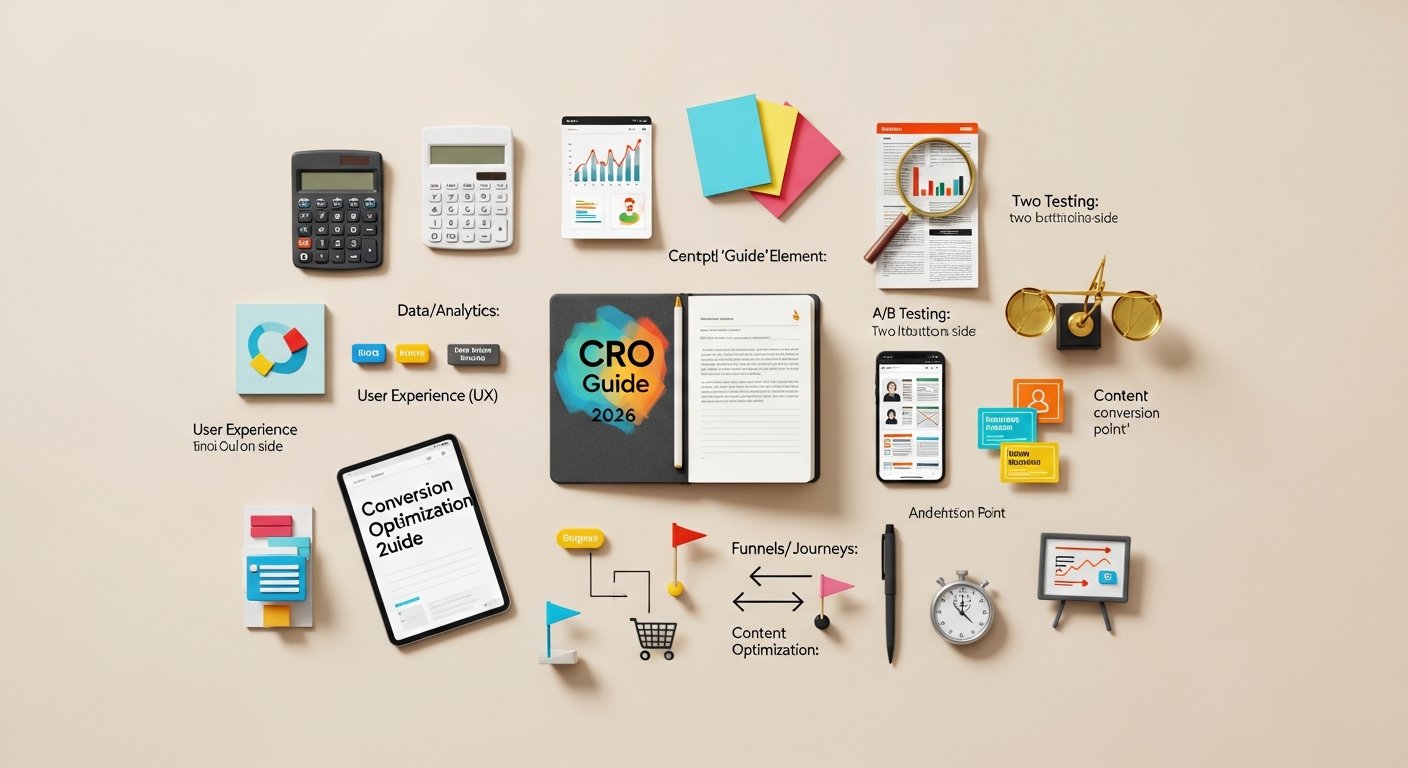
Once you have your prioritized hypotheses, it’s time to test them. A/B testing is the gold standard for scientifically validating changes, but it’s just one arrow in your Conversion Rate Optimization quiver.

A/B Testing: The Scientific Method for Your Website
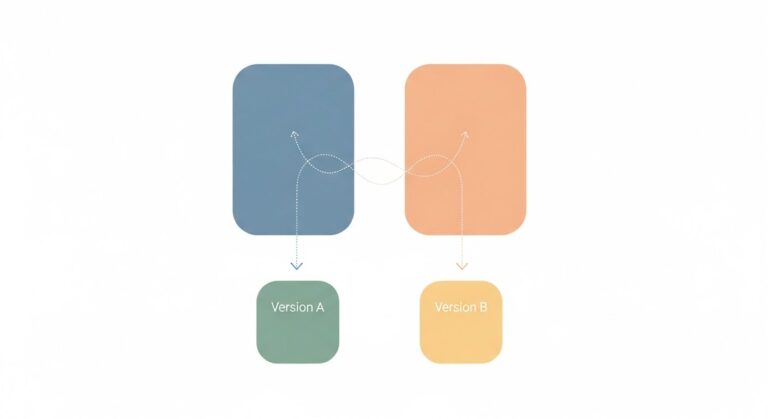
A/B testing involves creating two (or more) versions of a web page or app screen and showing them to different segments of your audience simultaneously. You then measure which version performs better against your defined conversion goal.
- Statistical Significance: Crucial for trustworthy results. Don’t stop a test early just because one variation is “winning.” Ensure your test runs long enough and gathers enough data to reach statistical significance (typically 90-95% confidence level). Tools like Optimizely’s sample size calculator can help you determine how much traffic and time you need.
- Tools: Leading platforms include VWO and Optimizely. These tools simplify the process of setting up variations, segmenting traffic, and analyzing results. While Google Optimize 360 is sunsetting, these alternatives offer robust solutions for startups.
- Types of Tests:
- A/B Split Test: Comparing two distinct versions of a page (e.g., two different landing page layouts).
- Multivariate Testing (MVT): Testing multiple elements on a page simultaneously (e.g., headline, image, and CTA button). More complex, requires significant traffic.
- Split URL Testing: Testing entirely different pages hosted at different URLs.
Beyond A/B Testing: A Holistic Approach
While A/B testing validates specific changes, CRO encompasses broader optimization strategies:
- Personalization (AI/ML-Driven): In 2026, dynamic content is table stakes. Using AI and machine learning, you can tailor website content, product recommendations, and messaging based on user behavior, demographics, or referral source. Platforms like Segment (for customer data infrastructure) combined with personalization engines (often built into Optimizely or standalone tools) enable hyper-relevant experiences. Imagine a returning user seeing products related to their last purchase or a first-time visitor from a specific ad campaign seeing a tailored headline.
- User Experience (UX) Enhancements: UX is CRO’s silent partner.
- Mobile-First Design: With mobile traffic dominating, your site must be flawlessly responsive and fast on all devices.
- Page Speed: Slow loading times are conversion killers. According to industry benchmarks, aiming for load times under 2 seconds can significantly improve conversion rates. Use tools like Google PageSpeed Insights to identify and fix bottlenecks.
- Accessibility: Ensuring your site is usable by everyone, including those with disabilities, not only expands your audience but often leads to better UX for all users.
- Copywriting & Messaging: Your words are powerful.
- Value Proposition Clarity: Can a visitor understand what you offer and why it matters within 5 seconds?
- Call-to-Action (CTA) Optimization: Are your CTAs clear, compelling, and benefit-oriented (“Start Your Free Trial” vs. “Submit”)? Test placement, color, and copy.
- Microcopy: Small pieces of text (e.g., error messages, form field labels, privacy notes) can significantly impact user trust and task completion.
- Forms & Flows:
- Simplification: Reduce the number of fields to the absolute minimum. Every extra field is a barrier.
- Multi-Step Forms: For longer forms, breaking them into smaller, manageable steps can reduce perceived effort and improve completion rates.
- Error Handling: Provide clear, immediate, and helpful error messages.
Your actionable step: Commit to running at least one significant A/B test per month on your primary conversion funnel. Beyond testing, dedicate resources to ongoing UX improvements, starting with mobile experience and page speed. Continuously refine your value proposition and CTA messaging based on user feedback and data. Consider how marketing automation tools can further enhance your optimization efforts.
What Does the Future Hold for Conversion Rate Optimization in 2026: AI, Data, and Ethics?
The CRO landscape is evolving rapidly. For 2026 and beyond, three major trends will redefine how startups approach optimization: the pervasive integration of AI and Machine Learning, the strategic imperative of first-party data, and the growing importance of ethical data practices.

AI & Machine Learning: The Intelligent Optimizer
AI is transforming Conversion Rate Optimization from reactive analysis to proactive prediction and automation.
- Automated Insights: AI-powered analytics platforms are becoming increasingly sophisticated, automatically identifying anomalies, user segments with high churn risk, or areas of high friction that human analysts might miss. Think of tools that don’t just show you what happened, but suggest why and what to do next.
- Predictive Personalization: AI can analyze vast datasets to predict individual user preferences and behaviors, enabling true one-to-one personalization. This means dynamic pricing, intelligently recommended products or content, and even predicting when a user is likely to convert or churn, allowing for timely interventions.
- Dynamic A/B Testing & Multi-Armed Bandits: AI can automatically allocate traffic to winning variations faster, reducing the time to declare a winner and maximizing conversions during the test phase itself.
- Smart Chatbots & Virtual Assistants: AI-driven chatbots are moving beyond simple FAQs to proactively guide users through complex flows, answer nuanced questions, and even personalize product recommendations, effectively acting as 24/7 conversion agents.
First-Party Data Strategy: Your Untapped Goldmine
With the ongoing deprecation of third-party cookies and increasing privacy regulations, owning and leveraging first-party data is no longer a luxury, but a necessity.
- Building Trust: Users are more willing to share data directly with brands they trust, especially when the value exchange is clear (e.g., personalized recommendations for better service).
- Customer Data Platforms (CDPs): Platforms like Segment or Tealium are becoming indispensable. They consolidate all your customer data (from website, app, CRM, email, support) into a single, unified profile. This “single source of truth” empowers hyper-personalization and more accurate segmentation, even without third-party cookies.
- Privacy-Centric Collection: Focus on transparent data collection, clear opt-in processes, and providing users control over their data. This builds loyalty and ensures compliance.
Ethical CRO: Balancing Optimization with User Trust
The pursuit of conversions must never come at the expense of user trust or ethical boundaries.
- Avoiding Dark Patterns: These are deceptive UI/UX elements designed to trick users into doing things they might not otherwise do (e.g., hidden costs, forced continuity, confusing opt-out processes). Not only are these legally risky, but they erode trust and lead to short-term gains at the cost of long-term customer relationships.
- Transparency: Be clear about your intentions. If you’re using personalization, make it clear how it benefits the user.
- Accessibility: Designing for inclusivity is an ethical imperative that also broadens your market reach.
Your actionable step: Start exploring AI-powered analytics capabilities within your existing tools or consider specialized platforms. Invest in building a robust first-party data strategy, potentially exploring a CDP as your user base grows. Critically review all your optimization efforts to ensure they are ethical and build, rather than erode, user trust. While focusing on digital, remember that other channels like local SEO for startups and advanced social media advertising also play a role in the broader customer journey.
How Can Startups Build a Sustainable CRO Culture for Long-Term Growth?
Conversion Rate Optimization is not a project with a start and end date; it’s an ongoing philosophy. For a startup, integrating CRO into your company’s DNA is crucial for sustainable growth. This means fostering a culture of continuous learning, experimentation, and customer-centricity across all departments.
CRO as a Continuous Process
The CRO flywheel never stops spinning. Successful startups embed this mentality, understanding that market conditions, user behaviors, and product offerings are constantly evolving. What worked last month might not work today, and what works today might be obsolete tomorrow. Regular reviews of performance, new data analysis, and fresh hypotheses are non-negotiable.
Cross-Functional Collaboration
CRO cannot live in a silo. It requires deep collaboration across:
- Marketing: To understand traffic sources, campaign messaging, and user acquisition costs.
- Product: To align optimization efforts with product roadmap, user experience, and feature development.
- Engineering: To implement tests, ensure technical feasibility, and maintain site performance.
- Design: To create user-centric interfaces and variations that align with brand guidelines.
- Sales & Customer Support: To provide invaluable qualitative feedback on customer pain points, objections, and desires.
Regular “CRO sync” meetings involving representatives from these teams can ensure alignment, share insights, and prioritize experiments effectively.
Documentation and Knowledge Sharing
Every test, whether it succeeds or fails, is a learning opportunity. Document your hypotheses, methodologies, results, and insights. Create a centralized knowledge base of what you’ve learned about your users and your product. This prevents repeating past mistakes, accelerates future testing, and helps onboard new team members. Celebrate small wins to maintain momentum and morale.
Your actionable step: Appoint a dedicated CRO lead or champion within your startup, even if it’s a dual role initially. Establish a weekly or bi-weekly CRO sync meeting with key stakeholders from marketing, product, and engineering. Start a shared document or project management board to track all hypotheses, tests, and learnings. This formalizes CRO as a core operational process, not just an ad-hoc activity.
FAQ: Your CRO Quickfire Answers for Startup Founders
How much budget should a startup allocate for CRO?
For early-stage startups, CRO isn’t about a massive separate budget but about reallocating existing resources. Start by investing in essential tools like Google Analytics 4 (free), Hotjar (freemium/affordable plans), and an A/B testing tool like VWO (starts at ~$200/month). Your primary investment will be in team time – dedicated hours for research, analysis, and implementation. As you scale, consider dedicating 5-10% of your marketing budget to CRO-specific tools and potentially a specialized CRO consultant or hire.
How long does it take to see results from CRO?
It varies significantly. Simple, high-impact changes (e.g., optimizing a CTA) can show results in weeks. More complex optimizations or those requiring significant traffic for statistical significance might take months. The key is continuous iteration. Don’t expect instant miracles; focus on consistent, incremental improvements. Your first few tests might even fail, but the learning derived is invaluable.
What’s the biggest mistake startups make with CRO?
The biggest mistake is acting on assumptions or “best practices” without data. Blindly copying what a competitor does or making changes based on personal opinion (“I think this looks better”) without testing is a recipe for wasted effort or, worse, negatively impacting your conversions. Always start with data, form a hypothesis, test, and then implement.
Is CRO only for e-commerce, or can B2B startups benefit?
CRO is absolutely critical for B2B startups! While the conversion goals differ (e.g., demo requests, whitepaper downloads, MQLs, SQLs, free trial sign-ups), the principles remain the same. Optimizing landing pages, lead forms, pricing pages, and the onboarding flow for SaaS products can dramatically improve lead quality and sales efficiency. The stakes are often even higher in B2B due to longer sales cycles and higher LTV.
How do I choose the right CRO tools?
Start lean and scale up.
- Analytics: Google Analytics 4 (essential and free).
- Qualitative Data: Hotjar (heatmaps, session recordings, surveys) is an excellent all-in-one.
- A/B Testing: VWO or Optimizely for robust testing. Evaluate based on your budget, required features, and ease of use.
- Customer Data Platform (Optional, but recommended for scale): Segment if you have diverse data sources and need a unified customer view.
Prioritize tools that integrate well with your existing tech stack and offer strong reporting capabilities.
Conclusion: Your Path to Data-Driven Growth in 2026
In the dynamic digital economy of 2026, Conversion Rate Optimization isn’t a luxury; it’s a fundamental pillar of sustainable startup growth. It’s the discipline that ensures every marketing dollar works harder, every product feature resonates deeper, and every user interaction moves you closer to your business objectives. By embracing a data-driven, systematic approach – from understanding your users through rigorous diagnostics, to crafting informed hypotheses, executing precise experiments, and integrating AI-powered personalization ethically – you empower your startup to not just compete, but to truly dominate. Don’t just chase traffic; optimize your journey. The time to make every visitor count is now. Start building your CRO muscle today, and watch your conversion rates, and ultimately your revenue, accelerate exponentially.