
Digital Transformation Strategy for Startups: Fueling Growth and Innovation
In today’s dynamic business landscape, a robust digital transformation strategy for startups is not merely an option but a critical imperative for survival and sustainable growth. For new ventures navigating competitive markets, leveraging digital technologies offers unparalleled opportunities to optimize operations, enhance customer experiences, and achieve market disruption. This comprehensive guide delves into the essence of digital transformation specifically tailored for startups, outlining its pivotal components, implementation tactics, and the profound benefits it unlocks.
A successful digital transformation strategy for startups fundamentally involves the strategic integration of digital technology into all areas of a business. This process fundamentally changes how a startup operates and delivers value to its customers. The primary benefits include enhanced agility, allowing rapid adaptation to market shifts; improved scalability, enabling efficient growth without proportional increases in overhead; superior customer experience through personalized engagement; and a significant competitive advantage derived from innovation and efficiency. By embracing a forward-thinking digital strategy, startups can not only carve out their niche but also redefine industry standards.
What is Digital Transformation for Startups?
At its core, digital transformation represents a profound organizational shift, moving beyond mere technological upgrades to fundamentally reimagine business models, processes, and customer interactions through digital means. For startups, this concept carries unique significance. Unlike established enterprises burdened with legacy systems, startups possess the inherent advantage of starting fresh, building digitally native operations from the ground up.
Understanding the nuances of related terms is crucial. Digitization refers to converting analog information into a digital format, such as scanning paper documents into PDFs. Digitalization, on the other hand, involves leveraging digitized information to improve existing processes, like automating invoice processing. Digital transformation encompasses both but goes significantly further, leveraging digital technologies to create entirely new business models, cultures, and customer experiences that might not have been possible before. For a startup, this means building agility and innovation directly into its DNA, ensuring every operational facet, from customer acquisition to product development, is optimized for the digital age.
This strategic approach allows startups to bypass common pitfalls of traditional businesses, fostering a culture of continuous innovation. By prioritizing digital tools and methodologies from inception, startups can efficiently scale their operations, rapidly iterate on products and services, and establish deeper, data-driven connections with their target audience. The strategic imperative for a digital transformation strategy for startups lies in enabling them to compete effectively, differentiate themselves, and ultimately disrupt established markets with unprecedented speed and efficiency.
Why is Digital Transformation Crucial for Startup Growth?
The imperative for a robust digital transformation strategy for startups stems from its direct impact on growth, market relevance, and long-term viability. Startups operate in an environment where speed, efficiency, and customer satisfaction dictate success. Digital transformation addresses these critical needs, acting as a catalyst for exponential growth.
One of the foremost benefits is significantly enhanced operational efficiency. By automating routine tasks, optimizing workflows through digital platforms, and integrating disparate systems, startups can reduce manual errors, save valuable time, and reallocate human resources to more strategic, value-adding activities. This lean operational model allows startups to do more with less, a crucial advantage given common resource constraints. For example, implementing cloud-based CRM systems can automate customer data management, freeing sales teams to focus on relationship building.
Furthermore, digital transformation drives enhanced customer engagement. Modern customers expect seamless, personalized experiences across multiple touchpoints. Digital strategies enable startups to collect and analyze customer data, allowing for highly targeted marketing campaigns, personalized product recommendations, and proactive customer service. This leads to higher customer satisfaction, increased loyalty, and valuable word-of-mouth referrals. According to a recent industry report, businesses that prioritize customer experience through digital channels see an average of 1.6x higher revenue growth than those that do not.
Moreover, a forward-thinking digital transformation strategy for startups unlocks the potential for new revenue streams and business models. Digital technologies can facilitate the creation of subscription services, platform-as-a-service (PaaS) offerings, or data monetization strategies that might be impossible through traditional means. This agility to pivot and innovate business models provides a strong competitive edge.
Finally, digital transformation fosters unparalleled market agility and competitive differentiation. Startups can quickly adapt to evolving market demands, respond to competitor moves, and launch innovative products or services at a faster pace. By leveraging advanced analytics and AI, they can gain deeper market insights, anticipate trends, and position themselves as leaders rather than followers. This capability to continuously innovate and adapt ensures that the startup remains relevant and resilient in an ever-changing digital economy.
[INLINE IMAGE 1: An infographic illustrating the “Digital Transformation Roadmap for Startups,” showing interconnected phases like Strategy & Vision, Technology Adoption, Data & Analytics, Culture & People, and Customer Experience, all leading to Growth & Innovation.]
Key Pillars of a Startup Digital Transformation Strategy
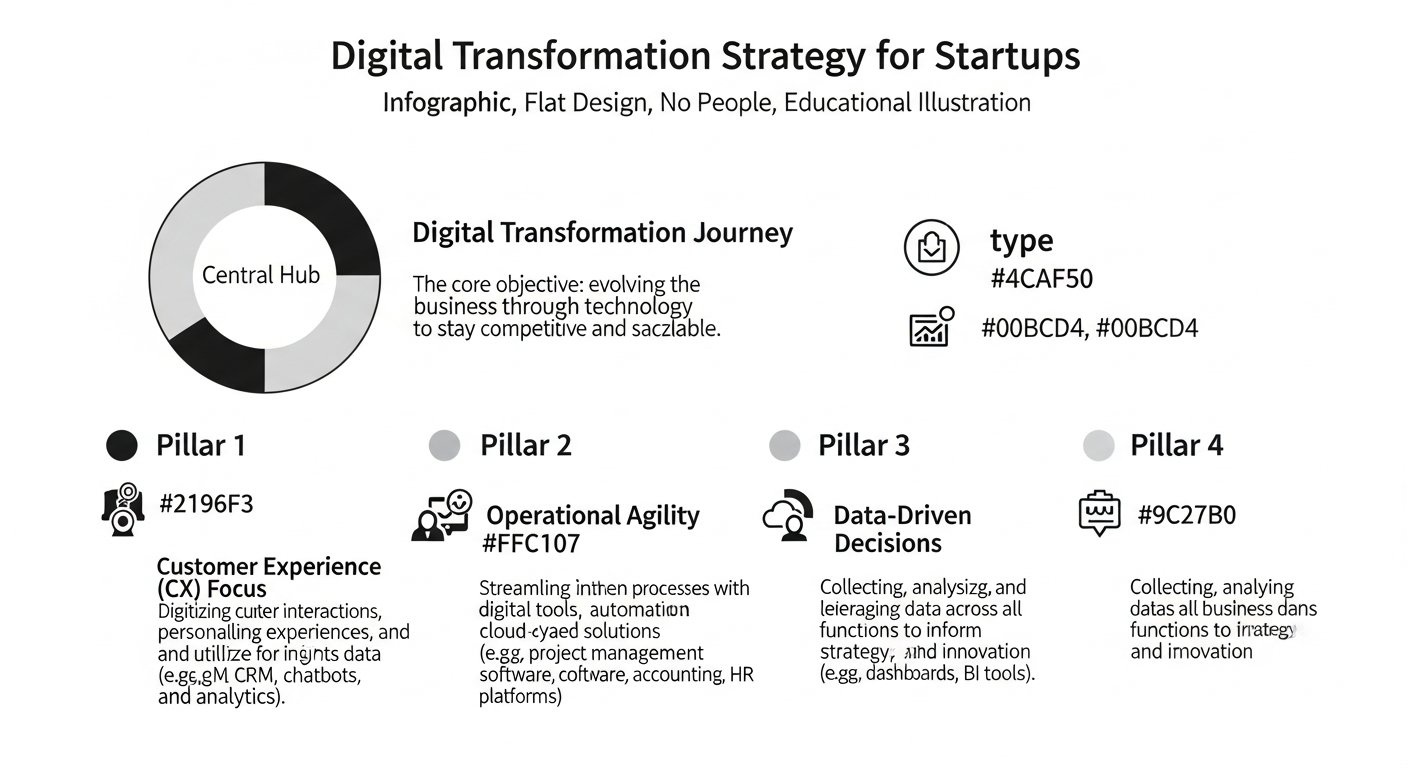
A successful digital transformation strategy for startups is built upon several interconnected pillars that must be strategically addressed for comprehensive impact. These pillars ensure that digital adoption is holistic, not just piecemeal, driving fundamental change across the organization.
Technology Adoption: Leveraging Cloud, AI, and Automation
At the heart of any digital transformation is the strategic adoption of cutting-edge technologies. For startups, this often means embracing solutions that offer scalability, flexibility, and cost-effectiveness without heavy upfront investment.
- Cloud Computing (SaaS, PaaS, IaaS): Cloud computing offers startups unparalleled scalability, reduced infrastructure costs, and global accessibility, enabling rapid deployment of applications without significant upfront investment. SaaS (Software as a Service) solutions like CRM and project management tools provide immediate functionality. PaaS (Platform as a Service) offers development environments, while IaaS (Infrastructure as a Service) provides virtualized computing resources, all crucial for agile development and deployment.
- Artificial Intelligence (AI) & Machine Learning (ML): AI and ML enable startups to automate complex tasks, personalize customer interactions, predict market trends, and derive deep insights from vast datasets. From AI-powered chatbots for customer support to ML algorithms for predictive analytics in marketing, these technologies enhance efficiency and decision-making.
- Data Analytics Tools: Beyond mere collection, robust data analytics tools allow startups to process, analyze, and visualize data to inform strategic decisions. Understanding customer behavior, operational bottlenecks, and market opportunities becomes significantly clearer with advanced analytics platforms.
- Process Automation (RPA): Robotic Process Automation (RPA) can automate repetitive, rule-based tasks across various functions, from HR onboarding to finance reconciliation. This frees up human talent for more creative and strategic work, significantly boosting productivity and reducing operational costs.
- Cybersecurity Solutions: As startups increasingly rely on digital platforms and data, robust cybersecurity is non-negotiable. Implementing strong security protocols, data encryption, and employee training protects valuable assets and maintains customer trust, which is paramount for growth.
Data-Driven Decision Making
A critical component of a *digital transformation strategy for startups* is the shift towards data-driven decision-making. This involves not just collecting data but establishing frameworks for its analysis, interpretation, and application. Startups must implement systems that provide actionable insights into customer behavior, market trends, operational performance, and financial health. This capability allows for continuous optimization of marketing campaigns, product features, and service delivery, ensuring that resources are allocated effectively and strategic pivots are made with confidence, reducing reliance on intuition alone.
Cultivating an Agile Mindset and Culture
Technology alone is insufficient for true digital transformation; it must be underpinned by a responsive organizational culture. Startups must foster an agile mindset that embraces experimentation, iterative development, and continuous learning. This involves:
- Change Management: Proactively managing the transition, communicating the vision, and addressing employee concerns to ensure smooth adoption of new technologies and processes.
- Employee Upskilling: Investing in training and development programs to equip employees with the digital skills necessary to thrive in the transformed environment.
- Leadership Buy-in: Ensuring that leadership champions the digital transformation, setting the tone and providing the necessary resources and support.
- Innovation-Driven Culture: Encouraging employees to experiment, take calculated risks, and contribute ideas for digital innovation, creating an environment where new solutions can emerge.
This cultural shift ensures that the entire organization is aligned with the digital vision, viewing change as an opportunity for growth rather than a threat.
| Pillar | Description | Startup Relevance | Key Technologies/Practices |
|---|---|---|---|
| Technology Adoption | Strategic integration of advanced digital tools. | Enables scalability, efficiency, and competitive edge without heavy initial investment. | Cloud Computing (SaaS, PaaS, IaaS), AI/ML, RPA, Cybersecurity. |
| Data & Analytics | Collecting, analyzing, and applying data insights for informed decisions. | Drives personalized customer experiences, optimized operations, and strategic pivots. | Business Intelligence (BI) Tools, Predictive Analytics, Customer Data Platforms (CDPs). |
| Customer Experience (CX) | Reimagining customer journeys through digital touchpoints. | Builds loyalty, enhances satisfaction, and fosters brand advocacy from inception. | CRM Systems, Omnichannel Platforms, Personalization Engines, AI Chatbots. |
| Operational Agility | Streamlining processes and fostering adaptability. | Ensures rapid response to market changes, efficient resource allocation, and continuous improvement. | Lean Methodologies, Agile Project Management, Automated Workflows. |
| Culture & Leadership | Cultivating a mindset that embraces innovation, learning, and change. | Facilitates successful adoption of new strategies and empowers employees for digital readiness. | Change Management Programs, Upskilling Initiatives, Visionary Leadership. |
Implementing Your Digital Transformation Roadmap
Executing a digital transformation strategy for startups requires a structured and phased approach. Rushing into technology adoption without a clear roadmap can lead to wasted resources and failed initiatives. A well-defined implementation plan ensures that changes are introduced strategically, minimizing disruption and maximizing impact.
Developing a Phased Approach
A phased approach allows startups to manage the complexity of digital transformation, learn from early deployments, and adjust as needed. This typically involves:
- Assessment and Vision Setting: Begin by thoroughly assessing the current state of operations, identifying pain points, and understanding customer needs. Define a clear vision for what the digital transformation aims to achieve, aligning it with overall business goals. This involves identifying key areas where digital solutions can deliver the most significant value.
- Strategy Formulation: Based on the vision, formulate a detailed strategy that outlines specific technologies to be adopted, processes to be re-engineered, and cultural shifts required. Prioritize initiatives based on potential impact and feasibility, creating a realistic timeline and allocating resources.
- Pilot Projects and Iteration: Start with small, manageable pilot projects in areas identified as high-impact. This allows the startup to test new technologies and processes on a smaller scale, gather feedback, and iterate quickly before a broader rollout. Emphasize learning and adaptation throughout this phase.
- Scaled Implementation: Once pilot projects prove successful, scale the digital solutions across relevant departments or the entire organization. This involves careful planning for integration, data migration, and comprehensive employee training.
- Monitoring and Optimization: Digital transformation is an ongoing journey, not a destination. Continuously monitor the performance of new systems and processes, collect feedback, and identify areas for further optimization. This iterative approach ensures that the startup remains agile and responsive to evolving market and technological landscapes.
Securing Leadership Buy-in and Team Alignment
No digital transformation strategy for startups can succeed without strong leadership buy-in and the full alignment of the entire team. Founders and senior leaders must champion the transformation, clearly articulating its benefits and necessity. This involves:
- Clear Communication: Regularly communicate the vision, goals, and progress of the transformation to all employees. Explain how these changes will impact their roles and the company’s future.
- Leading by Example: Leaders should actively participate in adopting new digital tools and processes, demonstrating their commitment and inspiring others.
- Empowering Teams: Provide employees with the necessary training, resources, and autonomy to embrace new digital tools and workflows. Encourage cross-functional collaboration and knowledge sharing.
- Fostering a Culture of Innovation: Create an environment where employees feel safe to experiment, learn from failures, and contribute innovative ideas, recognizing their critical role in the transformation journey.
By fostering a collaborative and supportive environment, startups can ensure that their digital transformation is a collective effort, driven by a shared vision and commitment.
[INLINE IMAGE 2: A diagram illustrating the interconnected “Pillars of Digital Transformation,” showing how technology, data, process, culture, and customer experience all support the central goal of digital transformation for startups.]
Overcoming Common Digital Transformation Challenges
While the benefits of a digital transformation strategy for startups are immense, new ventures often face unique challenges in its implementation. Addressing these proactively is crucial for success.
Addressing Budget Constraints and Resource Scarcity
Startups typically operate with leaner budgets and fewer resources than established corporations. This makes large-scale technology investments daunting. However, several strategies can mitigate these constraints:
- Prioritization: Focus on digital initiatives that offer the highest ROI and are critical for core business functions. A phased approach allows for incremental investment.
- Leveraging SaaS and Cloud Solutions: Opt for subscription-based Software as a Service (SaaS) and Platform as a Service (PaaS) solutions. These offer powerful capabilities without significant upfront capital expenditure on hardware or extensive IT infrastructure.
- Open-Source Technologies: Explore open-source software alternatives which can significantly reduce licensing costs while providing robust functionality.
- Strategic Partnerships: Collaborate with technology providers or digital agencies that understand startup needs, potentially offering flexible pricing models or specialized expertise.
Navigating Talent Gaps and Skill Development
The rapid evolution of digital technologies often creates a gap between available talent and the skills required for effective digital transformation. Startups may struggle to attract and retain specialized digital talent. Solutions include:
- Upskilling and Reskilling Existing Employees: Invest in comprehensive training programs to develop the digital competencies of current staff. This not only fills skill gaps but also boosts employee morale and loyalty.
- Strategic Hiring: Focus on hiring individuals with a blend of technical expertise and an agile, growth-oriented mindset. Look for candidates who are quick learners and adaptable.
- Outsourcing and Freelancers: For highly specialized or short-term needs, leverage the gig economy by engaging expert freelancers or outsourcing specific digital functions to specialized agencies.
- Mentorship and Peer Learning: Foster a culture where experienced team members can mentor others, facilitating knowledge transfer and skill development within the organization.
By proactively addressing these challenges, a startup can build a resilient digital transformation strategy that aligns with its unique resource landscape and talent pool.
| Technology | Description | Core Startup Benefit | Example Application |
|---|---|---|---|
| Cloud Computing | Internet-based computing where shared resources, software, and information are provided to computers and other devices on demand. | Scalability, cost-efficiency, flexibility, reduced infrastructure overhead. | Hosting web applications, data storage, virtual servers (AWS, Azure, Google Cloud). |
| Artificial Intelligence (AI) & Machine Learning (ML) | Systems that can learn from data, identify patterns, and make decisions with minimal human intervention. | Automation of tasks, personalized customer experiences, data-driven insights. | AI chatbots for customer support, predictive analytics for sales forecasting, personalized recommendations. |
| Data Analytics Tools | Software used to collect, process, analyze, and visualize data to uncover insights and trends. | Informed decision-making, operational optimization, market understanding. | Google Analytics for website traffic, Tableau for business intelligence, customer behavior analysis. |
| Process Automation (RPA) | Software robots that automate repetitive, rule-based tasks traditionally performed by humans. | Increased efficiency, reduced errors, cost savings, faster operations. | Automating invoice processing, data entry, onboarding tasks, report generation. |
| Cybersecurity Solutions | Technologies and processes designed to protect networks, devices, programs, and data from attack, damage, or unauthorized access. | Data protection, maintaining customer trust, regulatory compliance, business continuity. | Firewalls, antivirus software, multi-factor authentication, data encryption. |
| Challenge | Description | Startup Impact | Recommended Solution |
|---|---|---|---|
| Budget Constraints | Limited financial resources for large-scale technology investments. | Slow adoption, inability to acquire premium tools, missed growth opportunities. | Leverage SaaS, open-source, phased implementation, seek venture capital or strategic partnerships. |
| Talent Gap | Lack of skilled professionals (e.g., data scientists, AI engineers) within the team. | Ineffective implementation, reliance on external consultants, slower innovation. | Invest in upskilling existing staff, strategic hiring, utilize freelancers/outsourcing, foster internal learning. |
| Resistance to Change | Employees or leadership reluctant to adopt new technologies or processes. | Low adoption rates, reduced efficiency, internal friction, undermined strategy. | Strong leadership communication, involve employees in planning, demonstrate benefits, provide ample training. |
| Data Security & Privacy | Challenges in protecting sensitive data from breaches and ensuring compliance. | Reputational damage, legal penalties, loss of customer trust, financial losses. | Implement robust cybersecurity measures, ensure compliance (e.g., GDPR), regular audits, employee training. |
| Integration with Existing Systems | Difficulty in making new digital tools work seamlessly with legacy or existing (even minimal) systems. | Data silos, workflow disruptions, increased IT complexity, inefficient operations. | Prioritize API-first solutions, phased integration, use middleware platforms, strategic vendor selection. |
Measuring Success and Future Trends in Startup Digital Transformation
To ensure the efficacy and continuous improvement of a digital transformation strategy for startups, measuring its impact is paramount. Beyond initial implementation, understanding the evolving landscape of digital trends is also critical for sustained competitive advantage.
Measuring Success with Key Performance Indicators (KPIs)
Effective measurement provides insights into ROI and informs future strategic adjustments. Startups should define clear KPIs aligned with their transformation goals:
- Operational Efficiency: Track metrics like reduced operational costs, faster processing times (e.g., time to market, order fulfillment), and improved resource utilization. Automation, for instance, can be measured by the reduction in manual task hours.
- Customer Satisfaction and Engagement: Monitor Net Promoter Score (NPS), Customer Satisfaction Score (CSAT), customer churn rates, and engagement metrics across digital channels (e.g., website traffic, app usage, social media interactions).
- Revenue Growth and New Business Models: Quantify the impact on revenue generated from new digital products or services, increased sales conversions through digital channels, and the success of subscription models or platform offerings.
- Employee Productivity and Engagement: Measure improvements in employee productivity, internal process efficiency, and employee satisfaction with new tools and workflows.
- Data Utilization: Assess the extent to which data is collected, analyzed, and actively used to inform decisions, indicating a shift towards a truly data-driven culture.
Regularly reviewing these KPIs against established benchmarks allows startups to quantify the value derived from their digital investments and refine their strategy for ongoing optimization.
Future Trends in Startup Digital Transformation
The digital landscape is in constant flux, and a forward-looking digital transformation strategy for startups must anticipate emerging trends. Staying abreast of these advancements ensures that startups remain innovative and competitive.
- Hyper-Personalization at Scale: Leveraging advanced AI and data analytics to deliver incredibly tailored experiences to individual customers across all touchpoints, moving beyond basic segmentation.
- Decentralized Technologies (Blockchain, Web3): While still nascent for many, blockchain and Web3 technologies hold promise for enhancing data security, transparency, and creating new forms of digital ownership and interaction, potentially enabling novel business models for digitally native startups.
- Edge Computing: Processing data closer to the source (e.g., IoT devices) rather than relying solely on centralized cloud servers. This reduces latency and enhances real-time decision-making, crucial for applications in smart logistics, manufacturing, and AI at the point of interaction.
- Sustainable AI and Green Computing: An increasing focus on making AI models and digital infrastructure more energy-efficient and environmentally friendly. Startups that integrate sustainable practices into their digital transformation can gain a competitive edge in an eco-conscious market.
- Composable Architecture: Moving towards modular, interchangeable business capabilities built from packaged business capabilities (PBCs). This allows startups to assemble and reassemble their digital infrastructure quickly, responding with extreme agility to market changes.
By continuously evaluating and integrating these future trends, startups can ensure their digital transformation journey is not just a one-time overhaul but an adaptive, evergreen strategy for sustained innovation and market leadership beyond 2026.
In conclusion, embarking on a comprehensive digital transformation strategy for startups is an essential journey for any new venture aiming for enduring success in the modern economy. It demands more than just adopting new technologies; it necessitates a fundamental shift in mindset, culture, and operational paradigms. By strategically embracing cloud computing, AI, data analytics, and automation, while simultaneously cultivating an agile, data-driven culture, startups can unlock unprecedented levels of efficiency, customer engagement, and market responsiveness. Overcoming challenges such as budget constraints and talent gaps through smart resource management and continuous learning is crucial. Ultimately, a well-executed digital transformation strategy for startups empowers them to not only survive but thrive, innovate, and lead their respective industries into a digitally native future.