Navigating the Startup Legal Framework: A Guide for Tech Growth & Digital Marketing
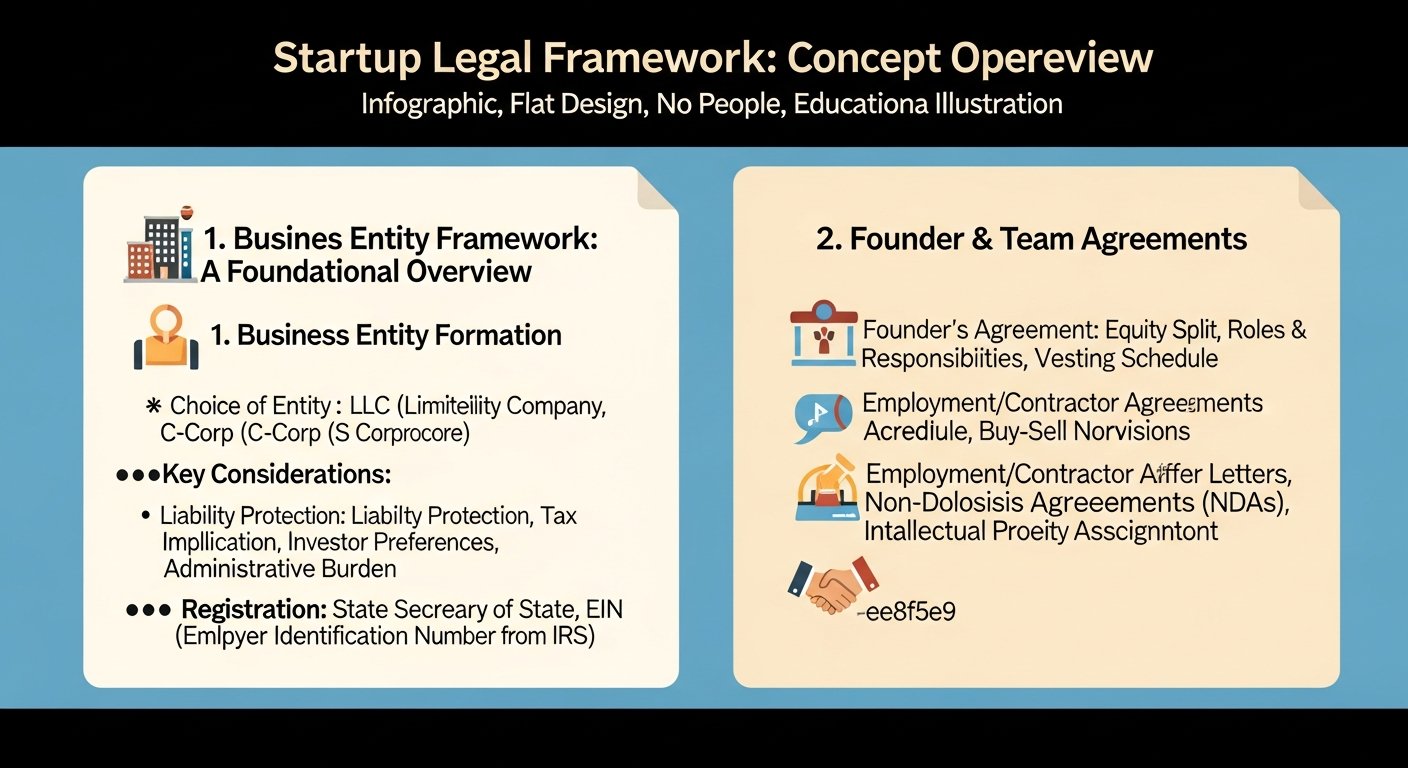
For any ambitious venture, a robust and thoughtfully constructed startup legal framework is not merely a bureaucratic hurdle but a foundational cornerstone. This is especially true for tech startups, where rapid innovation, intense competition, and scalable operations demand meticulous legal planning. This framework encompasses the foundational legal structures, agreements, and compliance measures that govern a business from its inception. For a tech startup, it is a strategic asset, directly enabling sustainable growth, safeguarding valuable intellectual property (IP), ensuring data privacy, facilitating critical funding rounds, and underpinning effective digital marketing strategies. Without a solid legal foundation, a tech startup risks costly disputes, regulatory penalties, hindered funding opportunities, and ultimately, stifled growth and market presence.
What is a Startup Legal Framework and Why is it Crucial for Tech Growth?
A startup legal framework constitutes the entire web of legal structures, policies, and practices that govern a new business entity. It includes everything from selecting the correct business type to securing intellectual property, drafting essential contracts, ensuring data privacy, and adhering to employment laws. For tech startups, this framework is disproportionately important due to several inherent characteristics of the industry:
- Innovation-Driven: Tech relies heavily on unique ideas, algorithms, and software, making intellectual property protection paramount.
- Rapid Scaling: Growth often happens quickly, requiring a legal structure that can adapt to increasing headcount, market expansion, and investor demands.
- Data-Centric: Most tech products and digital marketing strategies involve collecting, processing, and storing vast amounts of user data, necessitating strict data privacy compliance.
- Funding Dependence: Tech startups frequently rely on external investment, which demands rigorous legal due diligence and transparent corporate governance.
Establishing this framework early protects founders, attracts investors, mitigates risks, and creates a stable environment for innovation. A well-defined legal strategy directly supports tech startup growth by providing clarity, protecting assets, and enabling strategic partnerships. Moreover, it ensures that your digital marketing strategy operates within legal boundaries, building user trust and preventing costly regulatory infractions.
Choosing the Right Legal Structure for Your Tech Startup
The initial decision regarding your tech startup’s legal structure is one of the most impactful components of your entire startup legal framework. This choice affects liability, taxation, administrative burden, and your ability to raise capital for future growth. Understanding the nuances of each option is critical for long-term success.
Sole Proprietorship vs. LLC vs. C-Corp: Which is Right for Your Tech Startup?
Each legal entity offers distinct advantages and disadvantages, making the “best” choice dependent on your tech startup’s specific goals, risk tolerance, and plans for future growth and funding:
- Sole Proprietorship: This is the simplest and least expensive structure to form. The business is not legally separate from its owner, meaning personal assets are not protected from business liabilities. It’s rarely suitable for serious tech startup growth due to unlimited liability and difficulty in raising external capital.
- Limited Liability Company (LLC): An LLC provides personal liability protection, separating personal assets from business debts and legal actions. It offers flexible taxation (can be taxed as a sole proprietorship, partnership, or corporation) and a less formal administrative structure than a corporation. While good for some early-stage startups, it can be less attractive to venture capital investors who typically prefer C-Corps for equity investment.
- C-Corporation (C-Corp): This is the preferred structure for tech startups seeking significant venture capital (VC) funding and aiming for substantial growth and eventual acquisition or IPO. A C-Corp is a separate legal entity, providing robust personal liability protection to its owners (shareholders). It allows for multiple classes of stock, making it ideal for attracting diverse investors. However, C-Corps face “double taxation” (corporate profits are taxed, and then dividends paid to shareholders are taxed again) and require more formal compliance and administrative overhead.
- S-Corporation (S-Corp): An S-Corp avoids double taxation by passing income, losses, deductions, and credits through to its shareholders for federal tax purposes. Shareholders report the income and losses on their personal tax returns. While it offers liability protection, S-Corps have restrictions on the number and type of shareholders, which can limit fundraising potential and global expansion, making them less common for rapidly scaling tech startups seeking extensive outside investment.
Choosing an entity like an LLC or C-Corp provides the essential liability protection crucial for any business, particularly one with the potential for high stakes like a tech startup. This decision should ideally be made in consultation with legal and financial advisors to align with your long-term vision for tech startup growth.
| Legal Structure (Entity) | Liability Protection | Taxation Implications | Fundraising Potential | Administrative Complexity | Suitability for Tech Growth |
|---|---|---|---|---|---|
| Sole Proprietorship | None (Personal assets at risk) | Pass-through (Owner’s personal income) | Very Low | Very Low | Low (Not recommended for scalable ventures) |
| LLC (Limited Liability Company) | Good (Protects personal assets) | Flexible (Pass-through or Corporate) | Medium (Less attractive to VC) | Medium | Medium (Good for early stages, but consider C-Corp for VC) |
| C-Corp (C-Corporation) | Excellent (Protects personal assets) | Double Taxation (Corporate & Shareholder) | High (Preferred by VC investors) | High | High (Ideal for aggressive growth and external funding) |
| S-Corp (S-Corporation) | Excellent (Protects personal assets) | Pass-through (Avoids double taxation) | Medium (Restrictions on shareholders) | Medium to High | Medium (Less flexible for diverse investor base) |
[INLINE IMAGE 1: A stylized infographic showing different legal entities (Sole Prop, LLC, C-Corp) as building blocks, with arrows pointing towards “Growth” and “Investment” varying in size and direction depending on the entity, illustrating their suitability for tech startups.]
How Does Intellectual Property Protection Fuel Tech Startup Growth?
For tech startups, intellectual property (IP) is often their most valuable asset. The innovations, software, algorithms, brand names, and creative content that define a tech company are the very engines of its growth. A robust IP strategy within your startup legal framework is therefore indispensable, providing competitive advantage, attracting investment, and enabling strategic market positioning. Protecting your IP is a direct driver of tech startup growth, influencing valuation, market share, and long-term sustainability.
Patents, Trademarks, and Copyrights: Understanding Your Tech IP Assets
Understanding and strategically leveraging different types of IP protection is crucial for safeguarding your tech startup’s innovations and brand identity:
- Patents: Protect novel, non-obvious, and useful inventions, processes, machines, or compositions of matter. For tech startups, this often includes software algorithms, unique hardware designs, specific functionalities, or innovative business methods. A patent grants the inventor exclusive rights for a period, preventing others from making, using, or selling the invention, thereby providing a significant competitive moat for tech startup growth.
- Trademarks: Protect brand names, logos, slogans, and symbols used to identify and distinguish your products or services from those of competitors. For a tech startup, a strong trademark strategy is vital for building brand recognition and trust, especially within competitive digital marketing strategies. Protecting your brand ensures that your marketing efforts build equity in an identifiable and legally protected entity.
- Copyrights: Protect original works of authorship, including literary, dramatic, musical, and artistic works. In the tech context, this primarily covers software code, website content, user interface designs, documentation, and original content created for digital marketing strategies (e.g., blog posts, videos, infographics). Copyright automatically arises upon creation, but registration provides stronger legal recourse against infringement.
Trade Secrets and Confidentiality: Protecting Your Competitive Edge
Beyond formal registrations, tech startups often rely heavily on trade secrets for competitive advantage. These are confidential pieces of information that provide a business with an economic edge because they are not generally known or easily ascertainable by others. Examples include proprietary algorithms, customer lists, unique development processes, or specific marketing data. Safeguarding trade secrets involves robust internal policies, non-disclosure agreements (NDAs) with employees, contractors, and partners, and strict access controls. Integrating these confidentiality measures into your startup legal framework ensures that your secret sauce remains yours, fueling sustained innovation and growth without public disclosure.
| IP Type (Entity) | What it Protects | Key Benefit for Tech Startup Growth | Example in Tech |
|---|---|---|---|
| Patent | New, non-obvious, useful inventions, processes, designs | Exclusive market rights, strong competitive barrier, high valuation driver | A unique software algorithm, a novel hardware component |
| Trademark | Brand names, logos, slogans, unique identifiers | Brand recognition, consumer trust, market differentiation, marketing asset | Your tech company’s name, app icon, product logo |
| Copyright | Original works of authorship (code, content, UI) | Protects creative output, forms basis for licensing, prevents unauthorized copying | Source code, website content, user manual, marketing videos |
| Trade Secret | Confidential business information providing competitive advantage | Maintains unique processes, algorithms, customer data as proprietary knowledge | Proprietary algorithms, unique customer acquisition strategies, internal development methodologies |
Crafting Robust Agreements for Founders, Employees, and Partners
A comprehensive startup legal framework relies heavily on well-drafted contracts and agreements. These documents define relationships, allocate responsibilities, manage expectations, and mitigate disputes. For tech startup growth, meticulously designed agreements are not just formalities; they are critical tools for operational efficiency, team cohesion, and strategic partnerships. They provide the legal backbone for every interaction, from internal governance to external collaborations that drive your digital marketing strategy and overall expansion.
Founder Agreements: Laying the Groundwork
For multi-founder tech startups, a robust founder agreement is non-negotiable. This document, often an operating agreement (for LLCs) or shareholders’ agreement (for C-Corps), addresses crucial aspects such as:
- Equity Vesting: How founders earn their shares over time, preventing early departures from taking disproportionate equity.
- Roles and Responsibilities: Clearly defines who does what, minimizing overlap and conflict.
- Decision-Making Processes: Outlines how major decisions are made, including voting rights and potential tie-breaking mechanisms.
- Exit Clauses: Specifies what happens if a founder leaves or if the company is acquired.
- Intellectual Property Assignment: Ensures all IP created by founders for the startup is legally owned by the company, a critical component for future investment and asset protection.
A clear founder agreement fosters alignment and trust, essential ingredients for successful tech startup growth.
Employee & Contractor Agreements: Building Your Team Legally
As your tech startup expands, your workforce grows. Proper agreements with employees and independent contractors are vital components of your startup legal framework:
- Employment Agreements: Detail job roles, compensation, benefits, confidentiality obligations, and most importantly, IP assignment clauses. These clauses ensure that any software, code, or invention created by an employee in the course of their employment belongs to the company, a fundamental protection for a tech business.
- Independent Contractor Agreements: Clearly define the scope of work, deliverables, payment terms, ownership of work product, and confidentiality. Misclassifying an employee as a contractor can lead to significant legal penalties, impacting your ability to sustain growth.
- Non-Disclosure Agreements (NDAs): Essential for protecting proprietary information, especially when working with external parties, potential investors, or vendors.
Customer & Vendor Contracts: Streamlining Operations and Sales
Customer and vendor contracts are the lifeblood of your tech startup’s commercial operations. They define the terms under which you provide services or products and acquire necessary resources:
- Terms of Service (ToS) & End User License Agreements (EULAs): For SaaS products or online platforms, these legally binding documents govern user behavior, outline service limitations, disclaim warranties, and define acceptable use. They are crucial for risk management and protecting your platform.
- Privacy Policies: Mandated by data protection laws, these documents inform users how their data is collected, used, stored, and shared. A compliant privacy policy is essential for both legal adherence and building user trust, directly impacting the effectiveness of your digital marketing strategy.
- Service Level Agreements (SLAs): For B2B tech services, SLAs define the level of service promised, uptime guarantees, and support.
- Vendor Contracts: Agreements with suppliers of software, infrastructure, marketing services, or other essential resources ensure clear expectations and legal recourse.
These agreements protect your revenue streams, manage client expectations, and ensure your operational partners deliver as promised, all contributing to predictable tech startup growth.
[INLINE IMAGE 2: A flowchart illustrating the different types of contracts and agreements (Founders, Employees, Customers, Vendors) and how they branch out from the “Startup Legal Framework” central entity, emphasizing their interconnectedness and importance for growth.]
Data Privacy & Digital Marketing Compliance: A Legal Imperative
In the digital age, data is currency, and for tech startups, user data is often integral to product development, personalization, and crucially, digital marketing strategies. However, the collection, processing, and storage of personal data are heavily regulated. Robust data privacy practices are not merely a feature of a comprehensive startup legal framework; they are a legal imperative that directly impacts the legality and effectiveness of a tech startup’s digital marketing strategy. Non-compliance can lead to severe fines, reputational damage, and a loss of user trust, all of which can cripple tech startup growth.
Navigating Global Privacy Regulations (GDPR, CCPA, etc.)
The global regulatory landscape for data privacy is complex and constantly evolving. Tech startups, especially those with international ambitions or targeting users in various regions, must be aware of and comply with multiple regulations:
- General Data Protection Regulation (GDPR): A landmark EU law that sets stringent requirements for how personal data is collected, stored, and processed for individuals within the EU. It emphasizes consent, data minimization, transparency, and data subject rights. Any tech startup with EU customers or users, regardless of its location, must comply with GDPR.
- California Consumer Privacy Act (CCPA) / California Privacy Rights Act (CPRA): Provides California consumers with significant control over their personal information, including rights to know, delete, and opt-out of sales of their data. Similar laws are emerging across US states.
- ePrivacy Directive (Cookie Law): Specifically regulates the use of cookies and electronic communications. It requires websites to obtain explicit user consent before storing or accessing information on a user’s device, directly impacting cookie consent banners and tracking for digital marketing strategies.
- Other Regional Laws: Many other countries (e.g., Brazil’s LGPD, Canada’s PIPEDA, various Asian privacy laws) have their own comprehensive data protection frameworks.
Compliance with these regulations necessitates careful attention to data collection methods, storage security, and the clear communication of privacy policies.
Securing User Data and Building Trust
Beyond legal compliance, a strong commitment to data security and privacy builds invaluable user trust. For tech startups, trust is a critical factor for user adoption, retention, and positive word-of-mouth – all essential for growth. This involves:
- Privacy by Design: Integrating privacy considerations into the design of products and services from the outset.
- Robust Cybersecurity Measures: Implementing strong encryption, access controls, regular security audits, and data breach response plans.
- Transparent Privacy Policies: Crafting easy-to-understand privacy policies that clearly explain data practices.
- Data Minimization: Collecting only the data necessary for your specific purposes.
These practices reinforce your brand’s integrity and mitigate the risks associated with data breaches, which can be devastating for a growing tech startup.
Legal Aspects of Digital Marketing Activities
Your digital marketing strategy must operate within the bounds of various legal frameworks. This means your startup legal framework needs to account for:
- Email Marketing: Compliance with anti-spam laws like CAN-SPAM (US) or CASL (Canada), which require clear consent, opt-out mechanisms, and accurate sender information.
- Cookie Usage & Tracking: As mentioned with the ePrivacy Directive, explicit consent for non-essential cookies is mandatory in many jurisdictions.
- Influencer Marketing: Clear disclosure requirements for sponsored content to prevent deceptive advertising.
- User-Generated Content (UGC): Terms of service must address ownership, usage rights, and moderation of UGC to avoid copyright infringement or liability for offensive content.
- Advertising Standards: Adherence to truth in advertising laws, avoiding misleading claims or deceptive practices across all digital channels.
Integrating legal review into your digital marketing strategy is crucial to avoid penalties and maintain a positive brand reputation, which directly contributes to sustained tech startup growth.
| Digital Marketing Activity (Entity) | Relevant Legal Framework/Regulation | Key Compliance Requirement | Impact on Digital Marketing Strategy |
|---|---|---|---|
| Email Marketing | CAN-SPAM (US), CASL (Canada), GDPR (EU) | Explicit consent, clear unsubscribe option, accurate sender info | Requires opt-in strategies, clear calls-to-action, trust-building for list growth |
| Cookie Usage & Tracking | ePrivacy Directive (EU), GDPR, CCPA/CPRA | User consent for non-essential cookies, clear cookie policy | Influences website design (consent banners), data collection for analytics/retargeting |
| User Data Collection & Privacy | GDPR, CCPA/CPRA, LGPD (Brazil), PIPEDA (Canada) | Transparent privacy policy, data minimization, user rights (access, deletion) | Shapes lead generation forms, CRM usage, personalization efforts, ethical data handling |
| Influencer Marketing | FTC Guidelines (US), ASA (UK) | Clear disclosure of sponsored content/relationships | Requires careful vetting of influencers, clear contracting, brand reputation management |
| Online Advertising | Consumer protection laws, advertising standards bodies | Truth in advertising, avoiding misleading claims, proper disclaimers | Ensures ad copy and visuals are compliant, builds brand credibility, avoids fines |
Funding & Investment Legalities: Navigating Capital Infusion for Growth
For many tech startups, securing external funding is a vital step towards achieving significant growth. This process is inherently legalistic, requiring meticulous attention to documentation, regulatory compliance, and investor relations. The legal framework surrounding funding directly impacts a tech startup’s ability to attract capital, structure deals favorably, and manage equity. A solid startup legal framework ensures your company is “investor-ready” and can navigate the complexities of capital infusion smoothly, accelerating tech startup growth.
Seed Funding & Early-Stage Investment Agreements
Early-stage funding rounds typically involve specific legal instruments that define the terms of investment:
- Convertible Notes: These are debt instruments that convert into equity at a later funding round, often at a discount or with a valuation cap. They defer the valuation discussion, simplifying early investment.
- SAFEs (Simple Agreement for Future Equity): Similar to convertible notes but without an interest rate or maturity date, simplifying legal terms even further. SAFEs have become very popular for seed-stage tech startups.
- Equity Investment (Series A, B, etc.): As your tech startup matures, funding typically involves direct equity investment, where investors receive shares in exchange for capital. This necessitates complex investor rights agreements, shareholder agreements, and detailed due diligence.
Each of these requires specific legal documentation that meticulously outlines investment amounts, conversion terms, equity percentages, investor rights, and corporate governance provisions. Getting these right is crucial for future funding rounds and maintaining control as your tech startup grows.
Due Diligence and Investor Relations
Investors conduct thorough legal due diligence to assess a tech startup’s risks and opportunities. This process scrutinizes every aspect of your startup legal framework, including:
- Corporate Records: Proper formation documents, board minutes, and cap table management.
- Intellectual Property: Proof of ownership, registrations, and clear assignment from founders and employees.
- Contracts: Review of key customer, vendor, and employee agreements.
- Litigation History: Any past or pending legal disputes.
- Regulatory Compliance: Adherence to industry-specific regulations and data privacy laws.
Maintaining clean, organized legal documentation is paramount. A well-prepared startup legal framework can significantly streamline due diligence, instill investor confidence, and ultimately secure the capital needed for accelerated tech startup growth. Clear communication and transparency with investors, backed by solid legal practices, are key to successful long-term relationships.
Employment Law & HR Compliance: Building Your Team Legally
As a tech startup expands, building a talented team is essential for accelerating growth. However, navigating the complexities of employment law and HR compliance is a critical, yet often overlooked, part of the startup legal framework. Adhering to labor laws, fostering a fair workplace, and managing human resources legally protects your company from disputes, fines, and reputational damage. Proper HR compliance enables smooth team expansion, ensuring your tech startup growth isn’t hampered by legal challenges related to your most valuable asset: your people.
Hiring & Onboarding Best Practices
The hiring process itself is subject to numerous legal requirements:
- Non-Discrimination: Ensuring hiring practices comply with anti-discrimination laws (e.g., based on race, gender, religion, age, disability).
- Offer Letters & Employment Contracts: Clearly outlining job roles, compensation, benefits, start dates, and crucial IP assignment clauses to ensure company ownership of employee-developed innovations.
- Background Checks: Conducting these legally, with proper consent and adherence to fair credit reporting acts.
- Onboarding Paperwork: Properly completing I-9 forms (for US employment eligibility verification), tax forms, and benefits enrollment documents.
Establishing clear, compliant hiring processes protects your tech startup from potential legal claims and sets a professional tone from day one.
Workplace Policies and Remote Work Legalities
A growing tech startup needs comprehensive workplace policies to ensure consistency, fairness, and legal compliance:
- Employee Handbook: A crucial document outlining company policies on harassment, discrimination, conduct, attendance, social media use, and more.
- Wage & Hour Laws: Compliance with minimum wage, overtime, meal breaks, and record-keeping requirements, particularly for non-exempt employees.
- Leave Policies: Adherence to family and medical leave acts, sick leave, and other protected leave types.
- Remote Work Considerations: For distributed tech startups, understanding employment laws in different states or countries where employees reside is critical, including tax obligations, workers’ compensation, and varying labor protections.
These policies, integrated into your startup legal framework, create a stable and legally compliant environment, allowing your team to focus on driving tech startup growth.
Proactive Regulatory Compliance & Risk Management for Sustainable Growth
Beyond the foundational legal elements, a comprehensive startup legal framework must also incorporate proactive regulatory compliance and robust risk management strategies. The regulatory environment for tech startups is dynamic, especially concerning emerging technologies like AI, blockchain, or specific industry applications. Staying ahead of potential legal challenges, identifying and mitigating risks, and adapting to new regulations are vital for sustained tech startup growth and protecting your investment and reputation. This proactive approach supports continuous innovation and a resilient digital marketing strategy.
Identifying Industry-Specific Regulations
While some legal requirements are universal, many tech startups operate within specific niches that have their own regulatory bodies and compliance mandates:
- Fintech: Compliance with financial regulations, anti-money laundering (AML), Know Your Customer (KYC) laws, and securities regulations.
- Healthtech: Adherence to healthcare privacy laws (e.g., HIPAA in the US), medical device regulations, and clinical trial protocols.
- Edtech: Compliance with student data privacy laws (e.g., FERPA in the US, GDPR-K in Europe).
- AI Ethics & Regulation: A rapidly evolving area, with emerging guidelines and potential laws concerning data bias, transparency, and accountability in AI systems.
Identifying and integrating these industry-specific requirements into your startup legal framework is crucial to avoid costly penalties and maintain market access for your tech startup’s growth.
Risk Mitigation Strategies
Effective risk management involves anticipating legal threats and implementing strategies to minimize their impact. Key areas include:
- Cybersecurity Insurance: To protect against financial losses from data breaches and cyber-attacks.
- Product Liability: Especially relevant for hardware tech startups, ensuring product safety and appropriate disclaimers.
- Compliance Audits: Regular internal or external reviews to ensure adherence to all legal and regulatory obligations.
- Dispute Resolution Mechanisms: Including arbitration clauses in contracts to provide efficient alternatives to litigation.
- Crisis Management Plan: A pre-defined legal and public relations strategy for responding to legal challenges, data breaches, or reputational threats.
By integrating these risk mitigation strategies into your startup legal framework, your tech startup can better weather unforeseen challenges, protecting its trajectory towards significant growth and ensuring the integrity of its brand and digital marketing strategy.
Global Ambitions: Legal Considerations for International Expansion
For many tech startups, global expansion is a natural path to significant growth. However, expanding internationally introduces a complex layer of legal considerations that must be meticulously integrated into your startup legal framework. Each new market brings its own unique set of laws, regulations, and cultural norms that impact everything from business registration to intellectual property, data privacy, and digital marketing strategies. Navigating this landscape effectively is crucial for unlocking new markets and sustaining global tech startup growth.
Local Entity Formation and Compliance
When expanding into a new country, your tech startup will likely need to establish a local legal entity. This involves:
- Entity Selection: Choosing the appropriate legal structure (e.g., subsidiary, branch office) based on local laws, tax implications, and operational needs.
- Local Registration: Completing all necessary business registrations, licenses, and permits required by the target country.
- Tax Compliance: Understanding and adhering to local corporate taxes, VAT/GST, payroll taxes, and international tax treaties to avoid double taxation.
- Foreign Direct Investment (FDI) Regulations: Some countries have restrictions or approval processes for foreign ownership or investment.
A well-planned international entity strategy ensures your operations are compliant from day one, laying a solid legal foundation for global tech startup growth.
Cross-Border IP, Data, and Marketing Challenges
International expansion also magnifies the complexities surrounding key legal areas:
- International IP Protection: While IP rights are territorial, international treaties (like the Patent Cooperation Treaty or Madrid Protocol for trademarks) can streamline multi-country filings. Your startup legal framework needs to consider how to protect your patents, trademarks, and copyrights in each target market.
- International Data Transfer: Transferring personal data across borders (e.g., from EU users to US servers) is heavily regulated. Mechanisms like Standard Contractual Clauses (SCCs) or Binding Corporate Rules (BCRs) are often required to ensure compliance with laws like GDPR.
- Localized Digital Marketing Strategy: Advertising laws, consumer protection regulations, and cultural sensitivities vary significantly by country. Your digital marketing strategy must adapt to avoid legal missteps related to content, promotions, or pricing, which could impact brand reputation and market entry.
- Employment Law: Hiring in different countries means adhering to local labor laws, which can differ vastly regarding contracts, wages, benefits, and termination processes.
Successfully addressing these cross-border legal challenges is essential for seamless international integration and continued tech startup growth in new markets. Engaging local legal counsel is often invaluable in navigating these specific complexities.
The Ongoing Legal Journey for Tech Startups: A Strategic Asset
Establishing a comprehensive startup legal framework is not a one-time event; it is an ongoing journey that evolves with your tech startup’s growth and market dynamics. From initial incorporation and IP protection to navigating funding rounds, ensuring data privacy for your digital marketing strategy, and complying with ever-changing regulations, legal considerations permeate every stage of a tech company’s lifecycle. Rather than viewing it as a burdensome cost, forward-thinking tech startups recognize their legal framework as a strategic asset, actively contributing to their success.
Common Legal Pitfalls That Hinder Tech Startup Growth
Ignoring or delaying legal diligence can lead to significant setbacks. Common pitfalls include:
- Failing to properly assign IP: Leading to ownership disputes that can derail funding or acquisition.
- Ignoring data privacy laws: Resulting in massive fines, reputational damage, and loss of user trust.
- Poorly drafted founder agreements: Causing internal conflicts that fracture early teams.
- Misclassifying employees as contractors: Leading to expensive penalties and back taxes.
- Lack of clear terms of service or privacy policies: Exposing the company to litigation from users or regulators.
Proactive legal engagement helps avoid these traps, safeguarding the hard-earned progress of your tech startup growth.
The Future of Tech Regulation: What Startups Need to Watch For
The regulatory landscape for tech startups is in constant flux. Emerging areas like AI governance, antitrust enforcement against large tech companies, and further developments in data localization and privacy will continue to shape the legal environment. Staying informed and adapting your startup legal framework to these changes is paramount. This requires:
- Continuous Legal Monitoring: Keeping abreast of new legislation and regulatory guidance.
- Proactive Compliance Planning: Integrating future regulatory changes into product development and digital marketing strategy.
- Engaging Legal Expertise: Partnering with legal professionals who specialize in tech and understand the nuances of the evolving digital landscape.
By prioritizing a robust and adaptable startup legal framework, tech startups can not only mitigate risks but also build a resilient foundation that supports continuous innovation, aggressive growth, and effective digital marketing strategies well into the future. It’s an investment in stability, credibility, and long-term success.