
What Exactly is a Sales Funnel? Demystifying the Customer Journey
At its core, a sales funnel is a visual representation of the journey a potential customer takes from learning about your business to ultimately becoming a paying client. Imagine an actual funnel: wide at the top, where many prospects enter, and narrow at the bottom, where a smaller, more qualified group emerges as customers. This metaphor perfectly illustrates the process of progressively qualifying and nurturing leads until they are ready to convert. It’s not a linear path, but rather a series of stages designed to filter out uninterested parties and guide engaged prospects towards a purchase decision.
For tech startups, where innovation often precedes widespread recognition, a sales funnel is particularly critical. It provides a structured framework for marketing and sales efforts, ensuring that every interaction with a potential customer serves a specific purpose. Instead of random outreach, you’re orchestrating a deliberate sequence of touchpoints, each designed to move the prospect one step closer to conversion. This systematic approach allows businesses to:
- Identify bottlenecks: By tracking conversion rates at each stage, you can pinpoint exactly where prospects are dropping off and address those issues.
- Optimize resources: Focus your marketing and sales efforts on the most promising leads and the most effective strategies.
- Achieve predictability: Understand how many leads you need at the top of the funnel to generate a certain number of sales at the bottom, making revenue forecasting more accurate.
- Enhance customer experience: Deliver relevant information and support at precisely the right moments in the customer’s journey, building trust and authority.
In essence, a sales funnel transforms the often chaotic process of customer acquisition into a measurable, manageable, and repeatable system. It’s the engine that powers sustainable growth, allowing startups to convert interest into revenue consistently and efficiently.
The Core Stages of a Sales Funnel: From Awareness to Action
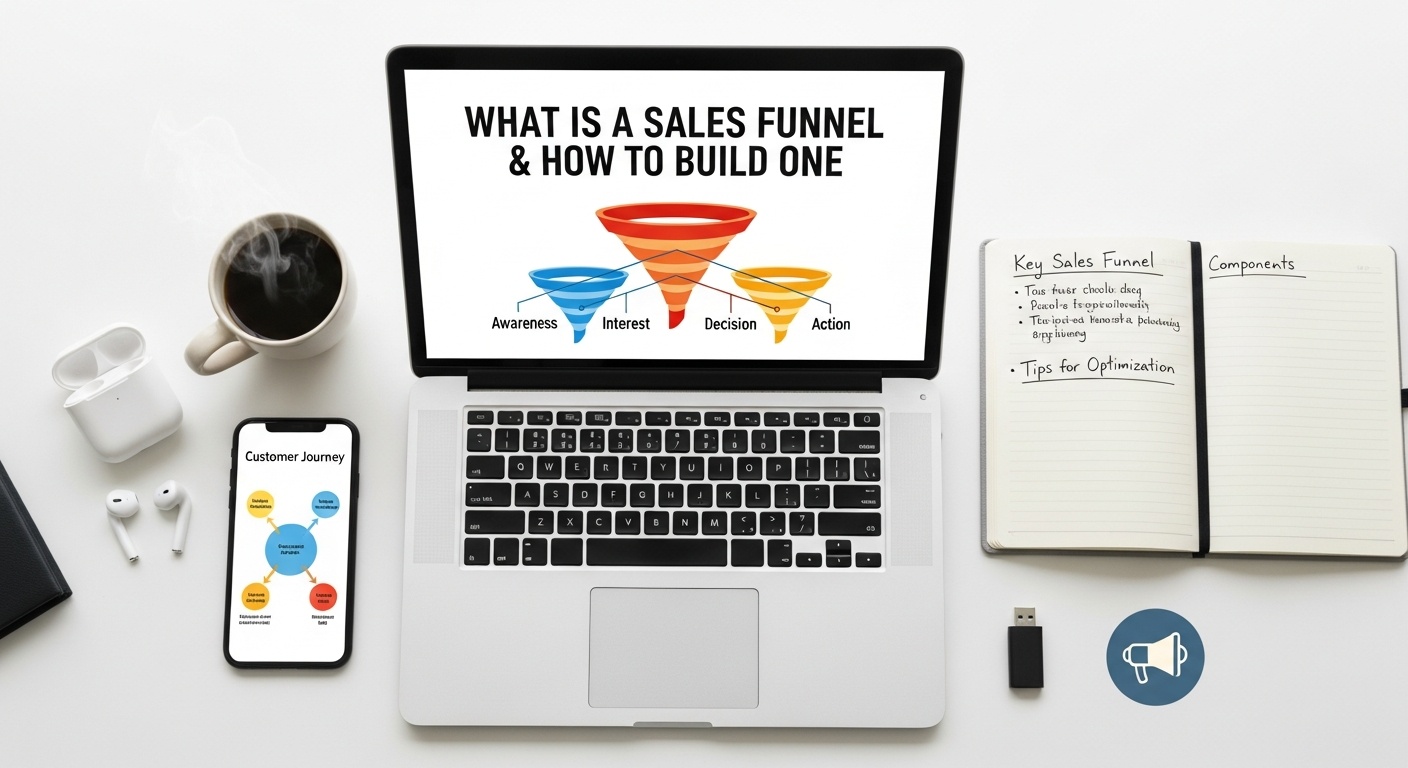
While the terminology might vary slightly across different methodologies, most sales funnels share fundamental stages that mirror the psychological journey of a buyer. A widely accepted model often integrates elements of the AIDA (Awareness, Interest, Desire, Action) framework with the TOFU-MOFU-BOFU (Top-of-Funnel, Middle-of-Funnel, Bottom-of-Funnel) content strategy. Let’s break down these critical stages:
1. Awareness (Top-of-Funnel – TOFU)
This is the widest part of the funnel, where potential customers first become aware of a problem they have and, subsequently, aware of your solution. They might not even know your brand exists yet. The goal here is to cast a wide net, attract attention, and generate initial interest. Content at this stage is typically broad, educational, and problem-focused, not overtly salesy. Think about the types of questions your ideal customers are asking when they first encounter a challenge your product or service addresses.
- Customer State: They have a problem or need, but might not know the solution or even that your company exists.
- Your Goal: Attract attention, educate them about the problem and potential solutions (which subtly lead to yours).
- Content Examples: Blog posts (e.g., following best practices from articles like “How To Write Blog Posts That Rank Google”), infographics, social media posts, videos, podcasts, keyword-rich articles, webinars on general topics.
2. Interest/Consideration (Middle-of-Funnel – MOFU)
Once prospects are aware of their problem and potential solutions, they move into the interest and consideration phase. Here, they are actively researching options, comparing different approaches, and starting to evaluate specific vendors. They are no longer just seeking general information; they’re looking for deeper insights and proof points. Your goal is to establish your authority and expertise, positioning your solution as a viable and superior option.
- Customer State: They understand their problem, are actively researching solutions, and comparing options.
- Your Goal: Educate them on your specific solution’s benefits, demonstrate your expertise, and differentiate yourself from competitors.
- Content Examples: E-books, whitepapers, detailed guides, case studies, comparison charts, expert interviews, webinars demonstrating specific features, product demos, free tools, email newsletters.
3. Desire/Decision (Bottom-of-Funnel – BOFU)
At this crucial stage, prospects have narrowed down their options and are seriously considering a purchase. They have developed a desire for a specific solution, and your task is to convince them that your offering is the absolute best fit. This is where you directly address their specific needs, overcome any lingering objections, and provide the final push towards conversion. The content here is highly persuasive and focuses on value proposition, urgency, and direct calls to action.
- Customer State: They are ready to make a purchase and are evaluating the final candidates.
- Your Goal: Remove any final doubts, provide compelling reasons to choose you, and facilitate the purchase.
- Content Examples: Free trials, personalized demos, consultations, testimonials, pricing guides, limited-time offers, direct sales calls, product comparisons (highlighting your strengths).
4. Action/Purchase (BOFU)
This is the moment of truth: the prospect becomes a customer. The “action” stage involves the actual transaction, whether it’s signing up for a service, making a purchase, or completing a form that initiates a sales conversation. Your job here is to make this process as smooth and seamless as possible, removing any friction that could lead to abandonment.
- Customer State: They have decided to buy and are ready to commit.
- Your Goal: Facilitate the purchase, provide clear instructions, and ensure a positive initial experience.
- Content Examples: Onboarding guides, thank-you pages, order confirmations, customer support resources, welcome emails.
Beyond these core stages, many modern sales funnels also emphasize Retention, Loyalty, and Advocacy. A successful conversion is just the beginning. Nurturing existing customers to ensure satisfaction, encourage repeat business, and turn them into brand advocates is vital for long-term growth, especially for subscription-based tech startups.
Why Every Startup Needs a Robust Sales Funnel in 2026
1. Predictable Revenue Generation
One of the biggest challenges for any startup is achieving consistent and predictable revenue. A well-defined sales funnel allows you to understand your conversion rates at each stage. By knowing how many leads you need at the top to generate a certain number of customers at the bottom, you can forecast revenue with greater accuracy. This predictability is invaluable for budgeting, resource allocation, and attracting investors.
2. Optimized Marketing & Sales Spend
Without a funnel, marketing efforts can feel like throwing darts in the dark. A sales funnel brings clarity. It helps you identify which marketing channels are most effective at attracting top-of-funnel leads and which sales tactics are best for closing deals. This insight enables you to allocate your budget more strategically, reducing wasted spend and maximizing your return on investment (ROI). You can focus on what truly moves prospects through the stages, rather than guessing.
3. Deeper Customer Understanding
Building a sales funnel forces you to think deeply about your target audience and their journey. This process inherently leads to the creation of detailed buyer personas, understanding their pain points, motivations, and preferred communication channels. This enhanced customer insight not only refines your marketing messages but also informs product development, ensuring you’re building solutions that truly resonate with your market. Regularly analyzing funnel performance is an ongoing education in customer behavior.
4. Scalability and Efficiency
As your startup grows, you need systems that can scale. A documented sales funnel provides a repeatable process that can be taught to new team members, automated with technology, and expanded as your business expands. It reduces reliance on individual sales heroes and instead builds a machine that can consistently generate leads and customers. Efficient management of this process often involves leveraging the best project management software startups use to coordinate tasks, track progress, and ensure seamless handoffs between marketing and sales teams.
5. Competitive Advantage in a Crowded Market
Many startups, particularly in the tech space, focus heavily on product innovation but neglect the systematic approach to customer acquisition. By implementing a sophisticated sales funnel, you gain a significant competitive edge. You’re not just selling a product; you’re offering a guided, value-driven experience that builds trust and rapport, making your brand more appealing than competitors who rely on ad-hoc or less structured approaches. In 2026, differentiation comes not just from what you sell, but how you sell it.
6. Enhanced Customer Lifetime Value (CLTV)
A funnel doesn’t end with a sale. By designing a funnel that considers post-purchase engagement, you can nurture customer loyalty, encourage repeat purchases, and turn satisfied clients into brand advocates. This focus on long-term relationships significantly increases Customer Lifetime Value (CLTV), which is a critical metric for sustainable growth and profitability for any startup.
Step-by-Step Guide to Building Your Sales Funnel
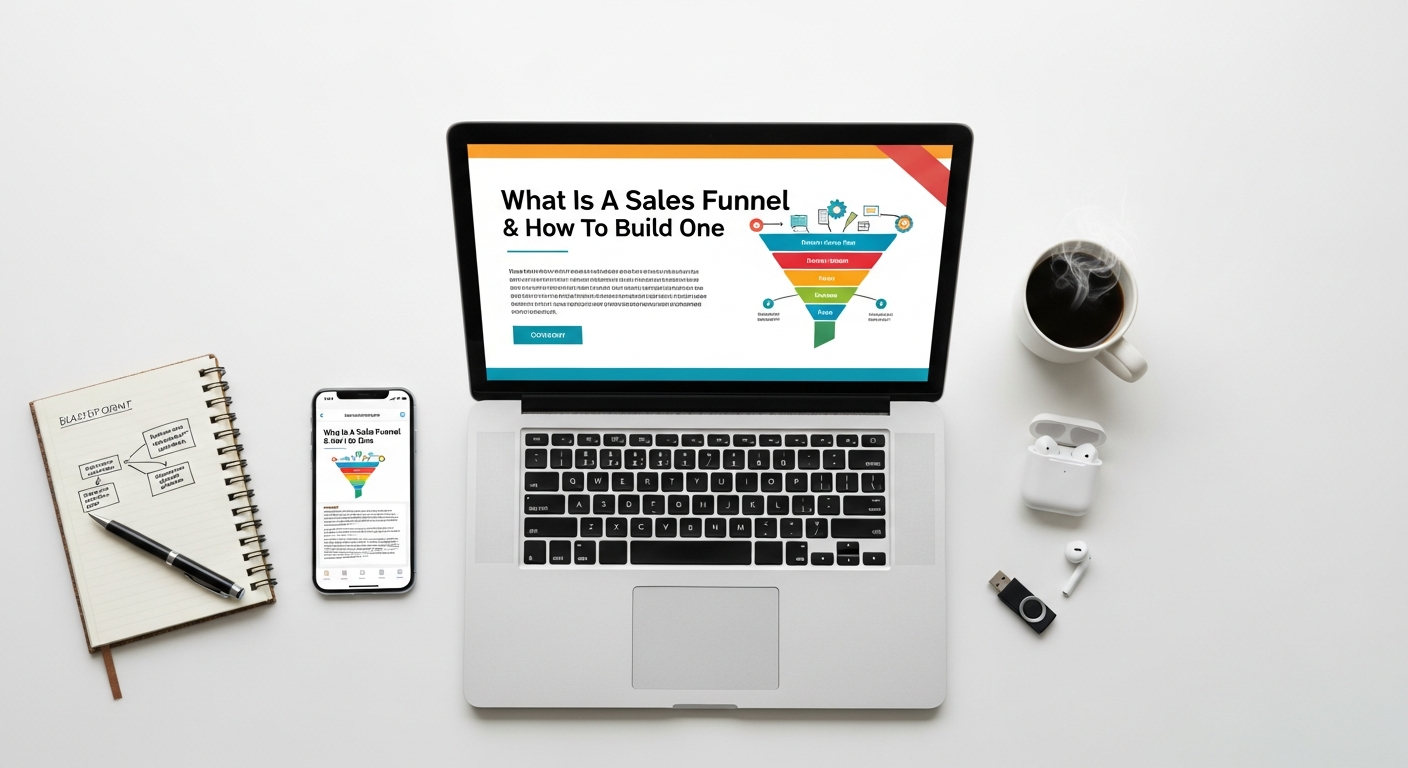
Building an effective sales funnel is a strategic endeavor that requires careful planning, execution, and continuous optimization. It’s not a set-it-and-forget-it task but an iterative process crucial for startup success. Here’s a detailed, step-by-step guide to help you construct a robust sales funnel for your business:
Step 1: Understand Your Target Audience & Create Buyer Personas
The foundation of any successful sales funnel is a deep understanding of who you are trying to reach. You cannot effectively guide someone if you don’t know who they are, what their problems are, and what motivates them.
- Research: Conduct market research, analyze existing customer data, interview current clients, and study your competitors’ audiences.
- Develop Personas: Create detailed buyer personas – semi-fictional representations of your ideal customers. Include demographics (age, role, industry), psychographics (goals, challenges, pain points, values), online behavior, and objections they might have. Give them names! This helps humanize your marketing efforts.
- Identify Their Journey: Map out their typical decision-making process related to the problem your product solves. What information do they seek at each stage?
Without this clarity, your funnel will be built on assumptions, leading to wasted effort and poor conversion rates.
Step 2: Map the Customer Journey & Identify Touchpoints
Once you know your audience, visualize their path through your funnel. Think about where they might encounter your brand at each stage.
- Brainstorm Touchpoints: List all potential interactions a prospect might have with your company, both online and offline (e.g., social media ads, blog posts, email, webinars, sales calls, website visits).
- Align with Funnel Stages: Categorize these touchpoints according to the Awareness, Interest/Consideration, and Desire/Decision stages. For instance, a social media ad might be Awareness, while a product demo is Desire.
- Consider Channels: Which channels are most effective for reaching your persona at each stage? LinkedIn for B2B? Instagram for B2C?
This mapping helps you strategically place your content and calls to action.
Step 3: Create Compelling Content for Each Stage
Content is the fuel that drives your sales funnel. Each piece of content should be tailored to the specific needs and mindset of the prospect at that particular stage.
- TOFU Content (Awareness): Focus on broad, educational content that addresses common pain points and questions. This is where you might implement strategies learned from articles like “How To Write Blog Posts That Rank Google” to attract organic traffic with informational content, along with social media posts, videos, and infographics. The goal is to inform and engage, not to sell.
- MOFU Content (Interest/Consideration): Provide more in-depth, problem-solving content that showcases your expertise. Think e-books, whitepapers, case studies, comparison guides, and detailed webinars. Demonstrate how your solution can address their specific challenges.
- BOFU Content (Desire/Decision): Offer conversion-focused content. This includes free trials, personalized demos, consultations, testimonials, pricing pages, and direct sales outreach. The aim is to eliminate final objections and provide a clear path to purchase.
Ensure your content offers genuine value at every interaction.
Step 4: Choose Your Tech Stack Wisely
Automation and data are crucial for scaling a sales funnel. The right tools can streamline processes, manage leads, and provide vital analytics. This is where insights from a guide like “What Is A Tech Stack How To Choose” become invaluable.
- CRM (Customer Relationship Management): Essential for managing lead information, tracking interactions, and segmenting your audience. Tools like HubSpot, Salesforce, Zoho CRM are popular choices.
- Marketing Automation Platform: For automating email sequences, lead nurturing workflows, landing pages, and analytics. HubSpot, ActiveCampaign, Mailchimp (for simpler needs) are common.
- Analytics Tools: Google Analytics, Mixpanel, Hotjar, etc., to track website traffic, user behavior, and conversion rates within your funnel.
- Communication Tools: Live chat, video conferencing for demos, and internal communication platforms.
Invest in tools that integrate well and scale with your business.
Step 5: Drive Traffic to Your Funnel
A beautifully designed funnel is useless without traffic. You need strategies to bring potential customers into the top of your funnel.
- SEO (Search Engine Optimization): Optimize your website and content to rank high on search engines for relevant keywords (as discussed in blog ranking strategies).
- PPC (Pay-Per-Click) Advertising: Google Ads, social media ads (Facebook, LinkedIn, Instagram) to target specific demographics and interests.
- Social Media Marketing: Organic posts, community engagement, and paid campaigns.
- Content Marketing: Regularly publishing high-quality blog posts, videos, and other shareable content.
- Email Marketing: Building an email list and sending targeted newsletters.
- Partnerships & PR: Collaborating with complementary businesses or securing media mentions.
Diversify your traffic sources to reduce risk and maximize reach.
Step 6: Nurture Leads Effectively
Not everyone will be ready to buy immediately. Lead nurturing is the process of building relationships with prospects over time, providing value, and guiding them towards a purchase.
- Email Sequences: Set up automated email campaigns that deliver relevant content based on a prospect’s behavior and stage in the funnel.
- Retargeting Ads: Show specific ads to people who have visited your website but haven’t converted.
- Personalized Communication: Use your CRM data to personalize messages and offers.
- Educational Content: Continue to provide value through webinars, exclusive guides, or free tools.
Patience and persistence are key in lead nurturing.
Step 7: Convert and Close
This is where your sales team (or automated sales processes) takes over to finalize the deal.
- Clear Calls to Action (CTAs): Ensure every piece of content has a clear, compelling CTA that guides the prospect to the next step.
- Sales Enablement: Equip your sales team with all the resources they need – compelling sales scripts, product knowledge, objection handling guides, and an understanding of the prospect’s journey so far.
- Streamlined Process: Make the purchasing process as easy as possible, from signing up for a trial to processing payment.
Focus on solving the customer’s problem, not just selling a product.
Step 8: Analyze, Optimize, and Iterate
Your sales funnel is a living entity that requires constant attention.
- Monitor Key Metrics: Track conversion rates at each stage, lead velocity, customer acquisition cost (CAC), and customer lifetime value (CLTV).
- Identify Drop-Off Points: Use analytics to pinpoint where prospects are abandoning your funnel.
- A/B Testing: Test different headlines, CTAs, landing page designs, email subject lines, and content formats to see what performs best.
- Gather Feedback: Talk to lost leads and current customers to understand their experiences and identify areas for improvement.
The most successful funnels are those that are continuously refined based on data and insights.
Key Metrics to Monitor in Your Sales Funnel
Building a sales funnel is only half the battle; the other half is understanding its performance and continuously optimizing it. Without measuring key metrics, you’re operating blind, unable to identify what’s working and what’s not. For tech startups, data-driven decisions are paramount to efficient scaling. Here are the essential metrics you must track:
1. Conversion Rates at Each Stage
This is arguably the most critical metric. It tells you the percentage of prospects who successfully move from one stage of your funnel to the next.
- Calculation: (Number of prospects advancing to next stage / Number of prospects in current stage) * 100%
- Why it matters: Low conversion rates at a specific stage indicate a bottleneck. For example, a low conversion from “Interest” to “Desire” might suggest your MOFU content isn’t compelling enough, or your calls to action are unclear.
2. Lead Velocity Rate (LVR)
LVR measures the growth of qualified leads month-over-month. It’s a forward-looking metric that indicates the health and momentum of your sales pipeline.
- Calculation: ((Number of qualified leads in current month – Number of qualified leads in previous month) / Number of qualified leads in previous month) * 100%
- Why it matters: A positive and consistent LVR suggests a growing pipeline and potential for future revenue. A declining LVR is a red flag, indicating a need to boost top-of-funnel activities.
3. Customer Acquisition Cost (CAC)
CAC is the total cost associated with acquiring a new customer, including all marketing and sales expenses over a specific period.
- Calculation: (Total sales and marketing costs / Number of new customers acquired)
- Why it matters: A high CAC can erode profitability. By tracking it against your sales funnel, you can see if specific channels or strategies are driving up costs without proportional conversions. Optimizing your funnel directly contributes to lowering CAC.
4. Customer Lifetime Value (CLTV)
CLTV predicts the total revenue a customer is expected to generate throughout their relationship with your company.
- Calculation (simplified): (Average purchase value Average purchase frequency Average customer lifespan)
- Why it matters: A high CLTV indicates that your funnel is not only acquiring customers but also retaining and nurturing them effectively. It helps determine how much you can reasonably spend on CAC and still remain profitable.
5. Funnel Drop-Off Points
While conversion rates tell you how many are moving, drop-off points tell you where they are leaving. This isn’t a single metric but an analysis of individual stage conversions.
- Why it matters: Pinpointing specific drop-off points allows for targeted optimization. If many prospects abandon a form, perhaps the form is too long. If they leave after a demo, maybe the demo didn’t address their key pain points effectively.
6. Time to Conversion
This metric measures the average time it takes for a lead to move from the top of the funnel to becoming a paying customer.
- Why it matters: A shorter time to conversion indicates efficiency and can free up resources. If the time is too long, it might suggest inefficiencies in your nurturing process or a lack of urgency in your offers.
By diligently monitoring these metrics, you gain a clear, quantitative understanding of your sales funnel’s health and can make informed, data-backed decisions to continuously improve its performance. This analytical rigor is a hallmark of successful tech startups in 2026.
Common Sales Funnel Mistakes to Avoid
While the concept of a sales funnel is powerful, many startups fall into common traps that hinder its effectiveness. Avoiding these pitfalls is just as important as implementing the best practices. Here are some critical mistakes to steer clear of:
1. Not Defining Your Target Audience Clearly Enough
The biggest mistake is building a funnel without a precise understanding of who you’re trying to attract. If your buyer personas are vague or nonexistent, your content, messaging, and channels will be unfocused, leading to low engagement and poor conversion rates. You’ll be attracting everyone and converting no one. Always start with deep audience research.
2. Inconsistent Messaging Across Stages
Customers move through different stages, but your brand voice, value proposition, and core message should remain consistent. If your top-of-funnel content promises one thing, but your middle-of-funnel content shifts focus or your sales team communicates a different message, prospects will get confused and lose trust. Ensure a unified narrative throughout the entire journey.
3. Neglecting Post-Purchase Engagement
Many funnels end at the point of sale, which is a significant missed opportunity. Ignoring existing customers means you’re missing out on repeat business, upsells, cross-sells, and invaluable referrals. A successful funnel extends beyond the initial conversion to foster loyalty and advocacy. Remember, customer retention is often more cost-effective than acquisition.
4. Failing to Optimize and Iterate
A “set it and forget it” mentality is a death knell for any sales funnel. The market, customer behavior, and competitive landscape are constantly changing. If you’re not regularly analyzing your metrics, identifying drop-off points, and A/B testing different elements, your funnel will quickly become outdated and inefficient. Continuous optimization based on data is non-negotiable.
5. Over-Reliance on a Single Traffic Source
Putting all your eggs in one basket, whether it’s organic search, paid ads, or social media, makes your funnel vulnerable. If that single source experiences an algorithm change, a policy update, or increased competition, your entire lead generation can grind to a halt. Diversify your traffic channels to build a resilient funnel.
6. Creating Friction in the Customer Journey
Every step in your funnel should be as smooth and intuitive as possible. Long forms, confusing navigation, slow loading pages, unclear calls to action, or requiring too much personal information too early can all create friction and cause prospects to abandon the journey. Regularly audit your funnel for any points of resistance.
7. Misalignment Between Marketing and Sales Teams
In many startups, marketing generates leads, and then “throws them over the wall” to sales without proper context or communication. This leads to frustrated sales teams chasing unqualified leads and marketing teams feeling their efforts are wasted. Foster strong collaboration, shared goals, and a unified understanding of what constitutes a “qualified lead.”
By proactively addressing these common mistakes, your startup can build a more robust, efficient, and ultimately more profitable sales funnel that truly serves as a growth engine in 2026 and beyond.
Frequently Asked Questions About Sales Funnels
What’s the difference between a sales funnel and a marketing funnel?
While often used interchangeably, there’s a subtle but important distinction. A marketing funnel typically focuses on the earlier stages of the customer journey (Awareness, Interest/Consideration), aiming to generate and nurture leads by attracting them with content and building brand recognition. A sales funnel encompasses the entire journey, from initial awareness right through to the final purchase and often post-purchase loyalty. It includes the marketing funnel’s efforts but extends further into the direct sales process, lead qualification, and conversion activities. Essentially, the marketing funnel feeds the sales funnel, and they work in close collaboration.
How long does it take to build an effective sales funnel?
The time it takes to build an initial sales funnel can vary from a few weeks to several months, depending on the complexity of your product/service, the size of your team, and your existing resources. However, building an effective sales funnel is an ongoing process. The initial setup is just the beginning; continuous optimization, testing, and iteration based on data are crucial. You’ll likely see initial results within 3-6 months, but achieving peak effectiveness is a journey of constant refinement that never truly ends.
Can a sales funnel work for B2B and B2C businesses?
Absolutely. The core principles of a sales funnel—attracting, engaging, and converting prospects—are universal. However, the specific strategies, content, and timelines will differ significantly between B2B and B2C. B2B funnels often involve longer sales cycles, more complex decision-making units, higher price points, and a greater emphasis on educational content and direct sales interactions (demos, consultations). B2C funnels tend to be shorter, more emotionally driven, and rely heavily on digital advertising, social media, and simplified checkout processes. The stages remain the same, but the execution adapts to the target audience.
What tools are essential for managing a sales funnel?
A robust tech stack is crucial for efficient funnel management. Key tools include:
- CRM (Customer Relationship Management): For managing lead data, interactions, and sales pipelines (e.g., HubSpot, Salesforce, Zoho CRM).
- Marketing Automation Platforms: For automating email campaigns, lead nurturing, landing pages, and analytics (e.g., ActiveCampaign, Pardot, Marketo).
- Analytics Tools: To track website traffic, user behavior, and conversion rates (e.g., Google Analytics, Mixpanel, Hotjar).
- Content Management System (CMS): For hosting your blog posts, landing pages, and other content (e.g., WordPress, Webflow).
- Communication Tools: For live chat, video conferencing, and internal collaboration.
The specific combination will depend on your budget, team size, and the complexity of your funnel, as highlighted in articles discussing “What Is A Tech Stack How To Choose”.
How often should I review and optimize my sales funnel?
Regular review and optimization are paramount. You should aim for:
- Weekly/Bi-weekly: Review key performance indicators (KPIs) like lead volume, conversion rates at each stage, and traffic sources.
- Monthly: Conduct deeper dives into analytics, identify drop-off points, and plan A/B tests for specific elements (e.g., headlines, CTAs, email subject lines).
- Quarterly: Assess overall funnel performance against business goals, review buyer personas, and consider larger strategic adjustments to content, channels, or offers.
The digital marketing landscape is dynamic, so continuous monitoring and adaptation are essential to maintain effectiveness.
Is a sales funnel still relevant in 2026 with AI advancements?
Absolutely, and arguably more so. AI advancements in 2026 are not replacing the sales funnel; they are enhancing it. AI can significantly improve every stage:
- Awareness: AI-powered tools optimize ad targeting and content recommendations.
- Interest/Consideration: AI chatbots provide instant answers, qualifying leads and guiding them to relevant resources.
- Desire/Decision: AI can personalize offers, predict buying intent, and even assist sales teams with optimal communication strategies.
- Optimization: AI-driven analytics provide deeper insights into customer behavior, allowing for more precise A/B testing and funnel adjustments than ever before.
The fundamental human journey of problem-solving and decision-making remains, but AI provides powerful tools to make that journey more
Recommended Resources
For more on what is a, see Infographic Design Tips And Best Practices on Layout Scene.
Check out Best Email Management Tools 2026 on Bookmark Sharer for a deeper dive.