
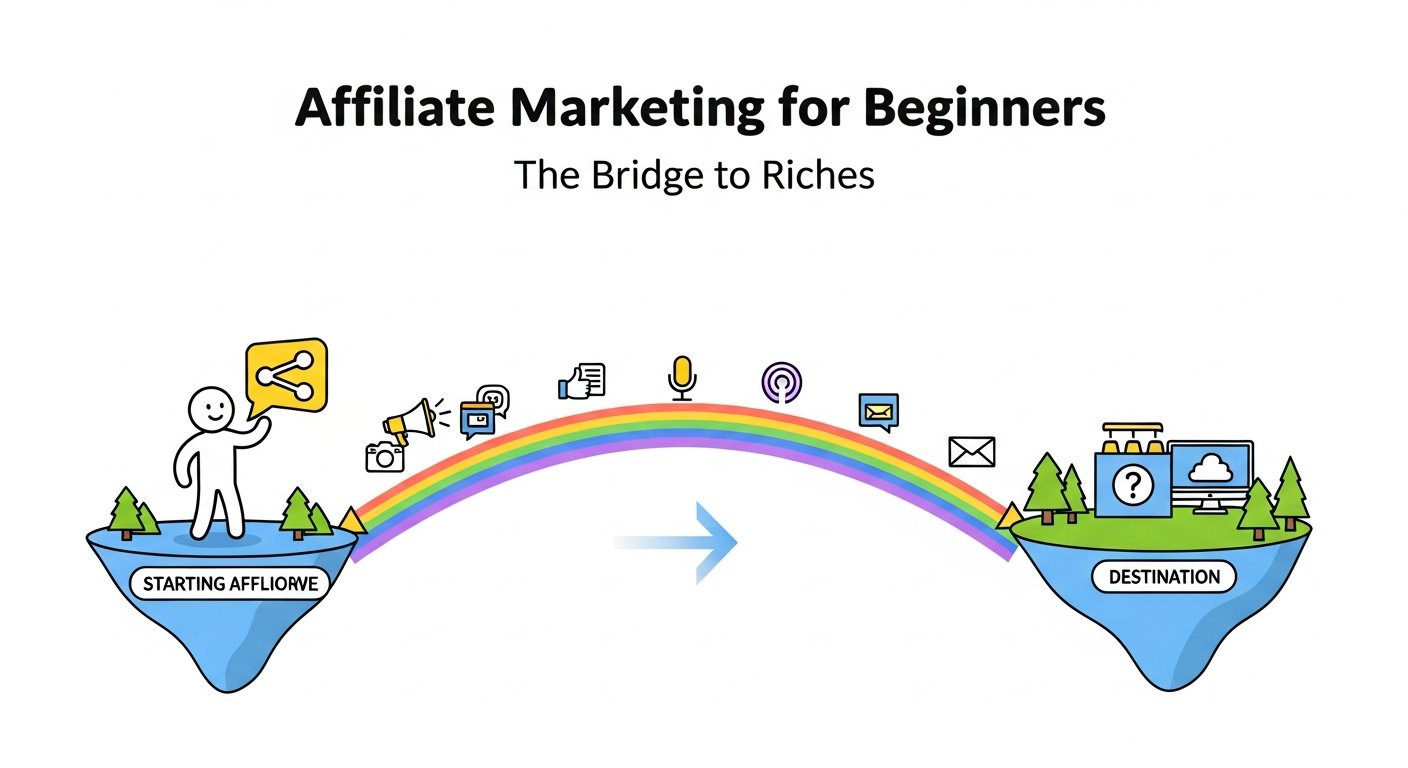
Affiliate Marketing for Beginners: Your Startup Growth Guide for 2026

In the relentless pursuit of scalable growth, startup founders often grapple with the elusive challenge of acquiring customers efficiently without burning through precious capital. Traditional advertising channels grow more saturated and expensive by the day. But what if there was a performance-based marketing channel, poised for continued expansion into 2026, that could unlock new revenue streams, diversify your customer acquisition strategy, and leverage the power of trusted recommendations? For beginners, understanding affiliate marketing is not merely about finding a side hustle, but about discovering a sophisticated, data-driven growth engine for ambitious startups.
This guide for beginners isn’t about quick wins or dubious tactics; it’s about building a robust, long-term partnership ecosystem that drives qualified leads and sustainable sales. We’ll engineer your entry into this powerful domain, focusing on the foundational knowledge and actionable steps necessary for any startup founder new to affiliate marketing.
What is Affiliate Marketing for Beginners and Why is it Crucial for Startup Founders?
Affiliate marketing, at its core, is a performance-based advertising model where a business (the merchant) rewards individuals or other businesses (the affiliates) for driving traffic or sales to the merchant’s products or services. The affiliate earns a commission for each successful conversion, tracked via unique affiliate links. It’s a symbiotic relationship: affiliates monetize their audience, and merchants expand their reach with a low-risk, high-reward model.
Demystifying the Model for Founders
Think of it as an outsourced sales force, paid purely on results. Instead of a fixed salary or retainer, affiliates are compensated when they deliver a specific action – typically a sale, but sometimes a lead, a click, or an app install. This model shifts the financial risk from your startup to the affiliate, as you only pay for proven performance. For a lean startup, this capital efficiency is invaluable.
The affiliate ecosystem is vast, encompassing:
- Content Affiliates: Bloggers, review sites, niche publications, and media companies that create valuable content around your product.
- Influencers: Social media personalities, YouTubers, podcasters who recommend your offerings to their engaged followers.
- Email Marketers: Businesses with established subscriber lists who promote relevant products.
- Coupon/Deal Sites: Platforms focused on discounts and promotions.
- Comparison Sites: Aggregators that list and compare products or services, often in the SaaS or finance sectors.
The Strategic Imperative for Startups: Low CPA, Scalability, Diversification
In a landscape where Customer Acquisition Cost (CAC) can quickly spiral out of control, affiliate marketing offers a compelling alternative. By 2026, the global affiliate marketing industry is projected to exceed $17 billion[1], a testament to its enduring effectiveness and adaptability. For startups, this translates to several critical advantages:
- Lower Customer Acquisition Cost (CAC): You only pay when a sale or desired action occurs. This performance-based model means your marketing spend is directly tied to revenue, providing a predictable and often lower CAC compared to paid advertising, where ad spend is upfront and results are not guaranteed.
- Scalability and Reach: Affiliates can extend your brand’s reach into new niches and demographics you might not otherwise access. Each affiliate acts as an independent marketing channel, allowing for rapid scaling without proportional increases in your internal marketing team or budget.
- Diversified Traffic Sources: Relying too heavily on one or two marketing channels is a significant risk. Affiliate marketing diversifies your inbound traffic, making your startup more resilient to algorithm changes or platform policy shifts.
- Enhanced Brand Credibility and Trust: Recommendations from trusted affiliates, influencers, or reputable content sites often carry more weight than direct advertising. This “social proof” can significantly improve conversion rates and build stronger brand loyalty. A recent study indicated that 88% of consumers trust online reviews as much as personal recommendations[2], and affiliate content often taps into this trust.
- Efficient Use of Capital: With no upfront costs for advertising placements, affiliate marketing frees up capital that can be reinvested into product development, talent acquisition, or other critical growth initiatives.
As a founder, your focus is on sustainable growth. Affiliate marketing provides a proven framework to achieve just that, by aligning your interests with a network of motivated promoters.
How Do Beginners Strategically Select Products & Programs in Affiliate Marketing?


The success of your affiliate marketing efforts hinges on meticulous selection – both of the products or services you promote (if you’re the affiliate) and the affiliates you recruit (if you’re the merchant). For a startup founder looking to leverage affiliate marketing, this means choosing programs that genuinely resonate with your existing audience and business goals.
Alignment with Your Brand and Audience
This is non-negotiable. Don’t chase high commissions if the product or service isn’t a natural fit for your startup’s niche or customer base. Your audience trusts you for a reason. Betraying that trust by promoting irrelevant or low-quality offerings will erode your credibility faster than any commission can compensate. For example, if your startup develops a project management SaaS, promoting complementary tools like advanced analytics platforms, communication software, or virtual assistant services makes perfect sense. Promoting a weight-loss supplement, however, would be a jarring misalignment.
Actionable Step: Create an “Ideal Affiliate Product Persona.” What problems does your audience have that your own product doesn’t solve? What tools or services do they already use or express interest in? Brainstorm categories and specific products that naturally extend the value you already provide.
Vetting Affiliate Programs: What to Look For
Once you’ve identified potential products or services, scrutinize their affiliate programs with the precision of a venture capitalist evaluating a pitch:
- Commission Structure: Is it a fair percentage or flat fee? Does it offer recurring commissions for subscriptions (highly desirable for SaaS products)? Compare against industry benchmarks. SaaS often offers 20-30% recurring, while digital products might be 30-50% one-time.
- Cookie Duration: This dictates how long a potential customer can convert after clicking your link for you to still earn a commission. Longer cookie durations (e.g., 60-90 days) are generally better, as they account for longer sales cycles.
- Conversion Rates: Does the merchant’s landing page convert well? A high commission on a product that doesn’t convert is worthless. Look for merchants with strong sales funnels and clear value propositions.
- Support and Resources: Do they provide marketing materials (banners, email swipe files, product images), dedicated affiliate managers, and clear tracking dashboards? Good support signifies a serious, partner-focused program.
- Product Quality and Reputation: Crucially, only promote products you genuinely believe in. Research reviews, test the product yourself, and ensure it aligns with your standards. A bad recommendation can damage your brand more than any single commission can benefit it.
Tools for Discovery & Management
Navigating the affiliate landscape can be complex. Utilize these platforms to discover and manage programs:
- Affiliate Networks: These platforms act as intermediaries, connecting publishers (affiliates) with merchants.
- ShareASale: Excellent for a wide range of products, including many digital and physical goods. Strong analytics.
- CJ Affiliate (formerly Commission Junction): Home to thousands of major brands and a robust tracking system.
- Impact.com: A comprehensive partnership management platform, increasingly popular for SaaS and larger enterprises, offering sophisticated tracking and management.
- PartnerStack: Specifically designed for SaaS companies, making it ideal for tech startups looking to promote or find software products.
- Digistore24: Popular for digital products, courses, and software, often offering high commissions.
- Direct Affiliate Programs: Many companies (especially larger SaaS players) run their own in-house affiliate programs. Check their websites directly (e.g., “Company Name + affiliate program”).
- Google Search: A simple “niche + affiliate programs” or “product name + affiliate” can yield results.
Example: Imagine your startup, “GrowthMetrics,” offers an AI-powered analytics dashboard for e-commerce. You could partner with affiliate programs for Shopify app developers (e.g., specific inventory management tools or email marketing platforms integrated with Shopify), e-commerce course creators, or even web hosting providers known for high-performance e-commerce sites. Tools like PartnerStack would be ideal for discovering relevant SaaS partners, while ShareASale might connect you with some digital product creators.
How Can Beginners Craft High-Converting Content for Affiliate Marketing?

This is where many beginners falter. Affiliate marketing isn’t about slapping links on content; it’s about creating genuine value that naturally leads to a recommendation. Your content should educate, solve problems, and build trust, with the affiliate offer presented as a natural, helpful solution, not an overt sales pitch.
Understanding Your Audience’s Pain Points
Before you write a single word, immerse yourself in your audience’s challenges. What keeps them up at night? What solutions are they actively searching for? Use tools like Ahrefs, SEMrush, and AnswerThePublic to uncover common questions, popular keywords, and content gaps related to your niche and the products you wish to promote. This research will form the bedrock of your content strategy, ensuring you address genuine needs.
Actionable Step: Conduct thorough keyword research. Look for “buyer intent keywords” such as “best [product category] for [niche],” “[product A] vs [product B],” “[product] review,” or “how to [solve problem] with [tool].” These indicate someone is actively seeking a solution and is close to making a purchase decision.
Content Formats That Drive Action
Different content formats excel at different stages of the buyer journey:
- In-Depth Reviews: Provide honest, balanced reviews. Don’t just list features; discuss benefits, ideal use cases, pros, cons, and who the product is best suited for. Include personal experience, screenshots, and even video demonstrations. This builds immense trust.
- Tutorials/How-To Guides: Show your audience how to achieve a specific outcome using the affiliate product. For instance, “How to Set Up Your First Email Campaign with ConvertKit” (an email marketing tool). This demonstrates value and expertise.
- Comparison Posts: Help your audience make informed decisions by comparing two or more similar products. “ActiveCampaign vs. HubSpot: Which CRM is Right for Your Startup?” Highlight key differentiators and help users choose based on their specific needs.
- Resource Lists/Roundups: Curate a list of “The 10 Best Productivity Tools for Founders” or “Essential SaaS Tools for Remote Teams.” Position affiliate products as part of a comprehensive solution.
- Case Studies/Success Stories: Illustrate how a specific product helped you or someone else achieve a tangible result. Quantifiable results are powerful motivators.
SEO & Content Distribution Strategies
Even the best content won’t convert if no one sees it. Your distribution strategy is critical:
- Search Engine Optimization (SEO): Optimize your content for relevant keywords identified during your research. Focus on on-page SEO (meta titles, descriptions, heading structure, internal linking), technical SEO (site speed, mobile-friendliness), and off-page SEO (building high-quality backlinks). Tools like Surfer SEO and Frase.io can help you optimize content for search intent and topic coverage.
- Email Marketing: Build an email list and nurture subscribers with valuable content. Periodically, introduce affiliate recommendations that genuinely solve problems for your audience. Email is a high-conversion channel for affiliate offers.
- Social Media Promotion: Share your content across relevant social platforms. Don’t just drop links; share insights, snippets, or teasers that drive traffic back to your in-depth reviews or guides.
- Community Engagement: Participate in relevant online forums, Slack communities, or LinkedIn groups. Share your expertise and, where appropriate and allowed, link to your valuable content that happens to contain affiliate offers.
The Art of the Call-to-Action (CTAs)
Your CTAs should be clear, compelling, and strategically placed. They should guide the user towards the next logical step without being overly pushy. Instead of “Buy Now,” consider phrases like:
- “Learn more about [Product Name] and start your free trial.”
- “Explore [Product Name]’s features and see if it’s right for you.”
- “Get [exclusive discount/bonus] when you sign up for [Product Name] today.”
- “Read our full review of [Product Name] and decide for yourself.”
Use buttons, bold text, and visual cues to make your CTAs stand out. Place them naturally within the content, not just at the end.
Example: A startup offering a lead generation tool for B2B sales might create a blog post titled “Top 5 CRM Systems for Small Businesses in 2026.” Within this post, they’d provide detailed reviews of various CRMs (e.g., HubSpot Sales Hub, Salesforce Essentials, Zoho CRM), including their pros and cons. Each review would conclude with a clear CTA like “Start Your Free Trial of HubSpot Sales Hub” linking to their affiliate tracking URL. This content provides immense value, naturally integrating the affiliate offers.
How Do Beginners Track, Analyze, and Optimize Affiliate Marketing Performance?

Affiliate marketing is a numbers game. Without robust tracking and a commitment to data-driven optimization, you’re flying blind. As a founder, you know that what gets measured, gets managed. This principle is paramount in affiliate marketing.
Setting Up Your Tracking Infrastructure
Your ability to track clicks, conversions, and commissions accurately is foundational:
- Affiliate Platform Dashboards: Your primary source of truth. Networks like ShareASale, CJ Affiliate, Impact.com, and PartnerStack provide comprehensive dashboards showing clicks, sales, commissions earned, and payout statuses. Familiarize yourself with these.
- Google Analytics 4 (GA4): Essential for understanding user behavior on your own site before they click an affiliate link.
- UTM Parameters: Always use UTM parameters on your affiliate links when placing them on your own website. This allows you to track the source, medium, and campaign of the click within GA4. For example, https://affiliatelink.com/?utm_source=yourwebsite&utm_medium=blogpost&utm_campaign=productreview. This tells you which specific piece of content drove the click.
- Event Tracking: Set up GA4 events to track affiliate link clicks. This gives you a clear picture of user engagement with your affiliate offers.
- Custom Tracking (Optional, for advanced users): For very high-volume affiliates or those running paid traffic, server-to-server (S2S) tracking or pixel tracking can provide more granular data and reduce discrepancies, but this is typically managed by the affiliate network or merchant.
Key Performance Indicators (KPIs) to Monitor
Focus on these metrics to gauge performance and identify areas for improvement:
- Click-Through Rate (CTR): The percentage of people who see your affiliate link/CTA and click it. A low CTR might indicate poor placement, unconvincing copy, or irrelevant offers.
- Conversion Rate (CR): The percentage of clicks that result in a sale or desired action on the merchant’s site. This is a critical indicator of the offer’s effectiveness and the merchant’s landing page quality.
- Earnings Per Click (EPC): The average amount you earn for every click on your affiliate link. This is a powerful metric for comparing the profitability of different programs and content pieces. (Total Earnings / Total Clicks).
- Return on Investment (ROI): If you’re investing time or money (e.g., in content creation, paid ads to promote content) into your affiliate efforts, track your ROI. (Net Profit / Cost of Investment) * 100.
- Average Order Value (AOV) / Commission Per Sale: Understand the average revenue you generate per successful conversion.
A/B Testing and Iterative Improvement
The beauty of digital marketing is the ability to test and refine. Don’t set it and forget it.
- A/B Test CTAs: Experiment with different button colors, text, and placement. Does “Get Started Free” outperform “Learn More”?
- Content Variations: Test different introductions, headlines, and even entire content formats. Does a video review convert better than a written one?
- Offer Optimization: If a merchant provides different offers (e.g., a 10% discount vs. a free trial), test which one resonates most with your audience.
- Landing Page Analysis: While you can’t directly control the merchant’s landing page, if your CR is consistently low for a particular program, it might indicate issues on their end. Communicate this feedback to the affiliate manager or consider promoting an alternative product.
Actionable Step: Dedicate specific time each week or month to review your affiliate performance dashboards and GA4 data. Look for underperforming content, high-performing offers, and trends. Use these insights to inform your next content pieces or optimization experiments. For instance, if your GA4 data shows that visitors from a specific blog post spend a lot of time on the page but rarely click your affiliate link, you might need to improve the CTA, make the offer more prominent, or better integrate the recommendation into the content flow.
What Are the Legal & Ethical Considerations for Beginners in Affiliate Marketing?

As a startup founder, your reputation is your most valuable asset. Engaging in affiliate marketing responsibly is not just an ethical imperative but a legal requirement. Transparency builds trust, and trust is the foundation of long-term success.
Disclosure Best Practices: FTC Guidelines and Beyond
The Federal Trade Commission (FTC) in the U.S. (and similar regulatory bodies globally) mandates clear and conspicuous disclosure of any material connection between an endorser (you, the affiliate) and an advertiser (the merchant). This means you must inform your audience that you may earn a commission if they purchase through your links.
- Prominent Placement: Your disclosure should be easy to see and understand. Don’t bury it in your privacy policy or at the very bottom of a long page. Place it at the beginning of content that contains affiliate links, near the affiliate link itself, or in a prominent sidebar.
- Clear Language: Use straightforward language. Examples: “This post contains affiliate links, meaning I may earn a commission if you make a purchase through my links, at no extra cost to you.” or “As an affiliate, I earn from qualifying purchases.”
- Consistent Disclosure: Disclose on every piece of content (blog posts, videos, social media posts, email newsletters) where affiliate links are used.
- No Misleading Claims: Never make false or unsubstantiated claims about a product or service, even if the merchant provides them. Always verify information.
Actionable Step: Create a standardized disclosure statement that you can easily integrate into all your content. Ensure it’s visually distinct and present before your audience encounters any affiliate links.
Building Long-Term Trust
Beyond legal compliance, true success in affiliate marketing comes from genuine advocacy. Only promote products you genuinely believe in and would recommend to a friend or colleague. Your audience is savvy; they can discern authenticity from a pure cash grab.
- Honesty and Transparency: Be honest about the pros and cons of a product. A balanced review is more credible than an overly positive, biased one.
- Provide Value First: Always prioritize helping your audience solve a problem or gain knowledge. The affiliate offer should be a natural extension of that value.
- Respond to Feedback: If your audience has questions or concerns about a product you’ve recommended, address them openly and honestly.
Avoiding Pitfalls: Spam, Misleading Claims, and Over-Promotion
- Avoid Spamming: Don’t flood your audience with affiliate links. Integrate them thoughtfully and sparingly.
- Quality Over Quantity: It’s better to promote a few high-quality, relevant products effectively than dozens of irrelevant ones poorly.
- Understand Merchant Terms: Always read the terms and conditions of each affiliate program. Some prohibit certain promotional methods (e.g., bidding on branded keywords, email spam). Violating these terms can lead to your commissions being revoked and your account being terminated.
Your journey into affiliate marketing as a founder is a strategic one. By adhering to ethical guidelines, you not only protect your startup from legal repercussions but also cultivate a loyal audience that trusts your recommendations, leading to sustainable, long-term growth.
Frequently Asked Questions About Affiliate Marketing for Startups in 2026
Q1: How much capital do I need to start affiliate marketing as a startup?
A1: One of the biggest advantages of affiliate marketing is its low barrier to entry. You can start with virtually no direct capital investment, leveraging existing assets like your blog, email list, or social media channels. Your primary investment will be time – in research, content creation, and optimization. If you choose to accelerate growth, you might invest in content creation tools (e.g., Ahrefs, SEMrush for keyword research), a professional website, or even paid advertising to promote your affiliate content, but these are optional for getting started.
Q2: How long does it typically take to see results from affiliate marketing?
A2: Affiliate marketing is not a get-rich-quick scheme. It typically takes 3-6 months to start seeing consistent, meaningful results, and often 12-18 months to build a substantial passive income stream. This timeline depends heavily on your content strategy, SEO efforts, audience size, and consistency. Building authority and trust takes time, but the compounding effect over years can be significant.
Q3: Can I successfully do affiliate marketing if my startup has a small audience?
A3: Absolutely. While a large audience helps, a highly engaged, niche audience is often more valuable. Focus on serving your specific niche deeply rather than broadly. Even with a small, dedicated following, if you provide immense value and recommend highly relevant, quality products, your conversion rates can be exceptionally high. The key is relevance and trust, not just raw numbers.
Q4: What’s the biggest mistake beginners make in affiliate marketing?
A4: The biggest mistake is prioritizing commissions over value and trust. Many beginners focus solely on promoting products with the highest payout, regardless of their relevance or quality, leading to a loss of audience trust. Another common error is treating affiliate marketing as a “set it and forget it” passive income stream, failing to continuously optimize, track performance, and adapt to audience feedback or market changes.
Q5: Is affiliate marketing still relevant and growing in 2026?
A5: Yes, absolutely. Affiliate marketing continues to evolve and thrive. With the increasing sophistication of tracking technologies, the rise of influencer marketing, and the ongoing demand for authentic recommendations, its relevance is stronger than ever. It’s a performance-based model perfectly aligned with the data-driven demands of modern digital marketing, projected to continue its growth trajectory well into 2026 and beyond.
Conclusion: Your Next Strategic Growth Lever for Beginners
For startup founders operating in 2026, affiliate marketing isn’t a peripheral tactic; it’s a strategic imperative. It offers a powerful, cost-effective avenue for customer acquisition, brand building, and revenue diversification. By understanding its mechanics, meticulously selecting programs, crafting value-driven content, and leveraging data for continuous optimization, you can transform this channel into a formidable growth lever for your startup.
Embrace transparency, prioritize your audience’s trust, and commit to the iterative process of learning and refinement. The affiliate landscape is rich with opportunity, waiting for founders like you to harness its potential. Start small, experiment, learn from your data, and scale your efforts. The future of your startup’s growth might just be powerfully amplified by the strategic partnerships you forge in the world of affiliate marketing.