The CRO Imperative for Startups: Your 2026 Guide to Unlocking Exponential Growth
Deconstructing Conversion: What Are You Optimizing For?
Before you can optimize, you must define what “conversion” means for your specific startup. It’s rarely just about a sale. For many early-stage ventures, micro-conversions are equally, if not more, critical for building momentum and validating product-market fit. Think like a scientist: every user interaction is a data point, and every step in their journey presents an opportunity to convert.
Beyond the Transaction: Micro vs. Macro Conversions
* Macro Conversions: These are your ultimate business goals. For an e-commerce startup, it’s a completed purchase. For a SaaS company, it might be a paid subscription or a demo request. For a content platform, it could be a premium content sign-up.
* Micro Conversions: These are the smaller, incremental steps users take that indicate engagement and move them closer to a macro conversion. Examples include:
* SaaS: Free trial sign-ups, feature adoption within the trial, webinar registration, downloading a whitepaper, watching a product video, clicking a “learn more” button.
* E-commerce: Adding an item to the cart, reaching the checkout page, signing up for a newsletter, creating an account, leaving a product review.
* Content/Media: Email list subscriptions, sharing an article, commenting on a post, spending a certain amount of time on a page.
Defining Clear KPIs: Choosing What Matters for Your Business Model
Your Key Performance Indicators (KPIs) must directly align with your business objectives. Don’t drown in data; focus on the metrics that truly move the needle.
1. Understand Your User Journey: Map out the typical path a user takes from discovery to conversion. Where are the critical decision points?
2. Align with Business Goals: If your immediate goal is lead generation, focus on form submissions and demo requests. If it’s retention, focus on feature engagement and repeat purchases.
3. Establish Baselines: Before you start optimizing, know your current conversion rates for each defined goal. This provides the benchmark against which you’ll measure success.
4. Make Them SMART: Specific, Measurable, Achievable, Relevant, Time-bound. “Increase sign-ups” is vague. “Increase free trial sign-ups by 15% within Q3 2026” is actionable.
The “Aha!” Moment and Aligning CRO with Product Value
Ultimately, CRO isn’t just about clever button colors; it’s about helping users experience the core value of your product or service as quickly and smoothly as possible. Identify your product’s “Aha!” moment – that point where a user truly understands and experiences the value you offer. Your CRO efforts should be geared towards accelerating users to this moment. If your product solves a genuine problem, your conversion strategy should focus on clearly communicating that solution and removing any barriers to adoption.
The Foundation: Data-Driven Diagnostics & User Understanding
A truly effective CRO strategy is built on a bedrock of data – both quantitative (the “what”) and qualitative (the “why”). You need to understand where users are dropping off and, more importantly, why they are dropping off.
Quantitative Analysis: Where Are the Leaks?
This is where you identify the bottlenecks in your conversion funnels.
* Google Analytics 4 (GA4): This is your mission control.
* Funnel Exploration: Map out your critical user journeys (e.g., product page view -> add to cart -> checkout initiation -> purchase) and see where users drop off. GA4’s funnel exploration report is invaluable for visualizing this.
* Path Exploration: Understand the actual paths users take before converting or abandoning. This can reveal unexpected routes or common points of confusion.
* Segment Performance: Analyze conversion rates by different segments (new vs. returning users, mobile vs. desktop, specific traffic sources, demographics). This pinpoints high-value segments and those needing attention.
* Event Tracking: Ensure you’re tracking all relevant micro-conversions (button clicks, video plays, form interactions) to get a granular view of engagement.
* Heatmaps & Session Recordings: Tools like Hotjar, Microsoft Clarity, or VWO Insights provide a visual layer to your quantitative data.
* Heatmaps: Show where users click, move their mouse, and how far they scroll on a page. Are important CTAs being ignored? Is valuable content below the fold?
* Session Recordings: Watch actual user sessions to observe their behavior in real-time. Identify points of confusion, rage clicks, repeated actions, or areas where they get stuck. This is incredibly powerful for spotting UX issues that data alone can’t explain.
* Performance Metrics: User experience is inextricably linked to technical performance.
* Page Load Speed: Use Google PageSpeed Insights to identify and fix slow-loading elements. Even a one-second delay can significantly impact conversion rates (studies show a 7% drop in conversions for every one-second delay).
* Mobile Responsiveness: Ensure your site is flawlessly responsive across all devices. Google’s Mobile-Friendly Test can help, but real-world testing is crucial.
* Identifying Key Drop-off Points: Your analytics will reveal the pages or steps in your funnel with the highest abandonment rates. These are your prime targets for optimization. Is it the pricing page? The checkout form? A specific product category? Focus your efforts where the biggest impact can be made.
Qualitative Insights: Why Are Users Doing That?
Quantitative data tells you what is happening. Qualitative data tells you why. Without the “why,” your optimizations are just educated guesses.
* User Surveys:
* On-site Polls: Tools like Hotjar or Qualaroo can trigger short, targeted questions (e.g., “What nearly stopped you from signing up today?” or “What’s missing on this page?”) at critical points in the user journey (e.g., exit intent, after spending X seconds on a page).
Post-Conversion Surveys: Ask users who converted why* they chose you. This reinforces your value proposition.
* Post-Abandonment Surveys: For users who dropped off, ask what prevented them from completing their goal.
* User Interviews: Conduct one-on-one interviews with current users, recent customers, or even ideal prospects. Ask open-ended questions to uncover their motivations, pain points, expectations, and how they perceive your brand and product. These are invaluable for understanding emotional drivers and unmet needs.
* Usability Testing: Observe real users attempting to complete specific tasks on your website or app. Tools like UserTesting or Lookback allow you to record their screen, voice, and facial expressions as they navigate. This reveals friction points, confusing navigation, and areas where your design or copy fails.
* Competitive Analysis: Don’t just copy competitors, analyze them. What are they doing well in terms of user experience, copy, and conversion flows? Where are their weaknesses? Use tools like Ahrefs or SEMrush to understand their traffic, content, and ad strategies, which can inform your own CRO efforts. Look at their calls to action, their value propositions, and how they handle objections.
By combining these data sources, you move beyond assumptions and build a truly empathetic understanding of your users’ needs and behaviors. This deep insight forms the bedrock for crafting powerful, data-backed hypotheses.
Crafting Hypotheses: From Insight to Actionable Test Ideas
With a wealth of data – both quantitative and qualitative – at your fingertips, you’re ready to move from diagnosis to potential solutions. This is where the scientific method of CRO comes into play: formulate hypotheses, test them, and learn. Don’t just “try things”; every change should be an experiment designed to answer a specific question.
The Scientific Method of CRO:
1. Observe: Identify a problem or opportunity through your data analysis (e.g., “Users are dropping off at the second step of the checkout process”).
2. Hypothesize: Propose a specific solution and predict its outcome based on your insights (e.g., “If we simplify the shipping information form, then checkout completion will increase because users will perceive fewer barriers”).
3. Test: Implement the proposed change and run an experiment (e.g., an A/B test).
4. Analyze: Measure the results against your baseline and determine if your hypothesis was correct.
5. Learn & Iterate: Apply what you’ve learned. If successful, implement the change and look for the next opportunity. If unsuccessful, learn why and formulate a new hypothesis.
Structuring a Strong Hypothesis:
A well-structured hypothesis is crucial for clear testing and actionable insights. Use this framework:
“If we [make this specific change], then [this specific outcome will occur], because [this is our data-backed reason/user psychology insight].”
Examples:
* Weak: “Let’s change the button color.”
* Strong: “If we change the primary CTA button color from blue to orange on the product page, then we expect a 5% increase in ‘Add to Cart’ clicks because heatmaps show users are overlooking the current blue button which blends with the background, and orange is a high-contrast color known to attract attention.”
* Weak: “We need better headlines.”
* Strong: “If we replace the current feature-focused headline ‘Advanced Analytics Dashboard’ with a benefit-driven headline ‘Unlock Deeper Customer Insights in Minutes’ on the SaaS landing page, then we anticipate a 10% increase in free trial sign-ups because user interviews indicated a stronger desire for actionable insights over technical specifications at the top of the funnel.”
Prioritization Frameworks: Which Hypothesis First?
You’ll likely generate many hypotheses. You can’t test them all at once. Prioritization is key to focusing on experiments with the highest potential impact.
* ICE Score (Impact, Confidence, Ease):
* Impact: How big of an effect do you think this change will have if successful? (Score 1-10)
* Confidence: How sure are you that this change will actually work? (Score 1-10, based on data and qualitative insights)
* Ease: How difficult will it be to implement this test? (Score 1-10, where 10 is very easy)
Calculation:* (Impact + Confidence + Ease) / 3. Prioritize higher scores.
* PIE Framework (Potential, Importance, Ease): Similar to ICE, but emphasizes “Potential” (how much room for improvement exists in this area?) and “Importance” (how critical is this page/feature to your main conversion goals?).
By systematically generating and prioritizing hypotheses, you transform your CRO efforts from reactive tweaks into a strategic, data-driven engine for growth.
The Experimentation Engine: A/B Testing, Multivariate & Personalization
Once you have your prioritized hypotheses, it’s time to test them. This is where dedicated experimentation tools come into play, allowing you to rigorously validate your assumptions and make data-backed decisions.
A/B Testing Mastery
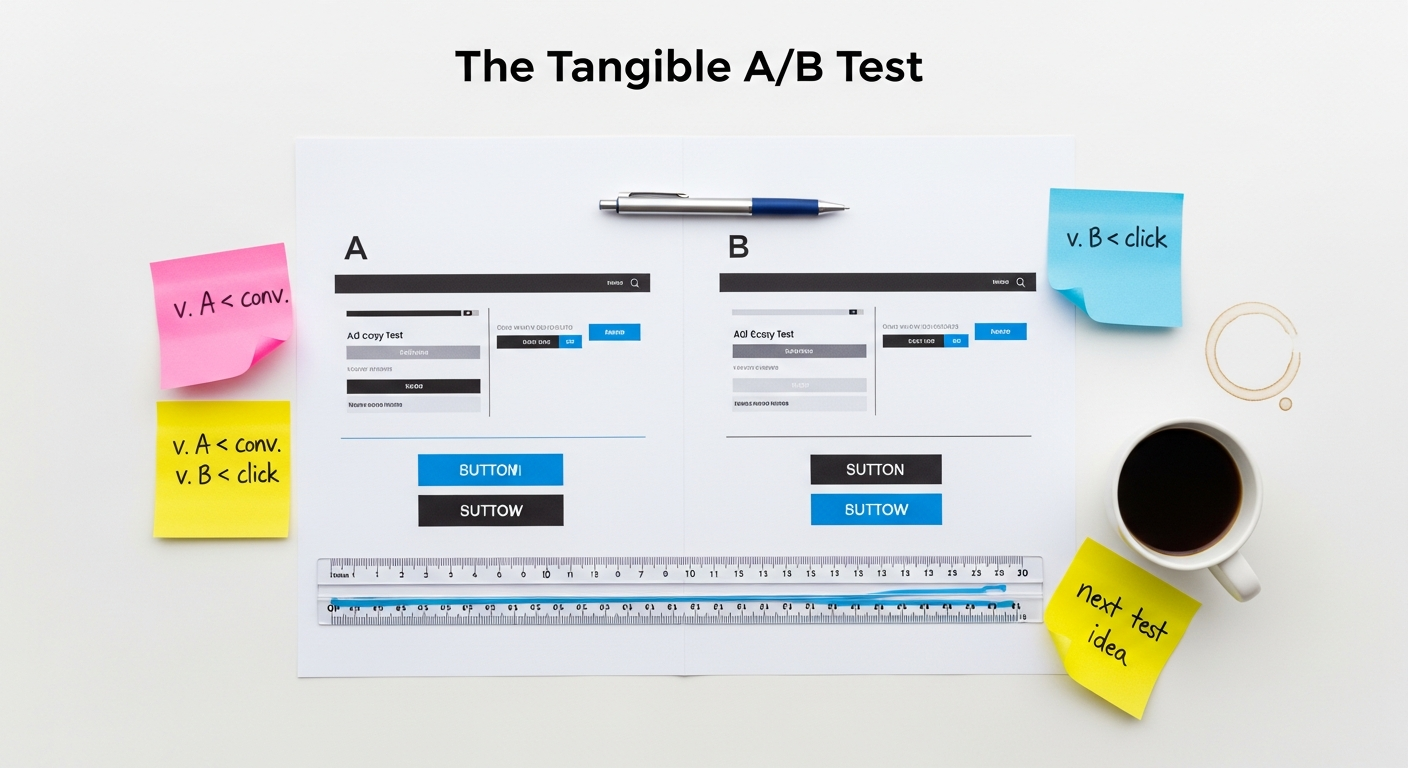
A/B testing (or split testing) is the most common and accessible form of experimentation. It involves comparing two versions of a webpage or app element (A and B) to see which one performs better against a defined conversion goal.
* Concept: You split your traffic between a control (the original version) and a variant (the modified version) to isolate the impact of a single change.
* Tools:
* Optimizely: A powerful, enterprise-grade platform offering robust A/B testing, MVT, and personalization. Excellent for complex testing needs.
* VWO (Visual Website Optimizer): Another comprehensive platform for A/B testing, MVT, heatmaps, session recordings, and surveys. User-friendly interface.
* Adobe Target: Part of Adobe Experience Cloud, offering advanced personalization and A/B/n testing capabilities for larger organizations.
* Google Optimize (Deprecated): While Google Optimize has been deprecated, its principles live on. Many of its features are being integrated into GA4, but startups will need to look at alternatives like those listed above for dedicated experimentation.
* Setting Up Tests:
1. Define Your Goal: What conversion metric are you trying to impact? (e.g., “Add to Cart” clicks, form submissions, page views).
2. Identify Your Variable: Focus on one change per test to accurately attribute results (e.g., CTA text, headline, image, form field reduction).
3. Create Variants: Design your “B” version with the proposed change.
4. Traffic Split: Typically 50/50, but can be adjusted for multiple variants (A/B/C/D).
5. Determine Duration: Run the test long enough to achieve statistical significance and account for weekly cycles. Avoid stopping too early.
* Statistical Significance: This is critical. It tells you the probability that your results are not due to random chance. Aim for at least 90-95% statistical significance. Don’t make decisions on “gut feelings” or small sample sizes. Most testing tools will calculate this for you.
* Avoiding Common Pitfalls:
* Testing too many variables at once: Makes it impossible to know what caused the change.
* Stopping tests too early: Leads to invalid results.
* Ignoring statistical significance: Leads to implementing changes that are just noise.
* Not having enough traffic: Small startups might struggle to get statistically significant results quickly. Focus on high-traffic pages and impactful changes.
Example: You hypothesize that making your “Request a Demo” button more prominent on your SaaS pricing page will increase demo requests. You set up an A/B test: Version A (control) has the current button, Version B (variant) has a larger, higher-contrast button. After running the test for two weeks and achieving 95% statistical significance, you find Version B leads to a 12% increase in demo requests. You then confidently implement Version B permanently.
Beyond A/B: Multivariate Testing (MVT) & Personalization
Multivariate Testing (MVT): While A/B tests compare two versions of one element, MVT allows you to test multiple variables simultaneously to see how different combinations perform. For example, testing different headlines and different hero images and* different CTA texts all at once. MVT requires significantly more traffic and time to achieve statistical significance due to the exponential number of combinations. It’s best reserved for high-traffic pages where you suspect multiple elements are interacting.
* Personalization: This takes experimentation a step further by dynamically serving content, offers, or experiences based on specific user segments.
* Dynamic Content: Showing different hero images to users from different industries, or displaying unique product recommendations based on past browsing history.
* Targeted Messaging: Tailoring headlines or CTAs based on referral source (e.g., “Welcome Product Hunt user!” for traffic from Product Hunt).
* Tools: Optimizely Web Personalization, VWO Engage, and even some email marketing platforms offer personalization features.
Personalization allows you to create highly relevant experiences, which can significantly boost conversion rates by making users feel understood and catered to. However, it requires a robust understanding of your audience segments and their specific needs.
Optimizing the Core Conversion Pathways
Conversion optimization isn’t just about micro-changes; it’s about systematically improving the critical touchpoints in your user’s journey. Let’s look at key areas.
Landing Page Optimization (LPO)
Your landing pages are often the first dedicated interaction point for potential customers. They must be ruthlessly optimized for a single goal.
* Clear Value Proposition: What problem do you solve? How do you make your user’s life better? State this clearly and concisely above the fold.
* Compelling Headline: Grab attention immediately. It should resonate with the ad or link that brought them there.
* Strong, Singular Call to Action (CTA): One primary goal per landing page. Make the CTA prominent, action-oriented, and benefit-driven (e.g., “Start Your Free Trial,” “Get My Personalized Quote,” “Download the Guide”).
* Trust Signals: Social proof (testimonials, reviews, client logos), security badges, privacy policy links. Build confidence.
* Minimal Distractions: Remove extraneous navigation, unnecessary links, or anything that diverts attention from the primary CTA.
* Mobile-First Design: Ensure your landing pages load quickly and are perfectly usable on smartphones and tablets.
* Concise Copy: Get to the point. Use bullet points, short paragraphs, and clear language. Highlight benefits, not just features.
Example: A SaaS startup’s landing page for a new AI writing tool. Instead of a vague headline like “Our AI Tool,” it uses “Generate High-Converting Copy in Seconds.” The CTA is “Start Writing Now,” and the page features testimonials from early users, a clear explanation of how it saves time, and a video demo.
Website & E-commerce Funnel Optimization
For businesses with more complex user journeys, optimizing the entire funnel is crucial.
* Navigation Clarity: Is it intuitive? Can users find what they’re looking for quickly? Use descriptive labels.
* Search Functionality: For e-commerce, a robust and fast search is non-negotiable. Offer filters and auto-suggestions.
* Product Page Optimization (E-commerce):
* High-Quality Images/Videos: Show the product from multiple angles, in use.
* Detailed Descriptions: Answer all potential questions, highlight benefits.
* Social Proof: Customer reviews, ratings, user-generated content.
* Clear Pricing & Shipping Info: No hidden costs.
* Prominent “Add to Cart” Button: Make it stand out.
* Simplified Checkout Process: This is a major conversion killer if poorly executed.
* Guest Checkout Option: Don’t force account creation.
* Progress Indicator: Show users how many steps are left.
* Fewer Form Fields: Only ask for essential information. Auto-fill where possible.
* Clear Error Messages: Guide users to correct mistakes.
* Multiple Payment Options: Offer popular choices.
* Trust Seals: Reassure users about security.
Example: An e-commerce store reduces its checkout from 5 steps to 3 by combining shipping and billing information onto one page and offering a guest checkout option. This simple change, backed by A/B testing, resulted in an 8% increase in completed purchases.
Mobile CRO
In 2026, mobile-first isn’t a trend; it’s the default.
* Speed: Mobile users are even less patient. Optimize images, leverage caching, and minimize code.
* Touch Targets: Ensure buttons and links are large enough and spaced appropriately for finger taps.
* Keyboard-Friendly Forms: Use appropriate input types (e.g., `type=”email”`, `type=”tel”`) to bring up the correct keyboard.
* Simplified Navigation: Hamburger menus are common, but ensure main navigation items are still easily accessible.
* No Pop-ups that Obscure Content: Google penalizes intrusive interstitials on mobile.
Copy & UX Writing
The words you use are just as important as the design.
* Clarity & Conciseness: Remove jargon. Get straight to the point.
* Empathy: Understand your user’s pain points and speak directly to them. Use “you” more than “we.”
* Microcopy: The small bits of text (button labels, error messages, form field hints) can have a huge impact. Make them helpful and reassuring.
* Benefit-Driven Language: Focus on what the user gains, not just what your product does.
Optimizing these core pathways ensures that every step a user takes is as smooth, clear, and persuasive as possible, guiding them efficiently towards your desired conversion goals.
Building a Sustainable CRO Culture for 2026 and Beyond
CRO is not a one-time project; it’s an ongoing, iterative process. For a startup, embedding CRO into your operational DNA is critical for long-term, scalable growth.
Iteration and Continuous Improvement
The digital landscape is constantly evolving, as are user expectations and behaviors. What worked last year might not work today. Your CRO efforts must be continuous:
* Never Stop Testing: Every successful test reveals a new opportunity for improvement. Every failed test provides valuable lessons.
* Regularly Review Data: Schedule weekly or monthly deep dives into your analytics to identify new trends, drop-off points, or changes in user behavior.
* Stay Agile: Be prepared to pivot your optimization priorities based on new data or market shifts.
Cross-functional Collaboration
CRO is not solely the domain of a marketing team. It requires input and buy-in from various departments:
* Marketing: Responsible for traffic acquisition, initial messaging, and understanding user segments.
* Product: Crucial for understanding the core value proposition, user needs, and implementing product-level changes.
* Design/UX: Ensures aesthetic appeal, usability, and intuitive user flows.
* Engineering: Essential for technical implementation of tests, ensuring site performance, and integrating tools.
* Sales/Customer Support: Provide invaluable qualitative insights into common customer questions, objections, and pain points.
Foster a culture where everyone understands the importance of conversion and contributes to identifying friction points and proposing solutions. Regular syncs and shared reporting dashboards can facilitate this.
Documenting Learnings
Every test, whether successful or not, is a learning opportunity.
* Build a Knowledge Base: Create a centralized repository (e.g., Notion, Confluence, internal wiki) for all your CRO experiments.
* Record: Hypothesis, methodology, start/end dates, traffic allocation, results (quantitative and qualitative), statistical significance, and key takeaways.
* Share Insights: Regularly share these learnings across teams. This prevents repeating mistakes and builds institutional knowledge, accelerating future optimization efforts.
Staying Ahead: AI in CRO, Predictive Analytics & Ethical Considerations
The future of CRO in 2026 is increasingly intertwined with advanced technologies:
* AI in CRO: AI and machine learning are revolutionizing how we identify optimization opportunities, personalize experiences, and even automate testing.
* Automated Anomaly Detection: AI can quickly flag unusual drops or spikes in conversion rates.
* Predictive Analytics: AI can predict which user segments are most likely to convert, allowing for hyper-targeted personalization.
* Dynamic Content Optimization: AI can automatically test and serve the most effective content variations to different users in real-time.
* Tools: Platforms like Optimizely and VWO are increasingly integrating AI-powered features for smarter segmentation and automated insights.
* Ethical Considerations: As personalization becomes more sophisticated, it’s crucial to maintain user trust.
* Transparency: Be clear about data usage.
* Privacy: Adhere strictly to data privacy regulations (GDPR, CCPA, etc.).
* Avoid Creepiness: Personalization should feel helpful, not intrusive. There’s a fine line between relevant and unsettling.
By embracing a culture of continuous learning, cross-functional collaboration, and leveraging emerging technologies responsibly, your startup can build a resilient and highly effective CRO engine that consistently drives growth well beyond 2026.
