Why Digital Transformation Is Essential for Small Business Survival
In the rapidly accelerating business environment of 2026, the notion of digital transformation has moved from a strategic advantage to a fundamental necessity for small businesses. The market is more interconnected, more demanding, and more data-driven than ever before. Those who fail to adapt risk not just stagnation, but obsolescence.
The Evolving Market Landscape and Customer Expectations
Customers today are digital natives, or at least digitally fluent. They expect seamless, personalized experiences across multiple channels, instant gratification, and proactive communication. A small business in 2026 that relies on outdated manual processes or disconnected systems will struggle to meet these elevated expectations. Digital transformation enables businesses to:
- Deliver Hyper-Personalization: By leveraging data, businesses can tailor marketing messages, product recommendations, and customer service interactions to individual preferences, fostering stronger loyalty.
- Ensure Omnichannel Presence: Customers might interact with your brand via social media, email, website, or even chatbots. A unified digital strategy ensures a consistent, high-quality experience across all touchpoints.
- Provide Instant Gratification: From automated order confirmations to self-service portals, digital tools reduce friction and provide immediate responses, critical for modern consumer satisfaction.
Competitive Pressure and Operational Efficiency
The playing field is increasingly level. Small businesses can now access powerful tools that were once exclusive to large enterprises. This democratization of technology means that your competitors, both large and small, are likely already on their digital transformation journey. To remain competitive, small businesses must:
- Optimize Operations: Digital tools automate repetitive tasks, reduce human error, and streamline workflows, leading to significant cost savings and improved productivity. This is where AI Tools for Business Automation become invaluable, transforming everything from inventory management to customer support.
- Gain Data-Driven Insights: Digital systems generate vast amounts of data. Transforming this raw data into actionable insights allows for more informed decision-making, from identifying market trends to optimizing pricing strategies.
- Enhance Agility: The ability to quickly adapt to market changes, launch new products, or pivot business models is crucial. Digital infrastructure provides the flexibility needed to respond rapidly to emerging opportunities or threats.
Ultimately, digital transformation for small businesses in 2026 isn’t a luxury; it’s the strategic backbone for survival and sustained growth. It empowers businesses to not only meet but exceed customer expectations, operate with unparalleled efficiency, and secure a resilient position in a fiercely competitive market.
Laying the Foundation: Strategic Planning and Mindset Shifts
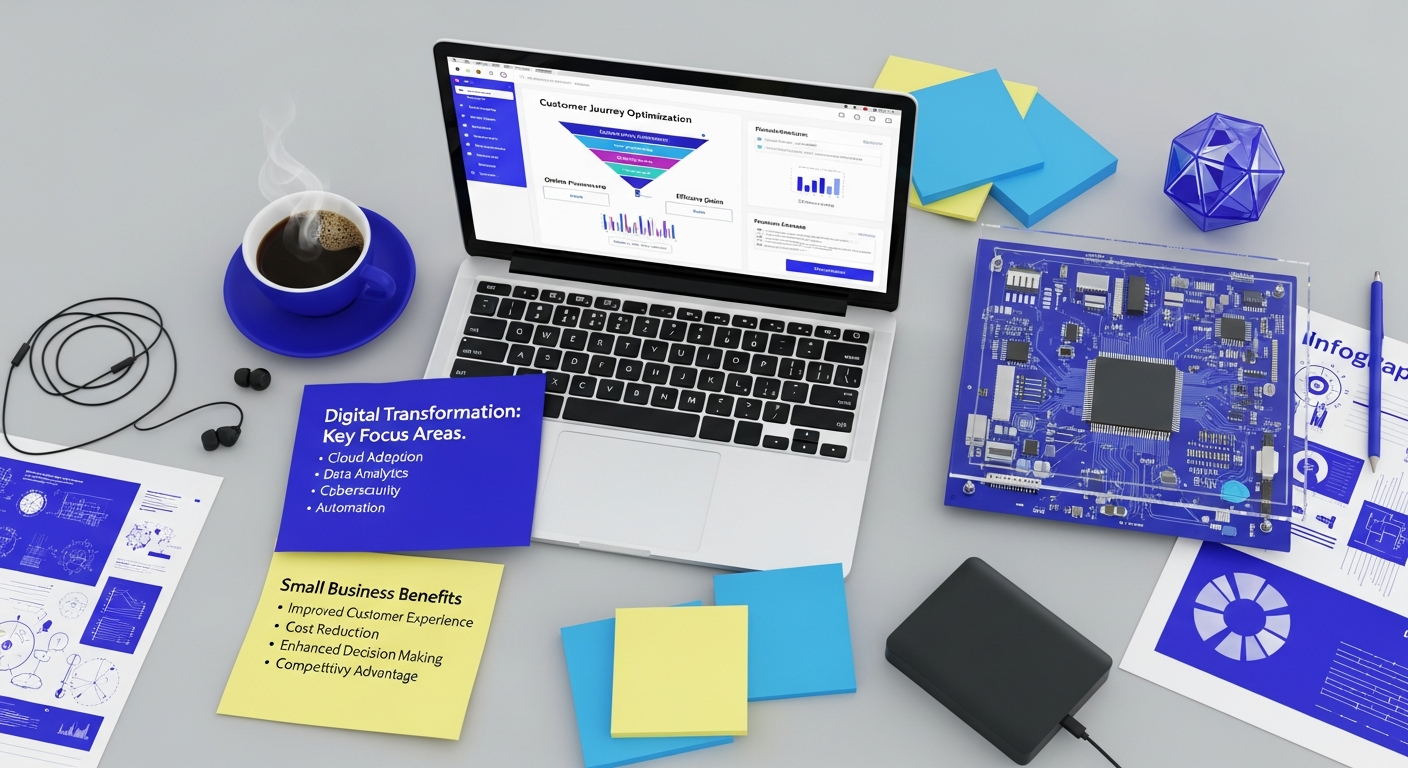
Embarking on a digital transformation journey without a clear strategy is akin to sailing without a compass. For small businesses in 2026, the initial phase must focus on meticulous planning and, perhaps more critically, a fundamental shift in mindset. Technology alone won’t deliver results; it’s the strategic application and cultural adoption that drive success.
Assessing Current State and Identifying Pain Points
Before implementing any new solution, a thorough audit of existing processes and technologies is essential. This involves:
- Mapping Current Workflows: Document every key business process, from sales and marketing to HR and customer service. Identify bottlenecks, redundancies, and areas heavily reliant on manual effort.
- Evaluating Existing Technology Stack: What software are you currently using? Is it integrated? Is it scalable? Are there legacy systems holding you back?
- Gathering Stakeholder Feedback: Talk to employees at all levels. They are on the front lines and can provide invaluable insights into inefficiencies and areas ripe for improvement. Understand their daily challenges and what digital tools could genuinely empower them.
- Analyzing Customer Journey: Put yourself in your customers’ shoes. Where do they experience friction? What could make their interactions with your business smoother and more satisfying?
This assessment helps pinpoint specific pain points that digital solutions can address, ensuring that transformation efforts are targeted and impactful.
Defining Clear Objectives and Key Performance Indicators (KPIs)
Once pain points are identified, translate them into clear, measurable objectives. What do you hope to achieve with digital transformation? Examples might include:
- Increase customer retention by X% within 12 months.
- Reduce operational costs by Y% through automation.
- Improve employee productivity by Z% by streamlining internal communication.
- Accelerate product launch cycles by W%.
Each objective should be accompanied by specific KPIs that will track progress. Without these metrics, it’s impossible to gauge the success of your initiatives and make necessary adjustments.
Cultivating a Digital-First Culture and Leadership Buy-In
Perhaps the most challenging aspect of digital transformation is the cultural shift. Small businesses often benefit from closer-knit teams, but this can also mean greater resistance to change. A digital-first culture means:
- Embracing Experimentation: Encourage employees to test new tools and ideas, fostering an environment where failure is seen as a learning opportunity.
- Promoting Continuous Learning: Invest in training and upskilling opportunities for your team. The digital landscape is constantly changing, and your team needs to evolve with it.
- Encouraging Cross-Functional Collaboration: Digital tools often break down departmental silos. Encourage teams to work together more effectively using shared platforms and data.
- Leadership by Example: Senior leadership must champion the digital transformation. When leaders actively use new tools and advocate for their benefits, it encourages widespread adoption.
Without strong leadership buy-in and a proactive effort to engage and educate employees, even the most cutting-edge technology will fail to deliver its full potential. For small businesses in 2026, a strategic, people-centric approach to planning is the bedrock upon which successful digital transformation is built.
Embracing Automation with AI Tools for Business Automation
The Transformative Role of AI in Small Business Operations
AI’s power lies in its ability to analyze vast datasets, identify patterns, make predictions, and execute tasks with speed and accuracy far beyond human capabilities. For small businesses, this translates into tangible benefits across virtually every department:
- Customer Relationship Management (CRM) Automation: AI-powered CRMs can automate lead scoring, assign leads to sales reps based on probability of conversion, and even suggest optimal times for follow-ups. This ensures sales teams focus on high-potential prospects and nurtures customer relationships more effectively.
- Marketing Automation: AI algorithms can personalize email campaigns, optimize ad spend by identifying the most effective channels and audiences, and even generate basic marketing copy. This allows small marketing teams to achieve reach and precision typically associated with larger enterprises.
- Customer Service Chatbots and Virtual Assistants: Deploying AI-driven chatbots on websites and social media can handle a significant volume of routine customer inquiries 24/7. This frees human agents to focus on complex issues, dramatically improving response times and customer satisfaction. Advanced AI can even analyze customer sentiment and route calls appropriately.
- Data Analysis and Business Intelligence: AI tools can sift through sales data, website traffic, and customer feedback to uncover trends, predict future demand, and identify opportunities for optimization that human analysts might miss. This provides small businesses with powerful insights for strategic decision-making.
- Back-Office Automation: AI can automate tasks like invoice processing, expense categorization, inventory management, and even basic HR functions like screening résumés. This reduces administrative burden, minimizes errors, and allows employees to focus on more strategic, value-added activities.
Practical Steps for Implementing AI Automation
Implementing AI doesn’t have to be an intimidating or expensive endeavor. Small businesses can take a phased approach:
- Identify High-Impact, Repetitive Tasks: Start by pinpointing areas where employees spend significant time on monotonous, rule-based tasks. These are prime candidates for AI automation.
- Research Accessible AI Solutions: Many AI tools are now available as user-friendly SaaS vs On-Premise Software solutions, often with freemium models or affordable subscription tiers. Look for platforms designed specifically for SMBs that offer easy integration and minimal setup.
- Pilot Small Projects: Begin with a pilot project in a single department or for a specific task. This allows your team to gain experience, understand the tool’s capabilities, and demonstrate quick wins before scaling up.
- Train Your Team: Provide adequate training to employees who will interact with or manage the AI tools. Emphasize how AI will augment their roles, not replace them, freeing them for more creative and strategic work.
- Monitor and Optimize: AI is not a set-it-and-forget-it solution. Continuously monitor its performance, gather feedback, and fine-tune its parameters to ensure it’s delivering maximum value and adapting to evolving business needs.
By strategically integrating AI Tools for Business Automation, small businesses in 2026 can achieve unprecedented levels of efficiency, responsiveness, and insight, allowing them to compete more effectively and drive significant growth.
Empowering Innovation: The Rise of No-Code Development
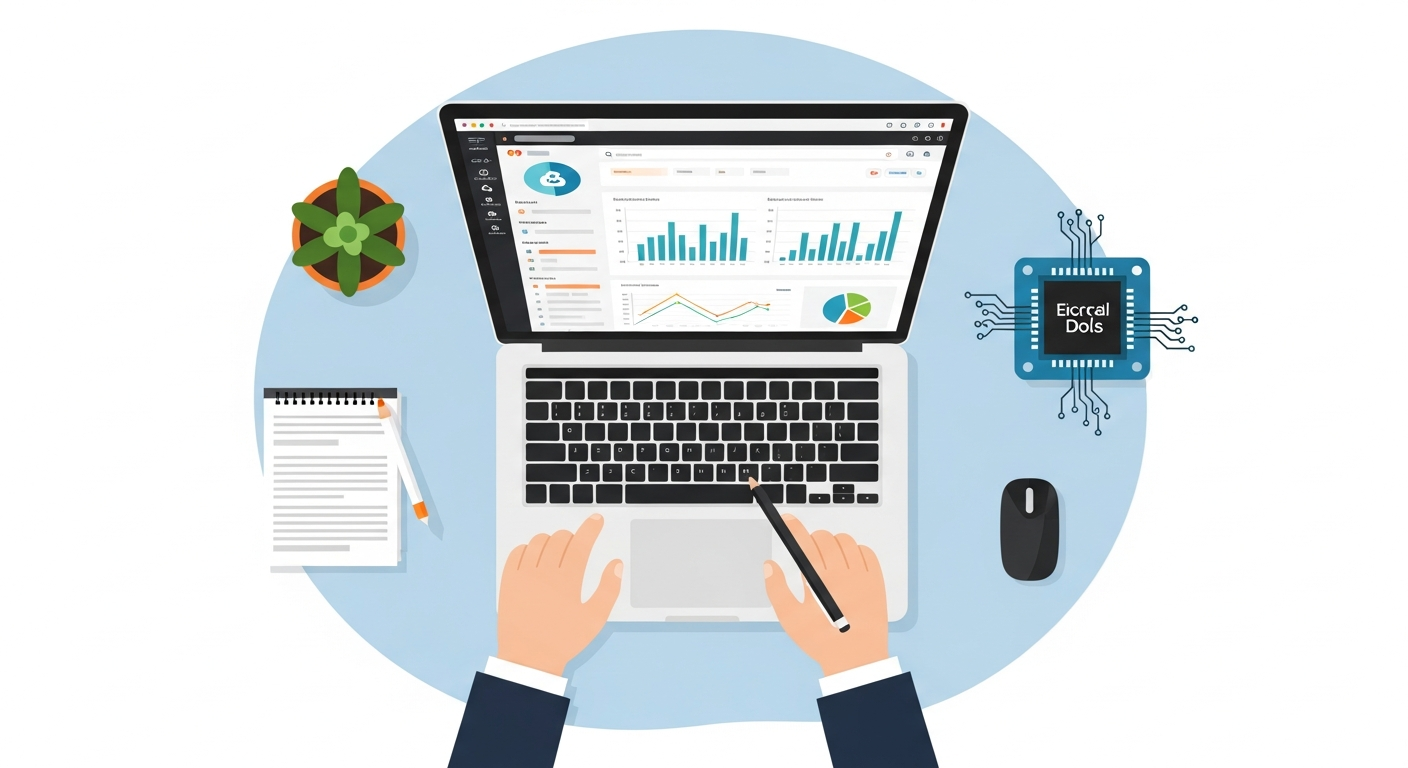
The digital transformation journey for small businesses in 2026 is significantly streamlined by the burgeoning power of no-code development. Historically, creating custom software or automating complex workflows required a significant investment in skilled developers. Today, What Is No-Code Development has emerged as a game-changer, democratizing application development and empowering non-technical business users to build sophisticated solutions rapidly and cost-effectively.
What Is No-Code Development?
No-code development platforms allow users to create applications and automate processes using graphical user interfaces and configuration, rather than writing traditional programming code. Instead of lines of text, users drag and drop pre-built components, configure settings, and connect workflows visually. This abstraction of complex coding means that individuals with domain expertise but no programming background can become “citizen developers,” building tools tailored precisely to their business needs.
Key characteristics of no-code platforms include:
- Visual Development: Intuitive drag-and-drop interfaces for building UIs and logic.
- Pre-built Components: Libraries of ready-to-use elements (buttons, forms, databases, integrations).
- Declarative Logic: Users define “what” they want the application to do, rather than “how” to code it.
- Instant Deployment: Applications can often be published and used almost immediately after creation.
Use Cases for Small Businesses in 2026
For small businesses, the applications of no-code development are vast and impactful, enabling them to innovate faster and respond to market demands more agilely:
- Custom Internal Tools: Build bespoke CRM systems, project management dashboards, inventory trackers, or HR portals that perfectly match your specific operational workflows, without the bloat of off-the-shelf software.
- Automated Workflows: Create automated processes for lead qualification, customer onboarding, invoice approvals, or data synchronization between different SaaS applications. This bridges gaps where existing software might fall short.
- Customer-Facing Applications: Develop custom mobile apps for loyalty programs, simple e-commerce storefronts, booking systems, or interactive customer feedback forms.
- Rapid Prototyping and MVPs: Quickly build and test new product ideas or business processes as Minimum Viable Products (MVPs), gathering feedback and iterating without significant upfront investment in development.
- Website and Landing Page Creation: Beyond basic website builders, no-code platforms offer greater flexibility to create highly customized, interactive landing pages and web applications for specific marketing campaigns.
Benefits of No-Code for Small Business Digital Transformation
Adopting no-code development offers significant advantages for SMBs:
- Speed and Agility: Applications can be built and deployed in days or weeks, not months, allowing businesses to react quickly to market changes and opportunities.
- Cost-Effectiveness: Reduces the need for expensive software developers and minimizes ongoing maintenance costs, as platforms often handle infrastructure.
- Empowerment of Business Users: Puts the power of application creation directly into the hands of those who understand the business problem best, leading to more relevant and effective solutions.
- Reduced Reliance on IT: Frees up limited IT resources (if any) to focus on more complex infrastructure and security issues.
- Innovation at Scale: Fosters a culture of innovation by allowing multiple teams or individuals to experiment and build solutions in parallel.
By leveraging What Is No-Code Development, small businesses in 2026 can significantly accelerate their digital transformation, creating tailored solutions that drive efficiency, enhance customer experience, and foster a truly agile business environment.
The Software Backbone: Navigating SaaS vs On-Premise Software in 2026
A critical decision in any small business’s digital transformation journey for 2026 revolves around its core software infrastructure. The choice between SaaS vs On-Premise Software significantly impacts costs, scalability, security, and operational flexibility. While on-premise solutions once dominated, the modern landscape overwhelmingly favors Software as a Service (SaaS), particularly for nimble SMBs.
SaaS: The Cloud-Native Advantage for Small Businesses
SaaS applications are hosted by a third-party provider and accessed over the internet, typically on a subscription basis. This model has become the default for many small businesses due to its inherent advantages:
- Lower Upfront Costs: Instead of large capital expenditures for licenses, hardware, and installation, SaaS involves predictable monthly or annual subscription fees. This shifts costs from CapEx to OpEx, which is often more manageable for SMB budgets.
- Scalability and Flexibility: SaaS solutions are designed to scale effortlessly. As your business grows, you can easily add more users or features. Conversely, you can scale down during slower periods, avoiding over-investment. This flexibility is vital in the dynamic market of 2026.
- Reduced IT Burden: The SaaS provider handles all infrastructure, maintenance, updates, and security patches. This frees small businesses from needing a dedicated IT team for software management, allowing them to focus on core business activities.
- Accessibility and Collaboration: SaaS applications are accessible from anywhere with an internet connection, promoting remote work and seamless collaboration among distributed teams. This aligns perfectly with modern work trends.
- Automatic Updates and Innovation: SaaS providers continuously update their platforms, ensuring users always have access to the latest features, security enhancements, and technological advancements without manual intervention.
- Faster Deployment: SaaS applications can often be deployed and integrated within hours or days, significantly accelerating the time-to-value for new digital initiatives.
Examples of essential SaaS tools for small businesses include cloud-based CRMs (e.g., Salesforce, HubSpot), ERPs (e.g., NetSuite, Zoho One), accounting software (e.g., QuickBooks Online, Xero), project management tools (e.g., Asana, Trello), and marketing automation platforms.
On-Premise Software: Niche Considerations in 2026
On-premise software is installed and run on computers located physically within the company’s own premises. While its popularity has waned for SMBs, there are still niche scenarios where it might be considered:
- Absolute Data Control and Security: For businesses with extremely sensitive data or stringent regulatory compliance requirements that mandate local data storage, on-premise offers maximum control over data residency and security protocols.
- Extensive Customization Needs: While SaaS offers configuration, on-premise solutions can be deeply customized to unique business processes, often requiring significant development effort. However, the rise of No-Code Development for SaaS platforms is bridging this gap.
- Intermittent or No Internet Connectivity: In rare cases where internet access is unreliable or non-existent, on-premise software can function independently.
The downsides for small businesses are significant: high upfront costs, dedicated IT staff for maintenance and security, slower deployment, limited scalability, and the risk of outdated software. For most small businesses in 2026, the benefits of SaaS vs On-Premise Software firmly position SaaS as the superior choice, providing the agility, cost-effectiveness, and innovation needed to thrive.
Hybrid Approaches and the Future
While SaaS dominates, some businesses adopt a hybrid model, using SaaS for most functions but keeping highly specialized or legacy systems on-premise. However, the trend is clear: cloud-native, SaaS solutions, often integrated with other platforms through APIs or no-code connectors, form the robust, flexible backbone for digital transformation in 2026.
Data-Driven Decisions and Cybersecurity in the Digital Age
For small businesses engaging in digital transformation in 2026, the twin pillars of data-driven decision-making and robust cybersecurity are paramount. The very act of digitizing operations generates a wealth of information, and leveraging this data effectively, while simultaneously protecting it, is crucial for sustained success.
Leveraging Data for Informed Strategies
Digital transformation isn’t just about implementing new tools; it’s about making smarter decisions. Every digital interaction, from website visits and social media engagement to sales transactions and customer support requests, generates valuable data. For small businesses, the challenge and opportunity lie in converting this raw data into actionable insights.
- Integrated Data Sources: Modern digital strategies involve integrating data from various platforms – CRM, marketing automation, e-commerce, financial software. Centralizing this data, often through analytics dashboards or data warehousing solutions (even simple ones for SMBs), provides a holistic view of business performance.
- Customer Insights: Analyzing customer behavior data can reveal purchasing patterns, preferred communication channels, pain points, and product interests. This enables businesses to refine product offerings, personalize marketing, and improve customer service.
- Operational Optimization: Data from internal systems can highlight inefficiencies in workflows, identify bottlenecks, and pinpoint areas where automation (perhaps through AI Tools for Business Automation) can yield the greatest impact.
- Market Trends and Forecasting: Aggregating external data with internal sales figures can help small businesses identify emerging market trends, anticipate demand fluctuations, and make more accurate forecasts, allowing for proactive strategic adjustments.
- Performance Measurement: Defining and tracking KPIs (Key Performance Indicators) becomes infinitely easier with digitized data. Businesses can quickly see what’s working, what isn’t, and adjust their strategies in real-time.
The ability to harness this data effectively transforms small businesses from reactive entities into proactive, agile competitors, capable of making decisions based on evidence rather than intuition.
The Critical Role of Cybersecurity
As small businesses embrace digital transformation, they inherently expose themselves to new cyber risks. Data breaches, ransomware attacks, and phishing scams are growing threats, and for an SMB, a single incident can be catastrophic. Cybersecurity in 2026 is no longer an afterthought but an integral component of any digital strategy.
- Protecting Sensitive Data: Whether it’s customer information, financial records, or intellectual property, data must be protected from unauthorized access, loss, or corruption. This is especially true when moving from SaaS vs On-Premise Software, as cloud solutions require understanding shared security responsibilities.
- Compliance with Regulations: Global and local data privacy regulations (e.g., GDPR, CCPA) are becoming more stringent. Non-compliance can result in hefty fines and reputational damage. Digital transformation must ensure that data handling practices meet these legal requirements.
- Employee Training: The human element remains the weakest link in cybersecurity. Regular training on best practices – identifying phishing emails, strong password hygiene, secure browsing – is non-negotiable.
- Robust Security Measures: Implementing multi-factor authentication (MFA), strong firewalls, endpoint detection and response (EDR), regular data backups, and encryption are essential. For SaaS solutions, vetting vendors for their security certifications and practices is critical.
- Incident Response Plan: Despite best efforts, breaches can occur. Having a clear incident response plan to detect, contain, eradicate, and recover from cyberattacks minimizes damage and ensures business continuity.
For small businesses in 2026, a truly successful digital transformation intertwines the intelligent use of data with an unyielding commitment to cybersecurity, ensuring growth is both informed and secure.
Future-Proofing Your Small Business: Continuous Adaptation and Learning
Digital transformation in 2026 is not a destination; it’s an ongoing journey. For small businesses, merely implementing a set of new technologies is insufficient. True future-proofing lies in cultivating a culture of continuous adaptation, learning, and strategic evolution. The pace of technological change means that what is cutting-edge today could be standard, or even obsolete, tomorrow.
Digital Transformation as a Continuous Process
Unlike a traditional project with a defined start and end, digital transformation requires an agile, iterative approach. Small businesses must view it as a continuous cycle of:
- Monitoring Trends: Regularly research and evaluate emerging technologies, market shifts, and competitor activities. What new AI Tools for Business Automation are becoming available? Are there new paradigms in No-Code Development?
- Experimentation and Piloting: Don’t be afraid to experiment with new tools or processes on a small scale. Pilot projects allow you to test viability, gather feedback, and measure impact before committing to a broader rollout.
- Feedback and Iteration: Establish mechanisms for collecting feedback from employees and customers about new digital initiatives. Use this feedback to iterate, refine, and optimize your digital solutions and strategies.
- Optimization and Scaling: Once a digital solution proves successful in a pilot, focus on optimizing its performance and then scaling it across the organization or to other relevant areas.
This mindset ensures that your business remains agile and responsive, capable of integrating new advancements rather than being caught off guard by them.
Upskilling Employees and Fostering a Learning Culture
The most sophisticated digital tools are only as effective as the people using them. Investing in your workforce’s digital literacy and skills is paramount:
- Ongoing Training Programs: Provide regular training on new software, digital tools, and emerging technologies. This could range from specific software tutorials to broader workshops on digital strategy or data analytics.
- Cross-Training and Skill Development: Encourage employees to learn skills outside their immediate roles. A sales team member understanding basic data analytics, or a marketing specialist utilizing No-Code Development to build a landing page, adds immense value.
- Promote a Growth Mindset: Foster an environment where learning is celebrated, curiosity is encouraged, and employees feel empowered to explore new solutions and challenge existing processes.
- Digital Leadership: Leaders must champion continuous learning, demonstrating their own commitment to digital literacy and adaptation.
By empowering your team with the knowledge and skills to navigate the digital landscape, you build an internal capacity for innovation and resilience, making your business intrinsically adaptable.
Building Resilient Digital Infrastructure
Future-proofing also extends to your technical foundation. This involves:
- Cloud-First Strategy: Prioritize cloud-based SaaS vs On-Premise Software solutions for their inherent scalability, reliability, and ease of updates. This reduces technical debt and increases agility.
- API-First Approach: When selecting tools, prioritize those with robust APIs (Application Programming Interfaces) that allow for seamless integration. This ensures that different systems can communicate and share data effectively, preventing data silos.
Recommended Resources
Related reading: How To Set Up A Home Network (Bookmark Sharer).
For more on heres how going, see Visual Hierarchy In Design Explained on Layout Scene.