How to Create a Landing Page that Converts in 2026: The Founder’s Definitive Guide
As a startup founder, your focus is on rapid growth, market validation, and securing that next round of funding. In this relentless pursuit, a high-converting landing page isn’t just a marketing asset; it’s a strategic weapon. It’s the critical juncture where your marketing spend either translates into tangible leads and sales, or evaporates into thin air. In 2026, the digital landscape is more competitive and sophisticated than ever. Generic, templated pages won’t cut it. This article is your tactical playbook, designed to equip you with the frameworks, tools, and insights needed to engineer landing pages that don’t just exist, but aggressively convert, fueling your startup’s expansion.
The Strategic Imperative: Why Your 2026 Landing Page is Not Just a Page
Forget the notion that a landing page is merely another page on your website. For ambitious founders, it’s a dedicated, purpose-built conversion machine, meticulously crafted to achieve a single, predefined goal. Unlike your comprehensive homepage, which serves multiple audiences with diverse interests, a landing page funnels a specific audience towards a singular action – be it signing up for a free trial, downloading an ebook, requesting a demo, or making a purchase. The distinction is critical: a homepage informs and navigates; a landing page persuades and converts.
In 2026, the sophistication of digital marketing demands this laser focus. Every dollar you spend on advertising – whether through Google Ads, Meta Ads, LinkedIn, or other channels – directs traffic to a destination. If that destination isn’t optimized to capture value, your customer acquisition cost (CAC) will skyrocket, and your growth trajectory will flatten. A poorly designed or unfocused landing page acts as a leaky bucket, pouring out potential customers who were genuinely interested enough to click your ad. Conversely, a high-converting landing page dramatically improves your return on ad spend (ROAS), lowers your CAC, and accelerates your path to product-market fit and scale.
Key metrics like conversion rate (CR), bounce rate, and time on page are not just data points; they are direct indicators of your landing page’s effectiveness and, by extension, your marketing efficiency. A high bounce rate signals a disconnect between your ad and your landing page, or a poor user experience. Low time on page suggests a lack of engagement. A low conversion rate, fundamentally, means lost revenue and wasted budget. The cost of a suboptimal landing page isn’t just the missed conversions; it’s the cumulative effect of higher ad spend for the same outcome, slower growth, and a diminished competitive edge. Understanding this strategic imperative is the first step towards building landing pages that are not just assets, but accelerators for your startup in 2026.
Foundation First: Understanding Your Audience and Crafting Your Offer
Before a single line of code is written or a pixel is placed, the bedrock of any high-converting landing page is a profound understanding of your target audience and an irresistible offer. This isn’t about guesswork; it’s about data-driven empathy and strategic positioning.
Audience Deep Dive: Who Are You Talking To?
Your landing page isn’t for everyone; it’s for someone specific. Developing detailed buyer personas is non-negotiable. Go beyond demographics. Delve into psychographics:
* Pain Points: What specific problems does your audience face that your product solves? Articulate these pains directly.
* Aspirations & Goals: What does success look like for them? How does your product help them achieve it?
* Objections & Fears: What hesitations might they have about your solution or adopting a new technology? Address these pre-emptively.
* Information Sources: Where do they typically look for solutions? What language do they use?
* Decision-Making Process: Who influences their decisions? What triggers a purchase or signup?
Tools like Google Analytics 4 (GA4) can provide deep insights into user behavior on your existing site, revealing demographics, interests, and how users interact with content. Conducting surveys, interviews, and analyzing customer support queries can unearth invaluable qualitative data. For instance, if you’re building an AI-powered project management tool, your persona might be “Sarah, the Overwhelmed Tech Lead,” who struggles with siloed teams and missed deadlines, aspiring for seamless collaboration and predictable project delivery. Your page must speak directly to Sarah’s specific frustrations and ambitions.
Crafting an Irresistible Offer: What’s the Value Exchange?
Your offer is the core of your landing page. It’s the reason visitors should convert. It must be clear, compelling, and provide undeniable value.
Crystal-Clear Value Proposition: What unique benefit do you provide? How are you different and better than alternatives? This isn’t just about features; it’s about the outcome or transformation* you deliver. For example, instead of “Our software has X features,” articulate “Achieve X results in Y time with our software.”
* Problem-Solution Fit: Explicitly link your product to the audience’s pain points. Show, don’t just tell, how your solution alleviates their specific struggles. Use scenarios they can relate to.
* Offer Specificity & Clarity: Is your offer a free trial, a demo, an ebook, a consultation, or a direct purchase? Make it unambiguous. The clearer the offer, the higher the conversion likelihood.
* Scarcity & Urgency (Use Judiciously): For certain offers (e.g., limited-time discounts, beta access for a select number of users), incorporating genuine scarcity or urgency can boost conversions. However, authenticity is paramount; false urgency erodes trust.
* Risk Reversal: Address potential fears. Guarantees, free trials, or money-back policies can significantly lower the perceived risk for the user, making conversion more palatable.
Competitive Analysis: Differentiating Your Edge
Understanding your competitors isn’t about imitation; it’s about differentiation. Use tools like Ahrefs or SEMrush to analyze what landing pages your competitors are running, what keywords they target, and what offers they promote.
* Identify Gaps: Where are they falling short in addressing customer pain points? Can you offer a superior solution or a more compelling angle?
* Benchmark Best Practices: What are they doing well? What design elements, copy angles, or CTAs seem effective? Adapt and improve, don’t just copy.
* Uncover Unique Selling Propositions (USPs): How can you position your offer to stand out? Is it a unique feature, a superior customer experience, a distinct pricing model, or a specific niche focus?
By meticulously laying this foundation – deeply understanding your audience and meticulously crafting an offer that resonates and differentiates – you set the stage for a landing page that is inherently designed for high conversions, even before the first design element is considered.
The Anatomy of a High-Converting Landing Page (2026 Edition)
Building a landing page that converts in 2026 requires a meticulous approach to every element, ensuring each component works in concert to guide the visitor towards your desired action. This isn’t just about aesthetics; it’s about psychological triggers, clarity, and frictionless user experience.
1. The Irresistible Headline & Subheadline
Your headline is the first, and often only, chance to capture attention. It must be clear, concise, and benefit-driven.
* Clarity over Cleverness: Visitors should immediately understand what your page is about and what problem it solves.
Benefit-Oriented: Focus on the outcome* the user will experience, not just the feature. For example, instead of “Our CRM has task automation,” try “Automate Your Sales Workflow: Close More Deals, Faster.”
* Match Message to Source: Ensure your headline directly aligns with the ad copy or link that brought the user to the page (message match).
* Subheadline for Elaboration: Use the subheadline to expand on the main benefit, provide more context, or introduce a key differentiator.
2. Engaging Hero Section Visuals
The “above the fold” section is paramount. It sets the tone and either hooks or loses your visitor.
* High-Quality, Relevant Imagery/Video: Use visuals that immediately convey your product’s value or illustrate its use. A concise explainer video (under 90 seconds) can significantly boost engagement and conversion, provided it loads quickly and is professionally produced. Stock photos rarely resonate. Consider custom illustrations, product screenshots, or real user scenarios.
* Visual Hierarchy: Guide the visitor’s eye. The most important elements (headline, CTA) should stand out.
* Minimalist Design: Avoid clutter. Every element must serve a purpose. White space is your friend.
3. Compelling Copywriting: Features Tell, Benefits Sell
Your copy is your sales pitch. It needs to be persuasive, empathetic, and actionable.
* Focus on Benefits: Translate every feature into a tangible benefit for the user. “Our software has real-time analytics” (feature) becomes “Make data-driven decisions instantly to outpace competitors” (benefit).
* Address Pain Points: Explicitly state the problems your audience faces and then show how your product is the solution.
* Use Clear, Concise Language: Avoid jargon unless your audience is highly technical and expects it. Write in an active voice.
* Structure for Skim-ability: Use bullet points, bold text, and short paragraphs. People scan before they read.
* Integrate Social Proof: Weave testimonials, case study snippets, or trust badges naturally into the copy where relevant.
4. The Unmissable Call to Action (CTA)
Your CTA is the gateway to conversion. It must be impossible to miss and crystal clear.
* Single, Primary CTA: For most landing pages, focus on one main conversion goal. Avoid overwhelming visitors with multiple options.
* Prominent Placement: The CTA button should be visually distinct (color, size) and placed strategically – ideally above the fold and repeated further down the page if necessary.
* Action-Oriented Language: Use strong verbs that describe the action and the benefit. Instead of “Submit,” try “Get Your Free Trial,” “Download the Guide,” or “Book a Demo Now.”
* Contrast: The CTA button should stand out from the rest of the page’s color scheme.
5. Form Optimization for Frictionless Conversion
If your CTA leads to a form, that form is a critical bottleneck. Optimize it ruthlessly.
* Minimal Fields: Only ask for absolutely essential information. Every extra field reduces conversion rates. A study by HubSpot showed that reducing the number of form fields from 11 to 4 can increase conversions by 120%.
* Clear Labels & Placeholders: Ensure users know exactly what information to enter.
* Error Handling: Provide clear, immediate feedback for incorrect entries without clearing the entire form.
* Pre-fill Options: If possible (e.g., for returning users), pre-fill fields to save time.
* Privacy Assurance: Include a short statement about how you’ll use their data (e.g., “We respect your privacy. Your information will not be shared.”).
6. Social Proof & Trust Signals
People trust what others say more than what you say about yourself.
* Testimonials & Reviews: Feature authentic quotes from satisfied customers, ideally with names, photos, and company affiliations. Video testimonials are even more powerful.
* Authority Logos: Display logos of well-known companies you’ve worked with or reputable media mentions.
* Security Badges: For e-commerce or sensitive data collection, prominently display SSL certificates, payment processor logos, or trust seals (e.g., Norton, McAfee).
* Numbers & Statistics: “Join 10,000 satisfied users” or “98% customer satisfaction rate” are powerful.
7. Mobile Responsiveness: Non-Negotiable for 2026
With mobile traffic dominating, your landing page must be flawlessly responsive across all devices.
* Fluid Layouts: Ensure content adapts seamlessly to different screen sizes.
* Tap-Friendly CTAs: Buttons should be large enough to be easily tapped on mobile devices.
* Optimized Images: Serve smaller, optimized image files for mobile to maintain speed.
* Simplified Navigation: Remove any extraneous navigation that might distract from the primary CTA on mobile.
8. Page Speed: The Unsung Conversion Hero
Slow pages kill conversions. In 2026, user patience is minimal, and search engines penalize slow sites.
* Optimize Images: Compress images without sacrificing quality (tools like TinyPNG).
* Minify Code: Reduce CSS, JavaScript, and HTML file sizes.
* Leverage Browser Caching: Allow returning visitors to load your page faster.
* Use a CDN: A Content Delivery Network distributes your content globally, reducing load times for users far from your server.
* Monitor with Google PageSpeed Insights: Regularly test and address identified performance bottlenecks.
By meticulously crafting each of these elements, you construct a landing page that not only looks professional but is engineered from the ground up to persuade, engage, and convert your target audience in 2026.
Building and Optimizing: Tools, Tactics, and Iteration
Creating a high-converting landing page isn’t a one-time task; it’s an ongoing process of building, testing, learning, and refining. The right tools and a data-driven mindset are crucial for this iterative journey.
Landing Page Builders: Your Digital Workbench
Gone are the days when you needed a developer for every page. Modern landing page builders empower founders to create professional, high-performing pages with speed and agility.
* Unbounce: A robust, AI-powered platform known for its powerful A/B testing capabilities, dynamic text replacement, and easy-to-use drag-and-drop builder. Ideal for marketers focused on advanced CRO.
* Leadpages: Offers a vast library of mobile-responsive templates and integrated lead generation tools. Excellent for those prioritizing speed and simplicity.
* Webflow: While not exclusively a landing page builder, Webflow provides unparalleled design flexibility and customizability, allowing for pixel-perfect designs without writing code. Great for design-conscious startups.
* HubSpot Landing Pages: Integrated within the HubSpot CRM platform, offering seamless lead capture, nurturing, and analytics. Best for companies already using HubSpot for their marketing and sales stack.
* WordPress with Elementor/Beaver Builder: For those on WordPress, these page builders offer drag-and-drop functionality to create highly customized landing pages.
Choose a builder that aligns with your team’s technical comfort, budget, and specific feature requirements. The key is ease of use combined with robust analytics and testing capabilities.
A/B Testing & Multivariate Testing: The Engine of Improvement
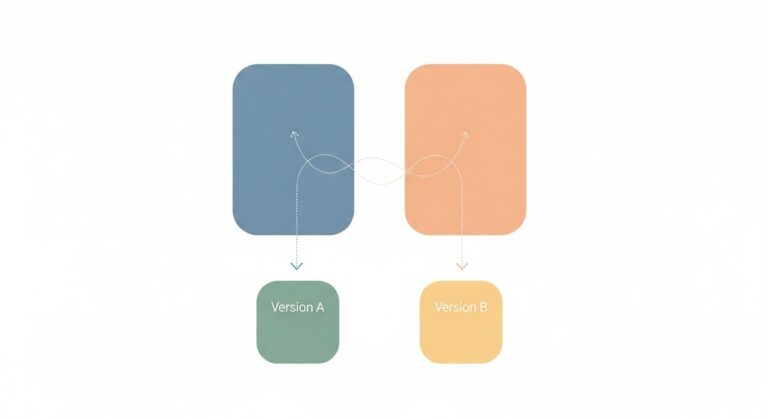
Never assume what works. Test it. A/B testing (or split testing) involves comparing two versions of a page (A and B) to see which performs better. Multivariate testing (MVT) tests multiple combinations of changes on a single page simultaneously.
* What to Test:
* Headlines & Subheadlines: Often the most impactful element.
* Call to Action (CTA): Text, color, size, placement.
* Hero Images/Videos: Different visuals, video vs. static image.
* Form Fields: Number of fields, field labels, layout.
* Copy: Short vs. long copy, different benefit angles.
* Social Proof: Placement, type of testimonials.
* Testing Frameworks:
* PIE Framework (Potential, Importance, Ease): Prioritize tests based on their potential impact, importance to your goals, and ease of implementation.
* ICE Score (Impact, Confidence, Ease): Similar to PIE, this helps you score and prioritize A/B test ideas.
* Tools:
* Google Optimize (sunsetting in 2023, but concepts remain relevant for other tools): A free, integrated tool for A/B testing. While it’s being deprecated, its principles of hypothesis-driven testing are universal.
* VWO (Visual Website Optimizer): A powerful A/B testing and CRO platform with advanced features like heatmaps and session recordings.
* Optimizely: Another enterprise-grade experimentation platform for complex testing needs.
Always have a clear hypothesis before running a test, ensure sufficient traffic for statistical significance, and run tests long enough to account for weekly variations.
Heatmaps & Session Recordings: Understanding User Behavior
Beyond just what converts, you need to understand why. Heatmaps and session recordings provide invaluable qualitative data.
* Heatmaps: Visually represent where users click, move their mouse, and scroll on your page.
* Click Maps: Show where users click, revealing what elements they interact with (or try to).
* Scroll Maps: Indicate how far down the page users scroll, identifying where they lose interest.
* Move Maps: Track mouse movements, often correlating with eye-tracking.
* Session Recordings: Replay individual user sessions, showing exactly how they navigate, interact with forms, and encounter issues.
* Tools:
* Hotjar: A popular tool offering heatmaps, session recordings, and on-page surveys/feedback widgets.
* Crazy Egg: Provides heatmaps, scroll maps, and confetti reports to visualize clicks.
These tools help identify friction points, confusing elements, and areas of interest that quantitative data alone cannot reveal.
Analytics Integration: Google Analytics 4 (GA4)
Robust analytics are the backbone of CRO. GA4 is essential for tracking your landing page’s performance.
* Event Tracking: Set up events for key actions beyond just page views – button clicks, form submissions, video plays, scroll depth.
* Conversion Tracking: Define your primary landing page goal as a conversion event in GA4 (e.g., “lead_generated,” “trial_started”).
* User Flow Analysis: Understand how users navigate to and interact with your landing page, and where they exit.
* Audience Segmentation: Analyze conversion rates across different audience segments (e.g., traffic source, device type, demographics) to identify high-value segments and tailor future efforts.
* Goals & Funnels: Map out the user journey to conversion, identifying drop-off points.
Conversion Rate Optimization (CRO) Principles: Continuous Improvement
CRO isn’t a project; it’s a mindset.
* Hypothesis-Driven: Every optimization should start with a hypothesis based on data or observation (e.g., “Changing the CTA color to green will increase clicks by 15% because it stands out more”).
* Iterative Process: Test, analyze, learn, implement, repeat. Small, continuous improvements compound over time.
* Holistic View: Consider the entire user journey, from ad click to post-conversion nurturing.
Post-Conversion Nurturing: The Journey Continues
Converting a visitor isn’t the end; it’s the beginning.
* Thank You Page: Provide clear next steps, reinforce value, and potentially offer additional resources.
* Email Automation: Immediately trigger a personalized email sequence to onboard, educate, or further qualify the lead. Tools like Mailchimp, ActiveCampaign, or HubSpot are invaluable here.
* CRM Integration: Ensure new leads are automatically pushed into your CRM (e.g., Salesforce, HubSpot CRM) for sales follow-up.
By integrating these tools, tactics, and a relentless focus on iteration, founders can transform their landing pages into dynamic, continuously improving conversion engines that drive sustainable growth in 2026.
Traffic Generation & Strategic Alignment
A perfectly optimized landing page is useless without targeted traffic. Conversely, driving traffic to a poorly designed page is a waste of resources. The synergy between your traffic sources and your landing page is paramount for high conversion rates in 2026. This is where strategic alignment comes into play – ensuring message match across your entire marketing funnel.
Paid Traffic: Precision Targeting, Critical Message Match
Paid channels offer immediate, scalable traffic, but demand precise alignment to maximize ROI.
* Google Ads (Search & Display):
Search Ads: Your ad copy, keywords, and landing page headline must be tightly integrated. If a user searches for “best project management software for startups” and clicks your ad, your landing page must* prominently feature “best project management software for startups” in its headline and offer a solution tailored for startups.
* Display Ads: Visuals on your display ads should be consistent with the landing page’s hero section.
* Landing Page Experience Score: Google evaluates your landing page quality, which impacts your Ad Rank and cost-per-click (CPC). Relevance, transparency, and ease of navigation are key.
* Meta Ads (Facebook & Instagram):
* Audience Segmentation: Leverage Meta’s powerful targeting to reach specific demographics, interests, and behaviors.
* Visual & Copy Consistency: The creative (image/video) and primary message in your Meta ad must flow seamlessly into the landing page. If your ad promotes a 30-day free trial, the landing page should immediately offer that same 30-day free trial.
* LinkedIn Ads:
* Professional Targeting: Ideal for B2B startups, LinkedIn allows targeting by job title, industry, company size.
* Value Proposition: Your ad and landing page should speak directly to professional challenges and offer solutions relevant to their roles.
* Retargeting Campaigns: Drive visitors who previously engaged with your site (but didn’t convert) back to a highly specific landing page, perhaps offering a special incentive or addressing a common objection.
Organic Traffic: SEO for Landing Pages
While landing pages are often designed for paid campaigns, they can also attract organic traffic with strategic SEO.
* Keyword Targeting: If your landing page addresses a specific problem or offers a unique solution that people search for, optimize it for relevant keywords. Use tools like Ahrefs or SEMrush to find high-intent keywords.
* Content Relevance: Ensure the landing page content thoroughly addresses the query or intent behind the target keywords.
* Internal Linking: Link to your landing page from relevant blog posts or other pages on your website to pass authority and help search engines discover it.
* Schema Markup: Implement schema (like the Article and FAQPage schema discussed later) to give search engines more context about your content, potentially enhancing visibility in rich results.
* Page Speed & Mobile-Friendliness: As discussed, these are critical SEO ranking factors.
Email Marketing: Nurturing and Directing
Your existing email list is a goldmine for conversions.
* Segmented Campaigns: Send targeted emails to specific segments of your list, directing them to landing pages tailored to their interests or stage in the buyer’s journey. For example, a segment interested in “AI tools for content creation” would be directed to a landing page for your AI content generator.
* Personalization: Use personalized subject lines and email content that directly leads into the landing page’s offer.
Social Media & Influencer Marketing
* Targeted Campaigns: Use organic social media posts or influencer collaborations to direct relevant audiences to specific landing pages.
* Clear Call to Action: Every social post driving to a landing page needs a clear, compelling CTA.
The Message Match Mandate
This is the golden rule: the promise made in your ad, email, or social post must be fulfilled immediately and clearly on your landing page. Any disconnect creates friction, confusion, and a high bounce rate. If your ad promises “50% off for new sign-ups,” your landing page headline needs to scream “Get 50% Off Your First Month!” This seamless transition builds trust, reduces cognitive load, and significantly boosts conversion rates. By meticulously aligning your traffic generation strategies with your landing page content, you create a cohesive, high-performing marketing funnel that efficiently turns clicks into customers in 2026.
FAQ: Landing Page Conversion Essentials
Here are some common questions founders ask about creating high-converting landing pages:
Q1: What’s the ideal length for a landing page?
A1: There’s no single “ideal” length; it depends entirely on the complexity of your offer, the stage of the buyer’s journey, and the price point of your product/service. For simple, low-commitment offers (e.g., email signup for a newsletter), a short, concise page is often best. For complex B2B software or high-value products requiring significant investment, a longer page with more detailed explanations, case studies, and FAQs might be necessary to address all potential objections and build sufficient trust. The key is to provide enough information to facilitate an informed decision without overwhelming the user or introducing unnecessary friction. Test different lengths to see what resonates with your specific audience.
Q2: Should I use video on my landing page?
A2: Yes, absolutely, if done correctly. Video can be a powerful conversion tool, especially for complex products or services. A well-produced, concise (under 90 seconds) explainer video can convey more information and emotion than text, build trust, and keep visitors engaged longer. However, ensure the video loads quickly, is relevant to your offer, and doesn’t auto-play with sound (which can be jarring). Always provide a clear call to action after the video. Test its impact against static images or text-heavy versions.
Q3: How many CTAs should a landing page have?
A3: For optimal conversion, a landing page should typically have one primary call to action that aligns with its single goal. This avoids choice paralysis and keeps the visitor focused. However, you can repeat this primary CTA strategically throughout a longer page (e.g., above the fold, mid-page, and at the bottom) to provide multiple opportunities for conversion without introducing new options. Avoid secondary CTAs that distract from your main goal, such as links to your blog or “about us” page, as these can dilute focus.
Q4: What’s a good conversion rate for a landing page?
A4: “Good” is subjective and varies widely by industry, offer, traffic source, and average price point. Across industries, average conversion rates can range from 2-5%. However, top-performing landing pages can achieve 10%, 20%, or even higher rates, especially for low-commitment offers like email sign-ups or free downloads. For B2B demos or high-value purchases, a 3-5% conversion rate might be excellent. Focus less on industry averages and more on continuously improving your own conversion rates through systematic A/B testing and optimization. Your goal should always be to beat your previous best.
Q5: How often should I update my landing pages?
A5: Landing pages are living assets that require continuous attention. You should be actively optimizing them based on data from A/B tests, heatmaps, and analytics at least monthly. Beyond ongoing A/B testing, a significant review and potential overhaul should occur quarterly or whenever there are major changes to your product, offer, target audience, or competitive landscape. Don’t let your landing pages become stagnant; they should evolve with your business and market trends to remain highly effective in 2026.
Conclusion: Your Landing Page as a Growth Engine for 2026
In the dynamic startup ecosystem of 2026, the success of your venture hinges on your ability to not just attract attention, but to convert it into tangible growth. Your landing pages are the front lines of this battle – not static web pages, but meticulously engineered conversion engines. By deeply understanding your audience, crafting an irresistible offer, designing with purpose, and relentlessly optimizing through data-driven testing, you transform a mere digital asset into a powerful accelerator for your startup.
This isn’t about chasing fleeting trends; it’s about mastering timeless psychological principles of persuasion combined with the most effective tools and tactics available. Embrace the iterative process, make every decision with data, and never settle for “good enough.” Your competitors are striving for excellence; you must aim higher. Implement the strategies outlined in this guide, and watch your landing pages not just perform, but profoundly impact your customer acquisition cost, revenue growth, and ultimately, your startup’s trajectory in the years to come. The future of your business is built one conversion at a time.
“`json
{
“@context”: “https://schema.org”,
“@graph”: [
{
“@type”: “Article”,
“mainEntityOfPage”: {
“@type”: “WebPage”,
“@id”: “https://eamped.com/how-to-create-a-landing-page-that-converts-2026”
},
“headline”: “How to Create a Landing Page that Converts in 2026: The Founder’s Definitive Guide”,
“description”: “A comprehensive, practical guide for startup founders on creating high-converting landing pages in 2026, focusing on strategy, design, copywriting, tools, and optimization tactics.”,
“image”: [
“https://eamped.com/images/landing-page-conversion-guide-2026.jpg”,
“https://eamped.com/images/landing-page-anatomy.jpg”
],
“datePublished”: “2024-05-15T09:00:00+08:00”,
“dateModified”: “2024-05-15T09:00:00+08:00”,
“author”: {
“@type”: “Person”,
“name”: “Eamped Strategist”
},
“publisher”: {
“@type”: “Organization”,
“name”: “Eamped”,
“logo”: {
“@type”: “ImageObject”,
“url”: “https://eamped.com/images/eamped-logo.png”
}