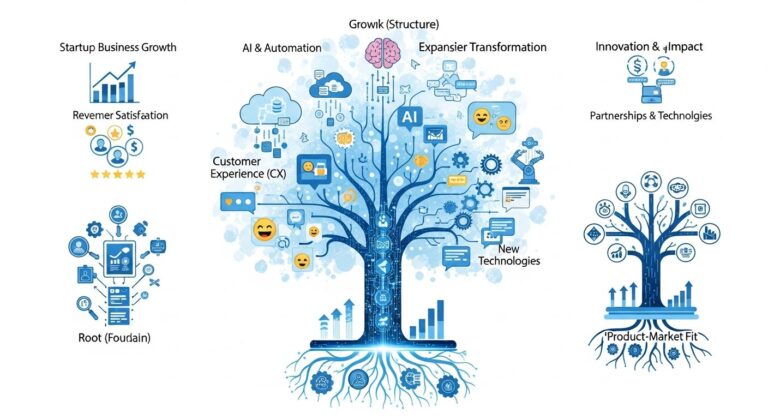

Updated April 2026. Taking a brilliant idea and transforming it into a sustainable business requires rigorous market research for startups. Navigating the unpredictable waters of early tech entrepreneurship demands more than just a talented engineering team and initial seed funding. By systematically analyzing your potential users and the competitive landscape, you replace dangerous assumptions with concrete data, dramatically lowering the risk of building something nobody wants.
Understanding your target audience is the critical difference between a product that scales efficiently and one that permanently stagnates. Whether you are validating a new software-as-a-service application or pinpointing the exact messaging for your next ad campaign, gathering accurate field intelligence gives your founding team the clarity needed to act decisively. Instead of guessing what features matter most to your demographic, you can meticulously map out a strategic product roadmap guided entirely by actual user needs, behavioral trends, and market realities.
Ultimately, early-stage business intelligence empowers founders to refine their core value proposition and optimize their digital marketing spend before exhausting their runway. By treating discovery and validation as continuous processes rather than isolated events, emerging companies position themselves to capture market share, outmaneuver entrenched competitors, and achieve long-term exponential growth.
Why is Foundational Market Analysis Crucial for New Ventures?
Defining the Foundation
Imagine launching a sophisticated AI-driven project management tool with a heavy focus on complex Gantt charts, only to discover your target users—freelance designers—actually prefer simple, visual kanban boards. A quick competitive analysis could have prevented six months of wasted engineering effort. By gathering intelligence before writing a single line of code, early-stage founders secure a massive competitive advantage. Integrating deep customer insights early in your product lifecycle planning ensures you build features that actually solve pressing pain points rather than chasing imaginary, non-existent problems.
According to a 2026 CB Insights autopsy report on failed tech businesses, 35% of nascent enterprises fold simply because there is no market need for their core offering. Analyzing potential buyers reveals their precise workflow bottlenecks. The overarching goal here is product-market fit validation—the systematic process of proving that a specific demographic will gladly pay for a proposed solution. When founders validate an idea thoroughly, they allocate their limited runway capital toward scalable acquisition channels instead of continuously pivoting a fundamentally flawed product.
See our detailed guide on the importance of foundational analysis for early-stage businesses.
Stages of the Validation Process and When to Apply Them

Structuring Your Investigation
Validating a new tech product happens in distinct iterative cycles because gathering feedback incrementally prevents massive sunken costs. Founders cannot afford to build in stealth mode for two years, assuming they know what the market wants. Instead, they must deploy flexible workflows that allow for continuous course correction based on live user engagement. Utilizing agile build methodologies ensures that every new data point collected directly influences the subsequent engineering sprint.
| Stage | Primary Objective | Key Startup Activity | Expected Outcome |
|---|---|---|---|
| Discovery | Identify root pain points | 1-on-1 qualitative interviews | Validated problem hypotheses |
| Testing | Verify the proposed solution | Deploying an MVP or prototype | Initial user adoption metrics |
| Growth | Identify acquisition channels | A/B testing ad creative | Lowered Customer Acquisition Cost |
| Scaling | Expand market share | Competitor pricing analysis | Increased Customer Lifetime Value |
What success looks like: Achieving a 40% response rate on initial problem-discovery surveys and identifying three highly recurring workflow bottlenecks among your core demographic. What failure looks like: Sending out 1,000 cold emails asking ‘Would you buy this feature?’ and receiving zero replies or purely polite, non-committal feedback from friends and family.
See our detailed guide on the validation process for tech startups.

[INLINE IMAGE 2: Flowchart illustrating the four stages of market validation: discovery, MVP testing, growth optimization, and continuous iteration for startups.]
Which Primary and Secondary Methods Yield the Best Data?
Blending Qualitative Depth with Quantitative Scale
Founders who mix both qualitative interviews and quantitative surveys accelerate their time to initial revenue by an average of 42% (Startup Genome, 2024). A rapidly scaling B2B SaaS company recently ran an observational study by watching target users attempt to complete a standard reporting task using a legacy competitor’s software. They noticed users repeatedly clicking the wrong export button and expressing visible frustration. This direct observation immediately gave the new startup a UI advantage to exploit in their initial beta release.
Combining these diverse techniques works beautifully because quantitative metrics tell you precisely what is happening across a massive sample size, while deep qualitative discussions reveal the underlying emotional and psychological reasons driving that specific behavior. Furthermore, founders can utilize secondary data analysis—the formal evaluation of existing industry reports, government census data, and competitor public filings—to estimate total addressable market size before launching expensive primary outreach campaigns.
Rohan Patel: Don’t rely solely on secondary data. A massive Total Addressable Market in a glossy analyst report means absolutely nothing if you haven’t spoken to ten real humans who desperately want to purchase your specific solution.
See our detailed guide on primary and secondary data collection techniques.
The Science of Leveraging Audience Insights for Digital Marketing
Translating Insights into Growth Strategies
Applying field data directly to user acquisition channels drastically reduces your Customer Acquisition Cost (CAC) while boosting overall brand awareness. When emerging companies understand their precise audience segments, they stop wasting thousands of dollars on broad, ineffective campaigns. A 2026 HubSpot marketing benchmark analysis found that ad campaigns utilizing heavily researched, data-backed buyer personas see a 55% higher click-through rate compared to generic demographic targeting.
Understanding exact search intent informs comprehensive user acquisition frameworks by closely aligning your landing page copywriting with the actual phrases prospects type into Google. Furthermore, properly identifying search volume opportunities allows early-stage entities to capture high-intent organic traffic long before their heavily funded competitors realize the niche even exists.
Consider an emerging ed-tech platform that initially poured its entire marketing budget into LinkedIn sponsored posts. After distributing targeted surveys, they discovered their core demographic of junior developers actually preferred short-form video coding tutorials. By immediately shifting their budget to TikTok and YouTube Shorts, they quadrupled their daily signups while slashing their cost-per-click by over 60%.
See our detailed guide on leveraging audience insights for digital marketing.

[INLINE IMAGE 4: Diagram showing a target customer persona mapping directly to specific digital ad channels and messaging strategies for startup marketing.]
Types of Cognitive Biases and How to Avoid Them
Recognizing and Avoiding Cognitive Biases
Founders routinely fall into cognitive traps, often interpreting vague positive feedback as a hard financial commitment to purchase. Their intense proximity to the product blinds them to harsh market realities, leading them to build features no one actually requested. To prevent this, emerging tech leaders must recognize common behavioral anti-patterns during the critical early validation phase.
- Confirmation Bias: Asking heavily leading questions such as “Don’t you think this automated reporting feature is helpful?” instead of the much more revealing “How do you currently compile your weekly reports?”
- Ignoring the Silent Majority: Heavily prioritizing the niche feature requests of one extremely vocal beta tester while your dashboard analytics show 98% of active users never even navigate to that specific settings tab.
- Relying on Outdated Context: Using a pre-pandemic 2022 Forrester enterprise software report to aggressively project 2026 remote-work budget allocations often leads to massively inflated, unrealistic revenue projections.
- Failing to Act on Negative Feedback: Collecting brilliant, constructive criticism from early adopters but refusing to pivot the engineering roadmap because the founders are deeply emotionally attached to their original, flawed vision.
See our detailed guide on avoiding common validation pitfalls.
Integration Frameworks for Sustained Growth
Embedding Intelligence into Your DNA
Startups that implement weekly user feedback loops into their core development cycle push successful, revenue-generating features to production 3x faster than traditional companies relying on bloated quarterly review processes (McKinsey, 2026). Continuous data collection fuels sustainable long-term growth. When intelligence gathering becomes an ingrained, weekly organizational habit rather than a massive, one-off launch event, product teams can effortlessly course-correct before minor usability annoyances mutate into major churn drivers.
Seamlessly deploying modern analytics stacks enables engineering teams to passively collect raw user behavior data without actively interrupting the customer experience. A modern fintech application, for instance, might silently track the exact second users abandon an onboarding flow. If the behavioral data shows a 60% drop-off precisely when the app asks for a Social Security Number, the growth team knows exactly where to inject educational tooltips to rebuild trust.
Ultimately, executing effective foundational analysis is not a static checklist item to cross off prior to launch; it is an ongoing, dynamic operational capability that consistently drives smarter strategic decisions, lowers risk, and maximizes total enterprise value over the company’s entire lifespan.
See our detailed guide on strategic analysis for scaling.
Sources & References
- HubSpot. (2026). Annual State of Digital Marketing for Emerging Businesses.
- CB Insights. (2026). The Top Reasons Startups Fail: Post-Mortem Analysis.
- Startup Genome. (2024). Global Startup Ecosystem Report: Early-Stage Validation Metrics.
- McKinsey & Company. (2026). Agile Development and Customer Feedback Loops in the Tech Sector.