Achieving Product-Market Fit: A Founder’s Definitive Guide to Unlocking Hypergrowth
Product-Market Fit (PMF) is the elusive holy grail for every startup founder. It’s the moment your product truly resonates with a significant market, solving a real problem so effectively that demand pulls your product forward, rather than you pushing it. Without PMF, even the most brilliant idea is merely a feature in search of a problem, or a solution without a market. This isn’t just a buzzword; it’s the foundational bedrock upon which sustainable growth, successful fundraising, and ultimately, a thriving business are built. This guide will dismantle the mystique around PMF, providing you with a sharp, data-driven framework and actionable strategies to systematically identify, validate, and achieve it. Prepare to shift from hopeful experimentation to deliberate, market-led execution.
What Exactly is Product-Market Fit (and Why It’s Your North Star)?
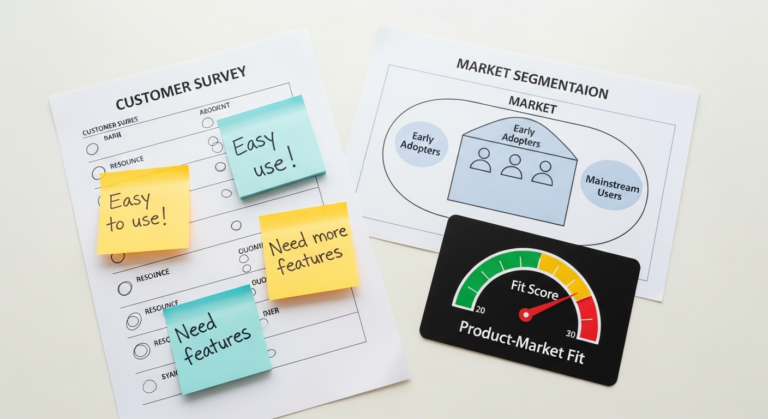
Coined by Marc Andreessen, Product-Market Fit is simply “being in a good market with a product that can satisfy that market.” It’s the sweet spot where your product effectively addresses a pervasive, underserved need within a large enough market segment. Think of it as the gravitational pull your product exerts when it truly clicks with users.
Why is this your absolute North Star? Because PMF dictates everything:
* Survival: Startups without PMF burn cash rapidly trying to acquire customers who don’t truly value their offering. Eventually, the runway ends. PMF ensures your spending is efficient, focused on growth, not just acquisition.
* Hypergrowth Potential: When you have PMF, growth becomes organic. Customers stick around, tell others, and demand more. This creates a virtuous cycle of positive word-of-mouth and lower customer acquisition costs (CAC).
* Fundraising Leverage: Investors aren’t just buying into an idea; they’re investing in validated market traction. Demonstrating PMF with solid metrics is arguably the most powerful signal you can send to potential funders. It de-risks their investment significantly.
* Operational Efficiency: With PMF, your team knows exactly who they’re building for and why. This clarity streamlines product development, marketing, and sales efforts, reducing wasted resources and improving focus.
* Market Leadership: Early PMF allows you to capture significant market share and establish a strong competitive moat before others can catch up, setting the stage for long-term dominance.
The cost of not having PMF is dire: high churn, negative word-of-mouth, escalating CAC, stagnant growth, and ultimately, failure. It’s not enough to build a great product; you must build a great product for a market that desperately wants it.
Phase 1: Deep Market Understanding & Problem Validation
Before you write a single line of code or design a single UI, you must immerse yourself in the market. This phase is about rigorous research, empathy, and challenging your assumptions.
Identifying a High-Value Problem
Founders often fall in love with solutions. The seasoned strategist, however, falls in love with problems. Not just any problem, but one that is:
* Acute: It causes significant pain, frustration, or inefficiency. People are actively looking for solutions or struggling without one.
* Widespread: It affects a substantial number of individuals or businesses. A niche problem might be interesting, but it rarely supports hypergrowth.
* Underserved: Existing solutions are either non-existent, expensive, clunky, or simply don’t fully satisfy the need. This is where your opportunity lies.
Tactics & Tools:
* Customer Interviews (Qualitative): Conduct 20-50 in-depth conversations with potential users. Don’t just ask what they want; ask about their daily struggles, how they currently cope, and what they’ve tried. Use tools like Zoom or Calendly to schedule and record. Focus on open-ended questions.
* Surveys (Quantitative): Once you have hypotheses from interviews, validate them with broader surveys using platforms like Qualtrics or SurveyMonkey. Ask about problem frequency, severity, and willingness to pay for a solution.
* Observational Research: Watch your target users in their natural environment. How do they perform tasks related to the problem? What workarounds do they employ?
* Competitive Analysis: Use tools like Crunchbase and SimilarWeb to identify existing players. Analyze their strengths, weaknesses, pricing, and customer reviews. Where are the gaps?
* Market Sizing: Estimate your Total Addressable Market (TAM), Serviceable Available Market (SAM), and Serviceable Obtainable Market (SOM). This helps validate the commercial viability of the problem space.
Defining Your Ideal Customer Profile (ICP) & Persona
You can’t build for “everyone.” You need to know exactly who you’re solving the problem for. This involves creating an Ideal Customer Profile (ICP) for B2B and detailed User Personas for B2C.
ICP (B2B):
* Company Size: (e.g., 50-200 employees)
* Industry: (e.g., SaaS, FinTech)
* Geography: (e.g., North America, EU)
* Pain Points: What specific problems do companies in this profile face that your product addresses?
* Budget: What’s their typical budget for solutions like yours?
User Persona (B2C & B2B User):
* Demographics: Age, income, location, occupation.
* Psychographics: Goals, motivations, values, fears, aspirations.
* Behaviors: How do they typically interact with technology? What channels do they use?
* Current Solutions: What do they use today to solve the problem (even if it’s a clunky workaround)?
* Quote: A representative quote that encapsulates their mindset.
Tactics & Tools:
* Synthesize Interview Data: Look for patterns in your qualitative research. What common themes emerge?
* Empathy Maps: Visually map out what your users “say, think, do, and feel.”
* User Stories: Frame requirements from the user’s perspective: “As a [type of user], I want [some goal] so that [some reason].”
The output of Phase 1 is a crystal-clear understanding of who has a specific, acute, underserved problem and why existing solutions fail them. This insight is your compass.
Phase 2: Crafting Your Minimum Viable Product (MVP) & Hypothesis Testing
With a validated problem and a well-defined customer, it’s time to build – but strategically. The goal isn’t a perfect product, but the smallest possible solution that can validate your core hypothesis.
The Lean Startup Approach: Build-Measure-Learn
Embrace Eric Ries’s Lean Startup methodology. Your MVP is not a watered-down product; it’s a focused experiment designed to test your riskiest assumptions.
1. Build: Create the simplest version of your product with just enough features to solve the core problem for your ICP.
2. Measure: Collect data on how users interact with it.
3. Learn: Analyze the data, derive insights, and decide whether to pivot, persevere, or iterate.
MVP Principles: Core Value Proposition
Your MVP should deliver a single, compelling core value proposition. It’s about solving one problem exceptionally well, not many problems poorly.
* Focus on the “Must-Haves”: What is the absolute minimum functionality required to deliver value?
* Avoid Feature Creep: Resist the temptation to add extra bells and whistles. Every additional feature increases development time and complexity, delaying learning.
Examples of Successful MVPs:
* Dropbox: Started with a simple video demonstrating the file-syncing concept before building the full product. This validated demand without extensive engineering.
* Zappos: The founder manually took photos of shoes from local stores and posted them online. When an order came in, he’d buy the shoe and ship it. This validated willingness to buy shoes online before investing in inventory or logistics.
* Airbnb: Initially, the founders simply rented out air mattresses in their own apartment to conference-goers, validating the concept of peer-to-peer accommodation.
Formulating Hypotheses
Every feature, every design choice in your MVP should be tied to a clear hypothesis about your users and market.
* “We believe [this specific user segment] will [perform this action] if we provide [this specific feature] because [this underlying need/motivation].”
* “We hypothesize that [X feature] will increase [Y metric] by [Z amount].”
Rapid Prototyping & Testing
Don’t wait for a fully functional product. Get feedback early and often.
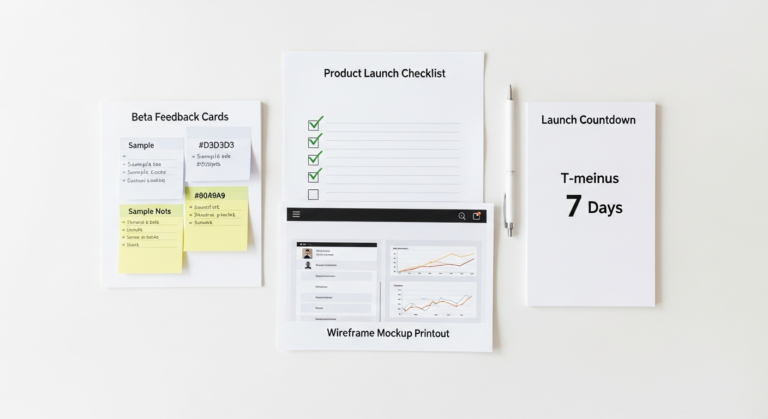
* Wireframes & Mockups: Use tools like Figma or Sketch to create interactive prototypes.
* User Testing: Put your prototypes (or early MVP) in front of real users. Observe their interactions, listen to their feedback. Tools like UserTesting.com or Lookback facilitate remote user tests.
* Landing Page MVPs: Describe your product’s value proposition on a landing page and measure sign-ups or interest. This validates demand before building anything.
The output of Phase 2 is a functional, albeit basic, product that directly addresses your validated problem and is ready for real-world interaction and data collection.
Phase 3: Iterative Validation & Measuring PMF
This is where the rubber meets the road. You have an MVP in the hands of early adopters. Now, you need to rigorously measure its impact and determine if you’ve hit PMF.
Quantitative Signals
Data doesn’t lie. Focus on these metrics:
* Retention Rate: The percentage of users who return to your product over time. This is arguably the most critical PMF metric. High retention (especially cohort retention) indicates genuine value. Track 30-day, 60-day, and 90-day retention.
* Engagement Metrics:
* DAU/MAU Ratio (Daily Active Users / Monthly Active Users): For consumer products, a ratio above 20% is often a good sign; for social products, 50%+.
* Session Duration & Frequency: How long and how often do users engage?
* Feature Adoption: Which features are used most? Which are ignored?
Net Promoter Score (NPS): While a general satisfaction metric, an NPS score for your product* can be indicative. Ask: “On a scale of 0-10, how likely are you to recommend [Product Name] to a friend or colleague?” Promoters (9-10) are your advocates.
* Customer Acquisition Cost (CAC) vs. Customer Lifetime Value (LTV): As you acquire users, track if your LTV is significantly higher than your CAC (e.g., LTV:CAC ratio of 3:1 or higher) without aggressive sales and marketing spend. This suggests organic demand.
Qualitative Signals
Don’t overlook the human element.
* Unsolicited Feedback: Are users tweeting about you, blogging, or sending enthusiastic emails without being prompted? Are they asking for specific new features that suggest deep engagement?
* Referrals & Word-of-Mouth: Are your users telling their friends and colleagues? This is the strongest indicator of genuine delight and PMF.
Customer Interviews (Again): Conduct interviews with your current* users. Ask crucial questions:
* “What problem does our product solve for you?”
* “How would you feel if you could no longer use [Product Name]?” (The Sean Ellis Test)
* “What do you like most/least about the product?”
* “What alternatives did you consider, and why did you choose us?”
The Sean Ellis Test (Disappointment Test)
This is a powerful, specific metric for PMF. Sean Ellis, who coined the term “growth hacker,” proposes asking users:
“How would you feel if you could no longer use [Product Name]?”
1. Very disappointed
2. Somewhat disappointed
3. Not disappointed
4. N/A – I no longer use [Product Name]
A strong indicator of PMF is when at least 40% of your users respond “Very disappointed.” If you’re below this threshold, you likely haven’t found PMF and need to iterate or pivot. This metric is actionable and cuts through vanity metrics.
Tools for Measurement:
* Analytics Platforms: Mixpanel, Amplitude, Segment for tracking user behavior and key metrics.
* Survey Tools: SurveyMonkey, Typeform for the Sean Ellis Test and other qualitative feedback.
* CRM/Support Tools: Intercom, Zendesk for capturing customer interactions and feedback.
The output of Phase 3 is a data-driven conviction (or lack thereof) that you have achieved PMF, backed by both quantitative metrics and enthusiastic qualitative feedback.
Phase 4: Scaling and Sustaining PMF
Finding PMF is a monumental achievement, but it’s not a finish line. It’s the starting gun for scaling. The challenge now is to maintain that fit as you grow, expand your product, and enter new markets.
Listening to Your Users (Continuously)
The market is dynamic, and user needs evolve. Your feedback loops must be robust and continuous.
* In-App Feedback: Integrate tools like Intercom or a custom feedback widget to capture suggestions.
* Customer Advisory Boards (CABs): For B2B products, assemble a small group of key customers to act as an advisory panel, providing high-level strategic input.
* Regular User Interviews: Continue conducting interviews with a segment of your user base to understand changing needs and identify new opportunities.
* Monitor Social Media & Forums: Keep an ear to the ground for discussions about your product, competitors, and industry trends.
Prioritizing Features
As you gather feedback, you’ll have a deluge of feature requests. You cannot build everything.
* Impact vs. Effort Matrix: Prioritize features that offer high user impact with low development effort.
* RICE Scoring: A more structured framework (Reach, Impact, Confidence, Effort) helps objectively score and prioritize potential features.
* Focus on Core Value: New features should always enhance your core value proposition or address a critical adjacent problem for your ICP, not dilute your focus.
Expanding Your Market (Carefully)
Once PMF is solid in your initial segment, you can consider expanding.
* Adjacent Markets: Can your product solve a similar problem for a slightly different customer segment? (e.g., from small businesses to mid-market).
* New Geographies: Is there demand for your product in other regions?
* New Use Cases: Can your product be adapted for entirely new applications?
Always validate these expansions with the same rigor you applied to your initial PMF search. Don’t assume PMF translates automatically.
Beware of Feature Creep
The temptation to add more features to please everyone is strong. Resist it. Feature creep dilutes your product’s core value, confuses users, and increases maintenance costs. Remain disciplined about your product vision and who you’re building for.
Competitive Landscape
PMF attracts competitors. Continuously monitor the market.
* Google Alerts: Set up alerts for your company, product, competitors, and industry keywords.
* Industry News: Stay abreast of new technologies, regulations, and market shifts.
* Competitor Analysis: Regularly review competitor offerings, pricing, and marketing messages. Understand their PMF and how you differentiate.
The output of Phase 4 is a product strategy that ensures your PMF is not just a moment but a sustained advantage, fueling continued growth and market relevance.
Common Pitfalls and How to Avoid Them
The path to PMF is fraught with potential missteps. Awareness is your first line of defense.
1. Ignoring Negative Feedback (or only seeking positive): It’s easy to dismiss critical feedback as “that user just doesn’t get it.” But consistent negative feedback, especially from your ICP, is a red flag you must address. Actively seek out detractors and understand their pain points.
2. Building for Yourself, Not the Customer: You might be a potential user, but you are not the market. Your biases can cloud judgment. Always validate assumptions with real users.
3. Premature Scaling: Launching aggressive marketing campaigns, hiring a massive sales team, or expanding into new markets before achieving PMF is a recipe for disaster. You’ll burn cash quickly trying to sell something the market doesn’t truly want. Scale after validation.
4. Falling in Love with Your Solution, Not the Problem: Your product is a means to an end. If your current solution isn’t solving the problem effectively, be prepared to iterate, pivot, or even scrap it. The problem is constant; the solution is flexible.
5. Lack of Clear Metrics: If you can’t define what PMF looks like for your product in quantifiable terms (e.g., “40% ‘very disappointed'” or “X% retention”), you’ll never know if you’ve found it. Define your success metrics upfront.
6. Confusing Early Adopters with the Mass Market: Early adopters are often more forgiving and willing to experiment. While crucial for initial feedback, their enthusiasm doesn’t always reflect the broader market’s needs. Ensure your PMF metrics hold up beyond this initial segment.
FAQ: Your Product-Market Fit Questions Answered
Q1: How long does it typically take to find PMF?
There’s no fixed timeline. It can range from a few months to several years. Companies like Airbnb and Slack iterated for years before hitting their stride. The key isn’t speed, but the intensity and discipline of your Build-Measure-Learn cycles. Focus on rapid experimentation and honest assessment, not just clock time.
Q2: Can Product-Market Fit be lost?
Absolutely. PMF is not a static state; it’s a continuous process. Markets evolve, competitors emerge, user needs shift, and technology advances. What fit perfectly today might be obsolete tomorrow. Continuous monitoring of metrics, user feedback, and market trends is essential to sustain PMF and adapt your product accordingly.
Q3: What’s the biggest mistake founders make when seeking PMF?
The single biggest mistake is building a product in isolation without sufficiently validating the problem and solution with real users. This leads to “build it and they will come” syndrome, where founders spend months or years on a product only to find no one truly needs or wants it. Prioritize problem validation and continuous user feedback above all else.
Q4: Should I raise a lot of money before finding PMF?
Generally, no. Raising significant capital before PMF can be detrimental. It often leads to premature scaling, where you hire aggressively and spend on marketing before truly understanding your market and product’s value. This burns through cash rapidly without sustainable returns. Focus on lean development and validation, raising just enough to hit PMF before seeking larger rounds for scaling.
Q5: Is PMF a one-time event or an ongoing process?
PMF is best understood as an ongoing process, a continuous quest for alignment between your product and the evolving market. While there might be a “moment” when you first feel you’ve achieved it (e.g., hitting the 40% Sean Ellis threshold), maintaining and expanding that fit requires constant vigilance, iteration, and adaptation. Think of it as a dynamic equilibrium.
Conclusion
Product-Market Fit is the bedrock of every successful startup. It’s not a mythical beast but a solvable equation, demanding rigorous problem validation, lean experimentation, and an unwavering commitment to data-driven iteration. As a founder, your mission isn’t just to build a product; it’s to build a product that your market desperately needs and deeply loves. Embrace the scientific method: form hypotheses, build MVPs, measure everything, and learn rapidly. Don’t shy away from pivots; they are often the clearest path to alignment. The journey to PMF is challenging, but by systematically applying the frameworks and tactics outlined here, you will significantly increase your odds of unlocking that elusive hypergrowth and building a truly impactful, enduring business. Now, go forth and find your fit.