The Ultimate Social Media Content Calendar Guide for Startup Founders
In the relentless arena of startup growth, every move must be calculated, every resource optimized. Social media, often seen as a nebulous “must-do,” can quickly become a time sink of ad-hoc posts and reactive engagement. This isn’t just inefficient; it’s a critical missed opportunity for strategic brand building and customer acquisition. As a founder, your time is your most precious commodity. You need a system that transforms social media from a chore into a potent, predictable growth engine. That system is a meticulously crafted social media content calendar.
This comprehensive social media content calendar guide is designed specifically for startup founders. It’s not about simply scheduling posts; it’s about architecting a consistent, data-driven narrative that resonates with your target audience, aligns with your business objectives, and scales with your ambition. Forget the scramble for daily content ideas; we’re going to build a strategic framework that empowers you to execute with precision, measure with clarity, and iterate for continuous improvement. Let’s get to work on mastering your social media strategy.

Why is a Social Media Content Calendar Essential for Your Startup?
Founders often wear many hats, and social media can feel like just another distraction. But viewing it as an optional extra is a strategic misstep. A robust social media content calendar isn’t just an organizational tool; it’s a strategic imperative that delivers tangible returns:
- Unwavering Consistency & Brand Authority: In a noisy digital landscape, consistency breeds familiarity and trust. A calendar ensures your brand voice, messaging, and presence remain steady, reinforcing your authority and keeping you top-of-mind. Sporadic posting signals disorganization; a steady stream builds a reliable brand narrative.
- Peak Efficiency & Time Savings: The single biggest win for any founder. By planning content in batches, you eliminate daily decision fatigue. Imagine creating a week or even a month’s worth of content in a dedicated block, freeing up countless hours for product development, fundraising, or strategic partnerships. This efficiency directly translates to reduced operational costs and increased productivity.
- Strategic Alignment with Business KPIs: Your social media efforts should never exist in a vacuum. A content calendar forces you to link every post back to your overarching business goals – whether it’s boosting brand awareness, driving website traffic, generating leads, or fostering community engagement. It transforms social media from a vanity metric pursuit into a measurable contributor to your bottom line.
- Data-Driven Optimization & Learning: Random acts of posting yield random results. A planned calendar allows you to systematically test different content types, messaging, calls-to-action (CTAs), and posting times. With a structured approach, you can analyze performance metrics, identify what resonates, discard what doesn’t, and continuously refine your strategy for optimal impact. For more on this, explore A/B testing strategies.
- Enhanced Team Collaboration & Scalability: As your startup grows, a content calendar becomes a central hub for your marketing team. It provides a clear roadmap, assigns responsibilities, and ensures everyone is working towards a unified vision. This clarity is essential for scaling your social media efforts without losing cohesion or control.
Consider this: brands that maintain a consistent, planned social media presence often report significantly higher engagement rates and improved conversion metrics compared to those that post reactively, as highlighted in reputable studies. This isn’t magic; it’s the direct result of strategic foresight.

Phase 1: What is the Strategic Foundation for Your Social Media Content Calendar?
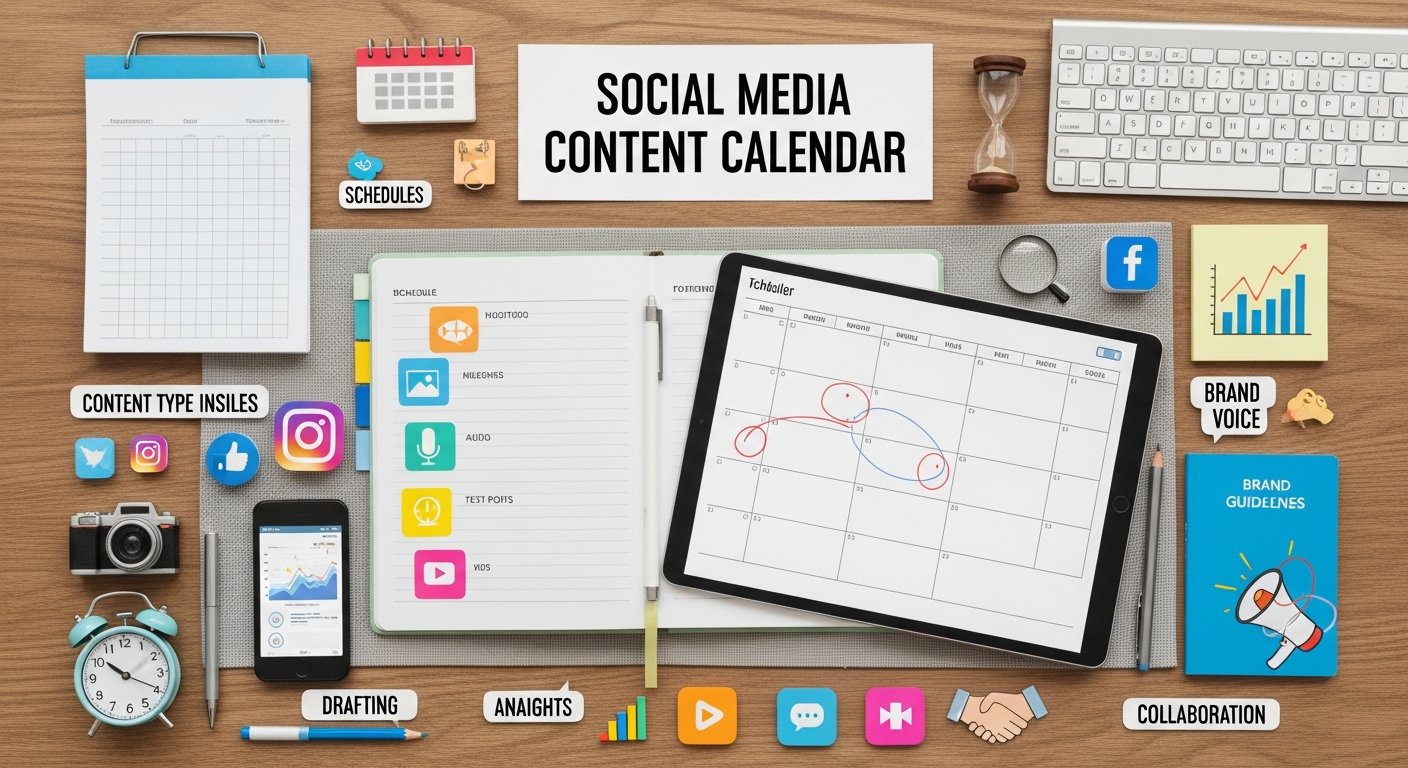
Before you dive into drafting tweets or designing Instagram carousels, you need a rock-solid strategy. This foundational phase is where you define your “why” and “who,” ensuring every piece of content serves a purpose.
1. Define Your Core Objectives & KPIs
What do you want your social media to achieve? Be ruthlessly specific. Use the SMART framework (Specific, Measurable, Achievable, Relevant, Time-bound).
- Brand Awareness: Increase follower count by X%, reach X new accounts per month.
- Lead Generation: Drive X clicks to a landing page, generate Y sign-ups or MQLs.
- Community Building: Achieve an average engagement rate of X%, respond to Z% of comments within an hour.
- Customer Support: Resolve X% of customer queries via social channels.
- Website Traffic: Increase website sessions from social media by X%.
Each objective must tie directly to a business KPI. For example, if your business goal is to increase product trial sign-ups, your social media objective might be to drive traffic to your trial page.
2. Know Your Audience (Deeply)
Who are you talking to? Go beyond basic demographics. Develop detailed buyer personas, which are crucial for effective customer acquisition:
- Demographics: Age, location, job title, industry.
- Psychographics: Goals, challenges, pain points, aspirations, values.
- Online Behavior: Which social platforms do they frequent? What content formats do they prefer (video, long-form text, infographics)? When are they most active?
- Content Consumption: What other brands, influencers, or publications do they follow?
Tools: Utilize native platform analytics (Facebook Insights, LinkedIn Analytics), conduct customer surveys, analyze competitor audiences, and leverage social listening tools like Brandwatch or Sprout Social’s listening features to understand conversations relevant to your industry.
3. Audit Your Current Performance
If you’ve been posting, what’s worked and what hasn’t? Use native analytics and Google Analytics to identify your top-performing posts, content themes, and engagement drivers. This baseline audit will inform your future content strategy and prevent you from repeating past mistakes. Look for patterns in reach, engagement, clicks, and conversions.
4. Identify Your Key Platforms
Resist the urge to be everywhere. Focus your efforts where your target audience is most active and where your content can have the greatest impact. For a B2B SaaS startup, LinkedIn is often paramount for thought leadership and lead generation. An eco-conscious DTC brand might thrive on Instagram and TikTok with visually rich content. Prioritize 2-3 platforms where you can genuinely excel.
5. Establish Your Content Pillars & Themes
Content pillars are the 3-5 foundational topics or categories that your content will consistently revolve around. These should directly address your audience’s pain points and align with your business objectives. They provide structure and ensure variety.
Examples for a Fintech Startup:
- Financial Literacy & Education: “Understanding Crypto,” “Budgeting for Founders.”
- Startup Growth & Funding: “Series A Tips,” “Investor Mindset.”
- Product Features & Use Cases: “How Our Platform Simplifies Expense Tracking,” “A Day in the Life with [Product Name].”
- Behind-the-Scenes & Company Culture: “Meet the Team,” “Our Mission & Values.”
- Industry News & Trends: “Impact of AI on Fintech,” “Regulatory Updates.”
Within these pillars, you’ll brainstorm specific themes and content ideas for your calendar.

Phase 2: How Do You Build Your Social Media Content Calendar?
With your strategy defined, it’s time to translate it into a tangible, actionable calendar. This is where organization meets creativity.
1. Choose Your Calendar Tool
The right tool depends on your team size, budget, and complexity needs:
- Spreadsheets (Google Sheets, Excel): Free, highly customizable, and excellent for solo founders or small teams just starting. You’ll create your own columns and structure.
- Project Management Tools (Asana, Trello, ClickUp, Notion): Offer more robust features for collaboration, task assignment, and workflow management. Ideal for growing teams that need to track content creation from ideation to approval. Many have calendar views.
- Dedicated Social Media Management Tools (Hootsuite, Buffer, Sprout Social, Later): These are all-in-one solutions that combine content planning, scheduling, publishing, and analytics. They often come with a cost but offer significant efficiency gains and advanced features like optimal posting time suggestions.
For most startups, starting with a robust Google Sheet or a tool like Notion offers a good balance of flexibility and power without immediate significant investment.
2. Determine Posting Frequency & Best Times
There’s no universal magic number. Frequency depends on your platform, audience, and content quality. For instance, LinkedIn might tolerate 1-2 posts daily, while Instagram Stories could be multiple times a day. Use your platform’s native analytics to identify when your audience is most active. Tools like Sprout Social also provide data-driven recommendations for optimal send times.
3. Map Out Content Types & Formats
Vary your content to keep your audience engaged. Brainstorm specific content types within your pillars:
- Images: Quotes, infographics, product shots, behind-the-scenes.
- Videos: Tutorials, interviews, testimonials, short-form Reels/TikToks, live Q&As.
- Text-Based: Thought leadership posts, industry news summaries, polls, questions.
- Interactive: Quizzes, surveys, user-generated content (UGC) campaigns.
- Long-Form: Blog post excerpts, LinkedIn articles, whitepapers.
Tailor formats to the platform – vertical video for TikTok/Reels, professional articles for LinkedIn, visually appealing carousels for Instagram.
4. Content Creation & Curation Strategy
Balance original, high-value content with curated industry insights. You don’t have to reinvent the wheel every day. Sharing relevant articles from trusted sources (with your unique commentary) positions you as an industry expert.
- Original Content: This is your unique voice and value. Plan for blog posts, custom graphics, videos, and thought leadership pieces. Tools like Canva or Adobe Express can empower non-designers to create stunning visuals quickly.
- Curated Content: Share articles, studies, or news from other reputable sources. Always add your perspective or a question to spark discussion.
5. Drafting & Scheduling: Populating Your Calendar
This is the core of the execution. Your calendar should include:
- Date & Time: When the post goes live.
- Platform: Specific channel (LinkedIn, Instagram, X, etc.).
- Content Pillar/Theme: Which strategic category it falls under.
- Content Type: (e.g., Image, Reel, Link Post, Text Post).
- Copy/Caption: The actual text. Draft multiple versions for A/B testing.
- Visual/Link: URL for images, videos, or external links.
- Call-to-Action (CTA): “Learn More,” “Sign Up,” “Download Now,” “Comment Below.”
- Status: (Draft, Ready for Review, Approved, Scheduled, Posted).
- Notes: Any specific instructions, relevant hashtags, or campaign tags.
Batching is Key: Dedicate specific blocks of time each week or month to brainstorm ideas, write captions, create visuals, and schedule posts. This focused effort is significantly more efficient than daily ad-hoc creation.
Scheduling Tools: Once content is approved, use your chosen social media management tool (Hootsuite, Buffer, Sprout Social, Later) or native platform schedulers (Facebook Creator Studio, LinkedIn Scheduler) to automate publishing. This ensures consistent delivery even when you’re focused on other tasks.
6. Incorporate Seasonal & Event-Based Content
Plan for relevant holidays, industry events, product launches, company milestones, and cultural moments. These offer excellent opportunities for topical content that resonates with current trends. For example, a cybersecurity startup could plan content around “Cybersecurity Awareness Month.”

Phase 3: How Do You Optimize and Iterate Your Social Media Content Calendar for Growth?
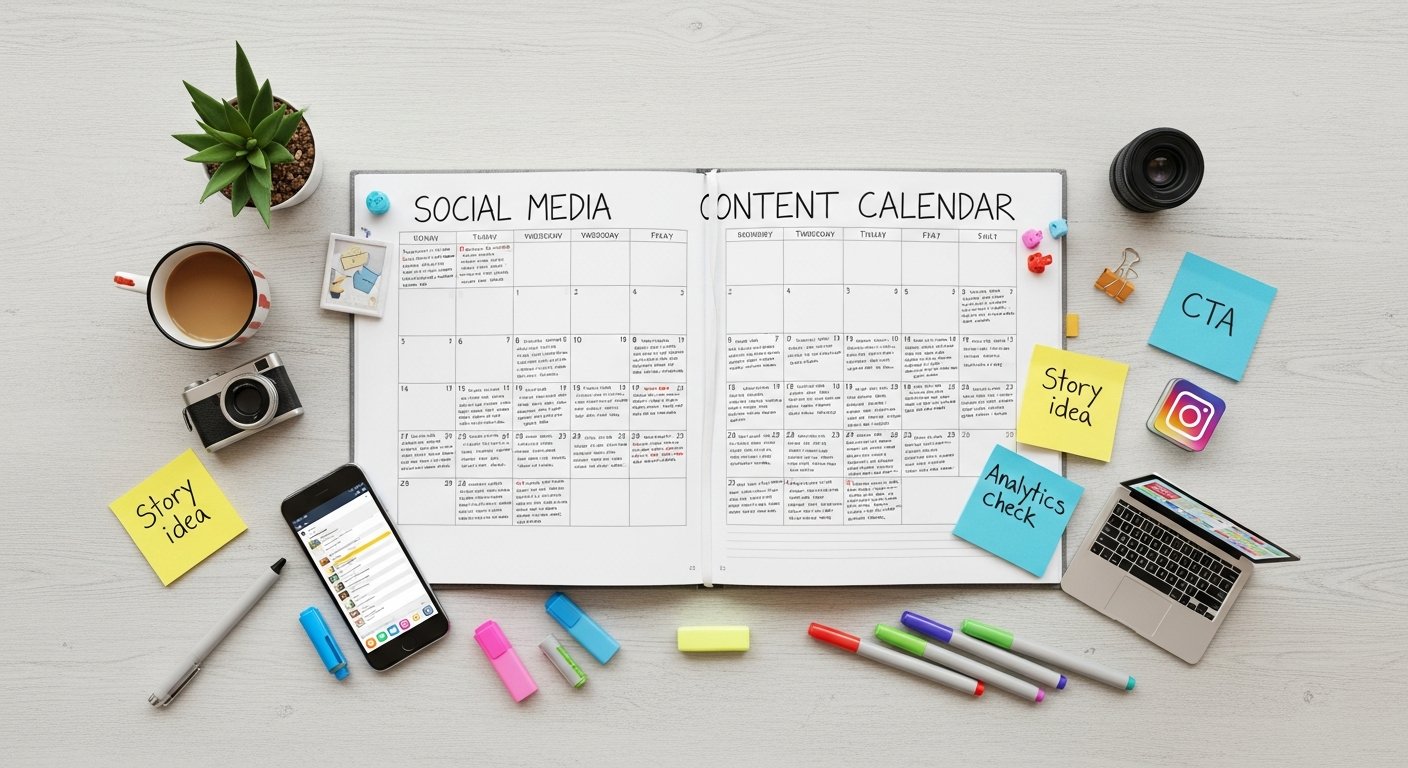
Your content calendar isn’t a static document; it’s a living, breathing strategy that demands continuous refinement. This phase is about relentless monitoring, analysis, and adaptation.
1. Monitor Performance Relentlessly
Track your predefined KPIs on an ongoing basis. Don’t just glance at likes; dig into the data:
- Engagement Rate: (Likes + Comments + Shares) / Reach. A true measure of audience interaction.
- Reach & Impressions: How many unique users saw your content and how many times was it displayed?
- Click-Through Rate (CTR): For posts with links, this shows how effective your CTA is.
- Conversion Rate: How many clicks translated into sign-ups, downloads, or purchases? (Requires Google Analytics integration).
- Follower Growth: Are you attracting and retaining your target audience?
Tools: Native platform analytics, Google Analytics, and the comprehensive dashboards offered by tools like Hootsuite or Sprout Social.
2. Analyze & Extract Insights
Move beyond superficial metrics. Ask “why?”
- Why did that video perform exceptionally well? Was it the topic, the format, the hook, or the time of day?
- Why did that link post flop? Was the copy unclear, the visual unappealing, or the audience simply not interested in the topic at that moment?
- Which content pillars consistently drive the most engagement or traffic?
Look for patterns. Identify top-performing content types, topics, hashtags, and posting times. This is your actionable intelligence.
3. A/B Testing: Experiment with Precision
Your calendar provides the perfect framework for controlled experiments. Test one variable at a time:
- Headlines/Hooks: Try two different opening lines for the same visual.
- Visuals: Use an infographic versus a photo for the same message.
- CTAs: “Learn More” vs. “Download Now.”
- Posting Times: Early morning vs. late afternoon.
Document your hypotheses and results. Over time, you’ll build a playbook of what works best for your specific audience and platforms.
4. Listen & Engage: Be Present
Social media is a two-way street. Don’t just broadcast; engage. Monitor comments, DMs, and mentions. Respond promptly and authentically. Social listening tools can help you track brand mentions, competitor activities, and industry trends, allowing you to jump into relevant conversations or adjust your content strategy in real-time.
5. Regularly Review & Adjust
Schedule a dedicated monthly or quarterly review of your content calendar. Assess your overall strategy against your objectives. Are your content pillars still relevant? Has your audience evolved? Are there new platform features you should leverage (e.g., new Reels trends, LinkedIn polls)? Your calendar should be flexible enough to adapt to market shifts, new product launches, and evolving audience preferences. This iterative loop is how you achieve sustained growth.

What are Common Pitfalls in Social Media Content Calendar Management and How Can You Avoid Them?
Even with a stellar plan, founders can stumble. Be aware of these common traps:
- Over-reliance on Automation, Losing Authenticity: While scheduling is crucial for efficiency, don’t let your social presence feel robotic. Remember to engage, respond, and inject personality. A scheduled post is a starting point, not the finish line.
- Ignoring Analytics & Posting Blindly: The biggest sin. Without analyzing performance, your calendar is just a schedule, not a strategy. You’ll keep repeating mistakes and missing opportunities. Make data analysis a non-negotiable part of your routine.
- Trying to Be Everywhere, Spreading Resources Too Thin: As discussed, focus on 2-3 core platforms where your audience is most active. A strong presence on a few channels is far more effective than a weak, sporadic presence across many.
- Lack of Flexibility: Your calendar is a guide, not a rigid decree. The digital world moves fast. Be prepared to pivot for breaking news, viral trends, or unexpected product developments. Build in buffer time for reactive content.
- Neglecting Engagement: Social media is called “social” for a reason. If you only post and never interact, you’re missing the core value of building a community and fostering relationships. Dedicate time to responding to comments and DMs.
- Inconsistent Branding or Messaging: Ensure all content aligns with your brand voice, visual identity, and core messaging. A disjointed presence confuses your audience and erodes trust.
FAQ: Your Social Media Content Calendar Questions Answered
- How far in advance should I plan my content?
- For most startups, planning 2-4 weeks in advance is a sweet spot. This allows enough time for thoughtful creation and approval without sacrificing flexibility for real-time opportunities. Some may plan monthly, others weekly, depending on content velocity and team size. The key is to find a rhythm that works for your team and allows for batching.
- What’s the best tool for a small startup with limited budget?
- Start with a Google Sheet. It’s free, highly customizable, and allows you to build a comprehensive calendar with all the necessary fields. As you grow and your needs become more complex, consider upgrading to a project management tool like Notion or a dedicated social media management tool’s free/starter plan (e.g., Buffer’s free tier for basic scheduling).
- How do I measure ROI from my social media calendar?
- ROI is measured by linking your social media KPIs directly to business outcomes. For example, if your objective is lead generation, track how many leads originated from social media and their conversion rate to customers. If your objective is brand awareness, measure the increase in website traffic from social, follower growth, and brand mentions. Use UTM parameters on all links to accurately track traffic and conversions in Google Analytics.
- Should I include user-generated content (UGC) in my calendar?
- Absolutely! UGC is incredibly powerful for startups. It builds trust, provides social proof, and often performs better than brand-created content. Plan specific slots in your calendar for sharing customer testimonials, product reviews, or content where users feature your product/service (always with permission and proper attribution). Encourage UGC through contests or dedicated campaigns.
- What if I run out of content ideas?
- This is a common challenge! Revisit your audience personas and content pillars. Look at competitor content, industry news, and trending topics. Repurpose existing content (e.g., turn a blog post into a series of social media graphics, a video, and a poll). Conduct an “Ask Me Anything” session, poll your audience for topics they’re interested in, or review your best-performing posts for inspiration. Tools like AnswerThePublic can also help identify common questions related to your niche.
Conclusion: What Strategic Advantage Does a Social Media Content Calendar Offer?
Creating a social media content calendar isn’t just about getting organized; it’s about embedding strategic discipline into your marketing efforts. For a founder, this means reclaiming precious time, ensuring every post serves a purpose, and transforming social media from a reactive chore into a proactive growth lever. By meticulously planning, executing, and optimizing, you’re not just posting; you’re building a consistent brand narrative, fostering genuine connections, and driving measurable results for your startup.
The digital landscape is competitive, but with a well-structured social media content calendar, you gain a significant advantage. Stop guessing, start strategizing. Your audience, your team, and your bottom line will thank you. Now, go build that calendar.