The Ultimate Startup Funding Guide for Tech Growth & Digital Marketing Strategy
Embarking on the entrepreneurial journey in the tech sector requires more than just a brilliant idea; it demands robust capital to transform vision into a scalable reality. This ultimate startup funding guide is meticulously crafted for innovators and entrepreneurs driving Tech Startup Growth & Digital Marketing Strategy. Navigating the complex world of startup finance can be daunting, but understanding its nuances is critical for accelerating product development, attracting top talent, and executing powerful digital marketing campaigns that drive user acquisition and market penetration.
This comprehensive startup funding guide will demystify the various stages and types of startup funding, from early-stage seed capital to late-stage venture rounds. We will explore how to prepare your tech venture for investment, master the intricate funding process, and strategically leverage capital to fuel rapid growth and optimize your digital marketing initiatives. For tech startups aiming to disrupt industries and achieve significant market share, securing the right funding at the right time is paramount. This resource serves as your definitive roadmap to securing the capital necessary to fuel your entrepreneurial ambitions in the dynamic tech landscape of 2026 and beyond.
Why is Startup Funding Crucial for Tech Ventures?
To effectively navigate the startup funding landscape, tech entrepreneurs must first grasp the foundational importance of capital in achieving rapid growth and executing robust digital marketing initiatives. Startup funding is the lifeblood of innovation, providing the necessary resources for developing groundbreaking technologies, attracting top-tier talent, and expanding market reach. Without adequate funding, even the most revolutionary tech ideas can falter due to a lack of operational capacity or an inability to reach target audiences effectively.
What is Startup Funding and Why Do Tech Startups Need It?
Startup funding refers to the capital raised by new or early-stage businesses to cover initial operating expenses, product development, market research, and scaling efforts. For tech startups, this capital is uniquely critical due to the inherent characteristics of the industry:
- High Upfront Costs: Developing sophisticated software, hardware, or AI solutions often requires substantial investment in research and development (R&D), prototyping, and intellectual property protection.
- Long Development Cycles: Bringing a complex tech product to market can take months or even years, during which time the startup generates little to no revenue but incurs significant expenses.
- Talent Acquisition: Competition for skilled engineers, data scientists, and UX/UI designers is fierce. Funding enables competitive salaries and benefits to attract and retain the best talent.
- Scalability Demands: Tech startups are often built for rapid, global scalability, which necessitates investment in infrastructure, cloud services, and international expansion strategies.
- Aggressive Marketing: Standing out in a crowded tech market requires significant investment in digital marketing and customer acquisition strategies to build brand awareness and drive user adoption.
In essence, startup funding provides the runway for tech ventures to iterate, innovate, and establish market presence before achieving self-sufficiency.
How Does Funding Accelerate Tech Startup Growth?
Funding is not merely about survival; it is a catalyst for exponential Tech Startup Growth. With sufficient capital, startups can make strategic investments that accelerate their trajectory:
- Product Development & Innovation: Funding allows for continuous iteration, adding new features, improving user experience, and exploring new technologies (e.g., integrating AI, blockchain, or advanced analytics).
- Team Expansion: Scaling a tech team, from engineering to sales and support, is directly tied to funding availability, enabling the hiring of specialists who can drive specific growth initiatives.
- Market Expansion: Capital facilitates entry into new geographic markets, whether through localized product versions or dedicated sales and marketing efforts.
- Strategic Acquisitions: In some cases, funding can be used for acquiring smaller companies or specific technologies that complement the startup’s offerings, accelerating growth and market share.
- Operational Efficiency: Investing in robust IT infrastructure, CRM systems, and automation tools can streamline operations, allowing the tech startup to scale without proportional increases in overhead.
Each funding round provides a fresh injection of resources, allowing the startup to hit new milestones and prepare for the next stage of expansion.
How Does Funding Power Your Digital Marketing Strategy?
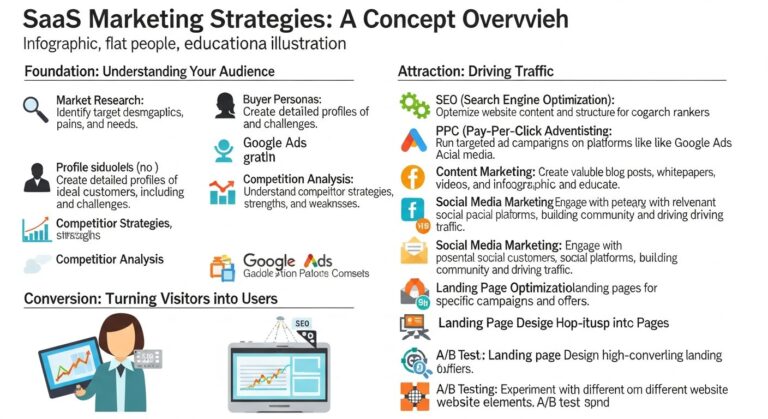
A sophisticated Digital Marketing Strategy is indispensable for tech startups to acquire users, build brand loyalty, and demonstrate scalability to investors. Funding directly fuels the effectiveness and reach of these strategies:
- Paid Advertising Campaigns: Significant capital is often needed for large-scale pay-per-click (PPC), social media advertising, and display ad campaigns to rapidly increase visibility and generate leads.
- Content Marketing & SEO: Investing in high-quality content creation (blog posts, whitepapers, videos), search engine optimization (SEO) specialists, and content distribution platforms helps build organic authority and long-term traffic.
- Influencer Marketing & Partnerships: Funds can be allocated to collaborate with industry influencers, thought leaders, or strategic partners to leverage their audience and credibility.
- Data Analytics & Marketing Automation: Acquiring advanced analytics tools, customer relationship management (CRM) systems, and marketing automation platforms allows for data-driven decision-making and personalized customer engagement.
- User Acquisition & Retention: Digital marketing budgets support A/B testing, conversion rate optimization (CRO), and retargeting campaigns crucial for optimizing customer acquisition cost (CAC) and improving customer lifetime value (LTV).
By strategically allocating funding to digital marketing, tech startups can not only acquire users efficiently but also demonstrate clear pathways to scalable customer growth, a key indicator for potential investors.

What are the Key Stages and Types of Startup Funding?
Understanding the varied stages and types of startup funding is paramount for any tech entrepreneur looking to secure capital. Each stage serves a distinct purpose, corresponds to different investor profiles, and has unique expectations concerning a startup’s maturity and growth trajectory. Successfully navigating the startup funding landscape for Tech Startup Growth & Digital Marketing Strategy means knowing which type of funding aligns with your current needs and future ambitions.
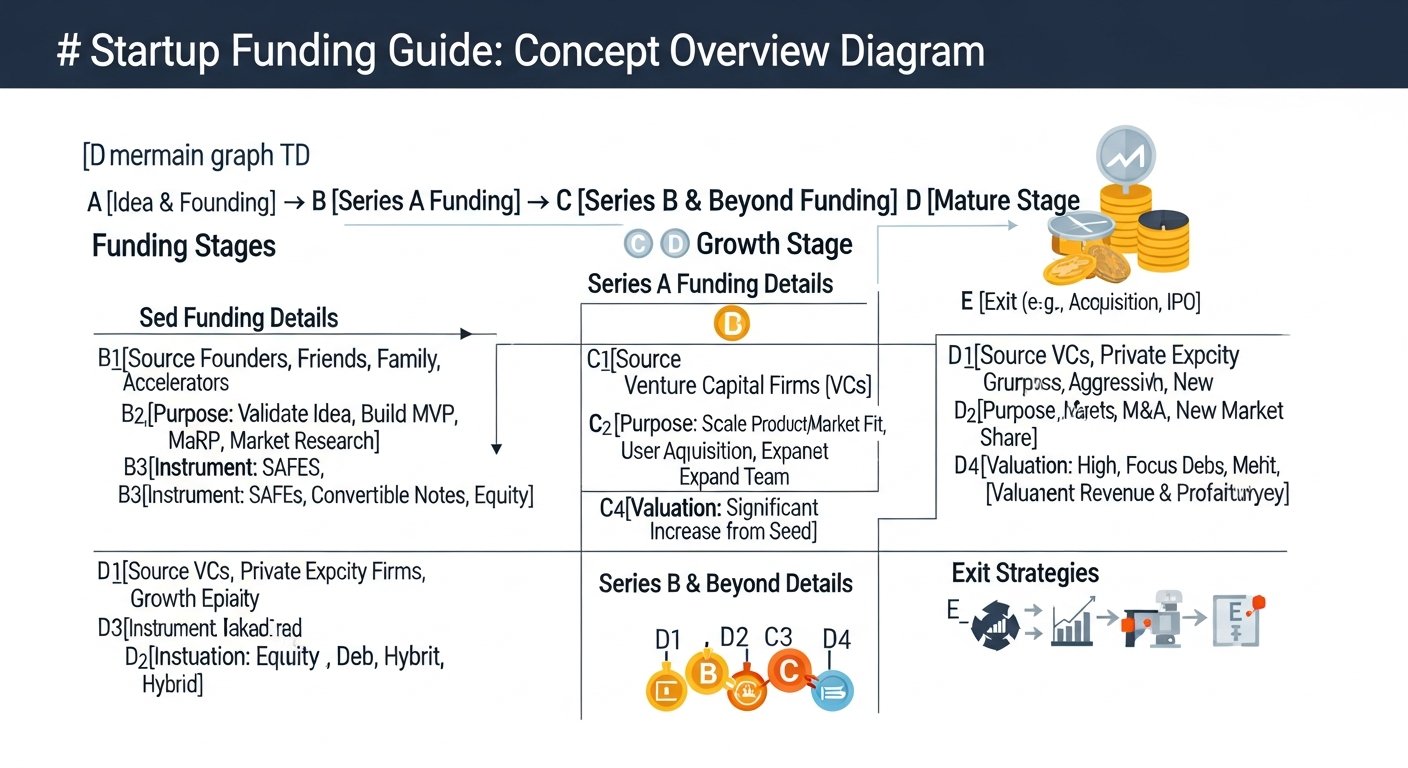
Here’s a breakdown of the key stages and types of funding that can power your tech venture:
What is Seed Funding and When Do You Need It?
Seed funding is typically the earliest stage of formal investment, often occurring when a tech startup is still in its nascent phases. It’s called “seed” because it provides the initial capital to plant the idea and begin development. This funding is crucial for:
- Concept Validation: Proving the initial idea, conducting market research, and identifying a clear problem-solution fit.
- Minimum Viable Product (MVP) Development: Building the first functional version of the product to test with early users.
- Team Formation: Bringing on co-founders and initial key hires.
- Initial Digital Marketing: Early efforts to build a waiting list, create a basic online presence, and gather feedback through preliminary campaigns.
When to seek it: You generally need seed funding when you have a compelling idea, a strong founding team, and a clear vision for your product, but lack the resources to build the MVP and achieve initial traction. Seed rounds typically range from tens of thousands to a few million dollars, often sourced from angel investors, accelerators, or pre-seed venture funds.
What are the Key Differences Between Angel Investors and Venture Capital?
Both angel investors and venture capital (VC) firms provide significant capital, but they operate with different motivations, structures, and expectations:
Angel Investors:
- Profile: High-net-worth individuals, often successful entrepreneurs themselves, who invest their personal capital.
- Investment Size: Typically smaller investments, ranging from $25,000 to $500,000 or more, often participating in seed or early Series A rounds.
- Involvement: Often provide mentorship, industry connections, and strategic advice, taking a more hands-on approach due to personal investment.
- Expectations: Seek a good return on investment but may be more flexible and patient, driven by passion for the industry or mentorship opportunities.
- Due Diligence: Generally less formal and extensive compared to VCs.
Venture Capital (VC) Firms:
- Profile: Professional investment firms managing funds raised from limited partners (e.g., pension funds, endowments, corporations).
- Investment Size: Larger investments, ranging from millions to hundreds of millions, primarily in Series A, B, and later rounds.
- Involvement: Typically take a board seat, provide strategic guidance, and leverage their network, but often less hands-on with daily operations than angels.
- Expectations: Seek significant, often 10x or more, returns within a specific timeframe (e.g., 5-10 years), aiming for major exits (acquisition or IPO). Focused on quantifiable metrics for Tech Startup Growth.
- Due Diligence: Highly rigorous and extensive, scrutinizing financials, market, team, technology, and legal aspects.
Choosing between angels and VCs depends on your stage, capital needs, and desired level of investor involvement.
What is Series A, B, and Beyond Funding for Scaling Tech?
Once a tech startup has validated its product, achieved product-market fit, and demonstrated initial traction, it moves into subsequent funding rounds designed for scaling:
- Series A Funding:
- Purpose: To optimize the product, refine the business model, scale initial marketing efforts (especially Digital Marketing Strategy), and build out the core team.
- Metrics: Investors look for strong user engagement, clear monetization paths, and evidence of a repeatable, scalable customer acquisition strategy.
- Investment: Typically ranges from $2 million to $15 million, often led by venture capital firms.
- Series B Funding:
- Purpose: To accelerate growth, expand into new markets, develop new product lines, and significantly scale operations and sales/marketing teams.
- Metrics: Focus is on rapid growth in key performance indicators (KPIs) like revenue, user base, and market share, proving the business model can scale aggressively.
- Investment: Can range from $10 million to $50 million, often led by established VC firms.
- Series C, D, and Beyond:
- Purpose: To fuel aggressive expansion, international growth, strategic acquisitions, and prepare for a potential IPO or large acquisition.
- Metrics: Investors seek market leadership, sustained high growth rates, and clear path to profitability or a major liquidity event.
- Investment: Can be tens to hundreds of millions of dollars, involving later-stage VC firms, private equity, and institutional investors.
Each subsequent round builds on the successes of the previous one, demanding increasing levels of performance and a clearer vision for large-scale Tech Startup Growth.
Are Debt Funding and Grants Right for Your Tech Startup?
While equity funding (angels, VCs) involves giving up ownership, debt funding and grants offer alternative ways to secure capital without diluting equity.
- Debt Funding:
- What it is: Borrowing money that must be repaid with interest, similar to a traditional loan.
- Types: Venture debt (loans specifically for VC-backed startups), convertible notes (debt that converts to equity later), lines of credit, traditional bank loans.
- Pros: No equity dilution, predictable repayment schedule, can be less restrictive than equity investors.
- Cons: Requires repayment regardless of success, can be harder to secure for early-stage tech startups without collateral or revenue, interest payments add to burn rate.
- When to use: Best for startups with predictable revenue streams, those looking to bridge between equity rounds, or for specific growth initiatives where ROI is clear.
- Grants:
- What it is: Non-repayable funds awarded by government agencies, foundations, or corporations, often for specific research, innovation, or social impact initiatives.
- Types: Small Business Innovation Research (SBIR) and Small Business Technology Transfer (STTR) grants in the US, European Horizon programs, national innovation funds.
- Pros: Non-dilutive, provides credibility, often comes with technical assistance.
- Cons: Highly competitive, lengthy application process, often project-specific, may require matching funds.
- When to use: Ideal for tech startups engaged in deep R&D, scientific breakthroughs, or those addressing significant societal challenges. Can be a fantastic way to fund initial research and development without giving up equity.
Both debt and grants can be valuable components of a diverse startup funding strategy, particularly for tech ventures with high R&D costs or clear social benefit potential.
Table 1: Startup Funding Stages for Tech Ventures
| Funding Stage | Typical Amount Range | Investor Type | Primary Use of Funds | Relevance to Digital Marketing |
|---|---|---|---|---|
| Seed | $50K – $2M | Angel Investors, Accelerators, Early-stage VCs, Friends & Family | MVP development, market research, initial team, concept validation | Early testing, social media presence, basic website SEO, audience building |
| Angel | $25K – $500K | Angel Investors | Proof of concept, early traction, team expansion, initial product iterations | Targeted ad campaigns, content creation, analytics setup, lead generation |
| Series A | $2M – $15M | Venture Capital Firms | Product optimization, market penetration, scaling operations, core team growth | Aggressive user acquisition, full-scale SEO/SEM, content strategy, marketing automation |
| Series B | $10M – $50M | Venture Capital Firms, Growth Equity | Rapid scaling, new market entry, product expansion, strategic hiring | International campaigns, brand building, advanced personalization, retention marketing |
| Debt | Varies ($500K – $10M+) | Venture Debt Funds, Banks | Working capital, bridging equity rounds, specific growth initiatives | Funding specific ad campaigns, expanding marketing tech stack, short-term ROI projects |
| Grants | Varies ($10K – $1M+) | Government Agencies, Foundations, Corporations | R&D, specific project development, social impact initiatives | Funding for content promoting research, educational campaigns, awareness for specific projects |
How to Prepare Your Tech Startup for Investment?
Securing investment for Tech Startup Growth & Digital Marketing Strategy is less about luck and more about meticulous preparation. Investors, particularly those in the tech sector, scrutinize every aspect of a venture, seeking strong indicators of potential, scalability, and defensibility. To successfully navigate the startup funding journey, your tech startup must be investor-ready, presenting a compelling narrative backed by robust data and a clear vision.
How to Craft a Compelling Pitch Deck for Tech Investors?
Your pitch deck is often the first, and sometimes only, impression you make on potential investors. For tech startups, it must not only tell a compelling story but also clearly articulate the technological innovation and market opportunity. A strong pitch deck typically includes:
- Problem: Clearly define the significant problem your tech solution addresses.
- Solution: Introduce your innovative tech product or service and how it uniquely solves the problem.
- Market Opportunity: Quantify the total addressable market (TAM), serviceable available market (SAM), and serviceable obtainable market (SOM). Emphasize the growth potential for your specific niche.
- Product/Technology: Showcase your tech. Explain key features, competitive advantages, and intellectual property. Visuals (mockups, screenshots, demo links) are crucial here.
- Business Model: How do you make money? Subscription, SaaS, freemium, ad-supported, transaction fees? Be clear and concise.
- Traction: This is critical. Highlight key metrics like user growth, revenue, engagement rates, customer acquisition costs (CAC), and customer lifetime value (LTV). Show early successes from your Digital Marketing Strategy.
- Team: Introduce your founders and key team members, emphasizing their relevant experience, expertise, and unique skills crucial for Tech Startup Growth.
- Competition: Analyze your competitive landscape, highlighting your differentiation and sustainable advantage.
- Financial Projections: Present realistic, well-justified financial forecasts for the next 3-5 years, showing revenue, expenses, and profitability. Link these to your growth strategy.
- The Ask: Clearly state how much funding you are seeking, how you plan to use it (break down allocation for R&D, marketing, team expansion), and what milestones this funding will enable.
Visual appeal, brevity, and a clear, confident narrative are key. For tech, demonstrating the ‘how’ behind your innovation is often as important as the ‘what’.
How to Develop a Robust Business Plan for Growth & Marketing?
While the pitch deck provides a high-level overview, a comprehensive business plan offers the detailed strategy behind your Tech Startup Growth & Digital Marketing Strategy. It’s a living document that guides your operations and serves as a deeper dive for interested investors. Key components include:
- Executive Summary: A concise overview of your entire plan.
- Company Description: Mission, vision, legal structure, and core values.
- Market Analysis: Deep dive into industry trends, target customer segments, market size, and competitive analysis.
- Product/Service Description: Detailed technical specifications, development roadmap, and intellectual property strategy.
- Marketing and Sales Strategy: This section is vital. Outline your Digital Marketing Strategy, including SEO, SEM, content marketing, social media, email campaigns, PR, and sales channels. Detail your customer acquisition funnel, CAC projections, and how you will achieve widespread user adoption to drive Tech Startup Growth.
- Management Team: Detailed biographies of key personnel, organizational structure, and hiring plan.
- Financial Plan: Detailed financial statements (income statement, balance sheet, cash flow), funding request, use of funds, break-even analysis, and sensitivity analysis. Emphasize projections related to user acquisition through digital marketing and how these contribute to growth metrics.
- Appendix: Supporting documents, resumes, market research, letters of intent, etc.
A well-structured business plan proves that you’ve thoroughly thought through every aspect of your venture.
What are the Key Valuation Methods for Early-Stage Tech Startups?
Valuing an early-stage tech startup can be challenging due to limited revenue and profitability, but it’s crucial for determining equity stakes. Common valuation methods include:
- Scorecard Method: Compares your startup to similar funded companies in your region and industry, adjusting for factors like management team, market size, product/technology, competitive environment, and marketing/sales channels.
- Berkus Method: Assigns a monetary value (e.g., $500K) to five key success factors: Sound Idea, Prototype, Quality Management Team, Strategic Relationships, and Rollout/Sales, summing them up to a pre-money valuation.
- Venture Capital Method: Works backward from a projected exit valuation (e.g., in 5-7 years) and discounts it by the desired return multiple (e.g., 10x-20x) to arrive at a present valuation.
- Discounted Cash Flow (DCF): Projects future cash flows and discounts them back to the present value. More suitable for companies with established revenue.
- Comparable Company Analysis (CCA): Compares your startup to publicly traded or recently acquired companies in similar industries using metrics like revenue multiples.
For tech startups, intellectual property, scalability, and market disruption potential often weigh heavily in valuation discussions. It’s essential to have a well-reasoned argument for your valuation during negotiations.
How to Build an Investor-Ready Team and Demonstrate Traction?
Beyond the idea, investors bet on teams. A strong, cohesive, and experienced team is paramount for Tech Startup Growth. Investors look for:
- Complementary Skills: A balanced team with technical, business, and marketing expertise.
- Relevant Experience: Founders with a track record of success or domain-specific knowledge.
- Passion & Commitment: Demonstrated dedication to the venture.
- Advisory Board: A strong advisory board with industry experts can add significant credibility.
Traction, however, is the most powerful indicator of future success. For tech startups, traction can come in many forms even before significant revenue:
- User Growth & Engagement: Active users, retention rates, daily/monthly active users (DAU/MAU).
- Product Milestones: Completed MVP, successful beta tests, key feature releases.
- Customer Acquisition: Low CAC, high LTV, early customer testimonials, pre-orders.
- Partnerships: Strategic alliances, letters of intent from significant clients.
- Digital Marketing Performance: Proof of concept for effective user acquisition channels, positive ROI on marketing spend.
- Press & Awards: Recognition from industry publications or competitions.
The more demonstrable traction you have, especially through effective Digital Marketing Strategy driving user adoption, the more attractive your tech startup becomes to investors. This mitigates risk and proves that your team can execute.

How to Navigate the Startup Funding Process: From Pitch to Close?
Securing startup funding for Tech Startup Growth & Digital Marketing Strategy is a multi-stage process that extends far beyond crafting a great pitch deck. From identifying the right investors to negotiating term sheets and closing the deal, each step requires strategic thinking, persistence, and meticulous attention to detail. This section outlines the critical phases involved in transforming an initial pitch into a successful investment.
How to Identify and Approach the Right Investors?
Not all investors are created equal, especially for tech startups. Identifying and approaching the right ones is crucial for a successful funding round:
- Research Investor Focus: Look for investors who specialize in your industry (e.g., SaaS, AI, FinTech, Web3), stage of development (seed, Series A), and geographical location. Review their portfolio companies to ensure alignment.
- Understand Their Thesis: What kind of problems do they like to solve? What growth metrics do they prioritize? A deep understanding of their investment thesis will help tailor your pitch.
- Leverage Your Network: Personal introductions are far more effective than cold outreach. Tap into your mentors, advisors, and professional connections for warm introductions. Attend industry events and pitch competitions.
- Craft a Targeted Outreach: When reaching out, personalize your message. Briefly explain why your startup is a good fit for their portfolio and clearly articulate your value proposition for Tech Startup Growth & Digital Marketing Strategy. Highlight specific traction.
A well-researched and targeted approach saves time and significantly increases your chances of getting a meeting.
Table 2: Investor Profile Comparison for Tech Startups
| Investor Type | Investment Focus | Typical Involvement | Key Expectations | Pros | Cons |
|---|---|---|---|---|---|
| Angel Investor | Early-stage, specific industries, often mentorship-driven | Hands-on advice, connections, mentorship | Good return, potential for passion projects | Flexible terms, valuable mentorship, quick decisions | Smaller checks, less formal due diligence (can be a con too), individual risk tolerance |
| Venture Capital (VC) Firm | High-growth potential, scalable tech, specific stages (e.g., Series A, B) | Board seat, strategic guidance, extensive network | Significant ROI (10x+), rapid scaling, clear exit strategy | Large capital, credibility, access to vast resources, structured support | Demanding terms, significant equity dilution, intense scrutiny, high pressure for growth |
| Incubator/Accelerator | Very early-stage, mentorship, rapid development, often sector-specific | Structured program, mentorship, co-working space, demo day | Rapid iteration, product-market fit, next-round funding potential | Structured support, early seed capital, network, intense learning | Equity dilution for small capital, demanding program, short-term focus |
| Strategic Investor (Corporate VC) | Alignment with parent company’s goals, technology synergy, market access | Potential for partnership, access to corporate resources, distribution channels | Strategic benefit for parent co., market advantage, potential acquisition | Access to corporate resources, distribution, strategic partnerships | Potential for conflict of interest, slower decision-making, less flexibility |
What Do Investors Look For When Mastering the Pitch Meeting?
The pitch meeting is your opportunity to bring your deck to life. Investors look for more than just facts; they assess your leadership, vision, and ability to execute. Key elements include:
- Clarity & Conciseness: Articulate your vision, problem, solution, and ask clearly and quickly. Avoid jargon unless absolutely necessary.
- Storytelling: Engage investors emotionally and logically. Tell the story of your startup’s journey, the problem you’re solving, and the impact it will have on users and the market.
- Confidence & Enthusiasm: Your passion for your venture should be palpable. Investors want to see that you are fully committed.
- Market Expertise: Demonstrate a deep understanding of your target market, customer pain points, and competitive landscape.
- Team Chemistry: If co-founders are present, show a cohesive, respectful, and effective working relationship.
- Response to Questions: Be prepared for tough questions. Answer honestly, thoughtfully, and without defensiveness. It shows your ability to think on your feet and handle challenges. Highlight how your Digital Marketing Strategy will drive Tech Startup Growth.
Practice your pitch relentlessly, anticipate questions, and be ready to adapt your message based on the investor’s feedback and focus.
What is Involved in Due Diligence and Term Sheet Negotiation?
Once an investor expresses serious interest, the due diligence phase begins. This is an extensive investigation into all aspects of your company:
- Legal: Corporate structure, intellectual property, contracts, compliance.
- Financial: Detailed historical financials, projections, burn rate, cap table.
- Technical: Product roadmap, technology stack, security, scalability.
- Market: Customer validation, competitive analysis, market growth.
- Team: Background checks, key employee agreements.
Simultaneously, you will receive a term sheet – a non-binding outline of the key terms and conditions of the investment. It covers:
- Valuation: Pre-money and post-money valuation.
- Investment Amount: How much capital is being invested.
- Equity Stake: Percentage of ownership the investor will receive.
- Liquidation Preferences: How investors get paid back in an exit scenario.
- Board Representation: Whether the investor gets a board seat.
- Protective Provisions: Rights that allow investors to block certain company actions.
- Vesting Schedules: For founder shares.
Negotiating the term sheet is critical. Engage experienced legal counsel specializing in startup finance. Focus on key terms that impact control, future fundraising, and founder incentives. A balanced deal benefits both parties and fosters a strong working relationship, crucial for long-term Tech Startup Growth.
What are the Legalities and Post-Investment Steps for Closing the Deal?
After term sheet negotiation, the process moves to definitive legal documentation. This involves drafting and executing various agreements, which can be complex and time-consuming:
- Stock Purchase Agreement: Outlines the terms of the equity sale.
- Investor Rights Agreement: Details investor rights such as information rights, pro-rata rights, and registration rights.
- Voting Agreement: Dictates how certain shares will be voted.
- Certificate of Incorporation/Bylaws: Amended to reflect new share classes and corporate governance.
Once all documents are signed and funds are transferred, the deal is officially closed. However, the work doesn’t stop there. Post-investment steps are equally important:
- Communication: Maintain regular, transparent communication with your new investors. Provide updates on progress, challenges, and key milestones, particularly those related to Tech Startup Growth & Digital Marketing Strategy.
- Strategic Alignment: Leverage your investors’ expertise and network. Engage them in strategic discussions and seek their advice when needed.
- Execution: Focus intensely on executing your business plan and achieving the milestones you outlined in your pitch. Demonstrate that the capital is being used effectively to drive growth.
- Compliance: Ensure you comply with all legal and reporting requirements stemming from the investment.
Building strong relationships with your investors is an ongoing process that can yield benefits far beyond the initial capital injection, setting the stage for future funding rounds and accelerated Tech Startup Growth.
How to Leverage Startup Funding for Tech Growth & Digital Marketing?
Once your startup funding round is complete, the real work of judiciously allocating and deploying that capital begins. For tech startups, the strategic use of funds directly impacts the speed and sustainability of Tech Startup Growth & Digital Marketing Strategy. Every dollar invested should contribute to achieving key milestones, expanding market reach, and ultimately, building a valuable enterprise.
How to Strategically Allocate Funds for Product Development & Scaling?
A significant portion of funding in tech startups is dedicated to product development and scaling initiatives. Strategic allocation in these areas is vital:
- Engineering & R&D:
- Talent Acquisition: Hiring and retaining top-tier engineers, developers, and product managers to accelerate feature development and innovation. This is often the largest expense.
- Infrastructure: Investing in robust cloud infrastructure, developer tools, and security protocols to ensure scalability, reliability, and data protection as your user base grows.
- New Product Lines/Features: Allocating budget for research and development of entirely new product offerings or significant enhancements to existing ones, keeping your tech competitive.
- Operations & Scalability:
- Automation: Investing in automation tools for customer support, onboarding, and internal processes to reduce manual effort and increase efficiency as you scale.
- International Expansion: Budgeting for localization, legal compliance, and initial market entry strategies if global growth is a key objective.
- Customer Success: Building out a dedicated customer success team and tools to ensure high retention rates, especially crucial for SaaS models.
Each investment should be tied to measurable outcomes that advance your product and operational capabilities, directly supporting Tech Startup Growth.
How to Optimize Your Digital Marketing Budget for Maximum ROI?
A well-funded Digital Marketing Strategy is a powerful engine for Tech Startup Growth, but funds must be spent wisely to achieve maximum ROI. Optimizing your digital marketing budget involves a blend of data-driven decisions and creative execution:
- Customer Acquisition Cost (CAC) Reduction:
- A/B Testing: Continuously test ad creatives, landing pages, and calls-to-action to identify the most effective combinations that lower CAC.
- Channel Optimization: Allocate budget to channels (e.g., Google Ads, Meta Ads, LinkedIn, TikTok, SEO, content marketing) that yield the best return on ad spend (ROAS) and lowest CAC for your target audience.
- Audience Targeting: Use advanced segmentation and lookalike audiences to reach highly relevant prospects, reducing wasted ad spend.
- Brand Building & Awareness:
- Content Marketing at Scale: Invest in high-quality, SEO-optimized content (blogs, videos, podcasts) that positions your tech startup as a thought leader and attracts organic traffic.
- Public Relations: Engage PR firms or specialists to secure media coverage in tech and industry publications, building credibility and brand awareness.
- Influencer & Affiliate Marketing: Partner with relevant influencers or establish affiliate programs to tap into new audiences cost-effectively.
- Retention & Engagement:
- Email Marketing & CRM: Invest in robust CRM and email marketing platforms to nurture leads, onboard users, and drive customer retention through personalized communication.
- In-App Messaging/Notifications: Utilize funds for tools that enable targeted in-app messages or push notifications to enhance user engagement and feature adoption.
- Referral Programs: Fund incentive-based referral programs to leverage existing happy customers for new user acquisition.
By constantly measuring, analyzing, and adapting your digital marketing efforts, you ensure that every dollar invested contributes meaningfully to user acquisition, retention, and overall Tech Startup Growth.
What Key Metrics Should You Track for Investors and Growth?
Investors demand clear, consistent reporting on key performance indicators (KPIs) that demonstrate the health and growth trajectory of your tech startup. Focusing on these metrics is not only about investor relations but also about internally driving sustainable growth:
- Financial Metrics:
- Monthly Recurring Revenue (MRR) / Annual Recurring Revenue (ARR): Critical for SaaS and subscription-based tech companies.
- Burn Rate: How quickly you’re spending cash; indicates your runway.
- Gross Margin: Profitability of your product or service after direct costs.
- Runway: How many months you can operate before running out of cash.
- Customer & User Metrics:
- Customer Acquisition Cost (CAC): The cost to acquire a new customer.
- Customer Lifetime Value (LTV): The total revenue expected from a customer over their relationship with your company. Investors look for LTV:CAC ratios of 3:1 or higher.
- Churn Rate: The percentage of customers who stop using your service over a given period. Low churn is critical.
- User Growth (DAU/MAU): Daily Active Users / Monthly Active Users, indicating engagement and stickiness.
- Conversion Rate: Percentage of visitors who complete a desired action (e.g., sign-up, purchase).
- Product & Marketing Metrics:
- Product-Market Fit (PMF): Often measured by surveys (e.g., “how would you feel if you could no longer use our product?”).
- Net Promoter Score (NPS): Measures customer loyalty and likelihood to recommend.
- Organic Traffic Growth: Increase in visitors from search engines, reflecting effective SEO.
- ROAS (Return on Ad Spend): Revenue generated for every dollar spent on advertising, particularly relevant to your Digital Marketing Strategy.
Consistent tracking and reporting of these metrics build trust with investors and provide valuable insights for internal strategic decision-making, ensuring that capital deployment directly correlates with demonstrable Tech Startup Growth.
Table 3: Key Digital Marketing Metrics for Tech Investors
| Metric | Definition | Why it Matters to Investors | Impact on Tech Startup Growth |
|---|---|---|---|
| Customer Acquisition Cost (CAC) | Total marketing & sales spend / # new customers acquired | Indicates efficiency of customer acquisition; lower is better. | Directly impacts profitability and scalability of user base. |
| Lifetime Value (LTV) | Average revenue per user x average customer lifespan | Shows long-term revenue potential from each customer. High LTV justifies higher CAC. | Enables more aggressive marketing spend and sustainable revenue generation. |
| Return on Ad Spend (ROAS) | Revenue from ads / Cost of ads | Measures the direct revenue generated by advertising campaigns. | Optimizes marketing budget allocation, ensuring profitable ad campaigns. |
| Conversion Rate | # Conversions / # Visitors | Indicates effectiveness of website/app design and marketing funnels. | Higher conversion means more users/sales from existing traffic, reducing CAC. |
| Organic Traffic Growth | Increase in visitors from unpaid search results over time | Demonstrates brand authority, effective SEO, and sustainable, low-cost customer acquisition. | Reduces reliance on paid channels, improves long-term brand visibility and trust. |
| Churn Rate | (# lost customers / # total customers at start) x 100 | Reveals customer satisfaction and retention ability; high churn signals problems. | Lower churn means sustainable revenue and growth from existing customers, boosting LTV. |
What are Common Startup Funding Pitfalls and Alternative Options for Tech Startups?
The journey to securing startup funding for Tech Startup Growth & Digital Marketing Strategy is fraught with challenges. Recognizing common pitfalls can help entrepreneurs avoid costly mistakes, while understanding alternative funding sources can provide valuable backup or complementary strategies. Learning from the missteps of others is as crucial as emulating successes.
What Are the Most Common Startup Funding Mistakes?
Entrepreneurs, particularly in the fast-paced tech world, often make predictable errors that can jeopardize their funding prospects:
- Lack of a Clear Vision & Story: Failing to articulate a compelling problem, solution, and market opportunity. Investors often see many similar ideas; your unique story and vision must stand out.
- Unrealistic Valuation: Overvaluing your early-stage tech startup can deter investors. Being too greedy early on can make it difficult to raise subsequent rounds.
- Insufficient Traction: Approaching investors too early without any demonstrable product-market fit, user base, or revenue. Investors want to see evidence that your team can execute on its Digital Marketing Strategy and product roadmap.
- Poor Due Diligence Preparation: Not having financials, legal documents, or cap table organized. This signals disorganization and can significantly delay or derail a deal.
- Ignoring Investor-Market Fit: Pitching to the wrong investors (e.g., a B2C SaaS startup pitching to a deep tech hardware investor). This wastes everyone’s time.
- Weak Team: A lack of complementary skills, relevant experience, or demonstrated leadership within the founding team. Investors primarily invest in people.
- Neglecting Digital Marketing Metrics: Failing to track, understand, and present key metrics like CAC, LTV, and ROAS. This shows a lack of understanding of how to drive scalable Tech Startup Growth.
- Burn Rate Mismanagement: Spending too quickly without sufficient runway, leading to a desperate fundraising situation, which weakens negotiation power.
- Lack of Legal Counsel: Attempting to navigate complex term sheets and legal agreements without experienced startup legal advice. This can lead to unfavorable terms.
Avoiding these common errors requires foresight, humility, and a commitment to meticulous preparation and strategic execution.
How to Explore Crowdfunding and Bootstrapping for Tech Ventures?
Beyond traditional equity and debt, tech startups have increasingly viable alternative funding avenues that offer unique benefits, especially for those focused on specific Digital Marketing Strategy angles or product niches.
- Crowdfunding:
- What it is: Raising small amounts of capital from a large number of individuals, typically via online platforms.
- Types:
- Reward-based: Backers receive a product or experience (e.g., Kickstarter, Indiegogo). Excellent for product validation and building early community around your tech product. Can double as a viral Digital Marketing Strategy.
- Equity-based: Backers receive a small equity stake in the company (e.g., SeedInvest, Republic). Allows for broader investor participation.
- Debt-based: Backers lend money with the expectation of repayment with interest.
- Pros: Market validation, early customer base, brand awareness, non-dilutive (reward-based), quick capital infusion, bypasses traditional gatekeepers.
- Cons: Intense marketing effort required, risk of not meeting goals, public exposure of ideas, managing many small investors.
- Relevance for Tech: Particularly strong for consumer tech products (hardware, apps) where early adopters are eager to support and evangelize. Can validate product-market fit and generate buzz that fuels Digital Marketing Strategy. Learn more about crowdfunding.
- Bootstrapping:
- What it is: Funding a startup primarily through personal savings, revenue generated from early sales, and minimal external capital.
- Pros: Full ownership and control, lean operations, forces financial discipline, builds resilience, validation of profitability from day one.
- Cons: Slower growth, limited resources for scaling or aggressive Digital Marketing Strategy, higher personal risk for founders, slower talent acquisition.
- Relevance for Tech: Suitable for tech startups with low initial capital requirements, strong early monetization potential (e.g., B2B SaaS with small initial customer base), or founders willing to sacrifice speed for control. Many successful tech companies started by bootstrapping for years, using revenue to fund organic Tech Startup Growth. Explore bootstrapping strategies.
Both crowdfunding and bootstrapping can be powerful tools for tech entrepreneurs, offering pathways to build, validate, and grow without immediately ceding equity or control. They often serve as excellent foundational strategies before seeking larger institutional startup funding rounds.
Conclusion: Fueling Your Tech Venture with Smart Funding
Securing the right startup funding is a transformative step for any tech venture focused on aggressive Tech Startup Growth & Digital Marketing Strategy. This comprehensive guide has explored the critical stages, types, and processes involved, from understanding the fundamental need for capital to strategically leveraging it for product development, team expansion, and optimized digital marketing. We’ve highlighted the importance of meticulous preparation, including crafting a compelling pitch deck, developing a robust business plan, and building an investor-ready team with demonstrable traction. Furthermore, navigating the funding process, from identifying the right investors to mastering negotiations and avoiding common pitfalls, is crucial for a successful outcome.
The tech landscape of 2026 demands not just innovative ideas, but also the financial acumen to bring them to market effectively. By applying the insights from this guide, entrepreneurs can confidently approach investors, articulate their vision for growth, and secure the capital necessary to accelerate their entrepreneurial journey. Remember that funding is a tool; its true value lies in how strategically it is deployed to drive innovation, acquire customers through a powerful Digital Marketing Strategy, and ultimately, achieve sustainable Tech Startup Growth. With diligent planning and execution, your tech startup is poised to not just survive, but thrive and lead in the ever-evolving digital economy.