
Startup Legal & Compliance Guide: Essential for Sustainable Growth & Digital Transformation
This comprehensive startup legal and compliance guide provides essential insights for businesses aiming for sustainable growth and successful digital transformation. Navigating the intricate landscape of legal requirements and regulatory compliance is not merely a formality but a strategic imperative for any nascent enterprise. From choosing the right business structure to protecting intellectual property and ensuring data privacy, adherence to legal standards minimizes risks, attracts investment, and builds trust. These are all critical components for a startup’s long-term viability and its ability to innovate in the digital age. A proactive approach to legal and compliance matters is the bedrock upon which thriving startup businesses are built, enabling them to confidently pursue market expansion and technological advancement without unforeseen legal hurdles hindering their momentum.
For any founder, understanding and implementing a robust legal framework from day one is not just about avoiding penalties; it’s about laying a secure foundation for rapid scaling. This guide will walk you through the critical legal and compliance areas every startup must master to achieve continuous growth and successfully navigate the complexities of digital transformation in an ever-evolving market. By prioritizing legal due diligence and embedding compliance into their operational DNA, startups can unlock their full potential, attract top talent, secure vital funding, and build an unshakable reputation, ensuring they are well-prepared for the challenges and opportunities ahead.
What are the Foundational Legal Structures for Your Startup?
Establishing the correct legal structure is the first and most critical step in your startup’s journey. This foundational decision significantly impacts liability, taxation, administrative burden, and future fundraising capabilities. Startup businesses must establish a robust legal foundation to ensure stability and attract investors, directly influencing their trajectory towards sustainable growth and digital transformation. Choosing wisely minimizes future complications and positions your entity for long-term success.
How to Choose the Right Business Entity (LLC, C-Corp, S-Corp)?
The choice of business entity is paramount, dictating how your startup operates and how its founders are protected. Each structure offers distinct advantages and disadvantages:
- Limited Liability Company (LLC): An LLC provides personal liability protection for its owners (members), meaning personal assets are generally shielded from business debts and lawsuits. It offers flexible taxation, often allowing profits and losses to “pass-through” to the owners’ personal income without being taxed at the company level (avoiding double taxation). An LLC is typically simpler to set up and administer than a corporation, making it appealing for many early-stage startups that prioritize operational simplicity and liability protection.
- C Corporation (C-Corp): A C-Corp is a separate legal entity from its owners, offering strong liability protection. It is often the preferred structure for startups seeking significant venture capital funding because it allows for an unlimited number of shareholders, different classes of stock, and is well-understood by institutional investors. However, C-Corps are subject to “double taxation”—the corporation pays taxes on its profits, and shareholders pay taxes again on dividends received. Despite this, the C-Corp structure is highly conducive to public offerings and substantial fundraising, essential for extensive digital transformation initiatives.
- S Corporation (S-Corp): An S-Corp is a special type of corporation that elects to pass corporate income, losses, deductions, and credits through to their shareholders’ personal income, similar to an LLC, thereby avoiding double taxation. It still offers limited liability protection. However, S-Corps come with more restrictions, such as limits on the number of shareholders (typically 100 maximum) and restrictions on shareholder types (e.g., generally no corporations, partnerships, or non-resident aliens as shareholders). This structure can be suitable for startups that don’t anticipate needing massive external investment or a complex shareholder structure early on.
The optimal choice depends on your startup’s specific goals regarding fundraising, personal liability, and tax efficiency. Consulting with a legal professional is crucial to align this choice with your long-term vision for business growth and digital transformation.
How to Craft Founder Agreements and Equity Vesting Schedules?
Beyond the primary business entity, robust internal agreements are vital for any multi-founder startup. A well-drafted founder agreement is a cornerstone for preventing future disputes and ensuring clear operational guidelines. This agreement typically covers:
- Roles and Responsibilities: Clearly defines who does what, avoiding overlap and accountability gaps.
- Equity Ownership and Vesting Schedules: Specifies each founder’s percentage of ownership and how that equity vests over time (e.g., a four-year vesting schedule with a one-year cliff). Vesting is critical as it incentivizes founders to stay committed and protects the company if a founder departs early.
- Decision-Making Processes: Establishes how critical decisions will be made, including voting rights and mechanisms for resolving deadlocks.
- Intellectual Property Assignment: Ensures all IP developed by founders in relation to the startup is assigned to the company, preventing future ownership disputes.
- Exit Clauses: Details conditions under which a founder can leave, be removed, or sell their shares, including “buy-sell” provisions.
These agreements are fundamental for the stability and harmonious operation required for any startup to focus on innovation and digital transformation without internal friction.
What are Essential Bylaws and Operating Agreements?
For corporations, bylaws outline the fundamental rules for the corporation’s internal management, including how meetings are held, officers are elected, and shares are issued. For LLCs, an operating agreement serves a similar purpose, detailing management structure, member rights and responsibilities, profit and loss allocation, and procedures for admitting new members or dissolving the LLC. These documents are legally binding and critical for smooth governance, demonstrating professionalism and structure to potential investors and partners alike. A meticulously structured operating agreement or set of bylaws reflects a mature approach to legal compliance, which is invaluable for securing the trust needed to drive substantial startup growth.
| Legal Structure | Key Attribute: Liability Protection | Key Attribute: Taxation | Key Attribute: Fundraising Suitability | Best For (Value) |
|---|---|---|---|---|
| LLC (Limited Liability Company) | Owners’ personal assets protected from business debts. | Pass-through taxation (no double taxation); flexible. | Moderate; can be converted to C-Corp for major VC. | Early-stage startups seeking flexibility, liability protection, and tax simplicity. |
| C-Corp (C Corporation) | Strongest separation of business and personal liability. | Double taxation (company and shareholders). | Excellent; preferred by venture capitalists and public markets. | Startups planning to raise significant capital, go public, or offer complex equity structures. |
| S-Corp (S Corporation) | Strong separation of business and personal liability. | Pass-through taxation (avoids double taxation). | Limited; restrictions on number and type of shareholders. | Startups that are profitable, don’t need complex equity, and have fewer shareholders. |
| Sole Proprietorship | No legal separation; unlimited personal liability. | Pass-through taxation; simple. | Poor; difficult to raise external capital beyond personal loans. | Very small, owner-operated businesses with minimal risk and no immediate growth plans. |
How to Protect Your Startup’s Intellectual Property Assets?
Beyond initial setup, protecting your intellectual property becomes paramount for any startup aiming for significant growth and digital transformation. Intellectual Property (IP) is a cornerstone for Startup Business Growth & Digital Transformation, representing the core innovations and brand identity that differentiate a company in the market. Safeguarding these assets is not just a defensive measure but a strategic imperative that attracts investment and ensures long-term competitive advantage. Without robust IP protection, a startup’s unique offerings can be easily replicated, undermining its market position and potential for future expansion.
Understanding Patents: Innovation & Exclusivity
Patents protect inventions, granting the patent holder exclusive rights to make, use, and sell the invention for a limited period (typically 20 years for utility patents). For technology-driven startups, patents are often the most valuable form of IP, safeguarding novel processes, machines, articles of manufacture, or compositions of matter. To be patentable, an invention must generally be novel, non-obvious, and useful. The patent registration process is complex, requiring detailed applications, often involving the USPTO (United States Patent and Trademark Office) or international equivalents. Securing patents is a powerful way for startup businesses to carve out a unique market position, attract significant investment, and defend against competitors, crucial for sustained growth in digitally transformative industries.
Trademarks: Brand Identity and Recognition
Trademarks protect brand names, logos, slogans, and other distinctive marks used to identify and distinguish goods or services. A strong trademark strategy builds brand equity, fosters customer loyalty, and prevents competitors from using similar marks that could confuse consumers. Registering a trademark with national authorities like the USPTO provides legal protection, including the right to sue for infringement. For startups, especially those leveraging digital platforms for marketing and sales, a distinctive and legally protected brand identity is essential for market penetration and establishing trust, directly fueling digital transformation efforts and customer acquisition.
Copyrights: Protecting Creative Works
Copyrights protect original works of authorship, including software code, website content, marketing materials, artistic works, and literary creations. Unlike patents or trademarks, copyright protection exists automatically upon creation. However, registering copyrights with the U.S. Copyright Office provides additional legal benefits, such as the ability to sue for infringement and seek statutory damages. For digital startups, copyright protection for software, algorithms, and unique content is critical for maintaining ownership over their core products and digital assets, ensuring that their creative output drives their growth and digital transformation efforts.
Safeguarding Trade Secrets and Proprietary Information
Trade secrets encompass confidential business information that provides a competitive edge, such as formulas, patterns, compilations, programs, devices, methods, techniques, or processes. Unlike patents, trademarks, or copyrights, trade secrets are not registered; their protection relies on maintaining secrecy. Measures like robust non-disclosure agreements (NDAs), strict internal security protocols, and employee education are vital. For many tech startups, proprietary algorithms, customer lists, and unique business processes may be protected as trade secrets. Effective trade secret protection is fundamental for preventing the unauthorized disclosure of critical operational and technological insights, directly impacting a startup’s ability to innovate and maintain its market leadership in the digital space.

| IP Type | What it Protects (Attribute) | How to Protect (Attribute) | Duration (Attribute) | Relevance to Startup Growth (Value) |
|---|---|---|---|---|
| Patent | Inventions (utility, design, plant), novel processes, machines, compositions. | Application and approval with government patent office (e.g., USPTO). | ~20 years from filing (utility), ~15 years (design). | Secures market exclusivity for core innovations, attracts investors, enables licensing. |
| Trademark | Brand names, logos, slogans, symbols identifying goods/services. | Use in commerce; registration with government trademark office (e.g., USPTO). | Indefinite, as long as used in commerce and renewed. | Builds brand recognition, customer loyalty, prevents competitor confusion, critical for marketing. |
| Copyright | Original works of authorship (software code, website content, books, music, art). | Automatic upon creation; registration with government copyright office (e.g., USCO) for stronger enforcement. | Author’s life + 70 years (individual); 95-120 years (corporate). | Protects core digital products, content, and creative assets, vital for software and media startups. |
| Trade Secret | Confidential business information providing a competitive edge (e.g., formulas, processes, customer lists). | Maintain secrecy through NDAs, internal security, employee agreements. | Indefinite, as long as secrecy is maintained. | Protects proprietary knowledge and competitive advantages not suitable for patenting, crucial for unique business models. |
How to Navigate Employment Law and HR Compliance?
As a startup scales, its compliance obligations expand, particularly in areas like employment law. Startup businesses face intricate employment law challenges that directly impact team building, operational efficiency, and overall growth potential. Navigating these complexities is essential for fostering a positive work environment, mitigating legal risks, and ensuring that human capital drives, rather than hinders, the company’s digital transformation journey. From initial hiring to managing employee relations and eventual departures, adherence to labor laws is a non-negotiable aspect of sustainable startup legal and compliance.
Hiring Legally: Contracts, Classifications, and Onboarding
The hiring process involves several critical legal considerations:
- Employment Contracts: While “at-will” employment is common in the U.S., formal employment agreements can define terms, roles, compensation, and IP assignment. For executives or highly specialized roles, detailed contracts are often necessary.
- Employee vs. Independent Contractor Classification: Misclassifying workers can lead to significant legal penalties, including back wages, taxes, and benefits. Strict federal and state tests determine whether a worker is an employee or an independent contractor. Startups leveraging gig workers or freelancers must pay close attention to these rules.
- Non-Disclosure Agreements (NDAs) & Non-Compete Clauses: NDAs protect proprietary information. Non-compete clauses, though increasingly scrutinized and restricted by states, aim to prevent former employees from working for competitors.
- Equal Employment Opportunity (EEO): Startups must adhere to anti-discrimination laws during recruitment and hiring, ensuring fair treatment regardless of race, gender, age, religion, disability, or other protected characteristics.
- Onboarding Compliance: Completing I-9 forms for employment eligibility verification and providing required state and federal notices are essential onboarding steps.
Proper legal guidance in these areas helps startups attract and retain top talent while avoiding costly legal battles, which is crucial for accelerating growth and digital transformation.
Workplace Policies and Employee Handbooks
A comprehensive employee handbook is vital for communicating company policies and ensuring legal compliance. It outlines expectations regarding conduct, performance, benefits, and dispute resolution. Key policies often include:
- Anti-harassment and anti-discrimination policies.
- Code of conduct and ethics.
- Data privacy and cybersecurity policies (especially crucial for digital transformation).
- Use of company property and intellectual property policies.
- Leave policies (e.g., FMLA, sick leave).
- Workplace safety guidelines.
Regularly updating these policies ensures they remain compliant with evolving labor laws, safeguarding the startup from potential legal liabilities and fostering a clear, equitable workplace culture.
Compensation, Benefits, and Payroll Compliance
Adherence to wage and hour laws is non-negotiable. This includes:
- Minimum Wage and Overtime: Complying with federal (FLSA) and state minimum wage and overtime requirements for non-exempt employees.
- Payroll Taxes: Correctly withholding and remitting federal, state, and local payroll taxes.
- Benefits: Understanding obligations for benefits like workers’ compensation, unemployment insurance, and, for larger employers, health insurance under the Affordable Care Act (ACA).
- Equal Pay: Ensuring compensation practices do not discriminate based on protected characteristics.
Accurate and timely payroll and benefits compliance is a cornerstone of responsible employer practices, building employee trust and preventing disputes that could derail a startup’s growth trajectory.
Handling Terminations and Disputes Ethically and Legally
Employee terminations, even in “at-will” states, carry legal risks. Startups must ensure that terminations are not discriminatory or retaliatory and follow proper procedures. Providing clear documentation, offering severance packages where appropriate, and understanding COBRA notification requirements are part of a legally sound termination process. For disputes, employing clear internal grievance procedures, and if necessary, considering mediation or arbitration, can prevent costly litigation. A fair and legally compliant approach to managing employee exits and resolving disputes protects the startup’s reputation and financial stability, allowing it to maintain focus on its core mission of growth and digital innovation.
What are the Key Data Privacy Regulations for Digital Startups?
In the era of digital transformation, data privacy and cybersecurity are non-negotiable pillars of compliance for any startup. Data privacy is non-negotiable for digital transformation, representing a critical area of legal and compliance focus for startup businesses aiming for global reach and sustainable growth. The proliferation of data across digital platforms has ushered in a complex web of regulations designed to protect individual information, making robust privacy frameworks and cybersecurity measures essential for building customer trust and avoiding severe penalties. Neglecting these aspects can severely jeopardize a startup’s reputation, financial health, and ability to operate in key markets.
Understanding GDPR and its Impact on Global Growth
The General Data Protection Regulation (GDPR), enacted by the European Union, is one of the most comprehensive and influential data privacy laws globally. Its reach extends beyond the EU, impacting any startup that processes personal data of individuals residing in the EU, regardless of the startup’s location. Key GDPR requirements include:
- Lawful Basis for Processing: Requiring a legal justification for collecting and processing personal data (e.g., consent, contractual necessity, legitimate interest).
- Data Subject Rights: Granting individuals rights such as access, rectification, erasure (the “right to be forgotten”), and data portability.
- Data Protection by Design and Default: Mandating that privacy considerations are built into systems and processes from the outset.
- Data Breach Notification: Requiring prompt notification of data breaches to supervisory authorities and affected individuals.
- Data Protection Officer (DPO): Requiring certain organizations to appoint a DPO.
For startup businesses with global ambitions, GDPR compliance is a strategic advantage, fostering trust with international customers and enabling seamless growth into European markets. Non-compliance can lead to hefty fines, up to 4% of annual global revenue or €20 million, whichever is higher. For more details, refer to the official GDPR information portal.
CCPA Compliance for US-Based Digital Businesses
The California Consumer Privacy Act (CCPA), and its successor, the California Privacy Rights Act (CPRA), provide significant data privacy rights to California consumers. While primarily affecting businesses that meet certain revenue or data processing thresholds, many digital startups, especially those scaling rapidly, will eventually fall under its purview. Key aspects include:
- Right to Know: Consumers have the right to know what personal information is being collected about them.
- Right to Delete: Consumers can request the deletion of their personal information.
- Right to Opt-Out: Consumers can opt-out of the sale or sharing of their personal information.
- Non-Discrimination: Businesses cannot discriminate against consumers for exercising their privacy rights.
As state-level data privacy laws continue to proliferate in the U.S., understanding and implementing CCPA/CPRA compliance lays the groundwork for adapting to other regulations, reinforcing a startup’s commitment to responsible data handling and supporting its digital transformation efforts across the United States. For official information, visit the California Attorney General’s CCPA page.
Implementing Robust Cybersecurity Measures
Data privacy and cybersecurity are two sides of the same coin. A startup can only protect personal data if it has robust security measures in place. Essential cybersecurity practices include:
- Encryption: Protecting data at rest and in transit.
- Access Controls: Limiting who can access sensitive information.
- Regular Security Audits and Penetration Testing: Identifying and addressing vulnerabilities.
- Employee Training: Educating staff on phishing, social engineering, and data handling best practices.
- Incident Response Plan: A clear strategy for detecting, responding to, and recovering from security breaches.
- Privacy by Design: Integrating privacy and security considerations into the design and architecture of IT systems and business practices.
For any startup undergoing digital transformation, maintaining strong cybersecurity is not merely a technical requirement but a fundamental component of its legal and compliance framework, directly impacting its reputation, customer trust, and long-term viability.
Emerging Data Privacy Frameworks and Future Trends
The data privacy landscape is continually evolving. Beyond GDPR and CCPA, countries like Brazil (LGPD), Canada (PIPEDA), and various U.S. states are introducing their own comprehensive privacy laws. Furthermore, emerging trends like AI ethics, facial recognition regulations, and privacy-enhancing technologies (PETs) are shaping the future of digital compliance. Startup businesses engaged in cutting-edge digital transformation must remain agile, continuously monitoring and adapting their data privacy and cybersecurity strategies to stay ahead of regulatory changes. Proactive engagement with these evolving frameworks ensures sustained growth and protects against future legal challenges.

| Regulation (Entity) | Scope (Attribute: e.g., Geographic, Data Type) | Key Requirements (Attribute: e.g., Consent, Data Subject Rights) | Impact on Digital Transformation & Growth (Value) |
|---|---|---|---|
| GDPR (General Data Protection Regulation) | EU/EEA residents’ personal data (global reach if data is processed). | Lawful basis for processing, data subject rights (access, erasure, portability), data protection by design, breach notification. | Enables trusted global expansion into EU markets, builds customer confidence worldwide, mitigates severe global fines. |
| CCPA/CPRA (California Consumer Privacy Act/California Privacy Rights Act) | California residents’ personal data (businesses meeting specific thresholds). | Rights to know, delete, opt-out of sale/sharing, non-discrimination. | Crucial for operating in the U.S. market, sets precedent for other state laws, enhances U.S. customer trust. |
| LGPD (Lei Geral de Proteção de Dados – Brazil) | Brazilian residents’ personal data (global reach if data is processed). | Similar to GDPR: lawful basis, data subject rights, consent, data protection officer. | Opens up secure market access to Brazil, a significant emerging digital economy, demonstrating commitment to global privacy standards. |
| HIPAA (Health Insurance Portability and Accountability Act – US) | Protected Health Information (PHI) by covered entities & business associates. | Privacy rule, security rule, breach notification rule, administrative safeguards. | Mandatory for HealthTech startups, ensures secure handling of sensitive health data, builds patient trust in digital health solutions. |
How to Secure Funding: Legal & Regulatory Considerations?
Accessing capital requires meticulous legal preparation to protect the interests of both the startup and its investors. For startup businesses, securing funding is often the make-or-break point for achieving rapid growth and executing ambitious digital transformation strategies. This process, however, is deeply intertwined with a complex web of legal and regulatory considerations that demand meticulous attention. From initial seed rounds to subsequent equity investments, understanding the legal nuances of fundraising is critical to attract capital, build investor confidence, and ensure long-term viability without legal entanglements.
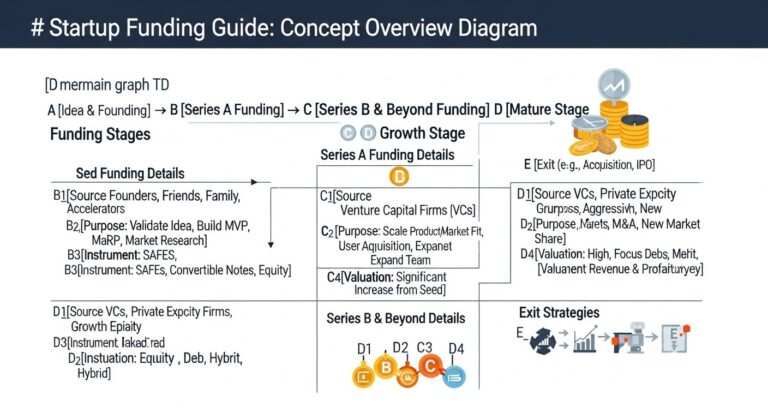
Seed Funding and Early-Stage Investment
Initial capital for startups often comes from angel investors or early-stage venture capital firms. Common legal instruments for seed funding include:
- Simple Agreement for Future Equity (SAFE): A popular instrument, especially in Silicon Valley, that allows early investors to make a cash investment in a startup in exchange for the right to receive equity in a future equity financing round. SAFEs are generally simpler and more founder-friendly than convertible notes.
- Convertible Notes: These are debt instruments that convert into equity at a later financing round, usually at a discount to the valuation of the future round. They offer investors a return on their investment (interest) and a conversion mechanism into equity.
- Common Stock Sales: Direct equity sales, though less common for very early-stage startups due to the difficulty of valuation, involve selling shares of the company.
Regardless of the instrument chosen, robust legal documentation, full disclosure, and compliance with securities laws are essential. This foundational legal work is crucial for future financing rounds and ensures a clear ownership structure as the startup targets significant growth and digital transformation.
Convertible Notes, SAFEs, and Equity Rounds
As startups mature, they typically move to more structured equity funding rounds (e.g., Series A, B, C). These rounds involve:
- Term Sheets: Non-binding documents outlining the principal terms and conditions of the investment, including valuation, investor rights, and governance.
- Share Purchase Agreements: Legally binding contracts detailing the sale and purchase of shares, including representations, warranties, and closing conditions.
- Shareholders’ Agreements: Governing the rights and obligations of shareholders, including voting rights, restrictions on share transfers, and anti-dilution provisions.
Each funding round requires meticulous legal due diligence from investors and the startup itself. This due diligence process scrutinizes all aspects of the startup’s legal and financial health, including IP ownership, contracts, employee agreements, and compliance history. A clean legal slate is invaluable for attracting premium investors and securing the capital needed for substantial growth and digital transformation efforts. For more information on securities regulations, consult the U.S. Securities and Exchange Commission (SEC).
Investor Relations and Legal Due Diligence
Maintaining transparent and legally compliant investor relations is ongoing. Regular communication, accurate financial reporting, and adherence to the terms of investment agreements are critical. Legal due diligence is a two-way street: while investors scrutinize the startup, the startup must also ensure that investment terms are fair and align with its long-term vision. This involves:
- Disclosure Requirements: Meeting all federal and state securities law disclosure obligations to investors.
- Corporate Governance: Adhering to bylaws, board meeting protocols, and shareholder consent requirements.
- Compliance Audit: Proactively auditing all legal and regulatory aspects to identify and rectify any potential red flags before investors do.
Effective management of investor relations and meticulous attention to legal due diligence build trust, facilitate smoother funding rounds, and allow startup businesses to focus their energy on achieving strategic growth and impactful digital transformation rather than being embroiled in legal disputes.
How Can Startups Mitigate Legal Risks and Disputes?
Mitigating legal risks is fundamental for sustainable startup growth and crucial for a startup business to maintain its velocity towards digital transformation. Proactive risk management and swift, effective dispute resolution mechanisms are not just reactive measures but integral components of a robust legal and compliance strategy. Failure to anticipate and address legal challenges can lead to costly litigation, reputational damage, and diversion of critical resources, all of which can severely impede a startup’s ability to innovate and scale. A comprehensive approach ensures that potential issues are identified early, minimizing their impact and safeguarding the company’s future.
Proactive Risk Assessment and Compliance Audits
A continuous process of risk assessment and compliance auditing is essential. This involves:
- Identifying Key Risk Areas: Systematically evaluating potential legal vulnerabilities across all operational aspects, from product development and marketing to sales and human resources.
- Regular Legal Health Checks: Conducting periodic internal or external audits to ensure ongoing compliance with all relevant laws and regulations. This can include reviewing contracts, IP portfolios, privacy policies, and employment practices.
- Staying Updated on Regulatory Changes: The legal landscape is constantly evolving, particularly in areas like data privacy and industry-specific regulations. Subscribing to legal updates and engaging expert counsel helps startups remain current.
By proactively identifying and addressing potential legal pitfalls, startup businesses can build resilience, protect their assets, and allocate resources more effectively towards growth and digital transformation, rather than reactive damage control.
Effective Contract Management and Vendor Agreements
Contracts are the backbone of all business relationships. Poorly drafted or managed contracts can lead to disputes, financial losses, and operational disruptions. Essential practices include:
- Standardized Templates: Using legally vetted templates for common agreements (e.g., NDAs, service agreements, customer contracts) to ensure consistency and compliance.
- Clear Terms and Conditions: Ensuring all contracts clearly define roles, responsibilities, deliverables, payment terms, intellectual property ownership, and dispute resolution mechanisms.
- Due Diligence on Vendors and Partners: Thoroughly reviewing the legal standing and compliance of third-party vendors and partners to mitigate supply chain or reputational risks.
- Contract Lifecycle Management: Implementing systems to track contract renewals, expirations, and compliance with terms throughout their lifecycle.
Robust contract management is a critical component of startup legal and compliance, ensuring smooth operations and protecting the startup’s interests as it forms partnerships vital for digital transformation and market expansion.
Dispute Resolution: Mediation, Arbitration, and Litigation
Despite best efforts, disputes can arise. Understanding various resolution mechanisms is crucial:
- Mediation: A voluntary process where a neutral third party helps disputing parties reach a mutually agreeable settlement. It’s often less adversarial and more cost-effective than litigation.
- Arbitration: A more formal process where a neutral arbitrator (or panel) hears evidence and makes a binding decision. Arbitration clauses are common in commercial contracts and can offer a quicker, less public alternative to court.
- Litigation: The formal process of bringing a lawsuit in court. It is typically the most expensive, time-consuming, and public method of dispute resolution, often reserved as a last resort.
By incorporating appropriate dispute resolution clauses into contracts and understanding the pros and cons of each approach, startup businesses can navigate conflicts efficiently, minimize disruption, and protect their focus on growth and digital transformation.
The Role of Legal Counsel in Continuous Compliance
Engaging experienced legal counsel is not a one-time event but an ongoing strategic partnership. Startup businesses benefit immensely from:
- Proactive Advice: Legal counsel can provide foresight on emerging regulatory trends and help structure operations to prevent issues before they arise.
- Specialized Expertise: Attorneys specializing in startup law, IP, data privacy, or employment law offer invaluable guidance tailored to the specific challenges of growth-stage companies.
- Crisis Management: In the event of a legal challenge or dispute, expert counsel is indispensable for navigating complex proceedings and protecting the startup’s interests.
Continuous engagement with legal experts ensures that the startup legal and compliance framework remains robust, adaptable, and aligned with the company’s ambitious goals for business growth and digital transformation. It transforms legal compliance from a burden into a strategic advantage.
What is Operational Compliance and Industry-Specific Regulations?
Operational compliance ensures smooth business functioning and is crucial for startup businesses. Beyond the foundational legal structures and core IP, employment, and data privacy considerations, startups must also adhere to a broader spectrum of operational compliance requirements, some of which are specific to their industry. This multifaceted approach to legal and compliance ensures that day-to-day activities align with regulatory standards, preventing operational disruptions and building a reputation for trustworthiness—both vital for sustained growth and seamless digital transformation. Neglecting these areas can expose a startup to unforeseen liabilities, stifling innovation and market expansion.
General Business Operations Compliance
Every startup, regardless of its industry, must comply with a range of general business regulations:
- Business Licenses and Permits: Obtaining and maintaining all necessary federal, state, and local licenses and permits required to operate legally. This varies significantly based on business type and location.
- Tax Compliance: Beyond payroll taxes, startups must manage sales taxes, corporate income taxes, and potentially other excise taxes. This includes proper registration, collection, and remittance to relevant authorities.
- Advertising and Marketing Laws: Ensuring marketing claims are truthful, not deceptive, and comply with consumer protection laws (e.g., FTC regulations in the U.S.). This is especially critical for digital startups leveraging online advertising.
- Accessibility Standards: For digital products and services, compliance with accessibility standards (e.g., ADA for U.S. businesses, WCAG guidelines) ensures that platforms are usable by individuals with disabilities, broadening market reach and avoiding discrimination claims.
Adhering to these general operational compliance standards demonstrates a commitment to ethical business practices, which in turn fosters consumer confidence and supports the broader goals of startup growth and digital transformation.
Industry-Specific Regulatory Landscapes
Many startups operate in highly regulated sectors, requiring specialized compliance knowledge:
- FinTech (Financial Technology): Startups in this space must navigate complex regulations from bodies like the SEC (Securities and Exchange Commission), FINRA, and state banking authorities. This includes anti-money laundering (AML), know-your-customer (KYC) requirements, consumer lending laws, and securities regulations.
- HealthTech/MedTech: Companies handling protected health information (PHI) must comply with HIPAA (Health Insurance Portability and Accountability Act) in the U.S., as well as FDA regulations for medical devices or software. International equivalents like GDPR also apply if patient data spans borders.
- EdTech (Education Technology): Startups dealing with student data must comply with regulations like FERPA (Family Educational Rights and Privacy Act) in the U.S., which protects the privacy of student education records.
- E-commerce: Beyond general consumer protection, e-commerce platforms must consider terms of service, refund policies, and compliance with payment card industry data security standards (PCI DSS).
Understanding and integrating these industry-specific legal and compliance requirements is paramount for startup businesses seeking to innovate and achieve sustained growth within their specialized niches. It’s a direct enabler of responsible digital transformation.
Product Liability and Consumer Protection
For startups developing and selling products or services, legal considerations around product liability and consumer protection are critical. This includes:
- Product Safety Standards: Ensuring products meet all relevant safety standards and regulations (e.g., CPSC regulations for consumer products in the U.S.).
- Warranties and Guarantees: Clearly defining express and implied warranties and ensuring they comply with consumer protection laws.
- Terms of Service and Privacy Policies: Providing clear, accessible, and legally compliant terms of service and privacy policies for all digital products and platforms, outlining user rights and responsibilities.
- Customer Service and Complaint Handling: Establishing robust processes for addressing customer complaints and resolving disputes to prevent escalation to legal action.
Proactive compliance in these areas builds customer trust, mitigates the risk of costly lawsuits or regulatory enforcement actions, and allows startup businesses to confidently bring their innovative products to market, driving both growth and successful digital transformation.
Conclusion: The Strategic Imperative of a Startup Legal and Compliance Guide
This comprehensive startup legal and compliance guide underscores a fundamental truth: robust legal and compliance frameworks are not merely overheads but strategic enablers for sustainable Startup Business Growth & Digital Transformation. From the nascent stages of choosing a legal entity and crafting founder agreements to the complexities of protecting intellectual property, navigating employment laws, and ensuring stringent data privacy, every legal decision profoundly impacts a startup’s trajectory. Neglecting any of these critical areas can lead to significant financial penalties, reputational damage, investor distrust, and ultimately, failure to achieve long-term objectives.
For startup businesses aiming for rapid scaling and significant market impact through digital transformation, embedding legal and compliance practices into their core operations is a non-negotiable imperative. It cultivates an environment of integrity, attracts high-caliber talent, and builds the confidence required to secure vital funding. Proactive engagement with legal counsel, continuous risk assessment, and adaptability to evolving regulatory landscapes are the hallmarks of a resilient startup. By meticulously managing legal obligations, startups can transform potential vulnerabilities into competitive advantages, ensuring that their innovative solutions reach the market securely and sustainably.
In a world increasingly driven by digital innovation, the interplay between sound legal governance and technological advancement becomes more pronounced than ever. This guide serves as a beacon for founders, empowering them with the knowledge to build legally sound, ethically responsible, and ultimately, highly successful enterprises. Embracing this holistic approach to startup legal and compliance is the surest path to not just survive, but to thrive and lead in the ever-evolving global economy of 2026 and beyond.