
What is Conversion Rate Optimization (CRO)? Understanding the Core Concept
Conversion Rate Optimization (CRO) is a structured and systematic approach to increasing the percentage of website visitors who complete a desired action, known as a ‘conversion’. This action could be anything from making a purchase, filling out a form, subscribing to a newsletter, downloading an e-book, or clicking a specific link. Essentially, CRO is about making your existing traffic work harder and smarter for you, rather than just focusing on acquiring more traffic.
At its heart, CRO is driven by understanding user behavior. It involves analyzing data, conducting user research, and employing various testing methodologies to identify why visitors aren’t converting and then making informed changes to improve their experience. The goal isn’t just to make your site look good, but to make it perform better, aligning the user journey with your business objectives. A conversion rate is calculated by dividing the number of conversions by the total number of visitors and multiplying by 100 to get a percentage. For example, if 1000 people visit your site and 20 make a purchase, your conversion rate for purchases is 2%.
The process of CRO is cyclical and continuous, not a one-time fix. It typically involves several key stages:
- Data Collection and Analysis: This is where you gather quantitative data (e.g., Google Analytics, Adobe Analytics) to understand where users are dropping off, which pages they visit, and how long they stay. Qualitative data (e.g., surveys, user interviews, heatmaps, session recordings) helps uncover the ‘why’ behind user behavior.
- Hypothesis Generation: Based on your data, you formulate hypotheses about what changes might lead to an improvement in your conversion rate. For instance, “Changing the call-to-action button color to orange will increase clicks by 15% because it stands out more.”
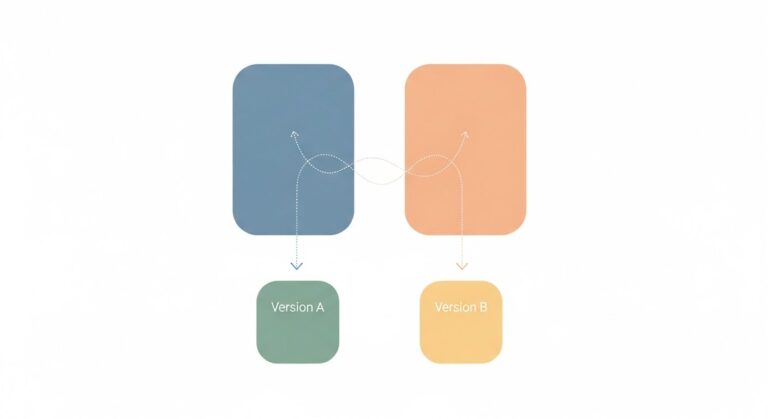
- Experimentation and Testing: This is the core of CRO, where you test your hypotheses. The most common method is A/B testing (also known as split testing), where two versions of a page (A and B) are shown to different segments of your audience, and their performance is compared. Multivariate testing allows for testing multiple variables simultaneously.
- Analysis and Learning: After an experiment concludes, you analyze the results to determine if your hypothesis was correct. It’s crucial to understand not just what happened, but why.
- Implementation and Iteration: If a test proves successful, the winning variation is implemented permanently. If not, you learn from the results and generate new hypotheses for further testing.
CRO is fundamentally about making data-driven decisions. It moves beyond gut feelings and design trends to focus on what truly resonates with your audience and drives measurable improvements. By consistently optimizing your digital properties, businesses can significantly improve their return on investment (ROI) from all their marketing efforts, turning more visitors into valuable customers.
Why CRO is Crucial for Tech Startups and Digital Businesses in 2026
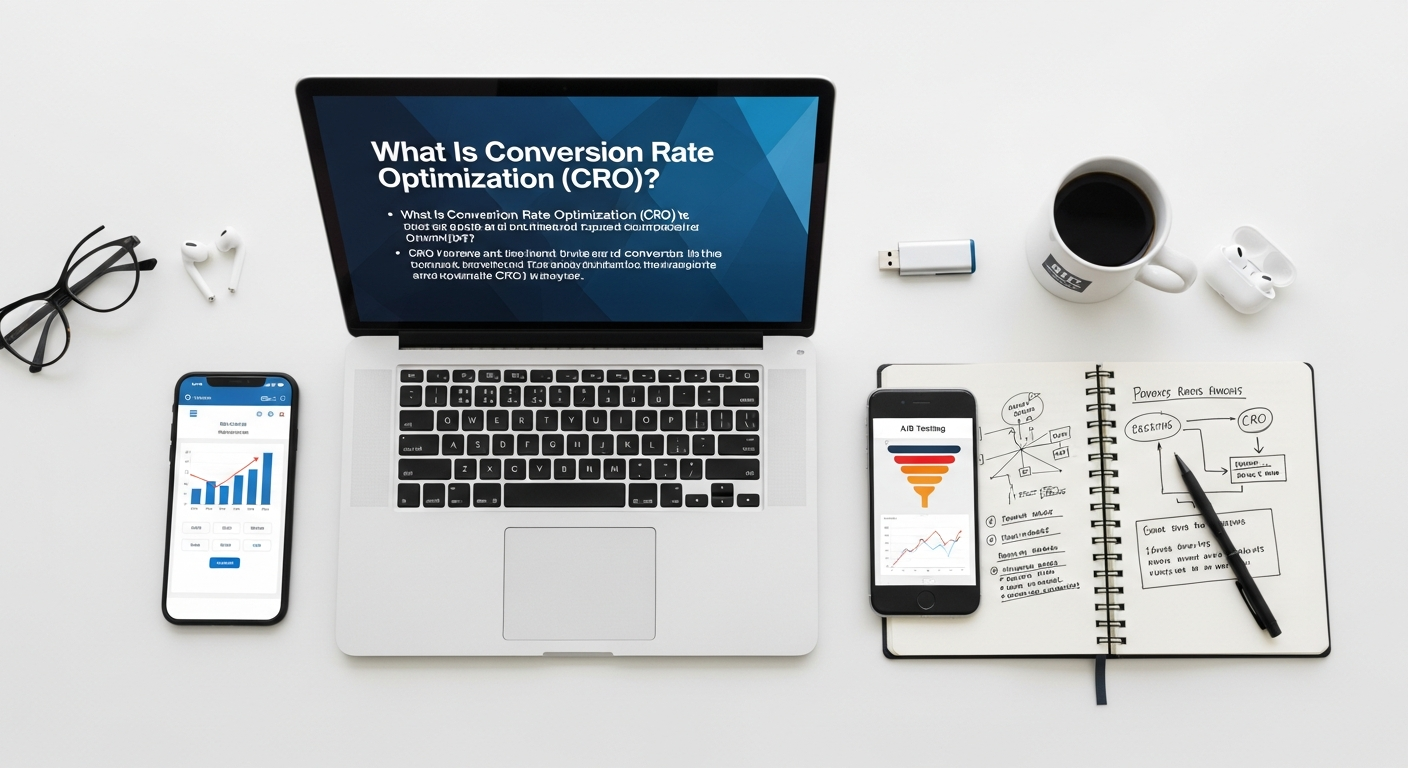
In the rapidly evolving digital landscape of 2026, where competition is fiercer than ever and customer acquisition costs continue to climb, Conversion Rate Optimization is no longer a luxury but an absolute necessity for tech startups and digital businesses. Its importance stems from several critical factors that directly impact sustainability, growth, and profitability.
Maximizing Existing Traffic & Reducing Customer Acquisition Costs (CAC)
One of the most compelling reasons for CRO is its ability to get more value from your existing website traffic. Instead of pouring ever-increasing budgets into acquiring new users through channels like search engine marketing or social media advertising, CRO focuses on making your current visitors more efficient. Imagine if you could increase your conversion rate by just 0.5% – that could mean hundreds, even thousands, of extra customers or leads without spending an additional penny on marketing. This directly translates into a lower Customer Acquisition Cost (CAC), freeing up resources that can be reinvested into product development, innovation, or further scaling.
Enhanced Return on Investment (ROI) for Marketing Spend
Every dollar spent on marketing, whether it’s for content creation, SEO, or Pay Per Click advertising, aims to bring potential customers to your digital doorstep. CRO acts as the amplifier for these efforts. If your landing pages are optimized, your CTAs are compelling, and your user journey is seamless, then your marketing spend will naturally yield a higher return. For instance, a highly optimized landing page for a PPC campaign will ensure that more of those expensive clicks convert, dramatically improving the campaign’s ROI. Without CRO, you’re essentially pouring water into a leaky bucket, where valuable traffic is wasted due to poor on-site experience.
Deeper Understanding of Your Audience
The CRO process inherently involves deep dives into user behavior, preferences, and pain points. Through analytics, heatmaps, user testing, and surveys, businesses gain invaluable insights into who their customers are, what they want, and what prevents them from converting. This understanding extends beyond superficial demographics, revealing psychological triggers, usability issues, and content gaps. For a tech startup, this feedback loop is crucial for validating product ideas, refining features, and ensuring product-market fit. It helps you build a product or service that truly resonates with your target audience.
Improved User Experience (UX) and Brand Reputation
A website or application that is optimized for conversions is, by its very nature, optimized for the user. CRO initiatives often lead to clearer navigation, faster load times, more intuitive forms, and more relevant content – all contributing to a superior user experience. In 2026, UX is a primary differentiator. A seamless and pleasant experience builds trust, fosters loyalty, and enhances your brand’s reputation. Conversely, a frustrating experience can drive users away, potentially forever, and lead to negative word-of-mouth or reviews, which can be particularly damaging for emerging tech brands.
Sustainable Growth in a Competitive Market
The digital economy is saturated with new businesses vying for attention. For tech startups, especially, the path to sustainable growth often hinges on efficient resource utilization and continuous improvement. CRO provides a framework for ongoing optimization, ensuring that your digital assets are always performing at their peak. It fosters a culture of testing, learning, and adapting, which is vital for long-term success. Rather than relying on sporadic marketing pushes, CRO ensures a steady, incremental improvement in your conversion rates, building a solid foundation for growth as you scale.
Future-Proofing Your Business
User behaviors and technological trends are constantly shifting. What works today might not work tomorrow. CRO instills a mindset of continuous adaptation. By regularly testing and optimizing, businesses can stay agile, respond to market changes, and keep their digital properties aligned with the latest user expectations and technological advancements. This proactive approach to improvement is essential for future-proofing any digital business in the dynamic environment of 2026.
The CRO Process: A Step-by-Step Guide to Driving Conversions
Step 1: Research and Data Collection (The Discovery Phase)
Before you can optimize, you must understand. This foundational step involves gathering both quantitative and qualitative data to identify where and why users are not converting.
- Quantitative Data (What):
- Web Analytics: Tools like Google Analytics or Adobe Analytics provide insights into user flow, bounce rates, exit pages, device usage, traffic sources, and conversion funnels. Identify pages with high drop-off rates, low conversion rates, or unexpected user behavior.
- Heatmaps & Click Maps: Visual tools (e.g., Hotjar, Crazy Egg) show where users click, scroll, and spend their time on a page, revealing areas of interest or neglect.
- Session Recordings: Watch actual user sessions to understand their journey, identify friction points, confusion, or technical issues they encounter.
- Qualitative Data (Why):
- User Surveys: On-site or post-conversion surveys help gather direct feedback on user motivations, frustrations, and expectations.
- User Interviews: In-depth conversations with target users can uncover deeper insights into their needs and pain points.
- Customer Support Feedback: Analyze common questions, complaints, or issues reported by customers, as these often highlight conversion blockers.
- Competitor Analysis: Observe what successful competitors are doing, but always validate with your own audience data.
Goal: Identify specific problems, bottlenecks, and areas of high friction in the user journey.
Step 2: Formulate Hypotheses (The Idea Generation Phase)
Based on your research, generate clear, testable hypotheses about what changes could improve your conversion rate. A good hypothesis follows the structure: “If I [make this change], then [this result] will happen, because [this reason/insight].”
- Example: “If I change the call-to-action (CTA) button text from ‘Submit’ to ‘Get Your Free Quote’, then conversion rate on the lead form will increase by 10%, because the new text is more benefit-oriented and clarifies the next step for the user.”
Goal: Develop specific, data-backed ideas for improvement.
Step 3: Prioritize Experiments
You’ll likely have many hypotheses. Prioritize them based on potential impact, ease of implementation, and confidence in your data. Frameworks like PIE (Potential, Importance, Ease) or ICE (Impact, Confidence, Ease) can help:
- Potential: How much impact could this change have on the conversion rate?
- Importance: How critical is this area of the website to overall business goals?
- Ease: How difficult or time-consuming is it to implement this test?
Focus on experiments that offer a high potential impact with reasonable effort first.
Goal: Create a roadmap of experiments, focusing on those with the highest ROI potential.
Step 4: Design and Conduct Experiments (The Testing Phase)
This is where you put your hypotheses to the test using A/B testing or multivariate testing tools. For tech startups, understanding what is a tech stack and how to choose the right tools for A/B testing (like Optimizely, VWO, Google Optimize) is crucial here.
- A/B Testing: Create two versions (control and variation) of a page element (e.g., headline, CTA, image) and show them to different, equally sized segments of your audience.
- Multivariate Testing: Test multiple variables on a single page simultaneously to see how different combinations perform. This is more complex and requires higher traffic volumes.
Ensure your tests run long enough to achieve statistical significance, avoiding premature conclusions based on insufficient data. Be mindful of external factors that could skew results (e.g., seasonality, marketing campaigns).
Goal: Objectively compare the performance of different variations to validate or invalidate your hypotheses.
Step 5: Analyze Results and Learn
Once an experiment concludes, meticulously analyze the data. Did the variation outperform the control? Was the result statistically significant? Don’t just look at the primary conversion metric; also examine secondary metrics, user segments, and potential negative impacts.
- Statistical Significance: Ensure the observed difference is unlikely due to random chance.
- Segment Analysis: Did the change work better for mobile users vs. desktop, or new visitors vs. returning ones?
- Qualitative Insights: Try to understand why a test succeeded or failed.
Regardless of the outcome, every test is a learning opportunity. Failed tests provide valuable insights into what doesn’t work for your audience.
Goal: Understand the impact of the changes and gain insights into user behavior.
Step 6: Implement Winning Variations and Iterate
If a variation significantly outperforms the control, implement it permanently on your website or app. But the process doesn’t stop there. CRO is an ongoing journey.
- Implement: Make the winning changes live across your platform.
- Document: Keep a record of all tests, hypotheses, results, and learnings. This institutional knowledge is invaluable for future optimization efforts.
- Iterate: A winning test often opens up new opportunities for further optimization. What’s the next logical step? Go back to Step 1 and continue the cycle.
To effectively manage your CRO initiatives, especially within a growing startup, leveraging the best project management software startups offer can be invaluable. Tools like Asana, Trello, or Jira clones tailored for agile development can keep your team aligned, track experiments, and ensure timely implementation of winning variations.
Goal: Continuously improve conversion rates and foster a culture of data-driven optimization.
Key Elements to Optimize for Better Conversions
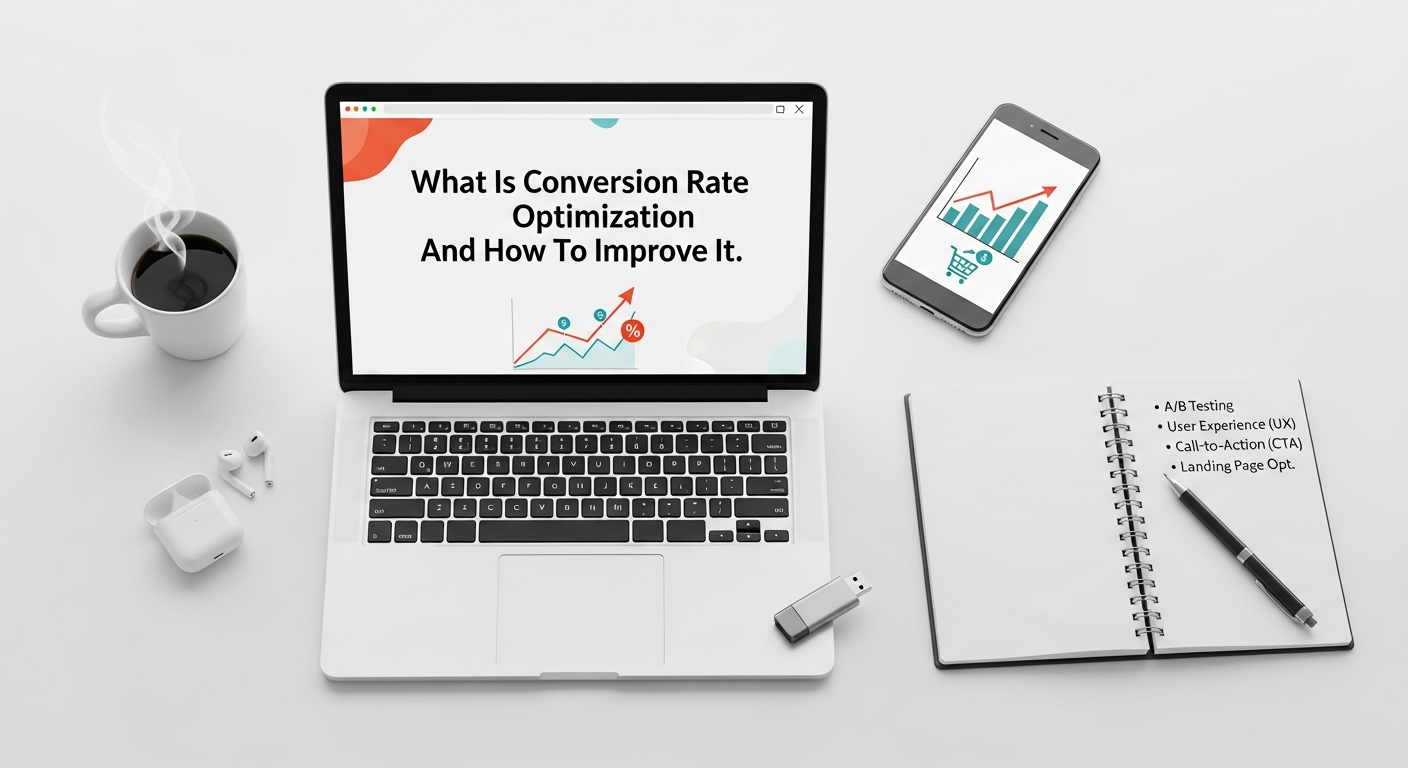
To effectively boost your conversion rates, it’s crucial to understand the various elements of your digital presence that influence user behavior. Optimizing these key areas can significantly impact your bottom line.
1. Website Design and User Experience (UX)
Your website’s design isn’t just about aesthetics; it’s about functionality, usability, and guiding the user. A strong UX ensures visitors can easily find what they’re looking for and complete desired actions without friction.
- Clear Navigation: Intuitive menus, clear breadcrumbs, and a logical site structure help users navigate effortlessly.
- Visual Hierarchy: Use size, color, and placement to draw attention to important elements like CTAs and key information.
- Whitespace: Don’t clutter your pages. Ample whitespace improves readability and focuses attention.
- Mobile Responsiveness: With a significant portion of traffic coming from mobile devices, a fully responsive and optimized mobile experience is non-negotiable.
- Page Speed: Slow loading times are a major conversion killer. Optimize images, leverage caching, and minimize code to ensure fast loading pages.
2. Calls-to-Action (CTAs)
CTAs are the prompts that tell users what to do next. Their effectiveness is paramount to conversions.
- Clear and Concise Text: Use action-oriented language that conveys value (e.g., “Get Your Free E-book,” “Start Your 30-Day Trial,” “Shop Now”).
- Prominent Placement: CTAs should be easily visible and strategically placed where users are ready to take the next step.
- Compelling Design: Use contrasting colors, appropriate sizing, and a button-like appearance to make CTAs stand out.
- Sense of Urgency/Scarcity (Use Sparingly): Phrases like “Limited Time Offer” or “Only X Left” can motivate immediate action, but use them genuinely.
3. Landing Pages
Landing pages are purpose-built to convert visitors for a specific offer or campaign. They should be highly focused.
- Clear Value Proposition: Immediately communicate what you offer and why it’s beneficial.
- Minimal Distractions: Remove unnecessary navigation, external links, or irrelevant content that could divert attention from the conversion goal.
- Strong Headline: Grab attention and clearly state the page’s purpose.
- Relevant Content: Ensure the content directly supports the offer and addresses potential user questions or objections.
- Social Proof: Include testimonials, reviews, or trust badges to build credibility.
4. Forms
Forms are often the gatekeepers of conversions, especially for lead generation. Poorly designed forms lead to high abandonment rates.
- Minimize Fields: Only ask for essential information. Every extra field increases friction.
- Clear Labeling: Ensure form field labels are clear and concise.
- Input Masks/Validation: Guide users with formatting suggestions (e.g., “MM/DD/YYYY”) and provide real-time error messages.
- Progress Indicators: For multi-step forms, show users how many steps are left.
- CAPTCHA Alternatives: Avoid frustrating CAPTCHAs where possible; use invisible reCAPTCHA or honeypot fields for spam protection.
5. Content and Copywriting
The words on your page are powerful conversion tools. They persuade, inform, and build trust.
- Benefit-Oriented Language: Focus on what the user gains, not just product features.
- Clear and Concise: Avoid jargon and overly complex sentences. Get straight to the point.
- Scannable Format: Use headings, subheadings, bullet points, and short paragraphs to make content easy to digest.
- Address Objections: Anticipate user concerns and address them proactively within your copy.
- Tone of Voice: Maintain a consistent, authoritative, yet approachable tone that resonates with your target audience.
6. User Journey and Funnel Optimization
Look beyond individual pages and optimize the entire path a user takes from first interaction to conversion.
- Map the Journey: Visualize the steps users take and identify potential drop-off points.
- Reduce Friction: Eliminate unnecessary steps, confusing redirects, or technical glitches.
- Personalization: Tailor content and offers based on user behavior, demographics, or referral source.
- Trust Signals: Display security badges, privacy policies, and contact information prominently.
7. A/B Testing and Analytics
Continuous testing and data analysis are the bedrock of CRO.
- Implement A/B Testing: Regularly test different variations of elements like headlines, CTAs, images, and page layouts.
- Monitor Analytics: Continuously track key metrics, identify trends, and use insights to inform new hypotheses.
- User Feedback Tools: Utilize surveys, polls, and feedback widgets to gather direct input from users.
By systematically addressing these elements, businesses can create a highly optimized digital experience that not only attracts visitors but effectively converts them into loyal customers.
Tools and Technologies for Effective CRO in 2026
Implementing a robust CRO strategy requires the right arsenal of tools and technologies. In 2026, the market offers sophisticated solutions that empower businesses to gather data, analyze behavior, run experiments, and make data-driven decisions. Understanding what is a tech stack and how to choose the right components for your CRO efforts is paramount to success.
1. Web Analytics Platforms
These are the foundation of any CRO strategy, providing quantitative data on user behavior.
- Google Analytics 4 (GA4): The industry standard for tracking website and app performance. It offers insights into user acquisition, engagement, monetization, and retention across platforms. Essential for identifying high-traffic, low-converting pages, and understanding user flow.
- Adobe Analytics: A powerful enterprise-level solution for deep data analysis, often favored by larger organizations with complex data needs.
- Matomo: An open-source, privacy-focused alternative to Google Analytics, allowing for self-hosting and full data ownership.
2. A/B Testing and Experimentation Platforms
These tools allow you to test different versions of your web pages or elements to see which performs better.
- Optimizely: A leading platform for A/B testing, multivariate testing, and personalization. Offers robust features for both web and mobile app optimization.
- VWO (Visual Website Optimizer): Another comprehensive CRO platform providing A/B testing, heatmaps, session recordings, and surveys in one suite.
- Google Optimize (though sunsetting in 2023, its functionality is migrating to GA4 and other Google products): While standalone Optimize is being deprecated, Google’s commitment to experimentation will continue through GA4. Businesses should transition to new tools or leverage GA4’s evolving capabilities for testing.
- Split.io: Focuses on feature flagging and controlled rollouts, allowing for experiments at the code level, essential for dynamic tech products.
3. Heatmaps, Session Recordings, and User Feedback Tools
These provide qualitative insights into why users behave the way they do.
- Hotjar: A popular all-in-one tool offering heatmaps (click, scroll, move), session recordings, conversion funnels, surveys, and feedback polls. Invaluable for visualizing user interaction and gathering direct feedback.
- Crazy Egg: Similar to Hotjar, providing heatmaps, scroll maps, click maps, and confetti reports to understand user engagement.
- FullStory: Offers powerful session replay, dev tools, and analytics to understand the entire customer experience and debug issues in real-time.
- UserTesting: Platform for conducting remote user tests, getting real people to complete tasks on your website or app while recording their screen and verbal feedback.
4. Form Analytics Tools
Dedicated tools to optimize forms, which are critical conversion points.
- Hotjar (also offers form analysis): Can pinpoint which form fields cause drop-offs.
- Formisimo (now part of Zuko): Provides in-depth analytics on form performance, showing where users hesitate, abandon, or make errors.
5. Personalization Platforms
Tailoring content and experiences to individual users can significantly boost conversions.
- Optimizely (also a personalization tool): Allows for dynamic content delivery based on user segments.
- Dynamic Yield (now part of Mastercard): A leading AI-powered personalization engine for optimizing customer journeys across channels.
- Segment: A customer data platform (CDP) that collects, cleans, and controls customer data, making it easier to power personalization efforts across various tools.
6. Survey and Poll Tools
Directly asking your users for feedback is a powerful way to uncover insights.
- SurveyMonkey / Typeform / Google Forms: For creating general surveys.
- Hotjar / VWO: Offer on-site polls and feedback widgets for contextual feedback.
7. Project Management Software
While not strictly CRO tools, they are essential for managing the CRO process, experiments, and team collaboration. As mentioned earlier, the best project management software startups use, like Trello, Asana, Jira, or Monday.com, can organize hypotheses, test results, and implementation schedules.
When choosing your CRO tech stack, consider:
- Integration: How well do these tools integrate with your existing platforms (CMS, CRM, marketing automation)?
- Scalability: Can the tools grow with your business?
- Team Expertise: Does your team have the skills to leverage these tools effectively?
- Budget: Balance features with cost-effectiveness.
A well-selected and integrated set of CRO tools empowers your team to move beyond guesswork, systematically improve user experience, and drive significant business growth.
Integrating CRO with Your Digital Marketing Strategy
Conversion Rate Optimization should never operate in a silo. Its true power is unleashed when it’s deeply integrated into your overall digital marketing strategy, working in synergy with all other channels to maximize efficiency and ROI. In 2026, a fragmented approach will simply not suffice; a holistic, CRO-centric strategy is essential for competitive advantage.
CRO and Search Engine Optimization (SEO)
While SEO focuses on bringing organic traffic to your site, CRO ensures that traffic actually converts. These two disciplines are intrinsically linked:
- Improved User Experience: Many CRO best practices, such as fast page loading times, clear navigation, mobile responsiveness, and engaging content, directly contribute to a better user experience, which is a significant ranking factor for search engines.
- Lower Bounce Rates & Higher Dwell Time: Optimized pages keep users engaged longer and reduce bounce rates, signaling to search engines that your content is valuable and relevant.
- Relevant Content: CRO research often reveals what information users are truly seeking. This insight can then inform your SEO content strategy, ensuring you create highly relevant content that satisfies user intent and ranks well.
- Technical SEO Alignment: CRO often uncovers technical issues (e.g., broken forms, slow assets) that also hinder SEO performance. Addressing these benefits both.
Synergy: By optimizing for both search engines and conversions, you not only attract more qualified traffic but also ensure that traffic is effectively utilized once it arrives on your site.
CRO and Pay Per Click (PPC) Advertising
CRO dramatically amplifies the effectiveness of your Pay Per Click advertising campaigns, turning expensive clicks into valuable conversions.
- Optimized Landing Pages: This is the most direct link. CRO ensures that the landing pages your PPC ads direct to are highly relevant, persuasive, and easy to convert on. A generic homepage will rarely convert as well as a dedicated, optimized landing page.
- Higher Quality Scores: Google Ads (and other platforms) reward ads that lead to a good user experience on the landing page with higher Quality Scores. A higher Quality Score means lower ad costs and better ad positions.
- Improved Ad Copy & Targeting: CRO insights into user preferences and conversion blockers can inform better ad copy and more precise audience targeting for your PPC campaigns.
- Better ROI: By increasing the conversion rate of your paid traffic, CRO directly lowers your Cost Per Acquisition (CPA) and significantly boosts the ROI of your entire PPC budget.
Synergy: Don’t just pay for clicks; pay for conversions. CRO ensures your PPC budget works harder, delivering more customers for the same spend.
CRO and Social Media Marketing
Social media drives brand awareness, engagement, and traffic. CRO helps translate that engagement into conversions.
- Optimized Social Landing Pages: Similar to PPC, ensure that any links from social media campaigns lead to optimized pages designed to convert that specific audience.
- Clear CTAs: Social posts and ads should have clear calls-to-action that direct users to a specific, optimized conversion path.
- Audience Insights: CRO data on audience demographics and behavior can inform your social media content strategy, ensuring you post what resonates and drives action.
Synergy: Turn social buzz into tangible business results by guiding interested followers to a conversion-focused experience.
CRO and Email Marketing
Email marketing is a powerful tool for nurturing leads and driving repeat business. CRO can refine its effectiveness.
- Optimized Email CTAs: Test different CTA texts, colors, and placements within your emails.
- Personalized Content: CRO insights can inform segmentation and personalization strategies for email campaigns, leading to more relevant offers and higher click-through rates.
- Landing Page Consistency: Ensure the landing page linked from an email seamlessly continues the message and offer presented in the email itself.
Synergy: Make every email count by directing recipients to highly optimized, conversion-ready experiences.
CRO and Content Marketing
Content marketing builds authority and trust. CRO ensures that valuable content leads to desired actions.
- Content-to-Conversion Pathways: Ensure your blog posts, whitepapers, and guides have clear next steps (CTAs) that lead users deeper into your funnel.
- Optimized Lead Magnets: If your content strategy includes lead magnets (e.g., e-books, webinars), CRO ensures the landing pages for these are highly effective at capturing leads.
- User Engagement Metrics: CRO tools like heatmaps and session recordings can show how users interact with your content, informing improvements to readability, layout, and internal linking.
Synergy: Transform content consumption into lead generation and customer acquisition by strategically integrating conversion elements.
By viewing CRO not as a standalone tactic but as an overarching philosophy that informs and enhances every aspect of your digital marketing, businesses can achieve a truly optimized and high-performing ecosystem. It’s about creating a frictionless, persuasive journey for your users, no matter how they arrive at your digital doorstep.
Common CRO Mistakes to Avoid
While the principles of Conversion Rate Optimization seem straightforward, many businesses, especially tech startups eager for quick wins, fall prey to common pitfalls that can derail their efforts. Avoiding these mistakes is as crucial as implementing best practices.
1. Not Having a Clear Hypothesis
One of the most fundamental errors is running tests without a clear, data-backed hypothesis. Instead, teams might say, “Let’s make the button green, I think it will perform better.” This is guessing, not optimizing. Every test should be driven by a specific problem identified through research, with a proposed solution and a predicted outcome.
- Correction: Always start with the “If I [change X], then [Y result] will happen, because [Z reason]” framework. This forces you to think critically and provides clear learning even if the test fails.
2. Testing Too Many Elements at Once (Without Proper Methodology)
While multivariate testing allows for multiple variable changes, it requires significant traffic and a sophisticated understanding of statistical models. For most businesses, especially those with moderate traffic, simultaneously changing a headline, image, and CTA in an A/B test makes it impossible to pinpoint which specific change drove the result.
- Correction: Stick to A/B testing one significant element at a time, especially in the beginning. This allows for clear attribution of results and precise learning. Once confident, explore multivariate testing with expert guidance.
3.
Recommended Resources
Learn more about this topic in What Is Ux Design And Why It Matters at Layout Scene.
Related reading: Best Mechanical Keyboards For Productivity (Bookmark Sharer).