Stop Guessing: The Founder’s Guide to Validating Your Business Idea Before You Build
Why Validation Isn’t Optional – It’s Your First Strategic Move
The cold, hard truth of the startup world is this: most new ventures fail. While various factors contribute to this grim statistic, a consistent top reason, according to CB Insights, is “no market need” – accounting for 35% of failures. This isn’t just a statistic; it’s a stark warning. Pouring years into development, hiring a team, and burning through capital on an idea that doesn’t solve a real problem for a willing market is the ultimate act of self-sabotage.
Validation is your shield against this common pitfall. It’s the process of systematically gathering evidence that your business idea has a legitimate market, solves a real customer problem, and that customers are willing to pay for your solution. It’s about transforming a hopeful hypothesis into a data-backed conviction. Think of it as conducting reconnaissance before deploying troops. You wouldn’t launch a full-scale invasion without understanding the terrain and enemy positions, so why would you launch a business without understanding your customers and market?
By embracing validation, you achieve several critical objectives:
* De-risking Your Venture: You identify potential flaws, misassumptions, and market gaps early, allowing you to pivot or refine your idea when the cost of change is lowest.
* Saving Time and Capital: Prevent the colossal waste of resources on building features or entire products that nobody wants.
* Gaining Market Intelligence: Develop a deep understanding of your target customers, their pain points, existing solutions, and pricing sensitivities. This knowledge is invaluable for product development, marketing, and sales.
* Building Confidence (and Credibility): Data-backed validation strengthens your resolve and provides compelling evidence for potential investors, partners, and early hires.
Phase 1: Problem-Solution Fit – Are You Solving a Real Pain?

Before you even think about your solution, you must become intimately familiar with the problem. This phase is about identifying a genuine, pervasive pain point experienced by a specific group of people (your target audience) and understanding how they currently cope with it. You’re not selling a product yet; you’re selling the alleviation of a problem.
Tactics for Problem Validation:
1.
Customer Interviews (Qualitative Research)
This is the bedrock of problem validation. Direct conversations with potential customers offer unparalleled depth and nuance.
* How to Conduct Effective Interviews:
* Target the Right People: Identify individuals who you believe experience the problem. Use LinkedIn, Reddit communities, industry forums, or your personal network.
* Focus on Their World, Not Yours: Ask about their experiences, challenges, and current workarounds. Avoid pitching your idea. Frame questions around their past behavior and frustrations, not hypothetical future use.
* Listen More Than You Talk: Your goal is to understand their existing reality. Use open-ended questions like “Tell me about a time when…”, “How do you currently handle X?”, “What’s the hardest part about Y?”.
* Look for Pain Points and Existing Workarounds: Where do they struggle? What manual, inefficient, or expensive solutions do they currently use? These are indicators of a problem ripe for a better solution.
* The “Mom Test” Principle: Rob Fitzpatrick’s “The Mom Test” advises asking questions about past behavior and concrete facts, rather than hypothetical future actions or opinions. E.g., instead of “Would you use an app that does X?”, ask “When was the last time you did X, and what was frustrating about it?”
* Tools:
* Scheduling: Calendly, SavvyCal
* Video Conferencing: Zoom, Google Meet
* Transcription/Note-taking: Otter.ai, Google Docs
* CRM for tracking interviews: HubSpot (free tier), Notion
2.
Surveys (Quantitative Research)
Surveys help you validate the prevalence and severity of problems identified in interviews across a larger audience.
* When to Use: After initial interviews have helped you crystallize specific pain points. Surveys confirm if these pains are widespread.
* What to Ask: Focus on validating specific problem statements. Use Likert scales (e.g., “On a scale of 1-5, how frustrating is X?”) and multiple-choice questions to quantify prevalence. Include open-ended questions sparingly to capture unexpected insights.
* Targeting: Distribute surveys via social media groups (e.g., relevant subreddits, Facebook groups), LinkedIn, email lists, or even paid survey platforms like SurveyMonkey Audience.
* Tools: Google Forms, SurveyMonkey, Typeform, Qualtrics.
3.
Market Research & Competitive Analysis
Understand the landscape. Are there existing solutions? What are their strengths and weaknesses? What gaps do they leave?
* Identify Existing Solutions: Use search engines, app stores, Product Hunt, and industry directories.
* Analyze Competitors:
* What problems do they solve? How do they position themselves?
* What are their pricing models?
* Read reviews: App store reviews, G2, Capterra, Reddit are goldmines for understanding customer frustrations with existing solutions. Look for common complaints or “missing features.”
* Assess Market Size:
* Total Addressable Market (TAM): The total revenue opportunity if everyone who could use your product did.
* Serviceable Available Market (SAM): The portion of TAM you can realistically reach with your current business model.
* Serviceable Obtainable Market (SOM): The slice of SAM you can realistically capture in the short to medium term.
* This helps gauge the potential scale of your idea.
* Tools: SimilarWeb (for traffic and competitor analysis), SEMrush/Ahrefs (for keyword and content gaps), Google Trends (for demand trends), Crunchbase (for funding and company profiles), Statista (for market data).
Real-world Example: Airbnb’s founders famously started by trying to rent air mattresses in their apartment during a conference when hotels were booked. This “concierge MVP” directly addressed a clear problem: a lack of affordable accommodation for event-goers and an unused asset (spare space) for hosts. Their early interviews and observations confirmed a widespread need for unique, localized stays and an income opportunity for homeowners. They didn’t build a complex platform first; they manually facilitated connections and then slowly scaled, validating demand at each step.
Phase 2: Product-Market Fit – Does Your Solution Resonate?
Once you have a solid understanding of the problem and your target audience, it’s time to test if your proposed solution actually resonates with them. This doesn’t mean building the full product; it means creating minimal, tangible representations to gauge interest and gather feedback. The goal is to find Product-Market Fit (PMF) – a state where you have built something that a significant portion of a specific market wants and needs.
Tactics for Solution Validation:
1.
Landing Pages & Explainer Videos
This is the ultimate “fake it ’til you make it” strategy, allowing you to test interest without writing a single line of code.
* Concept: Create a simple webpage or a short video that clearly articulates your proposed solution, its value proposition, and how it addresses the validated problem.
* Call to Action (CTA): The key is the CTA. Instead of “Buy Now,” use “Sign Up for Early Access,” “Join the Waitlist,” “Request a Demo,” or even “Pre-order.” This gauges genuine interest.
* Testing: Drive traffic to your landing page using targeted ads (Google Ads, LinkedIn Ads, social media) or organic outreach. A/B test different headlines, value propositions, and imagery to see what resonates most.
* Metrics: Focus on conversion rates (how many visitors complete your CTA). A conversion rate of 2-5% for a waitlist sign-up is a decent starting point, but can vary widely by industry.
* Tools: Webflow, Carrd, Unbounce, Leadpages (for landing pages); Figma, Adobe XD, Sketch (for mockups/prototypes); Loom, Animoto, Vyond (for explainer videos).
2.
Concierge MVP (Minimum Viable Product)
Manually deliver the core value proposition of your idea to a small group of early adopters.
* Concept: You are the product. Instead of an automated system, you perform the service or deliver the solution manually, learning directly from customer interactions.
* Example: Zappos initially started with its founder taking photos of shoes from local stores, posting them online, and if someone ordered, he’d buy the shoes and ship them. This proved demand for online shoe retail before investing in inventory or a complex e-commerce platform.
* Benefit: Provides deep insights into customer needs, pain points, and the actual workflows involved in delivering your solution.
3.
Piecemeal MVP
Assemble existing tools and services to simulate your product’s core functionality.
* Concept: Don’t build custom tech when off-the-shelf solutions can mimic the experience.
* Example: Groupon famously started with a WordPress blog and manually generated PDF coupons. They used existing email marketing tools to distribute offers. This proved the daily deal concept before building their sophisticated platform.
* Benefit: Extremely fast and cost-effective way to test a product concept.
4.
Wizard of Oz MVP
The product appears automated and fully functional to the user, but humans are performing the tasks behind the scenes.
Concept: Similar to Concierge, but the user experience seems* automated.
* Example: Aardvark (a social search engine acquired by Google) allowed users to ask questions and received answers quickly. To the user, it seemed like an intelligent system, but initially, a team of humans was manually routing questions and finding answers.
* Benefit: Tests the user experience and perceived value of an automated system without the upfront development cost.
Real-world Example: Dropbox used a simple explainer video to demonstrate its file-syncing concept before building the full product. This video, placed on a landing page, resulted in sign-ups for their beta program jumping from 5,000 to 75,000 overnight. This massive surge in interest validated the demand for their solution and justified the significant engineering investment.
Phase 3: Demand & Monetization – Will People Pay for It?

The ultimate validation isn’t just interest; it’s willingness to pay. Many ideas generate excitement but fail when it comes to opening wallets. This phase focuses on proving that your solution is valuable enough for customers to exchange money for it.
Tactics for Monetization Validation:
1.
Pre-orders & Paid Pilots
Directly ask for money before the product is fully built or launched. This is the most unambiguous form of validation.
* Pre-orders: Offer a discount for early commitment. This works well for physical products (e.g., hardware, books) or software with a clear feature set.
* Paid Pilots (for B2B): Offer a limited version of your service or product to a few early customers at a reduced rate. They pay for the value received, and you gain critical feedback and case studies.
* Crowdfunding: Platforms like Kickstarter and Indiegogo are powerful validation tools. The number of backers and the amount raised directly indicate market demand and willingness to pay. A successful campaign not only validates but also provides seed funding.
* Metrics: Number of pre-orders/pilot customers, revenue generated, conversion rate from landing page to paid.
2.
Pricing Experiments
Don’t guess your price. Test it.
* Landing Page A/B Testing: Create multiple versions of your landing page, each featuring a different pricing tier or model (e.g., monthly subscription, one-time purchase, freemium). Track which page generates more sign-ups or pre-orders.
* Van Westendorp Price Sensitivity Meter: A survey-based method that asks customers four key questions:
1. At what price would you consider the product to be so expensive that you would not consider buying it? (Too Expensive)
2. At what price would you consider the product to be priced so low that you would feel the quality couldn’t be very good? (Too Cheap)
3. At what price would you consider the product to be a bargain—a great buy for the money? (Good Value)
4. At what price would you consider the product starting to get expensive, but you still might consider buying it? (Expensive)
Plotting these responses helps identify an acceptable price range and optimal price points.
* Value-Based Pricing Interviews: In B2B, ask potential customers how much they currently spend to solve the problem (time, money, resources). This anchors their perception of value and helps you justify your price.
* Tools: Optimizely, VWO (for A/B testing); SurveyMonkey, Typeform (for price sensitivity surveys).
3.
Letters of Intent (LOI) / Memoranda of Understanding (MOU)
Primarily for B2B ventures, these non-binding agreements indicate a potential customer’s serious interest in purchasing your product or service once it’s available. While not cash, they represent a strong commitment and can be powerful leverage for fundraising and further development. They validate that a business is willing to formally commit to considering your solution.
Real-world Example: Basecamp, the project management software, offered early access and transparent pricing from day one. By charging for their beta and iterating based on paying customer feedback, they validated not only the need for their solution but also the specific features customers valued enough to pay for. This allowed them to build a sustainable business model from the outset.
Iterate, Pivot, or Persevere: The Continuous Cycle of Validation
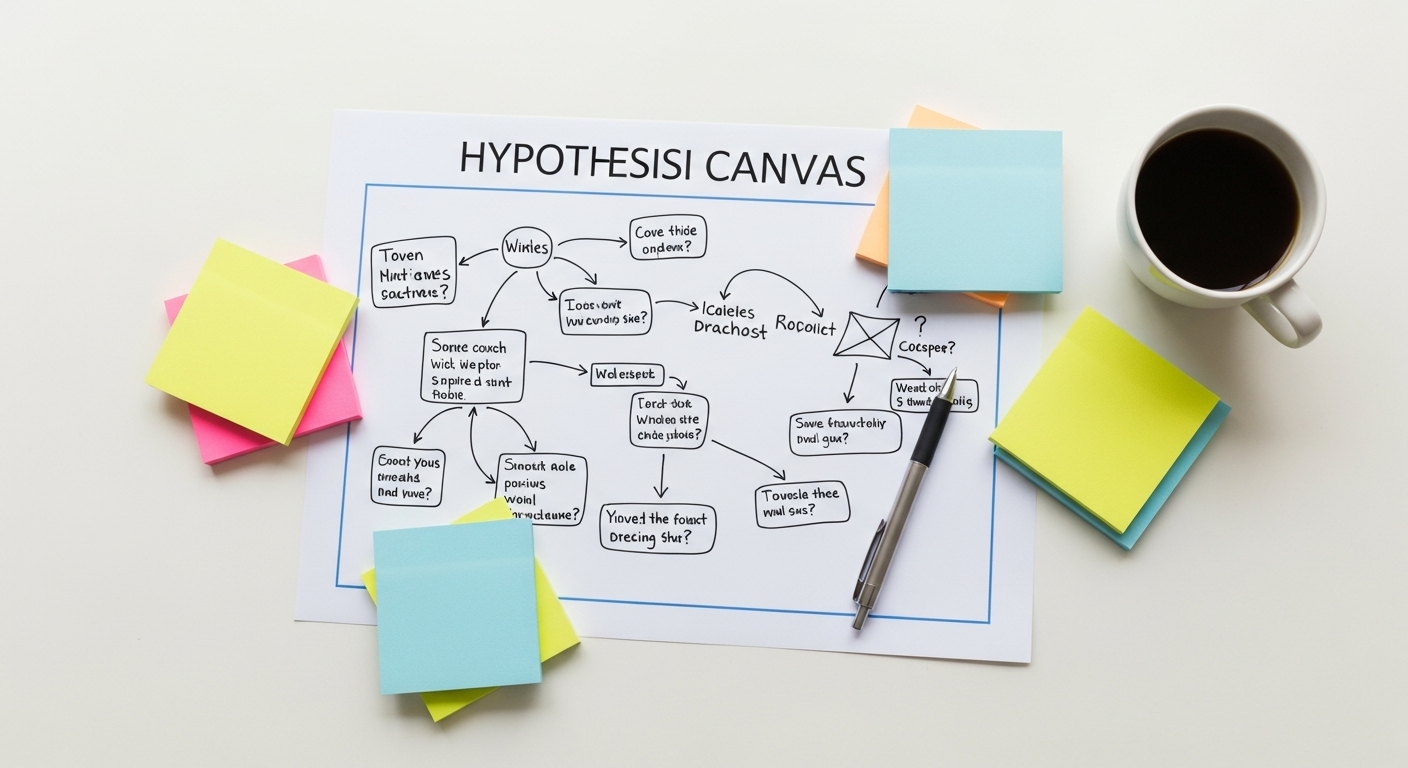
Validation isn’t a one-off event; it’s an ongoing, iterative process. The Lean Startup methodology, popularized by Eric Ries, champions the “Build-Measure-Learn” feedback loop. You form a hypothesis, build an MVP to test it, measure the results, and then learn from the data to decide your next step.
1. Build (Minimum): Create the smallest possible experiment or feature to test your current hypothesis.
2. Measure (Data): Collect quantitative and qualitative data from your experiment (e.g., conversion rates, user engagement, feedback from interviews).
3. Learn (Actionable Insights): Analyze the data to gain insights. Did your hypothesis prove true? What did you learn about your customers or market?
Based on your learnings, you have three strategic options:
* Persevere: Your data indicates you’re on the right track. Continue with your current strategy, perhaps refining features or optimizing messaging.
* Iterate: Your core hypothesis is sound, but specific aspects need adjustment. You might refine a feature, tweak your pricing, or target a slightly different customer segment. This is a small adjustment to your existing path.
* Pivot: Your data reveals a fundamental flaw in your problem-solution fit or your market assumptions. This means making a significant change to your business model, target audience, core product, or even the problem you’re solving. A pivot is not failure; it’s a course correction based on evidence. Slack, for example, famously pivoted from a gaming company (Tiny Speck) to a communication tool after realizing their internal communication system was more valuable than their game.
Signs You Might Need to Pivot:
* Low Conversion Rates: Your landing pages aren’t converting, or your MVP isn’t attracting users.
* Lack of Engagement: Users sign up but don’t stick around, or don’t use the core features.
* Negative Feedback: Consistent, unaddressed complaints or a lack of enthusiasm from early adopters.
* Unwillingness to Pay: Customers express interest but balk at pricing or refuse to commit funds.
* Market Shrinkage or Saturation: New data suggests your target market is smaller than anticipated or already dominated by strong incumbents.
Embrace data-driven decision-making. Remove emotion from the equation and let the evidence guide your path. This continuous cycle of validation ensures you’re always building what the market truly needs, increasing your odds of long-term success.
Conclusion
In the competitive landscape of current startups, building without validation is a luxury no founder can afford. Your idea, no matter how brilliant it seems in your head, is merely a hypothesis until proven otherwise by the market. By systematically engaging in problem validation, solution validation, and monetization validation, you transform abstract concepts into tangible, data-backed opportunities. You save time, conserve capital, and dramatically increase your odds of success. Embrace the journey of discovery, listen intently to your potential customers, and let evidence, not assumption, be your guide. The most successful founders aren’t those with the best ideas initially, but those who are most adept at validating, iterating, and pivoting their way to product-market fit. Stop guessing, start validating, and build a business that truly matters.