
Customer Retention Strategies for Tech Startups: Drive Sustainable Growth
In the dynamic world of tech, where innovation is constant and competition fierce, the ability to attract new customers is often celebrated. However, the true bedrock of lasting success for any tech startup isn’t just acquisition; it’s robust customer retention. What exactly are customer retention strategies? They are the concerted efforts and initiatives designed to keep existing customers engaged with your product or service over the long term, reducing churn and fostering loyalty. For tech startups, this isn’t merely a good practice; it’s an absolute imperative. With often sky-high Customer Acquisition Costs (CAC), relying solely on a continuous influx of new users is unsustainable. Retaining customers significantly boosts Customer Lifetime Value (LTV), ensures predictable recurring revenue, and fuels the sustainable growth critical for investor confidence and market leadership. This comprehensive guide will explore actionable strategies, key metrics, and essential tools tailored to help tech startups not just survive, but thrive by mastering the art and science of customer retention through astute digital marketing and product-led approaches.
What are Customer Retention Strategies and Why Do Tech Startups Need Them?
Customer retention strategies encompass a wide array of activities, from personalized communication to ongoing product enhancements, all aimed at nurturing the relationship between a business and its existing clientele. The ultimate goal is to prevent customer churn – the rate at which customers discontinue their subscription or stop using a product or service – and instead foster lasting loyalty and engagement. For tech startups, the “why” behind prioritizing retention is profoundly strategic and financial.
Consider the typical journey of a tech startup: an initial phase of heavy investment in product development and aggressive customer acquisition campaigns. This often results in a high Customer Acquisition Cost (CAC), which can quickly deplete resources if customers don’t stay long enough to recoup that investment. This is where Customer Lifetime Value (LTV) becomes paramount. A strong LTV, driven by high retention, ensures that the revenue generated from a customer over their entire relationship with your company far exceeds the initial cost of acquiring them. For subscription-based SaaS startups or mobile apps relying on recurring revenue models, predictable LTV is not just a financial metric but a critical component of valuation and investor appeal.
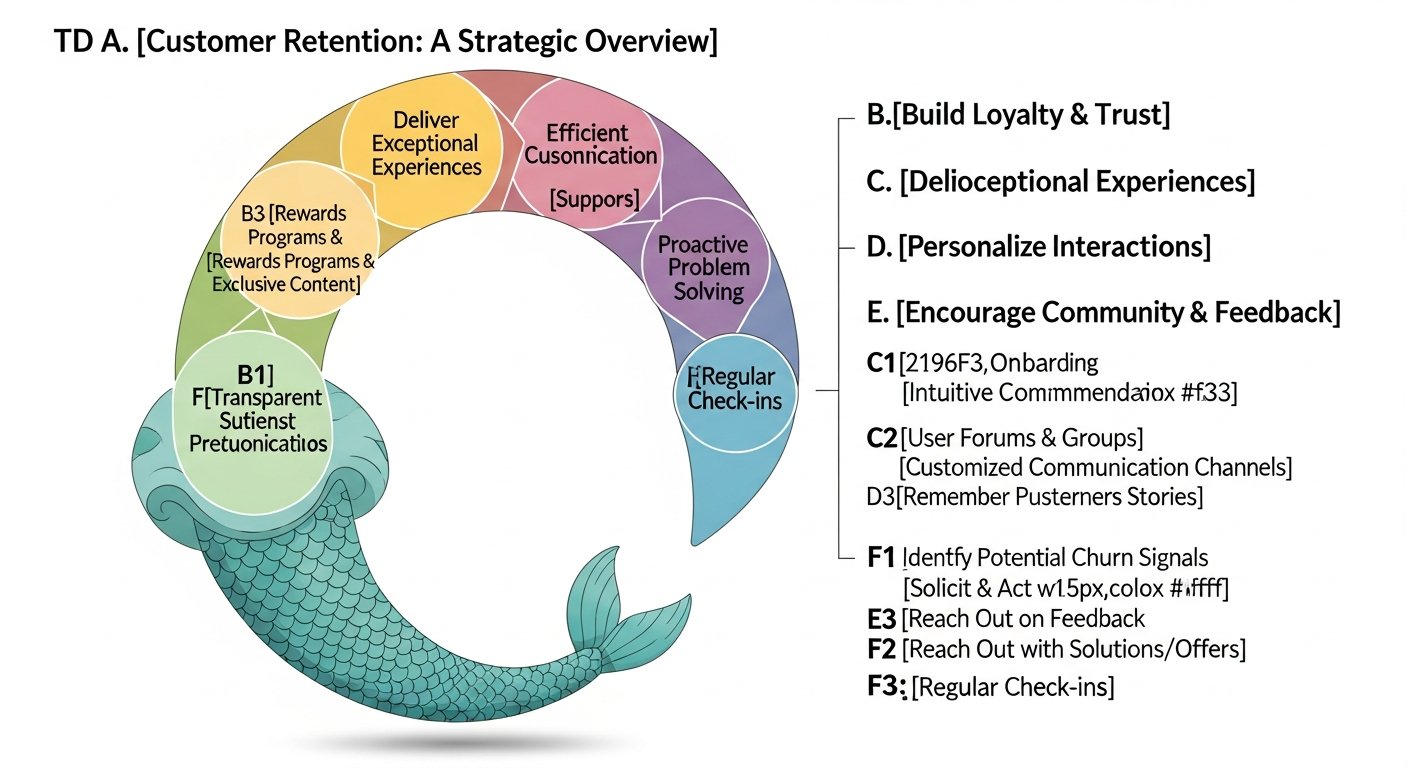
Moreover, retained customers often become powerful advocates. They provide valuable feedback for product improvement, offer testimonials, and generate word-of-mouth referrals, acting as an organic, low-cost acquisition channel. This virtuous cycle of retention leading to advocacy, which in turn drives acquisition, creates a compounding effect on growth. In a sector where agility and scalability are key, a loyal customer base provides the stable foundation needed to experiment, innovate, and expand without constantly fighting to replace lost users. Digital marketing strategies, therefore, must pivot from solely attracting new leads to deeply engaging and retaining the existing ones, transforming them into enthusiastic brand champions.
[INLINE IMAGE 1: place after second H2]
Core Customer Retention Strategies for Tech Startup Growth
Implementing a robust customer retention framework requires a multi-faceted approach, integrating digital marketing, product development, and customer service. Here are the core strategies crucial for tech startup growth:
Personalization and Targeted Communication
In the digital age, generic communication is a recipe for churn. Tech users expect experiences tailored to their specific needs, behaviors, and preferences. Personalization is about using data to deliver relevant content, offers, and support at the right time. For tech startups, this means:
- User Segmentation: Divide your customer base into meaningful segments based on demographics, behavioral data (e.g., feature usage, login frequency, last activity), subscription tier, or onboarding stage.
- Tailored Messaging: Craft email campaigns, in-app messages, and push notifications that speak directly to each segment’s pain points or success points. For example, a SaaS startup might send a “power user” tips email to highly engaged users or a “re-engagement” notification to users whose activity has dropped.
- Behavioral Triggers: Automate communications based on specific user actions (or inactions). A user completing a key onboarding step might trigger a celebratory email, while a user abandoning their cart could trigger a reminder with a small incentive.
- Dynamic Content: Present different content, features, or upgrade options within your product or website based on individual user profiles.
By leveraging digital marketing automation and customer data platforms (CDPs), tech startups can scale personalization efforts, making each user feel uniquely valued and understood, thereby enhancing engagement and loyalty.
Building Strong Customer Relationships and Community
Beyond transactional interactions, fostering a sense of connection and belonging is powerful for retention. Tech startups can achieve this by:
- Dedicated Community Forums: Provide a platform where users can ask questions, share tips, and connect with peers and your team. This reduces reliance on direct support and builds a self-sustaining knowledge base.
- Social Media Engagement: Actively listen and respond to customers on social platforms. Run polls, host Q&As, and showcase user-generated content to create a vibrant digital presence.
- User Groups and Webinars: Host virtual meetups, product training webinars, or exclusive Q&A sessions with product managers. This provides value, educates users, and strengthens their bond with the brand.
- Customer Success Managers (CSMs): For high-value B2B SaaS customers, dedicated CSMs can proactively engage, understand their goals, and ensure they are maximizing value from your product, acting as a direct human touchpoint.
These initiatives transform users from isolated individuals into members of a thriving ecosystem, reducing the likelihood of them seeking alternatives.
Enhancing Product Experience and Value
At the core of tech startup retention is the product itself. An exceptional, constantly evolving product that delivers tangible value is the ultimate retention tool. This involves:
- Intuitive UX/UI: A user-friendly, aesthetically pleasing, and efficient interface reduces friction and makes the product enjoyable to use. Seamless onboarding flows are critical here.
- Consistent Updates and Feature Releases: Regularly introduce new features, improvements, and bug fixes based on user feedback and market trends. This demonstrates commitment to evolution and provides ongoing value.
- Reliability and Performance: Tech products must be stable, fast, and reliable. Frequent bugs, downtime, or slow performance are major churn drivers.
- Perceived Value Enhancement: Continuously communicate the value proposition. Highlight new features, show users how to achieve more with the product, and quantify the benefits they are receiving.
- Product-Led Growth (PLG) Approach: Design the product itself to drive adoption, activation, and retention through intuitive design, self-service options, and built-in viral loops.
A superior product experience not only retains users but also turns them into enthusiastic advocates, driving organic growth and reducing reliance on costly digital marketing campaigns for re-engagement.
Proactive Customer Support and Success
Waiting for customers to encounter problems before engaging them is a reactive, and often costly, approach. Proactive support and success strategies aim to anticipate needs and prevent issues before they arise:
- Self-Service Knowledge Bases: Comprehensive FAQs, tutorials, and help articles empower users to find answers independently, reducing support ticket volume.
- In-App Support and Chatbots: Provide immediate assistance directly within the product interface. AI-powered chatbots can handle common queries, freeing human agents for complex issues.
- Proactive Outreach: Monitor user behavior for signs of disengagement or potential frustration (e.g., declining usage, failed transactions). Reach out with targeted support, tips, or offers before they churn.
- Sentiment Monitoring: Utilize tools to monitor social media, reviews, and forums for mentions of your brand. Address negative feedback swiftly and publicly to demonstrate responsiveness.
- Personalized Onboarding: Guide new users through initial setup and feature adoption with tailored in-app tours, email sequences, or even one-on-one sessions for enterprise clients. Effective onboarding is a critical first step in long-term retention.
By making support an active, rather than passive, component of the customer journey, tech startups can significantly enhance satisfaction and loyalty.
Implementing Effective Loyalty Programs
Structured incentive programs can encourage continued engagement and reward loyal behavior. While commonly associated with retail, loyalty programs are increasingly vital for tech startups, particularly in competitive markets:
- Tiered Rewards: Offer escalating benefits (e.g., exclusive features, faster support, discounts) as users reach certain milestones or spend thresholds. This incentivizes deeper engagement.
- Gamification: Integrate game-like elements into your product, such as badges, points, leaderboards, or challenges, to make usage more engaging and rewarding.
- Referral Bonuses: Reward existing customers for bringing in new users. This not only retains current customers but also acts as a powerful acquisition channel.
- Exclusive Access: Offer loyal users early access to beta features, premium content, or VIP support channels.
- Personalized Offers: Based on usage data, provide specific discounts or upgrades that are highly relevant to individual customers.
Loyalty programs, when integrated seamlessly into the digital experience, can create a positive feedback loop, encouraging users to stay active and feel valued.
Leveraging Customer Feedback for Continuous Improvement
In the agile world of tech, continuous improvement is non-negotiable. Customer feedback is the compass that guides this evolution, ensuring the product remains relevant and valuable:
- In-App Feedback Mechanisms: Provide easy ways for users to submit suggestions, bug reports, or feature requests directly within the product.
- Surveys and Polls: Use tools to collect structured feedback via Net Promoter Score (NPS), Customer Satisfaction (CSAT), or product-specific surveys at key touchpoints (e.g., after onboarding, upon feature completion, before renewal).
- User Testing and Beta Programs: Involve loyal users in testing new features or product iterations. Their insights are invaluable and make them feel invested in the product’s future.
- Feedback Loop Integration: Crucially, close the loop. Communicate back to users what changes were made based on their feedback. This demonstrates that their voice is heard and valued, fostering a sense of co-creation and trust.
- Data Analytics Integration: Combine qualitative feedback with quantitative usage data from analytics platforms to identify patterns, prioritize improvements, and validate hypotheses about user behavior.
By embracing feedback as a continuous input for product development and digital marketing strategy, tech startups can ensure their offerings consistently meet and exceed user expectations, driving sustained retention.
| Strategy | Description | Key Attributes for Startups | Expected Outcome | Digital Marketing Relevance |
|---|---|---|---|---|
| Personalization & Segmentation | Tailoring user experiences and communications based on data. | User segmentation, behavioral data, tailored messaging, in-app prompts. | Increased engagement, higher LTV, reduced churn. | Automated email campaigns, targeted ads for re-engagement, dynamic content. |
| Exceptional Product Experience | Ensuring the product is intuitive, valuable, and continuously improving. | Intuitive UX/UI, consistent updates, bug fixes, feature adoption, strong onboarding. | Higher feature adoption, sustained daily active users, positive word-of-mouth. | Content highlighting new features, tutorials, value-driven communication. |
| Proactive Customer Support | Anticipating customer needs and addressing issues before they escalate. | Self-service KBs, in-app chat, sentiment monitoring, proactive outreach. | Improved CSAT, lower support costs, prevention of churn. | Support content SEO, email alerts for disengaged users, re-engagement campaigns. |
| Community Building | Fostering a sense of belonging and connection among users. | Forums, social media engagement, user groups, webinars. | Enhanced loyalty, peer support, valuable user-generated content. | Social media marketing, community management, content creation for user groups. |
| Loyalty Programs | Rewarding continued usage and engagement with incentives. | Tiered rewards, gamification, referral bonuses, exclusive access. | Increased repeat usage, advocacy, extended customer lifespan. | Promotional campaigns for loyalty tiers, referral program marketing. |
| Feedback & Iteration | Actively collecting and acting upon customer feedback. | In-app feedback, NPS/CSAT surveys, user testing, transparent communication. | Product refinement, increased user satisfaction, higher perceived value. | Surveys integrated into customer journey, communication of product updates. |
Measuring Customer Retention Success: Key Metrics for Tech Startups
Without quantifiable metrics, retention strategies are merely theoretical. Tech startups must track specific KPIs to understand their performance, identify areas for improvement, and demonstrate ROI to stakeholders. Digital marketing efforts directly influence many of these metrics.
- Churn Rate: This is arguably the most critical retention metric. It measures the percentage of customers or subscribers who stop using your service over a given period.
- Calculation (Customer Churn): (Customers at start of period – Customers at end of period) / Customers at start of period * 100%
- Calculation (Revenue Churn): (MRR at start of period – MRR at end of period from churned customers) / MRR at start of period * 100%
- A high churn rate signals fundamental issues with product value, customer experience, or competitive positioning.
- Customer Lifetime Value (LTV): The total revenue a business can reasonably expect from a single customer account over the duration of their relationship.
- Calculation: (Average Purchase Value * Average Purchase Frequency) * Customer Lifespan OR Average Revenue Per User (ARPU) / Customer Churn Rate
- LTV is crucial for justifying CAC and understanding the long-term profitability of your customer base.
- Repeat Purchase Rate (or Repeat Usage Rate): The percentage of customers who have made more than one purchase or engaged with the product multiple times.
- Indicates product stickiness and customer satisfaction. High repeat rates are common for successful subscription services and mobile apps.
- Net Promoter Score (NPS): Measures customer loyalty by asking, “How likely are you to recommend our product/service to a friend or colleague?”
- Scores range from -100 to +100. Customers are categorized as Promoters (9-10), Passives (7-8), or Detractors (0-6).
- A high NPS indicates strong advocacy and potential for organic growth through word-of-mouth.
- Customer Satisfaction Score (CSAT): Measures short-term customer satisfaction with a specific interaction or product feature.
- Typically collected via simple surveys (e.g., “How satisfied were you with this support interaction?”).
- Provides immediate feedback on service quality and product usability.
- Engagement Rate: Measures how often and deeply users interact with your product.
- Examples: Daily Active Users (DAU), Monthly Active Users (MAU), feature adoption rate, time spent in-app.
- A decline in engagement often precedes churn. Digital marketing can play a role in re-engaging passive users.
| Metric | Definition | How to Calculate (Startup Context) | Why it Matters for Startup Growth | Actionable Insight |
|---|---|---|---|---|
| Churn Rate | Percentage of customers or revenue lost over a period. | (Lost Customers / Total Customers at Start) * 100% (for customer churn). | Direct indicator of customer dissatisfaction or lack of value; impacts recurring revenue. | Identify churn triggers (e.g., specific features, lifecycle stage) and implement proactive re-engagement. |
| Customer Lifetime Value (LTV) | Total revenue expected from a customer over their relationship. | (Average Revenue Per User) / (Customer Churn Rate) or Avg. Spend x Avg. Orders x Avg. Lifespan. | Justifies CAC; enables strategic investment in retention; key for valuation. | Focus retention efforts on high-LTV segments; optimize product for long-term usage. |
| Repeat Purchase Rate | Percentage of customers making more than one purchase/interaction. | (Customers with >1 purchase / Total Customers) * 100%. | Indicates product stickiness and continued perceived value. | Incentivize repeat usage through loyalty programs, feature updates, or personalized offers. |
| Net Promoter Score (NPS) | Measures customer loyalty and willingness to recommend. | % Promoters (9-10) – % Detractors (0-6). | Strong predictor of organic growth and brand advocacy. | Convert Promoters into advocates; address Detractors’ concerns immediately; learn from Passives. |
| Customer Satisfaction Score (CSAT) | Measures satisfaction with specific interactions or aspects. | (Positive Responses / Total Responses) * 100% for specific questions. | Provides immediate feedback on service quality or feature usability. | Improve support processes, iterate on features that receive low CSAT scores. |
[INLINE IMAGE 2: place after fourth H2]
Tools and Technologies for Customer Retention in Tech
The successful implementation of customer retention strategies relies heavily on the right tech stack. These tools enable automation, data analysis, personalization, and seamless communication, all crucial for scaling retention efforts in a tech startup environment:
- CRM Platforms (Customer Relationship Management):
- Examples: Salesforce, HubSpot, Zoho CRM
- Key Features: Centralized customer data, communication tracking, sales and marketing automation, customer service management.
- Best Use Case: Holistic view of customer journey, managing interactions, tracking support tickets, segmenting customers for targeted campaigns.
- Integration: Integrates with marketing automation, analytics, and support platforms.
- Customer Data Platforms (CDPs):
- Examples: Segment, Tealium, mParticle
- Key Features: Unifies customer data from all sources (website, app, CRM, marketing tools), creates persistent customer profiles, enables segmentation and activation.
- Best Use Case: Creating a single source of truth for customer data, enabling hyper-personalization across all touchpoints, complex segmentation.
- Integration: Feeds clean, unified data to CRMs, marketing automation, analytics, and advertising platforms.
- Marketing Automation Platforms:
- Examples: ActiveCampaign, Marketo (Adobe), HubSpot Marketing Hub
- Key Features: Automated email sequences, lead nurturing, behavioral triggers, landing page creation, segmentation.
- Best Use Case: Onboarding automation, re-engagement campaigns, loyalty program communication, personalized email marketing.
- Integration: Connects with CRMs, CDPs, and analytics tools.
- In-App Messaging & Push Notification Tools:
- Examples: Braze, Iterable, OneSignal, Intercom
- Key Features: Targeted in-app messages, push notifications, onboarding flows, user surveys, A/B testing.
- Best Use Case: Guiding users through features, announcing updates, sending personalized offers, re-activating dormant users directly within the product.
- Integration: Often integrates with CDPs and analytics for behavioral targeting.
- Analytics & Business Intelligence (BI) Platforms:
- Examples: Google Analytics 4, Mixpanel, Amplitude, Tableau, Power BI
- Key Features: User behavior tracking, funnel analysis, cohort analysis, dashboard creation, data visualization.
- Best Use Case: Identifying churn patterns, measuring feature adoption, tracking engagement metrics (DAU/MAU), optimizing user flows.
- Integration: Collects data from websites, apps, and other platforms to provide insights.
- Customer Success Platforms:
- Examples: Gainsight, ChurnZero, Totango
- Key Features: Health scores, churn prediction, automated outreach playbooks, customer journey mapping, task management for CSMs.
- Best Use Case: Proactively managing customer relationships, identifying at-risk customers, scaling customer success efforts, especially for B2B SaaS.
- Integration: Deep integration with CRMs, support tools, and communication platforms.
| Tool Category | Examples (Specific Tools) | Key Features for Retention | Best Use Case for Startups | Integration Capabilities |
|---|---|---|---|---|
| CRM Platforms | HubSpot, Salesforce, Zoho CRM | Centralized customer data, communication history, segmentation. | Managing customer relationships, personalizing interactions, tracking support. | Marketing automation, analytics, customer support, sales. |
| Customer Data Platforms (CDPs) | Segment, Tealium, mParticle | Unified customer profiles, data collection, identity resolution. | Creating a single customer view, enabling hyper-personalization, data hygiene. | CRMs, marketing automation, analytics, advertising, support. |
| Marketing Automation Platforms | ActiveCampaign, Mailchimp, Marketo | Automated email sequences, behavioral triggers, landing pages. | Onboarding new users, re-engagement campaigns, loyalty program communication. | CRMs, CDPs, analytics, social media. |
| In-App Messaging & Push Notification Tools | Intercom, Braze, OneSignal | Targeted in-app messages, push notifications, onboarding tours. | Guiding feature adoption, product announcements, personalized alerts within the app. | CDPs, analytics, CRM (for context). |
| Analytics & BI Platforms | Google Analytics 4, Mixpanel, Amplitude | User behavior tracking, funnel analysis, cohort analysis, dashboards. | Identifying churn patterns, measuring feature adoption, tracking engagement metrics. | CDPs, marketing tools, CRMs (for deeper customer insights). |
Beyond Acquisition: How Retention Fuels Long-Term Startup Value
While customer acquisition strategies are undoubtedly essential for initial traction, an exclusive focus on bringing in new users often masks underlying issues and can lead to a leaky bucket scenario. For tech startups, the shift from a purely acquisition-driven mindset to one that prioritizes retention is not just a strategic pivot but a fundamental determinant of long-term value and viability. Acquisition, by its nature, is a continuous, often high-cost battle. Retention, however, offers a compounding effect that acquisition simply cannot match.
A high retention rate means customers stay longer, increasing their Customer Lifetime Value (LTV). When LTV consistently outpaces Customer Acquisition Cost (CAC), the startup achieves a positive unit economy, signaling a scalable and profitable business model. This LTV/CAC ratio is a critical metric for investors, directly impacting a startup’s valuation. Investors look for businesses with predictable recurring revenue and a stable, loyal customer base, as these are indicators of resilience and future growth potential. Furthermore, retained customers are significantly cheaper to serve and sell to; they require less marketing spend and typically have higher conversion rates for upsells and cross-sells.
Retention also fosters organic growth. Loyal customers become advocates, sharing their positive experiences, leaving favorable reviews, and referring new users. This word-of-mouth marketing is incredibly powerful, credible, and cost-effective, effectively reducing your overall CAC for new customers. It creates a flywheel effect: improved retention leads to higher LTV, which allows for more investment in product and customer success, which further improves retention, and so on. This sustainable growth model is what differentiates a flash-in-the-pan startup from a enduring tech enterprise.
Common Customer Retention Challenges for Tech Startups
Despite the undeniable benefits, tech startups often face unique hurdles in their quest for high customer retention:
- Rapid Scaling vs. Personalization: As startups grow quickly, maintaining personalized interactions and high-touch support can become challenging without robust automation and dedicated customer success teams.
- Technical Debt and Bug Fixes: The pressure to innovate rapidly can sometimes lead to technical debt, resulting in bugs or performance issues that frustrate users and drive churn. Balancing new feature development with maintenance is crucial.
- Intense Competition: The tech landscape is crowded. Users have numerous alternatives, and switching costs can be low, making it easy for customers to jump ship if a competitor offers a slightly better feature or price.
- Onboarding Failure: Many users abandon new tech products simply because they don’t understand how to use them or don’t experience the “aha!” moment quickly enough. Poor onboarding is a significant churn driver.
- Feature Overload vs. Simplicity: Trying to be everything to everyone can result in a complex, overwhelming product that confuses users rather than delights them. Maintaining focus and simplicity is key.
- Resource Constraints: Small teams and limited budgets can make it difficult to invest adequately in dedicated customer success roles, advanced analytics tools, or comprehensive feedback loops.
Overcoming these challenges requires strategic planning, prioritizing customer-centricity, and smart allocation of resources, often leveraging digital marketing automation to do more with less.
The Future of Customer Retention: AI & Hyper-Personalization
The landscape of customer retention is continuously evolving, with emerging technologies promising even more sophisticated and effective approaches. The future is increasingly driven by artificial intelligence (AI) and the pursuit of hyper-personalization.
- AI-Powered Predictive Analytics: Machine learning algorithms can analyze vast datasets of user behavior, engagement patterns, and historical churn data to accurately predict which customers are at risk of churning before they even show explicit signs of disengagement. This allows for proactive, targeted interventions.
- Intelligent Chatbots and Virtual Assistants: Beyond basic FAQs, AI-driven chatbots are becoming more sophisticated, capable of understanding complex queries, offering personalized solutions, and even conducting proactive outreach based on user sentiment or behavior. They can provide 24/7 support and act as a first line of defense against dissatisfaction.
- Hyper-Personalized Journeys: AI will enable real-time, dynamic adjustments to the customer journey based on individual user behavior, preferences, and context. This goes beyond segmentation to truly one-to-one experiences, where product interfaces, content recommendations, and communication styles adapt automatically.
- Sentiment Analysis at Scale: AI-powered tools can monitor social media, reviews, support tickets, and even in-app messages to gauge customer sentiment on a massive scale. This allows startups to identify widespread issues or emerging trends in real-time and respond swiftly.
- Automated Value Delivery: AI can help identify unmet needs or underutilized features for individual users and automatically trigger relevant tutorials, tips, or prompts within the product, ensuring users continuously extract maximum value without manual intervention.
For tech startups, embracing AI and leveraging its capabilities for hyper-personalization is not just an opportunity for competitive advantage; it will soon become a necessity. These technologies promise to make retention efforts more efficient, precise, and profoundly impactful, enabling startups to build deeper, more resilient customer relationships in an increasingly complex digital world.
In conclusion, while the allure of customer acquisition is undeniable, sustainable growth for tech startups hinges on a foundational commitment to customer retention. By strategically implementing personalized experiences, nurturing strong relationships, continuously enhancing product value, offering proactive support, and leveraging cutting-edge tools and data, tech companies can transform a transient user base into a loyal, high-LTV community. The investment in retention not only reduces churn and boosts profitability but also creates a powerful engine for organic growth and long-term valuation, ensuring the startup’s continued success in the ever-evolving digital landscape.