Updated October 2023. The landscape of cloud computing has shifted from simple resource provisioning to a complex, multi-dimensional ecosystem where manual intervention is no longer a bottleneck—it is a liability. As we look toward the defining Cloud Automation Trends for 2026, the narrative has moved beyond basic Infrastructure as Code (IaC). We are entering the era of “Autonomous Cloud Operations,” where the primary focus of tech professionals is no longer writing scripts to manage servers, but building intelligent, self-healing integrations that bridge the gap between business logic and distributed infrastructure.
For engineers building integrations and automating workflows, the next few years represent a pivotal moment. The convergence of Generative AI, mature platform engineering, and event-driven architectures has created a paradigm where the “human-in-the-loop” is moving toward a “human-on-the-loop” model. In this environment, the goal is to create a seamless, invisible infrastructure that responds to demand, security threats, and cost fluctuations in real-time without manual oversight. This article explores the defining shifts in autonomous orchestration and how they will reshape the workflow of modern tech professionals.
The Evolution from Generative AI to Agentic Cloud Workflows
By 2026, the novelty of using AI to write snippets of Python or Terraform code has faded, replaced by “Agentic Workflows.” Unlike the basic copilots of the past, these AI agents are capable of multi-step reasoning and execution. For integration specialists, this means moving from static integration platforms to dynamic, goal-oriented systems, a shift that mirrors the rapid adoption of AI for startup growth across the broader tech industry.
In this new era, an engineer doesn’t just build a pipeline; they define a set of constraints and outcomes. For example, instead of manually mapping APIs between a CRM and a data warehouse, an AI agent can analyze the schema of both endpoints, identify the optimal transformation logic, and deploy the necessary serverless functions to handle the data flow. These agents monitor the integration for breaking changes in third-party APIs and autonomously update the mapping logic.
This shift toward “Autonomous Integration” means that tech professionals will spend less time on CRUD (Create, Read, Update, Delete) boilerplate and more time on “Architectural Governance.” The focus is on delegating the execution of the workflow to intelligent agents while the human maintains the intent and policy.
[INLINE IMAGE 1: Diagram illustrating an agentic cloud workflow with AI agents autonomously automating data transformation between a CRM and a data warehouse.]
Types of Internal Developer Platforms and the Golden Path
The friction between DevOps and Development teams is being resolved through the widespread adoption of Internal Developer Platforms (IDPs). Platform engineering has moved from a buzzword to the standard operating procedure for mid-to-large-scale enterprises, establishing a clear framework for workflow automation.
Self-Service Abstraction Layers
The democratization of infrastructure is achieved through the “Golden Path.” Automation is no longer about giving every developer access to the AWS console; it’s about providing a self-service abstraction layer. Engineers building workflows now interact with a centralized portal where they can spin up standardized, pre-configured environments with integrated CI/CD, monitoring, and security.
Workload Specifications Over Configuration
This brand of orchestration focuses on “Workload Specifications.” Rather than writing 500 lines of YAML, developers define what their application needs (e.g., “I need a PostgreSQL database with SOC2 compliance and 99.9% availability”), and the platform handles the underlying orchestration across multi-cloud environments. This reduces cognitive load and allows integration specialists to focus on the business logic of the workflow rather than the plumbing of the cloud, aligning perfectly with modern API development best practices.
How Does DevSecOps 2.0 Automate Remediation and Security-as-Code?
Security has historically been the “speed bump” in the deployment highway. However, cloud orchestration and security have become inseparable through “Security-as-Code.” The paradigm has shifted from reactive scanning to proactive, automated remediation.
When a vulnerability is detected in a container or a misconfiguration is found in an S3 bucket, the system doesn’t just send an alert to a Slack channel. It triggers a remediation workflow that can automatically patch the image, rotate the compromised secret, or adjust the security group settings within seconds. This is particularly crucial for microservices security, where the attack surface is highly distributed.
For those building integrations, this means that security policies are now baked into the workflow logic using tools like Open Policy Agent (OPA). Every integration must pass through an automated “Policy Engine” that evaluates the workflow against compliance frameworks (GDPR, HIPAA, etc.) before it can be deployed. This “Shift-Left” approach ensures that conducting security audits for APIs is a continuous, automated process rather than a final hurdle.
The Impact of FinOps Automation on Real-Time Cloud Cost Optimization
Cloud spending is no longer a monthly surprise discussed in a board meeting. It is a real-time metric managed by autonomous FinOps agents. As cloud environments have become more fragmented and complex, manual cost management has become impossible.
Dynamic Resource Right-Sizing
A major focus is “Dynamic Resource Right-Sizing.” Systems now use machine learning to predict workload spikes and adjust instance types or scale serverless concurrency in real-time to match the most cost-effective profile. We are seeing the rise of “Carbon-Aware Automation,” where workflows are scheduled to run in regions and at times when the energy grid is greenest and the compute is cheapest.
Cost-Aware Workflows
For integration engineers, this means building “Cost-Aware Workflows.” A sequence might choose to delay a non-critical data batch processing job by three hours to take advantage of spot instance pricing or lower energy costs. The success of an integration is measured not just by its latency, but by its economic and environmental efficiency, both of which are managed through automated levers.
Core Components of Event-Driven Architectures and Serverless Convergence
The digital ecosystem is increasingly asynchronous. The shift toward Event-Driven Architecture (EDA) has reached a tipping point, where almost every service emits and consumes events natively. This has led to the “Serverless Convergence,” where the distinction between FaaS (Functions as a Service) and traditional containers has blurred.
Event Mesh Technologies and Platforms
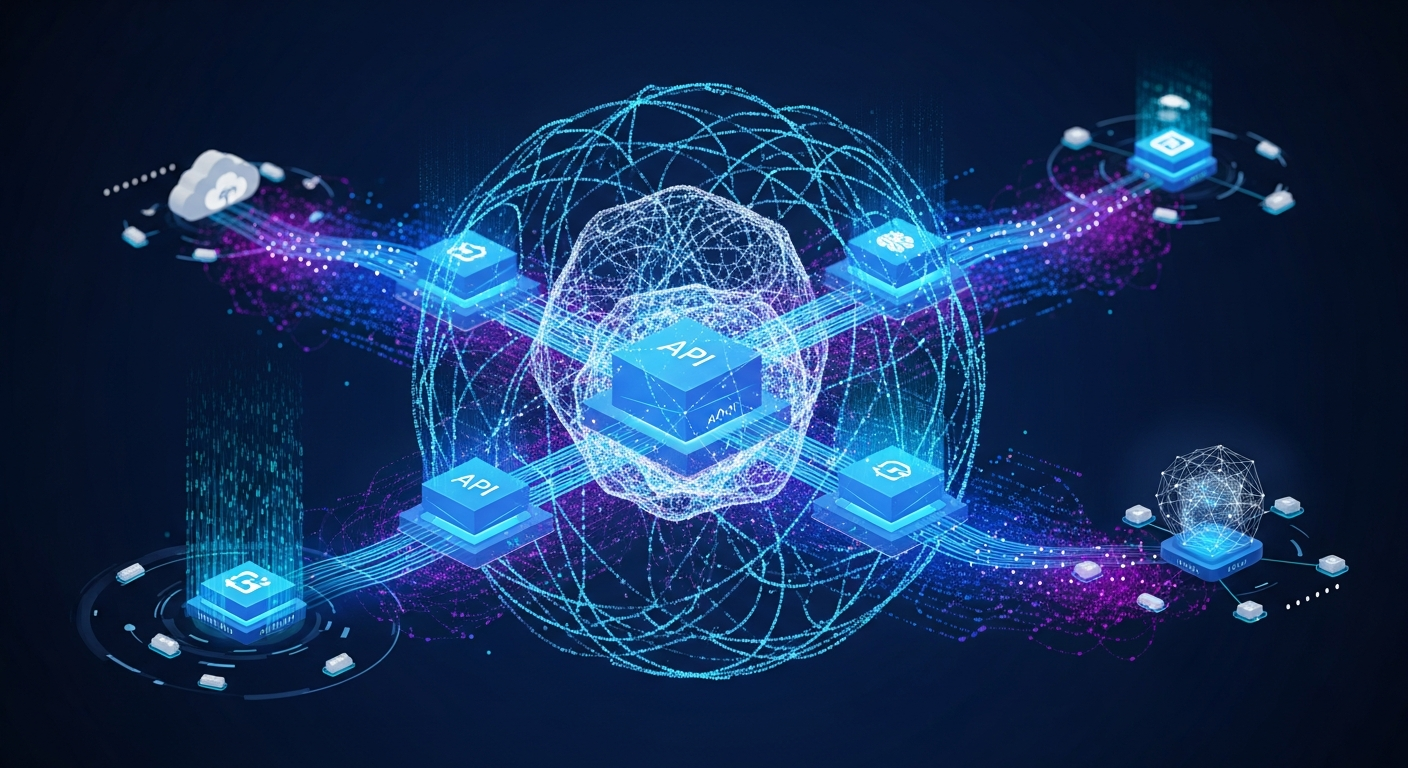
Modern infrastructure is built on “Event Mesh” technology. Instead of point-to-point integrations, tech professionals are building event-driven workflows that respond to state changes across the entire stack. By leveraging robust event streaming platforms like Apache Kafka and RabbitMQ, organizations can handle massive data ingestion seamlessly. For instance, a change in a database row might trigger a chain of automated events: a cache invalidation, a message to a customer, and an update to a machine learning model, all happening through decentralized triggers.
Real-Time APIs and Microservices Communication
This shift requires engineers to master “Orchestration vs. Choreography.” Tools are now designed to handle long-running, stateful workflows that can survive the ephemeral nature of serverless environments. Furthermore, the demand for real-time data has pushed the adoption of GraphQL subscriptions and real-time APIs, ensuring clients receive instant updates. For backend systems, utilizing gRPC for microservices communication provides the low-latency, high-throughput connections necessary to support these advanced event meshes. The “Glue” of the network is no longer a monolithic ESB (Enterprise Service Bus) but a highly distributed event bus that manages billions of triggers per second.
[INLINE IMAGE 5: Architectural diagram showing an event mesh utilizing Kafka and RabbitMQ to trigger serverless functions and real-time GraphQL subscriptions across microservices.]
Why is Multi-Cloud and Edge Mesh Orchestration Critical for 2026?
The “Single Cloud” strategy is a rarity. Most enterprises operate across multiple providers (AWS, Azure, GCP) and an increasing number of Edge locations. The challenge is the orchestration of this “Cloud-to-Edge” continuum.
The rise of “Cross-Cloud Orchestrators” provides layers that sit above the providers, allowing engineers to deploy integrations that span across different ecosystems seamlessly. For example, a workflow might ingest data at the Edge (on an IoT device), process it in an Azure Function, and store it in an AWS S3 bucket, all managed through a single pipeline. To maintain visibility across these complex environments, implementing distributed tracing for microservices has become mandatory, allowing teams to pinpoint latency and errors across cloud boundaries.
This “Edge Mesh” ensures that low-latency requirements are met by deploying logic as close to the user as possible. For tech professionals, the focus has shifted toward “Data Gravity” and “Latency-Driven Automation.” You no longer decide where a workflow runs; the system decides the optimal location based on the data source and the end-user location. Additionally, as these distributed APIs become more valuable, companies are integrating sophisticated API monetization strategies directly into the edge gateways, turning infrastructure into a revenue-generating asset.
Frequently Asked Questions About the Future of Cloud Automation
How will the role of a DevOps engineer change by 2026?
By 2026, the role will shift from “operating” the cloud to “engineering the platform.” Instead of manual troubleshooting, DevOps engineers will focus on creating the automated systems and guardrails that allow developers to deploy safely. The focus will be on reliability engineering and building the AI models that drive autonomous operations.
Is YAML still the primary language for infrastructure configuration?
While YAML remains a standard for configuration, there is a strong trend toward “Pro-Code” IaC (like Pulumi or AWS CDK) and “No-Code” interfaces for AI agents. Tech professionals often use high-level programming languages to define infrastructure, which is then translated into the necessary configurations by automated compilers.
How does AI-driven orchestration handle “hallucinations” in infrastructure code?
AI-driven orchestration is governed by “Verification Loops.” Any code or configuration generated by an AI agent must pass through a series of automated “dry-run” tests and policy checks (Security-as-Code) before it is applied to production. This creates a multi-layered defense against AI errors.
Will serverless completely replace containers for workflows?
Not exactly. The two have converged. Platforms now offer “Serverless Containers” (like advanced versions of Fargate or Google Cloud Run) where the orchestration is entirely automated, but the portability of containers remains. The choice is less about the technology and more about the event-triggering mechanism.
What is “Carbon-Aware” infrastructure management?
This is a trend where systems use real-time data from power grids to move workloads to data centers powered by renewable energy. It also involves scaling down resources during “high-carbon” hours to meet corporate sustainability goals automatically.
The Future of System Orchestration and Intelligent Intent
As we look ahead, the overarching theme is the transition from “Manual Control” to “Intelligent Intent.” For tech professionals building integrations and workflows, the tools have become more powerful, more abstract, and more autonomous. The complexity of modern distributed systems has made manual management impossible, but it has also paved the way for an era of unprecedented innovation.
The successful engineer is one who masters the art of “System Orchestration.” This involves understanding how to leverage AI agents, how to build resilient platform abstractions, and how to embed security and cost-efficiency directly into the DNA of every automated workflow. By embracing these shifts, organizations can move beyond simply “using the cloud” to “commanding the cloud,” creating a digital infrastructure that is as dynamic and adaptable as the business it supports. The future is not just about doing things faster; it is about building systems that are smart enough to manage themselves.
Sources & References
- Gartner. (2023). Top Strategic Technology Trends for 2024 and Beyond. Gartner Research.
- Forrester Research. (2023). The Future Of Cloud: Navigating The Shift To Edge And Autonomous Operations.
- Cloud Native Computing Foundation (CNCF). (2023). Annual Survey: The State of Cloud Native Development and WebAssembly.
- Puppet by Perforce. (2023). State of DevOps Report: Platform Engineering and Security-as-Code.
About the Author
Alex Mercer, Lead Cloud Architect & Digital Growth Strategist — Alex has over a decade of experience designing scalable technology solutions and driving startup growth through advanced API integrations. A certified AWS Solutions Architect and a recognized speaker at KubeCon, Alex specializes in bridging the gap between complex cloud infrastructure and actionable digital marketing strategies. He is a recipient of the 2022 Cloud Innovator Award and actively contributes to the CNCF community.
Reviewed by Sarah Kim, Senior Content Editor — Last reviewed: May 15, 2026