
By eamped Team
The Ultimate Guide to Marketing Attribution Models for Tech Startup Growth
In the fiercely competitive landscape of today’s digital economy, tech startups operate with unique pressures: limited budgets, the imperative for rapid growth, and the constant need to demonstrate tangible return on investment (ROI) to investors. This environment makes every marketing dollar count, elevating the strategic importance of understanding exactly how those dollars contribute to customer acquisition and revenue. This is precisely where marketing attribution models become indispensable tools for tech startup growth and management.
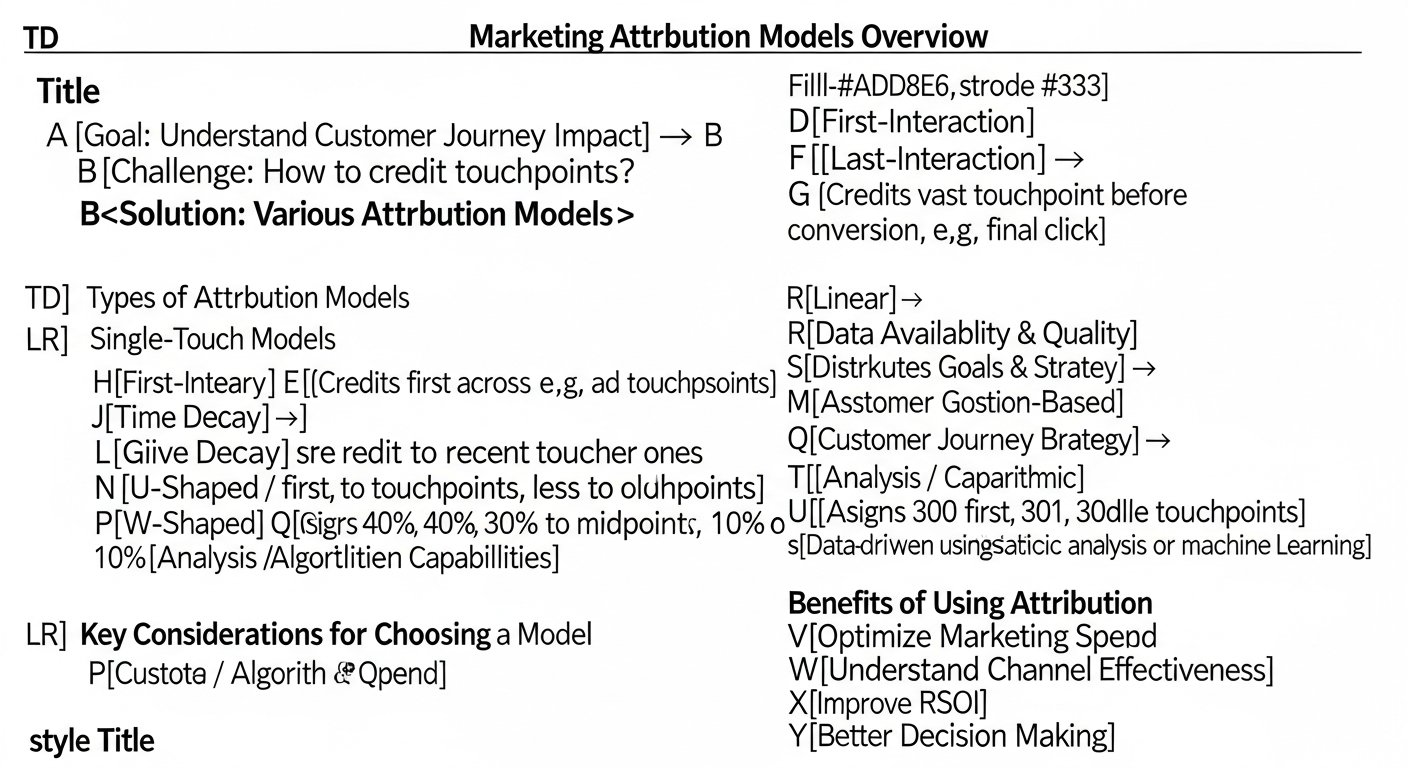
Marketing attribution models are frameworks that help startups identify which touchpoints in the customer journey receive credit for a conversion. By meticulously assigning value to each interaction—from initial awareness to the final purchase—these models enable startups to dissect complex customer paths, pinpoint effective channels, and optimize their marketing spend for scalable, data-driven growth. For tech startups, understanding these models isn’t just about analytics; it’s about unlocking efficiency, accelerating user acquisition, and securing a sustainable path to market leadership. Without a clear attribution strategy, marketing efforts risk becoming a black box, making it impossible to confidently scale successful initiatives or pivot away from underperforming ones. This guide will provide a comprehensive, expert-level overview of marketing attribution models, specifically tailored to the unique needs and challenges of innovative tech ventures aiming for exponential growth.
What Are Marketing Attribution Models and Why Are They Essential for Tech Startups?
At their core, marketing attribution models are the rules or sets of algorithms that determine how credit for a conversion (e.g., a software subscription, a demo request, an app download) is distributed across the various marketing touchpoints a customer encounters before completing that desired action. Think of a potential user who first discovers your SaaS product through a blog post, later sees a retargeting ad, then clicks on an email campaign, and finally converts after a direct visit to your pricing page. An attribution model assigns a specific weight or credit to each of these touchpoints, providing clarity on their individual and collective impact.
For tech startups, the necessity of accurate marketing attribution is paramount for several critical reasons:
- Optimized Marketing Spend: Tech startups often operate with lean marketing budgets. Attribution models reveal which channels and campaigns genuinely drive conversions, allowing founders and marketing leaders to reallocate resources to the most effective strategies and eliminate wasteful spending. This directly impacts the efficiency of customer acquisition cost (CAC).
- Understanding the Customer Journey: The path to conversion for a tech product or service, especially in B2B SaaS, can be long and complex. Attribution models illuminate these intricate customer journeys, helping startups understand user behavior, identify key decision points, and optimize the overall user experience across all touchpoints.
- Scalable Growth: Rapid scalability is a hallmark of successful tech startups. By understanding the true ROI of different marketing initiatives, startups can confidently invest more in proven growth drivers, building predictable and repeatable customer acquisition machines.
- Informed Product-Led Growth (PLG) Strategies: Many modern tech startups leverage PLG. Attribution helps understand how free trials, freemium models, and in-product experiences contribute to conversion and expansion, linking product usage directly to marketing efforts.
- Investor Confidence and Funding: Demonstrating a clear, data-driven understanding of marketing ROI and scalable customer acquisition is crucial for attracting and retaining investor confidence. Robust attribution data provides tangible proof of concept and a clear path to profitability, essential for subsequent funding rounds.
- Enhanced Customer Lifetime Value (LTV): By understanding which initial touchpoints lead to higher-value customers or better retention rates, startups can refine their top-of-funnel strategies to attract ideal user segments, thereby boosting LTV.
In essence, marketing attribution transforms marketing from an expense into a measurable, strategic investment, empowering tech startups to make data-driven decisions that fuel sustainable, rapid growth.
What Are the Core Types of Single-Touch Marketing Attribution Models?
Single-touch attribution models, as their name suggests, assign 100% of the credit for a conversion to just one touchpoint in the customer journey. While simpler to implement and understand, they inherently oversimplify complex conversion paths. However, they can be valuable for specific insights, especially for early-stage tech startups with limited data analytics capabilities or very clear, linear customer journeys.

First-Touch Attribution: How Does it Focus on Initial Engagement?
How it Works: This model attributes 100% of the conversion credit to the very first marketing interaction a customer had with your startup. It emphasizes the initial awareness or discovery phase.
- Mechanism: If a user first discovers your innovative AI tool through a sponsored LinkedIn post, and then later converts through a direct visit, the LinkedIn post gets all the credit.
- Pros (for Tech Startups):
- Simplicity: Easy to understand and implement, requiring less sophisticated tracking.
- Brand Awareness Insight: Excellent for identifying channels that are effective at introducing your new tech product or service to a broad audience.
- Top-of-Funnel Optimization: Helps startups optimize content and campaigns aimed at initial engagement and generating leads, crucial for new market entries.
- Cons (for Tech Startups):
- Ignores Nurturing: Neglects all subsequent interactions that might have been crucial in convincing a user to convert, which is a significant drawback for complex B2B tech sales cycles.
- Oversimplification: Can lead to misinformed decisions if other channels are doing the heavy lifting further down the funnel.
- Less Relevant for High-Value Conversions: For high-CAC, high-LTV tech products, the initial touch is rarely the sole driver.
- Ideal Use Case (for Startups): Early-stage startups focused heavily on brand awareness, viral growth, or identifying effective channels for initial user acquisition for a simple, low-friction product (e.g., a free mobile app).
- Example Channels Credited: Organic search (for discovery), social media ads, blog content, PR mentions.
Last-Touch Attribution: How Does it Identify the Final Conversion Driver?
How it Works: This model assigns 100% of the conversion credit to the last marketing interaction the customer had immediately before converting. It prioritizes the touchpoint that directly closed the deal.
- Mechanism: If a user visits your website via an email, then a paid ad, then directly converts after clicking a Google Search Ad, the Google Search Ad gets all the credit.
- Pros (for Tech Startups):
- Clear ROI for Closing Channels: Provides a direct measure of efficiency for “closer” channels, excellent for optimizing bottom-of-funnel campaigns.
- Easy to Implement: Like first-touch, it’s straightforward and requires minimal data complexity.
- Performance Marketing Focus: Ideal for startups heavily invested in performance marketing (e.g., paid search, retargeting) where the goal is immediate conversions.
- Cons (for Tech Startups):
- Neglects Awareness and Nurturing: Completely ignores all preceding touchpoints that built interest and trust, often underestimating the value of top- and mid-funnel activities.
- Skewed Channel Value: Can lead to over-investment in channels that are merely facilitators of an already committed user, rather than true drivers of initial interest.
- Misrepresents Complex Sales: Highly problematic for tech startups with long sales cycles where multiple interactions contribute to the final decision.
- Ideal Use Case (for Startups): Startups with short sales cycles, low-cost products, or those primarily focused on direct response campaigns and optimizing their conversion rates at the very end of the funnel (e.g., free trial sign-ups from specific landing pages).
- Example Channels Credited: Paid search ads, direct website visits, transactional emails, specific landing pages.
Linear Attribution: How Does it Distribute Credit Equally?
How it Works: This model distributes credit equally among all touchpoints in the customer journey that led to a conversion. Every interaction gets an even share.
- Mechanism: If a user interacts with your startup via a blog post, a social media ad, and an email campaign before converting, each of these three touchpoints receives 33.33% of the credit.
- Pros (for Tech Startups):
- Fairer Than Single-Touch: Acknowledges that multiple touchpoints contribute to a conversion, providing a more holistic view than first- or last-touch.
- Highlights All Contributions: Encourages investment across the entire customer journey, from awareness to conversion.
- Good Starting Point: Can be a reasonable initial multi-touch model for startups moving beyond single-touch, especially when specific channel impacts are still being understood.
- Cons (for Tech Startups):
- Lacks Nuance: Assumes all touchpoints are equally important, which is rarely true. Some interactions are inherently more impactful than others.
- Difficulty in Prioritization: Because all channels get equal credit, it can be hard to prioritize which channels or campaigns to optimize more aggressively.
- Not Ideal for Variable Impact: Doesn’t account for the differing weight of awareness vs. decision-stage interactions, which is crucial for tech products.
- Ideal Use Case (for Startups): Startups with relatively consistent customer journeys where the impact of each touchpoint is roughly equivalent, or as an introductory multi-touch model before moving to more sophisticated approaches.
- Example Channels Credited: All channels involved in the journey (organic search, social, paid, email, display, etc.) receive equal credit.
Time-Decay Attribution: How Does it Incorporate Recency Bias?
How it Works: This model gives more credit to touchpoints that occurred closer in time to the conversion. The closer an interaction is to the conversion, the more credit it receives, with credit decaying for earlier interactions.
- Mechanism: Using an exponential decay curve, a touchpoint 1 day before conversion receives significantly more credit than one 30 days prior. For example, the final email might get 60%, the ad before that 30%, and the initial blog post only 10%.
- Pros (for Tech Startups):
- Reflects Human Psychology: Acknowledges that recent interactions often have a greater influence on a user’s final decision.
- Good for Shorter Sales Cycles: Particularly useful for tech products with relatively quick decision-making processes, where recent nudges are highly effective.
- Balances Awareness and Conversion: Gives some credit to earlier touchpoints while emphasizing the closing stages, making it more balanced than single-touch models.
- Cons (for Tech Startups):
- Underestimates Early Awareness: Can still undervalue the critical role of initial discovery and brand building, which are essential for new tech companies.
- Complex Calculation: More mathematically involved than linear models, requiring a basic understanding of decay rates.
- Less Suitable for Long Sales Cycles: For enterprise SaaS or complex B2B tech products, the initial lead generation and long-term nurturing are vital and may be undervalued by this model.
- Ideal Use Case (for Startups): Tech startups with customer journeys of moderate length, where a series of interactions build towards a decision, but the most recent interactions are often the most persuasive. E.g., subscription services where free trials precede conversion quickly.
- Example Channels Credited: Campaigns closer to conversion (e.g., retargeting ads, follow-up emails, direct visits) receive more credit.
What Are Advanced Multi-Touch Marketing Attribution Models for Deeper Insights?
For tech startups with complex customer journeys, high-value products, or robust data analytics capabilities, multi-touch attribution models offer a more nuanced and accurate picture of marketing effectiveness. These models distribute credit across multiple touchpoints based on predefined rules or sophisticated algorithms, providing deeper insights into the entire conversion path.
U-Shaped Attribution: How Does it Highlight Key Milestones?
How it Works: The U-Shaped (or Position-Based) model gives the most credit to the first and last interactions, with the remaining credit distributed evenly among the middle touchpoints. A common distribution is 40% to the first touch, 40% to the last touch, and the remaining 20% split amongst all interactions in between.
- Mechanism: If a user’s journey is: Blog Post (1st) -> Social Ad -> Email -> Pricing Page (Last) -> Conversion. The Blog Post gets 40%, the Pricing Page gets 40%, and the Social Ad and Email each get 10%.
- Pros (for Tech Startups):
- Balances Awareness and Conversion: Acknowledges the importance of both initial discovery (crucial for new tech products) and the final closing touchpoint.
- Recognizes Nurturing: Gives some credit to the middle-funnel interactions that keep the user engaged.
- Comprehensive Yet Simplified: Offers a more sophisticated view than linear models without the complexity of algorithmic approaches.
- Cons (for Tech Startups):
- Arbitrary Credit Distribution: The 40/20/40 split is a rule-based assumption and might not accurately reflect the true impact of specific middle touchpoints.
- Can Still Oversimplify Middle Interactions: While better than single-touch, it doesn’t differentiate between the varying importance of different middle touchpoints.
- Ideal Use Case (for Startups): Startups where initial lead generation and final conversion are clearly defined, but a significant nurturing phase exists in between. Great for B2B tech where top-of-funnel content and bottom-of-funnel sales efforts are both critical.
- Example Channels Credited: Initial organic/paid discovery, final direct/sales touch, and all intermediate nurturing channels (email, webinars, content downloads).
W-Shaped Attribution: How Does it Provide Comprehensive Journey Mapping?
How it Works: Building on the U-shaped model, the W-Shaped model assigns significant credit to three key touchpoints: the first interaction (awareness), the lead creation touchpoint (when a lead is generated, e.g., form submission), and the opportunity creation touchpoint (when a sales opportunity is identified). The remaining credit is then distributed evenly among other touchpoints.
- Mechanism: A common distribution is 30% for the first touch, 30% for lead creation, 30% for opportunity creation, and 10% split among the rest. This is highly relevant for B2B tech startups with distinct stages in their sales funnel.
- Pros (for Tech Startups):
- Highly Relevant for B2B Tech: Directly aligns with typical B2B sales funnels that involve lead generation and sales opportunity stages.
- Deep Insight into Key Milestones: Provides excellent visibility into the channels driving crucial transitions in the customer journey.
- Better Collaboration: Fosters better alignment between marketing and sales by crediting the specific interactions that advance a prospect through the funnel.
- Cons (for Tech Startups):
- Requires Sophisticated Tracking: Needs precise tracking of lead creation and opportunity creation events, often involving CRM and marketing automation integration.
- Not Universal: Less applicable for simple consumer tech products or those without distinct lead/opportunity stages.
- Complexity: More complex to set up and manage than simpler models.
- Ideal Use Case (for Startups): B2B SaaS startups, enterprise tech solutions, or any tech company with a multi-stage sales process, where understanding the impact of marketing on lead generation and sales pipeline creation is vital.
- Example Channels Credited: Initial content discovery, webinar sign-ups, demo requests, sales outreach, product trials.
Custom Attribution Models: How Can They Be Tailored to Unique Startup Journeys?
How it Works: Custom attribution models allow tech startups to define their own credit distribution rules based on their unique understanding of their customer journey, business objectives, and the specific impact of different channels. This is the most flexible and potentially most accurate approach.
- Mechanism: A startup might decide that a “product demo” touchpoint is 3x more valuable than a “blog post read,” or that certain channels (e.g., direct referrals for a specialized tool) deserve a higher baseline credit. These models are often built using advanced analytics tools or even machine learning.
- Pros (for Tech Startups):
- Maximum Accuracy: Reflects the true value of each touchpoint based on the startup’s specific context and data.
- Highly Adaptable: Can evolve as the startup’s product, market, and customer journey change.
- Competitive Advantage: Provides unique insights that can lead to superior marketing efficiency and ROI compared to competitors using generic models.
- Cons (for Tech Startups):
- High Complexity and Resource Intensive: Requires significant data analytics expertise, robust data infrastructure, and ongoing maintenance.
- Risk of Bias: If not built carefully, can be influenced by internal biases rather than objective data.
- Time and Cost: Developing and maintaining custom models can be a substantial investment for early-stage startups.
- Ideal Use Case (for Startups): Growth-stage tech startups with significant data volumes, dedicated analytics teams, unique or highly complex customer journeys, and a mature understanding of their marketing ecosystem. Also beneficial for startups with distinct product-led growth (PLG) vs. sales-led growth (SLG) motions.
- Example Channels Credited: Any and all channels, with specific, weighted credit assigned based on custom rules.
Table 1: Comprehensive Comparison of Marketing Attribution Models
| Model Name | How it Works | Pros (for Tech Startups) | Cons (for Tech Startups) | Ideal Use Case (for Startups) | Example Channels Credited |
|---|---|---|---|---|---|
| First-Touch | 100% credit to the first interaction. | Simple; great for brand awareness/initial discovery. | Ignores all subsequent interactions; oversimplifies. | Early-stage, high-volume, low-friction products. | Organic Search, Social Ads, Blog Posts. |
| Last-Touch | 100% credit to the final interaction before conversion. | Clear ROI for closing channels; easy to implement. | Neglects awareness/nurturing; skews channel value. | Short sales cycles, direct response campaigns. | Paid Search, Direct Visits, Transactional Emails. |
| Linear | Equal credit distributed among all touchpoints. | Fairer than single-touch; highlights all contributions. | Lacks nuance; assumes equal importance; hard to prioritize. | Introductory multi-touch; consistent customer journeys. | All channels in journey get equal share. |
| Time-Decay | More credit to touchpoints closer to conversion. | Reflects recency bias; good for moderate sales cycles. | Underestimates early awareness; complex calculation. | Moderate sales cycles, subscription services. | Retargeting, Follow-up Emails, Direct Visits. |
| U-Shaped | High credit to first and last touches (e.g., 40/20/40 split). | Balances awareness/conversion; recognizes nurturing. | Arbitrary credit distribution; can still oversimplify middle. | B2B tech with clear lead gen/conversion, significant nurturing. | Initial discovery, final sales touch, intermediate content. |
| W-Shaped | High credit to first, lead creation, and opportunity creation. | Highly relevant for B2B sales funnels; deep insight into milestones. | Requires sophisticated CRM/MA integration; complex setup. | B2B SaaS, enterprise tech with multi-stage sales processes. | Initial content, webinar sign-ups, demo requests, sales calls. |
| Custom | Credit defined by unique, data-driven rules/algorithms. | Maximum accuracy; highly adaptable; competitive advantage. | High complexity/cost; requires expertise; risk of bias. | Growth-stage startups with unique, complex journeys; large data. | Tailored based on specific startup’s data and objectives. |
How Do Tech Startups Effectively Implement Marketing Attribution Models?
Implementing marketing attribution effectively isn’t just about selecting a model; it’s a strategic process that requires careful planning, robust data infrastructure, and continuous optimization. For tech startups, with their inherent need for efficiency and scalability, a structured approach is crucial.

Defining Your Customer Journey and Conversion Goals for Marketing Attribution
Before diving into data, startups must clearly map out their typical customer journeys. This involves:
- Identifying Key Touchpoints: What are all the potential interactions a prospect might have with your brand, from initial awareness (e.g., blog posts, social media) to consideration (e.g., whitepapers, webinars, free trials) to decision (e.g., demo calls, pricing pages, sign-up forms)?
- Setting Clear Conversion Goals: What constitutes a “conversion” for your startup? Is it a lead generation (MQL), a product qualified lead (PQL), a trial sign-up, a paid subscription, or a completed purchase? Define both macro and micro conversions relevant to your business model (SaaS, marketplace, app, etc.).
- Understanding Sales Cycle Length: Shorter cycles might benefit from models emphasizing recency, while longer, complex B2B cycles demand models that credit multiple interactions over time.
Gathering and Integrating Marketing Data Across Platforms for Attribution
The success of any attribution model hinges on the quality and comprehensiveness of your data. Tech startups need to consolidate data from various sources:
- Website Analytics: Google Analytics 4 (GA4), Mixpanel, Amplitude, etc., track website interactions, page views, and event completions.
- Ad Platforms: Data from Google Ads, Facebook Ads, LinkedIn Ads, etc., provides details on clicks, impressions, and costs for paid channels.
- CRM Systems: Salesforce, HubSpot, Zoho CRM, etc., hold crucial customer data, sales stages, and LTV metrics, especially for B2B startups.
- Marketing Automation Platforms: Tools like HubSpot, Marketo, Customer.io, track email opens, clicks, and lead nurturing activities.
- Product Analytics: For product-led growth (PLG) startups, in-app events and user behavior data from tools like Pendo, Mixpanel, or Amplitude are vital.
Integrating these disparate data sources into a centralized data warehouse (e.g., Google BigQuery, Snowflake) or using robust marketing analytics platforms (e.g., Segment, Fivetran, Supermetrics) is critical for a unified view of the customer journey.
Selecting the Right Marketing Attribution Model for Your Startup Stage
There’s no one-size-fits-all model. The choice depends on your startup’s maturity, product complexity, and resources:
- Early-Stage Startups: May start with simpler models like Last-Touch or Linear due to ease of implementation and limited data. The focus might be on proving initial ROI for direct acquisition channels.
- Growth-Stage Startups: As data accumulates and customer journeys become clearer, multi-touch models like U-Shaped, Time-Decay, or even W-Shaped become more appropriate, especially for B2B SaaS.
- Mature Tech Companies: May invest in custom, data-driven, or algorithmic models, potentially leveraging AI and machine learning for predictive insights.
It’s also advisable to test and compare multiple models simultaneously to understand different perspectives on channel performance before committing to one. This helps avoid “attribution bias” where a single model might overvalue or undervalue specific channels.
Leveraging Attribution Insights for Budget Optimization and ROI
The ultimate goal of attribution is to drive better decision-making. Once data is collected and models are applied, tech startups can:
- Optimize Budget Allocation: Reallocate marketing spend from underperforming channels (according to your chosen model) to those that consistently drive conversions and contribute positively to CAC and LTV.
- Improve Campaign Performance: Identify which creative elements, messaging, or ad formats are most effective at different stages of the funnel.
- Refine Content Strategy: Understand which types of content (blog posts, whitepapers, videos) contribute most to initial engagement or lead nurturing.
- Inform Sales Strategies: For B2B startups, attribution can help sales teams prioritize leads based on the quality and quantity of their prior marketing touchpoints.
- Report to Stakeholders: Provide clear, data-backed evidence of marketing’s impact on business growth to investors, leadership, and the board.
Table 2: Essential Data Points for Robust Startup Attribution
| Data Point | Why it’s Critical for Attribution | Primary Source/Tool | Startup Relevance |
|---|---|---|---|
| User ID (or Client ID) | Links all touchpoints to a single user across devices/sessions. | Google Analytics, CRM, Marketing Automation. | Essential for accurate cross-channel/cross-device tracking. |
| Touchpoint Timestamp | Defines the sequence and timing of interactions. | Website Analytics, Ad Platforms, CRM. | Crucial for time-decay models and journey mapping. |
| Marketing Channel | Identifies the source of interaction (e.g., Organic, Paid Social). | UTM Parameters, Ad Platforms, GA4. | Core for channel performance analysis and budget allocation. |
| Campaign ID/Name | Provides granularity to evaluate specific campaigns/ads. | Ad Platforms, CRM, Marketing Automation. | Enables micro-optimization of campaign elements. |
| Conversion Event | Defines the desired action (e.g., sign-up, demo, purchase). | CRM, Website Analytics, Product Analytics. | The ultimate metric attribution aims to explain. |
| Customer Lifetime Value (LTV) | Measures the long-term revenue a customer brings. | CRM, Billing/Subscription Systems. | Links acquisition to long-term profitability; vital for investor relations. |
| Customer Acquisition Cost (CAC) | Total cost to acquire a customer. | Ad Platforms, Internal Marketing Spend Data. | Directly compared with LTV to assess sustainable growth. |
What Are the Challenges and Best Practices in Marketing Attribution for Rapid Growth Startups?
While the benefits of robust marketing attribution are clear, tech startups, especially those in rapid growth phases, often encounter specific challenges. Navigating these obstacles with best practices is crucial for extracting meaningful insights.
Overcoming Data Silos and Integration Hurdles in Marketing Attribution
One of the most significant challenges is fragmented data. Marketing data often resides in disparate systems (ad platforms, analytics tools, CRMs, product databases) that don’t communicate seamlessly. This creates incomplete customer journeys and inaccurate attribution.
- Best Practice: Implement a Centralized Data Strategy: Invest in a customer data platform (CDP), a data warehouse (e.g., Google BigQuery, AWS Redshift), or robust data integration tools (e.g., Fivetran, Segment) early on. This unifies data, enabling a holistic view of the customer.
- Best Practice: Standardize UTM Tagging: Enforce strict and consistent UTM parameter usage across all marketing campaigns. This ensures clean, comparable data from every channel.
- Best Practice: Leverage Server-Side Tracking: Move beyond client-side tracking (browser-based) where possible to capture more reliable data, less susceptible to ad blockers or browser privacy changes.
Attributing Offline and Organic Channels in a Digital World
While tech startups primarily rely on digital, offline interactions (e.g., conferences, sales calls) and purely organic channels (e.g., word-of-mouth, direct brand search) still contribute significantly but are harder to track.
- Best Practice: Utilize Unique Codes/Tracking: For offline events, use unique QR codes, landing pages, or promotional codes to link back to digital touchpoints.
- Best Practice: Integrate CRM for Sales Interactions: Ensure sales teams log every interaction in the CRM. This is crucial for B2B tech where human touchpoints are vital.
- Best Practice: Conduct Surveys and Customer Interviews: Directly ask new customers “How did you hear about us?” This qualitative data can provide valuable insights into hard-to-track organic and referral channels, validating or challenging attribution models.
- Best Practice: Model Organic Search Incrementality: Understand that some direct or branded organic search is a result of prior marketing efforts, not purely ‘free’ acquisition.
Avoiding Common Marketing Attribution Pitfalls and Biases
Without careful consideration, attribution models can lead to misleading conclusions and suboptimal marketing decisions.
- Pitfall: Focusing on a Single Model: Relying solely on one attribution model (e.g., Last-Touch) can lead to over- or under-investment in certain channels.
- Best Practice: Use Multiple Models for Comparison: Regularly analyze your data using 2-3 different models (e.g., Last-Touch, Linear, U-Shaped) to gain varied perspectives. This allows you to understand which channels drive awareness versus those that close deals.
- Pitfall: Ignoring Time-Lag: For complex tech products, conversions might take weeks or months. Short attribution windows can miss crucial early touchpoints.
- Best Practice: Define an Appropriate Look-Back Window: Set your attribution window (e.g., 30, 60, 90 days) based on your average sales cycle length.
- Pitfall: Data Quality Issues: Inconsistent data, missing tags, or incorrect tracking can severely skew results.
- Best Practice: Implement Regular Data Audits: Periodically review your data collection and tracking setup to ensure accuracy and completeness.
Continuous Testing and Refinement for Evolving Startup Needs in Marketing Attribution
A startup’s customer journey, product, and market evolve rapidly. Attribution must be a dynamic, not static, process.
- Best Practice: Treat Attribution as an Ongoing Process: Regularly review and challenge your chosen attribution model(s). What worked at the seed stage might not be optimal at Series A.
- Best Practice: A/B Test Attribution Hypotheses: Use a controlled environment to test hypotheses, such as “Does investing more in our content marketing (first touch) lead to higher LTV customers, even if the direct conversion is later?”
- Best Practice: Align with Business Objectives: Ensure your attribution strategy is always aligned with current business goals, whether it’s rapid user acquisition, LTV optimization, or profitability.
Beyond Attribution: How Do Marketing Attribution Models Integrate into Overall Tech Startup Growth Strategy?
While marketing attribution models are powerful in isolation, their true potential for tech startups is unlocked when they are seamlessly integrated into the broader growth strategy. Attribution insights shouldn’t just inform marketing budget shifts; they should influence product development, sales enablement, and overall business intelligence.
For a tech startup focused on aggressive growth, attribution models provide the data backbone for several strategic initiatives:
- Holistic Customer Journey Optimization: By understanding the relative impact of each touchpoint, startups can identify bottlenecks or friction points across the entire customer journey, not just within marketing channels. This might lead to product enhancements, improvements in the onboarding process, or refinement of the sales hand-off for B2B models.
- Synergy Between Marketing and Sales: Especially for B2B SaaS, attribution data fosters a shared understanding between marketing and sales teams. Marketing can prove its impact on qualified lead generation and pipeline velocity, while sales can provide feedback on lead quality tied to specific marketing touchpoints. This creates a powerful, aligned revenue engine.
- Data-Driven Product Development: Attribution insights can reveal which features or product interactions (for PLG companies) are most effective in driving conversions or reducing churn. This feedback loop can directly inform the product roadmap, ensuring development efforts are aligned with user acquisition and retention goals.
- Investor Relations and Reporting: Presenting clear, robust attribution data allows startups to confidently articulate their customer acquisition strategy and demonstrate a predictable path to growth and profitability. This is invaluable for securing funding and maintaining investor confidence, proving that every dollar invested in growth is accounted for and optimized.
- Competitive Advantage Through Efficiency: In a market often saturated with similar tech solutions, efficient customer acquisition is a major differentiator. Startups that master attribution can out-compete by achieving lower CAC and higher LTV, allowing for more aggressive scaling and market penetration.
- Forecasting and Planning: With a reliable understanding of channel performance, startups can create more accurate forecasts for user acquisition, revenue growth, and marketing budget requirements, enabling more strategic long-term planning.
Integrating attribution means moving beyond simply crediting channels to actively shaping the entire growth ecosystem. It’s about using the ‘why’ behind conversions to drive strategic decisions across the entire organization, ensuring every function contributes to the overarching goal of scalable, sustainable tech startup growth.
What Are the Future Trends in Marketing Attribution for the Startup Ecosystem?
The digital marketing landscape is in constant flux, driven by technological advancements, evolving privacy regulations, and changing consumer behaviors. For nimble tech startups, staying ahead of these trends in marketing attribution is not just an advantage—it’s a necessity for sustained growth and innovation.
The Rise of AI and Machine Learning-Powered Attribution Models
Traditional rule-based models, while useful, have inherent limitations. The future lies in algorithmic, data-driven approaches:
- Probabilistic and Shapley Value Models: AI and ML algorithms can analyze vast datasets to identify complex, non-linear relationships between touchpoints and conversions. They can dynamically assign credit based on the incremental impact of each interaction, offering a far more accurate and unbiased view than fixed rules.
- Predictive Attribution: Beyond understanding past conversions, AI can help predict future customer behavior and conversion likelihood based on current touchpoints, allowing startups to optimize campaigns proactively.
- Automated Optimization: As AI models mature, they will not only attribute but also recommend and even automate budget adjustments across channels in real-time for maximum ROI.
For tech startups, early adoption of these advanced analytics capabilities (often through specialized platforms or leveraging internal data science expertise) can provide a significant edge.
Privacy-Centric Attribution and the Cookieless Future
With increasing privacy regulations (GDPR, CCPA) and the deprecation of third-party cookies, traditional attribution methods relying on cross-site tracking are becoming less viable.
- First-Party Data Emphasis: Startups will need to focus even more on collecting and leveraging their own first-party data (e.g., email addresses, user IDs, behavioral data on their own properties).
- Consent-Driven Tracking: Implementing robust consent management platforms (CMPs) and respecting user privacy preferences will be paramount.
- Enhanced Server-Side Tracking: Moving tracking logic from the user’s browser to the server will help maintain data fidelity and control, circumventing some client-side tracking limitations.
- Privacy-Enhancing Technologies: Exploring technologies like Differential Privacy or Federated Learning will allow for insights from aggregated data without compromising individual user privacy.
Tech startups, often built on innovation, are well-positioned to embrace and develop solutions for this privacy-first future, potentially turning a challenge into an opportunity.
Cross-Device and Offline-Online Integration in Marketing Attribution
Users interact with brands across multiple devices (laptop, mobile, tablet) and frequently move between digital and offline channels. Accurately stitching these disparate touchpoints together remains a significant challenge.
- Identity Resolution: Advanced techniques to identify a single user across different devices using deterministic (e.g., logged-in user IDs) and probabilistic (e.g., device graphs) methods will become more sophisticated.
- Connected TV (CTV) and Emerging Channels: As marketing expands to new platforms, attributing their impact will require new data connectors and methodologies.
- Augmented Reality (AR) and Virtual Reality (VR) Interactions: For startups in these cutting-edge fields, attribution will need to evolve to track and credit interactions within immersive experiences.
Incrementality Testing and Causal Inference for Marketing Attribution
Beyond simply assigning credit, marketers are increasingly focused on incrementality—understanding the *true causal impact* of a marketing activity, i.e., whether a conversion would have happened anyway without that specific touchpoint. This is particularly valuable for optimizing spend.
- Controlled Experiments: A/B testing, ghost ads, and geo-testing will become standard practices to measure the incremental lift provided by campaigns and channels.
- Econometric Modeling: More sophisticated statistical models that account for external factors (e.g., seasonality, competitor activity) will help isolate the true impact of marketing spend.
For tech startups, embracing these future trends means investing in robust data infrastructure, developing internal analytics expertise, and maintaining a culture of continuous experimentation and adaptation. The startups that can accurately measure and optimize their growth engines in an increasingly complex and privacy-conscious world will be the ones that achieve breakout success by 2026 and beyond.