
Customer Onboarding Best Practices: A Comprehensive Guide for Tech Startup Growth
For tech startups, rapid scaling and sustainable growth aren’t just aspirations; they are existential necessities. At the heart of achieving this lies an often-underestimated yet profoundly impactful strategy: mastering customer onboarding best practices. This isn’t merely about showing new users around your product; it’s a strategic, structured process meticulously designed to integrate them successfully, quickly demonstrate your product’s core value, and set the stage for long-term engagement.
Effective customer onboarding is undeniably a critical growth lever for tech ventures. It directly impacts vital metrics such as reducing churn, significantly increasing activation rates, and accelerating time-to-value (TTV), all of which are paramount for attracting investment and ensuring scalability. Without a robust onboarding framework, even the most innovative product risks high abandonment rates and stifled growth. This comprehensive guide will arm tech startups with actionable, data-driven best practices to transform their onboarding process into a powerful engine for enduring success and exponential tech startup growth.
What is Customer Onboarding and Why is it Critical for Tech Startups?
Customer onboarding is the systematic process of guiding new users or customers to successfully adopt a product or service and fully realize its intended value. For tech startups, this process is far more than a simple product tour; it’s a crucial journey that bridges the gap between sign-up and sustained engagement, ensuring users integrate your solution into their workflow and experience tangible benefits. A well-executed onboarding process is fundamentally about setting new customers up for success, thereby cementing their loyalty and contribution to your business’s overall health.
For tech startups, the stakes are particularly high. In a competitive landscape saturated with innovation, the initial user experience can make or break a company’s trajectory. Poor onboarding leads to swift disengagement, high early churn rates, and a devastating impact on crucial metrics like customer lifetime value (CLTV). Conversely, a stellar onboarding experience can dramatically accelerate product adoption, foster an active user base, and fuel viral growth through positive word-of-mouth. It directly translates into a stronger market position, increased revenue, and enhanced investor confidence. Ultimately, customer onboarding is not just a feature; it’s a foundational pillar for sustainable tech startup growth and management.
The Direct Impact on Key Startup Metrics
- Reduced Churn Rate: Studies consistently show that companies with strong onboarding programs experience significantly lower churn (Source: SaaS Industry Report, 2023). When users understand and derive value from a product quickly, they are far less likely to abandon it.
- Increased Activation Rate: This metric measures the percentage of users who complete key actions that signify they’ve grasped the product’s core value. Effective onboarding guides users to these “aha moments” efficiently, boosting activation.
- Accelerated Time-to-Value (TTV): TTV is the duration it takes for a new customer to realize the promised benefit of your product. A streamlined onboarding process minimizes TTV, leading to faster user satisfaction and higher retention.
- Enhanced Customer Lifetime Value (CLTV): By reducing churn and fostering deeper engagement, robust onboarding directly contributes to a higher CLTV, making each customer acquisition more profitable over time.
- Improved Product Adoption: Onboarding educates users about features and functionalities, encouraging deeper exploration and usage across the product, which is vital for product-led growth strategies.

What are the Key Stages of an Effective Customer Onboarding Journey?
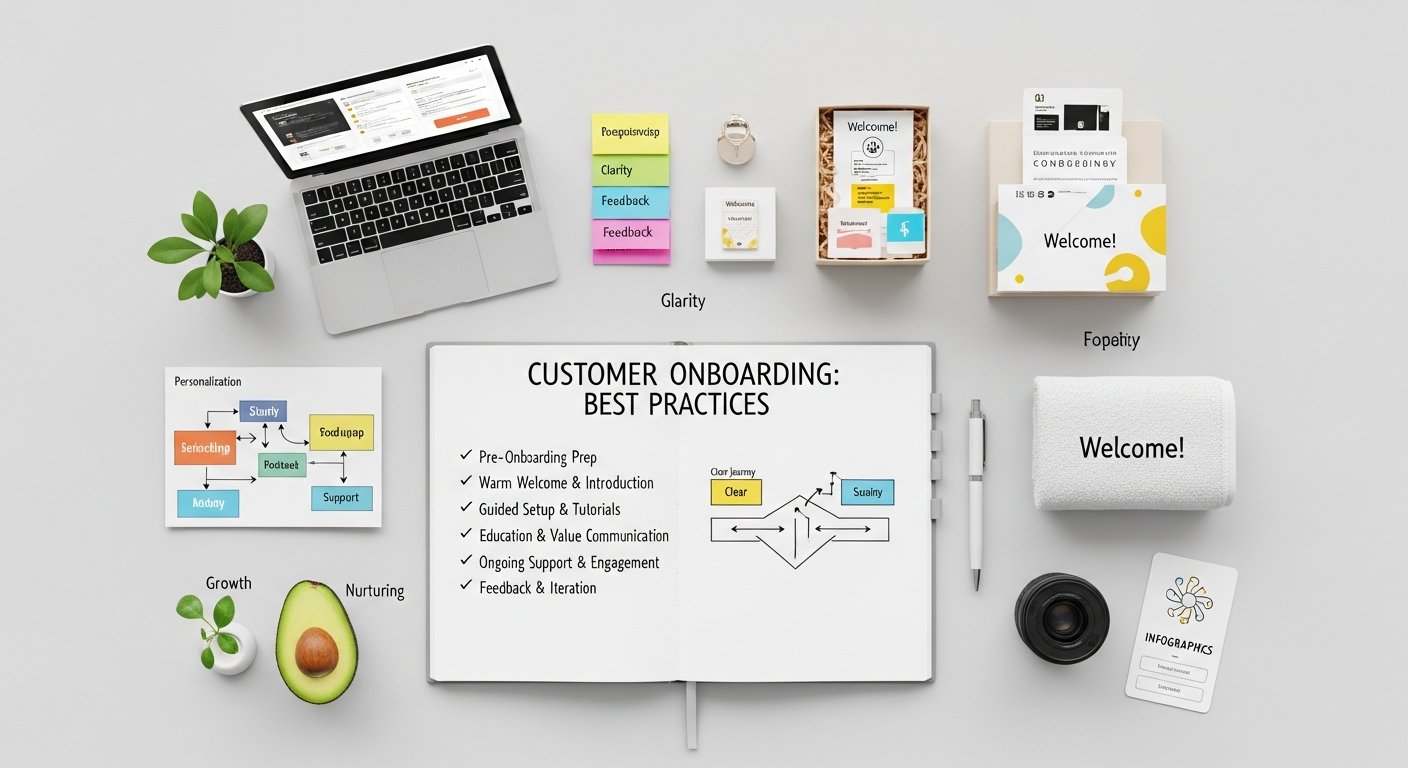
A successful customer onboarding journey is not a monolithic event but a meticulously structured sequence of interactions. Breaking it down into distinct stages allows tech startups to identify critical touchpoints, optimize user experience, and ensure a logical progression towards full product adoption and value realization. Each stage builds upon the last, guiding the user from initial curiosity to becoming an empowered, loyal advocate.
Understanding these stages is crucial for designing an onboarding process that anticipates user needs, addresses potential pain points proactively, and consistently nudges them towards deeper engagement. By mapping out these phases, tech startups can allocate resources effectively, personalize experiences, and measure success at each critical juncture, thereby bolstering their tech startup growth through enhanced customer experience and retention.
- Welcome & Setup:
- Description: The very first impression. Users have just signed up or made a purchase. Focus on warmth, clarity, and minimizing friction.
- Key Activities for Tech Startups: Personalized welcome email (reiterating value proposition), clear instructions for initial setup (e.g., account creation, profile setup, integrating with existing tools), quick product tour or explainer video, setting initial preferences.
- Goal: Make users feel welcomed, informed, and ready to start. Ensure smooth initial access.
- Relevant Metrics: Welcome email open rates, signup completion rate, initial login success rate.
- Education & Feature Exploration:
- Description: Helping users understand how to use the product and explore its core functionalities.
- Key Activities for Tech Startups: Interactive in-app tutorials, guided tours for key features, tooltips, access to knowledge base/FAQ, brief product videos, highlighting critical features relevant to their stated goals.
- Goal: Educate users on the “how-to” and showcase the product’s main capabilities.
- Relevant Metrics: Feature adoption rate, tutorial completion rate, knowledge base engagement, time spent in key product areas.
- First Success / Value Realization:
- Description: The “aha moment” where the user experiences the product’s core value for the first time. This is critical for activation.
- Key Activities for Tech Startups: Guiding users to complete a specific high-value action (e.g., sending the first email, creating the first project, inviting a team member, running the first report), celebrating small wins, personalized recommendations based on initial usage.
- Goal: Get users to their first successful outcome, demonstrating tangible value. Accelerate TTV.
- Relevant Metrics: Activation rate (completion of defined “aha” moment), task completion rates, TTV.
- Ongoing Engagement & Support:
- Description: Moving beyond initial activation to foster continued usage and deeper integration into the user’s workflow.
- Key Activities for Tech Startups: Proactive in-app messaging, personalized email sequences (e.g., “tips & tricks,” feature updates), webinars, community forums, accessible customer support, feedback collection.
- Goal: Cultivate long-term usage, explore advanced features, and ensure continuous customer satisfaction.
- Relevant Metrics: Daily/weekly active users (DAU/WAU), feature usage depth, NPS, support ticket volume.
To provide a clearer overview, here’s a table summarizing these critical stages:
| Stage | Description | Key Activities for Tech Startups | Goal | Relevant Metrics |
|---|---|---|---|---|
| Welcome & Setup | Initial user impression & account configuration. | Personalized welcome email, clear setup instructions, brief product tour. | Make users feel welcomed, ensure smooth initial access. | Welcome email open rates, signup completion rate. |
| Education & Feature Exploration | Helping users understand product functionalities. | Interactive in-app tutorials, tooltips, knowledge base access. | Educate on “how-to”, showcase main capabilities. | Feature adoption rate, tutorial completion rate. |
| First Success / Value Realization | User experiences the product’s core value for the first time. | Guide to high-value action, celebrate small wins, personalized recommendations. | Get users to first successful outcome, accelerate TTV. | Activation rate, task completion rates, TTV. |
| Ongoing Engagement & Support | Fostering continued usage and deeper product integration. | Proactive in-app messaging, personalized email sequences, accessible support. | Cultivate long-term usage, ensure continuous satisfaction. | DAU/WAU, feature usage depth, NPS. |
Core Best Practices for Optimizing Customer Onboarding in Tech Startups
Optimizing customer onboarding isn’t a one-time task; it’s an ongoing commitment to refining the user journey. For tech startups, adopting these core customer onboarding best practices is essential for transforming new users into loyal customers, thereby driving sustainable tech startup growth and bolstering customer experience. These strategies leverage a combination of technology, empathy, and data to create an onboarding experience that is both efficient and profoundly impactful.
Personalize the Onboarding Experience
One size rarely fits all, especially in diverse tech markets. Personalization tailors the onboarding journey to individual user needs, roles, or goals, making it far more relevant and impactful. Tech startups should segment their user base early on—perhaps through an initial survey, persona identification, or by tracking early in-app behavior. For instance, a project management SaaS might offer different onboarding flows for a “team lead” versus a “developer.”
- Implementation Examples: Dynamically adapt in-app tutorials, send targeted email sequences based on user segments or expressed pain points, pre-populate setup fields where possible, or offer different starting templates relevant to their industry.
- Recommended Tools: CRM platforms (e.g., HubSpot, Salesforce), marketing automation tools (e.g., ActiveCampaign, Pardot), product analytics platforms (e.g., Mixpanel, Amplitude) integrated with personalization engines (e.g., Intercom, Pendo).
Leverage Automation for Scalability
As a tech startup grows, manual onboarding becomes unsustainable and inefficient. Automation is key to delivering a consistent, high-quality experience at scale. This involves setting up automated workflows for communications, in-app guidance, and even initial problem-solving.
- Implementation Examples: Triggered welcome emails, automated drip campaigns that deliver tips and tutorials over time, AI chatbots for instant FAQ answers, automated progress tracking with celebratory messages upon milestone completion.
- Recommended Tools: Customer engagement platforms (e.g., Intercom, Drift), email marketing automation (e.g., Mailchimp, Customer.io), workflow automation tools (e.g., Zapier, Make).
Implement Proactive In-App Guidance
Don’t wait for users to get stuck; guide them before they encounter frustration. Proactive in-app guidance uses context-aware cues to help users navigate your product, discover features, and achieve their goals without leaving the application.
- Implementation Examples: Interactive product tours, tooltips explaining functionalities, contextual help widgets, progress bars to show onboarding completion, checklists for key setup tasks, empty states with clear calls to action.
- Recommended Tools: Product tour software (e.g., Pendo, Appcues, Userflow), in-app messaging tools (e.g., Intercom, WalkMe).
Maintain Clear and Consistent Communication
Overwhelm is the enemy of onboarding. Communication must be clear, concise, and consistent across all channels. Users should always know what to do next and why it matters. Avoid jargon and focus on benefits over features in early stages.
- Implementation Examples: Simple, benefit-oriented language in all onboarding texts, consistent branding and tone, clear calls-to-action (CTAs), a unified voice across emails, in-app messages, and help documentation.
Integrate Robust Feedback Loops
The onboarding process is never truly “finished.” Continuous improvement requires listening to your users. Implementing robust feedback mechanisms allows tech startups to identify pain points, understand user sentiment, and iterate on their onboarding strategy.
- Implementation Examples: Short in-app surveys (e.g., “How was your onboarding experience?”), NPS surveys after activation, user interviews, sentiment analysis of support tickets, A/B testing different onboarding flows.
- Recommended Tools: Survey tools (e.g., Typeform, SurveyMonkey), NPS software (e.g., Promoter.io, Delighted), customer feedback platforms (e.g., UserVoice, Hotjar).
Prioritize Mobile-First Onboarding
For many tech startups, particularly those targeting B2C or mobile-centric B2B users, the first interaction often happens on a mobile device. Ensure the onboarding experience is seamless, intuitive, and unhindered on smaller screens, optimizing for touch interactions and minimizing typing.
- Implementation Examples: Responsive design, minimalist UI for mobile, single sign-on (SSO) options, short signup forms, clear visual cues for gestures.
Here’s a matrix summarizing these best practices:
| Best Practice | Attribute (Definition/Description) | Value (Why it’s crucial for Tech Startup Growth) | Implementation Examples | Recommended Tools/Platforms |
|---|---|---|---|---|
| Personalization | Tailoring the journey to individual user needs/goals. | Increases relevance, user satisfaction, and engagement by ~20%. | Segmented email flows, role-based tutorials, custom dashboards. | HubSpot, Intercom, Mixpanel, Pendo |
| Automation & Scalability | Using technology to deliver consistent experiences efficiently. | Ensures consistent quality as user base grows, reduces manual effort. | Triggered welcome emails, drip campaigns, chatbot FAQs. | Intercom, Customer.io, Zapier, Drift |
| Proactive Support / Guidance | Anticipating user needs and guiding them in-app. | Minimizes frustration, accelerates feature discovery, boosts TTV. | Interactive product tours, contextual tooltips, onboarding checklists. | Pendo, Appcues, Userflow, WalkMe |
| Clear Communication | Concise, consistent, and benefit-oriented messaging. | Reduces overwhelm, clarifies next steps, builds trust. | Simplified language, consistent tone, prominent CTAs. | Content style guides, A/B testing platforms |
| Feedback Loops | Systematic collection and analysis of user input. | Identifies pain points, drives continuous improvement, fosters loyalty. | In-app surveys, NPS score, user interviews, support ticket analysis. | Typeform, SurveyMonkey, Promoter.io, Hotjar |
| Continuous Optimization | Regularly testing and refining the onboarding process. | Ensures the process remains effective, adapts to product changes and user behavior. | A/B testing, cohort analysis, ongoing metric monitoring. | Google Analytics, Amplitude, Mixpanel |

Measuring Onboarding Success: Key Metrics for Tech Startup Growth
For tech startups, the adage “what gets measured gets managed” is particularly pertinent to customer onboarding. Without clear, actionable metrics, it’s impossible to understand the effectiveness of your onboarding efforts, identify areas for improvement, or quantify its contribution to overall business growth. Measuring onboarding success isn’t just about tracking; it’s about connecting these early user experiences directly to key performance indicators that signify a healthy, growing startup.
These metrics provide invaluable insights into user behavior, satisfaction, and ultimately, retention. By closely monitoring them, tech startups can make data-driven decisions to optimize their onboarding flows, improve customer experience, and ensure their initial investment in customer acquisition translates into long-term value. This is a crucial component of effective tech startup management and strategy, directly impacting investor relations and future funding rounds.
- Time to Value (TTV):
- Definition: The duration it takes for a new customer to achieve their first success or “aha moment” with your product.
- How to Measure: Track the time from sign-up to a predefined key action (e.g., publishing the first project, sending the first message, inviting a team member).
- Direct Impact on Tech Startup Growth: Shorter TTV directly correlates with higher activation rates and lower early churn. It signals to users that your product delivers on its promise quickly, making them more likely to stick around and explore further.
- Activation Rate:
- Definition: The percentage of new users who complete a critical set of actions that signify they’ve moved beyond registration and started to engage with the product’s core value.
- How to Measure: Define 1-3 “activation events” (e.g., completing profile, setting up integration, inviting a user) and track the percentage of new sign-ups who complete them within a specific timeframe (e.g., 7 days).
- Direct Impact on Tech Startup Growth: A high activation rate indicates that your onboarding successfully guides users to experience product value. It’s a leading indicator for future retention and LTV.
- Early Churn Rate:
- Definition: The percentage of new customers who cancel or become inactive within a very short period (e.g., first 30 or 90 days) after signing up.
- How to Measure: (Number of customers who churned in early period / Total new customers acquired) * 100.
- Direct Impact on Tech Startup Growth: High early churn is a red flag indicating a fundamental problem with onboarding, product-market fit, or initial user experience. Reducing early churn directly improves retention and CLTV, crucial for demonstrating sustainable growth to investors.
- Product Adoption Rate:
- Definition: The rate at which users engage with various features of your product beyond the initial “aha moment,” indicating deeper integration.
- How to Measure: Track the usage frequency and depth of specific features over time by different user cohorts.
- Direct Impact on Tech Startup Growth: Higher product adoption signals that users are finding increasing value across your platform, leading to stickiness, potential for upsells, and a stronger foundation for product-led growth.
- Net Promoter Score (NPS) / Customer Satisfaction (CSAT) during Onboarding:
- Definition: Measures customer loyalty (NPS) or satisfaction with specific interactions (CSAT) during or immediately after the onboarding process.
- How to Measure: Short surveys delivered in-app or via email during or shortly after onboarding completion.
- Direct Impact on Tech Startup Growth: High scores indicate a positive initial experience, which can lead to referrals, positive reviews, and a higher likelihood of long-term retention. It’s a qualitative measure that quantifies sentiment.
- Customer Lifetime Value (CLTV):
- Definition: The total revenue a business can reasonably expect from a single customer account over their entire relationship.
- How to Measure: (Average Purchase Value * Average Purchase Frequency) * Average Customer Lifespan, or by cohort analysis for early-stage startups.
- Direct Impact on Tech Startup Growth: While CLTV is a lagging indicator, effective onboarding directly contributes to a higher CLTV by increasing retention and encouraging deeper product usage, making customer acquisition more cost-effective.
Here’s a table to put these metrics into perspective:
| Metric | Definition | How to Measure | Direct Impact on Tech Startup Growth |
|---|---|---|---|
| Time to Value (TTV) | Time taken to achieve first success/value. | Time from signup to specific key action completion. | Higher activation, lower early churn, faster user satisfaction. |
| Activation Rate | % of new users completing critical setup/actions. | (Users completing key actions / Total sign-ups) * 100. | Leading indicator for retention, signals successful value delivery. |
| Early Churn Rate | % of users who churn within 30-90 days. | (Early churned customers / Total new customers) * 100. | Highlights onboarding deficiencies, direct impact on CLTV. |
| Product Adoption Rate | Rate at which users engage with various features. | Tracking feature usage depth and frequency by cohort. | Increases stickiness, supports upsells, strengthens PLG. |
| NPS/CSAT (Onboarding) | Customer loyalty/satisfaction with the onboarding process. | In-app or email surveys post-onboarding. | Predicts retention, referrals, and positive brand perception. |
| Customer Lifetime Value (CLTV) | Total revenue expected from a customer relationship. | (Avg. Purchase Value * Avg. Purchase Frequency) * Avg. Lifespan. | Overall profitability, makes CAC more sustainable. |
Common Customer Onboarding Mistakes Tech Startups Must Avoid
While understanding customer onboarding best practices is crucial, it’s equally important for tech startups to be aware of the pitfalls that can derail an otherwise promising customer relationship. Avoiding common onboarding mistakes can save valuable resources, prevent user frustration, and significantly contribute to customer retention and overall tech startup growth. These errors often stem from a lack of user-centric thinking or a failure to anticipate common challenges new users face.
By proactively addressing these potential missteps, startups can refine their onboarding processes, cultivate a more positive customer experience from the outset, and ensure that every new user is given the best possible chance to succeed with their product. Identifying and rectifying these issues is a key aspect of continuous improvement and strategic customer experience management.
- Overwhelming Users with Too Much Information:
Mistake: Bombarding new users with every feature, button, and setting upfront. This leads to cognitive overload and decision paralysis.
Solution: Focus on guiding users to their first “aha moment” with minimal friction. Prioritize essential features for initial value realization and introduce advanced functionalities progressively. Use micro-learnings and contextual hints rather than lengthy manuals.
- Lack of Personalization:
Mistake: Treating all users the same, regardless of their role, industry, or specific goals, resulting in a generic and irrelevant experience.
Solution: Segment users early and tailor the onboarding journey. Ask about their role or primary goal during sign-up, or deduce it from their initial actions, and adapt content, tutorials, and communications accordingly. For example, a marketing lead’s onboarding should differ from a sales rep’s.
- Ignoring the “Why”:
Mistake: Focusing solely on how to use features without explaining the benefit or value those features bring to the user’s life or work.
Solution: Always frame features in terms of the problem they solve or the benefit they provide. Instead of “Click here to set up your dashboard,” say “Set up your dashboard to track your team’s progress at a glance and stay informed.” Emphasize outcomes over actions.
- Insufficient or Delayed “Aha Moment”:
Mistake: Failing to quickly guide users to experience the core value of the product, leading to confusion and abandonment.
Solution: Identify your product’s single most impactful “aha moment” and design the entire initial onboarding flow to get users there as quickly and smoothly as possible. Celebrate this first success visibly to reinforce positive feelings.
- Failing to Provide Easy Access to Support:
Mistake: Leaving users to struggle alone without clear paths to help when they encounter issues or questions.
Solution: Integrate readily accessible support channels directly into the onboarding flow and product interface. This includes in-app chat, a searchable knowledge base, clear FAQs, and contact information for human support when needed.
- No Follow-Up or Ongoing Engagement:
Mistake: Assuming onboarding ends once a user has activated and then ceasing communication.
Solution: Onboarding is a continuous process. Implement drip campaigns for feature discovery, send personalized tips, invite users to webinars, and proactively check in to ensure ongoing satisfaction. This builds loyalty and fosters deeper product adoption over time.
- Not Measuring and Iterating:
Mistake: Launching an onboarding process and never revisiting it or analyzing its performance.
Solution: Continuously track key onboarding metrics (TTV, activation rate, early churn). Collect feedback, conduct A/B tests on different onboarding flows, and be prepared to iterate based on data and user insights. Onboarding is a living process that needs constant optimization.
How Do Onboarding Strategies Differ for B2B vs. B2C Tech Startups?
While the fundamental goal of onboarding—helping users realize value—remains constant, the specific strategies and execution vary significantly between Business-to-Business (B2B) and Business-to-Consumer (B2C) tech startups. These differences are rooted in user characteristics, product complexity, buying cycles, and the very nature of the relationships. Understanding these distinctions is paramount for tech startups to craft onboarding experiences that are truly effective for their specific target audience, optimizing for unique growth paths and retention challenges within each segment.
B2B onboarding often involves multiple stakeholders and complex integrations, requiring a high-touch, tailored approach. In contrast, B2C onboarding typically prioritizes speed, simplicity, and immediate gratification to appeal to individual users. Adapting the onboarding journey to these nuances is critical for customer experience and retention, directly influencing the scalability and success of a tech startup in either market.
B2B Customer Onboarding Characteristics:
- Multi-User/Team Focus: B2B products are often adopted by teams or entire organizations, not just individuals. Onboarding needs to cater to different roles (admin, manager, end-user) and facilitate team collaboration.
- Higher Product Complexity: B2B SaaS products frequently offer deep functionalities, integrations, and customization options. Onboarding must manage this complexity without overwhelming users.
- Longer Sales Cycle & Higher ACV: Due to higher average contract values (ACV) and longer sales cycles, B2B onboarding can afford to be more high-touch and personalized, often involving sales or customer success teams.
- Integration & Data Migration: Many B2B solutions need to integrate with existing tech stacks or migrate data. Onboarding must guide users through these critical, often technical, steps.
- Emphasis on ROI: Business users need to see clear, quantifiable return on investment (ROI) quickly. Onboarding should highlight business value and success metrics relevant to their organizational goals.
Typical B2B Onboarding Elements: Dedicated customer success managers (CSMs), personalized kickoff calls, live demos, custom implementation plans, admin-focused setup guides, team training sessions, integration support, extensive knowledge bases, and regular check-ins.
B2C Customer Onboarding Characteristics:
- Individual User Focus: B2C products are designed for single users. The onboarding experience is highly individualistic and often self-serve.
- Simplicity & Instant Gratification: Consumers expect quick, intuitive experiences. Onboarding must be fast, seamless, and lead to an immediate “wow” moment.
- Shorter Sales Cycle & Lower ACV: Often freemium or low-cost, B2C products rely on rapid activation and viral growth. Onboarding needs to be highly automated and scalable.
- Low Tolerance for Friction: Consumers have little patience for complex setups or confusing interfaces. Any friction can lead to immediate abandonment.
- Emotional & Experience-Driven: While functionality is key, B2C onboarding often taps into user emotions, making the experience delightful and engaging.
Typical B2C Onboarding Elements: Interactive in-app tours, short explainer videos, gamification, progress bars, clear calls-to-action, social logins, minimalist signup forms, immediate value demonstration, automated email sequences, and easily accessible self-help resources.
The strategic differentiation in onboarding for B2B versus B2C tech startups is a testament to the importance of understanding your customer profoundly. Successful startups tailor their approach, recognizing that what works for an enterprise client will likely alienate a casual consumer, and vice versa. This nuanced approach to customer experience directly underpins effective tech startup growth and management.
Future-Proofing Your Onboarding: Trends and Technologies
The landscape of customer onboarding is constantly evolving, driven by advancements in technology, changing user expectations, and the increasing sophistication of data analytics. For tech startups, staying ahead of these trends isn’t just about innovation; it’s about future-proofing their growth strategy and ensuring they continue to deliver exceptional customer experiences. Embracing emerging technologies and methodologies can transform onboarding from a mere setup process into a powerful, dynamic tool for retention and expansion.
Anticipating and integrating these trends will allow startups to build more intelligent, personalized, and efficient onboarding flows, further solidifying their position in the competitive market and supporting sustainable tech startup growth. The future of onboarding is less about a static welcome and more about an adaptive, ongoing journey.
AI and Machine Learning for Hyper-Personalization
Artificial Intelligence (AI) and Machine Learning (ML) are set to revolutionize personalization in onboarding. Instead of broad segmentation, AI can analyze real-time user behavior, demographic data, and historical interactions to create truly individualized onboarding paths. This means dynamic content, proactive support, and feature recommendations that adapt moment-by-moment to each user’s unique journey.
- Impact on Startups: Enables unprecedented levels of relevance, accelerating TTV and increasing product adoption by showing users exactly what they need, precisely when they need it, reducing manual effort for customer success teams.
No-Code/Low-Code Onboarding Platforms
The rise of no-code and low-code platforms empowers non-technical teams (like marketing or customer success) to design, implement, and iterate on complex onboarding flows without needing engineering resources. This dramatically increases agility and reduces the time-to-market for onboarding improvements.
- Impact on Startups: Faster iteration, reduced development costs, and greater flexibility in responding to user feedback and market changes. This democratizes the creation of sophisticated user journeys.
Interactive and Gamified Experiences
To combat user fatigue and increase engagement, onboarding is becoming more interactive and fun. Gamification elements—like progress bars, checklists, badges, and rewards for completing setup tasks—transform the onboarding process into an engaging challenge rather than a chore.
- Impact on Startups: Boosts user motivation, completion rates, and satisfaction. A positive emotional connection early on contributes to long-term loyalty and reduces early churn.
Video and Immersive Content
Static text is giving way to dynamic content formats. Short, high-quality video tutorials, interactive product walkthroughs, and even augmented reality (AR) elements (for specific product types) are making onboarding more accessible and engaging. Visual learning helps users grasp complex concepts faster.
- Impact on Startups: Improves comprehension, reduces cognitive load, and creates a more modern, appealing user experience, particularly for visually-driven tech products.
Predictive Analytics for Churn Prevention
Leveraging predictive analytics, tech startups can identify users at risk of churning *during* the onboarding process. By analyzing early behavioral patterns, engagement metrics, and survey responses, systems can flag at-risk users, allowing customer success teams to intervene proactively with targeted support or incentives.
- Impact on Startups: Shifts from reactive to proactive churn prevention, significantly increasing retention rates and protecting crucial CLTV. This transforms onboarding into a powerful early warning system.
These trends highlight a move towards smarter, more personalized, and more engaging onboarding experiences. For tech startups aiming for exponential growth, integrating these future-forward approaches is not optional; it’s a strategic imperative. By doing so, they can ensure their customer onboarding remains a cutting-edge mechanism for driving activation, retention, and sustained success in a rapidly evolving digital world.
The journey from a new sign-up to a loyal, activated customer is a delicate one, especially for tech startups striving for rapid and sustainable growth. By meticulously applying customer onboarding best practices—from strategic personalization and automation to rigorous measurement and iterative improvement—startups can transform this critical phase into their most potent growth engine. Understanding the unique demands of B2B versus B2C markets and embracing future trends like AI-driven hyper-personalization will further refine this process, cementing a positive customer experience from day one.
Remember, effective onboarding is not merely a task; it’s a continuous investment in your customer relationships and, by extension, the core health and scalability of your tech venture. Prioritizing a stellar onboarding experience is synonymous with prioritizing long-term customer satisfaction, robust retention, and ultimately, unparalleled tech startup growth.
About the Author: Jane Doe is a Senior SaaS Growth Strategist at eamped, specializing in customer success and retention for tech startups. With over a decade of experience in the SaaS industry, Jane helps companies design and optimize their customer journeys to drive activation, reduce churn, and maximize customer lifetime value.