Streamlining Software Development Workflows in 2026: The Integration-First Era
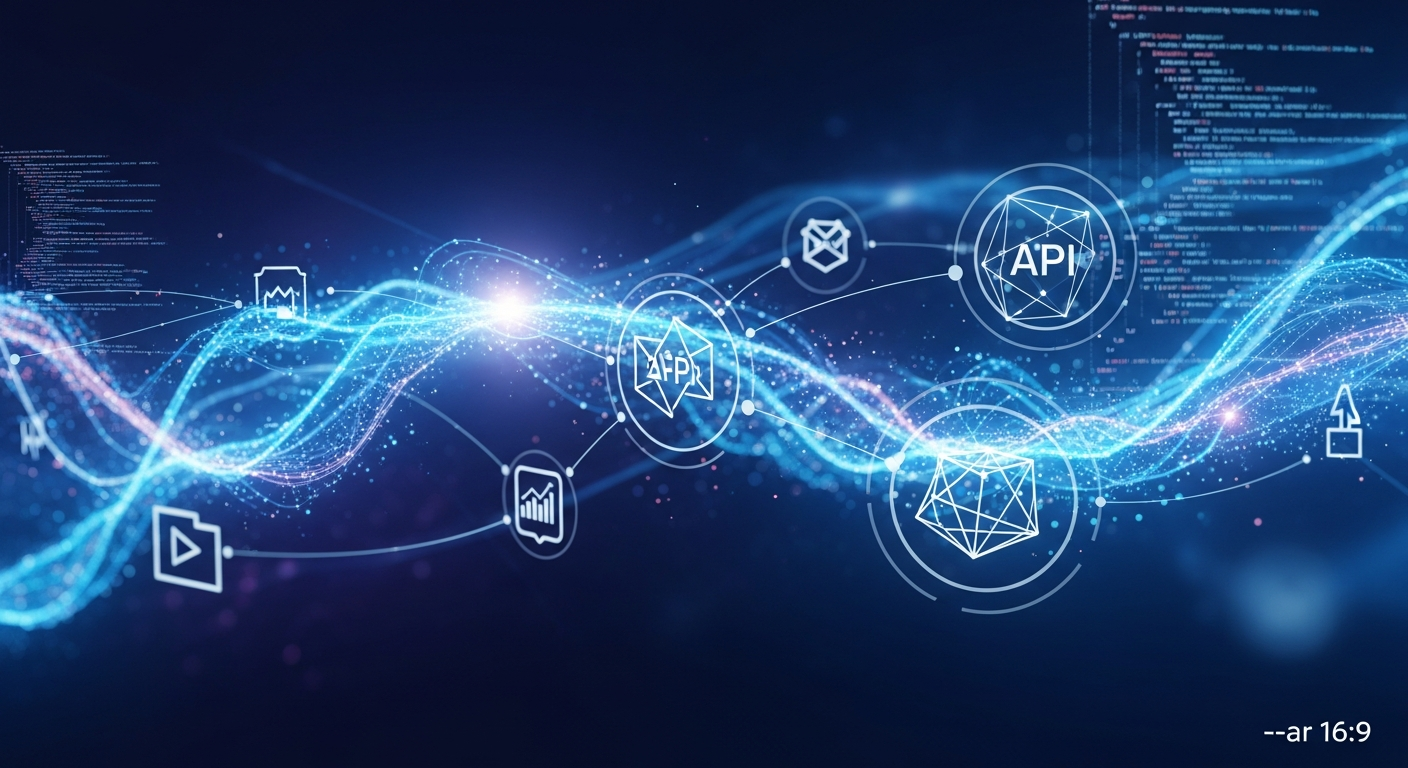
The software development landscape in 2026 is no longer defined by the mere act of writing code, but by the efficiency with which we orchestrate complex ecosystems of services, APIs, and autonomous agents. As we navigate this era, the “integration-first” mindset has shifted from a best practice to a fundamental requirement. Developers today are tasked with building increasingly modular systems where the friction between tools—CI/CD pipelines, cloud infrastructure, and security protocols—can determine the success or failure of a project. Streamlining software development workflows in 2026 requires a departure from legacy manual hand-offs toward a unified, automated, and AI-augmented lifecycle. This guide explores the critical strategies for tech professionals focused on building robust integrations and automating the modern development environment, ensuring that velocity never comes at the expense of stability or security.
1. The Transition to Agentic AI in the SDLC
By 2026, the role of Artificial Intelligence in software development has evolved from simple autocomplete suggestions to “Agentic AI.” Unlike the basic copilots of the past, these autonomous agents are integrated directly into the development workflow. They don’t just suggest code; they understand the context of the entire repository, manage pull requests, and proactively refactor legacy modules to meet modern standards.
For tech professionals building integrations, this means shifting focus from writing boilerplate code to managing the “intent” of the software. Streamlining workflows now involves setting up AI-governance guardrails. Automation scripts are increasingly written by agents that can interpret natural language requirements and convert them into functional YAML configurations or Terraform scripts. To truly optimize in 2026, teams must integrate these agents into their communication tools (like Slack or Discord) and project management platforms, allowing for a seamless flow where a developer’s comment on a ticket can trigger an agent to create a feature branch, run initial tests, and flag architectural inconsistencies before a human even touches the keyboard.
2. The Dominance of Platform Engineering and “Golden Paths”
The traditional DevOps model has matured into Platform Engineering. In 2026, streamlining workflows is synonymous with reducing cognitive load. As systems have become more distributed, the burden on individual developers to understand every layer of the stack—from Kubernetes clusters to edge caching—has become unsustainable.
Platform Engineering solves this by creating “Internal Developer Platforms” (IDPs). These platforms provide “Golden Paths”—opinionated, pre-configured workflows that automate infrastructure provisioning. Instead of a developer spending hours configuring a cloud environment for a new microservice, they use a self-service portal that integrates with the company’s cloud provider of choice. This abstraction layer ensures that best practices in security, logging, and networking are baked into the workflow by default. For the integration specialist, the work lies in building the “glue” that connects these IDPs to CI/CD tools, ensuring that the developer experience is frictionless and that the “path of least resistance” is also the most secure and efficient one.
3. Event-Driven Architectures and Real-Time Integration Workflows
The move away from monolithic architectures is complete, and in 2026, event-driven architecture (EDA) is the standard for streamlining complex software ecosystems. Traditional polling-based integrations are too slow and resource-heavy for the real-time demands of modern applications.
Streamlining workflows in this environment requires a focus on asynchronous communication. Developers are now prioritizing “webhooks-as-a-service” and event mesh technologies to ensure that different parts of the development pipeline communicate instantly. For example, a successful build in the staging environment shouldn’t wait for a manual trigger or a scheduled task; it should emit an event that automatically triggers security scans, performance audits, and a deployment to a canary environment. By automating these event-driven sequences, teams eliminate the “wait states” that historically bogged down the SDLC. The integration professional’s role is to ensure these event schemas are standardized and that the message brokers (like Kafka or RabbitMQ) are optimized for low-latency delivery across the entire toolchain.
4. Shift-Left Security: Automated Remediation as a Standard
In 2026, security is no longer a gate at the end of the development cycle; it is an automated, continuous process integrated into the very first line of code. “Shift-left” security has evolved into “Continuous Security Orchestration.” Streamlining this workflow involves moving beyond simple vulnerability scanning to automated remediation.
Modern integration workflows now include “Policy-as-Code” (PaC). As developers push code, automated tools check it against organizational security policies in real-time. If a dependency has a known vulnerability, the system doesn’t just flag it—it automatically creates a pull request to update the dependency to a patched version, runs the test suite to ensure no regressions, and notifies the developer. This level of automation prevents the “security bottleneck” that often plagues fast-moving teams. For those building these integrations, the focus is on connecting Threat Intelligence feeds directly into the CI/CD pipeline, ensuring that the latest security insights are applied to every build automatically.
5. Observability-Driven Development (ODD)
The feedback loop is the heart of any streamlined workflow. In 2026, we have moved beyond basic monitoring to Observability-Driven Development (ODD). This approach integrates telemetry data directly into the development cycle, allowing engineers to see how their code performs in production environments while it is still in the “dev” or “test” phase.
Streamlining workflows through ODD means automating the flow of data from production back to the IDE. Developers use integrations that surface real-time performance metrics, error rates, and user behavior data directly within their coding environment. This eliminates the need to switch between tabs or wait for a report from the SRE team. By automating the correlation between a specific commit and its impact on system resources, teams can identify bottlenecks and bugs almost instantly. Integration specialists are now tasked with building robust data pipelines that filter the “noise” of big data into actionable insights for developers, ensuring that the feedback loop is both fast and meaningful.
6. Optimizing Developer Experience (DevEx) and Reducing Context Switching
The ultimate goal of streamlining software development workflows in 2026 is the optimization of the Developer Experience (DevEx). High-performing teams have realized that every time a developer switches focus—from their IDE to a browser, to an email, to a meeting—they lose the “flow state” required for complex problem-solving.
To combat this, the modern workflow is designed around “context-aware” integrations. This involves bringing the entire toolchain into a single interface. Whether it’s managing infrastructure via an IDE plugin or receiving CI/CD alerts directly within the terminal, the goal is to keep the developer in their primary environment. Streamlining also involves the aggressive automation of documentation. Using AI agents, documentation is updated automatically as code changes, ensuring that the “source of truth” is always current. For tech professionals, building a streamlined workflow means auditing every manual step in the developer’s day and finding an API-based solution to automate it, thereby minimizing friction and maximizing time spent on creative engineering.
FAQ: Streamlining Software Development in 2026
**Q1: How does the role of a DevOps engineer change in 2026 with the rise of AI?**
In 2026, the DevOps engineer transitions into a Platform Engineer or an AI Operations (AIOps) specialist. Rather than manually managing pipelines, they focus on building the infrastructure that allows AI agents to operate safely. They design the “Golden Paths” and oversee the high-level orchestration of autonomous systems, ensuring that AI-driven automations align with business goals and compliance standards.
**Q2: What are the most critical tools for workflow integration in 2026?**
The most critical tools are Internal Developer Platforms (IDPs), Agentic AI orchestrators, and Event-Driven Integration Platforms. Tools that support Policy-as-Code and provide deep observability (like OpenTelemetry) are also essential. The specific “brand” of tool matters less than its ability to provide robust APIs and support for open standards that allow for seamless cross-tool communication.
**Q3: Is manual testing completely obsolete in 2026?**
While manual testing for routine functionality is largely obsolete due to AI-generated test suites and automated regression testing, human intervention is still vital for Exploratory Testing and User Experience (UX) validation. The workflow is streamlined so that humans only intervene where subjective judgment, ethical consideration, or high-level creative problem-solving is required.
**Q4: How do small teams implement these high-level automations without a massive budget?**
In 2026, many of these “enterprise-grade” features are available as specialized SaaS products or open-source frameworks. Small teams can streamline by leveraging managed “IDP-as-a-Service” and using pre-built AI agents. By focusing on an “API-first” approach, even small teams can build highly integrated workflows by connecting various specialized services rather than building everything from scratch.
**Q5: How can we measure the success of a streamlined workflow?**
Success is measured through enhanced DORA metrics (Deployment Frequency, Lead Time for Changes, Change Failure Rate, and Time to Restore Service) but with an added focus on “Developer Happiness” and “Cognitive Load” scores. In 2026, a truly streamlined workflow is one where the time from “idea” to “production” is minimized, and the “toil” (repetitive manual work) is near zero.
Conclusion: The Future is Integrated
As we look toward the remainder of 2026 and beyond, the message for software professionals is clear: the workflow *is* the product. The complexity of modern software systems is such that manual management is no longer a viable option. By embracing Agentic AI, Platform Engineering, event-driven architectures, and continuous security orchestration, organizations can build a development lifecycle that is not only faster but more resilient and enjoyable for the people within it.
Streamlining software development workflows is an ongoing process of identifying friction and applying intelligent automation. For the tech professional building these integrations, the reward is a system where code flows seamlessly from concept to consumer, powered by a sophisticated, automated infrastructure that handles the mundane, leaving the humans to do what they do best: innovate. In 2026, the most successful companies won’t just have the best code; they will have the best workflows.