What is Product-Led Growth? Unlocking Sustainable SaaS Scaling in 2026
By eamped Editorial Team — Senior editors with 10+ years of subject-matter experience.
Published 2026-05-26 · Last Updated 2026-05-26
Affiliate disclosure: This article may contain affiliate links. Recommendations are independent and editorially driven.
In the fiercely competitive landscape of tech startups and digital marketing, the pursuit of sustainable, scalable growth is the ultimate quest. For years, the prevailing wisdom dictated that growth stemmed primarily from aggressive sales efforts or expansive marketing campaigns. However, a seismic shift has occurred, ushering in a new paradigm where the product itself becomes the primary engine of acquisition, conversion, and expansion. This transformative approach is known as Product-Led Growth (PLG).
In 2026, understanding what Product-Led Growth is isn’t merely an advantage; it’s a strategic imperative for any SaaS company aiming for enduring success. PLG fundamentally reshapes how businesses engage with their customers, prioritize development, and measure value. It’s a philosophy that places the user’s experience with the product at the very core of the business model, allowing the product to sell itself through intrinsic value and intuitive design.
This comprehensive guide from eamped delves deep into the world of Product-Led Growth. We’ll explore its definition, differentiate it from traditional growth models, dissect its foundational pillars, and arm you with the knowledge to implement a robust PLG strategy. Whether you’re a burgeoning startup or an established enterprise seeking renewed vigor, embracing PLG can unlock unparalleled efficiency, customer loyalty, and market leadership.
The Dawn of a New Era: Understanding Product-Led Growth (PLG)
At its heart, Product-Led Growth (PLG) is a business methodology in which user acquisition, expansion, and retention are primarily driven by the product itself. Unlike traditional approaches where sales teams or marketing efforts are the main drivers of customer conversion, a product-led company empowers its product to deliver inherent value upfront, allowing users to experience its benefits directly, often through a freemium model, free trial, or self-service onboarding.
Imagine a software tool that is so intuitive, so effective, and so enjoyable to use that prospective customers can easily discover its value, integrate it into their workflow, and ultimately decide to pay for it, all with minimal intervention from a sales representative. That, in essence, is the vision of Product-Led Growth. It flips the funnel, putting the product experience first, and trusting that a superior user journey will naturally lead to business growth.
Defining Product-Led Growth: User Value at the Core
PLG is not just a feature or a tactic; it’s a holistic business strategy. It implies a fundamental shift in mindset across the entire organization. Every department – from engineering and product development to marketing, sales, and customer success – aligns around the product as the central hub of customer interaction and value delivery. The product’s ability to solve problems, simplify tasks, and enhance productivity becomes its most potent marketing and sales tool.
This strategy is characterized by:
- Self-Service Empowerment: Users can explore, evaluate, and often even purchase the product without needing to interact with a sales person.
- Value Before Cost: Customers experience the product’s benefits and utility before being asked to commit financially.
- Focus on User Experience (UX): An intuitive, delightful, and sticky product experience is paramount.
- Data-Driven Iteration: Product decisions are continuously informed by user behavior analytics, feedback loops, and A/B testing.
- Lower Customer Acquisition Costs (CAC): By reducing reliance on extensive sales teams, PLG can significantly decrease the cost of acquiring new customers.
The Market Shift: Why PLG is Dominating SaaS
Several converging market forces have propelled PLG from a niche strategy to a mainstream imperative in the SaaS industry:
- Rise of the Empowered Buyer: Modern buyers, particularly in B2B, prefer to research and evaluate solutions independently. They are wary of sales pitches and want to test-drive products before committing.
- Increased SaaS Competition: The barrier to entry for launching a SaaS product has lowered, leading to an explosion of options. Standing out requires delivering immediate, undeniable value.
- Expectation of Consumer-Grade UX: Users now expect business software to be as easy and enjoyable to use as their favorite consumer apps.
- Lower Switching Costs: While not always true for complex enterprise software, many SaaS products have relatively low switching costs, meaning customer retention hinges on continuous product value.
- Scalability Demands: Traditional sales and marketing models often hit a ceiling, requiring proportional increases in headcount and budget to scale. PLG offers a more capital-efficient and scalable growth path.
The Core Philosophy: Product as the Primary Growth Engine
In a PLG model, the product isn’t just a solution; it’s the primary channel for marketing, sales, and retention. It dictates the user journey from initial discovery to conversion and ongoing engagement. This means:
- Marketing focuses on awareness and driving traffic to the product. It highlights the core value proposition and encourages trial.
- Sales, if present, focuses on high-value, complex deals or expansion opportunities, rather than initial acquisition. They act more as consultants than gatekeepers.
- Customer Success leverages product usage data to proactively support users, prevent churn, and identify upsell opportunities.
- Product Development is intrinsically linked to growth metrics. Every feature, every bug fix, every UI tweak is evaluated through the lens of how it impacts user acquisition, activation, and retention.
This symbiotic relationship across departments, all centered on optimizing the product experience, is what makes PLG such a powerful and sustainable growth strategy for the modern digital era.
Why Product-Led Growth Matters for Modern Startups and Enterprises
The embrace of Product-Led Growth is not merely a trend; it represents a fundamental recalibration of business priorities, offering distinct advantages that resonate deeply with both agile startups and established enterprises seeking to innovate. Its significance stems from its ability to address contemporary market demands, optimize resource allocation, and foster deeper customer relationships.
Enhanced Customer Acquisition and Retention
One of the most compelling reasons to adopt PLG is its direct impact on customer acquisition and retention. By allowing users to experience the product’s value firsthand before committing to a purchase, PLG significantly lowers the barrier to entry. This “try before you buy” approach builds trust and confidence, leading to more qualified leads and higher conversion rates.
- Organic Acquisition: A product that consistently delivers value and is easy to use naturally encourages word-of-mouth referrals and virality. Satisfied users become advocates, reducing the need for expensive advertising.
- Lower CAC: By shifting the burden of initial conversion from sales teams to the product itself, companies can dramatically reduce their Customer Acquisition Costs. Less reliance on outbound sales means fewer salaries, commissions, and CRM costs dedicated solely to new customer capture.
- Sticky Products: PLG principles emphasize continuous value delivery and an intuitive user experience. This leads to higher user engagement and satisfaction, directly translating to improved retention rates and reduced churn. When users are deeply embedded in your product, they are less likely to seek alternatives.
Scalability and Efficiency Through Automation
Traditional growth models often struggle with scalability. Adding more sales reps or expanding marketing campaigns can become prohibitively expensive and logistically complex as a company grows. PLG, however, is inherently designed for scale.
- Automated Onboarding: A well-designed product-led experience automates much of the onboarding process, guiding users through their initial setup and “aha!” moments without human intervention. This frees up customer success teams to focus on high-value interactions.
- Self-Serve Empowerment: By enabling users to explore features, find solutions to common problems (through in-app guides, tooltips, and knowledge bases), and even upgrade their plans independently, PLG reduces the strain on support resources.
- Reduced Operational Overhead: With the product handling much of the heavy lifting for acquisition and initial support, operational costs associated with these functions decrease, allowing for more capital to be reinvested into product development or other strategic initiatives.
Higher Conversion Rates and LTV
The PLG model naturally cultivates higher conversion rates from trial to paid subscriptions and boosts Customer Lifetime Value (LTV). When users opt into a paid plan after experiencing tangible value, they are typically more engaged and less prone to churn.
- Qualified Conversions: Users who convert in a PLG model have already validated the product’s utility for their needs. They understand its core functions and are more likely to be long-term, satisfied customers.
- Expansion Revenue: A product-led strategy often includes clear upgrade paths and feature tiers. As users derive more value, they are more likely to upgrade to higher-priced plans or adopt additional features, driving significant expansion revenue without needing extensive sales efforts.
- Stronger Loyalty: A positive, continuous product experience fosters deeper customer loyalty. This loyalty translates into longer subscription durations and a higher propensity for customers to become brand advocates, further fueling organic growth.
Competitive Advantage in a Crowded Market
In 2026, the digital landscape is more competitive than ever, especially in SaaS. Standing out requires more than just innovative features; it demands a superior user experience and an efficient path to value. PLG delivers precisely this competitive edge.
- Market Differentiation: While competitors may rely on aggressive sales tactics, a PLG company differentiates itself by offering immediate, transparent value. This builds a reputation for customer-centricity and quality.
- Faster Time-to-Market for New Features: Because PLG companies are inherently data-driven and user-focused, they tend to have faster feedback loops and more agile product development cycles. This allows them to respond quickly to market changes and user needs.
- Data-Driven Insights: The wealth of product usage data collected in a PLG model provides invaluable insights into user behavior, pain points, and preferences. This allows companies to refine their product roadmap strategically, staying ahead of the curve and continuously improving their offering.
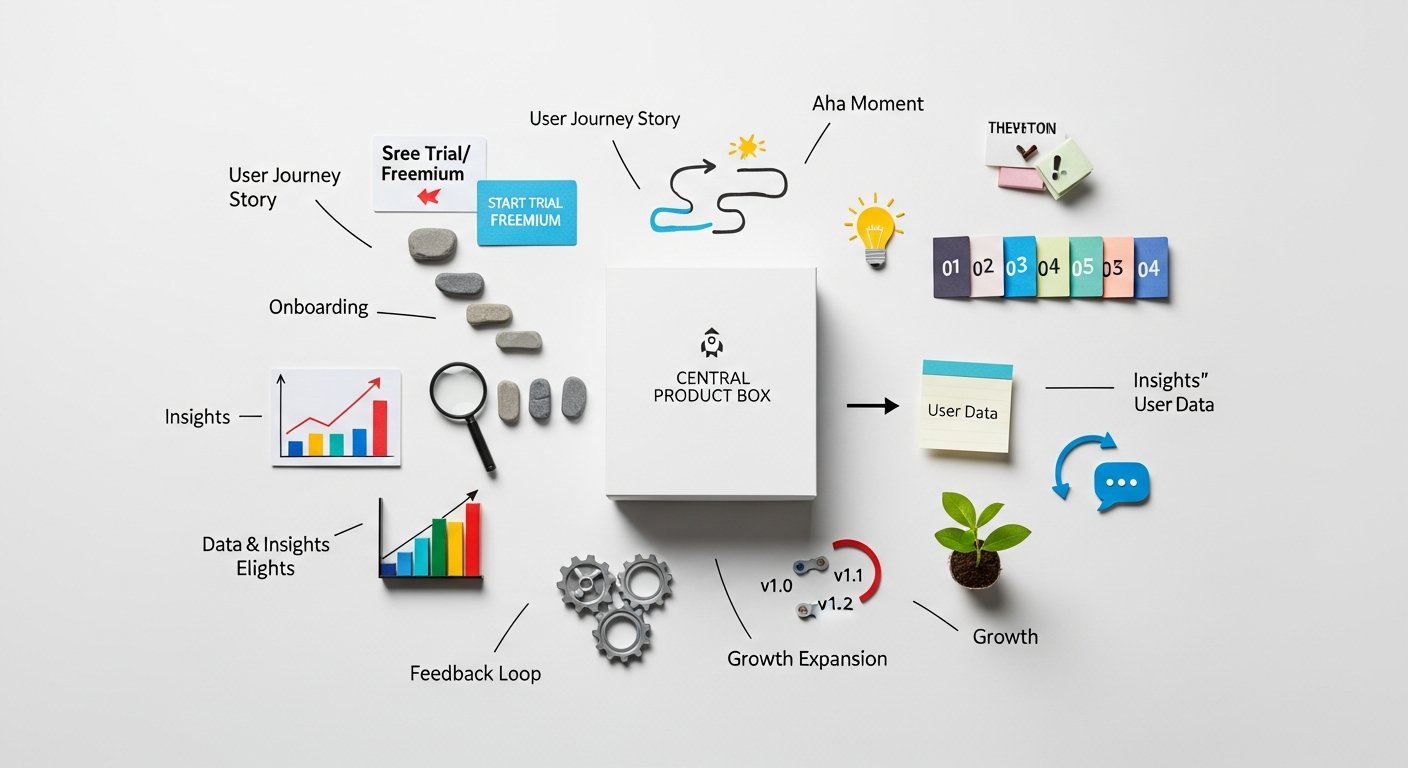
[INLINE IMAGE 1: place after second H2 | alt=”what is product led growth concept illustration”]
Product-Led vs. Sales-Led vs. Marketing-Led: A Strategic Showdown
To truly grasp the power and distinctiveness of Product-Led Growth, it’s essential to understand how it contrasts with the more traditional Sales-Led and Marketing-Led approaches. While all three aim to drive revenue, their primary mechanisms, resource allocations, and customer engagement philosophies differ significantly.
The Traditional Sales-Led Approach
For decades, the Sales-Led Growth (SLG) model was the default for most B2B companies, particularly those selling complex, high-value enterprise software. In this model, the sales team is the central engine of growth.
- Focus: Primarily on direct customer engagement, building relationships, and closing deals.
- Customer Acquisition: Driven by outbound sales (cold calling, emails, networking) and inbound leads qualified by sales.
- Customer Journey: Prospects are typically engaged by a sales representative early in their journey. The sales team provides demos, custom proposals, negotiates terms, and guides the customer through the buying process.
- Product’s Role: The product is a tool for the sales team to demo and explain. Its usability might be secondary to its feature list as presented by sales.
- Pros: Effective for high-ticket items, complex solutions requiring significant explanation, and building deep relationships with key stakeholders.
- Cons: High Customer Acquisition Costs (CAC), limited scalability (requires proportional growth in sales force), slower sales cycles, and potential for mismatched customer expectations if the product experience doesn’t align with the sales pitch.
The Marketing-Led Model: Generating Demand
The Marketing-Led Growth (MLG) model gained prominence with the rise of digital marketing, content marketing, and inbound methodologies. Here, the marketing department is the primary driver of customer acquisition.
- Focus: Generating awareness, educating the market, and creating demand through various marketing channels.
- Customer Acquisition: Achieved through content marketing, SEO, paid advertising, social media, webinars, and email campaigns designed to attract, nurture, and convert leads into Marketing Qualified Leads (MQLs).
- Customer Journey: Prospects engage with marketing content (blogs, whitepapers, videos), gradually learning about the product. Once deemed “qualified” by marketing criteria (e.g., downloaded certain assets, attended a webinar), they are often handed off to sales.
- Product’s Role: The product is the solution that marketing promotes. Its features and benefits are highlighted in marketing collateral.
- Pros: Scalable through automation, builds brand awareness, generates a steady stream of leads, often lower CAC than purely sales-led.
- Cons: Can lead to a disconnect between MQLs and actual product fit, still relies on a handoff to sales for conversion (unless it’s a very low-cost, simple product), can be resource-intensive for content creation and campaign management.
The Product-Led Distinction: Experiential Value
Product-Led Growth stands apart by making the product itself the hero. The product is not just a solution or a talking point; it’s the primary channel for marketing, sales, and customer success.
- Focus: Delivering immediate, tangible value through the product, facilitating self-service discovery and conversion.
- Customer Acquisition: Users discover the product, sign up for a free trial or freemium version, experience its value firsthand, and then convert to a paid plan. Growth is often viral or driven by word-of-mouth.
- Customer Journey: Begins with the user directly engaging with the product. Onboarding, feature discovery, and perceived value are all facilitated by the product’s design and in-app guidance. Sales, if involved, enters later in the funnel for expansion or complex enterprise deals.
- Product’s Role: The product *is* the sales pitch, the onboarding guide, the support system, and the retention mechanism.
- Pros: Lowest CAC potential, highest scalability, faster sales cycles for self-serve users, higher customer satisfaction and retention, more relevant product development driven by usage data.
- Cons: Requires a highly intuitive and valuable product, significant investment in product development and UX, can struggle with very complex or expensive enterprise solutions without some sales assistance.
To further illustrate the differences, here’s a comparison table:
| Criteria | Product-Led Growth (PLG) | Sales-Led Growth (SLG) | Marketing-Led Growth (MLG) |
|---|---|---|---|
| Primary Growth Engine | The Product Experience | Sales Team | Marketing Campaigns & Content |
| Customer Acquisition | Self-serve sign-ups, freemium, free trials, viral loops, word-of-mouth | Outbound sales, inbound sales-qualified leads (SQLs) | Inbound marketing (content, SEO, ads) generating Marketing Qualified Leads (MQLs) |
| Value Delivery | Users experience value directly through product usage | Value conveyed through sales presentations and demos | Value communicated through marketing materials and thought leadership |
| Cost of Acquisition (CAC) | Potentially very low | Typically high | Moderate to high |
| Scalability | Highly scalable, often automated | Scales linearly with sales team size | Scalable through automation and content, but still requires human touch for conversion |
| Customer Experience | Empowered, self-sufficient, instant gratification | Personalized, relationship-driven, guided | Informative, educational, brand-centric |
| Key Metric Focus | Activation, retention, Time to Value (TTV), PQLs | Qualified leads, closed deals, quota attainment | Traffic, MQLs, conversion rates (to MQLs) |
Hybrid Models: Blending Strategies for Optimal Results
While the distinctions are clear, in practice, many successful companies adopt hybrid models. For instance, a company might start with a strong PLG motion for user acquisition (freemium, self-serve) and then layer in a sales team to handle enterprise upgrades or more complex client needs. This is often referred to as “Product-Led Sales” or “Sales Assist.”
Similarly, a robust marketing strategy is crucial even for PLG companies to drive initial awareness and traffic to the product. The key is to understand the strengths of each model and strategically combine them to create a growth engine that is both efficient and effective for your specific product and target market.
The choice isn’t necessarily “either/or” but rather “which one leads?” In 2026, the data unequivocally suggests that leading with the product provides the most sustainable, customer-centric path to growth for the vast majority of SaaS businesses.
The Foundational Pillars of a Successful PLG Strategy
Implementing Product-Led Growth isn’t about simply offering a free trial; it requires a deep understanding and rigorous application of several core principles. These foundational pillars ensure that the product consistently delivers value, fosters engagement, and ultimately drives business outcomes. Neglecting any of these can undermine the entire PLG effort.
Value First: Delivering Instant Gratification
The cornerstone of PLG is the principle of “value first.” This means that users should be able to experience the core benefit or “aha! moment” of your product as quickly and easily as possible. This isn’t about showcasing every feature; it’s about solving a specific, immediate pain point for the user with minimal friction.
- Quick Time to Value (TTV): How fast can a new user go from signup to experiencing the product’s primary benefit? Reducing TTV is critical. This might involve streamlined onboarding flows, pre-populated data, or interactive guides.
- Core Problem Solving: What essential problem does your product solve? Ensure that this solution is immediately apparent and accessible in the initial user experience.
- Freemium vs. Free Trial:
- Freemium: Offers a permanently free version with limited features or usage. It’s excellent for broad reach and viral growth but requires careful feature gating to encourage upgrades.
- Free Trial: Provides full or near-full access for a limited time. Better for products that require more extensive setup or have a higher perceived value.
The choice depends on your product’s complexity and target audience, but both are designed to deliver value upfront.
Seamless Onboarding and Activation
Onboarding in a PLG context is not just a setup process; it’s a critical activation phase. It’s the journey where a user transitions from curiosity to understanding to active engagement, ultimately reaching their “aha! moment.”
- Contextual Guidance: Instead of long tutorials, use in-app prompts, tooltips, and interactive walkthroughs that appear exactly when the user needs them.
- Progressive Disclosure: Don’t overwhelm users with too many options upfront. Introduce features and functionalities progressively as they become relevant to the user’s journey.
- Personalization: Tailor the onboarding experience based on user roles, stated goals, or initial actions. For example, asking “What do you want to achieve with our product?” can customize the first steps.
- Clear Calls to Action (CTAs): Guide users toward key actions that lead to their first success within the product.
Effective onboarding is crucial for reducing churn during the initial stages and setting the stage for long-term retention.
[INLINE IMAGE 2: place after fourth H2 | alt=”what is product led growth comparison illustration”]
Intuitive User Experience (UX) and User Interface (UI)
A product cannot sell itself if it’s difficult to use or visually unappealing. Exceptional UX and UI are non-negotiable for PLG success.
- Simplicity and Clarity: The product should be easy to navigate, with clear labels, logical flows, and minimal cognitive load.
- Aesthetics: A visually pleasing interface enhances trust and makes the product more enjoyable to use.
- Consistency: Maintain consistent design patterns and terminology throughout the product to build familiarity and reduce confusion.
- Responsiveness: Ensure the product performs flawlessly across various devices and screen sizes.
- Accessibility: Design with accessibility in mind to ensure a broad user base can interact with your product effectively.
Every interaction should feel natural, allowing users to focus on achieving their goals rather than wrestling with the software.
Data-Driven Decision Making and Iteration
PLG thrives on data. Without understanding how users interact with your product, you cannot effectively optimize for growth. This pillar emphasizes continuous learning and adaptation.
- Robust Analytics: Implement comprehensive product analytics to track every user interaction, from feature adoption to drop-off points. Tools that visualize user flows are invaluable.
- Key Metric Tracking: Identify and consistently monitor core PLG metrics (e.g., activation rate, retention, Time to Value, PQLs).
- A/B Testing and Experimentation: Continuously test hypotheses about what improves user experience, conversion, and engagement. Experiment with onboarding flows, feature placements, and messaging.
- Feedback Loops: Establish clear channels for collecting user feedback (in-app surveys, feature requests, support tickets) and integrate this feedback into your product roadmap.
- Cross-Functional Collaboration: Data insights must be shared and understood across product, marketing, sales, and customer success teams to ensure aligned decision-making.
Leveraging data for informed decisions is a hallmark of successful digital strategies.
Virality and Network Effects Built-In
While not every product can achieve true virality, many can benefit from features that encourage sharing and collaboration, leading to organic growth.
- Shareability: Does your product make it easy for users to share their work, achievements, or insights created within your product? (e.g., “Share to Twitter” buttons, embeddable widgets).
- Collaboration Features: If your product is a team tool, does it naturally encourage users to invite colleagues? (e.g., shared workspaces, real-time collaboration).
- Referral Programs: While not strictly product-led, integrating referral incentives directly into the product experience can amplify growth.
- Community Building: Foster a community around your product where users can share tips, ask questions, and help each other. This creates network effects that increase product stickiness.
By consciously designing for these growth multipliers, a PLG company can significantly accelerate its user acquisition without proportionally increasing its marketing spend.
Key Metrics and KPIs for Measuring PLG Success
In a Product-Led Growth model, traditional sales and marketing metrics still hold some relevance, but the spotlight shifts significantly to product-centric Key Performance Indicators (KPIs). These metrics provide direct insights into user behavior, product adoption, and the efficiency of the growth engine. Tracking them meticulously is crucial for identifying areas of strength, pinpointing bottlenecks, and making data-driven decisions for continuous improvement.
Activation Rate: The First “Aha!” Moment
Activation measures the percentage of users who move from merely signing up to successfully experiencing the product’s core value. It’s often defined by specific actions within the product that signal a user has reached their “aha!” moment.
- Why it matters: A low activation rate indicates friction in the onboarding process or a failure to deliver immediate value, leading to high early-stage churn.
- How to measure: Define your “activation event(s)” – e.g., “sent first message,” “created first project,” “invited first team member.”
Activation Rate = (Number of users who completed activation event / Number of new sign-ups) * 100% - Example: For a project management tool, activation might be when a user creates their first project and assigns a task.
Retention Rate and Churn: Keeping Users Engaged
Retention measures the percentage of customers who continue to use and pay for your product over a specific period. Conversely, churn is the rate at which customers stop using your product.
- Why it matters: High retention is a hallmark of a valuable product and directly impacts LTV. Churn is a leading indicator of product issues or unmet customer needs.
- How to measure:
Retention Rate = (Number of customers remaining at end of period / Number of customers at start of period) * 100%
Churn Rate = (Number of customers lost during period / Number of customers at start of period) * 100% - Key types: Cohort retention (tracking groups of users by sign-up date), user retention, revenue retention.
Expansion Revenue (Upsell/Cross-sell): Growing with Your Users
This metric tracks the additional revenue generated from existing customers through upgrades (upsell) or purchases of additional features/products (cross-sell). It’s a powerful indicator of customer satisfaction and product value.
- Why it matters: Expansion revenue demonstrates that customers are finding increasing value over time and are willing to pay more for it. It’s often more cost-effective to grow existing accounts than acquire new ones.
- How to measure: Track monthly recurring revenue (MRR) changes from existing accounts.
Net Revenue Retention (NRR) = (Starting MRR + Expansion MRR - Downgrade MRR - Churn MRR) / Starting MRR
An NRR above 100% indicates healthy growth from your existing customer base.
Time to Value (TTV): Speed to Success
TTV measures the duration it takes for a new user to experience the core benefit or achieve their initial desired outcome with the product.
- Why it matters: Shorter TTV leads to higher activation, better retention, and increased satisfaction. It minimizes the risk of users abandoning the product before they see its worth.
- How to measure: Track the average time from signup to the completion of the defined “activation event.” This often requires detailed user journey analytics.
Product Qualified Leads (PQLs): The PLG Equivalent of MQLs/SQLs
A PQL is a user who has demonstrated significant engagement with the product and has shown intent to upgrade or purchase. They’ve experienced sufficient value to be ready for a sales conversation (if applicable) or a self-serve upgrade.
- Why it matters: PQLs represent the most qualified leads for conversion in a PLG model, drastically increasing the efficiency of any sales efforts.
- How to define: PQL criteria are highly specific to each product but often include:
- Exceeded a usage threshold (e.g., 5 projects created, 100 messages sent).
- Used a premium feature during a free trial.
- Invited a certain number of team members.
- Accessed specific pricing pages multiple times.
PQL Conversion Rate = (Number of PQLs who convert to paid / Total number of PQLs) * 100%
Customer Lifetime Value (CLTV): The Long-Term Perspective
CLTV is the total revenue a company can reasonably expect from a single customer account throughout their relationship with the product.
- Why it matters: CLTV helps assess the long-term profitability of your customer relationships and dictates how much you can afford to spend on acquisition. PLG, with its focus on retention and expansion, typically aims for a high CLTV.
- How to measure:
CLTV = Average Revenue Per User (ARPU) * Average Customer Lifespan
Where Average Customer Lifespan = 1 / Churn Rate.
NPS and CSAT: Understanding User Sentiment
Net Promoter Score (NPS) and Customer Satisfaction (CSAT) are qualitative metrics that provide insights into how users feel about your product and brand.
- Why they matter: These metrics offer a crucial qualitative layer to quantitative data. High scores indicate strong customer loyalty and satisfaction, which correlate with retention and expansion.
- How to measure:
- NPS: Ask “How likely are you to recommend [Product] to a friend or colleague?” (0-10 scale). Users are classified as Promoters (9-10), Passives (7-8), or Detractors (0-6). NPS = % Promoters – % Detractors.
- CSAT: Ask “How satisfied are you with [specific interaction/product feature]?” (e.g., 1-5 scale).
By regularly monitoring and acting upon these PLG-specific metrics, companies can ensure their product remains the most effective engine for sustainable growth.
Building and Implementing Your Product-Led Growth Strategy
Transitioning to or building a PLG strategy from the ground up requires a structured approach and a commitment to user-centricity across the entire organization. It’s not a one-time project but an ongoing journey of optimization and adaptation. Here’s a step-by-step guide to building and implementing an effective Product-Led Growth strategy.
Step 1: Deeply Understand Your User and Their Pain Points
The foundation of any successful product, and especially a product-led one, is an intimate understanding of your target audience. Before you can deliver value, you must know what “value” truly means to them.
- User Personas: Develop detailed user personas that go beyond demographics. Include their goals, motivations, behaviors, technical proficiency, and, critically, their current pain points that your product aims to solve.
- Jobs-to-Be-Done (JTBD): Frame your product’s purpose around the “jobs” users are trying to get done. What outcomes are they seeking? How does your product help them achieve those outcomes more effectively or efficiently?
- Empathy Mapping: Conduct user research, interviews, surveys, and observe user behavior to build deep empathy. Understand their workflows, frustrations, and aspirations.
This foundational understanding will inform every subsequent decision, from feature development to onboarding flows.
Step 2: Define Your “Aha!” Moment and Core Value Proposition
Once you know your users, pinpoint the exact point where they realize the tangible benefit of your product. This is your “aha!” moment, and it needs to be crystal clear and consistently delivered.
- Identify the Core Value: What is the single most important problem your product solves? What’s the immediate payoff?
- Map the “Aha!” Moment: Trace the user journey to identify the specific actions or events that lead to this realization. For a communication app, it might be sending the first message and getting a reply. For a design tool, it might be completing a template.
- Craft a Clear Value Proposition: How do you articulate the unique benefits your product offers? This should be concise, compelling, and resonate directly with your users’ pain points. It informs all your marketing and in-product messaging.
A strong value proposition is key to compelling startup messaging.
Step 3: Optimize the Onboarding Journey for Instant Value
The onboarding experience is where the “aha!” moment is delivered. It needs to be frictionless, intuitive, and highly focused on getting users to that point as quickly as possible.
- Streamline Signup: Minimize required fields. Offer social logins.
- Interactive Walkthroughs & Tooltips: Guide users with contextual cues, rather than lengthy tutorials. Show, don’t just tell.
- Personalized Paths: Use initial questions (e.g., “What’s your role?” or “What do you want to achieve?”) to tailor the onboarding experience, presenting only relevant features.
- Success Milestones: Celebrate small wins. Acknowledge when a user completes a key action, reinforcing their progress and encouraging further engagement.
- Eliminate Friction: Identify and remove any steps that might cause users to drop off. This could be complex integrations, unnecessary pop-ups, or confusing terminology.
Step 4: Instrument for Data Collection and Analytics
You can’t optimize what you don’t measure. A robust analytics infrastructure is the backbone of any PLG strategy.
- Choose the Right Tools: Implement product analytics platforms that track user behavior, feature adoption, funnels, and retention cohorts. (e.g., Mixpanel, Amplitude, Pendo).
- Define Key Events: Clearly define the events you want to track within your product (e.g., “signup_completed”, “project_created”, “feature_x_used”).
- Set Up Dashboards: Create centralized dashboards that visualize your core PLG metrics (activation, retention, TTV, PQLs). These should be accessible to all relevant teams.
- A/B Testing Framework: Establish a process and tools for running A/B tests on onboarding flows, feature placements, and in-app messaging.
Step 5: Foster a Cross-Functional PLG Culture
Product-Led Growth is an organizational philosophy, not just a product team’s responsibility. It requires alignment and
What is Product-Led Growth? Unlocking Sustainable SaaS Scaling in 2026
By eamped Editorial Team — Senior editors with 10+ years of subject-matter experience.
Published 2026-05-26 · Last Updated 2026-05-26
Affiliate disclosure: This article may contain affiliate links. Recommendations are independent and editorially driven.
In the fiercely competitive landscape of tech startups and digital marketing, the pursuit of sustainable, scalable growth is the ultimate quest. For years, the prevailing wisdom dictated that growth stemmed primarily from aggressive sales efforts or expansive marketing campaigns. However, a seismic shift has occurred, ushering in a new paradigm where the product itself becomes the primary engine of acquisition, conversion, and expansion. This transformative approach is known as Product-Led Growth (PLG).
In 2026, understanding what Product-Led Growth is isn’t merely an advantage; it’s a strategic imperative for any SaaS company aiming for enduring success. PLG fundamentally reshapes how businesses engage with their customers, prioritize development, and measure value. It’s a philosophy that places the user’s experience with the product at the very core of the business model, allowing the product to sell itself through intrinsic value and intuitive design.
This comprehensive guide from eamped delves deep into the world of Product-Led Growth. We’ll explore its definition, differentiate it from traditional growth models, dissect its foundational pillars, and arm you with the knowledge to implement a robust PLG strategy. Whether you’re a burgeoning startup or an established enterprise seeking renewed vigor, embracing PLG can unlock unparalleled efficiency, customer loyalty, and market leadership.
The Dawn of a New Era: Understanding Product-Led Growth (PLG)
At its heart, Product-Led Growth (PLG) is a business methodology in which user acquisition, expansion, and retention are primarily driven by the product itself. Unlike traditional approaches where sales teams or marketing efforts are the main drivers of customer conversion, a product-led company empowers its product to deliver inherent value upfront, allowing users to experience its benefits directly, often through a freemium model, free trial, or self-service onboarding.
Imagine a software tool that is so intuitive, so effective, and so enjoyable to use that prospective customers can easily discover its value, integrate it into their workflow, and ultimately decide to pay for it, all with minimal intervention from a sales representative. That, in essence, is the vision of Product-Led Growth. It flips the funnel, putting the product experience first, and trusting that a superior user journey will naturally lead to business growth.
Defining Product-Led Growth: User Value at the Core
PLG is not just a feature or a tactic; it’s a holistic business strategy. It implies a fundamental shift in mindset across the entire organization. Every department – from engineering and product development to marketing, sales, and customer success – aligns around the product as the central hub of customer interaction and value delivery. The product’s ability to solve problems, simplify tasks, and enhance productivity becomes its most potent marketing and sales tool.
This strategy is characterized by:
- Self-Service Empowerment: Users can explore, evaluate, and often even purchase the product without needing to interact with a sales person.
- Value Before Cost: Customers experience the product’s benefits and utility before being asked to commit financially.
- Focus on User Experience (UX): An intuitive, delightful, and sticky product experience is paramount.
- Data-Driven Iteration: Product decisions are continuously informed by user behavior analytics, feedback loops, and A/B testing.
- Lower Customer Acquisition Costs (CAC): By reducing reliance on extensive sales teams, PLG can significantly decrease the cost of acquiring new customers.
The Market Shift: Why PLG is Dominating SaaS
Several converging market forces have propelled PLG from a niche strategy to a mainstream imperative in the SaaS industry:
- Rise of the Empowered Buyer: Modern buyers, particularly in B2B, prefer to research and evaluate solutions independently. They are wary of sales pitches and want to test-drive products before committing.
- Increased SaaS Competition: The barrier to entry for launching a SaaS product has lowered, leading to an explosion of options. Standing out requires delivering immediate, undeniable value.
- Expectation of Consumer-Grade UX: Users now expect business software to be as easy and enjoyable to use as their favorite consumer apps.
- Lower Switching Costs: While not always true for complex enterprise software, many SaaS products have relatively low switching costs, meaning customer retention hinges on continuous product value.
- Scalability Demands: Traditional sales and marketing models often hit a ceiling, requiring proportional increases in headcount and budget to scale. PLG offers a more capital-efficient and scalable growth path.
The Core Philosophy: Product as the Primary Growth Engine
In a PLG model, the product isn’t just a solution; it’s the primary channel for marketing, sales, and retention. It dictates the user journey from initial discovery to conversion and ongoing engagement. This means:
- Marketing focuses on awareness and driving traffic to the product. It highlights the core value proposition and encourages trial.
- Sales, if present, focuses on high-value, complex deals or expansion opportunities, rather than initial acquisition. They act more as consultants than gatekeepers.
- Customer Success leverages product usage data to proactively support users, prevent churn, and identify upsell opportunities.
- Product Development is intrinsically linked to growth metrics. Every feature, every bug fix, every UI tweak is evaluated through the lens of how it impacts user acquisition, activation, and retention.
This symbiotic relationship across departments, all centered on optimizing the product experience, is what makes PLG such a powerful and sustainable growth strategy for the modern digital era.
Why Product-Led Growth Matters for Modern Startups and Enterprises
The embrace of Product-Led Growth is not merely a trend; it represents a fundamental recalibration of business priorities, offering distinct advantages that resonate deeply with both agile startups and established enterprises seeking to innovate. Its significance stems from its ability to address contemporary market demands, optimize resource allocation, and foster deeper customer relationships.
Enhanced Customer Acquisition and Retention
One of the most compelling reasons to adopt PLG is its direct impact on customer acquisition and retention. By allowing users to experience the product’s value firsthand before committing to a purchase, PLG significantly lowers the barrier to entry. This “try before you buy” approach builds trust and confidence, leading to more qualified leads and higher conversion rates.
- Organic Acquisition: A product that consistently delivers value and is easy to use naturally encourages word-of-mouth referrals and virality. Satisfied users become advocates, reducing the need for expensive advertising.
- Lower CAC: By shifting the burden of initial conversion from sales teams to the product itself, companies can dramatically reduce their Customer Acquisition Costs. Less reliance on outbound sales means fewer salaries, commissions, and CRM costs dedicated solely to new customer capture.
- Sticky Products: PLG principles emphasize continuous value delivery and an intuitive user experience. This leads to higher user engagement and satisfaction, directly translating to improved retention rates and reduced churn. When users are deeply embedded in your product, they are less likely to seek alternatives.
Scalability and Efficiency Through Automation
Traditional growth models often struggle with scalability. Adding more sales reps or expanding marketing campaigns can become prohibitively expensive and logistically complex as a company grows. PLG, however, is inherently designed for scale.
- Automated Onboarding: A well-designed product-led experience automates much of the onboarding process, guiding users through their initial setup and “aha!” moments without human intervention. This frees up customer success teams to focus on high-value interactions.
- Self-Serve Empowerment: By enabling users to explore features, find solutions to common problems (through in-app guides, tooltips, and knowledge bases), and even upgrade their plans independently, PLG reduces the strain on support resources.
- Reduced Operational Overhead: With the product handling much of the heavy lifting for acquisition and initial support, operational costs associated with these functions decrease, allowing for more capital to be reinvested into product development or other strategic initiatives.
Higher Conversion Rates and LTV
The PLG model naturally cultivates higher conversion rates from trial to paid subscriptions and boosts Customer Lifetime Value (LTV). When users opt into a paid plan after experiencing tangible value, they are typically more engaged and less prone to churn.
- Qualified Conversions: Users who convert in a PLG model have already validated the product’s utility for their needs. They understand its core functions and are more likely to be long-term, satisfied customers.
- Expansion Revenue: A product-led strategy often includes clear upgrade paths and feature tiers. As users derive more value, they are more likely to upgrade to higher-priced plans or adopt additional features, driving significant expansion revenue without needing extensive sales efforts.
- Stronger Loyalty: A positive, continuous product experience fosters deeper customer loyalty. This loyalty translates into longer subscription durations and a higher propensity for customers to become brand advocates, further fueling organic growth.
Competitive Advantage in a Crowded Market
In 2026, the digital landscape is more competitive than ever, especially in SaaS. Standing out requires more than just innovative features; it demands a superior user experience and an efficient path to value. PLG delivers precisely this competitive edge.
- Market Differentiation: While competitors may rely on aggressive sales tactics, a PLG company differentiates itself by offering immediate, transparent value. This builds a reputation for customer-centricity and quality.
- Faster Time-to-Market for New Features: Because PLG companies are inherently data-driven and user-focused, they tend to have faster feedback loops and more agile product development cycles. This allows them to respond quickly to market changes and user needs.
- Data-Driven Insights: The wealth of product usage data collected in a PLG model provides invaluable insights into user behavior, pain points, and preferences. This allows companies to refine their product roadmap strategically, staying ahead of the curve and continuously improving their offering.
[INLINE IMAGE 1: place after second H2 | alt=”what is product led growth concept illustration”]
Product-Led vs. Sales-Led vs. Marketing-Led: A Strategic Showdown
To truly grasp the power and distinctiveness of Product-Led Growth, it’s essential to understand how it contrasts with the more traditional Sales-Led and Marketing-Led approaches. While all three aim to drive revenue, their primary mechanisms, resource allocations, and customer engagement philosophies differ significantly.
The Traditional Sales-Led Approach
For decades, the Sales-Led Growth (SLG) model was the default for most B2B companies, particularly those selling complex, high-value enterprise software. In this model, the sales team is the central engine of growth.
- Focus: Primarily on direct customer engagement, building relationships, and closing deals.
- Customer Acquisition: Driven by outbound sales (cold calling, emails, networking) and inbound leads qualified by sales.
- Customer Journey: Prospects are typically engaged by a sales representative early in their journey. The sales team provides demos, custom proposals, negotiates terms, and guides the customer through the buying process.
- Product’s Role: The product is a tool for the sales team to demo and explain. Its usability might be secondary to its feature list as presented by sales.
- Pros: Effective for high-ticket items, complex solutions requiring significant explanation, and building deep relationships with key stakeholders.
- Cons: High Customer Acquisition Costs (CAC), limited scalability (requires proportional growth in sales force), slower sales cycles, and potential for mismatched customer expectations if the product experience doesn’t align with the sales pitch.
The Marketing-Led Model: Generating Demand
The Marketing-Led Growth (MLG) model gained prominence with the rise of digital marketing, content marketing, and inbound methodologies. Here, the marketing department is the primary driver of customer acquisition.
- Focus: Generating awareness, educating the market, and creating demand through various marketing channels.
- Customer Acquisition: Achieved through content marketing, SEO, paid advertising, social media, webinars, and email campaigns designed to attract, nurture, and convert leads into Marketing Qualified Leads (MQLs).
- Customer Journey: Prospects engage with marketing content (blogs, whitepapers, videos), gradually learning about the product. Once deemed “qualified” by marketing criteria (e.g., downloaded certain assets, attended a webinar), they are often handed off to sales.
- Product’s Role: The product is the solution that marketing promotes. Its features and benefits are highlighted in marketing collateral.
- Pros: Scalable through automation, builds brand awareness, generates a steady stream of leads, often lower CAC than purely sales-led.
- Cons: Can lead to a disconnect between MQLs and actual product fit, still relies on a handoff to sales for conversion (unless it’s a very low-cost, simple product), can be resource-intensive for content creation and campaign management.
The Product-Led Distinction: Experiential Value
Product-Led Growth stands apart by making the product itself the hero. The product is not just a solution or a talking point; it’s the primary channel for marketing, sales, and customer success.
- Focus: Delivering immediate, tangible value through the product, facilitating self-service discovery and conversion.
- Customer Acquisition: Users discover the product, sign up for a free trial or freemium version, experience its value firsthand, and then convert to a paid plan. Growth is often viral or driven by word-of-mouth.
- Customer Journey: Begins with the user directly engaging with the product. Onboarding, feature discovery, and perceived value are all facilitated by the product’s design and in-app guidance. Sales, if involved, enters later in the funnel for expansion or complex enterprise deals.
- Product’s Role: The product *is* the sales pitch, the onboarding guide, the support system, and the retention mechanism.
- Pros: Lowest CAC potential, highest scalability, faster sales cycles for self-serve users, higher customer satisfaction and retention, more relevant product development driven by usage data.
- Cons: Requires a highly intuitive and valuable product, significant investment in product development and UX, can struggle with very complex or expensive enterprise solutions without some sales assistance.
To further illustrate the differences, here’s a comparison table:
| Criteria | Product-Led Growth (PLG) | Sales-Led Growth (SLG) | Marketing-Led Growth (MLG) |
|---|---|---|---|
| Primary Growth Engine | The Product Experience | Sales Team | Marketing Campaigns & Content |
| Customer Acquisition | Self-serve sign-ups, freemium, free trials, viral loops, word-of-mouth | Outbound sales, inbound sales-qualified leads (SQLs) | Inbound marketing (content, SEO, ads) generating Marketing Qualified Leads (MQLs) |
| Value Delivery | Users experience value directly through product usage | Value conveyed through sales presentations and demos | Value communicated through marketing materials and thought leadership |
| Cost of Acquisition (CAC) | Potentially very low | Typically high | Moderate to high |
| Scalability | Highly scalable, often automated | Scales linearly with sales team size | Scalable through automation and content, but still requires human touch for conversion |
| Customer Experience | Empowered, self-sufficient, instant gratification | Personalized, relationship-driven, guided | Informative, educational, brand-centric |
| Key Metric Focus | Activation, retention, Time to Value (TTV), PQLs | Qualified leads, closed deals, quota attainment | Traffic, MQLs, conversion rates (to MQLs) |
Hybrid Models: Blending Strategies for Optimal Results
While the distinctions are clear, in practice, many successful companies adopt hybrid models. For instance, a company might start with a strong PLG motion for user acquisition (freemium, self-serve) and then layer in a sales team to handle enterprise upgrades or more complex client needs. This is often referred to as “Product-Led Sales” or “Sales Assist.”
Similarly, a robust marketing strategy is crucial even for PLG companies to drive initial awareness and traffic to the product. The key is to understand the strengths of each model and strategically combine them to create a growth engine that is both efficient and effective for your specific product and target market.
The choice isn’t necessarily “either/or” but rather “which one leads?” In 2026, the data unequivocally suggests that leading with the product provides the most sustainable, customer-centric path to growth for the vast majority of SaaS businesses.
The Foundational Pillars of a Successful PLG Strategy
Implementing Product-Led Growth isn’t about simply offering a free trial; it requires a deep understanding and rigorous application of several core principles. These foundational pillars ensure that the product consistently delivers value, fosters engagement, and ultimately drives business outcomes. Neglecting any of these can undermine the entire PLG effort.
Value First: Delivering Instant Gratification
The cornerstone of PLG is the principle of “value first.” This means that users should be able to experience the core benefit or “aha! moment” of your product as quickly and easily as possible. This isn’t about showcasing every feature; it’s about solving a specific, immediate pain point for the user with minimal friction.
- Quick Time to Value (TTV): How fast can a new user go from signup to experiencing the product’s primary benefit? Reducing TTV is critical. This might involve streamlined onboarding flows, pre-populated data, or interactive guides.
- Core Problem Solving: What essential problem does your product solve? Ensure that this solution is immediately apparent and accessible in the initial user experience.
- Freemium vs. Free Trial:
- Freemium: Offers a permanently free version with limited features or usage. It’s excellent for broad reach and viral growth but requires careful feature gating to encourage upgrades.
- Free Trial: Provides full or near-full access for a limited time. Better for products that require more extensive setup or have a higher perceived value.
The choice depends on your product’s complexity and target audience, but both are designed to deliver value upfront.
Seamless Onboarding and Activation
Onboarding in a PLG context is not just a setup process; it’s a critical activation phase. It’s the journey where a user transitions from curiosity to understanding to active engagement, ultimately reaching their “aha! moment.”
- Contextual Guidance: Instead of long tutorials, use in-app prompts, tooltips, and interactive walkthroughs that appear exactly when the user needs them.
- Progressive Disclosure: Don’t overwhelm users with too many options upfront. Introduce features and functionalities progressively as they become relevant to the user’s journey.
- Personalization: Tailor the onboarding experience based on user roles, stated goals, or initial actions. For example, asking “What do you want to achieve with our product?” can customize the first steps.
- Clear Calls to Action (CTAs): Guide users toward key actions that lead to their first success within the product.
Effective onboarding is crucial for reducing churn during the initial stages and setting the stage for long-term retention.
[INLINE IMAGE 2: place after fourth H2 | alt=”what is product led growth comparison illustration”]
Intuitive User Experience (UX) and User Interface (UI)
A product cannot sell itself if it’s difficult to use or visually unappealing. Exceptional UX and UI are non-negotiable for PLG success.
- Simplicity and Clarity: The product should be easy to navigate, with clear labels, logical flows, and minimal cognitive load.
- Aesthetics: A visually pleasing interface enhances trust and makes the product more enjoyable to use.
- Consistency: Maintain consistent design patterns and terminology throughout the product to build familiarity and reduce confusion.
- Responsiveness: Ensure the product performs flawlessly across various devices and screen sizes.
- Accessibility: Design with accessibility in mind to ensure a broad user base can interact with your product effectively.
Every interaction should feel natural, allowing users to focus on achieving their goals rather than wrestling with the software.
Data-Driven Decision Making and Iteration
PLG thrives on data. Without understanding how users interact with your product, you cannot effectively optimize for growth. This pillar emphasizes continuous learning and adaptation.
- Robust Analytics: Implement comprehensive product analytics to track every user interaction, from feature adoption to drop-off points. Tools that visualize user flows are invaluable.
- Key Metric Tracking: Identify and consistently monitor core PLG metrics (e.g., activation rate, retention, Time to Value, PQLs).
- A/B Testing and Experimentation: Continuously test hypotheses about what improves user experience, conversion, and engagement. Experiment with onboarding flows, feature placements, and messaging.
- Feedback Loops: Establish clear channels for collecting user feedback (in-app surveys, feature requests, support tickets) and integrate this feedback into your product roadmap.
- Cross-Functional Collaboration: Data insights must be shared and understood across product, marketing, sales, and customer success teams to ensure aligned decision-making.
Leveraging data for informed decisions is a hallmark of successful digital strategies.
Virality and Network Effects Built-In
While not every product can achieve true virality, many can benefit from features that encourage sharing and collaboration, leading to organic growth.
- Shareability: Does your product make it easy for users to share their work, achievements, or insights created within your product? (e.g., “Share to Twitter” buttons, embeddable widgets).
- Collaboration Features: If your product is a team tool, does it naturally encourage users to invite colleagues? (e.g., shared workspaces, real-time collaboration).
- Referral Programs: While not strictly product-led, integrating referral incentives directly into the product experience can amplify growth.
- Community Building: Foster a community around your product where users can share tips, ask questions, and help each other. This creates network effects that increase product stickiness.
By consciously designing for these growth multipliers, a PLG company can significantly accelerate its user acquisition without proportionally increasing its marketing spend.
Key Metrics and KPIs for Measuring PLG Success
In a Product-Led Growth model, traditional sales and marketing metrics still hold some relevance, but the spotlight shifts significantly to product-centric Key Performance Indicators (KPIs). These metrics provide direct insights into user behavior, product adoption, and the efficiency of the growth engine. Tracking them meticulously is crucial for identifying areas of strength, pinpointing bottlenecks, and making data-driven decisions for continuous improvement.
Activation Rate: The First “Aha!” Moment
Activation measures the percentage of users who move from merely signing up to successfully experiencing the product’s core value. It’s often defined by specific actions within the product that signal a user has reached their “aha!” moment.
- Why it matters: A low activation rate indicates friction in the onboarding process or a failure to deliver immediate value, leading to high early-stage churn.
- How to measure: Define your “activation event(s)” – e.g., “sent first message,” “created first project,” “invited first team member.”
Activation Rate = (Number of users who completed activation event / Number of new sign-ups) * 100% - Example: For a project management tool, activation might be when a user creates their first project and assigns a task.
Retention Rate and Churn: Keeping Users Engaged
Retention measures the percentage of customers who continue to use and pay for your product over a specific period. Conversely, churn is the rate at which customers stop using your product.
- Why it matters: High retention is a hallmark of a valuable product and directly impacts LTV. Churn is a leading indicator of product issues or unmet customer needs.
- How to measure:
Retention Rate = (Number of customers remaining at end of period / Number of customers at start of period) * 100%
Churn Rate = (Number of customers lost during period / Number of customers at start of period) * 100% - Key types: Cohort retention (tracking groups of users by sign-up date), user retention, revenue retention.
Expansion Revenue (Upsell/Cross-sell): Growing with Your Users
This metric tracks the additional revenue generated from existing customers through upgrades (upsell) or purchases of additional features/products (cross-sell). It’s a powerful indicator of customer satisfaction and product value.
- Why it matters: Expansion revenue demonstrates that customers are finding increasing value over time and are willing to pay more for it. It’s often more cost-effective to grow existing accounts than acquire new ones.
- How to measure: Track monthly recurring revenue (MRR) changes from existing accounts.
Net Revenue Retention (NRR) = (Starting MRR + Expansion MRR - Downgrade MRR - Churn MRR) / Starting MRR
An NRR above 100% indicates healthy growth from your existing customer base.
Time to Value (TTV): Speed to Success
TTV measures the duration it takes for a new user to experience the core benefit or achieve their initial desired outcome with the product.
- Why it matters: Shorter TTV leads to higher activation, better retention, and increased satisfaction. It minimizes the risk of users abandoning the product before they see its worth.
- How to measure: Track the average time from signup to the completion of the defined “activation event.” This often requires detailed user journey analytics.
Product Qualified Leads (PQLs): The PLG Equivalent of MQLs/SQLs
A PQL is a user who has demonstrated significant engagement with the product and has shown intent to upgrade or purchase. They’ve experienced sufficient value to be ready for a sales conversation (if applicable) or a self-serve upgrade.
- Why it matters: PQLs represent the most qualified leads for conversion in a PLG model, drastically increasing the efficiency of any sales efforts.
- How to define: PQL criteria are highly specific to each product but often include:
- Exceeded a usage threshold (e.g., 5 projects created, 100 messages sent).
- Used a premium feature during a free trial.
- Invited a certain number of team members.
- Accessed specific pricing pages multiple times.
PQL Conversion Rate = (Number of PQLs who convert to paid / Total number of PQLs) * 100%
Customer Lifetime Value (CLTV): The Long-Term Perspective
CLTV is the total revenue a company can reasonably expect from a single customer account throughout their relationship with the product.
- Why it matters: CLTV helps assess the long-term profitability of your customer relationships and dictates how much you can afford to spend on acquisition. PLG, with its focus on retention and expansion, typically aims for a high CLTV.
- How to measure:
CLTV = Average Revenue Per User (ARPU) * Average Customer Lifespan
Where Average Customer Lifespan = 1 / Churn Rate.
NPS and CSAT: Understanding User Sentiment
Net Promoter Score (NPS) and Customer Satisfaction (CSAT) are qualitative metrics that provide insights into how users feel about your product and brand.
- Why they matter: These metrics offer a crucial qualitative layer to quantitative data. High scores indicate strong customer loyalty and satisfaction, which correlate with retention and expansion.
- How to measure:
- NPS: Ask “How likely are you to recommend [Product] to a friend or colleague?” (0-10 scale). Users are classified as Promoters (9-10), Passives (7-8), or Detractors (0-6). NPS = % Promoters – % Detractors.
- CSAT: Ask “How satisfied are you with [specific interaction/product feature]?” (e.g., 1-5 scale).
By regularly monitoring and acting upon these PLG-specific metrics, companies can ensure their product remains the most effective engine for sustainable growth.
Building and Implementing Your Product-Led Growth Strategy
Transitioning to or building a PLG strategy from the ground up requires a structured approach and a commitment to user-centricity across the entire organization. It’s not a one-time project but an ongoing journey of optimization and adaptation. Here’s a step-by-step guide to building and implementing an effective Product-Led Growth strategy.
Step 1: Deeply Understand Your User and Their Pain Points
The foundation of any successful product, and especially a product-led one, is an intimate understanding of your target audience. Before you can deliver value, you must know what “value” truly means to them.
- User Personas: Develop detailed user personas that go beyond demographics. Include their goals, motivations, behaviors, technical proficiency, and, critically, their current pain points that your product aims to solve.
- Jobs-to-Be-Done (JTBD): Frame your product’s purpose around the “jobs” users are trying to get done. What outcomes are they seeking? How does your product help them achieve those outcomes more effectively or efficiently?
- Empathy Mapping: Conduct user research, interviews, surveys, and observe user behavior to build deep empathy. Understand their workflows, frustrations, and aspirations.
This foundational understanding will inform every subsequent decision, from feature development to onboarding flows.
Step 2: Define Your “Aha!” Moment and Core Value Proposition
Once you know your users, pinpoint the exact point where they realize the tangible benefit of your product. This is your “aha!” moment, and it needs to be crystal clear and consistently delivered.
- Identify the Core Value: What is the single most important problem your product solves? What’s the immediate payoff?
- Map the “Aha!” Moment: Trace the user journey to identify the specific actions or events that lead to this realization. For a communication app, it might be sending the first message and getting a reply. For a design tool, it might be completing a template.
- Craft a Clear Value Proposition: How do you articulate the unique benefits your product offers? This should be concise, compelling, and resonate directly with your users’ pain points. It informs all your marketing and in-product messaging.
A strong value proposition is key to compelling startup messaging.
Step 3: Optimize the Onboarding Journey for Instant Value
The onboarding experience is where the “aha!” moment is delivered. It needs to be frictionless, intuitive, and highly focused on getting users to that point as quickly as possible.
- Streamline Signup: Minimize required fields. Offer social logins.
- Interactive Walkthroughs & Tooltips: Guide users with contextual cues, rather than lengthy tutorials. Show, don’t just tell.
- Personalized Paths: Use initial questions (e.g., “What’s your role?” or “What do you want to achieve?”) to tailor the onboarding experience, presenting only relevant features.
- Success Milestones: Celebrate small wins. Acknowledge when a user completes a key action, reinforcing their progress and encouraging further engagement.
- Eliminate Friction: Identify and remove any steps that might cause users to drop off. This could be complex integrations, unnecessary pop-ups, or confusing terminology.
Step 4: Instrument for Data Collection and Analytics
You can’t optimize what you don’t measure. A robust analytics infrastructure is the backbone of any PLG strategy.
- Choose the Right Tools: Implement product analytics platforms that track user behavior, feature adoption, funnels, and retention cohorts. (e.g., Mixpanel, Amplitude, Pendo).
- Define Key Events: Clearly define the events you want to track within your product (e.g., “signup_completed”, “project_created”, “feature_x_used”).
- Set Up Dashboards: Create centralized dashboards that visualize your core PLG metrics (activation, retention, TTV, PQLs). These should be accessible to all relevant teams.
- A/B Testing Framework: Establish a process and tools for running A/B tests on onboarding flows, feature placements, and in-app messaging.
Step 5: Foster a Cross-Functional PLG Culture
Product-Led Growth is an organizational philosophy, not just a product team’s responsibility. It requires alignment and
