
Mastering Answer Engine Optimization for SaaS Startups: A Blueprint for Exponential Growth
Affiliate disclosure: This article may contain affiliate links. Recommendations are independent and editorially driven.
The digital landscape is undergoing a profound transformation. As AI-powered search engines and sophisticated chatbots become the primary gatekeepers of information, the traditional rules of SEO are evolving at an unprecedented pace. For SaaS startups, this shift presents both a formidable challenge and an unparalleled opportunity. Welcome to the era of Answer Engine Optimization (AEO).
Gone are the days when simply stuffing keywords and building backlinks guaranteed top rankings. Today, users demand immediate, precise, and contextual answers to their complex queries. AI-driven systems are designed to understand intent, synthesize information, and deliver direct answers, often bypassing traditional search result pages altogether. For a SaaS startup vying for attention in a crowded market, understanding and implementing AEO is no longer optional—it’s foundational for survival and exponential growth.
This comprehensive guide will equip you with the knowledge and strategies to navigate the AEO landscape effectively. We’ll delve into the core principles of AEO, explore its unique implications for SaaS companies, and provide actionable steps to optimize your content, product, and brand for the age of intelligent answers. By the end of this article, you’ll have a clear blueprint to ensure your SaaS solution isn’t just found but actively chosen by your target audience when they ask the right questions.
The Paradigm Shift: From Keywords to Questions and Answers
For decades, SEO was largely predicated on keywords. Businesses optimized their websites to rank for specific terms that users typed into search bars. While keywords still hold some relevance, their dominance is waning. The rise of natural language processing (NLP), machine learning (ML), and large language models (LLMs) has fundamentally altered how search engines interpret and respond to user queries.
Understanding the Evolution of Search
The journey from keyword matching to answer provision has been gradual but accelerating. Early search engines primarily focused on lexical matching. If a user typed “best CRM software,” the engine would look for pages containing those exact words. Over time, algorithms became more sophisticated, incorporating concepts like latent semantic indexing (LSI) to understand related terms and synonyms.
However, the real revolution began with the integration of AI. Tools like Google’s RankBrain, BERT (Bidirectional Encoder Representations from Transformers), and more recently, MUM (Multitask Unified Model) and generative AI capabilities have transformed search into an “answer engine.” These systems aim to understand the full context and intent behind a query, regardless of the exact phrasing, and then provide the most relevant, direct, and comprehensive answer possible.
This means that search engines are no longer just indexing web pages; they are “understanding” them. They are extracting facts, synthesizing information from multiple sources, and even generating new content snippets to directly answer user questions. This is particularly evident in features like featured snippets, knowledge panels, and direct answers in conversational AI interfaces.
[INLINE IMAGE 1: place after second H2 | alt=”Answer Engine Optimization for SaaS Startups concept illustration”]
Why AEO is Critical for SaaS Startups
SaaS products, by their very nature, are designed to solve specific problems or fulfill particular needs. Potential customers often begin their buyer’s journey with questions: “How can I automate my sales pipeline?” “What’s the best project management tool for remote teams?” “Connect payroll to my HR system?” These are not just keywords; they are intricate questions demanding nuanced answers.
Here’s why AEO is a game-changer for SaaS startups:
- Direct Customer Engagement: When your SaaS product or content directly answers a user’s question, you bypass layers of competition. Featured snippets and direct answers place your brand front and center, often “above the fold” and even above traditional organic results.
- Building Authority and Trust: Providing accurate, comprehensive answers positions your startup as a thought leader and trusted authority in your niche. This is invaluable for converting wary prospects into paying customers.
- Capturing High-Intent Users: Users asking specific questions are typically higher in the sales funnel than those performing broad keyword searches. They are actively seeking solutions, making them prime candidates for your SaaS offering.
- Voice Search Dominance: With the proliferation of voice assistants (Siri, Alexa, Google Assistant), conversational search is on the rise. AEO principles are inherently aligned with voice search, which relies heavily on direct, concise answers to natural language queries.
- Future-Proofing Your Strategy: As AI continues to permeate search and digital interaction, AEO ensures your marketing strategy remains relevant and effective. It’s a proactive approach to evolving search behavior.
Core Pillars of Answer Engine Optimization for SaaS

To successfully implement AEO, SaaS startups need to focus on several interconnected pillars. These go beyond traditional SEO tactics and demand a deeper understanding of user intent, content quality, and technical implementation.
Understanding User Intent and Question Mapping
The foundation of AEO is a profound understanding of your target audience’s questions, pain points, and decision-making process. This requires moving beyond simple keyword research to comprehensive “question mapping.”
- Identify Customer Personas: Develop detailed personas for your ideal customers. What are their roles? What challenges do they face daily? What goals are they trying to achieve?
- Brainstorm “How-To” and “What Is” Questions: Think like your users. What questions would they ask an expert or a search engine related to the problems your SaaS solves? Use tools like “People Also Ask” sections in Google, Quora, Reddit, and customer support logs.
- Map Questions to the Buyer’s Journey: Categorize questions based on where a user is in their journey:
- Awareness Stage: Broad questions about problems or symptoms (e.g., “How to improve team communication?”).
- Consideration Stage: Questions comparing solutions, features, or benefits (e.g., “CRM vs. project management software,” “What are the benefits of marketing automation?”).
- Decision Stage: Specific questions about your product, pricing, integrations, or implementation (e.g., “How does [Your SaaS Name] integrate with Slack?”).
- Analyze Competitor’s Answer Strategy: Use tools to see what questions your competitors are ranking for, especially in featured snippets. What content formats are they using? Where are their gaps?
Crafting Authoritative and Comprehensive Content
Content is the vehicle for your answers. For AEO, this content must be more than just informative; it must be authoritative, comprehensive, clear, and structured for AI consumption.
- Directly Answer Questions: Start your content pieces (or sections within them) with a direct, concise answer to the primary question. This is crucial for featured snippets.
- Provide Depth and Detail: After the direct answer, elaborate. Explain the “why” and the “how.” Use examples, case studies, and data to support your claims. AEO favors content that offers a complete solution, not just a superficial one.
- Utilize Diverse Content Formats:
- Blog Posts & Guides: Long-form content that delves deep into complex topics, answering multiple related questions.
- Knowledge Bases & FAQs: Essential for capturing decision-stage questions and providing concise answers on specific product features or issues.
- Comparison Articles: Directly address user queries like “X vs. Y” or “Best [category] software for [specific use case].”
- Tutorials & Walkthroughs: Visual content (videos, screenshots) that demonstrates how to use your SaaS to solve problems.
- Employ E-E-A-T Principles:
- Experience: Show that your team (or the individuals creating the content) has hands-on experience with the topic and your product.
- Expertise: Demonstrate deep knowledge. Cite credible sources, industry research, and internal data.
- Authoritativeness: Position your brand as a leading voice in your niche. Get endorsements, feature experts, and build a strong online presence.
- Trustworthiness: Ensure accuracy, transparency, and data security. Build user reviews and testimonials.
Structuring Content for AI Parsability
Even the most brilliant content will fail if AI can’t easily parse and understand it. This is where technical SEO and semantic markup play a crucial role.
- Clear Headings (H1, H2, H3): Use headings to logically structure your content and signal to AI what each section is about. Frame headings as questions or direct answers where appropriate.
- Bulleted and Numbered Lists: AI loves lists! They are easy to parse and often form the basis of featured snippets. Use them for steps, features, benefits, or comparisons.
- Concise Paragraphs: Break up long blocks of text into shorter, digestible paragraphs. AI struggles with dense walls of text.
- Schema Markup: Implement structured data (Schema.org markup) to explicitly tell search engines what your content means. Key schema types for SaaS AEO include:
QuestionandAnswerfor FAQ pages.HowTofor tutorials.Productfor product reviews and specifications.Organizationfor brand information.
- Internal Linking: Strategically link related content within your site. This helps AI understand the thematic connections between your pages and spreads authority. Learn more about effective content strategy for SaaS.
Technical Considerations and Platform Optimization
Beyond content, the technical foundation of your SaaS website must be robust and optimized for both users and AI agents. This includes site speed, mobile-friendliness, and advanced indexing strategies.
Ensuring Site Performance and Mobile Experience
A slow or clunky website will instantly deter users and signal to AI that your content may not be a good answer experience.
- Core Web Vitals: Prioritize excellent scores for Largest Contentful Paint (LCP), First Input Delay (FID), and Cumulative Layout Shift (CLS). These metrics directly impact user experience and ranking.
- Mobile Responsiveness: Ensure your entire site is fully responsive and provides an optimal experience on all devices, especially smartphones. Mobile-first indexing means Google primarily uses the mobile version of your site for ranking.
- Server Responsiveness: Invest in reliable hosting and Content Delivery Networks (CDNs) to reduce load times for users globally.
Leveraging AI for SEO Insights and Content Creation
Modern AI tools are not just for search engines; they are powerful allies for your AEO strategy.
- AI-Powered Keyword and Question Research: Use tools that leverage AI to identify latent semantic connections, predict emerging user questions, and analyze conversational queries.
- Content Generation & Optimization: AI writing assistants can help draft, expand, and optimize content for conciseness, clarity, and keyword integration. However, always review and fact-check AI-generated content to maintain E-E-A-T.
- Sentiment Analysis: Employ AI to understand the sentiment around your brand and product in reviews and social media. This can reveal underlying questions and pain points to address in your content.
[INLINE IMAGE 2: place after fourth H2 | alt=”Answer Engine Optimization for SaaS Startups comparison illustration”]
The Role of Voice Search Optimization
Voice interactions are inherently question-based. Optimizing for voice search is paramount for AEO success.
- Natural Language Focus: Write content in a conversational tone. People ask voice queries differently than they type them.
- Long-Tail Keywords and Questions: Voice search queries are typically longer and more specific. Target these long-tail questions directly.
- Featured Snippets: Voice assistants heavily rely on featured snippets for direct answers. Structure your content to maximize your chances of appearing there.
- Local SEO (if applicable): If your SaaS has a local component or serves specific geographic areas, ensure your Google Business Profile is optimized and provides clear answers to local queries.
Integrating Product-Led Growth with AEO
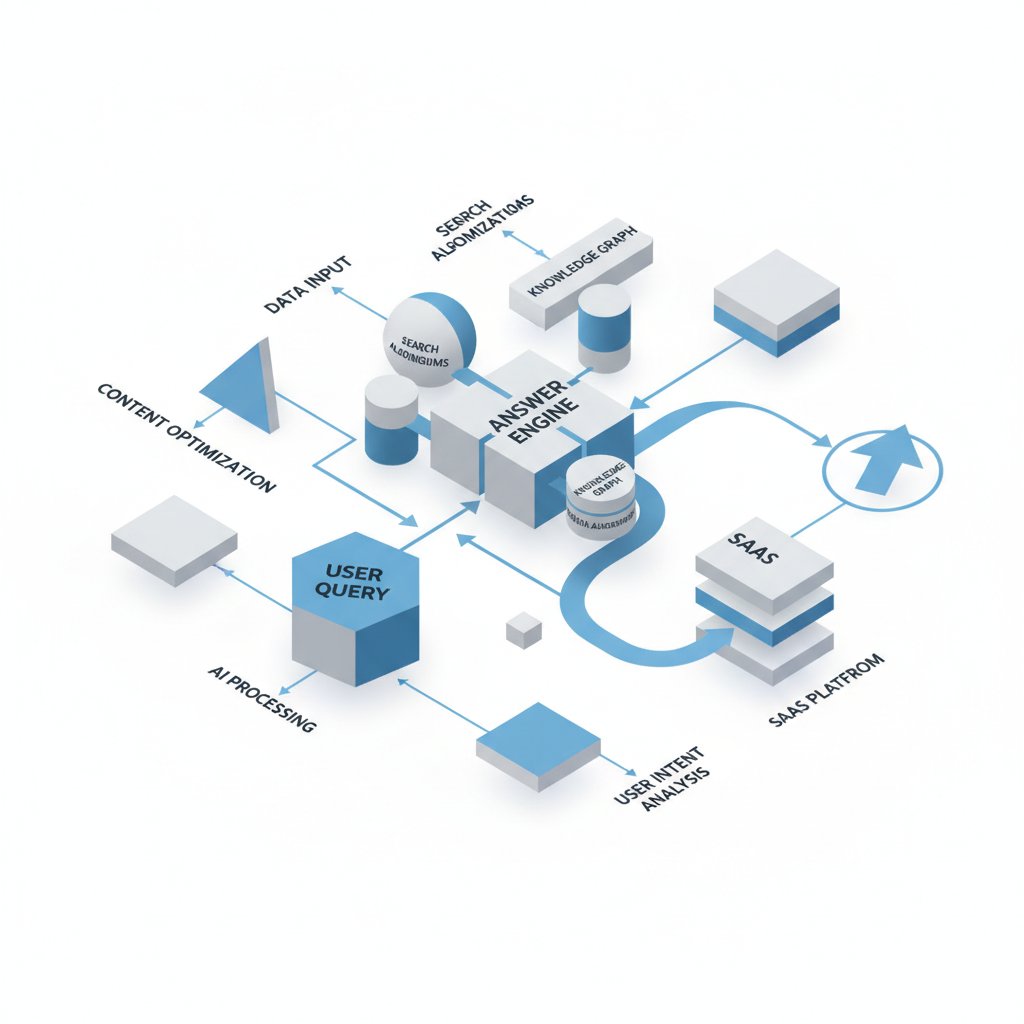
For SaaS startups, AEO isn’t just about getting discovered; it’s about leading users to a product that solves their problems. This requires a seamless integration between your content, your product, and your go-to-market strategy.
Solving User Problems with Your SaaS Solution
Every piece of AEO content should ultimately point to your SaaS product as the superior solution to the problem being discussed.
- Demonstrate Value: Don’t just tell users your product is good; show them. Use case studies, testimonials, and interactive demos within your answer content.
- Clear Calls to Action (CTAs): Guide users from the answer to the solution. CTAs should be relevant to the content—e.g., “Start your free trial,” “Request a demo,” “Download our [SaaS feature] guide.”
- Feature-Based Answer Content: Create content that answers questions directly related to unique features of your SaaS. “How to automate [task] with [Your SaaS Feature]?”
Using Product Documentation as AEO Assets
Your product documentation, often overlooked in traditional SEO, is a goldmine for AEO.
- Optimize Knowledge Base Articles: Frame each article as an answer to a specific user question (e.g., “How do I connect [integration] to [Your SaaS Name]?”).
- Utilize FAQs: Structure your product FAQs to directly answer common queries about setup, troubleshooting, and best practices. Ensure these are discoverable by search engines.
- Video Tutorials: Convert complex documentation into easy-to-digest video tutorials. YouTube is an answer engine in itself, and these videos can rank for “how-to” queries.
Here’s a comparison of traditional SEO approaches versus AEO for SaaS product documentation:
| Feature/Strategy | Traditional SEO Approach (Product Docs) | Answer Engine Optimization (AEO) Approach (Product Docs) |
|---|---|---|
| Primary Goal | Index documentation for keyword relevance; reduce support tickets. | Directly answer user questions at various stages of the journey; drive product adoption and satisfaction. |
| Content Focus | Feature descriptions, technical specifications, user manuals. | Problem/solution framing, “how-to” guides, “what if” scenarios, best practices. |
| Headings/Titles | “Admin Dashboard,” “API Endpoints,” “Billing Info.” | “How to Set Up Your Admin Dashboard,” “Connecting to Our API: A Step-by-Step Guide,” “Understanding Your Billing Statement.” |
| Structure | Hierarchical, often deep and compartmentalized. | Modular, self-contained answers within a broader knowledge base; uses lists, tables, direct answers. |
| Schema Markup | Minimal or none. | Extensive use of Question, Answer, HowTo, Product schema. |
| Internal Linking | Within the documentation tree. | Contextual links to relevant features, benefits, and broader solution pages on the main site. |
| Measurement | Page views, bounce rate. | Featured snippet impressions, “People Also Ask” appearances, direct answer visibility, click-through to product, reduced support tickets. |
Leveraging Customer Reviews and Testimonials
Authentic customer feedback provides invaluable answers to prospective users’ questions about reliability, ease of use, and effectiveness.
- Incorporate into Content: Strategically embed quotes and snippets from positive reviews into your detailed answer content.
- Optimize Review Platforms: Ensure your profiles on G2, Capterra, Trustpilot, and other relevant review sites are optimized. These platforms are often queried by AI.
- Address Negative Feedback: Publicly and professionally addressing negative reviews demonstrates trustworthiness and transparency, which are key AEO signals.
Measuring AEO Success and Iterative Optimization
AEO is an ongoing process, not a one-time setup. Continuous monitoring, analysis, and adaptation are essential for long-term success.
Key Performance Indicators (KPIs) for AEO
Traditional SEO KPIs like organic traffic and keyword rankings are still relevant but need to be augmented with AEO-specific metrics.
- Featured Snippet Impressions and Clicks: Track the number of times your content appears as a featured snippet and the resulting click-through rate.
- Direct Answer Visibility: Monitor if your content is being used for direct answers in Google’s knowledge panel or voice search.
- “People Also Ask” (PAA) Appearances: Track how often your content answers questions within the PAA section.
- Brand Mentions (Unlinked & Linked): Increased visibility as an answer engine often leads to more brand mentions, even if not directly linked. These contribute to authority.
- Voice Search Traffic: If your analytics platform can segment this, track traffic originating from voice queries.
- Conversion Rates from AEO Content: Trace users who interacted with your AEO-optimized content through to trials, demos, and paid subscriptions. Optimize your conversion funnels for AEO-driven traffic.
- Time on Page & Engagement Metrics: High engagement on your answer-driven content signals that you are truly solving user problems.
- Customer Support Ticket Reduction: If your knowledge base is effectively answering user questions, you should see a decrease in common support inquiries.
Tools for AEO Monitoring and Analysis
A range of tools can assist in tracking your AEO performance:
- Google Search Console: Essential for monitoring featured snippet performance, impression data, and identifying new search queries that your content is ranking for.
- SEMrush/Ahrefs/Moz: These tools offer competitive analysis, keyword gap analysis (for questions), and tracking of featured snippet rankings.
- AnswerThePublic/AlsoAsked: Specifically designed to uncover common questions and related queries around your target topics.
- Content Analytics Platforms: To track engagement metrics, conversion paths, and user behavior on your AEO content.
- AI Content Auditing Tools: To assess the clarity, conciseness, and AI-friendliness of your existing content.
Iterative Optimization and A/B Testing
AEO is not a static strategy. The AI landscape is constantly evolving, requiring continuous adjustment.
- Regular Content Audits: Periodically review your top-performing AEO content. Is it still accurate? Could it be updated with newer data or more comprehensive answers?
- Topic Expansion: Based on new questions identified through monitoring and AI insights, expand your content strategy to cover emerging topics and pain points.
- Format Experimentation: A/B test different content formats (lists vs. paragraphs, videos vs. text) for specific answer types to see what performs best in different contexts.
- Schema Markup Refinement: Continuously review and refine your schema implementation to ensure it’s accurate and up-to-date with the latest Schema.org standards.
- User Feedback Integration: Pay close attention to comments, surveys, and direct user feedback on your answer content to identify areas for improvement or gaps in information.
Overcoming Challenges in AEO for SaaS
While the opportunities are vast, SaaS startups will face unique challenges in their AEO journey.
Balancing Technical Depth with User Readability
SaaS products often involve complex technical concepts. The challenge is to explain these concepts accurately while maintaining readability for a broad audience and optimizing for AI.
- Start with the “What,” then the “How”: Begin with a simple explanation, then gradually introduce technical details.
- Glossaries and Tooltips: Provide clear definitions for jargon.
- Visual Aids: Diagrams, flowcharts, and screenshots can simplify complex processes.
- Contextual Links: Link to more technically detailed documentation or external resources for those who need to dive deeper, without cluttering the primary answer.
Staying Ahead of AI Algorithm Updates
AI models are constantly being refined, meaning AEO best practices can evolve. This requires agility and a commitment to continuous learning.
- Follow Industry News: Stay informed about Google’s announcements, research papers from major AI companies, and reputable SEO news sources.
- Observe Search Behavior Changes: Monitor how search results are presented for new types of queries. Are more direct answers appearing? Are new answer formats emerging?
- Experiment and Adapt: Don’t be afraid to test new optimization techniques and see what works for your specific niche.
Resource Allocation and Scalability
Creating high-quality, comprehensive answer content is resource-intensive. SaaS startups often operate with lean teams.
- Prioritize High-Impact Questions: Focus on questions that are high-volume, high-intent, or directly lead to product adoption.
- Repurpose and Atomize Content: Break down large guides into smaller, FAQ-style answers. Convert webinars into blog posts, and vice-versa. Unlock the power of content repurposing for maximum reach.
- Leverage Internal Expertise: Engage product managers, engineers, and customer support staff to contribute their specialized knowledge for authoritative content.
- Consider AI Assistance: As mentioned, AI tools can accelerate content creation and optimization, but always with human oversight.
The Future of SaaS Growth is Conversational and Contextual
The trajectory of digital search points towards increasingly personalized, conversational, and predictive experiences. For SaaS startups, this future is not distant; it is already here. Answer Engine Optimization is the bridge connecting your innovative solutions with the precise needs of your future customers within this evolving landscape.
By shifting your focus from simply being found to truly being understood and providing definitive answers, you position your SaaS startup not just as another vendor but as an indispensable partner in solving real-world problems. Embrace AEO, and you will not only survive the AI-driven search revolution but thrive within it, driving sustainable and exponential growth for your product.
The investment in understanding user intent, crafting authoritative content, and optimizing for AI-driven ecosystems will yield dividends in reduced customer acquisition costs, accelerated trial-to-paid conversions, and enhanced brand loyalty. Your SaaS solution deserves to be the answer, and AEO is the pathway to make that a reality.
Frequently Asked Questions
Q1: What is the main difference between SEO and AEO for a SaaS startup?
A1: Traditional SEO primarily focuses on ranking for keywords in search results, often by optimizing for volume and competition. Answer Engine Optimization (AEO), in contrast, shifts the focus to directly answering user questions with comprehensive, authoritative, and structured content. For SaaS, this means being the definitive answer provider for problems your software solves, often appearing in featured snippets, knowledge panels, or direct AI assistant responses, rather than just a blue link in a list. AEO emphasizes user intent, conversational queries, and making content highly parsable by AI models.
Q2: How can a small SaaS startup with limited resources effectively implement AEO?
A2: Start by hyper-focusing on your niche. Identify the 5-10 most critical questions your ideal customers ask throughout their journey, from awareness to decision. Create one pillar piece of authoritative content for each of these questions, ensuring it’s comprehensive, direct, and includes relevant schema markup. Leverage internal expertise (product, support teams) to contribute facts and insights. Repurpose existing documentation into FAQ-style answers. Focus on quality over quantity initially, then scale using AI content assistance and by gradually expanding to related questions. Prioritize questions directly addressing pain points your SaaS solves.
Q3: Does AEO replace the need for traditional keyword research?
A3: No, AEO doesn’t replace keyword research; it evolves it. Instead of just looking for single keywords, you’re performing “question research” or “conversational keyword research.” This involves identifying full questions, long-tail phrases, and implicit queries that users are asking. Tools that analyze “People Also Ask” sections, forums, and voice search data become more central. Keywords are still important for outlining topics, but the content itself is structured to answer the underlying question and intent behind those keywords.
Q4: What role do external links play in AEO compared to traditional SEO?
A4: External links (backlinks) still play a significant role in AEO, as they contribute to the “Authoritativeness” and “Trustworthiness” components of E-E-A-T, which is crucial for AI-driven search. If reputable sources link to your content as a go-to answer for a particular question, it signals to search engines that your content is valuable and trustworthy. However, the focus shifts from quantity of links to the quality and relevance of the linking sources, especially those recognized as authorities in your SaaS niche.
Q5: How can I ensure my SaaS product information itself is optimized for answer engines?
A5: Treat your product pages, feature descriptions, and especially your knowledge base/FAQ sections as answer engines. Frame headlines and content around questions users ask (e.g., “How to integrate X with Y?” or “What are the benefits of [Feature Name]?”). Implement Product, FAQPage, and HowTo schema markup where appropriate. Ensure all product information is accurate, up-to-date, and presented clearly with logical structure (bullet points, short paragraphs). Optimize for mobile access and fast loading times, as these contribute to a positive user experience, which AI evaluates.
Mastering Answer Engine Optimization for SaaS Startups: A Blueprint for Exponential Growth
Affiliate disclosure: This article may contain affiliate links. Recommendations are independent and editorially driven.
The digital landscape is undergoing a profound transformation. As AI-powered search engines and sophisticated chatbots become the primary gatekeepers of information, the traditional rules of SEO are evolving at an unprecedented pace. For SaaS startups, this shift presents both a formidable challenge and an unparalleled opportunity. Welcome to the era of Answer Engine Optimization (AEO).
Gone are the days when simply stuffing keywords and building backlinks guaranteed top rankings. Today, users demand immediate, precise, and contextual answers to their complex queries. AI-driven systems are designed to understand intent, synthesize information, and deliver direct answers, often bypassing traditional search result pages altogether. For a SaaS startup vying for attention in a crowded market, understanding and implementing AEO is no longer optional—it’s foundational for survival and exponential growth.
This comprehensive guide will equip you with the knowledge and strategies to navigate the AEO landscape effectively. We’ll delve into the core principles of AEO, explore its unique implications for SaaS companies, and provide actionable steps to optimize your content, product, and brand for the age of intelligent answers. By the end of this article, you’ll have a clear blueprint to ensure your SaaS solution isn’t just found but actively chosen by your target audience when they ask the right questions.
The Paradigm Shift: From Keywords to Questions and Answers
For decades, SEO was largely predicated on keywords. Businesses optimized their websites to rank for specific terms that users typed into search bars. While keywords still hold some relevance, their dominance is waning. The rise of natural language processing (NLP), machine learning (ML), and large language models (LLMs) has fundamentally altered how search engines interpret and respond to user queries.
Understanding the Evolution of Search
The journey from keyword matching to answer provision has been gradual but accelerating. Early search engines primarily focused on lexical matching. If a user typed “best CRM software,” the engine would look for pages containing those exact words. Over time, algorithms became more sophisticated, incorporating concepts like latent semantic indexing (LSI) to understand related terms and synonyms.
However, the real revolution began with the integration of AI. Tools like Google’s RankBrain, BERT (Bidirectional Encoder Representations from Transformers), and more recently, MUM (Multitask Unified Model) and generative AI capabilities have transformed search into an “answer engine.” These systems aim to understand the full context and intent behind a query, regardless of the exact phrasing, and then provide the most relevant, direct, and comprehensive answer possible.
This means that search engines are no longer just indexing web pages; they are “understanding” them. They are extracting facts, synthesizing information from multiple sources, and even generating new content snippets to directly answer user questions. This is particularly evident in features like featured snippets, knowledge panels, and direct answers in conversational AI interfaces.
[INLINE IMAGE 1: place after second H2 | alt=”Answer Engine Optimization for SaaS Startups concept illustration”]
Why AEO is Critical for SaaS Startups
SaaS products, by their very nature, are designed to solve specific problems or fulfill particular needs. Potential customers often begin their buyer’s journey with questions: “How can I automate my sales pipeline?” “What’s the best project management tool for remote teams?” “Connect payroll to my HR system?” These are not just keywords; they are intricate questions demanding nuanced answers.
Here’s why AEO is a game-changer for SaaS startups:
- Direct Customer Engagement: When your SaaS product or content directly answers a user’s question, you bypass layers of competition. Featured snippets and direct answers place your brand front and center, often “above the fold” and even above traditional organic results.
- Building Authority and Trust: Providing accurate, comprehensive answers positions your startup as a thought leader and trusted authority in your niche. This is invaluable for converting wary prospects into paying customers.
- Capturing High-Intent Users: Users asking specific questions are typically higher in the sales funnel than those performing broad keyword searches. They are actively seeking solutions, making them prime candidates for your SaaS offering.
- Voice Search Dominance: With the proliferation of voice assistants (Siri, Alexa, Google Assistant), conversational search is on the rise. AEO principles are inherently aligned with voice search, which relies heavily on direct, concise answers to natural language queries.
- Future-Proofing Your Strategy: As AI continues to permeate search and digital interaction, AEO ensures your marketing strategy remains relevant and effective. It’s a proactive approach to evolving search behavior.
Core Pillars of Answer Engine Optimization for SaaS
To successfully implement AEO, SaaS startups need to focus on several interconnected pillars. These go beyond traditional SEO tactics and demand a deeper understanding of user intent, content quality, and technical implementation.
Understanding User Intent and Question Mapping
The foundation of AEO is a profound understanding of your target audience’s questions, pain points, and decision-making process. This requires moving beyond simple keyword research to comprehensive “question mapping.”
- Identify Customer Personas: Develop detailed personas for your ideal customers. What are their roles? What challenges do they face daily? What goals are they trying to achieve?
- Brainstorm “How-To” and “What Is” Questions: Think like your users. What questions would they ask an expert or a search engine related to the problems your SaaS solves? Use tools like “People Also Ask” sections in Google, Quora, Reddit, and customer support logs.
- Map Questions to the Buyer’s Journey: Categorize questions based on where a user is in their journey:
- Awareness Stage: Broad questions about problems or symptoms (e.g., “How to improve team communication?”).
- Consideration Stage: Questions comparing solutions, features, or benefits (e.g., “CRM vs. project management software,” “What are the benefits of marketing automation?”).
- Decision Stage: Specific questions about your product, pricing, integrations, or implementation (e.g., “How does [Your SaaS Name] integrate with Slack?”).
- Analyze Competitor’s Answer Strategy: Use tools to see what questions your competitors are ranking for, especially in featured snippets. What content formats are they using? Where are their gaps?
Crafting Authoritative and Comprehensive Content
Content is the vehicle for your answers. For AEO, this content must be more than just informative; it must be authoritative, comprehensive, clear, and structured for AI consumption.
- Directly Answer Questions: Start your content pieces (or sections within them) with a direct, concise answer to the primary question. This is crucial for featured snippets.
- Provide Depth and Detail: After the direct answer, elaborate. Explain the “why” and the “how.” Use examples, case studies, and data to support your claims. AEO favors content that offers a complete solution, not just a superficial one.
- Utilize Diverse Content Formats:
- Blog Posts & Guides: Long-form content that delves deep into complex topics, answering multiple related questions.
- Knowledge Bases & FAQs: Essential for capturing decision-stage questions and providing concise answers on specific product features or issues.
- Comparison Articles: Directly address user queries like “X vs. Y” or “Best [category] software for [specific use case].”
- Tutorials & Walkthroughs: Visual content (videos, screenshots) that demonstrates how to use your SaaS to solve problems.
- Employ E-E-A-T Principles:
- Experience: Show that your team (or the individuals creating the content) has hands-on experience with the topic and your product.
- Expertise: Demonstrate deep knowledge. Cite credible sources, industry research, and internal data.
- Authoritativeness: Position your brand as a leading voice in your niche. Get endorsements, feature experts, and build a strong online presence.
- Trustworthiness: Ensure accuracy, transparency, and data security. Build user reviews and testimonials.
Structuring Content for AI Parsability
Even the most brilliant content will fail if AI can’t easily parse and understand it. This is where technical SEO and semantic markup play a crucial role.
- Clear Headings (H1, H2, H3): Use headings to logically structure your content and signal to AI what each section is about. Frame headings as questions or direct answers where appropriate.
- Bulleted and Numbered Lists: AI loves lists! They are easy to parse and often form the basis of featured snippets. Use them for steps, features, benefits, or comparisons.
- Concise Paragraphs: Break up long blocks of text into shorter, digestible paragraphs. AI struggles with dense walls of text.
- Schema Markup: Implement structured data (Schema.org markup) to explicitly tell search engines what your content means. Key schema types for SaaS AEO include:
QuestionandAnswerfor FAQ pages.HowTofor tutorials.Productfor product reviews and specifications.Organizationfor brand information.
- Internal Linking: Strategically link related content within your site. This helps AI understand the thematic connections between your pages and spreads authority. Learn more about effective content strategy for SaaS.
Technical Considerations and Platform Optimization
Beyond content, the technical foundation of your SaaS website must be robust and optimized for both users and AI agents. This includes site speed, mobile-friendliness, and advanced indexing strategies.
Ensuring Site Performance and Mobile Experience
A slow or clunky website will instantly deter users and signal to AI that your content may not be a good answer experience.
- Core Web Vitals: Prioritize excellent scores for Largest Contentful Paint (LCP), First Input Delay (FID), and Cumulative Layout Shift (CLS). These metrics directly impact user experience and ranking.
- Mobile Responsiveness: Ensure your entire site is fully responsive and provides an optimal experience on all devices, especially smartphones. Mobile-first indexing means Google primarily uses the mobile version of your site for ranking.
- Server Responsiveness: Invest in reliable hosting and Content Delivery Networks (CDNs) to reduce load times for users globally.
Leveraging AI for SEO Insights and Content Creation
Modern AI tools are not just for search engines; they are powerful allies for your AEO strategy.
- AI-Powered Keyword and Question Research: Use tools that leverage AI to identify latent semantic connections, predict emerging user questions, and analyze conversational queries.
- Content Generation & Optimization: AI writing assistants can help draft, expand, and optimize content for conciseness, clarity, and keyword integration. However, always review and fact-check AI-generated content to maintain E-E-A-T.
- Sentiment Analysis: Employ AI to understand the sentiment around your brand and product in reviews and social media. This can reveal underlying questions and pain points to address in your content.
[INLINE IMAGE 2: place after fourth H2 | alt=”Answer Engine Optimization for SaaS Startups comparison illustration”]
The Role of Voice Search Optimization
Voice interactions are inherently question-based. Optimizing for voice search is paramount for AEO success.
- Natural Language Focus: Write content in a conversational tone. People ask voice queries differently than they type them.
- Long-Tail Keywords and Questions: Voice search queries are typically longer and more specific. Target these long-tail questions directly.
- Featured Snippets: Voice assistants heavily rely on featured snippets for direct answers. Structure your content to maximize your chances of appearing there.
- Local SEO (if applicable): If your SaaS has a local component or serves specific geographic areas, ensure your Google Business Profile is optimized and provides clear answers to local queries.
Integrating Product-Led Growth with AEO
For SaaS startups, AEO isn’t just about getting discovered; it’s about leading users to a product that solves their problems. This requires a seamless integration between your content, your product, and your go-to-market strategy.
Solving User Problems with Your SaaS Solution
Every piece of AEO content should ultimately point to your SaaS product as the superior solution to the problem being discussed.
- Demonstrate Value: Don’t just tell users your product is good; show them. Use case studies, testimonials, and interactive demos within your answer content.
- Clear Calls to Action (CTAs): Guide users from the answer to the solution. CTAs should be relevant to the content—e.g., “Start your free trial,” “Request a demo,” “Download our [SaaS feature] guide.”
- Feature-Based Answer Content: Create content that answers questions directly related to unique features of your SaaS. “How to automate [task] with [Your SaaS Feature]?”
Using Product Documentation as AEO Assets
Your product documentation, often overlooked in traditional SEO, is a goldmine for AEO.
- Optimize Knowledge Base Articles: Frame each article as an answer to a specific user question (e.g., “How do I connect [integration] to [Your SaaS Name]?”).
- Utilize FAQs: Structure your product FAQs to directly answer common queries about setup, troubleshooting, and best practices. Ensure these are discoverable by search engines.
- Video Tutorials: Convert complex documentation into easy-to-digest video tutorials. YouTube is an answer engine in itself, and these videos can rank for “how-to” queries.
Here’s a comparison of traditional SEO approaches versus AEO for SaaS product documentation:
| Feature/Strategy | Traditional SEO Approach (Product Docs) | Answer Engine Optimization (AEO) Approach (Product Docs) |
|---|---|---|
| Primary Goal | Index documentation for keyword relevance; reduce support tickets. | Directly answer user questions at various stages of the journey; drive product adoption and satisfaction. |
| Content Focus | Feature descriptions, technical specifications, user manuals. | Problem/solution framing, “how-to” guides, “what if” scenarios, best practices. |
| Headings/Titles | “Admin Dashboard,” “API Endpoints,” “Billing Info.” | “How to Set Up Your Admin Dashboard,” “Connecting to Our API: A Step-by-Step Guide,” “Understanding Your Billing Statement.” |
| Structure | Hierarchical, often deep and compartmentalized. | Modular, self-contained answers within a broader knowledge base; uses lists, tables, direct answers. |
| Schema Markup | Minimal or none. | Extensive use of Question, Answer, HowTo, Product schema. |
| Internal Linking | Within the documentation tree. | Contextual links to relevant features, benefits, and broader solution pages on the main site. |
| Measurement | Page views, bounce rate. | Featured snippet impressions, “People Also Ask” appearances, direct answer visibility, click-through to product, reduced support tickets. |
Leveraging Customer Reviews and Testimonials
Authentic customer feedback provides invaluable answers to prospective users’ questions about reliability, ease of use, and effectiveness.
- Incorporate into Content: Strategically embed quotes and snippets from positive reviews into your detailed answer content.
- Optimize Review Platforms: Ensure your profiles on G2, Capterra, Trustpilot, and other relevant review sites are optimized. These platforms are often queried by AI.
- Address Negative Feedback: Publicly and professionally addressing negative reviews demonstrates trustworthiness and transparency, which are key AEO signals.
Measuring AEO Success and Iterative Optimization
AEO is an ongoing process, not a one-time setup. Continuous monitoring, analysis, and adaptation are essential for long-term success.
Key Performance Indicators (KPIs) for AEO
Traditional SEO KPIs like organic traffic and keyword rankings are still relevant but need to be augmented with AEO-specific metrics.
- Featured Snippet Impressions and Clicks: Track the number of times your content appears as a featured snippet and the resulting click-through rate.
- Direct Answer Visibility: Monitor if your content is being used for direct answers in Google’s knowledge panel or voice search.
- “People Also Ask” (PAA) Appearances: Track how often your content answers questions within the PAA section.
- Brand Mentions (Unlinked & Linked): Increased visibility as an answer engine often leads to more brand mentions, even if not directly linked. These contribute to authority.
- Voice Search Traffic: If your analytics platform can segment this, track traffic originating from voice queries.
- Conversion Rates from AEO Content: Trace users who interacted with your AEO-optimized content through to trials, demos, and paid subscriptions. Optimize your conversion funnels for AEO-driven traffic.
- Time on Page & Engagement Metrics: High engagement on your answer-driven content signals that you are truly solving user problems.
- Customer Support Ticket Reduction: If your knowledge base is effectively answering user questions, you should see a decrease in common support inquiries.
Tools for AEO Monitoring and Analysis
A range of tools can assist in tracking your AEO performance:
- Google Search Console: Essential for monitoring featured snippet performance, impression data, and identifying new search queries that your content is ranking for.
- SEMrush/Ahrefs/Moz: These tools offer competitive analysis, keyword gap analysis (for questions), and tracking of featured snippet rankings.
- AnswerThePublic/AlsoAsked: Specifically designed to uncover common questions and related queries around your target topics.
- Content Analytics Platforms: To track engagement metrics, conversion paths, and user behavior on your AEO content.
- AI Content Auditing Tools: To assess the clarity, conciseness, and AI-friendliness of your existing content.
Iterative Optimization and A/B Testing
AEO is not a static strategy. The AI landscape is constantly evolving, requiring continuous adjustment.
- Regular Content Audits: Periodically review your top-performing AEO content. Is it still accurate? Could it be updated with newer data or more comprehensive answers?
- Topic Expansion: Based on new questions identified through monitoring and AI insights, expand your content strategy to cover emerging topics and pain points.
- Format Experimentation: A/B test different content formats (lists vs. paragraphs, videos vs. text) for specific answer types to see what performs best in different contexts.
- Schema Markup Refinement: Continuously review and refine your schema implementation to ensure it’s accurate and up-to-date with the latest Schema.org standards.
- User Feedback Integration: Pay close attention to comments, surveys, and direct user feedback on your answer content to identify areas for improvement or gaps in information.
Overcoming Challenges in AEO for SaaS
While the opportunities are vast, SaaS startups will face unique challenges in their AEO journey.
Balancing Technical Depth with User Readability
SaaS products often involve complex technical concepts. The challenge is to explain these concepts accurately while maintaining readability for a broad audience and optimizing for AI.
- Start with the “What,” then the “How”: Begin with a simple explanation, then gradually introduce technical details.
- Glossaries and Tooltips: Provide clear definitions for jargon.
- Visual Aids: Diagrams, flowcharts, and screenshots can simplify complex processes.
- Contextual Links: Link to more technically detailed documentation or external resources for those who need to dive deeper, without cluttering the primary answer.
Staying Ahead of AI Algorithm Updates
AI models are constantly being refined, meaning AEO best practices can evolve. This requires agility and a commitment to continuous learning.
- Follow Industry News: Stay informed about Google’s announcements, research papers from major AI companies, and reputable SEO news sources.
- Observe Search Behavior Changes: Monitor how search results are presented for new types of queries. Are more direct answers appearing? Are new answer formats emerging?
- Experiment and Adapt: Don’t be afraid to test new optimization techniques and see what works for your specific niche.
Resource Allocation and Scalability
Creating high-quality, comprehensive answer content is resource-intensive. SaaS startups often operate with lean teams.
- Prioritize High-Impact Questions: Focus on questions that are high-volume, high-intent, or directly lead to product adoption.
- Repurpose and Atomize Content: Break down large guides into smaller, FAQ-style answers. Convert webinars into blog posts, and vice-versa. Unlock the power of content repurposing for maximum reach.
- Leverage Internal Expertise: Engage product managers, engineers, and customer support staff to contribute their specialized knowledge for authoritative content.
- Consider AI Assistance: As mentioned, AI tools can accelerate content creation and optimization, but always with human oversight.
The Future of SaaS Growth is Conversational and Contextual
The trajectory of digital search points towards increasingly personalized, conversational, and predictive experiences. For SaaS startups, this future is not distant; it is already here. Answer Engine Optimization is the bridge connecting your innovative solutions with the precise needs of your future customers within this evolving landscape.
By shifting your focus from simply being found to truly being understood and providing definitive answers, you position your SaaS startup not just as another vendor but as an indispensable partner in solving real-world problems. Embrace AEO, and you will not only survive the AI-driven search revolution but thrive within it, driving sustainable and exponential growth for your product.
The investment in understanding user intent, crafting authoritative content, and optimizing for AI-driven ecosystems will yield dividends in reduced customer acquisition costs, accelerated trial-to-paid conversions, and enhanced brand loyalty. Your SaaS solution deserves to be the answer, and AEO is the pathway to make that a reality.
Frequently Asked Questions
Q1: What is the main difference between SEO and AEO for a SaaS startup?
A1: Traditional SEO primarily focuses on ranking for keywords in search results, often by optimizing for volume and competition. Answer Engine Optimization (AEO), in contrast, shifts the focus to directly answering user questions with comprehensive, authoritative, and structured content. For SaaS, this means being the definitive answer provider for problems your software solves, often appearing in featured snippets, knowledge panels, or direct AI assistant responses, rather than just a blue link in a list. AEO emphasizes user intent, conversational queries, and making content highly parsable by AI models.
Q2: How can a small SaaS startup with limited resources effectively implement AEO?
A2: Start by hyper-focusing on your niche. Identify the 5-10 most critical questions your ideal customers ask throughout their journey, from awareness to decision. Create one pillar piece of authoritative content for each of these questions, ensuring it’s comprehensive, direct, and includes relevant schema markup. Leverage internal expertise (product, support teams) to contribute facts and insights. Repurpose existing documentation into FAQ-style answers. Focus on quality over quantity initially, then scale using AI content assistance and by gradually expanding to related questions. Prioritize questions directly addressing pain points your SaaS solves.
Q3: Does AEO replace the need for traditional keyword research?
A3: No, AEO doesn’t replace keyword research; it evolves it. Instead of just looking for single keywords, you’re performing “question research” or “conversational keyword research.” This involves identifying full questions, long-tail phrases, and implicit queries that users are asking. Tools that analyze “People Also Ask” sections, forums, and voice search data become more central. Keywords are still important for outlining topics, but the content itself is structured to answer the underlying question and intent behind those keywords.
Q4: What role do external links play in AEO compared to traditional SEO?
A4: External links (backlinks) still play a significant role in AEO, as they contribute to the “Authoritativeness” and “Trustworthiness” components of E-E-A-T, which is crucial for AI-driven search. If reputable sources link to your content as a go-to answer for a particular question, it signals to search engines that your content is valuable and trustworthy. However, the focus shifts from quantity of links to the quality and relevance of the linking sources, especially those recognized as authorities in your SaaS niche.
Q5: How can I ensure my SaaS product information itself is optimized for answer engines?
A5: Treat your product pages, feature descriptions, and especially your knowledge base/FAQ sections as answer engines. Frame headlines and content around questions users ask (e.g., “How to integrate X with Y?” or “What are the benefits of [Feature Name]?”). Implement Product, FAQPage, and HowTo schema markup where appropriate. Ensure all product information is accurate, up-to-date, and presented clearly with logical structure (bullet points, short paragraphs). Optimize for mobile access and fast loading times, as these contribute to a positive user experience, which AI evaluates.