The Ultimate Guide to Frictionless User Onboarding for SaaS Startups
Affiliate disclosure: This article may contain affiliate links. Recommendations are independent and editorially driven.
In the fiercely competitive landscape of tech startups and digital marketing, particularly within the SaaS sector, customer acquisition is only half the battle. The true differentiator, and often the make-or-break factor for long-term success, lies in how effectively you can transform newly acquired users into activated, engaged, and loyal customers. This critical transition hinges entirely on your user onboarding process. More specifically, it demands a commitment to frictionless user onboarding.
Frictionless user onboarding isn’t merely about creating a visually appealing welcome screen or sending an automated email series. It’s a holistic, strategically designed journey that anticipates user needs, removes obstacles, clarifies value, and guides individuals to their “Aha! moment” with minimal effort and maximum impact. For startups, where resources are often limited and every customer interaction counts, optimizing this initial experience is paramount for sustainable growth, reduced churn, and a robust go-to-market strategy.
This comprehensive guide from eamped delves deep into the principles, strategies, technologies, and metrics that define successful frictionless user onboarding. We’ll explore why it’s a non-negotiable component of modern SaaS growth, how to implement best practices, avoid common pitfalls, and leverage cutting-edge tools to create an onboarding experience that not only retains users but turns them into enthusiastic advocates. Whether you’re launching a new product, refining an existing one, or scaling your marketing automation efforts, understanding and mastering frictionless user onboarding is your clearest path to accelerating startup success in 2026 and beyond.
Defining the Core of Frictionless User Onboarding
At its core, frictionless user onboarding is the art and science of enabling users to achieve their desired outcome with your product or service as quickly and effortlessly as possible. It’s a proactive approach to user experience (UX) that anticipates potential roadblocks, provides clear guidance, and delivers tangible value from the very first interaction. For SaaS companies, where product usage dictates subscription retention, this initial journey is arguably the most important touchpoint in the entire customer lifecycle.
Many startups mistakenly view onboarding as a simple checklist: sign-up, email verification, maybe a quick product tour. However, a truly frictionless process transcends these basic steps. It’s about crafting an intuitive, personalized, and efficient pathway that educates, empowers, and delights the user, transforming them from a curious prospect into an activated, engaged, and ultimately, a loyal customer. It’s about removing cognitive load, decision fatigue, and any technical hurdles that might prevent a user from experiencing the core value proposition of your offering.
Defining Frictionless Onboarding in the SaaS Landscape
In the SaaS world, frictionless onboarding means minimizing any point of resistance, confusion, or frustration a new user might encounter from the moment they express interest to the point they become a habitual, successful user. This encompasses the entire journey, starting even before they sign up:
- Pre-Signup Clarity: Clear communication of value proposition on your website and marketing materials.
- Effortless Sign-Up: Streamlined forms, social login options, minimal required information.
- Instant Gratification: Guiding users to their first “win” or “Aha! moment” rapidly.
- Contextual Guidance: In-app messages, tooltips, and walkthroughs that appear exactly when and where needed, not as an overwhelming tutorial.
- Personalized Paths: Tailoring the onboarding experience based on user roles, goals, or initial inputs.
- Proactive Problem Solving: Anticipating common questions and providing accessible self-help resources.
- Seamless Transition: Ensuring that the onboarding process smoothly integrates with the ongoing product experience.
Ultimately, it’s about reducing the cognitive and emotional investment required from the user, allowing them to focus solely on achieving their objectives with your product.
Why a Smooth Onboarding Experience is Non-Negotiable for Startup Growth
For tech startups, particularly those operating on a subscription model, the initial onboarding experience is directly correlated with long-term viability. High churn rates in the early stages can decimate growth projections and quickly drain precious resources. A smooth, frictionless journey:
- Boosts Activation Rates: More users successfully complete the initial setup and reach a state of active product usage.
- Reduces Early Churn: Users who experience value quickly are far less likely to abandon the product within the first few days or weeks.
- Accelerates Time-to-Value (TTV): Getting users to their “Aha! moment” faster means they perceive value sooner, justifying their investment (time or money).
- Enhances Customer Lifetime Value (CLTV): Engaged users who stick around longer generate more revenue over time.
- Improves Product Adoption: Users discover and utilize more of your product’s features, increasing their overall satisfaction and stickiness.
- Generates Positive Word-of-Mouth: A delightful first experience encourages users to recommend your product to others, fueling organic growth.
- Lowers Support Costs: A clear, intuitive onboarding process reduces the number of common support queries.
In a world saturated with digital solutions, the product that makes it easiest for users to succeed is often the one that wins. Frictionless user onboarding is not a luxury; it’s a fundamental pillar of sustainable startup growth.
The Direct Impact on Key Business Metrics
The success of your frictionless user onboarding efforts can be directly observed and measured through several critical business metrics. Neglecting these metrics means operating in the dark, unable to identify where friction points exist or where improvements are making an impact.
- Activation Rate: The percentage of users who complete a defined key action within a specific timeframe (e.g., creating their first project, sending their first email, inviting a team member). A higher activation rate indicates successful onboarding.
- User Retention: The percentage of users who continue to use the product over successive periods. Frictionless onboarding directly impacts early retention by ensuring users find value before they have a chance to leave.
- Churn Rate: The rate at which customers discontinue their subscription or stop using the product. High early churn often signals significant friction in the onboarding process.
- Time-to-Value (TTV): The average time it takes for a new user to experience the core benefit of your product. A shorter TTV is a hallmark of frictionless onboarding.
- Customer Lifetime Value (CLTV): The total revenue a business can reasonably expect from a single customer account over the duration of the relationship. Higher retention driven by frictionless onboarding directly boosts CLTV.
- Net Promoter Score (NPS) and Customer Satisfaction (CSAT): These qualitative metrics provide insight into how users feel about their initial experience. A smooth onboarding often translates to higher satisfaction and willingness to recommend.
- Support Ticket Volume: A well-designed onboarding process educates users proactively, leading to fewer “how-to” or “getting started” support requests.
By focusing on these metrics, startups can gain a clear, data-driven understanding of their onboarding effectiveness and identify specific areas for continuous optimization to maintain a competitive edge.
Core Principles of a Truly Frictionless Onboarding Experience
Achieving a truly frictionless user onboarding experience requires a strategic mindset and adherence to several core principles. These principles serve as the foundation upon which effective onboarding flows are built, ensuring that every design choice and communication strategy contributes to a seamless user journey.
Simplicity and Clarity: Eliminating Cognitive Load
The human brain has a limited capacity for processing new information, especially when presented with an unfamiliar interface or complex tasks. Frictionless onboarding champions simplicity and clarity above all else. This means:
- Minimalism in Design: Stripping away unnecessary UI elements, dense text, and superfluous steps. Every component on the screen should serve a clear purpose.
- Clear Language: Using plain, concise, and jargon-free language in all instructions, labels, and messages. Avoid technical terms unless absolutely necessary and provide immediate explanations if they are.
- Intuitive Navigation: Ensuring that users can easily understand where they are, what they need to do next, and how to get help if stuck. Consistent UI patterns are crucial.
- Progressive Disclosure: Presenting information or features only when they are relevant and needed, rather than overwhelming the user upfront. For example, asking for essential signup information first, then gathering more details later as the user engages.
- Focus on One Action: Each step in the onboarding process should have a single, clear call to action, guiding the user towards the next logical step without distractions.
By minimizing cognitive load, users can effortlessly navigate the onboarding process, understand what’s expected of them, and quickly grasp the product’s core functionality.
Personalization at Scale: Tailoring the User Journey
One-size-fits-all onboarding is a common pitfall that introduces friction. Different users come to your product with varying levels of technical proficiency, diverse goals, and unique use cases. Frictionless onboarding embraces personalization at scale to cater to these differences.
- Segmented Onboarding Paths: Based on initial signup questions (e.g., “What’s your role?”, “What do you hope to achieve?”), route users to tailored onboarding flows that highlight features most relevant to them.
- Dynamic Content: Customize in-app messages, email sequences, and even product tours based on user behavior, industry, or stated preferences.
- Role-Based Introductions: For complex B2B SaaS products, present different onboarding experiences for administrators, team members, or end-users, focusing on what’s critical for their specific role.
- Behavioral Triggers: Use product analytics to identify when a user performs a key action or struggles at a certain point, then deliver targeted support or encouragement.
- Account Pre-filling: If possible, use publicly available information or data from integrations to pre-fill parts of their profile, reducing data entry.
Personalization makes the user feel understood and valued, dramatically increasing engagement and accelerating their path to realizing the product’s benefits.
Instant Value Delivery: Accelerating the “Aha! Moment”
The “Aha! moment” is the point at which a user truly understands and experiences the core value proposition of your product. Frictionless onboarding is designed to get users to this moment as quickly as possible, ideally within minutes of signing up.
- Focus on Core Use Cases: Don’t try to introduce every feature. Identify the 1-2 critical actions that deliver immediate value and guide users directly to them.
- Example Data/Templates: Provide pre-populated dashboards, sample projects, or ready-to-use templates that allow users to see the product in action immediately, rather than starting from scratch.
- Interactive Walkthroughs: Instead of passive videos, use interactive tours that guide users through performing a key action themselves.
- Minimal Setup: Reduce the number of configurations or integrations required before a user can experience value. Defer non-essential setup steps.
- Early Feedback Loops: Show users the impact of their actions quickly. For example, if it’s an analytics tool, show a sample report immediately after data connection.
Delivering instant value reinforces the user’s decision to try your product and creates momentum for continued exploration and adoption.
Proactive Support and Self-Service Empowerment
Even with the most streamlined onboarding, users will inevitably have questions or encounter issues. Frictionless onboarding doesn’t just prevent problems; it also provides immediate, easy-to-access solutions when they arise.
- Contextual Help: Integrate help bubbles, tooltips, or links to relevant knowledge base articles directly within the onboarding flow, at the point of need.
- Accessible Knowledge Base: Ensure a comprehensive, searchable knowledge base or FAQ section is easily discoverable from within the product, not just on your website.
- In-App Chat/Bots: Offer instant access to support agents or AI-powered chatbots for real-time assistance during onboarding.
- Community Forums: For certain products, a thriving community forum can provide peer-to-peer support and valuable insights.
- Error Message Clarity: When errors occur, provide clear, actionable messages that explain what went wrong and how to fix it, rather than cryptic codes.
Empowering users to find answers themselves reduces frustration and builds confidence, reinforcing the seamless nature of their interaction with your product.
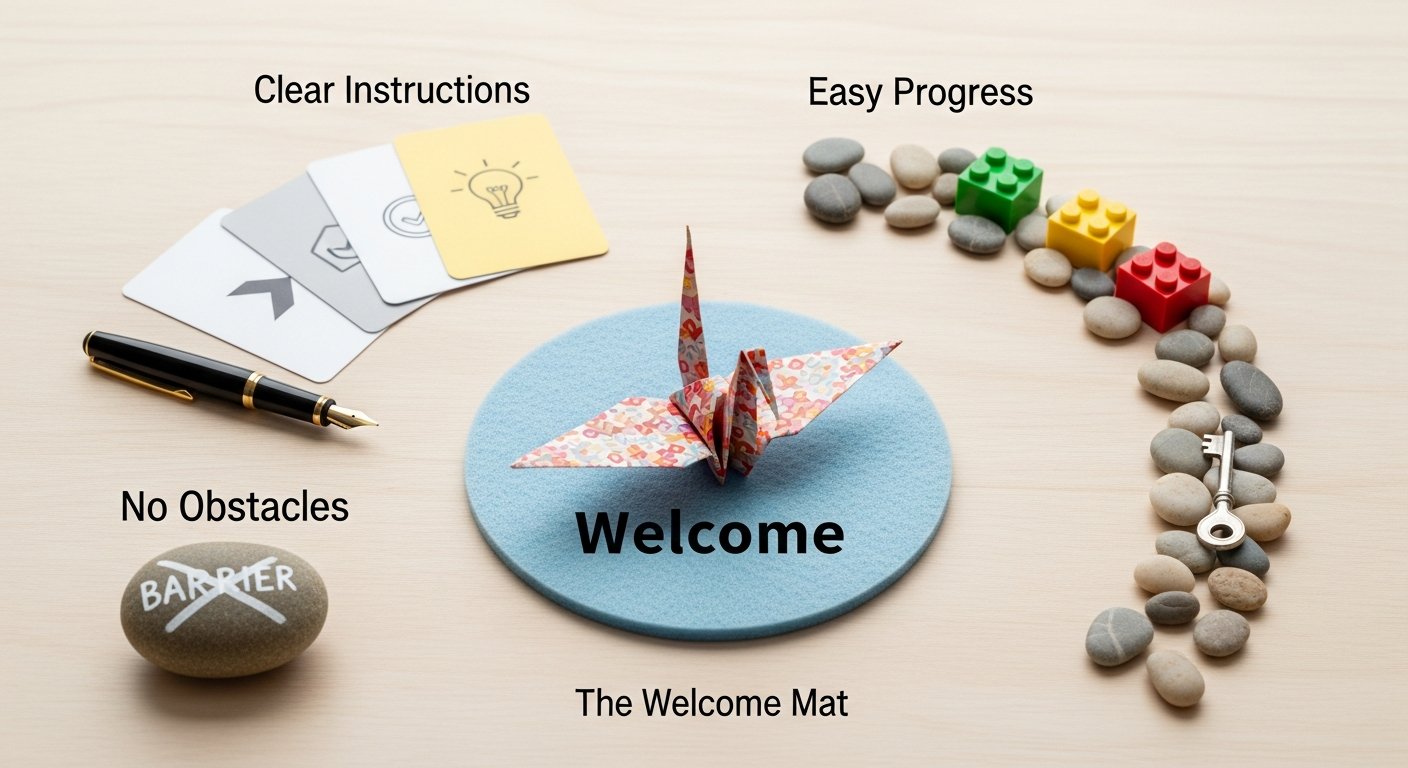
[INLINE IMAGE 1: place after second H2 | alt=”frictionless user onboarding concept illustration”]
Deconstructing the User Onboarding Journey: From Sign-Up to Super-User
The journey of a new user is not a single event but a multi-stage process, each with its own goals and potential friction points. A truly frictionless user onboarding strategy considers every step, from initial interest to sustained engagement, ensuring a cohesive and supportive experience throughout.
Pre-Onboarding: Setting Expectations and Prequalifying
Frictionless onboarding doesn’t begin when a user clicks “Sign Up”; it starts much earlier, with how your product is presented to potential customers. The pre-onboarding phase is critical for setting accurate expectations and attracting the right users, thereby minimizing future friction.
- Clear Value Proposition: Your website, landing pages, and marketing materials must articulate precisely what problem your product solves and for whom. Misaligned expectations lead to frustration during onboarding.
- Targeted Messaging: Ensure your marketing speaks directly to your ideal customer profile (ICP). This attracts users who are more likely to find immediate value and successfully onboard.
- Transparent Pricing: Hidden costs or unclear pricing models can introduce significant friction later. Be upfront and clear about what users get for their investment.
- Demo/Trial Clarity: If offering a demo or free trial, clearly define what users can expect, what features are available, and any limitations.
- Social Proof & Testimonials: Showcasing success stories from similar users can build trust and reassure prospective users about the value they will gain.
By effectively managing expectations and prequalifying users, you ensure that those who enter your onboarding funnel are already well-primed to succeed, reducing the likelihood of early drop-offs.
The Sign-Up Flow: Removing Initial Barriers
The sign-up process is often the first significant hurdle a new user encounters. Any unnecessary steps or complexities here can lead to immediate abandonment. The goal is to make this phase as swift, simple, and reassuring as possible.
- Minimize Form Fields: Only ask for absolutely essential information (email, password, maybe a name) initially. Use progressive profiling to gather more details later.
- Social Sign-Up Options: Offer “Sign up with Google,” “Sign up with Apple,” or “Sign up with Slack” to reduce typing and leverage existing credentials.
- Clear Error Messages: If there’s an error, clearly indicate what went wrong and how to fix it (e.g., “Password must contain 8 characters and one number”).
- Progress Indicators: For multi-step forms, a visible progress bar or “Step 1 of 3” indicator can reduce perceived effort and abandonment.
- Security Reassurance: Briefly explain why certain information is needed or how data is secured (e.g., “Your data is encrypted”).
- No Forced Upsells: Avoid pushing premium features or asking for credit card details too early, especially during a free trial sign-up.
A friction-free sign-up flow sets a positive tone for the entire user journey, signaling ease of use and respect for the user’s time.
First-Run Experience (FTUE): The Critical First Impression
The First-Run Experience (FTUE) is the period immediately after sign-up, where the user has their initial interactions with your product. This is where the “Aha! moment” either happens or is missed.
- Welcome Screen/Tour: A concise, engaging welcome screen or a short, interactive product tour (not a video) that highlights 1-2 core functionalities and their benefits.
- Empty States: Design empty states (e.g., an empty dashboard or project list) to be helpful. Instead of just being blank, they should suggest the first action the user can take to populate it.
- Onboarding Checklists: A simple, interactive checklist within the product that guides users through essential setup tasks and tracks their progress. Gamification elements (e.g., “10% complete”) can boost engagement.
- In-App Nudges & Tooltips: Contextual hints that explain specific UI elements or suggest actions as the user encounters them, rather than a generic, overwhelming tutorial.
- Personalized Welcome: Greet the user by name and reference their stated goals or role if gathered during sign-up.
- Instant Value Demonstration: Guide users to complete a simple, high-impact task that immediately showcases the product’s value (e.g., “Create your first campaign,” “Invite a team member”).
A well-crafted FTUE dramatically shortens the time-to-value and significantly increases the likelihood of activation.
Activation and Adoption: Guiding Towards Core Value
Once the initial welcome is over, the focus shifts to ensuring the user actively adopts the product’s core features and integrates it into their workflow. This is where ongoing guidance and nurturing become essential.
- Milestone-Based Nurturing: Send targeted email or in-app messages when users complete key actions or, conversely, if they appear stuck or inactive.
- Feature Discovery: Proactively introduce relevant features through contextual cues, short tutorials, or personalized recommendations based on usage patterns.
- Integration Assistance: If your product relies on integrations, provide clear, step-by-step guides or even in-app wizards to facilitate these connections.
- Resource Hub: Consolidate a library of video tutorials, webinars, and help documentation that users can access on-demand to deepen their understanding.
- Success Managers (for High-Value Accounts): For enterprise or high-tier plans, assign a dedicated customer success manager to provide personalized guidance and ensure successful implementation.
The goal here is to move users beyond basic usage to fully leveraging the product’s capabilities, making it indispensable to their daily operations.
Retention and Expansion: Sustaining Engagement Beyond Onboarding
Frictionless user onboarding doesn’t end with activation; it seamlessly transitions into continuous engagement and customer success. The objective is to foster long-term loyalty and identify opportunities for account expansion.
- Ongoing Education: Regularly provide tips, best practices, and updates on new features through newsletters, blog posts, and in-app announcements.
- Feedback Loops: Implement regular surveys (NPS, CSAT), user interviews, and product feedback mechanisms to understand evolving user needs and pain points.
- Proactive Check-ins: Use marketing automation to schedule automated check-in emails or notifications that offer further assistance or suggest advanced features based on user tenure or activity.
- User Community: Foster a sense of community where users can share tips, ask questions, and learn from each other.
- Feature Announcements: When rolling out new features, ensure existing users are properly onboarded to them through targeted in-app messages, emails, or webinars.
- Explore advanced strategies for marketing automation to nurture customer relationships long-term.
- Loyalty Programs & Rewards: Incentivize continued usage and referrals to encourage advocacy and sustained engagement.
By extending the principles of frictionless interaction beyond the initial activation, startups can cultivate a base of loyal, long-term customers who not only retain but also advocate for their product, contributing significantly to a robust SaaS go-to-market strategy.
Advanced Strategies for Implementing Frictionless Onboarding
Moving beyond the basics, advanced strategies leverage data, automation, and intelligent design to create hyper-personalized and exceptionally efficient onboarding flows. These approaches are crucial for startups looking to differentiate themselves and achieve superior activation and retention rates.
Leveraging Progressive Profiling and Data-Driven Personalization
Progressive profiling is a sophisticated technique that allows you to gather user information incrementally over time, rather than overwhelming them with a lengthy form upfront. Coupled with data analytics, this enables highly personalized onboarding experiences.
- Staged Data Collection: Ask for only critical information during sign-up (email, password). As users interact with the product, prompt them for additional details (e.g., company size, role, industry, specific goals) at relevant points, often as part of task completion.
- Behavioral Segmentation: Track user actions, feature usage, and engagement levels within the product. Segment users based on this behavior (e.g., “power users,” “inactive users,” “users interested in X feature”).
- Dynamic Onboarding Content: Based on the data collected (both explicit and implicit), dynamically adjust the onboarding path. This could mean showing different welcome messages, highlighting specific features, or recommending relevant integrations.
- AI-Driven Recommendations: Utilize machine learning to analyze user behavior patterns and suggest the next best action, relevant content, or features that align with their likely needs and goals. This can predict friction points before they occur.
- Integration with CRM/MAP: Feed profiling data directly into your CRM or marketing automation platform to ensure all customer-facing teams have a 360-degree view of the user and can deliver consistent, personalized support.
This data-driven approach transforms generic onboarding into a highly relevant and intuitive journey, significantly reducing perceived effort and enhancing the user’s perception of value.
Interactive Product Tours and Contextual Tooltips
Static tours and lengthy instructional videos are often skipped. Modern, frictionless onboarding utilizes interactive and contextual guidance to ensure users learn by doing.
- Guided Interactive Tours: Instead of showing, tell the user to *do*. An interactive tour guides users step-by-step through a core task, allowing them to click, type, and complete actions within the actual product interface. This active engagement enhances learning and retention.
- Contextual Tooltips & Hotspots: Implement tooltips that appear when a user hovers over an unfamiliar element or enters a new section of the product. Use “hotspots” (small pulsating indicators) to draw attention to new or important features.
- On-Demand Walkthroughs: Provide options for users to trigger specific product tours or feature walkthroughs when they need them, rather than forcing a linear path.
- Micro-tutorials: Break down complex tasks into very small, digestible steps, often presented as short, animated GIFs or quick pop-up instructions rather than long blocks of text.
- Discover how an optimized product experience ties into a successful SaaS go-to-market strategy.
- Skipping & Resuming Options: Allow users to skip parts of the tour they already understand or bookmark their progress to resume later, respecting their time and existing knowledge.
Interactive and contextual guidance minimizes the effort required for users to understand and adopt your product, making the learning curve feel almost nonexistent.
Automated Communication Workflows: Nurturing Through Engagement
Marketing automation is indispensable for delivering timely, relevant, and personalized communications throughout the onboarding journey, ensuring users remain engaged and supported without manual intervention.
- Segmented Welcome Sequences: Design different email welcome series based on how a user signed up, their role, or their stated goals. These sequences should guide them through initial setup, highlight key features, and offer helpful resources.
- Behavior-Triggered Emails/In-App Messages: Send automated messages based on user actions (e.g., “Congratulations on creating your first project!” or “It looks like you haven’t completed X step, here’s how…”). Conversely, send re-engagement messages for inactive users.
- Milestone Achievements: Celebrate user milestones (e.g., “You’ve invited 5 team members!”) to reinforce positive behavior and encourage continued usage.
- Educational Content Delivery: Automate the delivery of relevant educational content (blog posts, webinars, case studies) that helps users maximize their product usage.
- Feedback Requests: Schedule automated NPS or CSAT surveys at key points (e.g., after 7 days of active use) to gather insights and identify potential areas of friction.
- Upgrade/Expansion Prompts: Based on usage patterns, automatically suggest relevant feature upgrades or higher-tier plans that would benefit the user.
Well-executed automated communication workflows provide a continuous, supportive presence, guiding users proactively and responding to their needs in real-time.
Gamification and Micro-Engagements to Drive Adoption
Making the onboarding process enjoyable and rewarding can significantly reduce friction and boost motivation. Gamification elements and micro-engagements transform mundane tasks into satisfying achievements.
- Progress Bars & Checklists: Visually show users how far they’ve come and what steps remain. Completing items on a checklist provides a sense of accomplishment.
- Achievement Badges/Points: Reward users for completing key onboarding tasks or reaching milestones with virtual badges or points. These can be displayed on their profile or within the app.
- Onboarding Quests: Frame the initial setup as a “quest” with specific missions or challenges that lead to discovering core features.
- Micro-Rewards: Offer small, immediate rewards for completing steps, like access to a premium template, an extended trial period, or a free resource.
- Celebratory Animations/Messages: Use subtle animations, confetti, or positive messages when a user successfully completes a critical action, reinforcing their progress.
- Competitive Elements (Optional): For certain products, introducing friendly competition (e.g., leaderboards for team adoption) can drive engagement, though care should be taken to ensure it doesn’t create new friction.
Gamification taps into psychological drivers of motivation, turning necessary onboarding steps into engaging experiences that encourage sustained product adoption.
[INLINE IMAGE 2: place after fourth H2 | alt=”frictionless user onboarding comparison illustration”]
Essential Technologies and Tools for Optimizing Onboarding
Implementing a truly frictionless user onboarding strategy requires more than just good intentions; it demands the right technological infrastructure. A suite of specialized tools can automate processes, gather crucial data, personalize experiences, and provide seamless support.
Marketing Automation Platforms for Seamless Communication
Marketing automation platforms (MAPs) are the backbone of personalized, scalable communication during onboarding. They enable startups to nurture users through intelligent, triggered sequences.
- Email Nurturing: Create sophisticated email drip campaigns triggered by user sign-up, specific actions taken (or not taken) within the app, or time elapsed since registration.
- In-App Messaging: Some MAPs integrate with in-app messaging tools to deliver targeted welcome messages, feature announcements, or help prompts directly within the product interface.
- Lead Scoring & Segmentation: Segment users based on their engagement level, demographic data, or stated goals, then tailor communication workflows accordingly. This ensures relevance and reduces friction from irrelevant messages.
- Behavioral Tracking: Track user interactions across your website, product, and email campaigns to gain a holistic view of their journey and identify potential drop-off points.
- CRM Integration: Seamlessly pass user data and activity into your CRM, allowing sales and customer success teams to have a complete picture of each user’s onboarding progress.
Popular examples include HubSpot, ActiveCampaign, Customer.io, Braze, and Iterable. These platforms empower startups to orchestrate complex, multi-channel onboarding experiences without manual oversight.
Product Analytics for Identifying Friction Points
You can’t optimize what you don’t measure. Product analytics tools are indispensable for understanding how users interact with your product, where they get stuck, and what prevents them from reaching their “Aha! moment.”
- Event Tracking: Monitor every click, view, and interaction within your product. This allows you to map out user flows and identify where users deviate or abandon a critical path.
- Funnel Analysis: Create funnels to visualize the steps users take during onboarding and identify exact drop-off rates at each stage. This pinpoints specific friction points.
- Cohort Analysis: Track the behavior of groups of users who signed up around the same time to understand retention trends and the long-term impact of onboarding changes.
- Session Replays: Record and replay user sessions to visually observe how individuals navigate your product, revealing unexpected areas of confusion or frustration.
- Heatmaps: Visualize where users click, scroll, and spend their time on specific pages or within the app, highlighting areas of interest or neglect.
- Learn more about leveraging data with marketing automation best practices.
Tools like Mixpanel, Amplitude, Pendo, and Google Analytics provide the data-driven insights necessary to continuously iterate and refine your frictionless user onboarding process.
CRM and Customer Success Platforms for Relationship Management
While marketing automation handles broad communication, CRM (Customer Relationship Management) and dedicated Customer Success (CS) platforms ensure that customer-facing teams can provide personalized support and proactively manage relationships.
- Centralized Customer Data: Store all customer interactions, preferences, and onboarding progress in a single, accessible system. This prevents knowledge silos and ensures consistent messaging.
- Personalized Outreach: Enable customer success managers to quickly identify users who might be struggling or disengaged and initiate proactive outreach with tailored advice.
- Health Scoring: Many CS platforms offer health scoring, which uses product usage, support interactions, and other data points to assign a “health score” to each customer, alerting teams to potential churn risks.
- Onboarding Task Management: For more complex or enterprise onboarding, these platforms can help manage and track specific onboarding tasks for CSMs, ensuring consistency.
- Feedback Management: Collect, organize, and act on customer feedback received during or after onboarding, closing the loop with users.
Salesforce, HubSpot CRM, Zendesk, Gainsight, and ChurnZero are examples that help align sales, marketing, and success teams around a unified view of the customer, crucial for maintaining a frictionless journey.
Dedicated Onboarding Software and User Experience (UX) Tools
A growing category of tools specifically addresses the challenges of user onboarding by providing specialized features for in-app guidance and experience optimization.
- In-App Product Tours & Checklists: Tools like Appcues, Userflow, and Chameleon allow you to build interactive product tours, onboarding checklists, tooltips, and in-app messages without code.
- NPS/Feedback Widgets: Integrate survey tools (e.g., Typeform, SurveyMonkey, or dedicated NPS tools) directly into your product to gather real-time feedback on the onboarding experience.
- Knowledge Base & Chatbot Software: Intercom, Drift, and Freshdesk provide integrated solutions for self-service knowledge bases and live chat/chatbot support, enabling instant, contextual help.
- A/B Testing Platforms: Optimizely, VWO, or even built-in features in some onboarding tools allow you to A/B test different onboarding flows, messages, and UI elements to identify what works best.
These specialized tools complement broader marketing and analytics platforms, providing granular control over the in-app onboarding experience and enabling rapid iteration.
Comparison of Onboarding Tool Capabilities
Choosing the right mix of tools is crucial for building a cohesive and effective frictionless user onboarding strategy. Here’s a comparison of common capabilities across different types of platforms:
| Feature/Capability | Marketing Automation Platform (MAP) | Product Analytics Platform | Dedicated Onboarding Software | CRM/Customer Success Platform | |||||||||||||||||||||||||||||
|---|---|---|---|---|---|---|---|---|---|---|---|---|---|---|---|---|---|---|---|---|---|---|---|---|---|---|---|---|---|---|---|---|---|
| Email Nurturing Sequences | ✓ (Core) | ✗ (Integrates) | ✗ (Integrates) | ✓ (Limited, for CS) | |||||||||||||||||||||||||||||
| In-App Guides/Tours/Tooltips | ✗ (Limited) | ✗ (Integrates for data) | ✓ (Core) | ✗ | |||||||||||||||||||||||||||||
| User Segmentation (Behavioral) | ✓ | ✓ (Core, detailed) | ✓ | ✓ (Customer-centric) | |||||||||||||||||||||||||||||
| Funnel Analysis & Drop-off Points | ✗ (Limited) | ✓ (Core) | ✗ (Some) | ✗ | |||||||||||||||||||||||||||||
| A/B Testing Onboarding Flows | ✓ (Email) | ✗ (Integrates) | ✓ (Core) | ✗ | |||||||||||||||||||||||||||||
| Knowledge Base/Self-Help Portal |
The Ultimate Guide to Frictionless User Onboarding for SaaS StartupsAffiliate disclosure: This article may contain affiliate links. Recommendations are independent and editorially driven. In the fiercely competitive landscape of tech startups and digital marketing, particularly within the SaaS sector, customer acquisition is only half the battle. The true differentiator, and often the make-or-break factor for long-term success, lies in how effectively you can transform newly acquired users into activated, engaged, and loyal customers. This critical transition hinges entirely on your user onboarding process. More specifically, it demands a commitment to frictionless user onboarding. Frictionless user onboarding isn’t merely about creating a visually appealing welcome screen or sending an automated email series. It’s a holistic, strategically designed journey that anticipates user needs, removes obstacles, clarifies value, and guides individuals to their “Aha! moment” with minimal effort and maximum impact. For startups, where resources are often limited and every customer interaction counts, optimizing this initial experience is paramount for sustainable growth, reduced churn, and a robust go-to-market strategy. This comprehensive guide from eamped delves deep into the principles, strategies, technologies, and metrics that define successful frictionless user onboarding. We’ll explore why it’s a non-negotiable component of modern SaaS growth, how to implement best practices, avoid common pitfalls, and leverage cutting-edge tools to create an onboarding experience that not only retains users but turns them into enthusiastic advocates. Whether you’re launching a new product, refining an existing one, or scaling your marketing automation efforts, understanding and mastering frictionless user onboarding is your clearest path to accelerating startup success in 2026 and beyond. Defining the Core of Frictionless User OnboardingAt its core, frictionless user onboarding is the art and science of enabling users to achieve their desired outcome with your product or service as quickly and effortlessly as possible. It’s a proactive approach to user experience (UX) that anticipates potential roadblocks, provides clear guidance, and delivers tangible value from the very first interaction. For SaaS companies, where product usage dictates subscription retention, this initial journey is arguably the most important touchpoint in the entire customer lifecycle. Many startups mistakenly view onboarding as a simple checklist: sign-up, email verification, maybe a quick product tour. However, a truly frictionless process transcends these basic steps. It’s about crafting an intuitive, personalized, and efficient pathway that educates, empowers, and delights the user, transforming them from a curious prospect into an activated, engaged, and ultimately, a loyal customer. It’s about removing cognitive load, decision fatigue, and any technical hurdles that might prevent a user from experiencing the core value proposition of your offering. Defining Frictionless Onboarding in the SaaS LandscapeIn the SaaS world, frictionless onboarding means minimizing any point of resistance, confusion, or frustration a new user might encounter from the moment they express interest to the point they become a habitual, successful user. This encompasses the entire journey, starting even before they sign up:
Ultimately, it’s about reducing the cognitive and emotional investment required from the user, allowing them to focus solely on achieving their objectives with your product. Why a Smooth Onboarding Experience is Non-Negotiable for Startup GrowthFor tech startups, particularly those operating on a subscription model, the initial onboarding experience is directly correlated with long-term viability. High churn rates in the early stages can decimate growth projections and quickly drain precious resources. A smooth, frictionless journey:
In a world saturated with digital solutions, the product that makes it easiest for users to succeed is often the one that wins. Frictionless user onboarding is not a luxury; it’s a fundamental pillar of sustainable startup growth. The Direct Impact on Key Business MetricsThe success of your frictionless user onboarding efforts can be directly observed and measured through several critical business metrics. Neglecting these metrics means operating in the dark, unable to identify where friction points exist or where improvements are making an impact.
By focusing on these metrics, startups can gain a clear, data-driven understanding of their onboarding effectiveness and identify specific areas for continuous optimization to maintain a competitive edge. Core Principles of a Truly Frictionless Onboarding ExperienceAchieving a truly frictionless user onboarding experience requires a strategic mindset and adherence to several core principles. These principles serve as the foundation upon which effective onboarding flows are built, ensuring that every design choice and communication strategy contributes to a seamless user journey. Simplicity and Clarity: Eliminating Cognitive LoadThe human brain has a limited capacity for processing new information, especially when presented with an unfamiliar interface or complex tasks. Frictionless onboarding champions simplicity and clarity above all else. This means:
By minimizing cognitive load, users can effortlessly navigate the onboarding process, understand what’s expected of them, and quickly grasp the product’s core functionality. Personalization at Scale: Tailoring the User JourneyOne-size-fits-all onboarding is a common pitfall that introduces friction. Different users come to your product with varying levels of technical proficiency, diverse goals, and unique use cases. Frictionless onboarding embraces personalization at scale to cater to these differences.
Personalization makes the user feel understood and valued, dramatically increasing engagement and accelerating their path to realizing the product’s benefits. Instant Value Delivery: Accelerating the “Aha! Moment”The “Aha! moment” is the point at which a user truly understands and experiences the core value proposition of your product. Frictionless onboarding is designed to get users to this moment as quickly as possible, ideally within minutes of signing up.
Delivering instant value reinforces the user’s decision to try your product and creates momentum for continued exploration and adoption. Proactive Support and Self-Service EmpowermentEven with the most streamlined onboarding, users will inevitably have questions or encounter issues. Frictionless onboarding doesn’t just prevent problems; it also provides immediate, easy-to-access solutions when they arise.
Empowering users to find answers themselves reduces frustration and builds confidence, reinforcing the seamless nature of their interaction with your product. [INLINE IMAGE 1: place after second H2 | alt=”frictionless user onboarding concept illustration”] Deconstructing the User Onboarding Journey: From Sign-Up to Super-UserThe journey of a new user is not a single event but a multi-stage process, each with its own goals and potential friction points. A truly frictionless user onboarding strategy considers every step, from initial interest to sustained engagement, ensuring a cohesive and supportive experience throughout. Pre-Onboarding: Setting Expectations and PrequalifyingFrictionless onboarding doesn’t begin when a user clicks “Sign Up”; it starts much earlier, with how your product is presented to potential customers. The pre-onboarding phase is critical for setting accurate expectations and attracting the right users, thereby minimizing future friction.
By effectively managing expectations and prequalifying users, you ensure that those who enter your onboarding funnel are already well-primed to succeed, reducing the likelihood of early drop-offs. The Sign-Up Flow: Removing Initial BarriersThe sign-up process is often the first significant hurdle a new user encounters. Any unnecessary steps or complexities here can lead to immediate abandonment. The goal is to make this phase as swift, simple, and reassuring as possible.
A friction-free sign-up flow sets a positive tone for the entire user journey, signaling ease of use and respect for the user’s time. First-Run Experience (FTUE): The Critical First ImpressionThe First-Run Experience (FTUE) is the period immediately after sign-up, where the user has their initial interactions with your product. This is where the “Aha! moment” either happens or is missed.
A well-crafted FTUE dramatically shortens the time-to-value and significantly increases the likelihood of activation. Activation and Adoption: Guiding Towards Core ValueOnce the initial welcome is over, the focus shifts to ensuring the user actively adopts the product’s core features and integrates it into their workflow. This is where ongoing guidance and nurturing become essential.
The goal here is to move users beyond basic usage to fully leveraging the product’s capabilities, making it indispensable to their daily operations. Retention and Expansion: Sustaining Engagement Beyond OnboardingFrictionless user onboarding doesn’t end with activation; it seamlessly transitions into continuous engagement and customer success. The objective is to foster long-term loyalty and identify opportunities for account expansion.
By extending the principles of frictionless interaction beyond the initial activation, startups can cultivate a base of loyal, long-term customers who not only retain but also advocate for their product, contributing significantly to a robust SaaS go-to-market strategy. Advanced Strategies for Implementing Frictionless OnboardingMoving beyond the basics, advanced strategies leverage data, automation, and intelligent design to create hyper-personalized and exceptionally efficient onboarding flows. These approaches are crucial for startups looking to differentiate themselves and achieve superior activation and retention rates. Leveraging Progressive Profiling and Data-Driven PersonalizationProgressive profiling is a sophisticated technique that allows you to gather user information incrementally over time, rather than overwhelming them with a lengthy form upfront. Coupled with data analytics, this enables highly personalized onboarding experiences.
This data-driven approach transforms generic onboarding into a highly relevant and intuitive journey, significantly reducing perceived effort and enhancing the user’s perception of value. Interactive Product Tours and Contextual TooltipsStatic tours and lengthy instructional videos are often skipped. Modern, frictionless onboarding utilizes interactive and contextual guidance to ensure users learn by doing.
Interactive and contextual guidance minimizes the effort required for users to understand and adopt your product, making the learning curve feel almost nonexistent. Automated Communication Workflows: Nurturing Through EngagementMarketing automation is indispensable for delivering timely, relevant, and personalized communications throughout the onboarding journey, ensuring users remain engaged and supported without manual intervention.
Well-executed automated communication workflows provide a continuous, supportive presence, guiding users proactively and responding to their needs in real-time. Gamification and Micro-Engagements to Drive AdoptionMaking the onboarding process enjoyable and rewarding can significantly reduce friction and boost motivation. Gamification elements and micro-engagements transform mundane tasks into satisfying achievements.
Gamification taps into psychological drivers of motivation, turning necessary onboarding steps into engaging experiences that encourage sustained product adoption. [INLINE IMAGE 2: place after fourth H2 | alt=”frictionless user onboarding comparison illustration”] Essential Technologies and Tools for Optimizing OnboardingImplementing a truly frictionless user onboarding strategy requires more than just good intentions; it demands the right technological infrastructure. A suite of specialized tools can automate processes, gather crucial data, personalize experiences, and provide seamless support. Marketing Automation Platforms for Seamless CommunicationMarketing automation platforms (MAPs) are the backbone of personalized, scalable communication during onboarding. They enable startups to nurture users through intelligent, triggered sequences.
Popular examples include HubSpot, ActiveCampaign, Customer.io, Braze, and Iterable. These platforms empower startups to orchestrate complex, multi-channel onboarding experiences without manual oversight. Product Analytics for Identifying Friction PointsYou can’t optimize what you don’t measure. Product analytics tools are indispensable for understanding how users interact with your product, where they get stuck, and what prevents them from reaching their “Aha! moment.”
Tools like Mixpanel, Amplitude, Pendo, and Google Analytics provide the data-driven insights necessary to continuously iterate and refine your frictionless user onboarding process. CRM and Customer Success Platforms for Relationship ManagementWhile marketing automation handles broad communication, CRM (Customer Relationship Management) and dedicated Customer Success (CS) platforms ensure that customer-facing teams can provide personalized support and proactively manage relationships.
Salesforce, HubSpot CRM, Zendesk, Gainsight, and ChurnZero are examples that help align sales, marketing, and success teams around a unified view of the customer, crucial for maintaining a frictionless journey. Dedicated Onboarding Software and User Experience (UX) ToolsA growing category of tools specifically addresses the challenges of user onboarding by providing specialized features for in-app guidance and experience optimization.
These specialized tools complement broader marketing and analytics platforms, providing granular control over the in-app onboarding experience and enabling rapid iteration. Comparison of Onboarding Tool CapabilitiesChoosing the right mix of tools is crucial for building a cohesive and effective frictionless user onboarding strategy. Here’s a comparison of common capabilities across different types of platforms:
|