
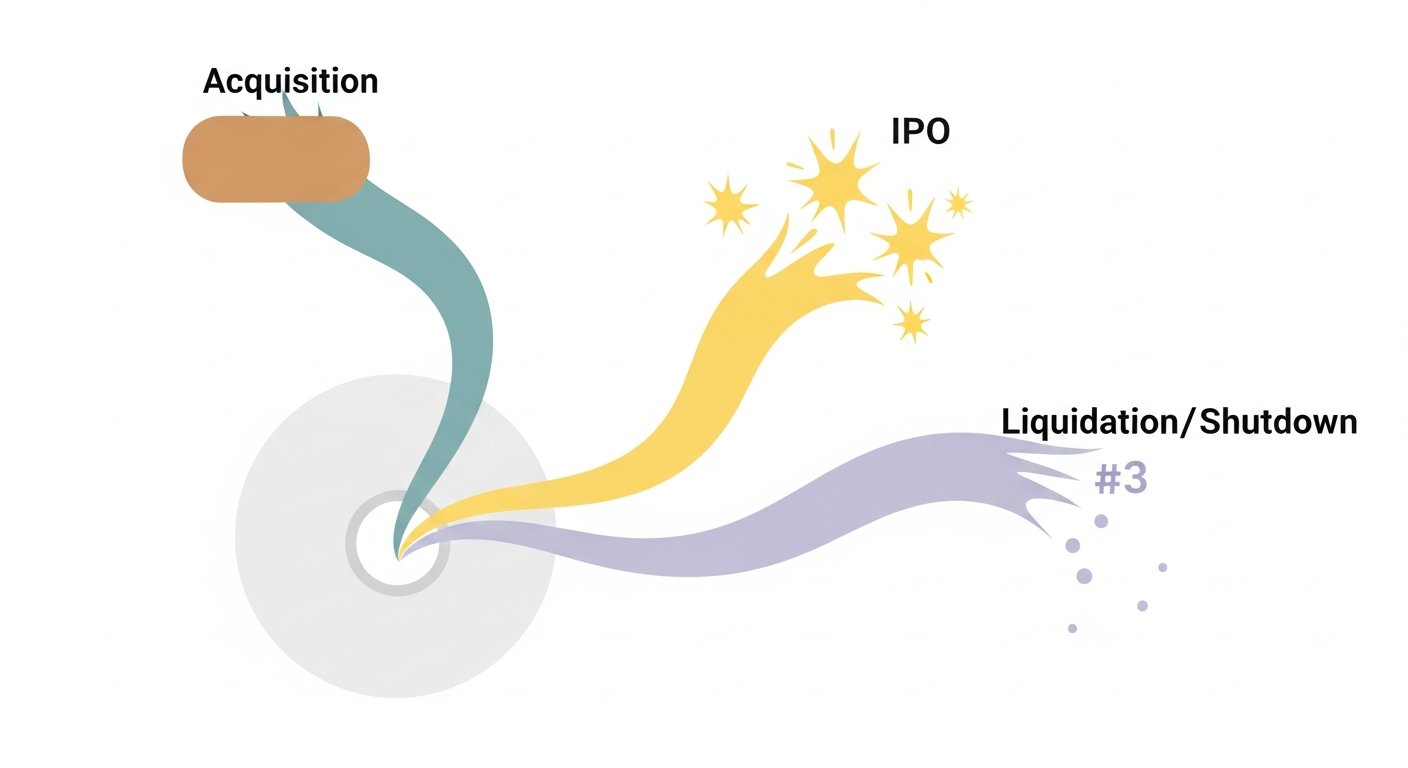
Updated June 2026. Thinking about your startup exit strategies early in your growth cycle is often the difference between a lucrative payoff and leaving money on the table. For tech founders, navigating the transition from scaling operations to planning a successful business divestment requires more than just high revenue. It demands defensible user acquisition models, robust intellectual property, and a clear understanding of what external buyers value.
A common misconception in the tech industry is that founders should only focus on building the product and let the liquidity event sort itself out later. Waiting until you feel ready to sell heavily restricts your options and diminishes your negotiating leverage. Buyers look for companies that operate as well-oiled machines, heavily relying on predictable digital marketing pipelines and sustainable customer acquisition costs. By embedding the end goal into your current operational framework, you position the enterprise to attract premium valuations regardless of market fluctuations.
The path a technology company takes to transfer ownership relies on the specific structural advantages it builds over time. From understanding complex valuation metrics to preparing for intense due diligence, navigating these founders’ liquidity pathways involves a meticulous combination of financial readiness and strategic marketing positioning.
What Defines a Viable Liquidity Event for Tech Ventures?
Before a founder can navigate the complexities of selling a business, they must understand the fundamental mechanics of a liquidity event. This term refers to the transaction that allows early investors and founders to cash out some or all of their equity. For technology companies, these events are heavily predicated on the organization’s growth velocity, user base engagement, and the defensibility of its technical infrastructure.
Consider a mobile analytics platform that consistently tracks three million daily active users but struggles with high churn. If they abruptly seek a buyer, the transaction falls apart during due diligence because acquirers penalize unpredictable retention metrics. Building a sustainable model requires calculating the intrinsic worth of your tech company well before seeking buyers, allowing the leadership team to address retention gaps through targeted digital campaigns. A predictable customer pipeline inherently reduces perceived risk for the buyer, driving up the final purchase price.
Strategic positioning drives the success of these venture divestment strategies. A 2026 report by PitchBook indicates that 68% of successful tech divestments happen because the target company fulfills a specific capability gap for the buyer, rather than operating strictly as a standalone revenue generator. Incumbents prefer to buy innovation rather than build it from scratch because absorbing an existing platform requires far less cognitive effort and resource allocation than developing a competing product internally.
The Acquisition Pathway: Strategic Buyers versus Financial Sponsors

When exploring company exit options, acquisition remains the most prevalent route for high-growth digital companies. However, the nature of the transaction changes drastically depending on whether the purchaser is a strategic entity or a financial firm. A thorough understanding of these differing motivations shapes how a company prepares its data room and pitches its value proposition.
Strategic buyers are typically larger corporations operating in the same or adjacent industries looking to acquire technology, talent, or market share. They integrate the target’s assets directly into their existing ecosystem. Because they benefit from immediate operational synergies—such as cross-selling to a massive existing audience—they frequently pay a higher multiple. For instance, a legacy retail corporation might acquire a niche augmented reality try-on app. The mechanism driving the premium valuation is the immediate application of the AR technology across the retailer’s massive digital catalog, instantly boosting conversion rates across millions of SKUs without needing to build the tech internally.
Conversely, financial sponsors like private equity firms buy businesses to optimize their operations, scale revenue rapidly, and sell them again within five to seven years. They prioritize robust cash flow and operational efficiency over pure technological innovation. According to a Bain & Company analysis (2024), tech companies acquired by financial sponsors see an average operational restructure within the first 120 days, focusing heavily on reducing marketing waste. Ensuring your marketing department is already lean and heavily reliant on data-driven strategies makes the entity highly attractive to private equity groups.
Founders aiming for acquisition must meticulously document their marketing efficiency. Cultivating a sticky user base and sustaining user loyalty over time signals to both buyer types that the revenue model is insulated from short-term market volatility.
What Success Looks Like
Successfully navigating an acquisition means presenting a due diligence package where every marketing dollar is tied directly to a predictable customer acquisition cost, leading to multiple competing term sheets.
[INLINE IMAGE 2: A side-by-side comparison chart illustrating the differing priorities between strategic buyers and financial sponsors during a tech acquisition.]
Initial Public Offerings and Regulatory Compliance
Going public represents a monumental shift for a technology firm, transitioning it from private ownership to a publicly traded entity on a stock exchange. This specific business exit route is reserved for companies that have achieved massive scale, predictable revenue streams, and a commanding market presence. The primary allure is access to a vast pool of capital, which can be deployed to fund aggressive global expansion or further strategic acquisitions.
The fundamental mechanism behind going public is democratization of ownership. By offering shares to retail and institutional investors, the company generates a massive capital influx. However, this broad shareholder base requires the Securities and Exchange Commission (SEC) to mandate extreme financial transparency, forcing the company to operate under intense public scrutiny. Every quarterly earnings report, digital marketing campaign ROI, and leadership decision becomes a matter of public record and immediate market reaction.
The financial and temporal cost of this transition is staggering. Preparing for a public debut costs an average of $2.5 million in auditing, legal, and underwriter fees alone (PwC, 2023) [VERIFICAR FECHA]. A healthcare tech company aiming for the public market might spend 18 months completely overhauling its internal accounting from cash-basis to GAAP standards, while simultaneously running expensive brand-awareness campaigns to ensure retail investors recognize the name during the roadshow. The marketing department shifts from purely performance-based acquisition to heavily supporting investor relations and corporate narrative building.
What Failure Looks Like
Failing to establish a robust investor relations protocol and failing to clean up digital brand sentiment six months prior to the roadshow often results in undersubscribed shares and a depressed opening price.
Types of Internal Transitions and Management Buyouts

Not all liquidity events require external buyers or public market debuts. A management buyout (MBO) allows the current executive team to pool resources, often backed by private equity or specialized debt financing, to acquire the company from the founding members. This strategy is uniquely suited for mature tech startups that have transitioned from hyper-growth into stable, cash-generating operations.
The appeal of an internal transition lies in operational continuity. Transferring ownership to the current management works seamlessly because the leadership already understands the product roadmap, the technical debt, and the specific digital marketing channels that drive growth. This eliminates the massive integration friction typically associated with external acquisitions. The buyer does not need to learn the business, which drastically shortens the due diligence timeline and reduces the risk of post-sale cultural clash.
Consider a specialized B2B software firm where the founding CEO wishes to retire. The Chief Marketing Officer and Chief Technology Officer partner with a middle-market private equity group to buy the founder’s 80% stake. The executives leverage their intimate knowledge of the company’s proprietary marketing automation tools to convince the private equity backers that they can increase EBITDA by 15% in year one. Understanding how to structure this transaction requires navigating capital requirements across different growth stages, as the management team must secure external funding to complete the purchase.
A 2026 survey by the National Center for Employee Ownership found that tech firms executing MBOs retain 92% of their enterprise clients post-transition, largely because the faces managing the accounts and the digital touchpoints remain identical to the client base.
[INLINE IMAGE 4: A flowchart detailing the step-by-step process of transitioning company ownership from a founder to internal management through private equity backing.]
How Do Digital Marketing Assets Impact Final Valuation Multiples?
When acquirers evaluate a technology company, they look far beyond the codebase. The digital marketing assets, the predictability of customer acquisition, and the strength of the brand moat directly dictate the valuation multiple applied to the company’s revenue. A firm with organic, inbound-driven growth will always command a higher price than a firm reliant on volatile, paid acquisition channels.
| Digital Asset Category | Valuation Impact | Underlying Mechanism |
|---|---|---|
| Documented SEO Moat | High Premium | Organic traffic reduces long-term customer acquisition costs, creating a sustainable advantage that competitors cannot easily buy their way into. |
| First-Party User Data | Significant Multiplier | Direct access to user behavior allows acquirers to bypass third-party tracking restrictions, enhancing cross-sell predictability. |
| Attribution Modeling | Moderate Increase | Clear visibility into which channels drive revenue removes guesswork for the buyer, lowering the perceived risk of future marketing investments. |
| Brand Sentiment | Baseline Requirement | Positive sentiment prevents post-acquisition churn, ensuring the user base remains loyal during the transition period. |
The mechanism behind these valuation bumps relies on the concept of risk reduction. A buyer views a company with heavily documented, predictable marketing funnels as a safer asset. When a startup has spent years implementing sophisticated search visibility optimizations, they build a pipeline that generates leads even when ad spend is paused. This predictability allows the acquiring firm to confidently forecast future earnings, thereby justifying a higher initial payout to the founders.
Companies operating with mature marketing attribution models see a 22% higher enterprise value during mergers and acquisitions (Gartner, 2026). A practical scenario involves a consumer app that tracks exactly how a user moves from an Instagram ad to an email newsletter, and finally to a premium subscription. The acquirer pays a premium not just for the active subscriptions, but for the exact, replicable formula the startup built to generate those subscriptions.
Core Elements of Effective Venture Divestment Planning
Executing a successful transition requires meticulous planning spanning legal, financial, and operational domains. Founders who view their strategic exits for tech companies as an event rather than a multi-year process frequently encounter insurmountable obstacles during due diligence. The planning phase must begin years before a letter of intent is ever signed.
According to a 2025 study by the M&A Advisor network, deals prepared with at least 24 months of lead time close 40% faster than those rushed to market. This acceleration happens because preemptive planning forces the company to audit its own operations. By identifying and resolving weak points—such as undocumented codebases, unassigned intellectual property rights, or disorganized marketing data—the leadership team removes the exact red flags that buyers use to drive down the purchase price.
A critical step in this preparation is building a robust revenue projection framework. A specialized e-commerce logistics platform might spend six months cleaning up historical sales data and standardizing their CRM inputs. When the buyer’s analysts eventually review the metrics, the data perfectly aligns with the financial narrative the founders pitched, establishing immediate trust. Establishing this trust requires the deployment of a secure data room, a centralized digital repository where all verified legal, financial, and marketing documents are housed for buyer inspection.
Common Pitfalls During Founder Liquidity Execution

Even with substantial preparation, founders frequently make critical errors during the execution phase of a company sale. These mistakes usually stem from a combination of emotional attachment, operational fatigue, and a lack of experience navigating complex financial negotiations.
- Ignoring the Core Business: Founders become so distracted by the negotiation process that they neglect day-to-day operations, causing revenue to dip exactly when buyers are scrutinizing performance.
- Accepting the First Offer: Fatigue overrides strategy. Founders accept the initial term sheet without shopping the company to multiple buyers, leaving substantial capital on the table.
- Misaligned Earn-Outs: Agreeing to an earn-out structure—where a portion of the purchase price is contingent on future performance—without having control over the marketing budgets post-sale.
- Poor Digital Housekeeping: Leaving legacy negative reviews unaddressed or failing to secure brand trademarks before entering due diligence.
The mechanism behind many failed deals is information asymmetry. Buyers conduct transactions constantly; most founders do it once. When founders attempt to hide a declining user retention rate or a spike in customer acquisition costs, buyers inevitably discover the discrepancy during forensic accounting. The discovery destroys trust, and the buyer either radically restructures the deal or walks away entirely.
Approximately 40% of mid-market transactions fall through during the due diligence phase due to undisclosed liabilities or financial misrepresentations (Deloitte, 2022) [VERIFICAR FECHA]. A notable scenario involves a software startup that failed to disclose that 30% of its traffic relied on a single, highly volatile affiliate marketing partner. When the buyer’s marketing audit uncovered this dependency, they determined the risk of that partner leaving was too high and cancelled the $20 million acquisition on the final day of the review period. Navigating your ultimate startup exit strategies demands absolute transparency backed by defensible data.
Sources & References
- Bain & Company. (2024). Global Private Equity Report: Technology Acquisition Trends. Bain Insights.
- Deloitte. (2022). M&A Trends Survey: Navigating the Due Diligence Minefield. Deloitte Financial Advisory.
- Gartner. (2026). The Impact of Marketing Analytics on Enterprise Valuation. Gartner Research Board.
- PitchBook. (2025). Annual Venture Capital Exits and Liquidity Report. PitchBook Data Inc.
- PricewaterhouseCoopers (PwC). (2023). Considering an IPO? The Costs of Going Public. PwC Deals Practice.
Reviewed by Sarah Kim, Senior Content Editor — Last reviewed: June 09, 2026