
The Transformative Power of AI in Business Automation
The allure of AI in business automation stems from its ability to replicate and often surpass human capabilities in specific, repetitive, and data-intensive tasks. By integrating AI tools into existing workflows, businesses can achieve a multitude of benefits that directly impact their bottom line and strategic agility. Gone are the days when automation was merely about simple scripting; today, AI-powered automation brings intelligence, adaptability, and predictive capabilities to the forefront.
- Unprecedented Efficiency: AI systems can process vast amounts of data, execute tasks, and make decisions at speeds unattainable by human employees. This translates to faster project completion, reduced lead times, and quicker response times across all departments.
- Significant Cost Reduction: Automating repetitive tasks with AI diminishes the need for manual labor in those specific areas, allowing human resources to be reallocated to higher-value activities. It also reduces errors, which can be costly to rectify.
- Enhanced Accuracy and Consistency: AI tools operate based on algorithms and data, eliminating human error, fatigue, and subjective bias. This ensures consistent quality and accuracy in processes ranging from data entry to complex financial analysis.
- Scalability for Growth: As your business expands, manual processes often become bottlenecks. AI-driven workflows, however, can scale rapidly to meet increased demand without a proportional increase in human resource requirements, making them ideal for growing startups.
- Improved Data Insights: AI excels at sifting through massive datasets to identify patterns, trends, and anomalies that human analysts might miss. This capability is crucial for informed decision-making and strategic planning.
- Superior Customer Experience: From instant customer support via chatbots to personalized marketing campaigns, AI enables businesses to interact with their customers more effectively and individually, leading to higher satisfaction and loyalty.
In 2026, businesses that embrace AI for automation are not just optimizing; they are fundamentally transforming their operational models, setting new benchmarks for productivity and innovation in their respective industries.
Identifying Automation Opportunities: Where AI Shines Brightest
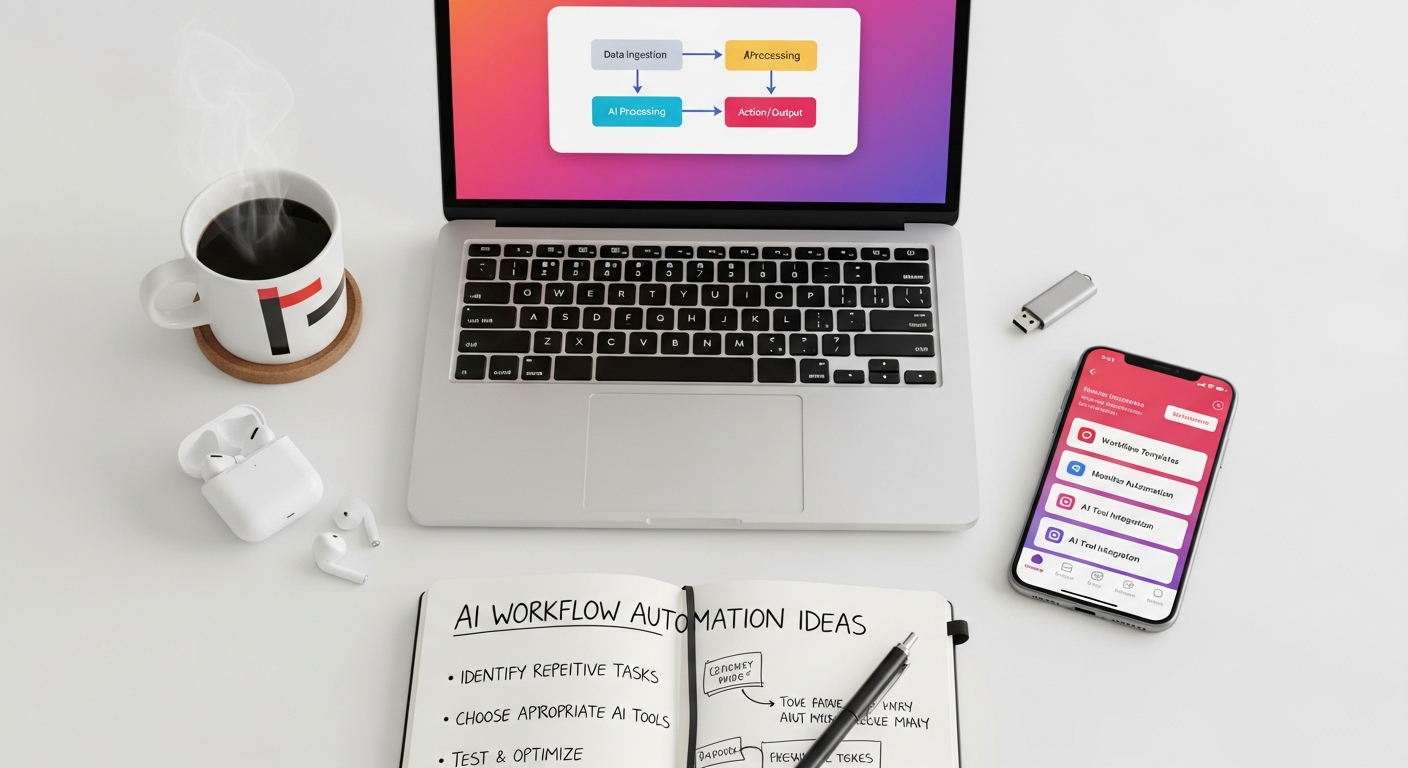
Embarking on the journey of AI automation begins with a critical assessment of your current business processes. Not every task is suitable for AI, but many common workflows across various departments are ripe for intelligent automation. The key is to identify areas that are repetitive, rule-based, data-heavy, time-consuming, or prone to human error.
Customer Service & Support
This is perhaps one of the most visible areas where AI has made significant inroads. AI-powered tools can:
- Chatbots and Virtual Assistants: Handle routine inquiries, provide instant answers to FAQs, guide users through processes, and even resolve common issues 24/7. This frees up human agents to focus on complex, high-value interactions.
- Sentiment Analysis: AI can analyze customer communications (emails, social media posts, chat logs) to gauge sentiment, identify urgent issues, and prioritize support tickets, ensuring timely and appropriate responses.
- Automated Ticket Routing: Intelligently route customer queries to the most appropriate department or agent based on keywords, urgency, and customer history.
Marketing & Sales
AI can revolutionize how businesses attract, engage, and convert customers:
- Content Generation: AI writing tools can assist in generating blog post outlines, social media updates, email subject lines, and even basic marketing copy, accelerating content creation efforts.
- Ad Optimization: AI algorithms can analyze performance data for digital advertising campaigns, dynamically adjust bids, target audiences, and allocate budgets across platforms. Understanding What Is Pay Per Click Advertising becomes even more critical when AI can fine-tune campaigns in real-time for maximum ROI, ensuring your ad spend is always optimized for conversions.
- Lead Scoring and Nurturing: AI can analyze vast amounts of data (website visits, email opens, social engagement) to predict which leads are most likely to convert, allowing sales teams to prioritize their efforts. Automated email sequences can then be triggered based on lead behavior.
- Personalized Marketing: Deliver highly personalized product recommendations, content, and offers based on individual customer behavior and preferences, significantly boosting engagement and conversion rates.
Operations & Administration
The backbone of any business can be significantly strengthened by AI automation:
- Data Entry and Processing: AI-powered Optical Character Recognition (OCR) and Robotic Process Automation (RPA) can extract data from documents (invoices, forms, receipts) and automatically input it into relevant systems, reducing manual effort and errors.
- Inventory Management: Predictive AI can analyze sales data, seasonality, and supplier lead times to optimize inventory levels, minimizing stockouts and overstocking.
- Scheduling and Resource Allocation: AI can optimize meeting schedules, assign tasks to employees based on skills and availability, and manage project timelines more efficiently.
- Financial Processes: Automating invoice processing, expense reporting, fraud detection, and reconciliation tasks ensures accuracy and compliance.
Human Resources
Even HR departments can benefit from AI automation:
- Recruitment: AI can screen resumes, identify qualified candidates, and even conduct initial interviews through chatbots, significantly shortening the hiring cycle.
- Onboarding: Automate the distribution of onboarding documents, training modules, and compliance forms, ensuring a smooth transition for new hires.
By strategically pinpointing these high-impact areas, businesses can lay a solid foundation for successful AI integration, starting with workflows that promise the most immediate and measurable returns.
Choosing the Right AI Tools for Your Business Workflows
Understanding Different Categories of AI Tools
AI tools can be broadly categorized based on their primary function:
- Robotic Process Automation (RPA) Platforms: While not strictly AI, RPA often forms the foundational layer for AI automation. These tools automate rule-based, repetitive digital tasks by mimicking human interactions with software applications. They are excellent for structured data tasks like data entry, form filling, and report generation.
- Machine Learning (ML) Platforms: These tools allow businesses to build, train, and deploy custom ML models for predictive analytics, recommendation engines, fraud detection, and more complex data analysis where patterns need to be learned from data.
- Natural Language Processing (NLP) Tools: Essential for tasks involving human language, NLP tools enable sentiment analysis, chatbot development, content summarization, and translation services.
- Computer Vision (CV) Tools: Used for image and video analysis, CV applications include facial recognition, object detection, quality control in manufacturing, and automated surveillance.
- AI-Powered Business Intelligence (BI) Tools: These integrate AI capabilities into traditional BI platforms to enhance data analysis, generate automated insights, and provide more intuitive data visualizations. When considering How To Choose Business Intelligence Tool, prioritize those with robust AI integration that can autonomously identify trends, forecast outcomes, and even suggest actions, moving beyond mere reporting to proactive decision support.
- Generative AI Tools: Tools capable of generating new content, such as text, images, or code, based on learned patterns from existing data. These are becoming increasingly relevant for marketing and content creation.
Key Criteria for Selection
When evaluating potential AI tools, consider the following factors:
- Integration Capabilities: Can the AI tool seamlessly integrate with your existing CRM, ERP, project management software, and other business applications? Poor integration can lead to data silos and hinder the very efficiency you seek. For instance, many of the Best Project Management Software Startups are now offering native AI integrations for tasks like automated task allocation, predictive timeline adjustments, and smart resource management. Ensure your chosen AI tool complements these advanced PM capabilities.
- Scalability: Will the tool be able to handle increased data volume and user load as your business grows? Cloud-based AI solutions often offer superior scalability.
- Ease of Use and Implementation: Consider the learning curve for your team and the complexity of deployment. “Low-code” or “no-code” AI platforms are becoming popular for businesses without extensive in-house AI expertise.
- Cost-Effectiveness: Evaluate not just the licensing fees but also implementation costs, maintenance, and potential ROI. A cheaper tool that requires extensive customization might end up being more expensive.
- Vendor Support and Community: Reliable customer support, comprehensive documentation, and an active user community can be invaluable, especially for complex AI deployments.
- Security and Compliance: Ensure the AI tool adheres to industry-specific data security standards and regulatory compliance requirements (e.g., GDPR, CCPA).
- Data Requirements: Does the tool require specific data formats or a certain volume of data to train its models effectively? Assess if your existing data infrastructure can meet these demands.
A thorough assessment against these criteria will help you navigate the crowded AI market and make informed decisions that align with your business goals and technological capabilities.
Implementing AI Automation: A Step-by-Step Guide
Successful AI automation isn’t about simply purchasing a tool; it’s a strategic process that requires careful planning, execution, and continuous optimization. Follow these steps to effectively integrate AI into your business workflows in 2026:
Step 1: Define Clear Objectives and Scope
- Identify Pain Points: Start by pinpointing specific business problems or inefficiencies that AI automation can solve. What tasks consume the most time, are prone to errors, or are bottlenecks in your current operations?
- Set Measurable Goals: Define what success looks like. Do you aim to reduce customer service response time by 30%? Increase lead conversion rates by 15%? Clear, quantifiable objectives will guide your implementation and allow for proper evaluation.
- Start Small: Begin with a pilot project in a less critical area to gain experience and demonstrate value. This minimizes risk and allows your team to adapt.
Step 2: Audit and Prepare Your Data
- Data Assessment: AI thrives on data. Evaluate the availability, quality, and relevance of your existing data. Do you have enough data to train AI models effectively? Is it clean, consistent, and well-structured?
- Data Cleaning and Structuring: Invest time in cleaning, normalizing, and structuring your data. Poor data quality is one of the biggest reasons AI projects fail.
- Data Governance: Establish clear policies for data collection, storage, access, and security to ensure compliance and maintain data integrity.
Step 3: Choose and Configure Your AI Tools
- Tool Selection: Based on your objectives and data audit, select the AI tools that best fit your needs (as discussed in the previous section).
- Configuration and Customization: Install, integrate, and configure the chosen AI solution. This might involve training machine learning models with your specific datasets, defining automation rules, or customizing chatbot responses.
- Integration with Existing Systems: Ensure seamless connectivity with your CRM, ERP, project management software, and other key systems to avoid data silos and enable end-to-end automation.
Step 4: Pilot and Test Thoroughly
- Phased Rollout: Implement the AI solution in a controlled environment or with a small group of users. This “pilot” phase allows you to identify issues before a full-scale deployment.
- Rigorous Testing: Conduct extensive testing to ensure the AI performs as expected, handles edge cases, and integrates correctly with other systems. Gather feedback from pilot users.
- Iterate and Refine: Be prepared to make adjustments based on testing results and feedback. AI implementation is often an iterative process.
Step 5: Full Deployment and Employee Training
- Go Live: Once the pilot is successful and all issues are addressed, roll out the AI automation to the relevant departments or across the entire organization.
- Train Your Team: Crucially, train your employees on how to interact with the new AI tools, understand their outputs, and leverage them effectively. Address concerns about job displacement by emphasizing how AI augments their roles, freeing them for more strategic work.
- Change Management: Communicate clearly about the benefits of AI automation and manage expectations. A successful implementation requires buy-in from all stakeholders.
Step 6: Monitor, Analyze, and Optimize Continuously
- Performance Monitoring: Continuously track the AI’s performance against your defined KPIs. Are you meeting your efficiency and cost-saving goals?
- Feedback Loop: Establish a mechanism for ongoing feedback from users to identify areas for improvement or new automation opportunities.
- Regular Updates and Retraining: AI models may need to be retrained with new data over time to maintain accuracy and adapt to changing business environments. Stay updated with new features and enhancements from your AI tool vendors.
By following this structured approach, businesses can navigate the complexities of AI implementation, ensuring that their automation efforts deliver tangible and sustainable value.
Overcoming Challenges and Ensuring Success with AI Automation
While the promise of AI automation is immense, its implementation is not without its hurdles. Businesses, particularly startups, must be prepared to address common challenges to ensure their AI initiatives are successful and deliver the desired ROI in 2026.
1. Data Quality and Availability
- Challenge: AI models are only as good as the data they’re trained on. Poor data quality (incomplete, inconsistent, biased) can lead to inaccurate outputs, flawed decisions, and failed automation. Insufficient data can also prevent effective model training.
- Solution: Prioritize data governance. Implement robust data cleaning, validation, and enrichment processes. Invest in data infrastructure that ensures data integrity and accessibility. Consider starting with areas where data is already abundant and well-structured.
2. Integration Complexities
- Challenge: Modern businesses use a patchwork of legacy systems and new cloud applications. Integrating AI tools with this diverse ecosystem can be technically challenging, time-consuming, and expensive, leading to data silos and operational friction.
- Solution: Opt for AI tools with open APIs and strong integration capabilities. Leverage integration platforms as a service (iPaaS) to streamline connections. Plan for phased integration, starting with critical systems and gradually expanding.
3. Skill Gaps and Talent Shortage
- Challenge: Implementing and managing AI solutions requires specialized skills in data science, machine learning engineering, and AI ethics. Many organizations lack this in-house expertise.
- Solution: Invest in upskilling existing employees through training programs and certifications. Recruit AI specialists when necessary. Partner with AI consulting firms or leverage AI-as-a-Service (AIaaS) platforms that offer managed solutions to bridge the skill gap.
4. Employee Resistance and Change Management
- Challenge: Fear of job displacement, skepticism about new technology, and resistance to change can hinder AI adoption and create internal friction.
- Solution: Implement a strong change management strategy. Communicate transparently about the benefits of AI, emphasizing how it augments human capabilities rather than replaces them. Involve employees in the process, provide comprehensive training, and highlight opportunities for them to take on more strategic and creative roles.
5. Ethical Concerns and Bias
- Challenge: AI systems can inadvertently perpetuate or amplify existing societal biases if trained on biased data. Ethical concerns around privacy, fairness, and accountability are paramount.
- Solution: Develop clear ethical AI guidelines and principles. Regularly audit AI models for bias and fairness. Ensure data diversity and representation in training datasets. Prioritize transparency in AI decision-making where possible, and maintain human oversight for critical decisions.
6. Cost and ROI Justification
- Challenge: Initial investment in AI tools, infrastructure, and talent can be substantial, making it difficult to justify ROI, especially for startups with limited budgets.
- Solution: Start with small, high-impact pilot projects that demonstrate clear, measurable ROI quickly. Focus on areas with significant operational costs or inefficiencies. Continuously monitor KPIs and communicate successes to stakeholders to build confidence and secure further investment.
By proactively addressing these challenges, businesses can navigate the complexities of AI automation, transforming potential roadblocks into stepping stones toward sustainable growth and innovation.
The Future of AI Workflow Automation: Trends to Watch by 2026
As we advance deeper into the decade, the integration of AI into business workflows is poised for an accelerated evolution. By 2026, AI won’t just be a tool for automation; it will be an intrinsic part of the operational fabric, driving a new era of “hyperautomation” and intelligent enterprise.
Hyperautomation Becomes the Norm
The concept of hyperautomation, where organizations combine multiple advanced technologies like AI, machine learning, RPA, and intelligent business process management to automate as many business and IT processes as possible, will move from a nascent strategy to a mainstream imperative. Businesses will increasingly look to automate complex, end-to-end processes that span multiple departments and systems, not just isolated tasks. This holistic approach will lead to unprecedented levels of operational efficiency and agility.
Predictive and Proactive Capabilities
AI’s role will shift from merely reacting to data to proactively predicting future outcomes and recommending actions. Predictive analytics, powered by advanced machine learning, will be standard in areas like:
- Predictive Maintenance: AI will anticipate equipment failures before they occur, scheduling maintenance preemptively to minimize downtime.
- Demand Forecasting: More accurate and real-time predictions of consumer demand will optimize supply chains, inventory management, and resource allocation.
- Proactive Customer Service: AI will identify potential customer issues before they escalate, allowing businesses to intervene proactively and enhance satisfaction.
Enhanced Human-AI Collaboration
The future isn’t about AI replacing humans entirely, but rather fostering deeper collaboration. AI will act as an intelligent co-pilot, augmenting human decision-making and productivity. Knowledge workers will increasingly rely on AI tools to summarize complex information, generate draft content, analyze data patterns, and provide strategic insights, freeing them to focus on creativity, critical thinking, and interpersonal interactions.
AI-Driven Personalization and Experience
Personalization, already a significant trend, will reach new heights with AI. Every customer interaction, product recommendation, and service offering will be hyper-personalized based on real-time data and individual preferences. This will extend to employee experiences as well, with AI personalizing training, career paths, and internal communications.
Greater Accessibility and Democratization of AI
The proliferation of low-code/no-code AI platforms and AI-as-a-Service (AIaaS) solutions will democratize AI, making it accessible to a broader range of businesses, including small and medium-sized enterprises (SMEs) and startups without extensive in-house AI expertise. This ease of access will accelerate adoption and innovation across industries.
Ethical AI and Trust by Design
As AI becomes more pervasive, the focus on ethical AI, transparency, and accountability will intensify. Regulatory frameworks will evolve, and businesses will need to build AI systems with trust, fairness, and privacy by design. Ensuring AI models are explainable, unbiased, and secure will be non-negotiable for long-term success and public acceptance.
By 2026, businesses that have successfully integrated AI into their core workflows will operate with unparalleled efficiency, make smarter decisions, and deliver highly personalized experiences, setting a new standard for what it means to be a truly intelligent enterprise.
Frequently Asked Questions
Recommended Resources
You might also enjoy Pomodoro Technique Guide How To Use from Bookmark Sharer.
For more on how to use, see Ux Writing Tips And Best Practices on Layout Scene.