
Understanding the Modern Threat Landscape in 2026
The digital battleground has become increasingly sophisticated. In 2026, cybercriminals are not just opportunistic; they are organized, well-funded, and constantly innovating their attack vectors. Businesses, especially those experiencing rapid growth like many tech startups, often become prime targets due to perceived vulnerabilities or the sheer value of the data they possess. Understanding the prevalent threats is the first step in formulating an effective defense strategy.
Ransomware attacks continue to be a dominant and devastating force. These attacks involve encrypting a victim’s data and demanding a ransom, often in cryptocurrency, for its release. The sophistication of ransomware gangs has grown exponentially, often employing double extortion tactics where data is not only encrypted but also exfiltrated and threatened to be leaked if the ransom isn’t paid. This adds immense pressure, as a data leak can trigger regulatory penalties and significant reputational damage. Small and medium-sized businesses are particularly vulnerable, as they often lack the robust security infrastructure of larger corporations.
Phishing and social engineering remain incredibly effective. While many assume these are easily detectable, attackers employ highly personalized and convincing tactics, known as ‘spear phishing,’ to trick employees into divulging credentials, clicking malicious links, or downloading malware. These attacks often exploit human psychology, leveraging urgency, authority, or curiosity to bypass technical defenses. Business email compromise (BEC) is a particularly insidious form, where attackers impersonate executives or trusted partners to trick employees into making unauthorized wire transfers or sharing sensitive information.
Supply chain attacks have also become a significant concern. Rather than directly attacking a target organization, cybercriminals compromise a less secure vendor or partner in the supply chain to gain access. This ripple effect can impact numerous businesses simultaneously, as seen in several high-profile incidents over recent years. As businesses increasingly rely on third-party services, from cloud providers to marketing agencies, the security posture of these partners directly impacts your own.
Furthermore, insider threats, both malicious and accidental, pose a constant risk. Disgruntled employees, individuals with lax security practices, or those falling victim to social engineering can inadvertently or intentionally compromise data. Data exfiltration by departing employees or accidental sharing of sensitive documents are common scenarios. Protecting against insider threats requires a combination of technical controls, such as access management and data loss prevention (DLP) tools, and strong organizational policies.
Finally, the proliferation of IoT devices and the continued expansion of remote work environments introduce new attack surfaces. Each connected device and remote endpoint represents a potential entry point for hackers. Businesses must therefore adopt a holistic view of security, extending protection beyond traditional network perimeters to encompass all endpoints, cloud services, and user identities.
Building a Strong Foundation: Core Security Principles
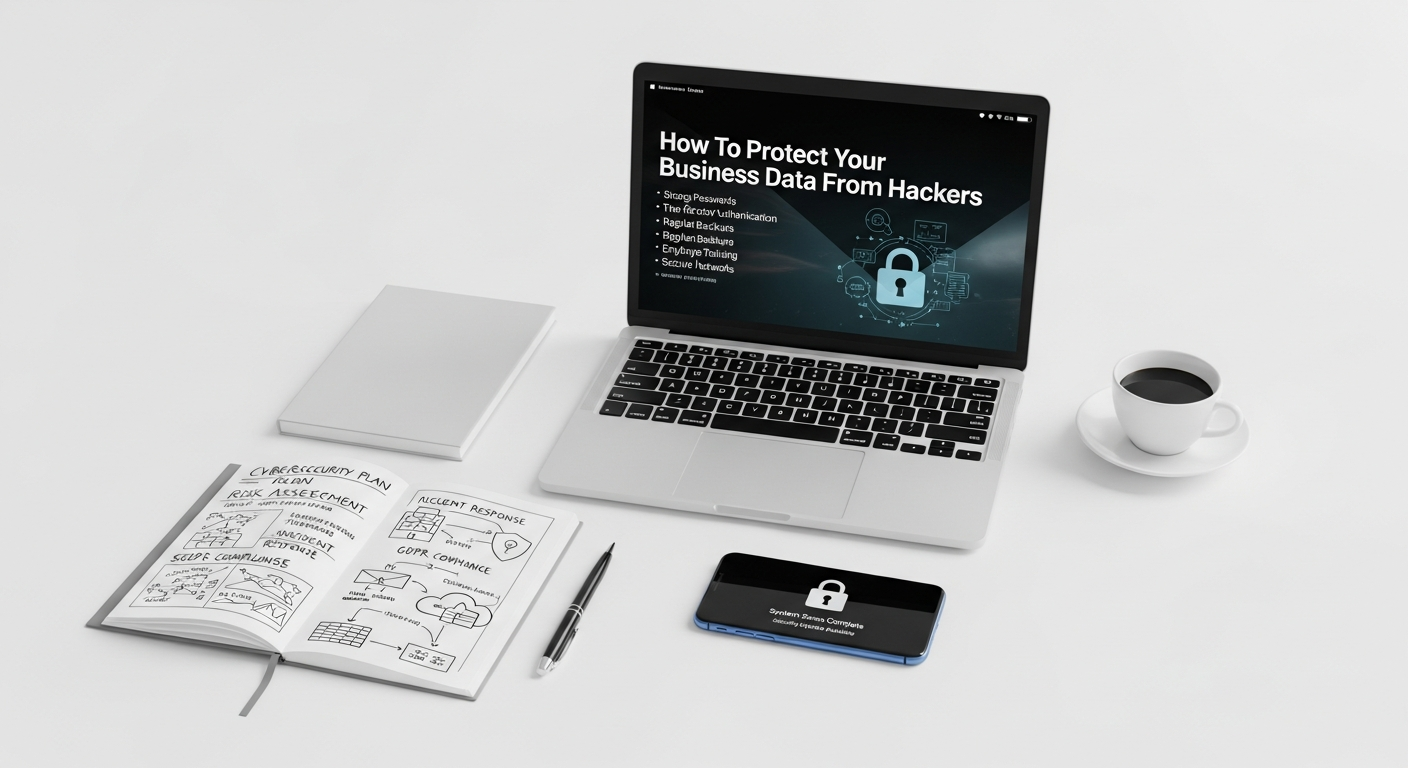
Effective data protection begins with a robust foundation built on fundamental cybersecurity principles. Without these core elements, even the most advanced security tools will struggle to provide adequate defense. Prioritizing these basics is crucial for any business serious about safeguarding its digital assets.
1. Strong Access Control and Least Privilege: This principle dictates that users should only have access to the data and systems absolutely necessary to perform their job functions. Implementing role-based access control (RBAC) ensures that permissions are tied to roles, simplifying management and reducing the risk of over-privileging. Regular audits of user accounts and permissions are essential to revoke access for departed employees promptly and adjust privileges as roles evolve. Multi-factor authentication (MFA) should be mandatory for all accounts, adding a critical layer of security beyond just passwords.
2. Data Encryption: Encryption is the process of converting data into a coded format to prevent unauthorized access. Data should be encrypted both in transit (when being sent over networks, e.g., using HTTPS for websites, VPNs for remote access) and at rest (when stored on servers, databases, or devices). Full disk encryption for laptops and desktops, database encryption, and encrypted cloud storage are non-negotiable. Even if an attacker manages to exfiltrate encrypted data, it remains unreadable without the decryption key, rendering it useless.
3. Regular Data Backups and Disaster Recovery: The importance of backing up data cannot be overstated. A comprehensive backup strategy involves creating multiple copies of critical data, storing them in different locations (e.g., on-site and off-site/cloud), and regularly testing the restoration process. The “3-2-1 rule” is a widely accepted best practice: at least three copies of your data, stored on two different types of media, with one copy off-site. This ensures business continuity even in the event of ransomware attacks, hardware failures, or natural disasters. Coupled with backups, a well-defined disaster recovery plan outlines the steps to restore operations quickly and efficiently after an incident.
4. Patch Management and Software Updates: Software vulnerabilities are a primary entry point for attackers. Regularly updating all software, operating systems, applications, and firmware is paramount. Vendors frequently release patches to address newly discovered security flaws. Delaying these updates leaves gaping holes in your defenses. Implement a systematic patch management program to ensure all systems are kept up-to-date, prioritizing critical security patches. This proactive approach significantly reduces the attack surface available to cybercriminals.
5. Network Segmentation: Dividing your network into smaller, isolated segments can significantly limit the lateral movement of attackers if a breach occurs in one part of the network. For instance, separating your guest Wi-Fi from your corporate network, or isolating sensitive databases from general user access, ensures that a compromise in one segment doesn’t automatically grant access to the entire infrastructure. This containment strategy minimizes the potential damage of a successful intrusion.
Adhering to these core principles forms the bedrock of a resilient cybersecurity posture. They are not merely technical tasks but foundational elements that demand consistent attention and integration into daily operational practices.
Securing Your Digital Perimeter: Network & Endpoint Protection
Firewalls: Your First Line of Defense: Firewalls act as a gatekeeper, monitoring and controlling incoming and outgoing network traffic based on predetermined security rules. Next-Generation Firewalls (NGFWs) go beyond traditional packet filtering, offering advanced capabilities like intrusion prevention, application control, and deep packet inspection. They are essential for segmenting your network, blocking malicious traffic, and preventing unauthorized access to your internal systems.
Endpoint Protection Platforms (EPP) and Endpoint Detection and Response (EDR): Every device that connects to your network – laptops, desktops, servers, mobile phones – is an endpoint and a potential point of entry for attackers. Traditional antivirus software, while still necessary, often struggles against sophisticated, file-less malware and zero-day exploits. This is where modern EPP and EDR solutions come into play. EPPs provide a comprehensive suite of tools, including antivirus, anti-malware, host intrusion prevention, and device control. EDR solutions take it a step further by continuously monitoring endpoint activity, detecting suspicious behavior, and providing advanced threat hunting and incident response capabilities. EDR can identify attacks that bypass initial defenses and help contain them rapidly, providing invaluable insights into attack vectors and scope.
Intrusion Detection/Prevention Systems (IDS/IPS): These systems continuously monitor network traffic for malicious activity or policy violations. An IDS detects and alerts on suspicious patterns, while an IPS actively works to block or prevent such threats in real-time. They operate by analyzing traffic against known attack signatures and behavioral patterns, providing an automated layer of defense against network-based attacks.
Virtual Private Networks (VPNs): For remote access, VPNs are indispensable. They create an encrypted tunnel over a public network, allowing remote employees to securely connect to the company’s internal network as if they were physically present in the office. This protects sensitive data from interception when accessed from potentially insecure home networks or public Wi-Fi hotspots. Implementing a “zero-trust” network access (ZTNA) model, which verifies every user and device before granting access, adds an even stronger layer of security to remote workforces.
Web Application Firewalls (WAFs): If your business operates web applications or e-commerce platforms, a WAF is critical. WAFs protect web applications from common attacks like SQL injection, cross-site scripting (XSS), and denial-of-service (DoS) attacks. They filter and monitor HTTP traffic between a web application and the Internet, safeguarding your applications and the sensitive data they process, including customer information collected via marketing efforts like those generated by a robust Pay Per Click advertising campaign.
By implementing these layers of protection, businesses can create a formidable digital perimeter, significantly reducing the chances of a successful breach and ensuring that even if an attacker manages to penetrate one layer, subsequent defenses are ready to detect and neutralize the threat.
The Human Element: Employee Training and Awareness

Even with the most advanced technological defenses, the human element remains the weakest link in cybersecurity. Employees are often the primary target for attackers through social engineering tactics, making comprehensive training and ongoing awareness programs absolutely critical. Building a “human firewall” is as important as any technical solution.
Regular and Engaging Security Awareness Training: This isn’t a one-time lecture; it’s an ongoing process. Training should cover a wide range of topics, including:
- Phishing Recognition: How to identify suspicious emails, links, and attachments. This includes common red flags like unusual sender addresses, urgent requests, grammatical errors, and generic greetings.
- Password Best Practices: The importance of strong, unique passwords, the use of password managers, and why sharing credentials is a major security risk.
- Social Engineering Tactics: Educating employees about various social engineering ploys, such as pretexting, baiting, and quid pro quo, where attackers manipulate individuals into divulging information or performing actions.
- Data Handling Policies: How to properly handle sensitive data, including classification, storage, sharing, and disposal protocols.
- Mobile Device Security: Best practices for securing company-issued and personal devices used for work (BYOD), including screen locks, encryption, and avoiding public Wi-Fi for sensitive tasks.
- Incident Reporting: Clearly defining the process for reporting suspected security incidents, no matter how minor they seem. Timely reporting can significantly reduce the impact of a breach.
Simulated Phishing Attacks: One of the most effective ways to test and reinforce training is through controlled, simulated phishing campaigns. Periodically sending fake phishing emails to employees and tracking their responses (e.g., clicking a malicious link, entering credentials) provides invaluable insights into areas where more training is needed. Crucially, these simulations should be followed by immediate, targeted education for those who fall for the bait, emphasizing learning over punishment.
Developing a Security-First Culture: Cybersecurity should be everyone’s responsibility, not just the IT department’s. Leadership must champion a security-first culture, demonstrating its importance through their actions and communication. This involves integrating security considerations into daily workflows, encouraging open communication about potential threats, and rewarding employees who demonstrate strong security practices. Empowering employees to question suspicious requests and providing them with the resources to do so without fear of reprimand is vital.
Clear Security Policies and Guidelines: Documented security policies provide employees with clear rules and expectations regarding data handling, acceptable use of company resources, remote work security, and incident response. These policies should be easily accessible, regularly reviewed, and updated to reflect new threats and technologies. Employees should formally acknowledge their understanding and adherence to these policies.
By investing in continuous employee education and fostering a strong security culture, businesses can transform their workforce from a potential vulnerability into a powerful first line of defense against cyber threats. This human element, when properly trained and empowered, is an invaluable asset in the fight to protect business data from hackers.
Cloud Security and Data Governance
As businesses increasingly migrate their operations and data to the cloud, understanding and implementing robust cloud security measures becomes paramount. While cloud providers offer significant security advantages, the shared responsibility model means that businesses still have a critical role to play in protecting their data. Furthermore, effective data governance ensures that data is managed securely and compliantly throughout its lifecycle.
Understanding the Shared Responsibility Model: In the cloud, security is a shared responsibility between the cloud provider (e.g., AWS, Azure, Google Cloud) and the customer. Generally, the provider is responsible for the security of the cloud (e.g., physical infrastructure, network, virtualization), while the customer is responsible for security in the cloud (e.g., data, applications, operating systems, network configuration, identity and access management). Misunderstanding this model is a common cause of cloud breaches.
Key Cloud Security Practices:
- Strong Identity and Access Management (IAM): This is arguably the most critical aspect of cloud security. Implement least privilege access, enforce MFA for all cloud accounts (especially administrative ones), and regularly audit IAM policies.
- Cloud Security Posture Management (CSPM): CSPM tools continuously monitor cloud environments for misconfigurations, compliance violations, and security risks. They help ensure that your cloud infrastructure adheres to best practices and security policies.
- Data Encryption: Ensure all data stored in the cloud is encrypted at rest and in transit. Most cloud providers offer robust encryption services, but it’s the customer’s responsibility to configure and manage encryption keys where applicable.
- Network Security: Configure virtual private clouds (VPCs), security groups, and network access control lists (ACLs) to restrict network access to cloud resources. Implement WAFs for web applications hosted in the cloud.
- Vulnerability Management: Regularly scan cloud-hosted applications and virtual machines for vulnerabilities and apply patches promptly.
- Cloud Access Security Brokers (CASBs): CASBs act as a security policy enforcement point between cloud users and cloud service providers. They help enforce security policies, provide data loss prevention, protect against malware, and ensure compliance for cloud usage.
Data Governance and Compliance: Effective data governance is the overall management of the availability, usability, integrity, and security of data in an enterprise. In the context of cybersecurity, it ensures that data is treated appropriately based on its sensitivity and regulatory requirements. This includes:
- Data Classification: Categorizing data based on its sensitivity (e.g., public, internal, confidential, highly restricted) helps determine the level of protection required. This enables businesses to prioritize security efforts for their most critical assets.
- Regulatory Compliance: Businesses must adhere to various data protection regulations depending on their industry, location, and customer base. Prominent examples include the General Data Protection Regulation (GDPR) in Europe, the California Consumer Privacy Act (CCPA) in the US, and industry-specific regulations like HIPAA for healthcare. Non-compliance can result in hefty fines and legal repercussions. A robust data governance framework ensures compliance by defining policies for data collection, storage, processing, and retention.
- Data Retention and Disposal: Establishing clear policies for how long data should be retained and how it should be securely disposed of when no longer needed minimizes the risk exposure. Keeping data longer than necessary increases the attack surface and potential liability.
By meticulously addressing cloud security challenges and implementing strong data governance policies, businesses can harness the flexibility and scalability of the cloud while maintaining a strong defense against cyber threats and meeting their regulatory obligations. When considering new tools, understanding how to choose a business intelligence tool that integrates securely with your cloud data sources and respects your data governance policies is essential for both operational efficiency and data protection.
Proactive Defense & Incident Response Planning
In the evolving threat landscape of 2026, a reactive approach to cybersecurity is no longer sufficient. Businesses must adopt proactive defense strategies and be prepared to respond swiftly and effectively when an incident inevitably occurs. Preparation is key to minimizing damage and ensuring business continuity.
Threat Intelligence: Staying Ahead of the Curve:
Threat intelligence involves gathering, processing, and analyzing information about current and emerging cyber threats. This includes data on new malware strains, attack methodologies, vulnerability disclosures, and attacker groups. By leveraging threat intelligence feeds, businesses can proactively adjust their defenses, patch vulnerabilities before they are exploited, and educate their teams about specific threats targeting their industry. Subscribing to reputable cybersecurity news sources, industry-specific forums, and government advisories can provide valuable insights.
Regular Security Audits and Penetration Testing:
- Security Audits: These involve a systematic review of your security controls, policies, and procedures to ensure they are effective and compliant. Audits can identify gaps in your security posture, misconfigurations, and areas for improvement.
- Vulnerability Assessments: These scans identify known vulnerabilities in your systems, applications, and network devices. While less intensive than penetration tests, they provide a good baseline of your security weaknesses.
- Penetration Testing (Pen Testing): A penetration test simulates a real-world cyber attack against your systems by ethical hackers. The goal is to identify exploitable vulnerabilities that a malicious actor could leverage to gain unauthorized access or compromise data. Regular pen testing, both internal and external, is crucial for identifying weaknesses that automated scans might miss and for assessing the effectiveness of your security controls.
Developing a Comprehensive Incident Response Plan (IRP):
No matter how robust your defenses, a breach is always a possibility. A well-defined Incident Response Plan is critical for managing the aftermath of a security incident efficiently and effectively. An IRP outlines the roles, responsibilities, and procedures for handling a cyber attack, from detection to recovery. Key components of an IRP include:
- Preparation: Defining roles, assembling an incident response team, establishing communication channels, and identifying necessary tools and resources.
- Identification: Procedures for detecting security incidents, including monitoring logs, alerts from security tools, and employee reports.
- Containment: Steps to limit the scope and impact of the incident, such as isolating affected systems, disconnecting networks, or shutting down compromised services.
- Eradication: Removing the root cause of the incident, such as deleting malware, patching vulnerabilities, or resetting compromised credentials.
- Recovery: Restoring affected systems and data to normal operation, including data restoration from backups, system hardening, and verifying full functionality.
- Post-Incident Analysis (Lessons Learned): A crucial step to review what happened, identify weaknesses in defenses or response procedures, and implement improvements to prevent similar incidents in the future.
Cyber Insurance: A Critical Safety Net:
While not a technical defense, cyber insurance plays a vital role in financial recovery after a breach. It can cover costs associated with incident response (forensics, legal fees, public relations), data recovery, regulatory fines, business interruption, and even ransom payments (though paying ransom is generally discouraged). Integrating cybersecurity efforts with comprehensive risk management, including evaluating the best project management software startups for tracking such initiatives, ensures that all aspects of business protection are covered.
By proactively identifying and mitigating risks, continuously testing defenses, and having a meticulously planned response strategy, businesses can significantly reduce the impact of cyber attacks and build resilience in the face of persistent threats.
Leveraging Technology & Strategic Partnerships for Enhanced Security
In the complex cybersecurity landscape of 2026, businesses cannot rely solely on manual processes or a few standalone tools. A holistic approach involves leveraging advanced technologies and forming strategic partnerships to augment internal capabilities and stay ahead of sophisticated threats.
Advanced Security Technologies:
The market for cybersecurity solutions is vast and constantly evolving. Key technologies that businesses should consider integrating include:
- Security Information and Event Management (SIEM) / Security Orchestration, Automation, and Response (SOAR): SIEM solutions collect and aggregate log data from various sources across your IT infrastructure, providing centralized visibility and enabling real-time analysis of security alerts. SOAR platforms build upon this by automating repetitive security tasks, orchestrating complex incident response workflows, and helping security teams respond faster and more efficiently to threats. They can integrate with numerous security tools, creating a cohesive defense ecosystem.
- Data Loss Prevention (DLP): DLP solutions monitor, detect, and block sensitive data from leaving the organization’s control. They identify sensitive information (e.g., PII, financial data, intellectual property) across endpoints, networks, and cloud applications, preventing accidental or malicious data exfiltration.
- User and Entity Behavior Analytics (UEBA): UEBA tools use machine learning and behavioral analytics to identify anomalous user and entity behavior that could indicate a security threat. By baselining normal behavior, UEBA can detect insider threats, compromised accounts, and targeted attacks that might bypass traditional signature-based defenses.
- Zero-Trust Architecture (ZTA): Moving beyond the traditional perimeter-based security model, Zero Trust operates on the principle of “never trust, always verify.” Every user, device, and application attempting to access resources, whether inside or outside the network, must be authenticated and authorized. This significantly reduces the risk of lateral movement within the network if an initial breach occurs.
Strategic Partnerships:
Not every business, especially a startup, has the resources or in-house expertise to manage every aspect of cybersecurity. Strategic partnerships can fill these gaps effectively:
- Managed Security Service Providers (MSSPs): MSSPs offer outsourced monitoring and management of security devices and systems. They can provide 24/7 security monitoring, threat detection, incident response, and compliance management, allowing businesses to focus on their core operations while benefiting from specialized cybersecurity expertise.
- Cybersecurity Consultants: For specific projects, such as developing an incident response plan, conducting penetration tests, or achieving compliance certifications, engaging cybersecurity consultants can provide targeted expertise and guidance.
- Cloud Security Specialists: As mentioned, cloud security is a shared responsibility. Partnering with specialists who understand the intricacies of securing specific cloud environments (AWS, Azure, Google Cloud) can ensure proper configuration and continuous monitoring of your cloud assets.
Leveraging Project Management and Business Intelligence:
The effective implementation and continuous improvement of cybersecurity initiatives require disciplined project management. Exploring the capabilities of the best project management software startups can provide immense value in tracking security projects, managing vulnerability remediation workflows, and coordinating incident response efforts across teams. These tools help ensure that security initiatives are planned, executed, and monitored efficiently.
Furthermore, to effectively monitor security metrics, identify patterns, and gain actionable insights from vast amounts of security data, businesses need powerful analytical capabilities. Understanding how to choose a business intelligence tool that integrates seamlessly with your SIEM, EDR, and other security systems can transform raw security logs into understandable dashboards and reports, enabling quicker decision-making and proactive threat hunting. For instance, analyzing trends in phishing attempts or identifying unusual network traffic patterns can reveal emerging threats.
By strategically adopting advanced technologies and forming judicious partnerships, businesses can amplify their security posture, free up internal resources, and build a more resilient defense against the ever-present threat of cyber attacks. This proactive and integrated approach is essential for long-term data protection and business sustainability.
Frequently Asked Questions
Recommended Resources
For more on how to protect, see How To Create A Brand Identity From Scratch on Layout Scene.
Explore How To Speed Up A Slow Computer for additional insights.