Understanding the Core of Content Marketing Strategy
Before diving into the mechanics of creation, it’s crucial to grasp what a content marketing strategy truly entails and why it’s indispensable. At its heart, content marketing is a strategic marketing approach focused on creating and distributing valuable, relevant, and consistent content to attract and retain a clearly defined audience—and, ultimately, to drive profitable customer action. It’s about building trust and rapport with your potential and existing customers by providing solutions to their problems, answering their questions, and entertaining them, rather than overtly selling to them.
Without a coherent strategy, your content efforts risk becoming a scattered collection of blog posts, social media updates, and emails that lack direction and fail to resonate. A well-defined strategy acts as your roadmap, ensuring every piece of content serves a specific purpose, aligns with your business objectives, and speaks directly to your target audience. It transforms content creation from a sporadic task into a powerful, integrated system that supports your broader marketing and business goals. In 2026, where information overload is the norm, only strategic, high-quality content stands a chance of cutting through the noise and making a lasting impact.
- Why a Strategy is Non-Negotiable:
- Consistency: Ensures a steady flow of valuable content.
- Relevance: Guarantees content addresses audience needs and interests.
- Efficiency: Optimizes resource allocation by preventing redundant efforts.
- Measurability: Provides clear metrics to track performance and ROI.
- Competitive Edge: Differentiates your brand and establishes thought leadership.
Defining Your Audience and Setting SMART Goals
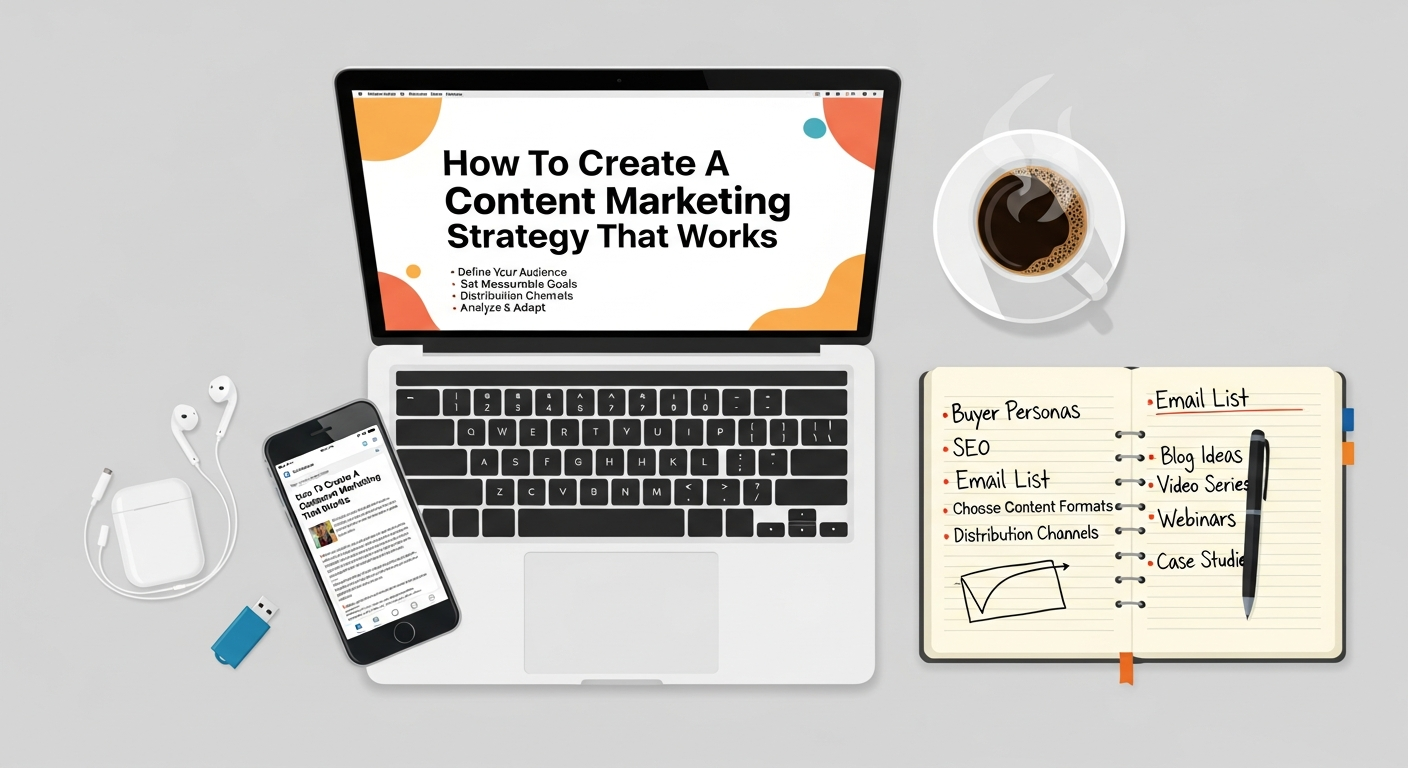
The bedrock of any successful content marketing strategy is a deep understanding of who you’re trying to reach and what you aim to achieve. Without these foundational elements, even the most brilliantly crafted content will miss its mark.
Audience Research: Crafting Buyer Personas
Your content needs to speak directly to your ideal customer. This isn’t just about demographics; it’s about psychographics, pain points, aspirations, and behaviors. Develop detailed buyer personas—semi-fictional representations of your ideal customers based on market research and real data about your existing customers. Give them names, job titles, describe their daily challenges, their goals, and how they search for information online.
Consider the following when building your personas:
- Demographics: Age, gender, location, income, education.
- Firmographics (for B2B): Company size, industry, revenue.
- Psychographics: Interests, values, attitudes, lifestyle.
- Pain Points: What problems are they trying to solve? What frustrations do they experience?
- Goals & Aspirations: What do they want to achieve? What motivates them?
- Information Sources: Where do they get their news? What social media platforms do they use? Which blogs or industry publications do they read?
- Buying Journey: How do they typically research and make purchasing decisions for products/services like yours?
Understanding these facets allows you to tailor your content’s topics, tone, format, and distribution channels to maximize its relevance and impact.
Goal Setting: Making Them SMART
Once you know who you’re talking to, you need to define what success looks like. Your content marketing goals must be SMART:
- Specific: Clearly defined, not vague. (e.g., “Increase leads” vs. “Increase qualified leads by 15%”).
- Measurable: Quantifiable with specific metrics. (e.g., “Achieve 10,000 blog visitors” vs. “Increase organic traffic by 20%”).
- Achievable: Realistic given your resources and timeframe.
- Relevant: Aligned with your overall business objectives.
- Time-bound: Have a clear deadline for achievement. (e.g., “by Q4 2026”).
Common content marketing goals include:
- Brand Awareness: Increasing organic search rankings, social media reach, website traffic.
- Lead Generation: Driving whitepaper downloads, webinar registrations, demo requests.
- Customer Acquisition: Converting leads into paying customers.
- Customer Retention & Loyalty: Providing valuable post-purchase content, fostering community.
- Thought Leadership: Establishing your brand as an authority in your niche.
By clearly defining your audience and setting SMART goals, you lay a solid foundation for every subsequent step in your content marketing journey.
Content Creation and Planning for Impact
Content Pillars, Topics, and Keyword Research
Start by identifying your core content pillars—the overarching themes or categories that your content will consistently address. These should directly relate to your audience’s pain points and your business’s solutions. For a tech startup, pillars might include “innovative software solutions,” “industry trends,” or “productivity hacks.”
Within these pillars, brainstorm specific topics. This is where keyword research becomes invaluable. Use tools like Ahrefs, SEMrush, or Google Keyword Planner to identify keywords and phrases your target audience is searching for. Look for a mix of high-volume, competitive keywords and long-tail keywords (more specific phrases, often with lower volume but higher intent). Analyze competitor content to identify gaps and opportunities.
Choosing the Right Content Formats
Content isn’t just text. Different formats serve different purposes and appeal to different segments of your audience. Consider a diverse content mix:
- Blog Posts & Articles: Excellent for SEO, thought leadership, and in-depth explanations.
- Videos: Highly engaging for tutorials, product demos, interviews, and brand storytelling.
- Infographics & Visuals: Great for simplifying complex data and sharing on social media.
- Podcasts: Reach audiences on the go, ideal for interviews and industry insights.
- Whitepapers & Ebooks: Gated content for lead generation, demonstrating expertise.
- Case Studies: Powerful social proof, showcasing customer success.
- Webinars & Live Streams: Interactive, real-time engagement, lead generation.
- Interactive Content: Quizzes, polls, calculators to boost engagement.
The choice of format should align with your content’s purpose, your audience’s preferences, and your available resources.
Developing a Robust Content Calendar
Consistency is paramount in content marketing. A content calendar is your operational blueprint, detailing what content will be created, when, by whom, and for which channel. This ensures a steady flow of content and helps manage your team’s workload.
Your calendar should include:
- Content Titles/Topics: Specific ideas derived from your keyword research.
- Content Type/Format: Blog post, video, infographic, etc.
- Target Persona: Which audience segment is this content for?
- Goal: What SMART goal does this content support?
- Keywords: Primary and secondary keywords to target.
- Responsible Party: Who is writing, editing, designing?
- Due Dates: For drafting, editing, design, and publication.
- Distribution Channels: Where will it be promoted?
- Call to Action (CTA): What do you want the reader to do next?
For managing these complex workflows, especially within a growing tech startup, leveraging the Best Project Management Software Startups offer can be a game-changer. Tools like Asana, Trello, Monday.com, or ClickUp provide robust features for task assignment, deadline tracking, collaborative editing, and progress monitoring, ensuring your content pipeline remains efficient and on schedule as you scale your operations in 2026. These platforms allow content managers to oversee multiple projects, allocate resources effectively, and maintain clear communication across the content team, from writers and designers to SEO specialists and marketers.
Distribution and Promotion: Amplifying Your Content
Creating compelling content is only half the battle; the other half is ensuring it reaches your target audience. A well-crafted distribution and promotion strategy is essential to maximize your content’s visibility and impact.
Organic Channels: Building Sustainable Reach
Organic promotion focuses on unpaid methods to get your content seen. These strategies build long-term value and authority.
- Search Engine Optimization (SEO):
- On-Page SEO: Optimizing your content itself with relevant keywords, compelling meta descriptions, proper heading structures (H2, H3), internal linking, and high-quality images.
- Technical SEO: Ensuring your website is fast, mobile-friendly, secure (HTTPS), and easily crawlable by search engines.
- Off-Page SEO: Building high-quality backlinks from reputable websites, which signals authority to search engines.
A strong SEO foundation means your content can continuously attract new visitors over time, acting as an evergreen asset.
- Social Media Organic: Share your content across relevant social media platforms (LinkedIn, X (formerly Twitter), Facebook, Instagram, TikTok, etc.) where your audience spends their time. Tailor your captions and visuals to each platform’s style and audience. Engage with comments and questions to foster community.
- Email Marketing: Your email list is one of your most valuable assets. Share new content, curated roundups, and exclusive insights directly with your subscribers. Segment your list to ensure you’re sending the most relevant content to each group.
- Online Communities & Forums: Participate in relevant industry forums, Reddit communities, or LinkedIn groups. Share your content when it genuinely adds value to a discussion, avoiding blatant self-promotion.
Paid Channels: Accelerating Your Reach
While organic channels build long-term equity, paid channels can provide an immediate boost in visibility and allow for highly targeted reach.
- Social Media Advertising: Platforms like Facebook Ads, LinkedIn Ads, and Instagram Ads allow you to promote your content to highly specific demographics, interests, and behaviors. This is excellent for amplifying your best-performing content or reaching new audiences.
- Search Engine Marketing (SEM): This involves bidding on keywords to display your content (often landing pages or specific articles) at the top of search engine results pages. This is where understanding What Is Pay Per Click Advertising becomes critical. PPC campaigns, particularly Google Ads, can drive immediate, high-intent traffic to your content, especially if it addresses a specific problem your audience is actively searching for. By strategically combining PPC with your organic content efforts, you can capture both short-term conversions and long-term organic growth.
- Content Syndication: Distributing your content to third-party publishers or platforms, often for a fee, to reach a broader audience.
- Influencer Marketing: Collaborating with industry influencers to promote your content to their engaged followers.
A balanced approach, combining the sustainable growth of organic channels with the targeted amplification of paid channels, will yield the best results for your content marketing strategy in 2026.
Measurement, Analysis, and Optimization: The Iterative Loop
A content marketing strategy isn’t a static document; it’s a living framework that requires continuous monitoring, evaluation, and refinement. The ability to measure your efforts, analyze the data, and optimize based on insights is what truly separates a working strategy from a theoretical one.
Key Performance Indicators (KPIs)
Your SMART goals should dictate your KPIs. Here are common metrics to track:
- Website Traffic:
- Total Visits: Overall interest.
- Unique Visitors: Reach.
- Page Views: Engagement with content.
- Traffic Sources: Where visitors are coming from (organic search, social, referral, direct).
- Time on Page: How long visitors spend consuming your content.
- Bounce Rate: % of visitors who leave after viewing only one page.
- Engagement Metrics:
- Social Shares, Likes, Comments: Content resonance on social platforms.
- Email Open Rates & Click-Through Rates (CTRs): Effectiveness of email distribution.
- Scroll Depth: How much of your content users are actually consuming.
- Comments on Blog Posts: Indicating reader interaction.
- Lead Generation Metrics:
- Conversion Rates: % of visitors who complete a desired action (e.g., download an ebook, sign up for a webinar).
- Number of Leads: Raw count of leads generated by specific content.
- Lead Quality: Are the leads generated by content truly qualified for sales?
- Sales & Revenue Metrics:
- Marketing-Qualified Leads (MQLs) to Sales-Qualified Leads (SQLs) Conversion Rate: How well content nurtures leads.
- Customer Acquisition Cost (CAC): Cost to acquire a new customer through content efforts.
- Return on Investment (ROI): The ultimate measure of your content strategy’s financial success.
Leveraging Analytics Tools
Tools like Google Analytics (GA4), your social media platform insights, email marketing dashboards, and CRM systems are indispensable for gathering data. Configure goals and events in GA4 to track specific user actions on your content. Regularly review performance reports to identify trends, popular content, and areas for improvement.
The Optimization Loop
Analysis without action is pointless. Use your insights to continuously refine your strategy:
- Identify Top Performers: What content resonates most? Create more of it, or repurpose it into different formats.
- Identify Underperformers: Why isn’t certain content working? Is it the topic, format, promotion, or targeting? Can it be updated, improved, or repurposed?
- A/B Testing: Experiment with different headlines, CTAs, visuals, or content formats to see what drives better results.
- User Feedback: Solicit feedback through surveys, comments, or direct conversations to understand what your audience truly wants.
- Content Audits: Periodically review your entire content library to update outdated information, improve SEO, or remove irrelevant pieces.
This iterative process of measuring, analyzing, and optimizing ensures your content marketing strategy remains agile, relevant, and consistently effective in achieving your business goals.
Leveraging Technology for a Future-Proof Strategy in 2026
In 2026, technology isn’t just an enabler for content marketing; it’s an integrated partner that drives efficiency, scalability, and deeper insights. Building a successful content strategy today means thoughtfully assembling a robust tech stack that supports every stage of the content lifecycle.
Your Essential Content Marketing Tech Stack
A well-chosen suite of tools can dramatically enhance your content marketing efforts:
- Content Management Systems (CMS): Platforms like WordPress, HubSpot, or Webflow are fundamental for creating, publishing, and managing your website content. They provide the infrastructure for your blog, landing pages, and other digital assets.
- SEO & Keyword Research Tools: Ahrefs, SEMrush, Moz, and Google Keyword Planner help you discover what your audience is searching for, analyze competitor strategies, and track your search rankings. These are critical for ensuring your content is discoverable.
- Project Management Software: As highlighted earlier, tools from the Best Project Management Software Startups (e.g., Asana, Trello, ClickUp, Monday.com) are vital for coordinating content teams. They streamline workflows, assign tasks (from ideation to publication), track deadlines, facilitate collaborative editing, and ensure seamless communication across writers, editors, designers, and marketers. This prevents bottlenecks and ensures timely delivery of content.
- Marketing Automation Platforms: HubSpot, Marketo, Pardot, or ActiveCampaign automate tasks like email nurturing, lead scoring, and content personalization. These tools help you deliver the right content to the right person at the right time, moving leads through the sales funnel more efficiently.
- CRM Systems: Salesforce, HubSpot CRM, or Zoho CRM are essential for managing customer relationships and tracking leads. Integrating your content marketing efforts with your CRM allows you to see how content influences lead progression and customer lifetime value.
- Analytics & Reporting Tools: Google Analytics (GA4), Tableau, or dedicated dashboard tools help you visualize performance, track KPIs, and gain actionable insights from your content data.
- Design & Creative Tools: Adobe Creative Suite, Canva, or Figma are crucial for creating stunning visuals, infographics, and video assets that make your content stand out.
The Importance of a Cohesive Tech Stack
It’s not enough to simply have these tools; they need to work together seamlessly. This brings us to the crucial concept of your Tech Stack: How to Choose the right components and ensure they integrate effectively. A disjointed tech stack, where tools don’t communicate, leads to data silos, inefficient workflows, and a fragmented view of your customer journey. When choosing your content marketing tools, prioritize:
- Integration Capabilities: Can the tools connect with each other, either natively or through third-party integrators like Zapier? This allows data to flow freely between your CMS, CRM, marketing automation, and analytics platforms.
- Scalability: Will the tools grow with your startup? Ensure they can handle increased content volume, team size, and data complexity.
- Ease of Use: Complex tools can hinder adoption. Choose platforms that your team can learn and use efficiently.
- Cost-Effectiveness: Balance features with your budget, especially as a startup. Many tools offer tiered pricing, allowing you to scale up as needed.
By strategically building and integrating your content marketing tech stack, you empower your team to operate with greater efficiency, gain deeper insights, and deliver a more personalized and effective content experience to your audience, ensuring your strategy remains cutting-edge and competitive in 2026 and beyond.
Conclusion: Building a Sustainable Content Marketing Engine
Crafting a content marketing strategy that truly works is an ongoing journey, not a destination. It demands strategic thinking, creative execution, diligent measurement, and continuous adaptation. In the rapidly evolving digital landscape of 2026, simply creating content is no longer enough. Success hinges on a well-defined strategy that begins with a deep understanding of your audience and clear, measurable goals. It progresses through systematic content creation and rigorous promotion, leveraging both organic and paid channels, including a solid grasp of What Is Pay Per Click Advertising to amplify your message.
Crucially, a winning strategy is underpinned by smart technology choices—from utilizing the Best Project Management Software Startups to manage your creative workflows, to thoughtfully assembling your overall What Is A Tech Stack How To Choose to ensure seamless operations. By embracing this iterative process of planning, executing, measuring, and optimizing, your business can transform its content efforts into a powerful, sustainable engine for growth, thought leadership, and deep customer engagement. Start building your impactful content marketing strategy today, and position your brand for unparalleled success in the years to come.
Frequently Asked Questions
Recommended Resources
For more on how to create, see Visual Hierarchy In Design Explained on Layout Scene.
Learn more about this topic in How To Speed Up A Slow Computer at Bookmark Sharer.