Enhanced Efficiency and Productivity: The Core Promise of Automation
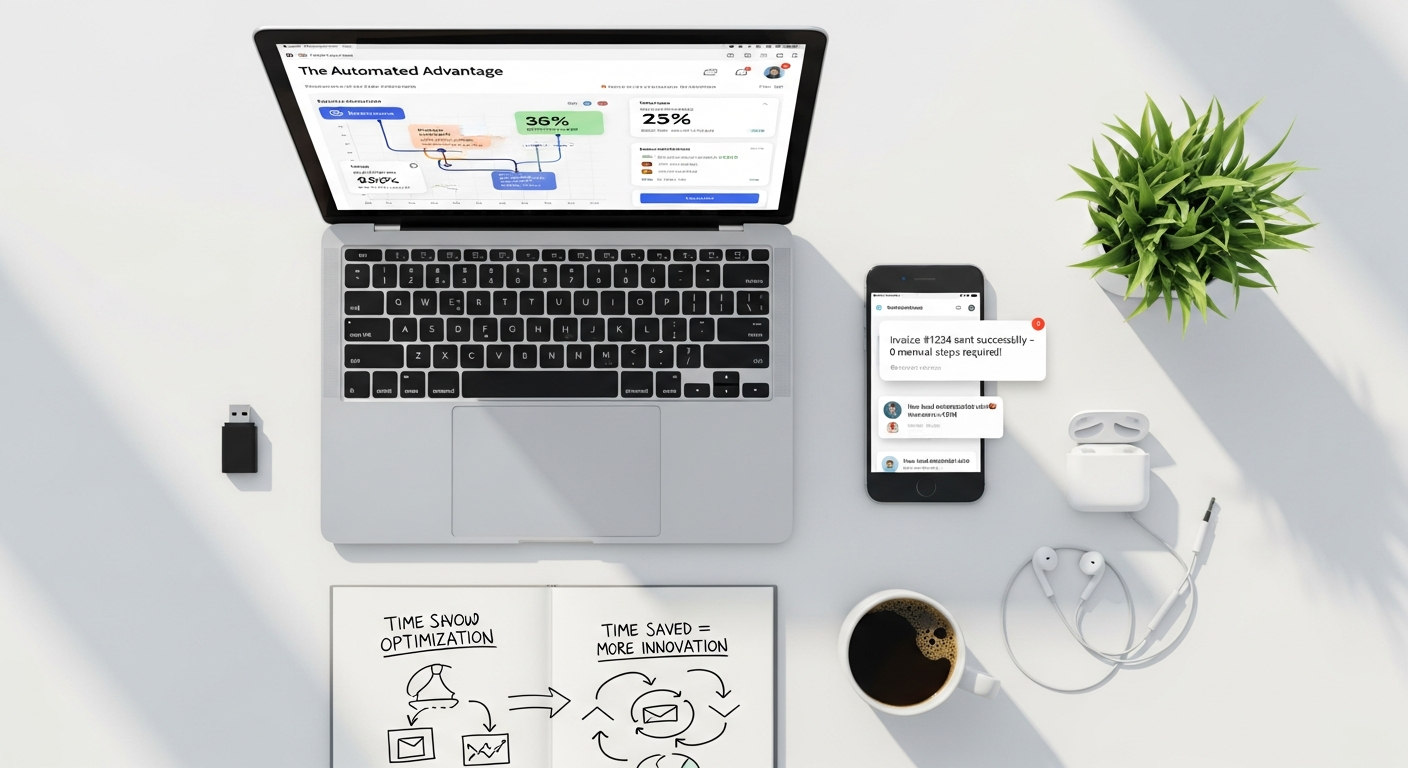
At the heart of automation’s appeal lies its unparalleled ability to boost efficiency and productivity. Small businesses often grapple with repetitive, time-consuming tasks that, while necessary, divert valuable human capital from more strategic endeavors. Automation software steps in to take over these mundane processes, freeing up employees to focus on activities that genuinely require human intelligence, creativity, and nuanced decision-making.
Consider the daily operations of a typical small business. Tasks like data entry, invoice processing, appointment scheduling, email responses, and social media posting can consume hours each week. When automated, these tasks are completed faster, more consistently, and without human intervention. For instance, a small marketing agency can automate the scheduling and posting of social media content across multiple platforms, ensuring a consistent online presence without a dedicated employee manually managing each post. Similarly, a small e-commerce store can automate order fulfillment notifications, inventory updates, and even basic customer support queries, ensuring customers receive timely information and the business maintains accurate stock levels.
The impact extends beyond mere task completion. By eliminating manual errors and bottlenecks, automation ensures a smoother workflow. It creates a seamless operational chain where one automated action triggers the next, maintaining momentum and reducing delays. This leads to faster turnaround times for clients, quicker internal processes, and an overall more agile business. Employees, no longer bogged down by repetitive administrative work, can dedicate their energy to innovation, client relationship building, or developing new products and services. This shift in focus is not just about doing more; it’s about doing the right things more effectively, ultimately propelling the business forward.
Moreover, the integration of automation with other business tools, such as the Best Project Management Software Startups leverage, can create a powerful ecosystem. Imagine project tasks automatically assigned based on triggers, deadlines updated in real-time, and team members receiving automated reminders for upcoming milestones. This level of integrated automation ensures that projects stay on track, resources are optimally utilized, and communication remains fluid, even within lean teams. For a small business, this integrated efficiency is a game-changer, allowing them to compete on a playing field traditionally dominated by larger organizations with more extensive workforces.
Significant Cost Savings and Resource Optimization
One of the most compelling benefits for small businesses, where every dollar counts, is the potential for substantial cost savings. Automation software, while representing an initial investment, quickly delivers a robust return on investment (ROI) by reducing operational expenses in various areas.
Firstly, automation minimizes the need for extensive manual labor. While it’s crucial to state that automation rarely replaces entire job functions, it significantly reduces the human hours required for routine tasks. This means a small business can achieve more with its existing team, delaying the need to hire additional staff for administrative roles as it scales. For example, automating payroll processing or expense reporting means finance teams can handle a larger volume of transactions without increasing headcount, directly impacting salary and benefits costs.
Secondly, automation drastically cuts down on errors. Manual data entry, calculations, and process execution are inherently prone to human mistakes. These errors can lead to costly rework, customer dissatisfaction, compliance issues, and even financial losses. An automated system, once correctly configured, performs tasks with near-perfect accuracy every time. Think about an e-commerce platform automatically calculating taxes, shipping costs, and discounts. The reduction in errors translates directly into fewer chargebacks, less time spent on corrections, and improved financial integrity, all of which contribute to the bottom line.
Furthermore, automation enables better resource allocation. By providing data-driven insights into operational bottlenecks and resource utilization, businesses can identify areas where they are overspending or underperforming. For instance, marketing automation platforms can analyze campaign performance with precision, helping small businesses optimize their ad spend. This is particularly relevant for strategies like What Is Pay Per Click Advertising, where automated bidding and analytics can ensure marketing budgets are allocated to the most effective keywords and demographics, preventing wasted ad spend and maximizing conversions.
Finally, automation can reduce overheads associated with physical resources. Digital document management and automated archiving reduce the need for physical storage space, printing, and paper supplies. Automated energy management systems can even optimize utility consumption in physical offices. These seemingly small savings accumulate, providing a significant financial buffer that small businesses can reinvest into growth initiatives, product development, or expanding their market reach in 2026.
Improved Accuracy and Reduced Errors: Building Trust and Reliability
Automation software, by contrast, operates with consistent precision. Once programmed with specific rules and workflows, it executes tasks flawlessly, every single time. This dramatic reduction in errors is a cornerstone benefit for small businesses looking to build a reputation for reliability and professionalism.
Consider the accuracy of financial transactions. Automated accounting software can process invoices, reconcile accounts, and generate reports with meticulous accuracy, minimizing the risk of discrepancies that could lead to cash flow problems or audit issues. In customer service, automated chatbots or email response systems ensure that customers receive consistent, accurate information instantly, avoiding misunderstandings that can arise from human variability or delayed responses. For a retail business, automated inventory management ensures stock levels are always accurate, preventing overselling or stockouts that disappoint customers and disrupt operations.
Beyond the direct financial and operational impact, improved accuracy fosters greater trust. Customers trust businesses that consistently deliver on promises and provide accurate information. Partners and suppliers trust businesses that process payments and orders without error. Internally, employees trust systems that provide reliable data, allowing them to make better-informed decisions. This foundation of trust is invaluable for small businesses aiming for long-term growth and strong relationships in a competitive market.
Moreover, the time saved correcting errors can be substantial. Instead of spending hours tracking down discrepancies or apologizing for mistakes, employees can redirect their efforts to proactive problem-solving, improving customer satisfaction, or developing new strategies. This shift from reactive error correction to proactive value creation is a direct result of automation’s ability to instill a new level of precision across all business functions.
Better Customer Experience and Engagement: The Automated Touch
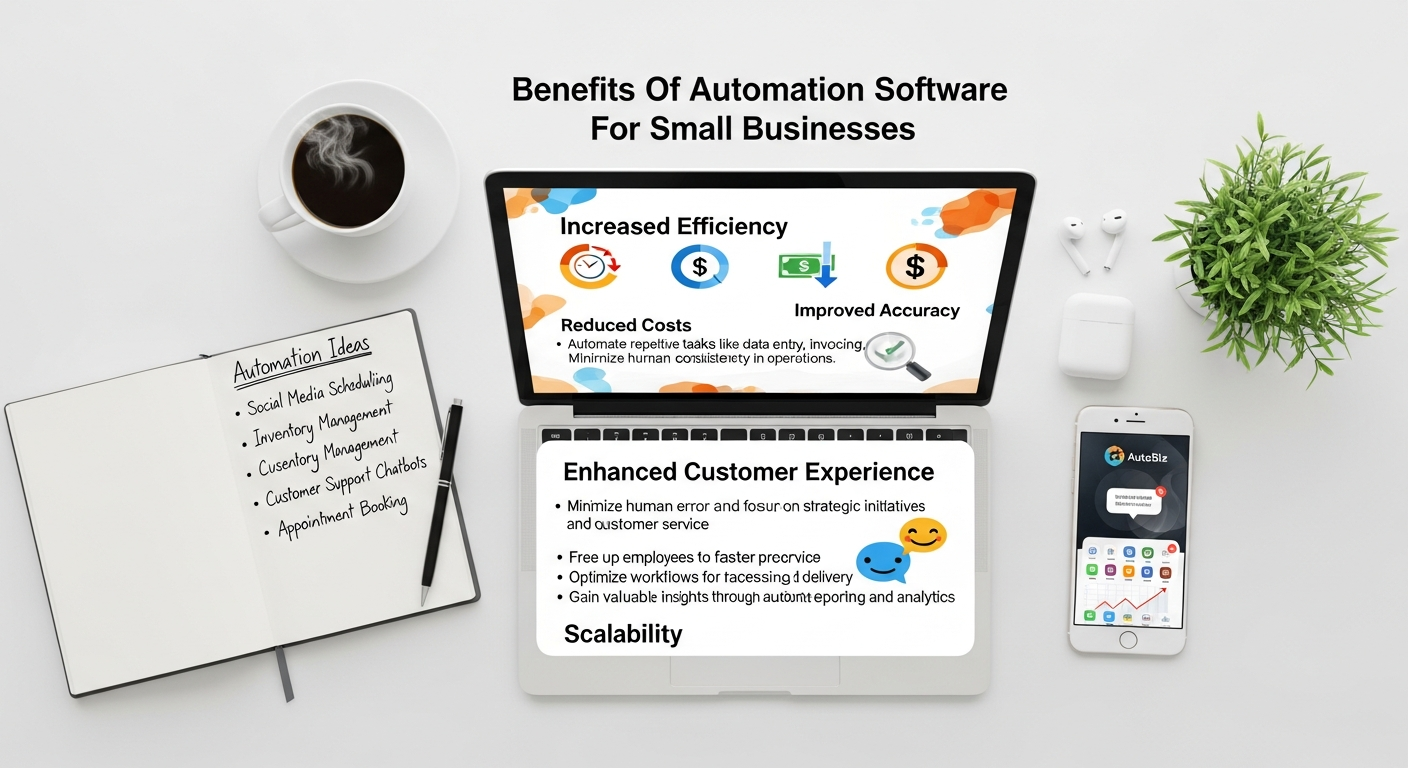
In today’s customer-centric world, the quality of the customer experience is a primary differentiator, especially for small businesses vying for attention against larger competitors. Automation software plays a pivotal role in enhancing every stage of the customer journey, leading to increased satisfaction, loyalty, and ultimately, repeat business.
One of the most immediate impacts is on responsiveness. Customers in 2026 expect instant gratification and quick answers. Automation can provide this through:
- Automated Chatbots and FAQs: These tools can answer common customer questions 24/7, providing instant support and freeing human agents to handle more complex inquiries. This ensures customers never have to wait for basic information.
- Personalized Communication: Marketing automation platforms can segment customers based on their behavior, preferences, and purchase history. This allows small businesses to send highly targeted emails, promotions, and product recommendations, making customers feel understood and valued, rather than just another number.
- Order and Service Updates: Automated notifications about order status, shipping updates, appointment reminders, or service changes keep customers informed and reduce anxiety. Proactive communication builds confidence and reduces the need for customers to contact support.
Beyond responsiveness, automation enables a more consistent and seamless experience. Whether a customer interacts with your website, email, or social media, automation ensures a unified brand voice and consistent information delivery. This consistency builds trust and reinforces your brand identity. For instance, an automated CRM (Customer Relationship Management) system ensures that every customer interaction, regardless of the channel, is logged and accessible to all relevant team members, providing a holistic view of the customer and preventing repetitive questioning.
The ability to gather and analyze customer data through automation also allows small businesses to anticipate needs and tailor offerings. By automating data collection and reporting, businesses can identify trends, understand pain points, and proactively address them. This deeper insight helps in developing better products, refining services, and creating more effective marketing campaigns.
Finally, automation can elevate post-purchase care. Automated follow-up emails for feedback, satisfaction surveys, or even personalized recommendations for related products show customers that their business is valued beyond the initial transaction. This nurturing approach transforms one-time buyers into loyal advocates, a critical component for sustainable growth for any small business in 2026.
Scalability and Growth Potential: Paving the Way for Expansion
For a small business with ambitions to grow, scalability is paramount. The ability to increase output and handle a larger volume of work without a proportional increase in costs or resources is what separates thriving enterprises from those that stagnate. Automation software is a powerful enabler of scalability, allowing small businesses to expand their operations seamlessly and efficiently.
Traditional manual processes often become bottlenecks as a business grows. Adding more customers or products typically means hiring more staff to handle the increased administrative load. This can be slow, expensive, and introduce new complexities. Automation, however, can handle significantly larger volumes of work without requiring additional human intervention. An automated invoicing system can process hundreds or thousands of invoices with the same efficiency as it handles a dozen. An automated customer support system can manage a surge in inquiries without overwhelming a small team.
This inherent scalability means that as your small business attracts more clients or expands its product lines, your operational infrastructure can keep pace. You don’t have to constantly rebuild or re-staff your back office; the automated systems simply process more data or execute more tasks. This allows you to focus your growth efforts on market expansion, product innovation, and strategic partnerships, rather than being bogged down by operational logistics.
Furthermore, automation plays a critical role in standardizing processes. When workflows are automated, they are executed consistently every time. This standardization is crucial for scaling because it ensures quality and predictability across an expanding operation. New employees can be onboarded more quickly as they learn to interact with standardized automated systems, rather than grappling with inconsistent manual procedures.
When considering growth, the concept of a What Is A Tech Stack How To Choose becomes incredibly relevant. A well-chosen tech stack, integrated with robust automation software, forms the backbone of a scalable business. Selecting tools that are designed to grow with your business, offer API integrations, and can handle increasing data volumes is essential. By building a cohesive and automated tech stack from the outset, small businesses lay a strong foundation for future expansion, ensuring that their technological infrastructure supports, rather than hinders, their growth ambitions in 2026 and beyond.
Strategic Focus and Innovation: Unleashing Human Potential
Perhaps one of the most profound, yet often overlooked, benefits of automation for small businesses is its ability to elevate the human element within the organization. By taking over the tedious, repetitive, and low-value tasks, automation frees up employees to engage in work that truly leverages their unique human capabilities: critical thinking, creativity, strategic planning, problem-solving, and relationship building.
Imagine a scenario where your sales team no longer spends hours manually updating CRM records or sending follow-up emails. Instead, they can dedicate that time to nurturing high-potential leads, crafting personalized pitches, or collaborating on innovative sales strategies. Your marketing team can shift from manual social media scheduling to developing compelling content strategies, analyzing market trends, or experimenting with new engagement tactics. Your operations team can move from manual data entry to optimizing supply chains, identifying new efficiencies, or exploring disruptive technologies.
This shift from operational execution to strategic thinking is transformative. It allows small business owners and their teams to step back from the daily grind and focus on the bigger picture. What are the long-term goals? How can the business innovate to stay ahead of competitors in 2026? What new markets can be explored? These are the questions that drive sustainable growth and competitive advantage, and they require mental bandwidth that is often consumed by manual tasks.
Automation also fosters a culture of innovation. When employees are no longer bogged down by repetitive work, they are more likely to feel engaged, motivated, and empowered to contribute ideas. They become problem-solvers rather than task-doers. This can lead to the identification of new opportunities, the development of improved processes, and even the creation of entirely new products or services that might have remained undiscovered in a manually intensive environment.
Furthermore, automation provides access to rich data and analytics that power strategic decisions. By automatically collecting, organizing, and presenting key performance indicators (KPIs), automation software gives small businesses the insights needed to make informed choices about everything from marketing spend (e.g., optimizing Pay Per Click Advertising campaigns) to product development. This data-driven approach replaces guesswork with evidence, significantly improving the likelihood of successful strategic initiatives. Ultimately, automation transforms a small business from merely executing tasks into a dynamic, strategically focused, and innovative entity ready to tackle the challenges and opportunities of the future.
Competitive Advantage in the 2026 Digital Landscape
The business world of 2026 is hyper-competitive, characterized by rapid technological advancements and evolving customer expectations. For small businesses, simply offering a good product or service is often not enough to stand out. Gaining and maintaining a competitive advantage requires agility, efficiency, and the ability to leverage technology effectively. Automation software provides precisely these capabilities, allowing small businesses to punch above their weight and compete successfully against larger, more resourced organizations.
Firstly, automation enables small businesses to operate with the speed and responsiveness typically associated with bigger enterprises. Automated processes mean faster order fulfillment, quicker customer service responses, and accelerated internal workflows. This agility allows small businesses to react quickly to market changes, capitalize on emerging opportunities, and deliver services faster than competitors still reliant on manual methods. Imagine a small startup that can launch and iterate on marketing campaigns twice as fast as its traditional rivals due to robust marketing automation – that’s a significant edge.
Secondly, the cost efficiencies derived from automation allow small businesses to offer more competitive pricing or invest more heavily in product development and customer experience. By lowering operational overheads, a small business can either pass those savings on to customers, making their offerings more attractive, or allocate the freed-up capital into innovation, improving their core value proposition.
Thirdly, automation helps small businesses deliver a superior and personalized customer experience, which is a key differentiator. As discussed earlier, automated personalization, 24/7 support, and consistent communication build stronger customer relationships. In a market saturated with choices, businesses that make customers feel valued and understood will win loyalty. This personalized touch, often difficult to scale manually, becomes feasible and highly effective with automation.
Moreover, automation grants small businesses access to sophisticated analytics and insights that were once exclusive to large corporations. By collecting and analyzing data on sales trends, customer behavior, marketing performance (including detailed Pay Per Click Advertising analytics), and operational efficiency, automation empowers small business leaders to make data-driven decisions. This strategic foresight allows them to optimize their business model, identify niche opportunities, and adapt their strategies more effectively than competitors operating on intuition alone.
Finally, embracing automation positions a small business as forward-thinking and innovative. This perception can attract top talent, impress potential investors, and build a modern brand image. In the digital age, a robust and integrated Tech Stack, underpinned by automation, signals a readiness for the future. For small businesses, automation isn’t just about operational improvements; it’s about building a future-proof, competitive entity capable of not just surviving, but thriving and leading in the dynamic business landscape of 2026.
Conclusion: The Imperative of Automation for Small Business Success
The journey of a small business is often characterized by ambition, resilience, and an unwavering commitment to growth. In the rapidly evolving digital ecosystem of 2026, the traditional models of operation are no longer sufficient to guarantee sustained success. Automation software has emerged not merely as a beneficial tool, but as an essential catalyst for transformation, offering a strategic pathway for small businesses to overcome their inherent limitations and unlock unprecedented opportunities.
From dramatically boosting efficiency and achieving significant cost savings to ensuring unparalleled accuracy and cultivating superior customer experiences, the benefits of automation are comprehensive and far-reaching. It empowers small enterprises to scale their operations gracefully, focus their invaluable human capital on innovation and strategic initiatives, and ultimately, forge a formidable competitive advantage in a crowded marketplace. Embracing automation is about more than just adopting new technology; it’s about reimagining how work gets done, fostering a culture of continuous improvement, and positioning your business for enduring prosperity. For any small business looking to not just survive, but truly thrive and lead in the years to come, the strategic integration of automation software is no longer a luxury – it is the cornerstone of future success.
Frequently Asked Questions
Recommended Resources
Explore Best Budget Smartphones 2026 for additional insights.
Explore How To Use White Space In Design for additional insights.