
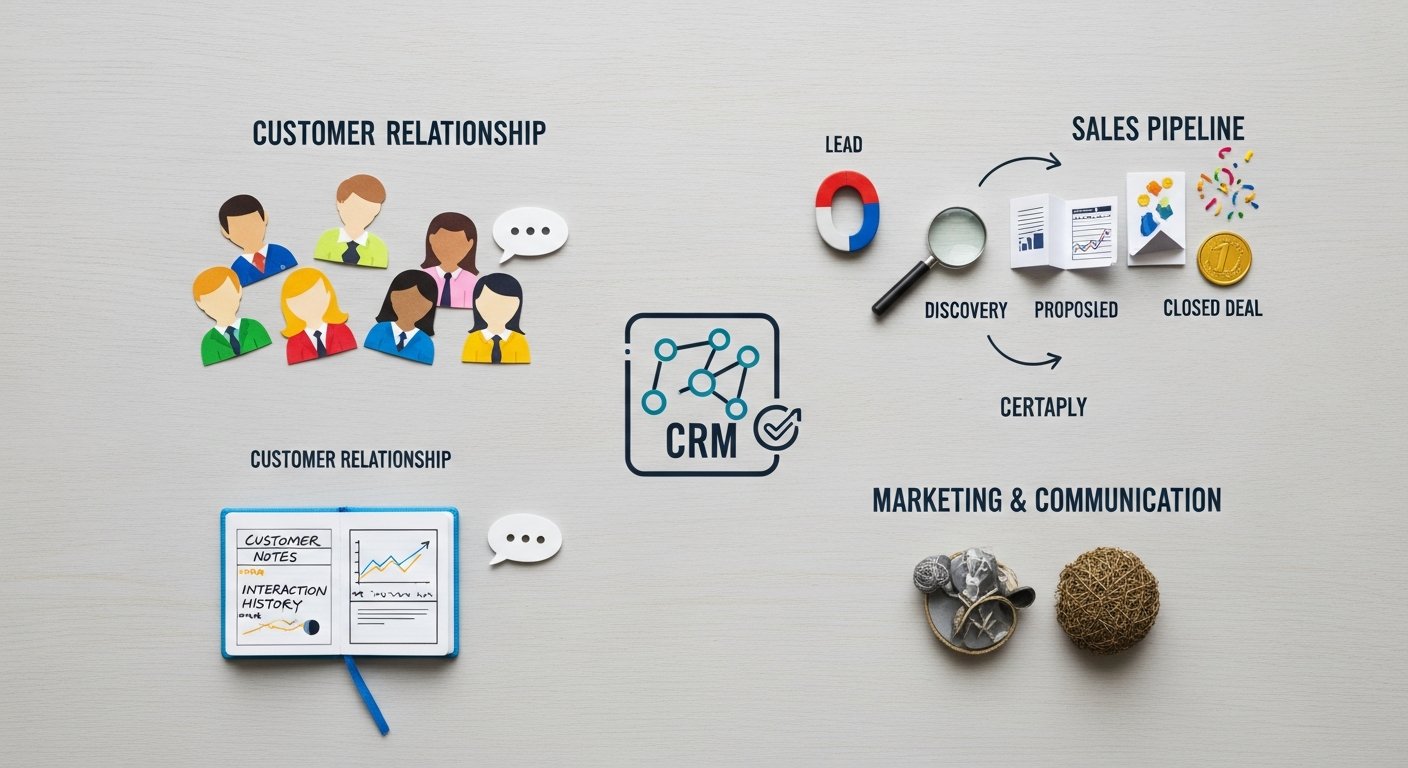
The Ultimate Guide: Finding the Best CRM for Startups in 2026
Affiliate disclosure: This article may contain affiliate links. Recommendations are independent and editorially driven.
In the fast-paced world of startups, where every lead, every customer interaction, and every data point can make or break your trajectory, a robust Customer Relationship Management (CRM) system isn’t just a nice-to-have – it’s an absolute necessity. For ambitious tech startups, digital marketing agencies, and SaaS businesses aiming for exponential growth, a CRM serves as the central nervous system for all customer-facing operations. It’s the platform that empowers you to manage leads, nurture prospects, close deals, and build lasting customer relationships with unparalleled efficiency.
Choosing the best CRM for startups, however, is far from a trivial decision. The market is saturated with options, each promising a myriad of features. For a startup with limited resources, a lean team, and an imperative to scale quickly, the wrong choice can lead to wasted time, budget overruns, and missed opportunities. The ideal CRM must be intuitive, scalable, cost-effective, and powerful enough to support your unique go-to-market strategy, from initial traction to mature market penetration.
This comprehensive guide from eamped is designed to cut through the noise. We’ll explore why a CRM is critical for your startup’s survival and growth, delve into the essential features you should prioritize, guide you through crucial considerations, and highlight the top CRM platforms that are making waves in 2026. Whether you’re an early-stage founder seeking to organize your first contacts or a growth-stage CEO looking to optimize complex sales funnels, we’ll equip you with the knowledge to make an informed decision and propel your startup forward.
Why a CRM is Non-Negotiable for Startup Success
For a startup, success hinges on innovation, agility, and above all, customer acquisition and retention. A CRM isn’t merely a database; it’s a strategic asset that underpins every facet of your customer journey. Ignoring or delaying CRM implementation can lead to disorganization, missed opportunities, and ultimately, stunt your growth potential. Here’s why a CRM is an indispensable tool for any startup aiming for sustained success:
Scaling Customer Relationships
As your startup gains traction, the volume of leads and customers will inevitably grow. Manually managing these relationships through spreadsheets or scattered email threads quickly becomes unsustainable. A CRM centralizes all customer data – contact information, communication history, purchase records, support tickets, and more – providing a 360-degree view of every customer. This unified perspective allows your team to personalize interactions, anticipate needs, and deliver exceptional experiences consistently, even as you scale your customer base from dozens to thousands.
Streamlining Sales Processes
Sales are the lifeblood of any startup. A CRM provides a structured framework for managing your sales pipeline, from initial lead generation to deal closure. It enables sales teams to track prospects, monitor their engagement, identify bottlenecks, and prioritize activities based on potential value. Automation features within a CRM can handle repetitive tasks like email follow-ups and meeting scheduling, freeing up sales representatives to focus on what they do best: building rapport and closing deals. This efficiency translates directly into faster sales cycles and higher conversion rates, critical for early revenue generation.
Enhancing Marketing Efforts
Effective marketing campaigns require deep insights into your target audience. A CRM integrates seamlessly with marketing automation tools, allowing you to segment your audience based on demographics, behavior, and engagement history. This enables highly targeted and personalized marketing messages, improving campaign relevance and ROI. By tracking how leads interact with your content and campaigns, a CRM helps you understand what resonates with your audience, refine your strategies, and nurture leads more effectively until they’re sales-ready. For SaaS startups, understanding user behavior within the product itself can be fed back into the CRM to drive re-engagement or upsell opportunities.
Data-Driven Decision Making
In the startup world, every decision carries weight, and data is your most reliable guide. A CRM collects vast amounts of customer data, which can be transformed into actionable insights through robust reporting and analytics features. You can monitor key performance indicators (KPIs) such as lead conversion rates, sales cycle length, customer churn, and customer lifetime value. This data empowers founders and leadership to identify trends, pinpoint areas for improvement, forecast revenue more accurately, and make strategic decisions based on real-world performance rather than guesswork. This is especially vital for iterating on your product-market fit and optimizing your go-to-market strategy.
Building a Foundation for Growth
Think of your CRM as the cornerstone of your startup’s operational infrastructure. By establishing a centralized system early on, you create a scalable foundation that can support future growth. It minimizes the risk of data silos, ensures consistency across customer interactions, and facilitates smooth transitions as your team expands. A well-implemented CRM not only optimizes current operations but also prepares your startup for future expansion, allowing you to onboard new team members quickly and maintain operational excellence as you navigate the complexities of scaling.
[INLINE IMAGE 1: place after second H2 | alt=”best crm for startups concept illustration”]
Key Features Every Startup CRM Needs
While the market offers a dizzying array of CRM features, startups, with their unique needs for agility and efficiency, should prioritize a core set of functionalities. These features will ensure your CRM isn’t just a glorified contact list, but a powerful engine for growth. When evaluating the best CRM for startups, focus on these critical capabilities:
Contact and Lead Management
At its heart, a CRM must excel at managing contacts and leads. This involves more than just storing names and email addresses. Look for features that allow you to:
- Centralized Database: A single source of truth for all customer and prospect information.
- Detailed Contact Profiles: Ability to store notes, communication history, company details, job titles, social media links, and custom fields relevant to your business.
- Lead Scoring: Automatically rank leads based on their engagement and demographic data, helping your sales team prioritize high-potential prospects.
- Lead Assignment: Efficiently distribute leads to the appropriate sales or account manager, preventing leads from falling through the cracks.
- Segmentation: Easily group contacts based on shared characteristics (e.g., industry, company size, engagement level) for targeted outreach.
Sales Pipeline Management
A visual, intuitive sales pipeline is crucial for tracking deals and understanding your sales forecast. Essential features include:
- Customizable Sales Stages: Define stages that mirror your unique sales process, from “New Lead” to “Closed-Won.”
- Drag-and-Drop Interface: Simple movement of deals between stages for easy updates.
- Deal Tracking: Monitor deal value, close dates, associated contacts, and activities.
- Activity Management: Schedule and track calls, emails, meetings, and tasks directly within the deal or contact record.
- Sales Forecasting: Tools to predict future revenue based on current pipeline data.
Marketing Automation Capabilities
For startups, especially those in digital marketing or SaaS, automating marketing efforts can significantly boost efficiency and lead nurturing. Key automation features include:
- Email Marketing: Create, send, and track personalized email campaigns, newsletters, and automated drip sequences.
- Workflow Automation: Set up automated actions based on triggers, such as sending a welcome email after a new sign-up or assigning a lead to a sales rep after a certain engagement level.
- Landing Page Builders: Tools to create optimized landing pages for lead capture.
- Ad Management: Integrate with advertising platforms to track ad spend ROI and retargeting efforts.
Customer Service & Support Tools
Customer retention is just as vital as acquisition, especially for subscription-based startups. A CRM with integrated support features ensures a cohesive customer experience:
- Ticket Management: Centralized system for logging, tracking, and resolving customer queries.
- Knowledge Base Integration: Link to self-service resources to empower customers and reduce support volume.
- Live Chat/Chatbot: Real-time support options for immediate assistance.
- Customer Feedback Tools: Surveys or NPS scoring to gauge satisfaction and identify areas for improvement.
Reporting and Analytics
Data-driven decisions are paramount for startups. A good CRM provides robust reporting tools:
- Customizable Dashboards: Visualize key metrics at a glance.
- Sales Reports: Track performance by rep, team, product, or region; analyze win/loss rates.
- Marketing Reports: Measure campaign effectiveness, lead source performance, and ROI.
- Customer Service Reports: Monitor resolution times, agent performance, and customer satisfaction.
- Forecasting: Predictive analytics for sales and revenue.
Integrations (e.g., email, accounting, project management)
No CRM operates in a vacuum. Seamless integration with other tools in your tech stack is crucial for workflow efficiency. Look for native integrations or robust API capabilities with:
- Email Clients: Gmail, Outlook 365.
- Communication Tools: Slack, Microsoft Teams.
- Accounting Software: QuickBooks, Xero.
- Project Management Tools: Asana, Trello, Jira.
- Marketing Platforms: Social media, advertising platforms.
- Website/CMS Platforms: WordPress, Shopify.
Mobile Accessibility
In today’s remote and on-the-go work environments, a powerful mobile app is no longer a luxury. Your team needs to access customer information, update deals, and manage tasks from anywhere, anytime. A user-friendly mobile interface ensures productivity doesn’t stop when your team is away from their desks.
By prioritizing these core features, startups can select a CRM that not only meets their current needs but also provides a flexible and scalable foundation for future growth. Remember, the best CRM for your startup is the one that your team will actually use, and that delivers tangible value to your bottom line.
Navigating the CRM Landscape: Crucial Considerations for Startups
Selecting a CRM is a significant investment for any startup, requiring careful evaluation beyond just a feature checklist. The right choice can accelerate your growth, while the wrong one can hinder progress and drain resources. Here are crucial considerations that every startup must weigh when navigating the CRM landscape in 2026:
Scalability: Growing with Your Business
Startups are inherently designed for growth. Your chosen CRM must be able to scale alongside your company, accommodating an increasing number of users, expanding data volumes, and evolving business processes. Consider:
- User Tiers: Does the CRM offer different plans or pricing tiers that allow you to add users as your team expands without breaking the bank?
- Feature Upgrades: Can you easily unlock more advanced features (e.g., enterprise-level automation, advanced analytics) as your needs become more complex?
- Data Capacity: What are the limits on storage for contacts, files, and activity logs?
- Flexibility: Can the platform handle new sales funnels, marketing campaigns, or customer segments that you might introduce in the future?
A CRM that quickly becomes outdated or restrictive as you grow will necessitate a costly and disruptive migration in the future. Opt for a platform with a clear growth path.
Ease of Use & User Adoption
The most feature-rich CRM is useless if your team doesn’t adopt it. Startups often have lean teams with members wearing multiple hats; they don’t have time for steep learning curves or clunky interfaces. Prioritize a CRM that is:
- Intuitive: Easy to navigate with a clean, user-friendly interface.
- Quick to Learn: Minimal training required for basic functionalities.
- Accessible: Available on desktop and through robust mobile applications.
- Customizable Workflows: Can be tailored to match your team’s existing processes, rather than forcing them to adapt entirely to the software.
Pilot programs with a few team members can reveal potential adoption hurdles before a full rollout. High user adoption directly translates to better data quality and ROI.
Cost-Effectiveness & ROI
Budget constraints are a reality for most startups. While you want robust functionality, you also need to ensure the CRM provides a strong return on investment (ROI). Consider not just the sticker price but the total cost of ownership (TCO):
- Subscription Fees: Understand pricing tiers, per-user costs, and any annual commitments. Many CRMs offer free plans or significant discounts for startups.
- Hidden Costs: Factor in costs for implementation, customization, training, integrations, and potential add-ons.
- Value Proposition: How quickly will the CRM help you close more deals, reduce churn, or increase operational efficiency to offset its cost?
- Free Tiers/Trials: Leverage these to thoroughly test the platform before committing.
The “cheapest” option isn’t always the most cost-effective if it lacks critical features or is difficult to use, leading to lost productivity and opportunities. Balance features with your immediate financial realities.
Customization & Flexibility
Every startup has a unique go-to-market strategy, sales process, and customer lifecycle. Your CRM should be flexible enough to adapt to your specific needs, not the other way around. Look for:
- Custom Fields: Ability to add specific data points relevant to your product or service.
- Custom Workflows & Automation: Design automated processes that align with your business logic.
- Custom Reports & Dashboards: Create dashboards that display the KPIs most relevant to your startup’s goals.
- Branding: Some CRMs allow you to customize the interface with your company’s branding, which can be useful for client portals or internal user experience.
This flexibility ensures the CRM truly supports your operations rather than creating new limitations.
Implementation & Support
Even the best CRM needs proper implementation and ongoing support. Startups often lack dedicated IT teams, so vendor support becomes crucial:
- Onboarding Resources: Does the vendor provide comprehensive documentation, tutorials, and dedicated onboarding assistance?
- Customer Support: What are the channels (phone, email, chat), hours, and responsiveness of their support team?
- Community & Knowledge Base: A strong user community or extensive knowledge base can be invaluable for self-service problem-solving.
- Implementation Partners: For more complex setups, does the CRM provider have a network of certified implementation partners?
Smooth implementation and reliable support ensure you get up and running quickly and resolve issues efficiently, minimizing downtime.
Security & Data Privacy
Protecting customer data is paramount, especially with increasing regulatory scrutiny (e.g., GDPR, CCPA). For startups, a data breach can be catastrophic. Ensure your chosen CRM offers:
- Robust Security Measures: Data encryption, multi-factor authentication, regular security audits, and compliance certifications (e.g., ISO 27001).
- Data Privacy Compliance: Adherence to global and regional data protection regulations.
- User Permissions: Granular control over who can access, edit, or delete sensitive data within your team.
- Backup & Recovery: Regular data backups and clear disaster recovery protocols.
Prioritizing security from day one builds trust with your customers and protects your startup’s reputation.
By carefully considering these factors, startups can confidently select a CRM that not only meets their current needs but also serves as a strategic partner in their journey toward sustained growth and market leadership.
Top Contenders: Our Picks for the Best CRM for Startups
The CRM market is vast, but certain platforms consistently rise to the top for their blend of features, scalability, and startup-friendly approaches. Based on our analysis for 2026, here are our top picks for the best CRM for startups, alongside a detailed comparison to help you make an informed decision.
[INLINE IMAGE 2: place after fourth H2 | alt=”best crm for startups comparison illustration”]
HubSpot CRM: The All-in-One Growth Platform
HubSpot is arguably one of the most popular CRMs for startups, and for good reason. It offers a powerful, yet incredibly user-friendly free tier that provides core CRM functionalities, making it ideal for early-stage companies with tight budgets. As your startup grows, HubSpot’s various “hubs” (Sales, Marketing, Service, CMS, Operations) allow you to seamlessly expand your capabilities within the same ecosystem. This all-in-one approach is a significant advantage, eliminating the need for complex integrations between disparate systems.
- Strengths for Startups: Excellent free CRM, intuitive interface, strong marketing automation, extensive knowledge base and community, scalability through integrated hubs.
- Potential Considerations: Premium hubs can become expensive as you scale, particularly for large teams, some advanced features might be behind higher-tier paywalls.
Salesforce Essentials: Enterprise Power for Small Teams
Salesforce is the undisputed giant in the CRM space, and Salesforce Essentials is its offering tailored specifically for small businesses and startups. It provides a foundational set of sales and service features, leveraging the robust and reliable Salesforce platform. While it might have a slightly steeper learning curve than HubSpot for absolute beginners, its power lies in its unparalleled customization options and the ability to seamlessly upgrade to more advanced Salesforce editions as your startup matures into an enterprise.
- Strengths for Startups: Industry-leading platform, immense customization potential, powerful analytics, vast app marketplace (AppExchange), strong scalability path.
- Potential Considerations: Can be more expensive than some alternatives, initial setup and customization might require more effort, not as intuitive for non-sales roles as HubSpot.
Zoho CRM: Feature-Rich and Budget-Friendly
Zoho CRM is a compelling option for startups seeking a comprehensive suite of features without breaking the bank. Part of the broader Zoho ecosystem (which includes accounting, project management, and more), Zoho CRM offers robust sales force automation, marketing automation, and customer support capabilities. Its free edition is generous, and its paid plans are highly competitive, making it an excellent value proposition for budget-conscious startups.
- Strengths for Startups: Affordable pricing, extensive features even in lower tiers, strong suite of complementary Zoho applications, good customization options, AI-powered assistant (Zia).
- Potential Considerations: Interface can sometimes feel a bit cluttered due to the abundance of features, learning curve might be moderate for maximizing its full potential.
Pipedrive: Sales-Focused and Visual
Pipedrive shines for sales-driven startups that prioritize a clean, visual pipeline management system. Its core strength lies in its intuitive drag-and-drop interface for managing deals, making it incredibly easy for sales teams to track their progress and focus on conversion. While it has expanded its marketing and automation features, its primary appeal remains its laser focus on empowering sales reps to move deals forward efficiently.
- Strengths for Startups: Highly visual and intuitive sales pipeline, excellent for sales process management, strong reporting on sales activities, good integrations.
- Potential Considerations: Less robust for marketing automation or customer service compared to all-in-one platforms, might require integrations for a full customer lifecycle view.
Freshsales Suite: Comprehensive Sales & Marketing
Freshsales Suite, by Freshworks, offers an integrated solution combining CRM, sales automation, marketing automation, and chat. It’s designed to give a 360-degree view of your customers across their lifecycle. Its AI-powered insights, robust communication features, and competitive pricing make it a strong contender for startups looking for an integrated approach without the complexity or cost of some enterprise solutions.
- Strengths for Startups: All-in-one sales and marketing suite, AI-powered insights (Freddy AI), built-in phone, chat, and email, competitive pricing, good for customer lifecycle management.
- Potential Considerations: Might still be growing its brand recognition compared to giants, some advanced features might be better in dedicated best-of-breed tools.
monday.com Sales CRM: Highly Customizable Workflow
While often known for project management, monday.com has evolved into a highly customizable platform, including a robust Sales CRM solution. Its strength lies in its visual, board-based interface that allows startups to build and customize sales pipelines, client management workflows, and deal tracking dashboards with unparalleled flexibility. It’s less of a rigid CRM and more of a highly adaptable workspace that can be molded to fit almost any sales process.
- Strengths for Startups: Highly visual and customizable interface, excellent for adapting to unique sales processes, strong collaboration features, integrates well with other tools.
- Potential Considerations: Requires more setup and customization than out-of-the-box CRMs, less inherent sales-specific intelligence compared to dedicated CRMs.
ActiveCampaign: Automation Powerhouse
ActiveCampaign isn’t a traditional full-service CRM in the vein of HubSpot or Salesforce, but it’s an absolute powerhouse for marketing and sales automation, making it an excellent choice for startups whose primary need is sophisticated lead nurturing and automated follow-ups. It combines email marketing, marketing automation, and a strong CRM for managing contacts and deals, focusing on highly personalized customer journeys.
- Strengths for Startups: Industry-leading marketing and sales automation, deep personalization capabilities, robust email marketing, strong segmentation, competitive pricing for its automation power.
- Potential Considerations: CRM features are strong but not as broad as a pure CRM solution; may require integration with other tools for comprehensive customer service or complex sales forecasting.
CRM Comparison Table for Startups (2026)
Here’s a quick comparison of the top CRM options, focusing on attributes critical for startups:
| CRM Platform | Best For | Key Strengths for Startups | Pricing (Est. per user/month, entry-level paid) | Ease of Use | Scalability |
|---|---|---|---|---|---|
| HubSpot CRM | All-in-one growth platform; early-stage startups | Generous free tier, intuitive UI, integrated marketing, sales & service | Free, then $20-50+ | Excellent | High (modular growth) |
| Salesforce Essentials | Startups needing enterprise-grade power & flexibility | Robust platform, high customization, vast AppExchange, strong future-proofing | $25-35+ | Good (moderate learning curve) | Very High (industry leader) |
| Zoho CRM | Budget-conscious startups; feature-rich needs | Affordable, comprehensive features, part of a larger business suite | Free, then $14-20+ | Good (can be feature-dense) | High |
| Pipedrive | Sales-focused teams; visual pipeline management | Intuitive sales pipeline, activity management, visual focus | $14-25+ | Excellent (for sales) | Medium-High (strong sales focus) |
| Freshsales Suite | Startups needing integrated sales, marketing & chat | All-in-one, AI-powered insights, built-in communication, competitive pricing | Free, then $15-30+ | Very Good | High |
| monday.com Sales CRM | Highly customizable workflow; unique sales processes | Flexible boards, visual workflows, strong collaboration, adaptable | Free, then $10-16+ | Very Good (requires setup) | High (workflow flexibility) |
| ActiveCampaign | Startups prioritizing marketing & sales automation | Industry-leading automation, deep personalization, robust email marketing | $29-49+ | Very Good | High (automation-focused) |
Note: Pricing is approximate and can vary based on billing cycle, user count, and specific features. Always check the vendor’s official website for the most current pricing and plans.
The “best” CRM is ultimately subjective and depends on your startup’s specific context. Take advantage of free trials and free tiers to test these platforms with your actual team and data. Focus on user adoption, essential features, and how well the CRM integrates into your existing or planned tech stack.
Understanding marketing automation’s role in CRM selection is key for digital marketing agencies.
Deep Dive: Tailoring Your CRM Choice to Your Startup’s Stage & Industry
The “best” CRM isn’t a one-size-fits-all solution, especially for startups navigating different growth stages and operating in diverse industries. A CRM suitable for a pre-seed B2B SaaS company will likely differ from what’s ideal for a growth-stage e-commerce startup. Tailoring your CRM choice to your specific context is crucial for maximizing its impact and ensuring a strong ROI.
Early-Stage Startups: Prioritizing Simplicity and Core Needs
For startups in their very nascent stages – pre-seed to seed funding, or just getting their first customers – simplicity, affordability, and core functionality are paramount. Resources are scarce, and the primary goal is often validating the product-market fit and securing initial revenue.
- Focus: Basic contact management, lead tracking, simple sales pipeline.
- Key CRM Attributes: Free or very low-cost tiers, extreme ease of use, minimal setup, good for 1-5 users.
- Recommended CRMs: HubSpot CRM (free tier), Zoho CRM (free/starter), Pipedrive (for sales-heavy models), monday.com (if custom tracking is vital).
- Why: These options provide the essentials without overwhelming small teams or budgets. They allow for organization and basic process establishment, which is crucial before scaling.
Growth-Stage Startups: Balancing Features and Scalability
Once your startup has found its product-market fit, secured initial funding, and is focused on aggressive scaling, your CRM needs will evolve. You’ll have a larger team, more complex sales cycles, and a greater need for marketing automation and customer service integration.
- Focus: Advanced sales pipeline, marketing automation, customer service integration, robust reporting, integrations with existing tech stack.
- Key CRM Attributes: Scalable pricing models, strong integration capabilities, customizable workflows, advanced analytics, capacity for 10-50+ users.
- Recommended CRMs: HubSpot CRM (Sales & Marketing Hubs), Salesforce Essentials (or higher tiers), Freshsales Suite, ActiveCampaign (if automation-heavy).
- Why: These platforms offer the depth and breadth of features needed to manage a growing customer base and more sophisticated operations, while still providing clear upgrade paths.
SaaS Startups: Focus on Subscriptions and Customer Lifecycle
SaaS businesses have a unique customer lifecycle centered around subscriptions, recurring revenue, and often, product-led growth. Your CRM needs to support these nuances.
- Focus: Recurring revenue tracking, customer success management, integration with billing/subscription management, user behavior data (from product usage), churn prediction.
- Key CRM Attributes: APIs for product data integration, customer success modules, automated renewal reminders, strong reporting on LTV and churn.
- Recommended CRMs: HubSpot CRM (with Operations Hub), Salesforce (with custom objects for subscriptions), Zoho CRM (integrates with Zoho Subscriptions), ActiveCampaign (for lifecycle messaging).
- Why: These CRMs can be customized or natively integrate with tools that help track subscriber health, manage renewals, and leverage product usage data for proactive outreach, minimizing churn and maximizing LTV.
E-commerce Startups: Integrating with Storefronts and Marketing
E-commerce startups live and breathe customer purchases, website activity, and targeted marketing. Your CRM must integrate tightly with your online store and marketing channels.
- Focus: Purchase history tracking, abandoned cart recovery, customer segmentation (based on buying behavior), loyalty programs, integration with Shopify/WooCommerce, email marketing.
- Key CRM Attributes: Strong e-commerce platform integrations, robust email marketing and marketing automation, customer journey mapping, personalization capabilities.
- Recommended CRMs: HubSpot Marketing Hub, ActiveCampaign, Freshsales Suite, Zoho CRM (integrates with e-commerce platforms).
- Why: These CRMs excel at collecting behavioral data from your storefront, enabling highly personalized marketing campaigns and improving customer retention strategies post-purchase.
B2B vs. B2C Startups: Different Engagement Models
The fundamental difference in sales cycles and customer relationships between B2B and B2C significantly impacts CRM choice.
- B2B Startups: Typically longer sales cycles, multiple stakeholders, account-based selling, complex contract negotiations, emphasis on lead nurturing and detailed relationship tracking.
- Key CRM Attributes: Account management features, robust sales pipeline, lead scoring, custom fields for company data, integration with LinkedIn Sales Navigator.
- Recommended CRMs: Salesforce, Pipedrive, HubSpot Sales Hub, Zoho CRM.
- B2C Startups: Shorter sales cycles, high volume of individual customers, focus on direct marketing, customer loyalty, and rapid support.
- Key CRM Attributes: Mass email marketing, social media integration, customer segmentation, customer service ticketing, loyalty program management.
- Recommended CRMs: ActiveCampaign, HubSpot Marketing Hub, Freshsales Suite, Zoho CRM.
By conducting this deeper analysis, considering your startup’s unique characteristics, you can narrow down the options and select a CRM that genuinely aligns with your operational reality and growth ambitions. This strategic alignment is critical for avoiding common pitfalls and ensuring your CRM becomes a true asset.
Implementing Your New CRM: Best Practices for Startup Success
Choosing the best CRM for startups is only half the battle; successful implementation is where the real value is unlocked. Many CRM projects fail not due to the software itself, but due to poor planning, lack of adoption, or insufficient execution. For startups, where every resource counts, a structured and thoughtful implementation process is crucial. Here are best practices to ensure your CRM rollout is a success:
Define Your Goals and Requirements
Before you even begin configuring your CRM, clearly articulate what you want to achieve. What specific problems are you trying to solve? What processes do you want to improve or automate?
- SMART Goals: Set Specific, Measurable, Achievable, Relevant, and Time-bound goals (e.g., “Increase lead conversion rate by 15% within 6 months of CRM launch,” “Reduce customer support response time to under 1 hour”).
- User Stories: Interview your sales, marketing, and customer service teams to understand their daily workflows and pain points. How will the CRM make their jobs easier?
- Feature Prioritization: Based on goals and user stories, identify the absolute must-have features vs. nice-to-haves. Start simple and expand later.
A clear understanding of your objectives will guide configuration, training, and measurement of success.
Data Migration Strategy
One of the most daunting tasks in CRM implementation is migrating existing data. A haphazard approach can lead to corrupted, duplicate, or lost data, severely undermining the CRM’s effectiveness.
- Audit Existing Data: Identify all current data sources (spreadsheets, old CRMs, email contacts).
- Clean and Deduplicate: Before migration, meticulously clean your data. Remove duplicates, standardize formats, and update outdated information. This is critical for data quality.
- Map Fields: Create a clear mapping between your old data fields and the new CRM’s fields. Decide which data is essential and which can be archived.
- Phased Migration: For larger datasets, consider migrating in phases. Start with core contact data, then add deal histories, and so on.
- Backup: Always back up all your existing data before initiating any migration.
Invest time here; clean data is the foundation of a successful CRM.
Effective data migration is a cornerstone of broader startup growth strategies.
Training Your Team for Adoption
User adoption is the single biggest factor in CRM success. If your team doesn’t use it, it fails.
- Early Involvement: Involve key users (champions) from each department during the selection and configuration phases. They will become advocates.
- Customized Training: Don’t just show generic tutorials. Tailor training sessions to your team’s specific roles and workflows. Show them how the CRM directly benefits *their* daily tasks.
- Hands-on Practice: Provide sandbox environments or practice scenarios where users can experiment without fear of messing up live data.
- Ongoing Support & Resources: Offer continuous support, a dedicated FAQ, quick guides, and regular refreshers. Make it easy for users to get help.
- Leadership Buy-in: Ensure leadership actively uses the CRM and champions its benefits. This sets an example and reinforces its importance.
Make CRM usage easy, valuable, and non-negotiable.
Phased Rollout Approach
Instead of a “big bang” launch, consider a phased rollout, especially for larger teams or more complex CRM implementations.
- Pilot Group: Start with a small, enthusiastic pilot group. They can identify bugs, provide feedback, and help refine processes before a wider launch.
- Module by Module: Implement core features first (e.g., contact management, sales pipeline), then gradually introduce marketing automation, customer service, or advanced reporting.
- Iterate: Use feedback from each phase to refine processes, provide additional training, and make necessary adjustments to the CRM configuration.
This approach minimizes disruption and builds confidence incrementally.
Continuous Optimization
A CRM is not a set-it-and-forget-it tool. Your startup’s needs will evolve, and your CRM should evolve with them.
- Regular Reviews: Schedule periodic reviews (quarterly, semi-annually) with your team to assess how the CRM is being used, what’s working, and what’s not.
- Monitor KPIs: Continuously track the metrics you defined in your goals. Is the CRM helping you achieve them?
- Gather Feedback: Actively solicit feedback from users. What new features do they need? What processes could be improved?
- Stay Updated: Keep an eye on new CRM features and updates from your vendor. Leverage new capabilities to further optimize your operations.
Treat your CRM as a living system that requires ongoing attention and refinement to deliver maximum value.
By following these best practices, startups can ensure their CRM implementation is not just successful, but also a significant accelerator for growth, efficiency, and customer satisfaction.
Successful CRM implementation directly supports a robust SaaS go-to-market strategy.
Beyond CRM: Integrating for a Holistic Startup Growth Strategy
While a
The Ultimate Guide: Finding the Best CRM for Startups in 2026
Affiliate disclosure: This article may contain affiliate links. Recommendations are independent and editorially driven.
In the fast-paced world of startups, where every lead, every customer interaction, and every data point can make or break your trajectory, a robust Customer Relationship Management (CRM) system isn’t just a nice-to-have – it’s an absolute necessity. For ambitious tech startups, digital marketing agencies, and SaaS businesses aiming for exponential growth, a CRM serves as the central nervous system for all customer-facing operations. It’s the platform that empowers you to manage leads, nurture prospects, close deals, and build lasting customer relationships with unparalleled efficiency.
Choosing the best CRM for startups, however, is far from a trivial decision. The market is saturated with options, each promising a myriad of features. For a startup with limited resources, a lean team, and an imperative to scale quickly, the wrong choice can lead to wasted time, budget overruns, and missed opportunities. The ideal CRM must be intuitive, scalable, cost-effective, and powerful enough to support your unique go-to-market strategy, from initial traction to mature market penetration.
This comprehensive guide from eamped is designed to cut through the noise. We’ll explore why a CRM is critical for your startup’s survival and growth, delve into the essential features you should prioritize, guide you through crucial considerations, and highlight the top CRM platforms that are making waves in 2026. Whether you’re an early-stage founder seeking to organize your first contacts or a growth-stage CEO looking to optimize complex sales funnels, we’ll equip you with the knowledge to make an informed decision and propel your startup forward.
Why a CRM is Non-Negotiable for Startup Success
For a startup, success hinges on innovation, agility, and above all, customer acquisition and retention. A CRM isn’t merely a database; it’s a strategic asset that underpins every facet of your customer journey. Ignoring or delaying CRM implementation can lead to disorganization, missed opportunities, and ultimately, stunt your growth potential. Here’s why a CRM is an indispensable tool for any startup aiming for sustained success:
Scaling Customer Relationships
As your startup gains traction, the volume of leads and customers will inevitably grow. Manually managing these relationships through spreadsheets or scattered email threads quickly becomes unsustainable. A CRM centralizes all customer data – contact information, communication history, purchase records, support tickets, and more – providing a 360-degree view of every customer. This unified perspective allows your team to personalize interactions, anticipate needs, and deliver exceptional experiences consistently, even as you scale your customer base from dozens to thousands.
Streamlining Sales Processes
Sales are the lifeblood of any startup. A CRM provides a structured framework for managing your sales pipeline, from initial lead generation to deal closure. It enables sales teams to track prospects, monitor their engagement, identify bottlenecks, and prioritize activities based on potential value. Automation features within a CRM can handle repetitive tasks like email follow-ups and meeting scheduling, freeing up sales representatives to focus on what they do best: building rapport and closing deals. This efficiency translates directly into faster sales cycles and higher conversion rates, critical for early revenue generation.
Enhancing Marketing Efforts
Effective marketing campaigns require deep insights into your target audience. A CRM integrates seamlessly with marketing automation tools, allowing you to segment your audience based on demographics, behavior, and engagement history. This enables highly targeted and personalized marketing messages, improving campaign relevance and ROI. By tracking how leads interact with your content and campaigns, a CRM helps you understand what resonates with your audience, refine your strategies, and nurture leads more effectively until they’re sales-ready. For SaaS startups, understanding user behavior within the product itself can be fed back into the CRM to drive re-engagement or upsell opportunities.
Data-Driven Decision Making
In the startup world, every decision carries weight, and data is your most reliable guide. A CRM collects vast amounts of customer data, which can be transformed into actionable insights through robust reporting and analytics features. You can monitor key performance indicators (KPIs) such as lead conversion rates, sales cycle length, customer churn, and customer lifetime value. This data empowers founders and leadership to identify trends, pinpoint areas for improvement, forecast revenue more accurately, and make strategic decisions based on real-world performance rather than guesswork. This is especially vital for iterating on your product-market fit and optimizing your go-to-market strategy.
Building a Foundation for Growth
Think of your CRM as the cornerstone of your startup’s operational infrastructure. By establishing a centralized system early on, you create a scalable foundation that can support future growth. It minimizes the risk of data silos, ensures consistency across customer interactions, and facilitates smooth transitions as your team expands. A well-implemented CRM not only optimizes current operations but also prepares your startup for future expansion, allowing you to onboard new team members quickly and maintain operational excellence as you navigate the complexities of scaling.
[INLINE IMAGE 1: place after second H2 | alt=”best crm for startups concept illustration”]
Key Features Every Startup CRM Needs
While the market offers a dizzying array of CRM features, startups, with their unique needs for agility and efficiency, should prioritize a core set of functionalities. These features will ensure your CRM isn’t just a glorified contact list, but a powerful engine for growth. When evaluating the best CRM for startups, focus on these critical capabilities:
Contact and Lead Management
At its heart, a CRM must excel at managing contacts and leads. This involves more than just storing names and email addresses. Look for features that allow you to:
- Centralized Database: A single source of truth for all customer and prospect information.
- Detailed Contact Profiles: Ability to store notes, communication history, company details, job titles, social media links, and custom fields relevant to your business.
- Lead Scoring: Automatically rank leads based on their engagement and demographic data, helping your sales team prioritize high-potential prospects.
- Lead Assignment: Efficiently distribute leads to the appropriate sales or account manager, preventing leads from falling through the cracks.
- Segmentation: Easily group contacts based on shared characteristics (e.g., industry, company size, engagement level) for targeted outreach.
Sales Pipeline Management
A visual, intuitive sales pipeline is crucial for tracking deals and understanding your sales forecast. Essential features include:
- Customizable Sales Stages: Define stages that mirror your unique sales process, from “New Lead” to “Closed-Won.”
- Drag-and-Drop Interface: Simple movement of deals between stages for easy updates.
- Deal Tracking: Monitor deal value, close dates, associated contacts, and activities.
- Activity Management: Schedule and track calls, emails, meetings, and tasks directly within the deal or contact record.
- Sales Forecasting: Tools to predict future revenue based on current pipeline data.
Marketing Automation Capabilities
For startups, especially those in digital marketing or SaaS, automating marketing efforts can significantly boost efficiency and lead nurturing. Key automation features include:
- Email Marketing: Create, send, and track personalized email campaigns, newsletters, and automated drip sequences.
- Workflow Automation: Set up automated actions based on triggers, such as sending a welcome email after a new sign-up or assigning a lead to a sales rep after a certain engagement level.
- Landing Page Builders: Tools to create optimized landing pages for lead capture.
- Ad Management: Integrate with advertising platforms to track ad spend ROI and retargeting efforts.
Customer Service & Support Tools
Customer retention is just as vital as acquisition, especially for subscription-based startups. A CRM with integrated support features ensures a cohesive customer experience:
- Ticket Management: Centralized system for logging, tracking, and resolving customer queries.
- Knowledge Base Integration: Link to self-service resources to empower customers and reduce support volume.
- Live Chat/Chatbot: Real-time support options for immediate assistance.
- Customer Feedback Tools: Surveys or NPS scoring to gauge satisfaction and identify areas for improvement.
Reporting and Analytics
Data-driven decisions are paramount for startups. A good CRM provides robust reporting tools:
- Customizable Dashboards: Visualize key metrics at a glance.
- Sales Reports: Track performance by rep, team, product, or region; analyze win/loss rates.
- Marketing Reports: Measure campaign effectiveness, lead source performance, and ROI.
- Customer Service Reports: Monitor resolution times, agent performance, and customer satisfaction.
- Forecasting: Predictive analytics for sales and revenue.
Integrations (e.g., email, accounting, project management)
No CRM operates in a vacuum. Seamless integration with other tools in your tech stack is crucial for workflow efficiency. Look for native integrations or robust API capabilities with:
- Email Clients: Gmail, Outlook 365.
- Communication Tools: Slack, Microsoft Teams.
- Accounting Software: QuickBooks, Xero.
- Project Management Tools: Asana, Trello, Jira.
- Marketing Platforms: Social media, advertising platforms.
- Website/CMS Platforms: WordPress, Shopify.
Mobile Accessibility
In today’s remote and on-the-go work environments, a powerful mobile app is no longer a luxury. Your team needs to access customer information, update deals, and manage tasks from anywhere, anytime. A user-friendly mobile interface ensures productivity doesn’t stop when your team is away from their desks.
By prioritizing these core features, startups can select a CRM that not only meets their current needs but also provides a flexible and scalable foundation for future growth. Remember, the best CRM for your startup is the one that your team will actually use, and that delivers tangible value to your bottom line.
Navigating the CRM Landscape: Crucial Considerations for Startups
Selecting a CRM is a significant investment for any startup, requiring careful evaluation beyond just a feature checklist. The right choice can accelerate your growth, while the wrong one can hinder progress and drain resources. Here are crucial considerations that every startup must weigh when navigating the CRM landscape in 2026:
Scalability: Growing with Your Business
Startups are inherently designed for growth. Your chosen CRM must be able to scale alongside your company, accommodating an increasing number of users, expanding data volumes, and evolving business processes. Consider:
- User Tiers: Does the CRM offer different plans or pricing tiers that allow you to add users as your team expands without breaking the bank?
- Feature Upgrades: Can you easily unlock more advanced features (e.g., enterprise-level automation, advanced analytics) as your needs become more complex?
- Data Capacity: What are the limits on storage for contacts, files, and activity logs?
- Flexibility: Can the platform handle new sales funnels, marketing campaigns, or customer segments that you might introduce in the future?
A CRM that quickly becomes outdated or restrictive as you grow will necessitate a costly and disruptive migration in the future. Opt for a platform with a clear growth path.
Ease of Use & User Adoption
The most feature-rich CRM is useless if your team doesn’t adopt it. Startups often have lean teams with members wearing multiple hats; they don’t have time for steep learning curves or clunky interfaces. Prioritize a CRM that is:
- Intuitive: Easy to navigate with a clean, user-friendly interface.
- Quick to Learn: Minimal training required for basic functionalities.
- Accessible: Available on desktop and through robust mobile applications.
- Customizable Workflows: Can be tailored to match your team’s existing processes, rather than forcing them to adapt entirely to the software.
Pilot programs with a few team members can reveal potential adoption hurdles before a full rollout. High user adoption directly translates to better data quality and ROI.
Cost-Effectiveness & ROI
Budget constraints are a reality for most startups. While you want robust functionality, you also need to ensure the CRM provides a strong return on investment (ROI). Consider not just the sticker price but the total cost of ownership (TCO):
- Subscription Fees: Understand pricing tiers, per-user costs, and any annual commitments. Many CRMs offer free plans or significant discounts for startups.
- Hidden Costs: Factor in costs for implementation, customization, training, integrations, and potential add-ons.
- Value Proposition: How quickly will the CRM help you close more deals, reduce churn, or increase operational efficiency to offset its cost?
- Free Tiers/Trials: Leverage these to thoroughly test the platform before committing.
The “cheapest” option isn’t always the most cost-effective if it lacks critical features or is difficult to use, leading to lost productivity and opportunities. Balance features with your immediate financial realities.
Customization & Flexibility
Every startup has a unique go-to-market strategy, sales process, and customer lifecycle. Your CRM should be flexible enough to adapt to your specific needs, not the other way around. Look for:
- Custom Fields: Ability to add specific data points relevant to your product or service.
- Custom Workflows & Automation: Design automated processes that align with your business logic.
- Custom Reports & Dashboards: Create dashboards that display the KPIs most relevant to your startup’s goals.
- Branding: Some CRMs allow you to customize the interface with your company’s branding, which can be useful for client portals or internal user experience.
This flexibility ensures the CRM truly supports your operations rather than creating new limitations.
Implementation & Support
Even the best CRM needs proper implementation and ongoing support. Startups often lack dedicated IT teams, so vendor support becomes crucial:
- Onboarding Resources: Does the vendor provide comprehensive documentation, tutorials, and dedicated onboarding assistance?
- Customer Support: What are the channels (phone, email, chat), hours, and responsiveness of their support team?
- Community & Knowledge Base: A strong user community or extensive knowledge base can be invaluable for self-service problem-solving.
- Implementation Partners: For more complex setups, does the CRM provider have a network of certified implementation partners?
Smooth implementation and reliable support ensure you get up and running quickly and resolve issues efficiently, minimizing downtime.
Security & Data Privacy
Protecting customer data is paramount, especially with increasing regulatory scrutiny (e.g., GDPR, CCPA). For startups, a data breach can be catastrophic. Ensure your chosen CRM offers:
- Robust Security Measures: Data encryption, multi-factor authentication, regular security audits, and compliance certifications (e.g., ISO 27001).
- Data Privacy Compliance: Adherence to global and regional data protection regulations.
- User Permissions: Granular control over who can access, edit, or delete sensitive data within your team.
- Backup & Recovery: Regular data backups and clear disaster recovery protocols.
Prioritizing security from day one builds trust with your customers and protects your startup’s reputation.
By carefully considering these factors, startups can confidently select a CRM that not only meets their current needs but also serves as a strategic partner in their journey toward sustained growth and market leadership.
Top Contenders: Our Picks for the Best CRM for Startups
The CRM market is vast, but certain platforms consistently rise to the top for their blend of features, scalability, and startup-friendly approaches. Based on our analysis for 2026, here are our top picks for the best CRM for startups, alongside a detailed comparison to help you make an informed decision.
[INLINE IMAGE 2: place after fourth H2 | alt=”best crm for startups comparison illustration”]
HubSpot CRM: The All-in-One Growth Platform
HubSpot is arguably one of the most popular CRMs for startups, and for good reason. It offers a powerful, yet incredibly user-friendly free tier that provides core CRM functionalities, making it ideal for early-stage companies with tight budgets. As your startup grows, HubSpot’s various “hubs” (Sales, Marketing, Service, CMS, Operations) allow you to seamlessly expand your capabilities within the same ecosystem. This all-in-one approach is a significant advantage, eliminating the need for complex integrations between disparate systems.
- Strengths for Startups: Excellent free CRM, intuitive interface, strong marketing automation, extensive knowledge base and community, scalability through integrated hubs.
- Potential Considerations: Premium hubs can become expensive as you scale, particularly for large teams, some advanced features might be behind higher-tier paywalls.
Salesforce Essentials: Enterprise Power for Small Teams
Salesforce is the undisputed giant in the CRM space, and Salesforce Essentials is its offering tailored specifically for small businesses and startups. It provides a foundational set of sales and service features, leveraging the robust and reliable Salesforce platform. While it might have a slightly steeper learning curve than HubSpot for absolute beginners, its power lies in its unparalleled customization options and the ability to seamlessly upgrade to more advanced Salesforce editions as your startup matures into an enterprise.
- Strengths for Startups: Industry-leading platform, immense customization potential, powerful analytics, vast app marketplace (AppExchange), strong scalability path.
- Potential Considerations: Can be more expensive than some alternatives, initial setup and customization might require more effort, not as intuitive for non-sales roles as HubSpot.
Zoho CRM: Feature-Rich and Budget-Friendly
Zoho CRM is a compelling option for startups seeking a comprehensive suite of features without breaking the bank. Part of the broader Zoho ecosystem (which includes accounting, project management, and more), Zoho CRM offers robust sales force automation, marketing automation, and customer support capabilities. Its free edition is generous, and its paid plans are highly competitive, making it an excellent value proposition for budget-conscious startups.
- Strengths for Startups: Affordable pricing, extensive features even in lower tiers, strong suite of complementary Zoho applications, good customization options, AI-powered assistant (Zia).
- Potential Considerations: Interface can sometimes feel a bit cluttered due to the abundance of features, learning curve might be moderate for maximizing its full potential.
Pipedrive: Sales-Focused and Visual
Pipedrive shines for sales-driven startups that prioritize a clean, visual pipeline management system. Its core strength lies in its intuitive drag-and-drop interface for managing deals, making it incredibly easy for sales teams to track their progress and focus on conversion. While it has expanded its marketing and automation features, its primary appeal remains its laser focus on empowering sales reps to move deals forward efficiently.
- Strengths for Startups: Highly visual and intuitive sales pipeline, excellent for sales process management, strong reporting on sales activities, good integrations.
- Potential Considerations: Less robust for marketing automation or customer service compared to all-in-one platforms, might require integrations for a full customer lifecycle view.
Freshsales Suite: Comprehensive Sales & Marketing
Freshsales Suite, by Freshworks, offers an integrated solution combining CRM, sales automation, marketing automation, and chat. It’s designed to give a 360-degree view of your customers across their lifecycle. Its AI-powered insights, robust communication features, and competitive pricing make it a strong contender for startups looking for an integrated approach without the complexity or cost of some enterprise solutions.
- Strengths for Startups: All-in-one sales and marketing suite, AI-powered insights (Freddy AI), built-in phone, chat, and email, competitive pricing, good for customer lifecycle management.
- Potential Considerations: Might still be growing its brand recognition compared to giants, some advanced features might be better in dedicated best-of-breed tools.
monday.com Sales CRM: Highly Customizable Workflow
While often known for project management, monday.com has evolved into a highly customizable platform, including a robust Sales CRM solution. Its strength lies in its visual, board-based interface that allows startups to build and customize sales pipelines, client management workflows, and deal tracking dashboards with unparalleled flexibility. It’s less of a rigid CRM and more of a highly adaptable workspace that can be molded to fit almost any sales process.
- Strengths for Startups: Highly visual and customizable interface, excellent for adapting to unique sales processes, strong collaboration features, integrates well with other tools.
- Potential Considerations: Requires more setup and customization than out-of-the-box CRMs, less inherent sales-specific intelligence compared to dedicated CRMs.
ActiveCampaign: Automation Powerhouse
ActiveCampaign isn’t a traditional full-service CRM in the vein of HubSpot or Salesforce, but it’s an absolute powerhouse for marketing and sales automation, making it an excellent choice for startups whose primary need is sophisticated lead nurturing and automated follow-ups. It combines email marketing, marketing automation, and a strong CRM for managing contacts and deals, focusing on highly personalized customer journeys.
- Strengths for Startups: Industry-leading marketing and sales automation, deep personalization capabilities, robust email marketing, strong segmentation, competitive pricing for its automation power.
- Potential Considerations: CRM features are strong but not as broad as a pure CRM solution; may require integration with other tools for comprehensive customer service or complex sales forecasting.
CRM Comparison Table for Startups (2026)
Here’s a quick comparison of the top CRM options, focusing on attributes critical for startups:
| CRM Platform | Best For | Key Strengths for Startups | Pricing (Est. per user/month, entry-level paid) | Ease of Use | Scalability |
|---|---|---|---|---|---|
| HubSpot CRM | All-in-one growth platform; early-stage startups | Generous free tier, intuitive UI, integrated marketing, sales & service | Free, then $20-50+ | Excellent | High (modular growth) |
| Salesforce Essentials | Startups needing enterprise-grade power & flexibility | Robust platform, high customization, vast AppExchange, strong future-proofing | $25-35+ | Good (moderate learning curve) | Very High (industry leader) |
| Zoho CRM | Budget-conscious startups; feature-rich needs | Affordable, comprehensive features, part of a larger business suite | Free, then $14-20+ | Good (can be feature-dense) | High |
| Pipedrive | Sales-focused teams; visual pipeline management | Intuitive sales pipeline, activity management, visual focus | $14-25+ | Excellent (for sales) | Medium-High (strong sales focus) |
| Freshsales Suite | Startups needing integrated sales, marketing & chat | All-in-one, AI-powered insights, built-in communication, competitive pricing | Free, then $15-30+ | Very Good | High |
| monday.com Sales CRM | Highly customizable workflow; unique sales processes | Flexible boards, visual workflows, strong collaboration, adaptable | Free, then $10-16+ | Very Good (requires setup) | High (workflow flexibility) |
| ActiveCampaign | Startups prioritizing marketing & sales automation | Industry-leading automation, deep personalization, robust email marketing | $29-49+ | Very Good | High (automation-focused) |
Note: Pricing is approximate and can vary based on billing cycle, user count, and specific features. Always check the vendor’s official website for the most current pricing and plans.
The “best” CRM is ultimately subjective and depends on your startup’s specific context. Take advantage of free trials and free tiers to test these platforms with your actual team and data. Focus on user adoption, essential features, and how well the CRM integrates into your existing or planned tech stack.
Understanding marketing automation’s role in CRM selection is key for digital marketing agencies.
Deep Dive: Tailoring Your CRM Choice to Your Startup’s Stage & Industry
The “best” CRM isn’t a one-size-fits-all solution, especially for startups navigating different growth stages and operating in diverse industries. A CRM suitable for a pre-seed B2B SaaS company will likely differ from what’s ideal for a growth-stage e-commerce startup. Tailoring your CRM choice to your specific context is crucial for maximizing its impact and ensuring a strong ROI.
Early-Stage Startups: Prioritizing Simplicity and Core Needs
For startups in their very nascent stages – pre-seed to seed funding, or just getting their first customers – simplicity, affordability, and core functionality are paramount. Resources are scarce, and the primary goal is often validating the product-market fit and securing initial revenue.
- Focus: Basic contact management, lead tracking, simple sales pipeline.
- Key CRM Attributes: Free or very low-cost tiers, extreme ease of use, minimal setup, good for 1-5 users.
- Recommended CRMs: HubSpot CRM (free tier), Zoho CRM (free/starter), Pipedrive (for sales-heavy models), monday.com (if custom tracking is vital).
- Why: These options provide the essentials without overwhelming small teams or budgets. They allow for organization and basic process establishment, which is crucial before scaling.
Growth-Stage Startups: Balancing Features and Scalability
Once your startup has found its product-market fit, secured initial funding, and is focused on aggressive scaling, your CRM needs will evolve. You’ll have a larger team, more complex sales cycles, and a greater need for marketing automation and customer service integration.
- Focus: Advanced sales pipeline, marketing automation, customer service integration, robust reporting, integrations with existing tech stack.
- Key CRM Attributes: Scalable pricing models, strong integration capabilities, customizable workflows, advanced analytics, capacity for 10-50+ users.
- Recommended CRMs: HubSpot CRM (Sales & Marketing Hubs), Salesforce Essentials (or higher tiers), Freshsales Suite, ActiveCampaign (if automation-heavy).
- Why: These platforms offer the depth and breadth of features needed to manage a growing customer base and more sophisticated operations, while still providing clear upgrade paths.
SaaS Startups: Focus on Subscriptions and Customer Lifecycle
SaaS businesses have a unique customer lifecycle centered around subscriptions, recurring revenue, and often, product-led growth. Your CRM needs to support these nuances.
- Focus: Recurring revenue tracking, customer success management, integration with billing/subscription management, user behavior data (from product usage), churn prediction.
- Key CRM Attributes: APIs for product data integration, customer success modules, automated renewal reminders, strong reporting on LTV and churn.
- Recommended CRMs: HubSpot CRM (with Operations Hub), Salesforce (with custom objects for subscriptions), Zoho CRM (integrates with Zoho Subscriptions), ActiveCampaign (for lifecycle messaging).
- Why: These CRMs can be customized or natively integrate with tools that help track subscriber health, manage renewals, and leverage product usage data for proactive outreach, minimizing churn and maximizing LTV.
E-commerce Startups: Integrating with Storefronts and Marketing
E-commerce startups live and breathe customer purchases, website activity, and targeted marketing. Your CRM must integrate tightly with your online store and marketing channels.
- Focus: Purchase history tracking, abandoned cart recovery, customer segmentation (based on buying behavior), loyalty programs, integration with Shopify/WooCommerce, email marketing.
- Key CRM Attributes: Strong e-commerce platform integrations, robust email marketing and marketing automation, customer journey mapping, personalization capabilities.
- Recommended CRMs: HubSpot Marketing Hub, ActiveCampaign, Freshsales Suite, Zoho CRM (integrates with e-commerce platforms).
- Why: These CRMs excel at collecting behavioral data from your storefront, enabling highly personalized marketing campaigns and improving customer retention strategies post-purchase.
B2B vs. B2C Startups: Different Engagement Models
The fundamental difference in sales cycles and customer relationships between B2B and B2C significantly impacts CRM choice.
- B2B Startups: Typically longer sales cycles, multiple stakeholders, account-based selling, complex contract negotiations, emphasis on lead nurturing and detailed relationship tracking.
- Key CRM Attributes: Account management features, robust sales pipeline, lead scoring, custom fields for company data, integration with LinkedIn Sales Navigator.
- Recommended CRMs: Salesforce, Pipedrive, HubSpot Sales Hub, Zoho CRM.
- B2C Startups: Shorter sales cycles, high volume of individual customers, focus on direct marketing, customer loyalty, and rapid support.
- Key CRM Attributes: Mass email marketing, social media integration, customer segmentation, customer service ticketing, loyalty program management.
- Recommended CRMs: ActiveCampaign, HubSpot Marketing Hub, Freshsales Suite, Zoho CRM.
By conducting this deeper analysis, considering your startup’s unique characteristics, you can narrow down the options and select a CRM that genuinely aligns with your operational reality and growth ambitions. This strategic alignment is critical for avoiding common pitfalls and ensuring your CRM becomes a true asset.
Implementing Your New CRM: Best Practices for Startup Success
Choosing the best CRM for startups is only half the battle; successful implementation is where the real value is unlocked. Many CRM projects fail not due to the software itself, but due to poor planning, lack of adoption, or insufficient execution. For startups, where every resource counts, a structured and thoughtful implementation process is crucial. Here are best practices to ensure your CRM rollout is a success:
Define Your Goals and Requirements
Before you even begin configuring your CRM, clearly articulate what you want to achieve. What specific problems are you trying to solve? What processes do you want to improve or automate?
- SMART Goals: Set Specific, Measurable, Achievable, Relevant, and Time-bound goals (e.g., “Increase lead conversion rate by 15% within 6 months of CRM launch,” “Reduce customer support response time to under 1 hour”).
- User Stories: Interview your sales, marketing, and customer service teams to understand their daily workflows and pain points. How will the CRM make their jobs easier?
- Feature Prioritization: Based on goals and user stories, identify the absolute must-have features vs. nice-to-haves. Start simple and expand later.
A clear understanding of your objectives will guide configuration, training, and measurement of success.
Data Migration Strategy
One of the most daunting tasks in CRM implementation is migrating existing data. A haphazard approach can lead to corrupted, duplicate, or lost data, severely undermining the CRM’s effectiveness.
- Audit Existing Data: Identify all current data sources (spreadsheets, old CRMs, email contacts).
- Clean and Deduplicate: Before migration, meticulously clean your data. Remove duplicates, standardize formats, and update outdated information. This is critical for data quality.
- Map Fields: Create a clear mapping between your old data fields and the new CRM’s fields. Decide which data is essential and which can be archived.
- Phased Migration: For larger datasets, consider migrating in phases. Start with core contact data, then add deal histories, and so on.
- Backup: Always back up all your existing data before initiating any migration.
Invest time here; clean data is the foundation of a successful CRM.
Effective data migration is a cornerstone of broader startup growth strategies.
Training Your Team for Adoption
User adoption is the single biggest factor in CRM success. If your team doesn’t use it, it fails.
- Early Involvement: Involve key users (champions) from each department during the selection and configuration phases. They will become advocates.
- Customized Training: Don’t just show generic tutorials. Tailor training sessions to your team’s specific roles and workflows. Show them how the CRM directly benefits *their* daily tasks.
- Hands-on Practice: Provide sandbox environments or practice scenarios where users can experiment without fear of messing up live data.
- Ongoing Support & Resources: Offer continuous support, a dedicated FAQ, quick guides, and regular refreshers. Make it easy for users to get help.
- Leadership Buy-in: Ensure leadership actively uses the CRM and champions its benefits. This sets an example and reinforces its importance.
Make CRM usage easy, valuable, and non-negotiable.
Phased Rollout Approach
Instead of a “big bang” launch, consider a phased rollout, especially for larger teams or more complex CRM implementations.
- Pilot Group: Start with a small, enthusiastic pilot group. They can identify bugs, provide feedback, and help refine processes before a wider launch.
- Module by Module: Implement core features first (e.g., contact management, sales pipeline), then gradually introduce marketing automation, customer service, or advanced reporting.
- Iterate: Use feedback from each phase to refine processes, provide additional training, and make necessary adjustments to the CRM configuration.
This approach minimizes disruption and builds confidence incrementally.
Continuous Optimization
A CRM is not a set-it-and-forget-it tool. Your startup’s needs will evolve, and your CRM should evolve with them.
- Regular Reviews: Schedule periodic reviews (quarterly, semi-annually) with your team to assess how the CRM is being used, what’s working, and what’s not.
- Monitor KPIs: Continuously track the metrics you defined in your goals. Is the CRM helping you achieve them?
- Gather Feedback: Actively solicit feedback from users. What new features do they need? What processes could be improved?
- Stay Updated: Keep an eye on new CRM features and updates from your vendor. Leverage new capabilities to further optimize your operations.
Treat your CRM as a living system that requires ongoing attention and refinement to deliver maximum value.
By following these best practices, startups can ensure their CRM implementation is not just successful, but also a significant accelerator for growth, efficiency, and customer satisfaction.
Successful CRM implementation directly supports a robust SaaS go-to-market strategy.
Beyond CRM: Integrating for a Holistic Startup Growth Strategy
While a