
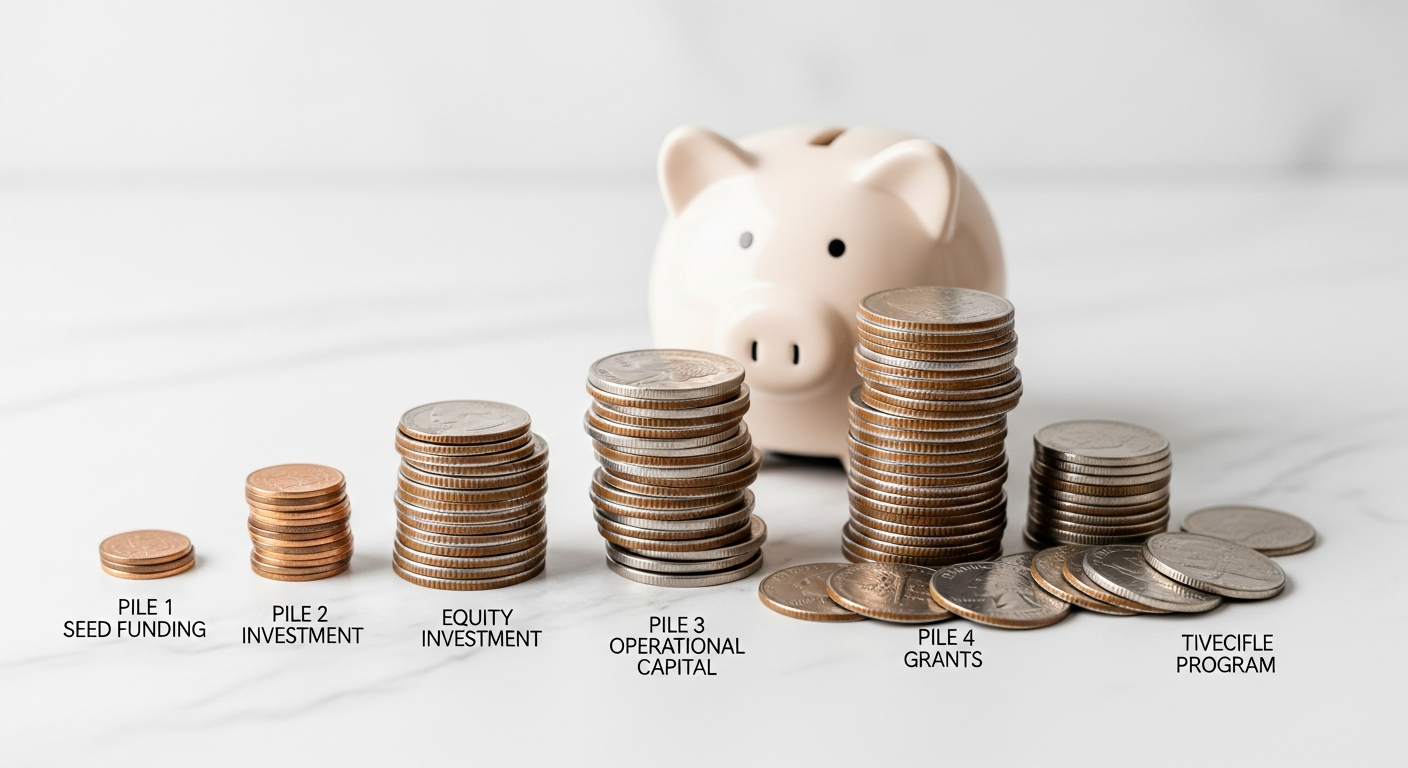
At Eamped, we understand the entrepreneurial journey, and we’re here to tell you that securing funding doesn’t always mean signing away your future to a lender. There are numerous powerful, strategic, and often more sustainable ways to fuel your venture without incurring debt. This comprehensive guide will explore the best ways to fund your small business without a loan, providing actionable insights, real-world examples, and practical steps to empower you to build and scale your business on your own terms. From leveraging your own grit to tapping into community power and strategic partnerships, get ready to discover a world of non-dilutive and equity-based funding options that preserve your financial freedom and foster genuine growth.
Mastering Bootstrapping: The Art of Self-Sufficiency and Lean Growth
Bootstrapping is perhaps the purest form of funding a small business without a loan. It’s the practice of building a company from the ground up using only personal savings, initial revenue, and minimal outside capital. For many legendary tech companies, including Mailchimp and GitHub in their early days, bootstrapping wasn’t just a funding strategy—it was a foundational philosophy that instilled discipline, efficiency, and a deep understanding of customer value. It forces you to be resourceful, prioritize ruthlessly, and validate your market before spending a dime you don’t have.
What Bootstrapping Entails
At its core, bootstrapping means funding your operations and growth through:
- Personal Savings: Investing your own money is the most common starting point. This demonstrates commitment and provides initial runway.
- Early Sales & Revenue: Generating income from your very first customers and reinvesting every penny back into the business. This is where lean operations truly shine.
- Sweat Equity: Valuing your time and effort as an investment. You’re trading personal hours for capital, which reduces immediate cash outflow.
- Cost Minimization: Operating with extreme frugality. This means delaying non-essential hires, using free or low-cost tools, working from home or co-working spaces, and negotiating every expense.
Why Bootstrapping is a Powerful Strategy
- Full Control: You maintain 100% ownership and decision-making power. There are no investors to report to, no loan covenants to adhere to.
- Financial Discipline: It forces you to be hyper-focused on profitability and cash flow from day one, building a sustainable business model.
- Market Validation: If you can build a viable business with minimal resources, it’s a strong signal that you have a compelling product or service that customers truly want and are willing to pay for.
- Increased Valuation: Should you eventually seek external investment, a bootstrapped business with proven traction and profitability often commands a higher valuation because you’ve de-risked much of the early stage.
Actionable Steps for Successful Bootstrapping
- Start Lean with an MVP: Develop a Minimum Viable Product (MVP) that solves a core problem for your target audience, then launch it quickly. Don’t overbuild.
- Prioritize Revenue Generation: Focus relentlessly on sales and customer acquisition. Your first customers are your first investors.
- Automate & Outsource Smartly: Use automation tools and strategically outsource non-core functions to minimize full-time payroll costs.
- Barter Services: Exchange your skills or services for those you need (e.g., web design for legal advice) to reduce cash expenditures.
- Manage Cash Flow Aggressively: Implement strict budgeting, track every expense, and optimize billing cycles to get paid faster.
Mailchimp, the email marketing giant, was famously bootstrapped for 18 years, growing organically through revenue before selling a majority stake for $12 billion. This long-term self-funding approach allowed them to prioritize product and customer experience without external pressures.
Unlocking Non-Dilutive Capital: Grants and Competitions
For many small businesses, especially those with innovative technology, social impact, or a research-and-development component, grants represent one of the best ways to fund your small business without a loan. Grants are essentially free money that you don’t have to repay or give up equity for. While highly competitive, securing a grant can provide significant capital infusion and add considerable prestige to your venture.
Exploring Grant Opportunities
- Government Grants:
- Federal: In the U.S., programs like the Small Business Innovation Research (SBIR) and Small Business Technology Transfer (STTR) grants offer millions of dollars to small businesses engaged in federal R&D. These are highly competitive but offer substantial funding (Phase I typically up to $250,000, Phase II up to $1.7 million).
- State and Local: Many states and municipalities offer grants to foster economic development, support specific industries (e.g., manufacturing, clean energy), or benefit underserved communities.
- Corporate Grants: Large corporations often have philanthropic arms or CSR (Corporate Social Responsibility) initiatives that award grants to businesses aligning with their values or community goals.
- Foundation Grants: Private and public foundations support a wide range of causes, from environmental sustainability to education and healthcare innovation.
- Non-Profit Organization Grants: Industry-specific non-profits may offer grants to advance particular sectors or solve specific problems.
Pitch Competitions and Awards
Beyond traditional grants, many organizations, universities, and industry groups host business plan or pitch competitions. These events not only offer cash prizes (which can range from a few thousand to hundreds of thousands of dollars) but also invaluable exposure, mentorship, and networking opportunities. They force you to hone your pitch and articulate your value proposition under pressure.
Actionable Steps to Secure Grants and Win Competitions
- Research Meticulously: Use databases like Grants.gov (for federal grants), Foundation Group, or local Chamber of Commerce resources to identify grants that align perfectly with your business mission, stage, and industry.
- Understand Eligibility: Don’t waste time on grants you don’t qualify for. Pay close attention to geographic restrictions, revenue limits, industry focus, and social impact requirements.
- Craft a Compelling Narrative: Grant applications are about storytelling and demonstrating impact. Clearly articulate the problem you’re solving, your innovative solution, your team’s expertise, and the broader benefit of your project.
- Quantify Impact: Provide data, projections, and clear metrics on how your business will achieve its goals and utilize the grant funds effectively.
- Network Strategically: Attend industry events, connect with grant officers or competition organizers, and seek advice from previous winners.
- Tailor Each Application: Never use a generic application. Customize every proposal to address the specific objectives and priorities of the grantor or competition.
Many biotech and cleantech startups heavily rely on SBIR/STTR grants in their early stages, leveraging this non-dilutive capital to de-risk their technology before seeking larger venture rounds.
Leveraging the Crowd: The Power of Crowdfunding
Crowdfunding has revolutionized the way small businesses and startups can raise capital, turning customers and enthusiasts into early supporters and even investors. It’s a highly effective method to fund your small business without a loan, offering market validation and a built-in community alongside capital.
Types of Crowdfunding
There are several distinct models, each suited for different business types and stages:
- Reward-Based Crowdfunding: Platforms like Kickstarter and Indiegogo allow businesses to raise money by offering backers non-financial rewards in exchange for their contributions. These rewards often include pre-orders of the product, exclusive access, or branded merchandise.
- Why it’s great: Validates market demand, generates early sales, builds a community of loyal customers, and creates buzz. It’s truly non-dilutive and non-debt.
- Example: The Pebble smartwatch famously raised over $10 million on Kickstarter in 2012, demonstrating massive market interest long before the product shipped.
- Equity Crowdfunding: Enabled by regulations like the JOBS Act in the U.S. (Title II, Title III, Title IV), platforms such as SeedInvest, StartEngine, and Wefunder allow everyday investors (not just accredited ones) to invest in private companies in exchange for equity (ownership shares).
- Why it’s great: Provides significant capital, allows a broad base of supporters to become owners, and can be faster than traditional venture capital. While it involves giving up equity, it’s not debt.
- Consideration: Requires compliance with securities regulations and often a significant marketing effort to attract investors.
- Donation-Based Crowdfunding: Primarily for charities or social causes, where individuals donate without expecting anything in return. While not typically for profit-driven businesses, it’s a model worth understanding for businesses with strong social missions.
Actionable Steps for a Successful Crowdfunding Campaign
- Build a Pre-Launch Audience: Success often hinges on having an audience ready to back you on day one. Collect emails, engage on social media, and generate excitement well before your campaign goes live.
- Craft a Compelling Story and Video: People invest in stories and passion. Clearly articulate your vision, the problem you solve, and why your product or service matters. A high-quality video is essential.
- Offer Irresistible Rewards (Reward-Based): Design tiered rewards that offer clear value and exclusivity. Early bird specials, limited editions, and unique experiences work well.
- Set Realistic Goals: An achievable goal builds momentum. It’s better to exceed a smaller goal than fall short of an ambitious one.
- Engage Throughout the Campaign: Regularly update your backers, respond to comments, and actively promote your campaign on all channels.
- Plan for Fulfillment: For reward-based campaigns, underestimating fulfillment logistics can be a pitfall. Factor in production, shipping, and potential delays.
Crowdfunding isn’t just about money; it’s a powerful marketing tool, a way to build a community, and a litmus test for your product’s appeal.
Strategic Partnerships and Customer-Funded Growth
One of the most sustainable and intelligent ways to fund your small business without a loan is by leveraging your customers and strategic partners. This approach minimizes risk, validates your market, and can provide continuous cash flow to fuel growth organically.
Customer-Funded Growth: Pre-Sales and Subscriptions
Imagine your customers paying you upfront, essentially financing your inventory or development. This is the essence of customer-funded growth:
- Pre-Orders & Deposits: For physical products or services, taking pre-orders or requiring deposits allows you to secure working capital before incurring significant production costs. This model is particularly effective for products with high anticipation or unique value propositions.
- Subscription Models: For SaaS businesses, content platforms, or service providers, recurring revenue from subscriptions provides predictable cash flow. Customers pay monthly or annually, giving you funds to invest in product development, marketing, and operational improvements.
- Milestone Payments: For custom projects or large service contracts, structuring payments based on project milestones ensures you’re funded as work progresses, rather than waiting for completion.
Strategic Alliances and Co-Development
Partnerships can bring more than just capital; they can offer resources, market access, and shared development costs:
- Joint Ventures & Co-Development: Partner with another company to develop a new product or service. You share the costs, risks, and ultimately, the profits. This is common in tech, pharma, and manufacturing.
- Revenue Share Agreements: Form partnerships where your business receives a percentage of revenue generated by your partner through the use of your product or service, or vice versa. This can provide a stable, ongoing revenue stream without upfront investment.
- Licensing Agreements: If you have proprietary technology, intellectual property, or a unique process, you can license it to larger companies for an upfront fee and/or ongoing royalties. This provides non-dilutive income without requiring you to manufacture or distribute the product yourself.
- Bartering & Trade Credit: While not direct funding, these methods conserve cash. Trade credit allows you to purchase goods or services from suppliers and pay later, effectively extending your working capital. Bartering involves exchanging goods or services directly without money changing hands, reducing operational expenses.
Actionable Steps for Strategic Partnerships & Customer Funding
- Clearly Define Your Value Proposition: Whether seeking customer pre-payments or a strategic partner, you must articulate the unique value your business brings.
- Structure Favorable Payment Terms: For services, require upfront deposits or milestone payments. For products, explore pre-order campaigns.
- Identify Complementary Partners: Look for businesses that serve a similar customer base but offer non-competing products or services.
- Formalize Agreements: Always have clear, legally binding contracts for pre-orders, subscriptions, joint ventures, and licensing to protect all parties.
- Build Trust: Reliability and clear communication are paramount when relying on customers or partners for funding. Deliver on your promises.
Many early-stage SaaS companies thrive on subscription models, using recurring revenue to continuously fund product improvements and expand their customer base without external debt. Figma, before its acquisition, was a prime example of a company built on a robust, customer-funded SaaS model.
Attracting Equity Investors: Angels and Venture Capitalists
While distinct from loans, attracting equity investors like angel investors and venture capitalists is one of the most significant ways to fund your small business without a loan. Instead of debt, you exchange a portion of your company’s ownership for capital. This approach often provides not just funding but also invaluable mentorship, strategic guidance, and access to powerful networks.
Understanding Angel Investors
Angel investors are high-net-worth individuals who invest their personal capital in early-stage companies, typically in exchange for equity. They often bring extensive industry experience and mentorship, acting as more than just a source of funds. Angel rounds are generally smaller than VC rounds, ranging from tens of thousands to a few million dollars, and are critical for seed-stage companies.
Understanding Venture Capitalists (VCs)
Venture Capital firms manage funds from institutional investors (pension funds, endowments, corporations) and invest in high-growth potential companies in exchange for significant equity stakes. VCs typically invest larger sums than angels, starting from a few million dollars upwards, across various funding rounds (Seed, Series A, B, C, etc.). They seek substantial returns and often take a more active role in guiding the company’s growth, strategy, and eventual exit (acquisition or IPO).
Why Equity Investment is Attractive (Beyond Just Money)
- Significant Capital Infusion: Equity funding can provide substantial capital to accelerate growth, hire talent, expand markets, and scale operations far beyond what bootstrapping or grants might allow.
- Strategic Guidance & Mentorship: Experienced investors often bring a wealth of knowledge, industry connections, and strategic oversight that can be crucial for navigating challenges and capitalizing on opportunities.
- Validation & Credibility: Securing investment from reputable angels or VCs adds significant credibility to your business, making it easier to attract top talent, strategic partners, and future investors.
- Access to Networks: Investors open doors to their extensive networks of contacts, including potential customers, suppliers, advisors, and future funding sources.
Actionable Steps to Attract Equity Investors
- Develop a Compelling Pitch Deck: This is your business story, vision, market opportunity, solution, team, and financial projections condensed into a concise, engaging presentation.
- Build a Strong Team: Investors back people as much as ideas. Highlight your team’s expertise, experience, and complementary skills.
- Demonstrate Traction: Show evidence of market validation—early customers, revenue, user growth, pilot programs, or key partnerships. “Show, don’t just tell.”
- Understand Your Market: Clearly articulate the problem you’re solving, the size of your total addressable market (TAM), and your competitive advantage.
- Network Relentlessly: Attend industry events, pitch competitions, and startup mixers. Get warm introductions through advisors, mentors, and other founders. Cold outreach is rarely effective.
- Prepare for Due Diligence: Be ready to share financial records, legal documents, market research, and customer data. Transparency is key.
- Know Your Valuation: Have a clear understanding of what percentage of your company you’re willing to give up for the capital you need.
Nearly every successful tech startup that scales rapidly, from Airbnb to Stripe, has leveraged venture capital to fuel its exponential growth, demonstrating the power of equity funding to build global enterprises.
Incubators, Accelerators, and Venture Builders
For early-stage startups, particularly in the tech space, incubators, accelerators, and venture builders offer a powerful blend of seed funding, mentorship, resources, and a structured environment for rapid growth. These programs are an excellent strategy among the best ways to fund your small business without a loan, as they typically provide initial capital in exchange for a small equity stake, rather than debt.
Incubators: Nurturing Early Ideas
Incubators are designed to “incubate” nascent ideas. They usually provide shared office space, basic resources, and mentorship over a longer period (months to years). They are best suited for companies in the very early stages of conceptualization, often before a fully developed product or even a business model exists. While some incubators offer modest grants or stipends, their primary value lies in providing a supportive environment to develop your idea without immediate pressure for rapid growth.
Accelerators: Fueling Rapid Growth
- Seed Funding: A fixed amount of capital (e.g., $100,000 to $250,000).
- Mentorship: Access to a network of experienced entrepreneurs, industry experts, and investors.
- Structured Curriculum: Workshops and guidance on everything from product development and marketing to legal and fundraising strategies.
- Networking Opportunities: Introductions to investors, potential customers, and strategic partners.
- Demo Day: A culminating event where startups pitch to a large audience of investors, media, and potential partners.
Examples: Y Combinator, Techstars, 500 Global are renowned accelerators that have launched thousands of successful companies.
Venture Builders (or Startup Studios): Building from Scratch
Venture builders differ in that they actively conceive, build, and launch new companies using their own resources and teams. They identify market opportunities, recruit founders (or act as co-founders), and provide significant operational support, funding, and talent to build a startup from day zero. In return, they take a substantial equity stake, often significantly more than accelerators, reflecting their deeper involvement and risk.
Actionable Steps to Engage with These Programs
- Research Programs Carefully: Identify incubators or accelerators that align with your industry, stage of development, and geographic location. Some are sector-specific (e.g., healthcare, fintech).
- Understand the Value Proposition: Beyond funding, what specific resources, mentorship, and network access does a program offer that will genuinely help your business?
- Craft a Standout Application: These programs are highly competitive. Clearly articulate your unique idea, market potential, team strength, and why their program is the perfect fit.
- Prepare for the Interview: If selected, be ready to confidently pitch your business, answer tough questions, and demonstrate your passion and coachability.
- Leverage the Network: Once accepted, actively engage with mentors, fellow founders, and program staff. The connections are often more valuable than the initial capital.
Airbnb, Dropbox, and Stripe are just a few of the tech giants that gained crucial early-stage traction and funding through Y Combinator, proving the catalytic effect of accelerators.
Friends, Family, and Fools (FFF) Funding
For many small businesses, especially those in their nascent stages, the first external capital comes from within their personal network. “Friends, Family, and Fools” (FFF) funding refers to investments from people who know and trust you, often more for your potential and character than a fully developed business plan. While often dismissed by professional investors, it remains one of the most accessible and common ways to fund your small business without a loan in the very early days.
The Advantages of FFF Funding
- Accessibility: It’s usually the easiest capital to raise when you have no formal track record or product yet.
- Flexible Terms: Family and friends are often more lenient with repayment schedules, interest rates (if any), or equity terms compared to traditional lenders or VCs. They might even offer truly non-repayable gifts.
- Trust-Based: These individuals believe in you, not just your business idea, providing crucial emotional and financial support.
- Early Validation: If your closest circle is willing to put money in, it can be a small signal of confidence in your venture, which can be useful when approaching future investors.
The Pitfalls and How to Avoid Them
While accessible, FFF funding comes with unique challenges, primarily the risk of damaging personal relationships if not handled professionally:
- Strained Relationships: Business disagreements can easily spill into personal life.
- Unprofessional Expectations: Lack of clear terms can lead to misunderstandings about returns, repayment, or involvement.
- Lack of Professional Scrutiny: While an advantage for ease of access, it means you might miss critical feedback that professional investors would provide.
Actionable Steps for Professional FFF Funding
- Treat It Like Any Other Investment: Present a clear business plan, outlining the opportunity, your strategy, and how the funds will be used.
- Formalize Everything with Legal Documents: Even with family, use clear, written agreements. This could be a promissory note (if it’s a loan, clearly define interest and repayment), a simple agreement for future equity (SAFE), or an equity investment agreement. This protects both parties.
- Clearly Communicate Risks: Be transparent that this is an investment in a startup, which inherently carries high risk. They could lose their entire investment.
- Set Clear Expectations: Discuss timelines, expected returns (if any), and how and when they’ll receive updates on the business’s progress. Will they be passive investors or involved?
- Avoid Over-Promising: Be realistic about potential returns and timelines. It’s better to under-promise and over-deliver.
- Separate Business from Personal: Establish boundaries. While they are friends/family, interact with them regarding the business in a professional capacity.
Many iconic companies, from Amazon to Dell, received critical early funding from family and friends before securing institutional investment. For example, Jeff Bezos famously raised initial capital for Amazon from his parents and other family members.
Conclusion: Charting Your Debt-Free Funding Path
Navigating the complex world of small business funding doesn’t have to lead you down the path of burdensome loans and restrictive covenants. As we’ve explored, there’s a robust ecosystem of alternative funding strategies that empower founders to retain control, build resilient businesses, and grow on their own terms. From the lean discipline of bootstrapping to the community power of crowdfunding, the strategic capital of grants, and the growth acceleration from equity investors and programs, the options are diverse and potent.
Choosing the best ways to fund your small business without a loan depends heavily on your industry, stage of development, risk tolerance, and growth ambitions. Often, the most successful approach involves a hybrid model—bootstrapping to validate your idea, then leveraging grants or crowdfunding for initial traction, and perhaps later bringing in strategic equity partners for scale. Each method offers unique advantages, but they all share a common thread: they free you from the shackles of debt, allowing you to innovate and adapt with greater agility.
Your journey as a founder is about solving problems and creating value. Don’t let traditional funding limitations be the problem you can’t solve. Equip yourself with the knowledge, embrace resourcefulness, and strategically pursue the funding avenues that best align with your vision. The capital you need is out there, waiting for you to claim it without compromising your entrepreneurial spirit or your company’s future. Start exploring these non-loan avenues today and build the business you’ve always envisioned.