How to Define Ideal Customer Profile (ICP): The Blueprint for Tech Startup & SaaS Success
Affiliate disclosure: This article may contain affiliate links. Recommendations are independent and editorially driven.
In the fiercely competitive landscape of tech startups and Software-as-a-Service (SaaS), precision is paramount. Every marketing dollar, every sales hour, and every product development sprint must be laser-focused to yield maximum return. At the heart of this precision lies an impeccably defined Ideal Customer Profile (ICP). For growth-hungry startups and established SaaS companies, knowing precisely who your best customers are – and aren’t – is the difference between thriving exponentially and slowly fading into obscurity.
This comprehensive guide from eamped is designed to demystify the process of defining your ICP, transforming it from an abstract concept into an actionable strategy. We’ll delve deep into the methodologies, data points, and strategic implications that empower you to identify, attract, and retain the customers who will not only love your product but also drive your long-term success. From optimizing your go-to-market (GTM) strategy to supercharging marketing automation and accelerating sales cycles, a robust ICP is the foundational pillar upon which sustainable growth is built.
Whether you’re a nascent startup seeking product-market fit or a scaling SaaS company aiming to expand efficiently, understanding and leveraging your ICP is non-negotiable. Prepare to unlock unparalleled clarity in your business strategy, refine your value proposition, and ultimately, engineer a more predictable and profitable growth trajectory.
What Exactly is an Ideal Customer Profile (ICP)?
An Ideal Customer Profile (ICP) is a detailed, data-driven description of the type of company or organization that would derive the most value from your product or service and, conversely, provides the most value to your business. It’s the “perfect fit” customer – not just someone who *can* use your product, but someone who *needs* it, will *succeed* with it, and will therefore *stay* with it, becoming an advocate and a profitable long-term partner. Unlike a broad target market, an ICP is highly specific, outlining the characteristics that indicate a strong potential for mutual success.
For tech startups and SaaS companies, an ICP isn’t merely a demographic snapshot; it’s a strategic North Star. It guides decisions across the entire organization, from engineering new features to crafting compelling marketing messages and training sales teams. Without a clear ICP, resources are often wasted on attracting customers who churn quickly, demand excessive support, or simply don’t fully leverage the solution’s capabilities, leading to suboptimal growth and increased operational costs.
ICP vs. Buyer Persona: Understanding the Nuances
While often conflated, ICPs and buyer personas serve distinct yet complementary roles in a comprehensive marketing and sales strategy. Understanding their differences is crucial for effective implementation:
- Ideal Customer Profile (ICP): Focuses on the *company* or *account* level. It describes the characteristics of the organization itself. Think B2B attributes like industry, company size, revenue, technological stack, geographic location, and specific pain points or goals at the organizational level. An ICP helps you decide *which companies to target*.
- Buyer Persona: Focuses on the *individual* within an ICP company. It describes the specific decision-makers, influencers, or end-users within that ideal account. This includes their job title, responsibilities, daily challenges, motivations, preferred communication channels, and personal goals. A buyer persona helps you understand *how to engage specific individuals* within your target ICP accounts.
In essence, you first define your ICP to identify the right companies. Once those companies are identified, you then leverage buyer personas to understand and effectively communicate with the specific people within those companies who are involved in the purchasing decision or product usage. Both are vital, but the ICP sets the initial strategic direction for account-based efforts.
The Strategic Imperative of a Well-Defined ICP
The strategic importance of a well-defined ICP cannot be overstated, especially for businesses operating in dynamic, high-growth sectors like tech and SaaS. It acts as a filter, allowing you to concentrate your efforts where they will yield the greatest impact. Here’s why it’s imperative:
- Optimized Resource Allocation: Prevents wasted time, money, and effort on leads or accounts that are unlikely to convert or succeed.
- Enhanced Product Development: Informs the product roadmap by highlighting the features and solutions most valued by your best customers.
- More Effective Marketing: Enables hyper-targeted campaigns, personalized messaging, and content strategies that resonate deeply with ideal prospects.
- Accelerated Sales Cycles: Sales teams can prioritize and pursue accounts with higher closing rates and lower acquisition costs.
- Improved Customer Retention & LTV: Customers who are an ideal fit are more likely to achieve success with your product, leading to higher satisfaction, longer retention, and increased Customer Lifetime Value (CLTV).
- Predictable Growth: Creates a repeatable blueprint for identifying and acquiring new customers, making growth more scalable and forecastable.
An ICP isn’t just a marketing or sales tool; it’s a foundational business strategy that drives efficiency, profitability, and sustainable growth across the entire organization.
The Core Components of a Robust ICP
Building a truly robust ICP requires looking beyond surface-level demographics. It involves a multi-faceted approach, incorporating various data types that paint a complete picture of the ideal organization. We categorize these components into firmographic, technographic, behavioral, and psychographic data.
Firmographic Data: The Foundation
Firmographics are the B2B equivalent of demographics. They describe the basic characteristics of a company and are often the first filter in identifying potential ICPs. These are usually easy to obtain and verify.
- Industry (Vertical): Which specific industry sectors do your best customers belong to? (e.g., FinTech, Healthcare IT, E-commerce, Manufacturing). This helps tailor your messaging to industry-specific pain points.
- Company Size: This can be measured by employee count, annual revenue, or both. Do your ideal customers tend to be small businesses, mid-market, or large enterprises? This often dictates their budget, complexity of needs, and decision-making processes.
- Geographic Location: Are your best customers concentrated in specific regions, countries, or globally? This might be driven by regulatory requirements, market readiness, or your own operational reach.
- Revenue/Funding: Understanding a company’s financial health and capacity to invest in solutions like yours is critical. For startups, knowing their funding stage can also be a strong indicator.
- Growth Stage: Are they early-stage startups, rapidly scaling companies, or mature, stable organizations? Their growth trajectory often correlates with their needs and budget for new solutions.
Technographic Data: Unmasking the Tech Stack
Technographic data reveals the technology infrastructure and software applications a company currently uses. This is especially crucial for SaaS companies, as it helps determine compatibility, integration opportunities, and competitive positioning.
- Existing Software Stack: What CRM, ERP, marketing automation, HR, or project management software do they use? This can reveal potential integration points or identify companies that might be looking to replace outdated systems.
- Cloud Provider: Are they primarily on AWS, Azure, GCP, or on-premise? This might influence their readiness for certain SaaS solutions or your ability to integrate.
- Specific Technologies: Do they use particular programming languages, databases, or niche industry-specific tools that your product complements or integrates with?
- Technology Adoption Level: Are they early adopters of new technology, or do they tend to stick with established, mature solutions? This can indicate their openness to innovation.
Behavioral Insights: Actions Speak Louder
Behavioral data captures how companies (or individuals within them) interact with your brand, your product, and the market at large. This data is often indicative of their potential to become a successful customer.
- Website Engagement: Which pages do they visit? How long do they stay? What content do they consume? High engagement with specific product pages or thought leadership content related to their pain points can be a strong signal.
- Content Downloads/Webinar Attendance: Are they actively seeking information related to your solution area? Downloading whitepapers, attending webinars, or requesting demos are strong buying signals.
- Product Usage Patterns (for existing customers): For current customers, which features do they use most? How frequently? High engagement with core features, successful onboarding, and low support ticket rates are indicators of an ideal fit.
- Response to Outreach: How do they respond to emails, calls, or other sales touches? Open rates, reply rates, and meeting acceptance indicate their level of interest.
- Trigger Events: Are there specific company events that indicate a higher likelihood of needing your solution? (e.g., a new round of funding, a recent acquisition, an executive hire, or a public announcement about digital transformation initiatives).
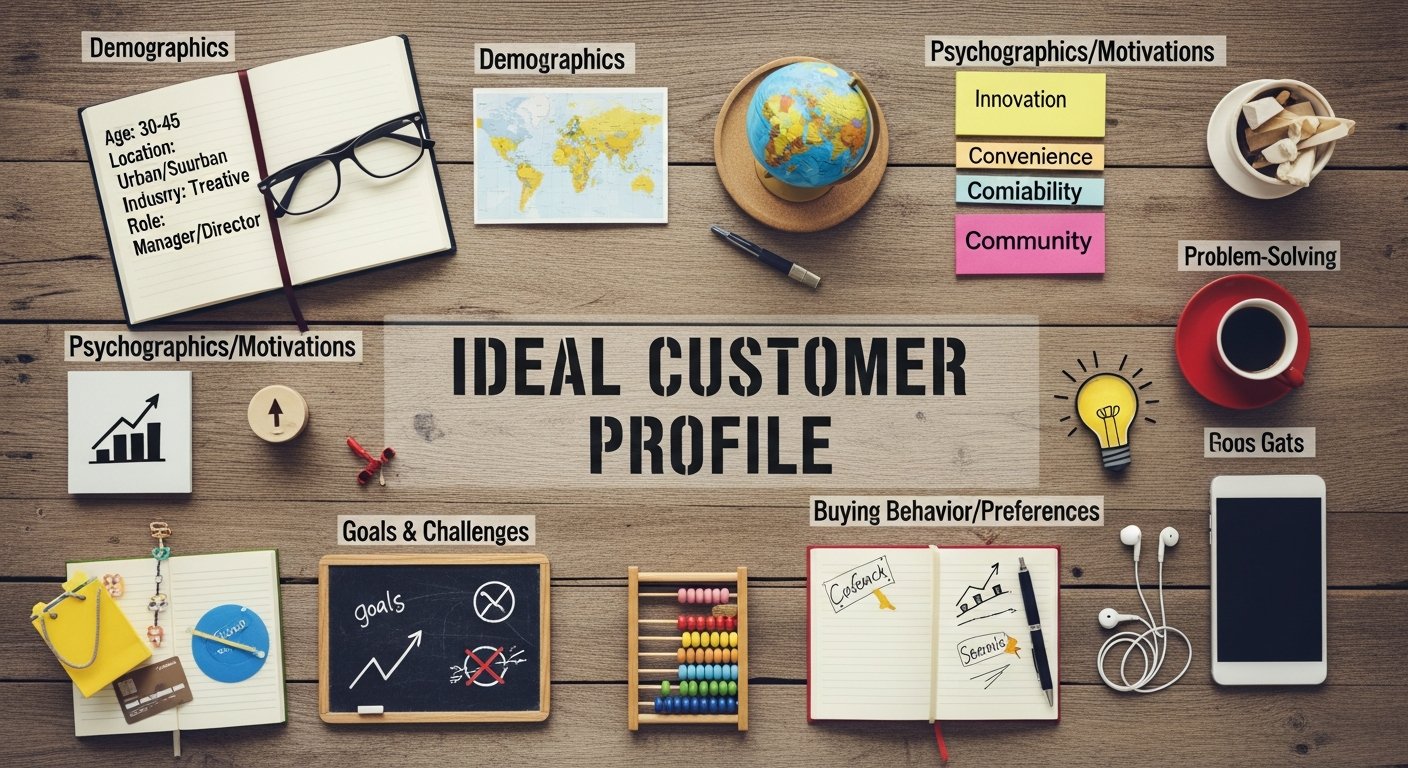
[INLINE IMAGE 1: place after second H2 | alt=”define ideal customer profile concept illustration”]
Psychographic Data: The ‘Why’ Behind the ‘What’
Psychographics delve into the attitudes, values, and strategic priorities of a company. This is harder to quantify but provides invaluable context for understanding why a company would choose your solution.
- Strategic Priorities: What are their overarching business goals? Are they focused on aggressive growth, cost reduction, market expansion, or innovation? Your solution should directly contribute to these priorities.
- Pain Points & Challenges: What specific, acute problems are they struggling with that your product can solve? These are often the primary drivers for seeking new solutions.
- Culture & Values: Does their company culture align with yours? Are they forward-thinking, risk-averse, collaborative, or hierarchical? This can impact sales cycles and long-term partnership.
- Decision-Making Process: How do they typically evaluate and adopt new technologies? Are they consensus-driven, top-down, or agile in their approach?
- Budget Philosophy: Do they view software as an investment to drive growth, or primarily as a cost center to be minimized? Ideal customers see the ROI.
- Openness to Innovation: Are they eager to try new technologies and improve processes, or are they resistant to change and prefer established solutions?
By combining these four categories of data, you can construct a highly nuanced and actionable ICP that goes far beyond simple demographics, allowing for truly targeted and effective strategies.
Why Defining Your ICP is Non-Negotiable for Tech Startups & SaaS
In the high-stakes world of tech startups and SaaS, where rapid iteration and efficient scaling are keys to survival and dominance, neglecting to define an ICP is akin to navigating without a compass. It leads to scattered efforts, wasted resources, and ultimately, a diluted market position. For eamped’s audience – those focused on startup growth, marketing automation, and SaaS go-to-market strategies – the ICP is the bedrock upon which all successful initiatives are built. Here’s why it’s absolutely non-negotiable:
Sharpening Your Go-to-Market (GTM) Strategy
Your GTM strategy is the plan for bringing your product to market and acquiring customers. An ICP provides the foundational intelligence for this plan, ensuring every element is aligned:
- Precise Market Segmentation: Instead of casting a wide net, an ICP enables you to pinpoint the most promising segments, allowing for focused resource allocation.
- Clear Value Proposition: By understanding the specific needs and challenges of your ICP, you can articulate a value proposition that resonates deeply and directly addresses their pain points.
- Optimized Channel Strategy: Knowing where your ideal customers spend their time (online and offline) dictates the most effective marketing and sales channels, be it specific industry forums, LinkedIn groups, or trade shows.
- Competitive Differentiation: An ICP helps you identify niches where your product can truly excel and differentiate itself from competitors who might be targeting a broader, less defined audience.
Without an ICP, your GTM strategy risks being generic, inefficient, and failing to capture the attention of the customers who matter most.
Optimizing Product Development and Roadmapping
Product-led growth is a cornerstone of modern SaaS success, and an ICP is central to building products that truly solve problems for your best users. It shifts product development from an internal “build it and they will come” mentality to a customer-centric approach:
- Feature Prioritization: An ICP helps product managers prioritize features that address the most critical pain points and deliver the highest value to your ideal users, preventing the development of “nice-to-have” features that don’t move the needle.
- Reduced Churn Risk: When your product roadmap is guided by your ICP, you build solutions that directly solve their problems, leading to higher product adoption, increased satisfaction, and significantly reduced churn.
- Innovation with Purpose: Understanding the future needs and aspirations of your ICP allows for proactive innovation, positioning your product ahead of the curve in solving emerging challenges.
- Improved User Experience (UX): Designing for a specific, well-understood user type leads to a more intuitive, effective, and delightful user experience, which is crucial for SaaS adoption and advocacy.
An ICP ensures that every line of code written and every feature designed serves a clear, strategic purpose for your most valuable customers.
Boosting Sales Efficiency and Conversion Rates
Sales teams are on the front lines, and an ICP equips them with the intelligence needed to operate with maximum efficiency and impact:
- Targeted Prospecting: Sales reps can identify and prioritize accounts that fit the ICP criteria, leading to higher-quality leads and more productive outreach.
- Personalized Outreach: With a deep understanding of ICP challenges and priorities, sales messaging can be highly personalized and relevant, increasing engagement and response rates.
- Faster Sales Cycles: Ideal customers often recognize the value of your solution more quickly, leading to shorter sales cycles and quicker closes. They have a clear, acute pain that your product solves.
- Higher Win Rates: Focusing on ICP accounts naturally leads to higher conversion rates because these companies are genuinely a good fit for your offering.
- Reduced Sales Acquisition Cost (CAC): By streamlining prospecting and increasing win rates, the cost to acquire each customer decreases, directly impacting profitability.
An ICP transforms sales from a broad-stroke endeavor into a precise, high-conversion operation, crucial for sales enablement in growth-focused companies.
Maximizing Marketing ROI and Personalization
Marketing is often the largest expenditure for many startups and SaaS companies. An ICP ensures this investment is not only effective but also highly efficient:
- Hyper-Targeted Campaigns: Marketing teams can design campaigns that speak directly to the specific industries, roles, and pain points of the ICP, dramatically increasing engagement and lead quality.
- Content Strategy Alignment: Content creation becomes focused on addressing the information needs, questions, and challenges of the ideal customer, leading to higher organic visibility and lead capture.
- Optimized Ad Spend: Ad budgets can be allocated to platforms and audiences where the ICP is most active, reducing wasted impressions and clicks.
- Effective Marketing Automation: ICP insights power sophisticated marketing automation workflows, allowing for personalized lead nurturing paths that guide prospects effectively through the funnel. This leads to higher MQL to SQL conversion rates.
- Stronger Brand Messaging: A clear ICP ensures that all brand communication, from website copy to social media posts, consistently resonates with the target audience, building trust and authority.
For marketing automation strategies, an ICP is the core intelligence that makes personalization truly powerful and impactful.
Facilitating Sustainable Growth and Scalability
Ultimately, a well-defined ICP is the engine for sustainable, scalable growth. It provides a repeatable framework for success:
- Reduced Churn: Ideal customers, by definition, derive the most value from your product, leading to higher satisfaction and significantly lower churn rates. High retention is critical for SaaS growth.
- Increased Customer Lifetime Value (CLTV): Retained customers are more likely to expand their usage, upgrade plans, and become advocates, boosting their CLTV and overall company revenue.
- Stronger Referrals and Advocacy: Satisfied ideal customers are your best marketing channel. They are more likely to refer new business and act as case studies or testimonials.
- Clearer Expansion Opportunities: Understanding your ICP helps identify adjacent markets or new ICP segments for future expansion, ensuring strategic rather than haphazard growth.
In essence, an ICP transforms unpredictable growth into a predictable, measurable, and repeatable process, which is the holy grail for any tech startup or SaaS company aiming for long-term success.
A Step-by-Step Guide to Defining Your Ideal Customer Profile
Defining your ICP isn’t a one-time exercise; it’s an ongoing process of data collection, analysis, and refinement. However, getting started with a structured approach is crucial. This step-by-step guide provides a practical framework for tech startups and SaaS companies to craft a truly effective Ideal Customer Profile.
Step 1: Analyze Your Best Existing Customers
The best place to start is often right under your nose: your current customer base. Not all customers are created equal. Identify the 10-20% of your customers who:
- Derive the most value: They achieve significant success with your product, often becoming advocates.
- Are highly engaged: They use your product frequently and deeply, exploring various features.
- Have high retention rates: They’ve been with you the longest and are least likely to churn.
- Are profitable: They contribute positively to your revenue and potentially have expansion potential (e.g., upsells, cross-sells).
- Are easiest to service: They require minimal support, don’t demand custom features outside your roadmap, and are generally pleasant to work with.
Compile a list of these “champions” and gather as much data as possible about them across all four ICP component categories: firmographic, technographic, behavioral, and psychographic.
Step 2: Identify Common Attributes and Pain Points
Once you have your list of best customers, begin to look for patterns and commonalities. This is where the synthesis happens:
- Firmographics: Do they cluster around a specific industry, company size range, or revenue bracket? Are they all located in a particular region?
- Technographics: Do they share a common tech stack (e.g., all use Salesforce, HubSpot, or AWS)? Are they all using a specific integration that your product offers?
- Behaviorals: How did they engage with your marketing and sales process? What trigger events led them to your solution? How do they use your product successfully?
- Psychographics: What are their common strategic priorities? What specific, acute pain points did they have that your product effectively solved? What was their cultural attitude towards adopting new technology?
Pay close attention to the *problems* they faced before your solution and the *results* they achieved with it. This forms the core of your value proposition for future ideal customers.
Step 3: Interview and Survey Key Stakeholders (Internal & External)
Data tells you *what* happened, but interviews reveal *why*. Engage with both internal and external stakeholders:
- Internal Interviews: Talk to your sales team (AEs, SDRs), customer success managers (CSMs), product managers, and even support staff. They interact with customers daily and have invaluable qualitative insights into who succeeds and why. Ask them: “Who are our best customers and why?” and “Which customers are a poor fit and why?”
- External Interviews: Conduct in-depth interviews with your identified “best customers.” Ask open-ended questions about their challenges, goals, their decision-making process, how they evaluated solutions, and the tangible impact your product has had on their business.
- Surveys: Supplement interviews with surveys to gather quantitative data from a broader segment of your customer base. Ask about product satisfaction, feature usage, perceived value, and demographic/firmographic details.
These conversations will help validate your initial assumptions and uncover nuances that data alone might miss.
Step 4: Leverage Data Analytics and CRM Insights
Your CRM, marketing automation platform, product analytics tools, and even financial systems are treasure troves of ICP data. Utilize them to confirm and expand upon your qualitative insights:
- CRM Data: Analyze conversion rates, deal sizes, sales cycle lengths, and win/loss reasons across different customer segments. Look for commonalities among your most successful closed-won deals.
- Marketing Automation Data: Track lead sources, content engagement, and website behavior that led to conversions for your ideal customers.
- Product Analytics: Identify common usage patterns, popular features, and integration usage among your most successful and engaged users.
- Financial Data: Analyze CLTV, churn rates, and average revenue per account (ARPA) by segment to quantify the value of different customer types.
- Third-Party Data: Use data enrichment tools to gather additional firmographic and technographic data on your customer base and potential leads.
[INLINE IMAGE 2: place after fourth H2 | alt=”define ideal customer profile comparison illustration”]
Step 5: Document and Socialize Your ICP
Once you’ve collected and synthesized your data, formalize your ICP into a clear, concise document. This isn’t just a marketing asset; it’s a strategic organizational document. It should include:
- A summary description of your ideal company.
- Bullet points detailing key firmographic, technographic, behavioral, and psychographic attributes.
- A clear articulation of their primary pain points and the specific value your product delivers.
- Examples of actual companies that fit the ICP.
- Examples of companies that are *not* a good fit (negative ICP).
Crucially, once documented, *socialize* it across all relevant departments: sales, marketing, product, customer success, and even leadership. Everyone needs to understand and align with the ICP to ensure consistent targeting and messaging. Consider creating a centralized resource or wiki page for easy access.
Step 6: Iterate and Refine Continuously
The market evolves, your product changes, and your business learns. Your ICP is not static. It requires continuous monitoring and refinement:
- Regular Reviews: Schedule quarterly or bi-annual reviews of your ICP. Re-evaluate your best customers. Has their profile changed? Are new segments emerging?
- Performance Monitoring: Track key metrics (e.g., CLTV, churn, sales cycle length, ARR per customer type) to see if your ICP is still leading to the desired business outcomes.
- A/B Testing: Continuously test messaging, targeting, and channel strategies based on your ICP hypotheses.
- Feedback Loops: Maintain ongoing feedback loops from sales and customer success to capture new insights and validate assumptions.
By following these steps, tech startups and SaaS companies can move from guesswork to strategic precision, ensuring their efforts are consistently directed towards attracting and retaining the customers who fuel sustainable growth. This iterative process ensures that your ICP remains a living, breathing guide for your GTM strategy.
Tools and Technologies to Aid ICP Definition
Defining an ICP is a data-intensive process that can be significantly streamlined and enhanced by leveraging the right tools and technologies. For tech startups and SaaS companies, integrating these solutions can turn fragmented data into actionable insights, making the ICP definition more robust and dynamic. Here’s an overview of essential tool categories and their benefits:
CRM Systems: Your Data Goldmine
Your Customer Relationship Management (CRM) system is arguably the most critical tool for ICP definition. It houses a wealth of first-party data about your existing customers and leads.
- Centralized Customer Data: Stores firmographic details, interaction history, deal stages, and sales notes.
- Performance Analytics: Allows you to segment customers by various attributes and analyze performance metrics like deal size, win rates, sales cycle length, and churn.
- Lead Scoring: Can be configured to score leads based on ICP criteria, helping sales prioritize.
Popular examples include Salesforce, HubSpot CRM, Pipedrive, and Zoho CRM.
Marketing Automation Platforms: Tracking Engagement
These platforms capture how prospects and customers interact with your marketing content and campaigns, providing valuable behavioral data.
- Website Tracking: Monitors which pages prospects visit, content they download, and forms they submit.
- Email Engagement: Tracks open rates, click-through rates, and conversion paths for different segments.
- Lead Nurturing Analytics: Reveals which types of content resonate with specific company profiles.
Key players include HubSpot Marketing Hub, Marketo, Pardot, and ActiveCampaign.
Data Enrichment and Predictive Analytics Tools
These tools take your existing data and augment it with additional firmographic, technographic, and even psychographic insights, or use AI to predict ideal fits.
- Data Enrichment: Automatically fills in missing company data (industry, revenue, employee count, tech stack) for your leads and accounts using public and proprietary databases.
- Predictive Scoring: Uses machine learning algorithms to analyze your historical data and predict which new leads or accounts are most likely to become ideal customers.
- Technographic Data Providers: Specifically identify the technologies used by companies, crucial for SaaS integration compatibility and competitive analysis.
Examples include Clearbit, ZoomInfo, Apollo.io, BuiltWith, and MadKudu.
Survey and Feedback Platforms
Essential for gathering qualitative and quantitative insights directly from your customers and prospects.
- Customer Interviews: Facilitate structured and unstructured feedback sessions.
- NPS/CSAT Surveys: Measure customer satisfaction and loyalty, helping identify your most delighted customers.
- Market Research Surveys: Gather insights on pain points, needs, and preferences from broader audiences.
Tools like SurveyMonkey, Typeform, Qualtrics, and Hotjar (for on-site feedback) are commonly used.
Competitor Analysis Tools
Understanding your competitors’ customer base can sometimes offer clues about your own potential ICP, or identify underserved niches.
- Market Share Analysis: Reveals who your competitors are selling to.
- Audience Overlap: Shows shared audiences between your site and competitors.
- Feature Comparison: Helps identify gaps in the market that your ICP might value.
SimilarWeb, SpyFu, Ahrefs, and SEMrush offer features for competitive intelligence.
Here’s a comparison table highlighting some key tools:
| Tool Category | Example Tools | Primary ICP Contribution | Key Features for ICP |
|---|---|---|---|
| CRM System | Salesforce, HubSpot CRM, Pipedrive | First-party customer data, sales performance metrics, lead qualification. | Contact/Company Management, Deal Tracking, Reporting & Analytics, Lead Scoring. |
| Marketing Automation | HubSpot Marketing Hub, Marketo, Pardot | Behavioral insights, content engagement, lead nurturing analytics. | Website Visitor Tracking, Email Marketing Analytics, Lead Scoring, Campaign Performance. |
| Data Enrichment & Technographics | Clearbit, ZoomInfo, Apollo.io, BuiltWith | Automated firmographic & technographic data, B2B contact details. | Company Profiles, Employee Data, Tech Stack Identification, Intent Data, Prospecting. |
| Product Analytics | Mixpanel, Amplitude, Pendo | Product usage patterns, feature adoption, user behavior within the application. | Event Tracking, User Journeys, Funnel Analysis, Retention Cohorts, A/B Testing. |
| Survey & Feedback | SurveyMonkey, Typeform, Qualtrics | Qualitative & quantitative customer feedback, pain point identification. | Customizable Surveys, NPS/CSAT, Interview Scheduling, Data Analysis. |
By strategically combining these tools, tech startups and SaaS companies can gather, analyze, and leverage vast amounts of data to create a dynamic, informed, and highly effective Ideal Customer Profile, fueling their SaaS go-to-market success.
Common Pitfalls and How to Avoid Them
While the concept of defining an ICP seems straightforward, many tech startups and SaaS companies stumble during implementation. Avoiding these common pitfalls is as crucial as understanding the definition itself, ensuring your efforts yield meaningful results and don’t become another discarded initiative.
The Trap of Oversimplification
One of the most common mistakes is creating an ICP that is too broad or based on too few data points. This happens when companies focus only on basic firmographics (e.g., “any company in the tech industry with 50-500 employees”) without digging deeper into psychographics, technographics, or behavioral patterns.
- How to Avoid: Insist on a multi-dimensional approach. Combine firmographic data with technographic insights (their existing software stack), behavioral triggers (how they engage with content, product usage), and psychographic factors (their strategic priorities, values, and specific pain points). The more detailed and nuanced your ICP, the more effective it will be. Remember, the goal is specificity, not generality.
Ignoring Negative ICPs
Many focus solely on defining who their ideal customer *is*, neglecting to articulate who their ideal customer *is not*. A negative ICP is just as valuable as a positive one, helping you qualify *out* accounts that will likely drain resources, churn quickly, or never realize full value from your product.
- How to Avoid: Actively identify common attributes of your worst customers: those with high churn rates, excessive support requests, low product usage, or those who consistently challenge your pricing model. Document these characteristics as your “negative ICP.” Use this to disqualify leads early in the sales process, preventing wasted time and resources. Examples might include companies below a certain revenue threshold, those using a competing legacy system with no budget to switch, or organizations in a highly regulated industry you don’t support.
Lack of Cross-Functional Alignment
An ICP is a strategic asset, but its power diminishes significantly if it lives only within the marketing or sales department. If product teams are building features for a different audience, or customer success is onboarding customers who aren’t a good fit, the entire strategy falls apart.
- How to Avoid: Make ICP definition a collaborative, cross-functional effort from the outset. Involve leadership, sales, marketing, product, and customer success in its creation and refinement. Once defined, communicate it widely and regularly. Integrate the ICP into sales playbooks, marketing guidelines, product requirement documents, and customer success onboarding processes. Regular workshops and training sessions can reinforce its importance and ensure consistent application across all teams.
Setting and Forgetting: The Need for Iteration
The market, customer needs, competitive landscape, and even your own product evolve. An ICP defined today might not be perfectly relevant in 6 months or a year. Treating it as a static document is a recipe for diminishing returns.
- How to Avoid: Embed ICP review and refinement into your regular business cadence. Schedule quarterly or bi-annual ICP workshops where teams reassess its validity against current performance metrics, market changes, and new product developments. Be open to evolving your ICP as your product matures, or as you expand into new markets. Continuously collect feedback from sales and customer success, and monitor product usage data to spot emerging trends or shifts in who your “best” customers are. This iterative approach ensures your ICP remains a dynamic and effective guide for growth.
By proactively addressing these common pitfalls, tech startups and SaaS companies can ensure their investment in defining an ICP translates into tangible, sustainable growth and a significantly more efficient operation.
Implementing Your ICP Across Your Organization
Defining your Ideal Customer Profile is merely the first step. The true power of an ICP is unleashed when it’s actively implemented and integrated into the daily operations and strategic decisions of every relevant department. This organizational alignment ensures that everyone is working towards attracting, serving, and retaining the right customers, driving coherent growth. For startup growth strategies, this integration is critical.
Sales Enablement and Training
The sales team is on the front lines of customer acquisition, and a well-integrated ICP transforms their efficiency and effectiveness.
- Targeted Prospecting: Equip sales development representatives (SDRs) and account executives (AEs) with clear ICP guidelines for lead qualification and account prioritization. This means fewer wasted outreach efforts on poor-fit companies.
- Personalized Messaging: Train sales teams to tailor their outreach, discovery questions, and demo presentations to the specific pain points and strategic priorities of the ICP. Provide them with ICP-specific battlecards and messaging frameworks.
- Qualification Criteria: Integrate ICP attributes into your CRM as mandatory fields or lead scoring criteria, ensuring only truly qualified leads proceed through the pipeline.
- Deal Prioritization: Encourage AEs to prioritize deals with high ICP fit, recognizing that these accounts typically have higher close rates and lower churn potential.
Example: If your ICP favors FinTech companies under strict regulatory compliance, sales reps should highlight your product’s security features and compliance certifications in early conversations.
Marketing Content and Campaign Strategy
Marketing is the engine for attracting and nurturing leads. The ICP ensures every campaign and piece of content is relevant and impactful.
- Content Creation: Develop content (blog posts, whitepapers, webinars, case studies) that specifically addresses the challenges, goals, and interests of your ICP. Focus on solving their problems, not just listing features.
- Channel Selection: Allocate marketing budget to channels where your ICP spends their time – specific industry publications, professional social networks, or niche online communities.
- Messaging & Positioning: Craft all marketing copy, from website headlines to ad creatives, with the ICP’s language and priorities in mind.
- Lead Nurturing: Design automated email sequences
How to Define Ideal Customer Profile (ICP): The Blueprint for Tech Startup & SaaS Success
Affiliate disclosure: This article may contain affiliate links. Recommendations are independent and editorially driven.
In the fiercely competitive landscape of tech startups and Software-as-a-Service (SaaS), precision is paramount. Every marketing dollar, every sales hour, and every product development sprint must be laser-focused to yield maximum return. At the heart of this precision lies an impeccably defined Ideal Customer Profile (ICP). For growth-hungry startups and established SaaS companies, knowing precisely who your best customers are – and aren’t – is the difference between thriving exponentially and slowly fading into obscurity.
This comprehensive guide from eamped is designed to demystify the process of defining your ICP, transforming it from an abstract concept into an actionable strategy. We’ll delve deep into the methodologies, data points, and strategic implications that empower you to identify, attract, and retain the customers who will not only love your product but also drive your long-term success. From optimizing your go-to-market (GTM) strategy to supercharging marketing automation and accelerating sales cycles, a robust ICP is the foundational pillar upon which sustainable growth is built.
Whether you’re a nascent startup seeking product-market fit or a scaling SaaS company aiming to expand efficiently, understanding and leveraging your ICP is non-negotiable. Prepare to unlock unparalleled clarity in your business strategy, refine your value proposition, and ultimately, engineer a more predictable and profitable growth trajectory.
What Exactly is an Ideal Customer Profile (ICP)?
An Ideal Customer Profile (ICP) is a detailed, data-driven description of the type of company or organization that would derive the most value from your product or service and, conversely, provides the most value to your business. It’s the “perfect fit” customer – not just someone who *can* use your product, but someone who *needs* it, will *succeed* with it, and will therefore *stay* with it, becoming an advocate and a profitable long-term partner. Unlike a broad target market, an ICP is highly specific, outlining the characteristics that indicate a strong potential for mutual success.
For tech startups and SaaS companies, an ICP isn’t merely a demographic snapshot; it’s a strategic North Star. It guides decisions across the entire organization, from engineering new features to crafting compelling marketing messages and training sales teams. Without a clear ICP, resources are often wasted on attracting customers who churn quickly, demand excessive support, or simply don’t fully leverage the solution’s capabilities, leading to suboptimal growth and increased operational costs.
ICP vs. Buyer Persona: Understanding the Nuances
While often conflated, ICPs and buyer personas serve distinct yet complementary roles in a comprehensive marketing and sales strategy. Understanding their differences is crucial for effective implementation:
- Ideal Customer Profile (ICP): Focuses on the *company* or *account* level. It describes the characteristics of the organization itself. Think B2B attributes like industry, company size, revenue, technological stack, geographic location, and specific pain points or goals at the organizational level. An ICP helps you decide *which companies to target*.
- Buyer Persona: Focuses on the *individual* within an ICP company. It describes the specific decision-makers, influencers, or end-users within that ideal account. This includes their job title, responsibilities, daily challenges, motivations, preferred communication channels, and personal goals. A buyer persona helps you understand *how to engage specific individuals* within your target ICP accounts.
In essence, you first define your ICP to identify the right companies. Once those companies are identified, you then leverage buyer personas to understand and effectively communicate with the specific people within those companies who are involved in the purchasing decision or product usage. Both are vital, but the ICP sets the initial strategic direction for account-based efforts.
The Strategic Imperative of a Well-Defined ICP
The strategic importance of a well-defined ICP cannot be overstated, especially for businesses operating in dynamic, high-growth sectors like tech and SaaS. It acts as a filter, allowing you to concentrate your efforts where they will yield the greatest impact. Here’s why it’s imperative:
- Optimized Resource Allocation: Prevents wasted time, money, and effort on leads or accounts that are unlikely to convert or succeed.
- Enhanced Product Development: Informs the product roadmap by highlighting the features and solutions most valued by your best customers.
- More Effective Marketing: Enables hyper-targeted campaigns, personalized messaging, and content strategies that resonate deeply with ideal prospects.
- Accelerated Sales Cycles: Sales teams can prioritize and pursue accounts with higher closing rates and lower acquisition costs.
- Improved Customer Retention & LTV: Customers who are an ideal fit are more likely to achieve success with your product, leading to higher satisfaction, longer retention, and increased Customer Lifetime Value (CLTV).
- Predictable Growth: Creates a repeatable blueprint for identifying and acquiring new customers, making growth more scalable and forecastable.
An ICP isn’t just a marketing or sales tool; it’s a foundational business strategy that drives efficiency, profitability, and sustainable growth across the entire organization.
The Core Components of a Robust ICP
Building a truly robust ICP requires looking beyond surface-level demographics. It involves a multi-faceted approach, incorporating various data types that paint a complete picture of the ideal organization. We categorize these components into firmographic, technographic, behavioral, and psychographic data.
Firmographic Data: The Foundation
Firmographics are the B2B equivalent of demographics. They describe the basic characteristics of a company and are often the first filter in identifying potential ICPs. These are usually easy to obtain and verify.
- Industry (Vertical): Which specific industry sectors do your best customers belong to? (e.g., FinTech, Healthcare IT, E-commerce, Manufacturing). This helps tailor your messaging to industry-specific pain points.
- Company Size: This can be measured by employee count, annual revenue, or both. Do your ideal customers tend to be small businesses, mid-market, or large enterprises? This often dictates their budget, complexity of needs, and decision-making processes.
- Geographic Location: Are your best customers concentrated in specific regions, countries, or globally? This might be driven by regulatory requirements, market readiness, or your own operational reach.
- Revenue/Funding: Understanding a company’s financial health and capacity to invest in solutions like yours is critical. For startups, knowing their funding stage can also be a strong indicator.
- Growth Stage: Are they early-stage startups, rapidly scaling companies, or mature, stable organizations? Their growth trajectory often correlates with their needs and budget for new solutions.
Technographic Data: Unmasking the Tech Stack
Technographic data reveals the technology infrastructure and software applications a company currently uses. This is especially crucial for SaaS companies, as it helps determine compatibility, integration opportunities, and competitive positioning.
- Existing Software Stack: What CRM, ERP, marketing automation, HR, or project management software do they use? This can reveal potential integration points or identify companies that might be looking to replace outdated systems.
- Cloud Provider: Are they primarily on AWS, Azure, GCP, or on-premise? This might influence their readiness for certain SaaS solutions or your ability to integrate.
- Specific Technologies: Do they use particular programming languages, databases, or niche industry-specific tools that your product complements or integrates with?
- Technology Adoption Level: Are they early adopters of new technology, or do they tend to stick with established, mature solutions? This can indicate their openness to innovation.
Behavioral Insights: Actions Speak Louder
Behavioral data captures how companies (or individuals within them) interact with your brand, your product, and the market at large. This data is often indicative of their potential to become a successful customer.
- Website Engagement: Which pages do they visit? How long do they stay? What content do they consume? High engagement with specific product pages or thought leadership content related to their pain points can be a strong signal.
- Content Downloads/Webinar Attendance: Are they actively seeking information related to your solution area? Downloading whitepapers, attending webinars, or requesting demos are strong buying signals.
- Product Usage Patterns (for existing customers): For current customers, which features do they use most? How frequently? High engagement with core features, successful onboarding, and low support ticket rates are indicators of an ideal fit.
- Response to Outreach: How do they respond to emails, calls, or other sales touches? Open rates, reply rates, and meeting acceptance indicate their level of interest.
- Trigger Events: Are there specific company events that indicate a higher likelihood of needing your solution? (e.g., a new round of funding, a recent acquisition, an executive hire, or a public announcement about digital transformation initiatives).
[INLINE IMAGE 1: place after second H2 | alt=”define ideal customer profile concept illustration”]
Psychographic Data: The ‘Why’ Behind the ‘What’
Psychographics delve into the attitudes, values, and strategic priorities of a company. This is harder to quantify but provides invaluable context for understanding why a company would choose your solution.
- Strategic Priorities: What are their overarching business goals? Are they focused on aggressive growth, cost reduction, market expansion, or innovation? Your solution should directly contribute to these priorities.
- Pain Points & Challenges: What specific, acute problems are they struggling with that your product can solve? These are often the primary drivers for seeking new solutions.
- Culture & Values: Does their company culture align with yours? Are they forward-thinking, risk-averse, collaborative, or hierarchical? This can impact sales cycles and long-term partnership.
- Decision-Making Process: How do they typically evaluate and adopt new technologies? Are they consensus-driven, top-down, or agile in their approach?
- Budget Philosophy: Do they view software as an investment to drive growth, or primarily as a cost center to be minimized? Ideal customers see the ROI.
- Openness to Innovation: Are they eager to try new technologies and improve processes, or are they resistant to change and prefer established solutions?
By combining these four categories of data, you can construct a highly nuanced and actionable ICP that goes far beyond simple demographics, allowing for truly targeted and effective strategies.
Why Defining Your ICP is Non-Negotiable for Tech Startups & SaaS
In the high-stakes world of tech startups and SaaS, where rapid iteration and efficient scaling are keys to survival and dominance, neglecting to define an ICP is akin to navigating without a compass. It leads to scattered efforts, wasted resources, and ultimately, a diluted market position. For eamped’s audience – those focused on startup growth, marketing automation, and SaaS go-to-market strategies – the ICP is the bedrock upon which all successful initiatives are built. Here’s why it’s absolutely non-negotiable:
Sharpening Your Go-to-Market (GTM) Strategy
Your GTM strategy is the plan for bringing your product to market and acquiring customers. An ICP provides the foundational intelligence for this plan, ensuring every element is aligned:
- Precise Market Segmentation: Instead of casting a wide net, an ICP enables you to pinpoint the most promising segments, allowing for focused resource allocation.
- Clear Value Proposition: By understanding the specific needs and challenges of your ICP, you can articulate a value proposition that resonates deeply and directly addresses their pain points.
- Optimized Channel Strategy: Knowing where your ideal customers spend their time (online and offline) dictates the most effective marketing and sales channels, be it specific industry forums, LinkedIn groups, or trade shows.
- Competitive Differentiation: An ICP helps you identify niches where your product can truly excel and differentiate itself from competitors who might be targeting a broader, less defined audience.
Without an ICP, your GTM strategy risks being generic, inefficient, and failing to capture the attention of the customers who matter most.
Optimizing Product Development and Roadmapping
Product-led growth is a cornerstone of modern SaaS success, and an ICP is central to building products that truly solve problems for your best users. It shifts product development from an internal “build it and they will come” mentality to a customer-centric approach:
- Feature Prioritization: An ICP helps product managers prioritize features that address the most critical pain points and deliver the highest value to your ideal users, preventing the development of “nice-to-have” features that don’t move the needle.
- Reduced Churn Risk: When your product roadmap is guided by your ICP, you build solutions that directly solve their problems, leading to higher product adoption, increased satisfaction, and significantly reduced churn.
- Innovation with Purpose: Understanding the future needs and aspirations of your ICP allows for proactive innovation, positioning your product ahead of the curve in solving emerging challenges.
- Improved User Experience (UX): Designing for a specific, well-understood user type leads to a more intuitive, effective, and delightful user experience, which is crucial for SaaS adoption and advocacy.
An ICP ensures that every line of code written and every feature designed serves a clear, strategic purpose for your most valuable customers.
Boosting Sales Efficiency and Conversion Rates
Sales teams are on the front lines, and an ICP equips them with the intelligence needed to operate with maximum efficiency and impact:
- Targeted Prospecting: Sales reps can identify and prioritize accounts that fit the ICP criteria, leading to higher-quality leads and more productive outreach.
- Personalized Outreach: With a deep understanding of ICP challenges and priorities, sales messaging can be highly personalized and relevant, increasing engagement and response rates.
- Faster Sales Cycles: Ideal customers often recognize the value of your solution more quickly, leading to shorter sales cycles and quicker closes. They have a clear, acute pain that your product solves.
- Higher Win Rates: Focusing on ICP accounts naturally leads to higher conversion rates because these companies are genuinely a good fit for your offering.
- Reduced Sales Acquisition Cost (CAC): By streamlining prospecting and increasing win rates, the cost to acquire each customer decreases, directly impacting profitability.
An ICP transforms sales from a broad-stroke endeavor into a precise, high-conversion operation, crucial for sales enablement in growth-focused companies.
Maximizing Marketing ROI and Personalization
Marketing is often the largest expenditure for many startups and SaaS companies. An ICP ensures this investment is not only effective but also highly efficient:
- Hyper-Targeted Campaigns: Marketing teams can design campaigns that speak directly to the specific industries, roles, and pain points of the ICP, dramatically increasing engagement and lead quality.
- Content Strategy Alignment: Content creation becomes focused on addressing the information needs, questions, and challenges of the ideal customer, leading to higher organic visibility and lead capture.
- Optimized Ad Spend: Ad budgets can be allocated to platforms and audiences where the ICP is most active, reducing wasted impressions and clicks.
- Effective Marketing Automation: ICP insights power sophisticated marketing automation workflows, allowing for personalized lead nurturing paths that guide prospects effectively through the funnel. This leads to higher MQL to SQL conversion rates.
- Stronger Brand Messaging: A clear ICP ensures that all brand communication, from website copy to social media posts, consistently resonates with the target audience, building trust and authority.
For marketing automation strategies, an ICP is the core intelligence that makes personalization truly powerful and impactful.
Facilitating Sustainable Growth and Scalability
Ultimately, a well-defined ICP is the engine for sustainable, scalable growth. It provides a repeatable framework for success:
- Reduced Churn: Ideal customers, by definition, derive the most value from your product, leading to higher satisfaction and significantly lower churn rates. High retention is critical for SaaS growth.
- Increased Customer Lifetime Value (CLTV): Retained customers are more likely to expand their usage, upgrade plans, and become advocates, boosting their CLTV and overall company revenue.
- Stronger Referrals and Advocacy: Satisfied ideal customers are your best marketing channel. They are more likely to refer new business and act as case studies or testimonials.
- Clearer Expansion Opportunities: Understanding your ICP helps identify adjacent markets or new ICP segments for future expansion, ensuring strategic rather than haphazard growth.
In essence, an ICP transforms unpredictable growth into a predictable, measurable, and repeatable process, which is the holy grail for any tech startup or SaaS company aiming for long-term success.
A Step-by-Step Guide to Defining Your Ideal Customer Profile
Defining your ICP isn’t a one-time exercise; it’s an ongoing process of data collection, analysis, and refinement. However, getting started with a structured approach is crucial. This step-by-step guide provides a practical framework for tech startups and SaaS companies to craft a truly effective Ideal Customer Profile.
Step 1: Analyze Your Best Existing Customers
The best place to start is often right under your nose: your current customer base. Not all customers are created equal. Identify the 10-20% of your customers who:
- Derive the most value: They achieve significant success with your product, often becoming advocates.
- Are highly engaged: They use your product frequently and deeply, exploring various features.
- Have high retention rates: They’ve been with you the longest and are least likely to churn.
- Are profitable: They contribute positively to your revenue and potentially have expansion potential (e.g., upsells, cross-sells).
- Are easiest to service: They require minimal support, don’t demand custom features outside your roadmap, and are generally pleasant to work with.
Compile a list of these “champions” and gather as much data as possible about them across all four ICP component categories: firmographic, technographic, behavioral, and psychographic.
Step 2: Identify Common Attributes and Pain Points
Once you have your list of best customers, begin to look for patterns and commonalities. This is where the synthesis happens:
- Firmographics: Do they cluster around a specific industry, company size range, or revenue bracket? Are they all located in a particular region?
- Technographics: Do they share a common tech stack (e.g., all use Salesforce, HubSpot, or AWS)? Are they all using a specific integration that your product offers?
- Behaviorals: How did they engage with your marketing and sales process? What trigger events led them to your solution? How do they use your product successfully?
- Psychographics: What are their common strategic priorities? What specific, acute pain points did they have that your product effectively solved? What was their cultural attitude towards adopting new technology?
Pay close attention to the *problems* they faced before your solution and the *results* they achieved with it. This forms the core of your value proposition for future ideal customers.
Step 3: Interview and Survey Key Stakeholders (Internal & External)
Data tells you *what* happened, but interviews reveal *why*. Engage with both internal and external stakeholders:
- Internal Interviews: Talk to your sales team (AEs, SDRs), customer success managers (CSMs), product managers, and even support staff. They interact with customers daily and have invaluable qualitative insights into who succeeds and why. Ask them: “Who are our best customers and why?” and “Which customers are a poor fit and why?”
- External Interviews: Conduct in-depth interviews with your identified “best customers.” Ask open-ended questions about their challenges, goals, their decision-making process, how they evaluated solutions, and the tangible impact your product has had on their business.
- Surveys: Supplement interviews with surveys to gather quantitative data from a broader segment of your customer base. Ask about product satisfaction, feature usage, perceived value, and demographic/firmographic details.
These conversations will help validate your initial assumptions and uncover nuances that data alone might miss.
Step 4: Leverage Data Analytics and CRM Insights
Your CRM, marketing automation platform, product analytics tools, and even financial systems are treasure troves of ICP data. Utilize them to confirm and expand upon your qualitative insights:
- CRM Data: Analyze conversion rates, deal sizes, sales cycle lengths, and win/loss reasons across different customer segments. Look for commonalities among your most successful closed-won deals.
- Marketing Automation Data: Track lead sources, content engagement, and website behavior that led to conversions for your ideal customers.
- Product Analytics: Identify common usage patterns, popular features, and integration usage among your most successful and engaged users.
- Financial Data: Analyze CLTV, churn rates, and average revenue per account (ARPA) by segment to quantify the value of different customer types.
- Third-Party Data: Use data enrichment tools to gather additional firmographic and technographic data on your customer base and potential leads.
[INLINE IMAGE 2: place after fourth H2 | alt=”define ideal customer profile comparison illustration”]
Step 5: Document and Socialize Your ICP
Once you’ve collected and synthesized your data, formalize your ICP into a clear, concise document. This isn’t just a marketing asset; it’s a strategic organizational document. It should include:
- A summary description of your ideal company.
- Bullet points detailing key firmographic, technographic, behavioral, and psychographic attributes.
- A clear articulation of their primary pain points and the specific value your product delivers.
- Examples of actual companies that fit the ICP.
- Examples of companies that are *not* a good fit (negative ICP).
Crucially, once documented, *socialize* it across all relevant departments: sales, marketing, product, customer success, and even leadership. Everyone needs to understand and align with the ICP to ensure consistent targeting and messaging. Consider creating a centralized resource or wiki page for easy access.
Step 6: Iterate and Refine Continuously
The market evolves, your product changes, and your business learns. Your ICP is not static. It requires continuous monitoring and refinement:
- Regular Reviews: Schedule quarterly or bi-annual reviews of your ICP. Re-evaluate your best customers. Has their profile changed? Are new segments emerging?
- Performance Monitoring: Track key metrics (e.g., CLTV, churn, sales cycle length, ARR per customer type) to see if your ICP is still leading to the desired business outcomes.
- A/B Testing: Continuously test messaging, targeting, and channel strategies based on your ICP hypotheses.
- Feedback Loops: Maintain ongoing feedback loops from sales and customer success to capture new insights and validate assumptions.
By following these steps, tech startups and SaaS companies can move from guesswork to strategic precision, ensuring their efforts are consistently directed towards attracting and retaining the customers who fuel sustainable growth. This iterative process ensures that your ICP remains a living, breathing guide for your GTM strategy.
Tools and Technologies to Aid ICP Definition
Defining an ICP is a data-intensive process that can be significantly streamlined and enhanced by leveraging the right tools and technologies. For tech startups and SaaS companies, integrating these solutions can turn fragmented data into actionable insights, making the ICP definition more robust and dynamic. Here’s an overview of essential tool categories and their benefits:
CRM Systems: Your Data Goldmine
Your Customer Relationship Management (CRM) system is arguably the most critical tool for ICP definition. It houses a wealth of first-party data about your existing customers and leads.
- Centralized Customer Data: Stores firmographic details, interaction history, deal stages, and sales notes.
- Performance Analytics: Allows you to segment customers by various attributes and analyze performance metrics like deal size, win rates, sales cycle length, and churn.
- Lead Scoring: Can be configured to score leads based on ICP criteria, helping sales prioritize.
Popular examples include Salesforce, HubSpot CRM, Pipedrive, and Zoho CRM.
Marketing Automation Platforms: Tracking Engagement
These platforms capture how prospects and customers interact with your marketing content and campaigns, providing valuable behavioral data.
- Website Tracking: Monitors which pages prospects visit, content they download, and forms they submit.
- Email Engagement: Tracks open rates, click-through rates, and conversion paths for different segments.
- Lead Nurturing Analytics: Reveals which types of content resonate with specific company profiles.
Key players include HubSpot Marketing Hub, Marketo, Pardot, and ActiveCampaign.
Data Enrichment and Predictive Analytics Tools
These tools take your existing data and augment it with additional firmographic, technographic, and even psychographic insights, or use AI to predict ideal fits.
- Data Enrichment: Automatically fills in missing company data (industry, revenue, employee count, tech stack) for your leads and accounts using public and proprietary databases.
- Predictive Scoring: Uses machine learning algorithms to analyze your historical data and predict which new leads or accounts are most likely to become ideal customers.
- Technographic Data Providers: Specifically identify the technologies used by companies, crucial for SaaS integration compatibility and competitive analysis.
Examples include Clearbit, ZoomInfo, Apollo.io, BuiltWith, and MadKudu.
Survey and Feedback Platforms
Essential for gathering qualitative and quantitative insights directly from your customers and prospects.
- Customer Interviews: Facilitate structured and unstructured feedback sessions.
- NPS/CSAT Surveys: Measure customer satisfaction and loyalty, helping identify your most delighted customers.
- Market Research Surveys: Gather insights on pain points, needs, and preferences from broader audiences.
Tools like SurveyMonkey, Typeform, Qualtrics, and Hotjar (for on-site feedback) are commonly used.
Competitor Analysis Tools
Understanding your competitors’ customer base can sometimes offer clues about your own potential ICP, or identify underserved niches.
- Market Share Analysis: Reveals who your competitors are selling to.
- Audience Overlap: Shows shared audiences between your site and competitors.
- Feature Comparison: Helps identify gaps in the market that your ICP might value.
SimilarWeb, SpyFu, Ahrefs, and SEMrush offer features for competitive intelligence.
Here’s a comparison table highlighting some key tools:
Tool Category Example Tools Primary ICP Contribution Key Features for ICP CRM System Salesforce, HubSpot CRM, Pipedrive First-party customer data, sales performance metrics, lead qualification. Contact/Company Management, Deal Tracking, Reporting & Analytics, Lead Scoring. Marketing Automation HubSpot Marketing Hub, Marketo, Pardot Behavioral insights, content engagement, lead nurturing analytics. Website Visitor Tracking, Email Marketing Analytics, Lead Scoring, Campaign Performance. Data Enrichment & Technographics Clearbit, ZoomInfo, Apollo.io, BuiltWith Automated firmographic & technographic data, B2B contact details. Company Profiles, Employee Data, Tech Stack Identification, Intent Data, Prospecting. Product Analytics Mixpanel, Amplitude, Pendo Product usage patterns, feature adoption, user behavior within the application. Event Tracking, User Journeys, Funnel Analysis, Retention Cohorts, A/B Testing. Survey & Feedback SurveyMonkey, Typeform, Qualtrics Qualitative & quantitative customer feedback, pain point identification. Customizable Surveys, NPS/CSAT, Interview Scheduling, Data Analysis. By strategically combining these tools, tech startups and SaaS companies can gather, analyze, and leverage vast amounts of data to create a dynamic, informed, and highly effective Ideal Customer Profile, fueling their SaaS go-to-market success.
Common Pitfalls and How to Avoid Them
While the concept of defining an ICP seems straightforward, many tech startups and SaaS companies stumble during implementation. Avoiding these common pitfalls is as crucial as understanding the definition itself, ensuring your efforts yield meaningful results and don’t become another discarded initiative.
The Trap of Oversimplification
One of the most common mistakes is creating an ICP that is too broad or based on too few data points. This happens when companies focus only on basic firmographics (e.g., “any company in the tech industry with 50-500 employees”) without digging deeper into psychographics, technographics, or behavioral patterns.
- How to Avoid: Insist on a multi-dimensional approach. Combine firmographic data with technographic insights (their existing software stack), behavioral triggers (how they engage with content, product usage), and psychographic factors (their strategic priorities, values, and specific pain points). The more detailed and nuanced your ICP, the more effective it will be. Remember, the goal is specificity, not generality.
Ignoring Negative ICPs
Many focus solely on defining who their ideal customer *is*, neglecting to articulate who their ideal customer *is not*. A negative ICP is just as valuable as a positive one, helping you qualify *out* accounts that will likely drain resources, churn quickly, or never realize full value from your product.
- How to Avoid: Actively identify common attributes of your worst customers: those with high churn rates, excessive support requests, low product usage, or those who consistently challenge your pricing model. Document these characteristics as your “negative ICP.” Use this to disqualify leads early in the sales process, preventing wasted time and resources. Examples might include companies below a certain revenue threshold, those using a competing legacy system with no budget to switch, or organizations in a highly regulated industry you don’t support.
Lack of Cross-Functional Alignment
An ICP is a strategic asset, but its power diminishes significantly if it lives only within the marketing or sales department. If product teams are building features for a different audience, or customer success is onboarding customers who aren’t a good fit, the entire strategy falls apart.
- How to Avoid: Make ICP definition a collaborative, cross-functional effort from the outset. Involve leadership, sales, marketing, product, and customer success in its creation and refinement. Once defined, communicate it widely and regularly. Integrate the ICP into sales playbooks, marketing guidelines, product requirement documents, and customer success onboarding processes. Regular workshops and training sessions can reinforce its importance and ensure consistent application across all teams.
Setting and Forgetting: The Need for Iteration
The market, customer needs, competitive landscape, and even your own product evolve. An ICP defined today might not be perfectly relevant in 6 months or a year. Treating it as a static document is a recipe for diminishing returns.
- How to Avoid: Embed ICP review and refinement into your regular business cadence. Schedule quarterly or bi-annual ICP workshops where teams reassess its validity against current performance metrics, market changes, and new product developments. Be open to evolving your ICP as your product matures, or as you expand into new markets. Continuously collect feedback from sales and customer success, and monitor product usage data to spot emerging trends or shifts in who your “best” customers are. This iterative approach ensures your ICP remains a dynamic and effective guide for growth.
By proactively addressing these common pitfalls, tech startups and SaaS companies can ensure their investment in defining an ICP translates into tangible, sustainable growth and a significantly more efficient operation.
Implementing Your ICP Across Your Organization
Defining your Ideal Customer Profile is merely the first step. The true power of an ICP is unleashed when it’s actively implemented and integrated into the daily operations and strategic decisions of every relevant department. This organizational alignment ensures that everyone is working towards attracting, serving, and retaining the right customers, driving coherent growth. For startup growth strategies, this integration is critical.
Sales Enablement and Training
The sales team is on the front lines of customer acquisition, and a well-integrated ICP transforms their efficiency and effectiveness.
- Targeted Prospecting: Equip sales development representatives (SDRs) and account executives (AEs) with clear ICP guidelines for lead qualification and account prioritization. This means fewer wasted outreach efforts on poor-fit companies.
- Personalized Messaging: Train sales teams to tailor their outreach, discovery questions, and demo presentations to the specific pain points and strategic priorities of the ICP. Provide them with ICP-specific battlecards and messaging frameworks.
- Qualification Criteria: Integrate ICP attributes into your CRM as mandatory fields or lead scoring criteria, ensuring only truly qualified leads proceed through the pipeline.
- Deal Prioritization: Encourage AEs to prioritize deals with high ICP fit, recognizing that these accounts typically have higher close rates and lower churn potential.
Example: If your ICP favors FinTech companies under strict regulatory compliance, sales reps should highlight your product’s security features and compliance certifications in early conversations.
Marketing Content and Campaign Strategy
Marketing is the engine for attracting and nurturing leads. The ICP ensures every campaign and piece of content is relevant and impactful.
- Content Creation: Develop content (blog posts, whitepapers, webinars, case studies) that specifically addresses the challenges, goals, and interests of your ICP. Focus on solving their problems, not just listing features.
- Channel Selection: Allocate marketing budget to channels where your ICP spends their time – specific industry publications, professional social networks, or niche online communities.
- Messaging & Positioning: Craft all marketing copy, from website headlines to ad creatives, with the ICP’s language and priorities in mind.
- Lead Nurturing: Design automated email sequences