
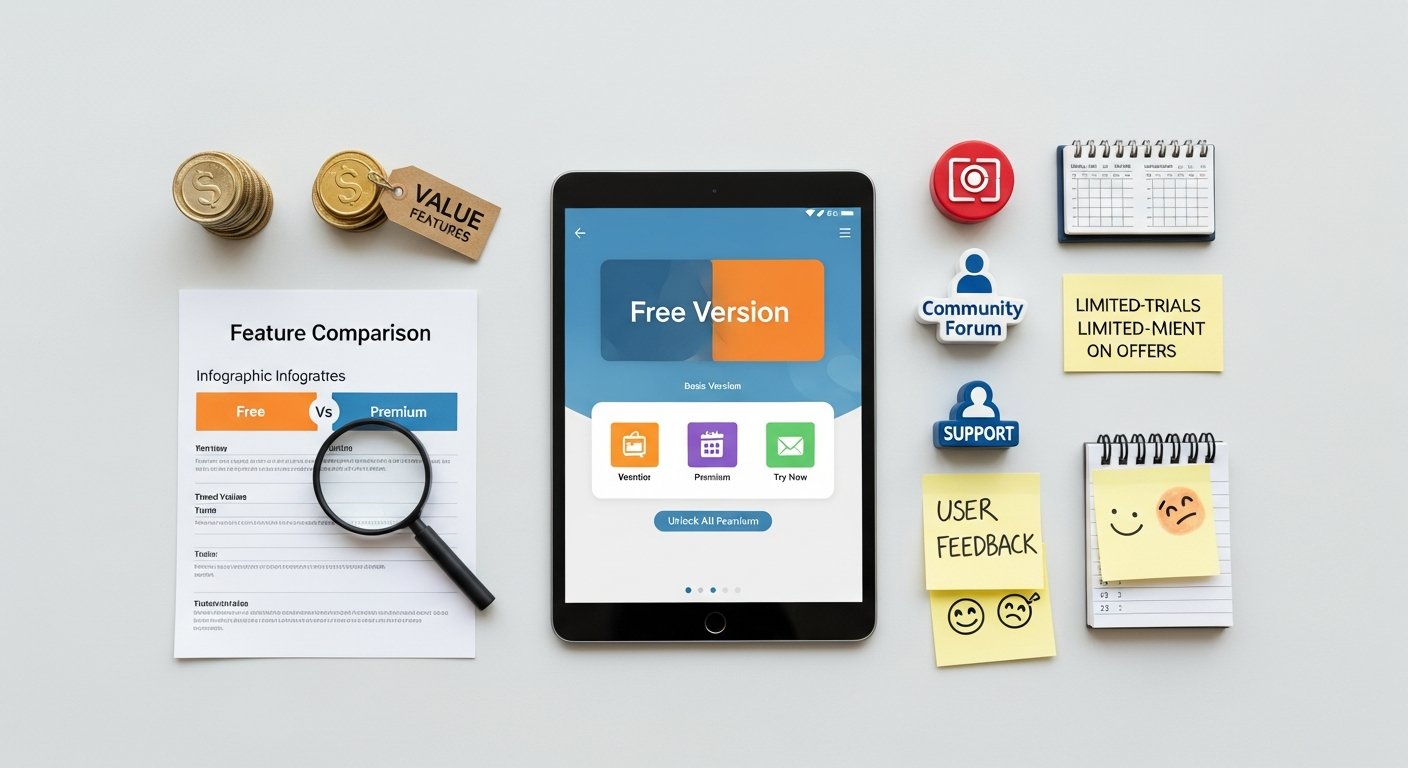
Mastering the Freemium Model: Best Practices for Sustainable Growth & Conversion in 2026
Affiliate disclosure: This article may contain affiliate links. Recommendations are independent and editorially driven.
In the fiercely competitive landscape of tech startups and SaaS, the freemium model stands as a double-edged sword: a powerful engine for user acquisition and brand visibility, yet a potential drain on resources if not executed with surgical precision. For many founders and marketers, understanding and implementing freemium model best practices is not just an advantage—it’s a fundamental requirement for survival and scaled growth. In 2026, as digital markets become increasingly saturated, the nuances of converting free users into loyal, paying customers are more critical than ever.
This comprehensive guide delves deep into the strategic imperatives, tactical executions, and crucial metrics that define successful freemium strategies. We’ll explore how to design compelling free offerings, optimize conversion funnels, navigate pricing complexities, and avoid common pitfalls. Our goal is to equip you with actionable insights to leverage the freemium model not merely as a marketing gimmick, but as a core component of your long-term business strategy, driving both user volume and sustainable revenue.
The Freemium Foundation: Understanding the Model and Its Strategic Imperatives
At its core, the freemium model offers a basic version of a product or service for free, while charging for advanced features, functionality, or capacity. The term, a portmanteau of “free” and “premium,” encapsulates its dual nature. It’s not just a pricing strategy; it’s a fundamental business model that dictates product development, marketing, sales, and customer success.
Defining Freemium: Beyond Just “Free”
Many mistakenly equate freemium with a free trial. While both offer a taste of the product without immediate cost, their underlying mechanisms and objectives differ significantly. A free trial typically provides full access to the premium product for a limited time (e.g., 7 or 30 days), after which access is revoked unless a subscription is initiated. Its primary goal is to demonstrate value quickly to qualified leads who are already contemplating a purchase.
Freemium, conversely, offers an ongoing, feature-limited version of the product indefinitely. The free tier serves as a perpetual lead generation and user acquisition engine. Users can stay on the free plan forever, theoretically, if their needs align with its limitations. The challenge, and the art, of freemium lies in designing a free tier that provides sufficient value to attract a wide audience and encourages adoption, yet strategically gates enough core features or capacity to incentivize an upgrade to a paid plan.
Why Freemium Resonates with Modern Tech Startups
The appeal of freemium for tech startups and SaaS companies is multifaceted:
- Reduced Barrier to Entry: By eliminating upfront costs, freemium significantly lowers the entry barrier for potential users. This is particularly crucial for new companies seeking to gain traction in competitive markets, allowing them to acquire a large user base quickly.
- Viral Loop Potential: A free product is inherently shareable. Satisfied free users can become organic evangelists, spreading the word and attracting more users through word-of-mouth, social sharing, and referrals, often at a lower cost than traditional marketing channels.
- Product-Led Growth (PLG): Freemium is a cornerstone of PLG strategies, where the product itself becomes the primary driver of customer acquisition, conversion, and expansion. Users experience value firsthand, making the sales cycle more efficient and authentic.
- Market Intelligence: A large free user base provides invaluable data on user behavior, feature usage, pain points, and preferences. This data can inform product development, marketing messages, and refinement of the conversion path.
- Competitive Advantage: In crowded markets, a robust freemium offering can differentiate a startup, giving it a distinct edge over competitors who rely solely on paid models or limited trials.
The Core Challenge: Balancing Value and Conversion
The inherent tension within the freemium model is the delicate balance between providing enough value in the free tier to attract and retain users, without giving away so much that users have no reason to upgrade. This balance is not static; it requires continuous monitoring, iteration, and a deep understanding of your target audience’s needs and willingness to pay.
Too little value in the free tier, and adoption will be low. Too much, and your conversion rates to premium will suffer, potentially leading to a large user base that never monetizes. The strategic imperative, therefore, is to identify the “upgrade triggers”—those specific pain points, limitations, or advanced needs that only the premium offering can solve, compelling a free user to open their wallet. Achieving this balance is at the heart of mastering freemium model best practices.
Core Principles for Developing Robust Freemium Model Best Practices
Success with freemium isn’t accidental; it’s the result of adhering to fundamental principles that guide every aspect of its implementation. These principles ensure that your free offering serves its purpose as a gateway, not a dead end, to premium value.
Principle 1: Value Proposition Clarity (for both Free and Premium)
Every user, whether free or paid, must clearly understand the value they receive. For the free tier, this means a concise articulation of the core problem it solves and its essential capabilities. For the premium tier, the value proposition must highlight the enhanced capabilities, increased efficiency, expanded scale, or superior support that justifies the cost. Ambiguity in value leads to confusion, frustration, and a stalled user journey.
A well-defined value proposition should answer: “What specific benefit does this tier provide for me?” For the free tier, it might be “basic project management for individual tasks.” For premium, “advanced collaborative project management for growing teams with analytics and priority support.”
Principle 2: Seamless User Experience and Onboarding
The journey from sign-up to experiencing the core value (the “Aha! moment”) must be frictionless. Complex onboarding processes or confusing interfaces will deter free users, who have little initial investment. A successful freemium product prioritizes intuitive design, guided tours, and immediate gratification. The easier it is for a free user to understand and benefit from the product, the higher their engagement and the greater the likelihood of eventual conversion.
This principle extends to the upgrade path itself. When a free user encounters a limitation that requires an upgrade, that process should be clear, simple, and presented as a natural progression to unlock further value, not as a sudden paywall.
Principle 3: Strategic Constraint & Progressive Unlocking
This is arguably the most critical principle. The free tier must be genuinely useful, providing a complete, albeit limited, solution to a basic problem. However, it must also contain strategic constraints that naturally lead users towards the premium offering as their needs grow or become more sophisticated. These constraints can be:
- Feature-based: Basic features are free; advanced features (e.g., integrations, automation, specific analytics) are premium.
- Usage-based: Limited usage (e.g., number of projects, storage, collaborators, API calls); unlimited usage is premium.
- Support-based: Community support for free; priority email/chat/phone support for premium.
- Branding-based: Product includes company branding in free tier; white-labeling is premium.
The constraints should feel like a natural consequence of growth or increased complexity, rather than arbitrary restrictions. They should progressively unlock more value as the user scales their needs, making the upgrade a logical next step.
Principle 4: Data-Driven Iteration
Never set and forget your freemium strategy. Successful freemium models are built on continuous A/B testing, user feedback analysis, and metric-driven iteration. Track key performance indicators (KPIs) like free-to-paid conversion rates, user engagement within the free tier, feature usage, and churn rates. Use this data to understand where users drop off, what features they value most, and what triggers an upgrade. This iterative approach allows you to constantly refine your offering, pricing, and messaging.
Principle 5: Monetization Pathways Beyond Direct Upgrades
While direct conversion from free to paid is the primary goal, consider other ways the free tier can contribute to your business ecosystem. Free users can provide valuable referrals, generate brand awareness, contribute to a community, or even offer data for improving AI models (with proper consent). A large, engaged free user base can also be attractive to investors, demonstrating significant market traction, even if immediate monetization is lower. This broader view of value can help sustain the free tier while you optimize conversion.
[INLINE IMAGE 1: place after second H2 | alt=”freemium model best practices concept illustration”]
Crafting Your Freemium Offering: Tiers, Features, and User Journeys
Designing the architecture of your freemium model is a critical exercise. It involves deep empathy for your target user, a clear understanding of your product’s value, and strategic foresight regarding monetization pathways. This section explores how to structure your offering to maximize both free user acquisition and premium conversions.
Identifying Your Value Metrics
Before deciding what goes into your free and premium tiers, identify your core value metrics. What quantifiable units of value does your product deliver? Is it projects created, users managed, data analyzed, tasks completed, storage used, or API calls made? Understanding these metrics is crucial because they often form the basis of your strategic constraints. For example, if your product helps manage projects, limiting the number of active projects in the free tier makes sense. If it’s a communication tool, limiting the number of team members or message history could be the key differentiator.
The best value metrics are:
- Understandable: Users can easily grasp what they are paying for.
- Scalable: As user needs grow, so does their usage of this metric.
- Aligned with Value: The metric directly correlates with the perceived benefit.
- Monetizable: You can effectively charge for increased usage of this metric.
Strategic Feature Gating: What to Offer for Free (and What Not To)
This is where the art and science of freemium truly converge. The goal is to provide a “core experience” for free that solves a significant, but basic, problem for your target audience. This core experience should be compelling enough to attract a large user base and demonstrate the fundamental value of your product. However, critical advanced features, scalability, or enhanced support must be reserved for premium tiers.
Consider these questions when gating features:
- What is the absolute minimum viable product (MVP) experience that still delivers tangible value? This forms the basis of your free tier.
- What features are “nice-to-haves” for basic users but “must-haves” for power users or teams? These are prime candidates for premium.
- Which features improve collaboration, automation, integration, or analytics? These are often strong upgrade drivers for businesses.
- What limitations will become a genuine pain point as a user’s needs or usage grow? These pain points are your natural upgrade triggers.
Common strategies include:
- Capability-based: Free offers core functionalities; premium unlocks advanced tools (e.g., AI-powered features, custom branding, specific integrations).
- Capacity-based: Free offers limited usage; premium expands limits (e.g., storage, number of users, projects, reports).
- Support-based: Basic support for free; priority, dedicated, or advanced support for premium.
- Performance-based: Standard performance for free; enhanced speed or uptime for premium (less common for most SaaS but relevant for hosting/infrastructure).
Avoid gating features that are essential for demonstrating the core value or that make the free product unusable. The free experience should never feel like a frustrating demo; it should be a valuable product in its own right, albeit with clear opportunities for enhancement.
User Experience Mapping for Conversion
A successful freemium model designs the user journey with conversion in mind. This involves:
- Clear Onboarding: Guide new free users to their “Aha! moment” as quickly as possible. This is the point where they truly understand and experience the core value of your product.
- Contextual Upgrade Prompts: Don’t just show a pricing page. Instead, when a free user attempts to access a premium feature or hits a limit, present a polite, value-driven prompt explaining what they could achieve by upgrading. “Unlock unlimited projects to streamline your entire workflow!” is more effective than “Upgrade now.”
- Feedback Loops: Monitor where users get stuck, abandon features, or express frustration. These points are often prime candidates for either clarifying instructions, improving the free experience, or refining your upgrade messaging.
The Role of ‘Aha!’ Moments in Freemium
The “Aha! moment” is the instant a user grasps the core value of your product. For freemium, it’s about helping free users experience this moment quickly and repeatedly within the confines of the free tier. If free users don’t find initial value, they’ll churn before ever considering an upgrade. Identify what makes users truly successful with your product, and ensure that the free tier helps them achieve that on a basic level. For example, if your product is a design tool, the “Aha! moment” might be creating their first professional-looking graphic in minutes. Ensure that the free tier enables this core function, even if advanced templates or export options are premium.
Pricing Strategies and Conversion Tactics: Elevating Users to Premium
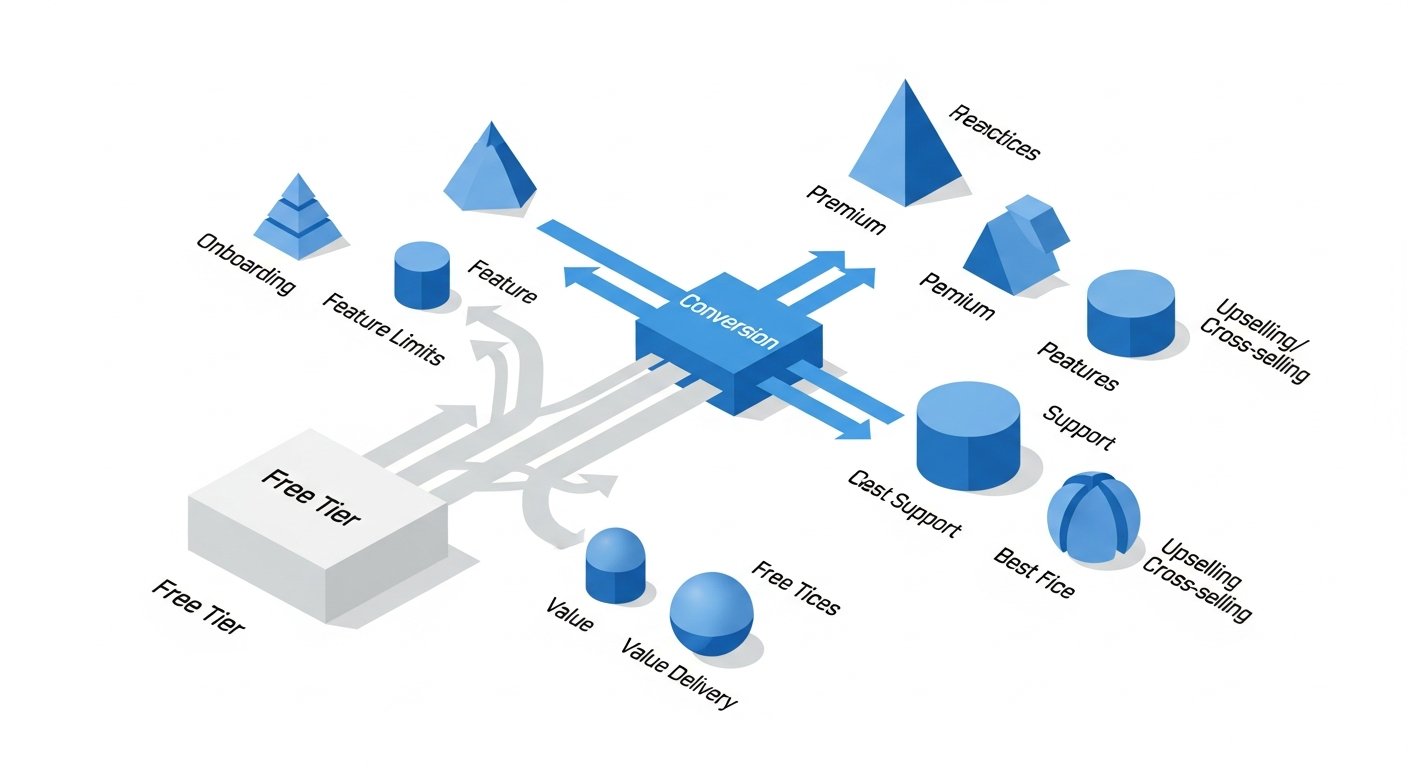
Once you’ve structured your freemium offering, the next critical step is to define your premium pricing and develop effective tactics to encourage upgrades. This isn’t just about setting a number; it’s about communicating value, understanding user psychology, and optimizing the conversion funnel.
Psychological Pricing and Perceived Value
Pricing is as much about psychology as it is about cost. Consider these psychological tactics:
- Anchoring: Presenting a higher-priced tier first can make subsequent, lower-priced premium tiers seem more reasonable.
- Charm Pricing: Ending prices in .99 (e.g., $9.99 instead of $10) can make them appear significantly lower.
- Value-Based Pricing: Focus on the value your premium tier provides, not just its features. If it saves a business 10 hours a week, quantify that saving and tie it to the subscription cost.
- Tiers: Offer multiple premium tiers (e.g., Basic, Pro, Business) to cater to different user segments and budget levels. This allows users to find a plan that perfectly matches their needs and willingness to pay, rather than a one-size-fits-all approach.
- Annual vs. Monthly: Offer a discount for annual subscriptions. This improves cash flow, reduces churn, and can make the higher upfront cost seem more appealing over the long term due to savings.
The key is to frame the premium upgrade not as an expense, but as an investment that yields significant returns in terms of efficiency, capabilities, or peace of mind.
Tiered Pricing Models and Add-ons
For freemium, a tiered pricing model is almost always preferable to a single premium option. It allows you to segment your market effectively:
- Entry-Level Premium: A relatively inexpensive tier that offers slightly more than the free version, targeting users who are ready to pay but have limited needs.
- Mid-Tier Premium: The “sweet spot” for most users, offering a significant jump in features and capacity.
- Enterprise/High-Tier: For power users, large teams, or businesses with advanced needs, offering maximum features, custom solutions, and dedicated support.
Consider also offering add-ons—extra features or services that users can purchase independently of their main subscription. This can be a flexible way to monetize specific high-value features without forcing all users into a higher-priced tier. Examples include additional storage, premium templates, or specialized integrations.
Time-Limited Trials vs. Feature-Limited Freemium
While distinct, these models can sometimes complement each other. Some companies offer a freemium model (perpetually free, limited features) alongside a free trial of their highest-tier product. This hybrid approach allows users who are deeply curious about advanced features to experience them fully for a short period, potentially converting faster, while the perpetual free tier continues to draw in a broad audience.
If you implement a trial, ensure clear communication about its duration and what happens at the end. The goal is to provide a comprehensive experience that highlights premium value, not to create a confusing paywall.
[INLINE IMAGE 2: place after fourth H2 | alt=”freemium model best practices comparison illustration”]
Overcoming Conversion Friction
Friction points can derail even the most well-designed conversion strategies. Identify and eliminate them:
- Complex Payment Process: Keep the checkout flow simple, secure, and fast. Minimize form fields.
- Lack of Trust: Clearly display security badges, privacy policies, and customer testimonials.
- Unclear Value Proposition: Reiterate the benefits of upgrading at the point of conversion.
- Pricing Confusion: Make sure pricing is easy to understand, with clear comparisons between tiers.
- Fear of Commitment: Offer a money-back guarantee or a flexible cancellation policy to reduce perceived risk.
Comparison Table: Strategic Feature Gating Approaches
| Gating Strategy | Description | Pros for Conversion | Cons & Considerations |
|---|---|---|---|
| Capacity/Usage-Based | Limits on quantity (e.g., projects, users, storage, API calls, minutes of video). Free users hit a ceiling as they scale. | Natural upgrade trigger as needs grow; clear scaling path; easy to understand. | Can feel restrictive if limits are too low; requires users to actively use the product to hit limits. |
| Feature-Based | Core features are free; advanced, specialized, or automation features are premium. | Clear value differentiation; power users naturally seek advanced tools; allows for focused free product. | Risk of giving too much away for free; difficult to decide which features are “core” vs. “advanced.” |
| Support-Based | Community/self-serve support for free; priority, personalized, or dedicated support for premium. | Low-cost acquisition; appeals to businesses that value reliability and quick help. | Might alienate free users if basic support is too difficult; can strain community resources. |
| Performance/SLA-Based | Standard performance/uptime for free; guaranteed higher performance/SLA for premium. | Appeals to mission-critical users; clear business value for premium. | Less applicable for most SaaS; free tier must still be performant enough to be useful. |
| Branding-Based | Company branding on free assets/exports; white-labeling or custom branding for premium. | Good for marketing the free product; clear professional upgrade for businesses. | May not be a strong enough incentive for all user types; niche applicability. |
Selecting the right gating strategy, or combination thereof, is fundamental to a successful freemium model and must align with your product’s core value and target user segments. Continuous testing of these gates is essential.
Marketing & Acquisition: Attracting the Right Users to Your Freemium Product
A freemium model, by its very nature, is a powerful marketing tool. However, simply offering a free product isn’t enough. You need to strategically attract the *right* users—those who are most likely to become paying customers. This requires a targeted marketing approach that leverages various channels.
Content Marketing for Freemium Products
Content marketing is the natural ally of freemium. By creating valuable, educational, and problem-solving content, you attract users who are actively seeking solutions that your product can provide. This includes blog posts, guides, tutorials, webinars, and case studies that:
- Address target audience pain points: Create content around the problems your product solves, both in its free and premium versions.
- Showcase free tier value: Write “how-to” guides demonstrating specific tasks that can be accomplished with your free product.
- Highlight upgrade triggers: Develop content that subtly points towards the limitations of basic solutions and the benefits of advanced features (e.g., “5 Ways to Scale Your Project Management Beyond Basic Tools”).
- Build authority and trust: Position your brand as an expert in your niche, making users more likely to trust your product.
Focus on creating high-quality, evergreen content that continues to draw in organic traffic over time. This acts as a perpetual lead magnet for your freemium offering.
SEO and Organic Growth: Driving Free User Acquisition
For a freemium model, strong search engine optimization (SEO) is paramount. A high ranking for relevant keywords drives organic traffic directly to your product’s sign-up page or feature-showcase content. Optimize your website and product pages for keywords related to your features, use cases, and target audience’s problems. For example, if your product is a graphic design tool, optimize for “free graphic design software,” “online logo maker,” or “social media design tool.”
Consider creating dedicated landing pages for specific free features or use cases. Ensure your site has fast loading times, is mobile-responsive, and provides a clear call to action (CTA) for signing up for the free version. Regularly monitor your SEO performance and adapt your strategy based on keyword trends and competitor activity.
Leveraging Virality and Referrals
The “free” aspect of freemium makes it inherently shareable. Design mechanisms within your product that encourage users to invite others, such as:
- Collaboration Features: If your product is collaborative, inviting team members is a natural way for free users to spread the word.
- Referral Programs: Offer incentives (e.g., premium features, extended limits, discounts) to both the referrer and the referee when new users sign up or upgrade.
- Shareable Content/Outputs: If users create content with your tool, make it easy for them to share it directly from the app, potentially with a “Powered by YourProduct” link.
- Community Building: Foster a vibrant online community where users can share tips, ask questions, and invite peers.
A strong viral loop can significantly reduce your customer acquisition cost (CAC) for new free users, freeing up resources to focus on converting existing free users to paid. Discover more SaaS growth strategies here.
Paid Acquisition and LTV Considerations
While freemium aims for organic growth, paid acquisition can play a strategic role, especially in the early stages or when scaling rapidly. However, it requires a careful understanding of your customer lifetime value (LTV).
- Targeted Ads: Use platforms like Google Ads, LinkedIn, and social media to target users who are actively searching for solutions your product provides.
- Remarketing: Retarget free users who show high engagement but haven’t converted, offering tailored messages or incentives.
- LTV Projections: Crucially, understand the projected LTV of a converted premium customer. Your CAC for free users should ideally be significantly lower than the LTV of a premium customer. If your CAC exceeds LTV, your paid acquisition strategy is unsustainable.
For freemium, paid acquisition should primarily focus on bringing in high-quality free users who fit your ideal customer profile and have a high propensity to upgrade, rather than simply maximizing sign-ups. Testing and optimizing your ad creatives and targeting are key to maintaining a healthy CAC-to-LTV ratio.
Optimizing the Freemium Funnel: From Activation to Advocacy
Acquiring free users is only the first step. The true challenge lies in guiding them through the freemium funnel, encouraging deep engagement, demonstrating premium value, and ultimately converting them into paying customers and advocates. This requires a systematic approach to user activation, communication, and support.
User Activation and Onboarding Flow Optimization
Activation is the point where a user experiences the core value of your product. For freemium, this is critical. A free user who doesn’t activate quickly is unlikely to ever convert. Focus on:
- First-Run Experience: Design a smooth, intuitive onboarding process that minimizes friction and quickly guides users to their first “Aha! moment.” Use interactive tutorials, welcome emails, and in-app prompts.
- Progressive Disclosure: Don’t overwhelm users with too many features at once. Introduce core functionalities first, then reveal more advanced options as they progress.
- Personalization: Where possible, tailor the onboarding experience based on user roles, stated goals, or initial actions.
- Feedback Loops: Collect feedback during onboarding to identify stumbling blocks and areas for improvement. A/B test different onboarding flows to optimize activation rates.
A highly activated free user is a highly engaged user, and engaged free users are the most likely to convert to paid.
In-App Messaging and Nudges for Upgrade
Strategic in-app messaging plays a vital role in demonstrating premium value and prompting upgrades. These should not be aggressive sales pitches but rather helpful nudges that highlight how premium features can solve a user’s current pain point or enhance their workflow. Examples include:
- Feature Demos: When a user clicks on a premium feature, instead of a hard paywall, show a quick video or interactive demo of what that feature can do, followed by an upgrade prompt.
- Usage Limit Alerts: When a user approaches a free tier limit (e.g., project count, storage), send an in-app notification explaining how upgrading will remove that limitation and enhance their productivity.
- Value-Add Prompts: Based on a user’s in-app behavior, suggest a premium feature that complements their current activity. For instance, if they frequently export reports, prompt them about advanced analytics available in premium.
- Time-Limited Offers: Occasionally offer a special discount or a short free trial of a premium tier to highly engaged free users.
The goal is to provide timely, relevant, and value-driven prompts that align with the user’s current context and demonstrate a clear path to greater productivity or impact.
Retargeting and Drip Campaigns
Your marketing efforts don’t stop once someone signs up for the free tier. Nurturing these leads through targeted email drip campaigns and retargeting ads is crucial:
- Welcome Series: An initial series of emails to guide users through onboarding, highlight key free features, and introduce the concept of premium value.
- Usage-Based Emails: Send emails triggered by user behavior—e.g., if a user hasn’t logged in for a while, send a re-engagement email; if they’ve used a specific feature heavily, send an email about its premium counterpart.
- Benefit-Driven Campaigns: Focus on the benefits of upgrading, using testimonials, case studies, and feature comparisons.
- Abandoned Cart/Upgrade Page Reminders: If a user visits your pricing page but doesn’t convert, send a follow-up email with a gentle reminder or a limited-time incentive.
- Educational Content: Continue to provide valuable content that helps users maximize their experience, subtly hinting at premium solutions for advanced challenges.
Retargeting ads can reinforce these messages on other platforms, keeping your product top of mind for engaged free users.
Customer Success for Premium Users
While the focus of freemium is on converting free users, retaining premium users is equally vital for long-term growth. Dedicated customer success efforts for your paying customers ensure they continue to derive value, reducing churn and creating opportunities for expansion (upselling/cross-selling to higher tiers or more seats).
- Proactive Onboarding for Premium: Ensure premium users are fully leveraging all the features they’re paying for.
- Dedicated Support Channels: Offer priority support, account managers, or exclusive resources.
- Regular Check-ins: Proactively reach out to premium users to gather feedback, offer tips, and ensure they are satisfied.
- Community & Exclusive Content: Create exclusive forums, webinars, or content for premium users to foster a sense of belonging and provide additional value.
Happy premium customers are your best advocates and a stable source of recurring revenue. Investing in their success is a key freemium model best practice.
Key Performance Indicators (KPIs) for Measuring Freemium Success
To effectively manage and optimize your freemium strategy, you need clear, measurable metrics. Tracking the right Key Performance Indicators (KPIs) allows you to understand what’s working, what’s not, and where to focus your optimization efforts.
Conversion Rate (Free-to-Paid)
This is arguably the most critical metric. It measures the percentage of free users who upgrade to a paid subscription. A healthy conversion rate indicates that your free tier effectively demonstrates value and your premium offering solves a significant enough problem to warrant payment.
Conversion Rate = (Number of Paid Conversions / Total Number of Active Free Users) * 100
Benchmarks vary widely by industry and product, but generally, SaaS conversion rates from freemium range from 1-10%. Understanding the specific drivers behind your conversion rate (e.g., which features trigger upgrades, what segment of users converts most often) is crucial.
Churn Rate (Premium and Free)
Premium Churn: The rate at which paying customers cancel their subscriptions. High premium churn erodes your revenue base and indicates potential issues with product value, customer satisfaction, or onboarding for paid users.
Customer Churn Rate = (Number of Churned Customers / Total Customers at Start of Period) * 100
Free User Churn (Inactive Users): While not directly impacting revenue, a high churn rate among free users indicates issues with onboarding, lack of perceived value in the free tier, or attracting the wrong audience. Monitoring this helps optimize your acquisition and activation strategies.
Free User Churn = (Number of Inactive Free Users / Total Free Users at Start of Period) * 100
Average Revenue Per User (ARPU) and LTV
Average Revenue Per User (ARPU): Measures the average monthly or annual revenue generated per active user (both free and paid, or just paid depending on how you calculate it). This helps understand the overall monetization efficiency of your user base.
ARPU = Total Revenue / Total Number of Active Users
Customer Lifetime Value (LTV): The total revenue you expect to generate from a customer over their entire relationship with your product. For freemium, it’s essential to understand the LTV of a converted premium customer and compare it against your Customer Acquisition Cost (CAC) for both free and paid users. A healthy LTV:CAC ratio (ideally 3:1 or higher) is vital for sustainable growth. Learn how to build a robust SaaS metrics dashboard.
LTV = (Average Monthly Revenue Per Customer * Customer Lifetime in Months) - Acquisition Cost
User Engagement Metrics
These metrics help understand how free users are interacting with your product, indicating their potential for conversion:
- Daily/Weekly Active Users (DAU/WAU): How many unique users are actively using your product. High engagement often correlates with higher conversion potential.
- Feature Usage: Which features are free users using most? Which premium features are they attempting to access? This data informs product development and upgrade messaging.
- Time in App: The average duration users spend actively interacting with your product.
- Completion Rates: For key tasks or onboarding flows, measuring how many users complete them.
Deep engagement with the free product signifies that users are finding value, making them more receptive to premium offerings.
Viral Coefficient
While more complex to calculate precisely, the viral coefficient estimates how many new users each existing user brings to your product. For freemium, where sharing and referrals are key, a coefficient greater than 1 indicates exponential, self-sustaining growth.
Viral Coefficient = (Number of Invites Sent Per User * Conversion Rate of Invites)
Monitoring these KPIs rigorously and consistently is the bedrock of freemium success. They provide the data necessary to make informed decisions about product changes, marketing spend, and pricing adjustments, ensuring your freemium model drives sustainable and profitable growth.
Common Freemium Pitfalls and Mitigation Strategies
While the freemium model offers immense potential, it’s fraught with challenges that can undermine even the most promising products. Recognizing these common pitfalls and implementing proactive mitigation strategies is key to sustainable success.
Offering Too Much Value for Free
The Pitfall: This is perhaps the most common mistake. Giving away too many core features or an unlimited capacity in the free tier means users never encounter a compelling reason to upgrade. They receive all the value they need without paying, leading to a large user base with dismal conversion rates and, consequently, low revenue. This often stems from a fear of losing users or a desire for rapid adoption at any cost.
Mitigation Strategy: Conduct a rigorous value audit. Clearly differentiate between “must-have” core features that introduce users to your product’s value and “nice-to-have” or “critical-for-scale” features that unlock true productivity for businesses or power users. Design strategic constraints around capacity, advanced features, integrations, or support that naturally prompt an upgrade as a user’s needs evolve. Test these gates. Are users hitting them and then converting? Or are they churning?
Poor Onboarding or Value Communication
The Pitfall: A confusing or lengthy onboarding process prevents free users from experiencing their “Aha! moment.” If users don’t quickly understand how to use the product or perceive its value, they’ll churn before even exploring premium options. Similarly, if the value proposition of the free and premium tiers isn’t crystal clear, users won’t know why they should bother with either.
Mitigation Strategy: Streamline your onboarding to guide users to their first success as quickly as possible. Use interactive tours, tooltips, and contextual prompts. Emphasize one or two core benefits of the free tier upfront. For premium, clearly articulate what problems it solves and the specific gains (e.g., time saved, increased efficiency,
Mastering the Freemium Model: Best Practices for Sustainable Growth & Conversion in 2026
Affiliate disclosure: This article may contain affiliate links. Recommendations are independent and editorially driven.
In the fiercely competitive landscape of tech startups and SaaS, the freemium model stands as a double-edged sword: a powerful engine for user acquisition and brand visibility, yet a potential drain on resources if not executed with surgical precision. For many founders and marketers, understanding and implementing freemium model best practices is not just an advantage—it’s a fundamental requirement for survival and scaled growth. In 2026, as digital markets become increasingly saturated, the nuances of converting free users into loyal, paying customers are more critical than ever.
This comprehensive guide delves deep into the strategic imperatives, tactical executions, and crucial metrics that define successful freemium strategies. We’ll explore how to design compelling free offerings, optimize conversion funnels, navigate pricing complexities, and avoid common pitfalls. Our goal is to equip you with actionable insights to leverage the freemium model not merely as a marketing gimmick, but as a core component of your long-term business strategy, driving both user volume and sustainable revenue.
The Freemium Foundation: Understanding the Model and Its Strategic Imperatives
At its core, the freemium model offers a basic version of a product or service for free, while charging for advanced features, functionality, or capacity. The term, a portmanteau of “free” and “premium,” encapsulates its dual nature. It’s not just a pricing strategy; it’s a fundamental business model that dictates product development, marketing, sales, and customer success.
Defining Freemium: Beyond Just “Free”
Many mistakenly equate freemium with a free trial. While both offer a taste of the product without immediate cost, their underlying mechanisms and objectives differ significantly. A free trial typically provides full access to the premium product for a limited time (e.g., 7 or 30 days), after which access is revoked unless a subscription is initiated. Its primary goal is to demonstrate value quickly to qualified leads who are already contemplating a purchase.
Freemium, conversely, offers an ongoing, feature-limited version of the product indefinitely. The free tier serves as a perpetual lead generation and user acquisition engine. Users can stay on the free plan forever, theoretically, if their needs align with its limitations. The challenge, and the art, of freemium lies in designing a free tier that provides sufficient value to attract a wide audience and encourages adoption, yet strategically gates enough core features or capacity to incentivize an upgrade to a paid plan.
Why Freemium Resonates with Modern Tech Startups
The appeal of freemium for tech startups and SaaS companies is multifaceted:
- Reduced Barrier to Entry: By eliminating upfront costs, freemium significantly lowers the entry barrier for potential users. This is particularly crucial for new companies seeking to gain traction in competitive markets, allowing them to acquire a large user base quickly.
- Viral Loop Potential: A free product is inherently shareable. Satisfied free users can become organic evangelists, spreading the word and attracting more users through word-of-mouth, social sharing, and referrals, often at a lower cost than traditional marketing channels.
- Product-Led Growth (PLG): Freemium is a cornerstone of PLG strategies, where the product itself becomes the primary driver of customer acquisition, conversion, and expansion. Users experience value firsthand, making the sales cycle more efficient and authentic.
- Market Intelligence: A large free user base provides invaluable data on user behavior, feature usage, pain points, and preferences. This data can inform product development, marketing messages, and refinement of the conversion path.
- Competitive Advantage: In crowded markets, a robust freemium offering can differentiate a startup, giving it a distinct edge over competitors who rely solely on paid models or limited trials.
The Core Challenge: Balancing Value and Conversion
The inherent tension within the freemium model is the delicate balance between providing enough value in the free tier to attract and retain users, without giving away so much that users have no reason to upgrade. This balance is not static; it requires continuous monitoring, iteration, and a deep understanding of your target audience’s needs and willingness to pay.
Too little value in the free tier, and adoption will be low. Too much, and your conversion rates to premium will suffer, potentially leading to a large user base that never monetizes. The strategic imperative, therefore, is to identify the “upgrade triggers”—those specific pain points, limitations, or advanced needs that only the premium offering can solve, compelling a free user to open their wallet. Achieving this balance is at the heart of mastering freemium model best practices.
Core Principles for Developing Robust Freemium Model Best Practices
Success with freemium isn’t accidental; it’s the result of adhering to fundamental principles that guide every aspect of its implementation. These principles ensure that your free offering serves its purpose as a gateway, not a dead end, to premium value.
Principle 1: Value Proposition Clarity (for both Free and Premium)
Every user, whether free or paid, must clearly understand the value they receive. For the free tier, this means a concise articulation of the core problem it solves and its essential capabilities. For the premium tier, the value proposition must highlight the enhanced capabilities, increased efficiency, expanded scale, or superior support that justifies the cost. Ambiguity in value leads to confusion, frustration, and a stalled user journey.
A well-defined value proposition should answer: “What specific benefit does this tier provide for me?” For the free tier, it might be “basic project management for individual tasks.” For premium, “advanced collaborative project management for growing teams with analytics and priority support.”
Principle 2: Seamless User Experience and Onboarding
The journey from sign-up to experiencing the core value (the “Aha! moment”) must be frictionless. Complex onboarding processes or confusing interfaces will deter free users, who have little initial investment. A successful freemium product prioritizes intuitive design, guided tours, and immediate gratification. The easier it is for a free user to understand and benefit from the product, the higher their engagement and the greater the likelihood of eventual conversion.
This principle extends to the upgrade path itself. When a free user encounters a limitation that requires an upgrade, that process should be clear, simple, and presented as a natural progression to unlock further value, not as a sudden paywall.
Principle 3: Strategic Constraint & Progressive Unlocking
This is arguably the most critical principle. The free tier must be genuinely useful, providing a complete, albeit limited, solution to a basic problem. However, it must also contain strategic constraints that naturally lead users towards the premium offering as their needs grow or become more sophisticated. These constraints can be:
- Feature-based: Basic features are free; advanced features (e.g., integrations, automation, specific analytics) are premium.
- Usage-based: Limited usage (e.g., number of projects, storage, collaborators, API calls); unlimited usage is premium.
- Support-based: Community support for free; priority email/chat/phone support for premium.
- Branding-based: Product includes company branding in free tier; white-labeling is premium.
The constraints should feel like a natural consequence of growth or increased complexity, rather than arbitrary restrictions. They should progressively unlock more value as the user scales their needs, making the upgrade a logical next step.
Principle 4: Data-Driven Iteration
Never set and forget your freemium strategy. Successful freemium models are built on continuous A/B testing, user feedback analysis, and metric-driven iteration. Track key performance indicators (KPIs) like free-to-paid conversion rates, user engagement within the free tier, feature usage, and churn rates. Use this data to understand where users drop off, what features they value most, and what triggers an upgrade. This iterative approach allows you to constantly refine your offering, pricing, and messaging.
Principle 5: Monetization Pathways Beyond Direct Upgrades
While direct conversion from free to paid is the primary goal, consider other ways the free tier can contribute to your business ecosystem. Free users can provide valuable referrals, generate brand awareness, contribute to a community, or even offer data for improving AI models (with proper consent). A large, engaged free user base can also be attractive to investors, demonstrating significant market traction, even if immediate monetization is lower. This broader view of value can help sustain the free tier while you optimize conversion.
[INLINE IMAGE 1: place after second H2 | alt=”freemium model best practices concept illustration”]
Crafting Your Freemium Offering: Tiers, Features, and User Journeys
Designing the architecture of your freemium model is a critical exercise. It involves deep empathy for your target user, a clear understanding of your product’s value, and strategic foresight regarding monetization pathways. This section explores how to structure your offering to maximize both free user acquisition and premium conversions.
Identifying Your Value Metrics
Before deciding what goes into your free and premium tiers, identify your core value metrics. What quantifiable units of value does your product deliver? Is it projects created, users managed, data analyzed, tasks completed, storage used, or API calls made? Understanding these metrics is crucial because they often form the basis of your strategic constraints. For example, if your product helps manage projects, limiting the number of active projects in the free tier makes sense. If it’s a communication tool, limiting the number of team members or message history could be the key differentiator.
The best value metrics are:
- Understandable: Users can easily grasp what they are paying for.
- Scalable: As user needs grow, so does their usage of this metric.
- Aligned with Value: The metric directly correlates with the perceived benefit.
- Monetizable: You can effectively charge for increased usage of this metric.
Strategic Feature Gating: What to Offer for Free (and What Not To)
This is where the art and science of freemium truly converge. The goal is to provide a “core experience” for free that solves a significant, but basic, problem for your target audience. This core experience should be compelling enough to attract a large user base and demonstrate the fundamental value of your product. However, critical advanced features, scalability, or enhanced support must be reserved for premium tiers.
Consider these questions when gating features:
- What is the absolute minimum viable product (MVP) experience that still delivers tangible value? This forms the basis of your free tier.
- What features are “nice-to-haves” for basic users but “must-haves” for power users or teams? These are prime candidates for premium.
- Which features improve collaboration, automation, integration, or analytics? These are often strong upgrade drivers for businesses.
- What limitations will become a genuine pain point as a user’s needs or usage grow? These pain points are your natural upgrade triggers.
Common strategies include:
- Capability-based: Free offers core functionalities; premium unlocks advanced tools (e.g., AI-powered features, custom branding, specific integrations).
- Capacity-based: Free offers limited usage; premium expands limits (e.g., storage, number of users, projects, reports).
- Support-based: Basic support for free; priority, dedicated, or advanced support for premium.
- Performance-based: Standard performance for free; enhanced speed or uptime for premium (less common for most SaaS but relevant for hosting/infrastructure).
Avoid gating features that are essential for demonstrating the core value or that make the free product unusable. The free experience should never feel like a frustrating demo; it should be a valuable product in its own right, albeit with clear opportunities for enhancement.
User Experience Mapping for Conversion
A successful freemium model designs the user journey with conversion in mind. This involves:
- Clear Onboarding: Guide new free users to their “Aha! moment” as quickly as possible. This is the point where they truly understand and experience the core value of your product.
- Contextual Upgrade Prompts: Don’t just show a pricing page. Instead, when a free user attempts to access a premium feature or hits a limit, present a polite, value-driven prompt explaining what they could achieve by upgrading. “Unlock unlimited projects to streamline your entire workflow!” is more effective than “Upgrade now.”
- Feedback Loops: Monitor where users get stuck, abandon features, or express frustration. These points are often prime candidates for either clarifying instructions, improving the free experience, or refining your upgrade messaging.
The Role of ‘Aha!’ Moments in Freemium
The “Aha! moment” is the instant a user grasps the core value of your product. For freemium, it’s about helping free users experience this moment quickly and repeatedly within the confines of the free tier. If free users don’t find initial value, they’ll churn before ever considering an upgrade. Identify what makes users truly successful with your product, and ensure that the free tier helps them achieve that on a basic level. For example, if your product is a design tool, the “Aha! moment” might be creating their first professional-looking graphic in minutes. Ensure that the free tier enables this core function, even if advanced templates or export options are premium.
Pricing Strategies and Conversion Tactics: Elevating Users to Premium
Once you’ve structured your freemium offering, the next critical step is to define your premium pricing and develop effective tactics to encourage upgrades. This isn’t just about setting a number; it’s about communicating value, understanding user psychology, and optimizing the conversion funnel.
Psychological Pricing and Perceived Value
Pricing is as much about psychology as it is about cost. Consider these psychological tactics:
- Anchoring: Presenting a higher-priced tier first can make subsequent, lower-priced premium tiers seem more reasonable.
- Charm Pricing: Ending prices in .99 (e.g., $9.99 instead of $10) can make them appear significantly lower.
- Value-Based Pricing: Focus on the value your premium tier provides, not just its features. If it saves a business 10 hours a week, quantify that saving and tie it to the subscription cost.
- Tiers: Offer multiple premium tiers (e.g., Basic, Pro, Business) to cater to different user segments and budget levels. This allows users to find a plan that perfectly matches their needs and willingness to pay, rather than a one-size-fits-all approach.
- Annual vs. Monthly: Offer a discount for annual subscriptions. This improves cash flow, reduces churn, and can make the higher upfront cost seem more appealing over the long term due to savings.
The key is to frame the premium upgrade not as an expense, but as an investment that yields significant returns in terms of efficiency, capabilities, or peace of mind.
Tiered Pricing Models and Add-ons
For freemium, a tiered pricing model is almost always preferable to a single premium option. It allows you to segment your market effectively:
- Entry-Level Premium: A relatively inexpensive tier that offers slightly more than the free version, targeting users who are ready to pay but have limited needs.
- Mid-Tier Premium: The “sweet spot” for most users, offering a significant jump in features and capacity.
- Enterprise/High-Tier: For power users, large teams, or businesses with advanced needs, offering maximum features, custom solutions, and dedicated support.
Consider also offering add-ons—extra features or services that users can purchase independently of their main subscription. This can be a flexible way to monetize specific high-value features without forcing all users into a higher-priced tier. Examples include additional storage, premium templates, or specialized integrations.
Time-Limited Trials vs. Feature-Limited Freemium
While distinct, these models can sometimes complement each other. Some companies offer a freemium model (perpetually free, limited features) alongside a free trial of their highest-tier product. This hybrid approach allows users who are deeply curious about advanced features to experience them fully for a short period, potentially converting faster, while the perpetual free tier continues to draw in a broad audience.
If you implement a trial, ensure clear communication about its duration and what happens at the end. The goal is to provide a comprehensive experience that highlights premium value, not to create a confusing paywall.
[INLINE IMAGE 2: place after fourth H2 | alt=”freemium model best practices comparison illustration”]
Overcoming Conversion Friction
Friction points can derail even the most well-designed conversion strategies. Identify and eliminate them:
- Complex Payment Process: Keep the checkout flow simple, secure, and fast. Minimize form fields.
- Lack of Trust: Clearly display security badges, privacy policies, and customer testimonials.
- Unclear Value Proposition: Reiterate the benefits of upgrading at the point of conversion.
- Pricing Confusion: Make sure pricing is easy to understand, with clear comparisons between tiers.
- Fear of Commitment: Offer a money-back guarantee or a flexible cancellation policy to reduce perceived risk.
Comparison Table: Strategic Feature Gating Approaches
| Gating Strategy | Description | Pros for Conversion | Cons & Considerations |
|---|---|---|---|
| Capacity/Usage-Based | Limits on quantity (e.g., projects, users, storage, API calls, minutes of video). Free users hit a ceiling as they scale. | Natural upgrade trigger as needs grow; clear scaling path; easy to understand. | Can feel restrictive if limits are too low; requires users to actively use the product to hit limits. |
| Feature-Based | Core features are free; advanced, specialized, or automation features are premium. | Clear value differentiation; power users naturally seek advanced tools; allows for focused free product. | Risk of giving too much away for free; difficult to decide which features are “core” vs. “advanced.” |
| Support-Based | Community/self-serve support for free; priority, personalized, or dedicated support for premium. | Low-cost acquisition; appeals to businesses that value reliability and quick help. | Might alienate free users if basic support is too difficult; can strain community resources. |
| Performance/SLA-Based | Standard performance/uptime for free; guaranteed higher performance/SLA for premium. | Appeals to mission-critical users; clear business value for premium. | Less applicable for most SaaS; free tier must still be performant enough to be useful. |
| Branding-Based | Company branding on free assets/exports; white-labeling or custom branding for premium. | Good for marketing the free product; clear professional upgrade for businesses. | May not be a strong enough incentive for all user types; niche applicability. |
Selecting the right gating strategy, or combination thereof, is fundamental to a successful freemium model and must align with your product’s core value and target user segments. Continuous testing of these gates is essential.
Marketing & Acquisition: Attracting the Right Users to Your Freemium Product
A freemium model, by its very nature, is a powerful marketing tool. However, simply offering a free product isn’t enough. You need to strategically attract the *right* users—those who are most likely to become paying customers. This requires a targeted marketing approach that leverages various channels.
Content Marketing for Freemium Products
Content marketing is the natural ally of freemium. By creating valuable, educational, and problem-solving content, you attract users who are actively seeking solutions that your product can provide. This includes blog posts, guides, tutorials, webinars, and case studies that:
- Address target audience pain points: Create content around the problems your product solves, both in its free and premium versions.
- Showcase free tier value: Write “how-to” guides demonstrating specific tasks that can be accomplished with your free product.
- Highlight upgrade triggers: Develop content that subtly points towards the limitations of basic solutions and the benefits of advanced features (e.g., “5 Ways to Scale Your Project Management Beyond Basic Tools”).
- Build authority and trust: Position your brand as an expert in your niche, making users more likely to trust your product.
Focus on creating high-quality, evergreen content that continues to draw in organic traffic over time. This acts as a perpetual lead magnet for your freemium offering.
SEO and Organic Growth: Driving Free User Acquisition
For a freemium model, strong search engine optimization (SEO) is paramount. A high ranking for relevant keywords drives organic traffic directly to your product’s sign-up page or feature-showcase content. Optimize your website and product pages for keywords related to your features, use cases, and target audience’s problems. For example, if your product is a graphic design tool, optimize for “free graphic design software,” “online logo maker,” or “social media design tool.”
Consider creating dedicated landing pages for specific free features or use cases. Ensure your site has fast loading times, is mobile-responsive, and provides a clear call to action (CTA) for signing up for the free version. Regularly monitor your SEO performance and adapt your strategy based on keyword trends and competitor activity.
Leveraging Virality and Referrals
The “free” aspect of freemium makes it inherently shareable. Design mechanisms within your product that encourage users to invite others, such as:
- Collaboration Features: If your product is collaborative, inviting team members is a natural way for free users to spread the word.
- Referral Programs: Offer incentives (e.g., premium features, extended limits, discounts) to both the referrer and the referee when new users sign up or upgrade.
- Shareable Content/Outputs: If users create content with your tool, make it easy for them to share it directly from the app, potentially with a “Powered by YourProduct” link.
- Community Building: Foster a vibrant online community where users can share tips, ask questions, and invite peers.
A strong viral loop can significantly reduce your customer acquisition cost (CAC) for new free users, freeing up resources to focus on converting existing free users to paid. Discover more SaaS growth strategies here.
Paid Acquisition and LTV Considerations
While freemium aims for organic growth, paid acquisition can play a strategic role, especially in the early stages or when scaling rapidly. However, it requires a careful understanding of your customer lifetime value (LTV).
- Targeted Ads: Use platforms like Google Ads, LinkedIn, and social media to target users who are actively searching for solutions your product provides.
- Remarketing: Retarget free users who show high engagement but haven’t converted, offering tailored messages or incentives.
- LTV Projections: Crucially, understand the projected LTV of a converted premium customer. Your CAC for free users should ideally be significantly lower than the LTV of a premium customer. If your CAC exceeds LTV, your paid acquisition strategy is unsustainable.
For freemium, paid acquisition should primarily focus on bringing in high-quality free users who fit your ideal customer profile and have a high propensity to upgrade, rather than simply maximizing sign-ups. Testing and optimizing your ad creatives and targeting are key to maintaining a healthy CAC-to-LTV ratio.
Optimizing the Freemium Funnel: From Activation to Advocacy
Acquiring free users is only the first step. The true challenge lies in guiding them through the freemium funnel, encouraging deep engagement, demonstrating premium value, and ultimately converting them into paying customers and advocates. This requires a systematic approach to user activation, communication, and support.
User Activation and Onboarding Flow Optimization
Activation is the point where a user experiences the core value of your product. For freemium, this is critical. A free user who doesn’t activate quickly is unlikely to ever convert. Focus on:
- First-Run Experience: Design a smooth, intuitive onboarding process that minimizes friction and quickly guides users to their first “Aha! moment.” Use interactive tutorials, welcome emails, and in-app prompts.
- Progressive Disclosure: Don’t overwhelm users with too many features at once. Introduce core functionalities first, then reveal more advanced options as they progress.
- Personalization: Where possible, tailor the onboarding experience based on user roles, stated goals, or initial actions.
- Feedback Loops: Collect feedback during onboarding to identify stumbling blocks and areas for improvement. A/B test different onboarding flows to optimize activation rates.
A highly activated free user is a highly engaged user, and engaged free users are the most likely to convert to paid.
In-App Messaging and Nudges for Upgrade
Strategic in-app messaging plays a vital role in demonstrating premium value and prompting upgrades. These should not be aggressive sales pitches but rather helpful nudges that highlight how premium features can solve a user’s current pain point or enhance their workflow. Examples include:
- Feature Demos: When a user clicks on a premium feature, instead of a hard paywall, show a quick video or interactive demo of what that feature can do, followed by an upgrade prompt.
- Usage Limit Alerts: When a user approaches a free tier limit (e.g., project count, storage), send an in-app notification explaining how upgrading will remove that limitation and enhance their productivity.
- Value-Add Prompts: Based on a user’s in-app behavior, suggest a premium feature that complements their current activity. For instance, if they frequently export reports, prompt them about advanced analytics available in premium.
- Time-Limited Offers: Occasionally offer a special discount or a short free trial of a premium tier to highly engaged free users.
The goal is to provide timely, relevant, and value-driven prompts that align with the user’s current context and demonstrate a clear path to greater productivity or impact.
Retargeting and Drip Campaigns
Your marketing efforts don’t stop once someone signs up for the free tier. Nurturing these leads through targeted email drip campaigns and retargeting ads is crucial:
- Welcome Series: An initial series of emails to guide users through onboarding, highlight key free features, and introduce the concept of premium value.
- Usage-Based Emails: Send emails triggered by user behavior—e.g., if a user hasn’t logged in for a while, send a re-engagement email; if they’ve used a specific feature heavily, send an email about its premium counterpart.
- Benefit-Driven Campaigns: Focus on the benefits of upgrading, using testimonials, case studies, and feature comparisons.
- Abandoned Cart/Upgrade Page Reminders: If a user visits your pricing page but doesn’t convert, send a follow-up email with a gentle reminder or a limited-time incentive.
- Educational Content: Continue to provide valuable content that helps users maximize their experience, subtly hinting at premium solutions for advanced challenges.
Retargeting ads can reinforce these messages on other platforms, keeping your product top of mind for engaged free users.
Customer Success for Premium Users
While the focus of freemium is on converting free users, retaining premium users is equally vital for long-term growth. Dedicated customer success efforts for your paying customers ensure they continue to derive value, reducing churn and creating opportunities for expansion (upselling/cross-selling to higher tiers or more seats).
- Proactive Onboarding for Premium: Ensure premium users are fully leveraging all the features they’re paying for.
- Dedicated Support Channels: Offer priority support, account managers, or exclusive resources.
- Regular Check-ins: Proactively reach out to premium users to gather feedback, offer tips, and ensure they are satisfied.
- Community & Exclusive Content: Create exclusive forums, webinars, or content for premium users to foster a sense of belonging and provide additional value.
Happy premium customers are your best advocates and a stable source of recurring revenue. Investing in their success is a key freemium model best practice.
Key Performance Indicators (KPIs) for Measuring Freemium Success
To effectively manage and optimize your freemium strategy, you need clear, measurable metrics. Tracking the right Key Performance Indicators (KPIs) allows you to understand what’s working, what’s not, and where to focus your optimization efforts.
Conversion Rate (Free-to-Paid)
This is arguably the most critical metric. It measures the percentage of free users who upgrade to a paid subscription. A healthy conversion rate indicates that your free tier effectively demonstrates value and your premium offering solves a significant enough problem to warrant payment.
Conversion Rate = (Number of Paid Conversions / Total Number of Active Free Users) * 100
Benchmarks vary widely by industry and product, but generally, SaaS conversion rates from freemium range from 1-10%. Understanding the specific drivers behind your conversion rate (e.g., which features trigger upgrades, what segment of users converts most often) is crucial.
Churn Rate (Premium and Free)
Premium Churn: The rate at which paying customers cancel their subscriptions. High premium churn erodes your revenue base and indicates potential issues with product value, customer satisfaction, or onboarding for paid users.
Customer Churn Rate = (Number of Churned Customers / Total Customers at Start of Period) * 100
Free User Churn (Inactive Users): While not directly impacting revenue, a high churn rate among free users indicates issues with onboarding, lack of perceived value in the free tier, or attracting the wrong audience. Monitoring this helps optimize your acquisition and activation strategies.
Free User Churn = (Number of Inactive Free Users / Total Free Users at Start of Period) * 100
Average Revenue Per User (ARPU) and LTV
Average Revenue Per User (ARPU): Measures the average monthly or annual revenue generated per active user (both free and paid, or just paid depending on how you calculate it). This helps understand the overall monetization efficiency of your user base.
ARPU = Total Revenue / Total Number of Active Users
Customer Lifetime Value (LTV): The total revenue you expect to generate from a customer over their entire relationship with your product. For freemium, it’s essential to understand the LTV of a converted premium customer and compare it against your Customer Acquisition Cost (CAC) for both free and paid users. A healthy LTV:CAC ratio (ideally 3:1 or higher) is vital for sustainable growth. Learn how to build a robust SaaS metrics dashboard.
LTV = (Average Monthly Revenue Per Customer * Customer Lifetime in Months) - Acquisition Cost
User Engagement Metrics
These metrics help understand how free users are interacting with your product, indicating their potential for conversion:
- Daily/Weekly Active Users (DAU/WAU): How many unique users are actively using your product. High engagement often correlates with higher conversion potential.
- Feature Usage: Which features are free users using most? Which premium features are they attempting to access? This data informs product development and upgrade messaging.
- Time in App: The average duration users spend actively interacting with your product.
- Completion Rates: For key tasks or onboarding flows, measuring how many users complete them.
Deep engagement with the free product signifies that users are finding value, making them more receptive to premium offerings.
Viral Coefficient
While more complex to calculate precisely, the viral coefficient estimates how many new users each existing user brings to your product. For freemium, where sharing and referrals are key, a coefficient greater than 1 indicates exponential, self-sustaining growth.
Viral Coefficient = (Number of Invites Sent Per User * Conversion Rate of Invites)
Monitoring these KPIs rigorously and consistently is the bedrock of freemium success. They provide the data necessary to make informed decisions about product changes, marketing spend, and pricing adjustments, ensuring your freemium model drives sustainable and profitable growth.
Common Freemium Pitfalls and Mitigation Strategies
While the freemium model offers immense potential, it’s fraught with challenges that can undermine even the most promising products. Recognizing these common pitfalls and implementing proactive mitigation strategies is key to sustainable success.
Offering Too Much Value for Free
The Pitfall: This is perhaps the most common mistake. Giving away too many core features or an unlimited capacity in the free tier means users never encounter a compelling reason to upgrade. They receive all the value they need without paying, leading to a large user base with dismal conversion rates and, consequently, low revenue. This often stems from a fear of losing users or a desire for rapid adoption at any cost.
Mitigation Strategy: Conduct a rigorous value audit. Clearly differentiate between “must-have” core features that introduce users to your product’s value and “nice-to-have” or “critical-for-scale” features that unlock true productivity for businesses or power users. Design strategic constraints around capacity, advanced features, integrations, or support that naturally prompt an upgrade as a user’s needs evolve. Test these gates. Are users hitting them and then converting? Or are they churning?
Poor Onboarding or Value Communication
The Pitfall: A confusing or lengthy onboarding process prevents free users from experiencing their “Aha! moment.” If users don’t quickly understand how to use the product or perceive its value, they’ll churn before even exploring premium options. Similarly, if the value proposition of the free and premium tiers isn’t crystal clear, users won’t know why they should bother with either.
Mitigation Strategy: Streamline your onboarding to guide users to their first success as quickly as possible. Use interactive tours, tooltips, and contextual prompts. Emphasize one or two core benefits of the free tier upfront. For premium, clearly articulate what problems it solves and the specific gains (e.g., time saved, increased efficiency,