
The Critical Importance of Idea Validation in the Startup Ecosystem
Imagine spending months, perhaps even years, pouring your heart, soul, and life savings into developing a groundbreaking product, only to discover upon launch that the market simply isn’t interested. This nightmare scenario is a stark reality for countless entrepreneurs who skip the vital step of idea validation. In the dynamic landscape of 2026, where consumer expectations are higher than ever and competition is fierce, understanding your market before you build is not just a strategic advantage; it’s a survival imperative.
The cost of not validating an idea extends far beyond financial losses. It encompasses wasted time, depleted emotional energy, strained relationships, and a potential aversion to future entrepreneurial pursuits. Every line of code written, every design mock-up created, and every marketing dollar spent before validation carries an inherent risk that could have been mitigated. Validation acts as your compass, guiding you away from potential icebergs and towards navigable waters. It helps you understand if there’s a genuine problem worth solving, if your proposed solution resonates with a target audience, and if that audience is willing to pay for it.
Many promising tech startups have stumbled because they operated on assumptions rather than validated insights. They built features they thought users wanted, rather than features users explicitly needed. By proactively engaging with potential customers and gathering data, you can significantly de-risk your venture, refine your concept, and build a product that genuinely addresses market demand from day one. This iterative process of testing and learning is the cornerstone of lean startup methodology and a fundamental principle for any aspiring founder aiming for sustainable growth.
Defining Your Problem, Target Audience, and Market Landscape
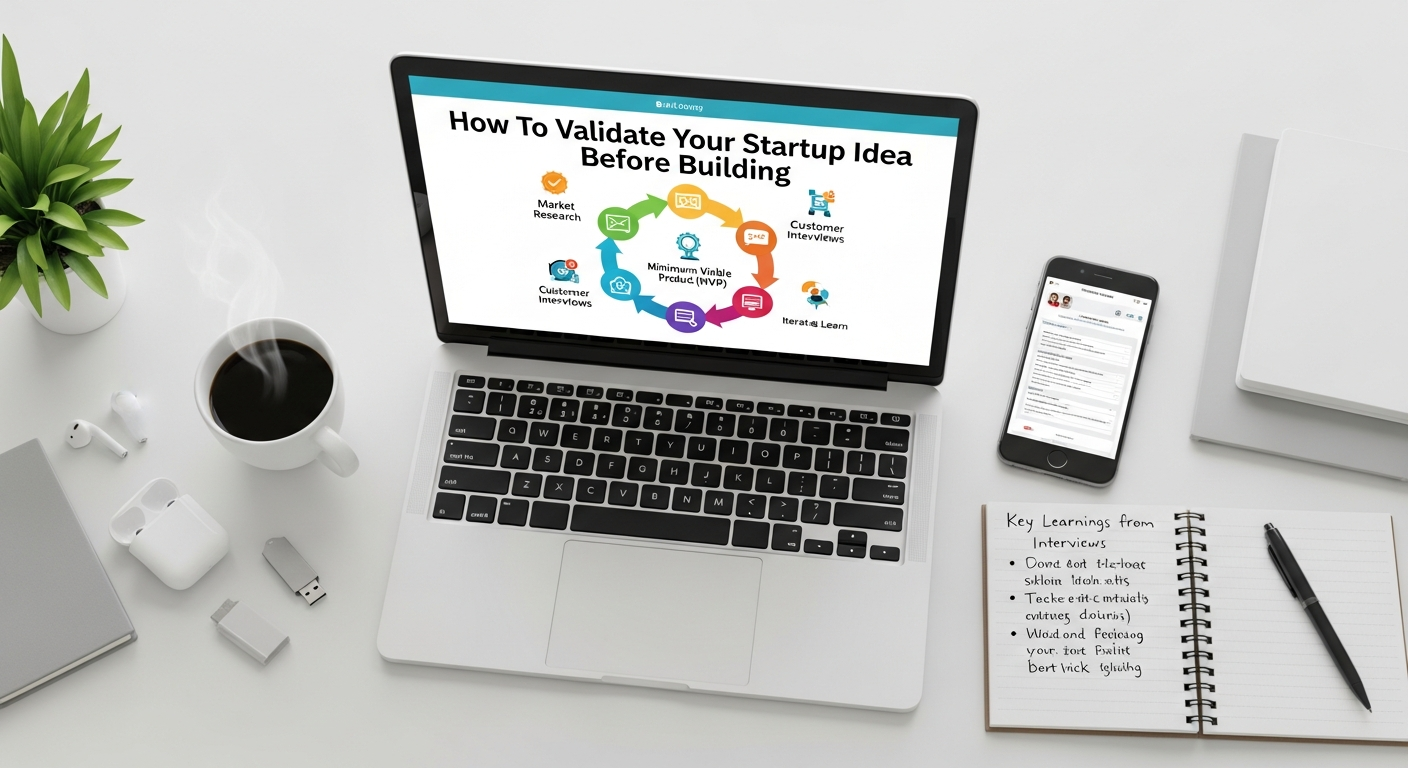
Before you even think about solutions or features, you must deeply understand the problem you’re trying to solve and for whom. This foundational step is often overlooked but is arguably the most crucial part of the validation process. Without a clearly defined problem and a specific target audience, your validation efforts will be unfocused and ineffective.
Start by articulating the problem in clear, concise terms. Is it a significant pain point? How frequently does it occur? What are the current workarounds people use? Understanding the severity and frequency of the problem helps you gauge its market potential. A minor inconvenience might not be enough to drive adoption, whereas a critical, daily struggle presents a much stronger opportunity.
Next, identify your target audience. Who experiences this problem most acutely? Develop detailed customer personas that go beyond demographics. Think about their behaviors, motivations, frustrations, goals, and even their tech savviness. Where do they spend their time online? What other products or services do they use? The more granular your understanding of your potential users, the more effectively you can tailor your validation questions and future product development.
Conducting a thorough market sizing and segmentation exercise is also vital. How large is the total addressable market (TAM)? What percentage of that market can you realistically capture (SAM – serviceable addressable market)? And what segment will you target initially (SOM – serviceable obtainable market)? This isn’t about perfectly accurate numbers at this stage, but rather about understanding the potential scale of your opportunity and identifying viable entry points.
Finally, perform a comprehensive competitive analysis. Who are the existing players in this space? What solutions do they offer, and what are their strengths and weaknesses? Don’t just look for direct competitors; also consider indirect competitors and common workarounds. Understanding the competitive landscape helps you identify gaps in the market, potential differentiation strategies, and existing customer expectations. Are there entrenched players you need to displace, or is there an underserved niche waiting for a better solution? This analysis will inform your unique value proposition and help you articulate why your solution is superior or different.
Lean Validation Methods: Getting Started Without Writing a Single Line of Code
Customer Interviews and Surveys: Listening to Your Future Users
One of the most powerful and direct ways to validate your idea is by talking to your potential customers. Customer interviews provide qualitative data, offering deep insights into user needs, pain points, and behaviors. The key is to ask open-ended questions and listen much more than you talk. Focus on past behaviors and current challenges rather than hypothetical future actions. For example, instead of asking “Would you use an app that does X?”, ask “How do you currently solve problem Y?” or “Tell me about the last time you experienced Z.” Look for patterns in responses and identify recurring frustrations or unmet needs. Aim for 10-20 in-depth interviews to start gaining meaningful insights.
Surveys, on the other hand, are excellent for gathering quantitative data from a larger audience. They can help you validate assumptions drawn from interviews or test specific hypotheses. When designing surveys, keep them concise, avoid leading questions, and use a mix of multiple-choice, rating scales, and optional open-text fields. Tools like SurveyMonkey or Google Forms can be invaluable here. However, be cautious: survey data alone can be misleading without the qualitative context from interviews. Combine both methods for a holistic view.
Landing Pages and A/B Testing: Gauging Interest and Demand
A simple, single-page website can be an incredibly effective validation tool. Create a landing page that clearly articulates your problem, proposed solution, and unique value proposition. The primary goal of this page is to measure interest through a clear call to action (CTA). This could be an email sign-up for early access, a pre-order button (even if it’s just collecting expressions of interest), or a waitlist. Tools like Leadpages, Unbounce, or even simple WordPress sites can help you create these quickly.
Drive traffic to your landing page through targeted ads (Google Ads, social media) or relevant online communities. Monitor key metrics such as conversion rates (how many visitors complete your CTA), bounce rates, and time on page. If a significant percentage of visitors are signing up or expressing interest, it’s a strong signal of market demand. A/B testing different headlines, value propositions, or CTAs on your landing page can help you refine your messaging and identify what resonates best with your target audience, providing further validation.
Concierge MVPs and Manual Service: Delivering Value Manually
A Concierge MVP involves manually delivering your product’s core value to a small group of early customers. Instead of building a complex system, you act as the “software” behind the scenes. For example, if your idea is an AI-powered personal assistant for busy professionals, you might manually perform tasks for a few clients, using existing tools and your own effort. This method allows you to directly observe how users interact with the solution, what challenges they face, and what features are truly essential, all without significant development cost.
The beauty of a Concierge MVP is the deep, qualitative feedback you receive. You’re not just observing; you’re actively participating in their problem-solving process. This direct interaction reveals nuances that surveys or even interviews might miss. It’s an intensive but incredibly valuable way to validate both the problem and your proposed solution’s effectiveness.
Explainer Videos and Mockups: Visualizing the Future
Sometimes, explaining a complex idea through text or even static images isn’t enough. An explainer video, even a simple animated one, can effectively communicate your vision, demonstrate the problem, and show how your solution works. Post this video on YouTube or Vimeo, share it with your target audience, and gather feedback on clarity, appeal, and whether it effectively conveys the value proposition. You can also use calls to action within the video or in its description to gauge interest.
Similarly, high-fidelity mockups or prototypes (using tools like Figma, Adobe XD, or InVision) can allow users to “interact” with your product’s interface and workflow before any code is written. This helps validate usability, design choices, and user flow, identifying potential pain points early on. Observing users navigating these mockups and gathering their feedback is invaluable for refining your product’s user experience (UX) and ensuring it’s intuitive and effective.
Building Your Minimum Viable Product (MVP) for Further Validation
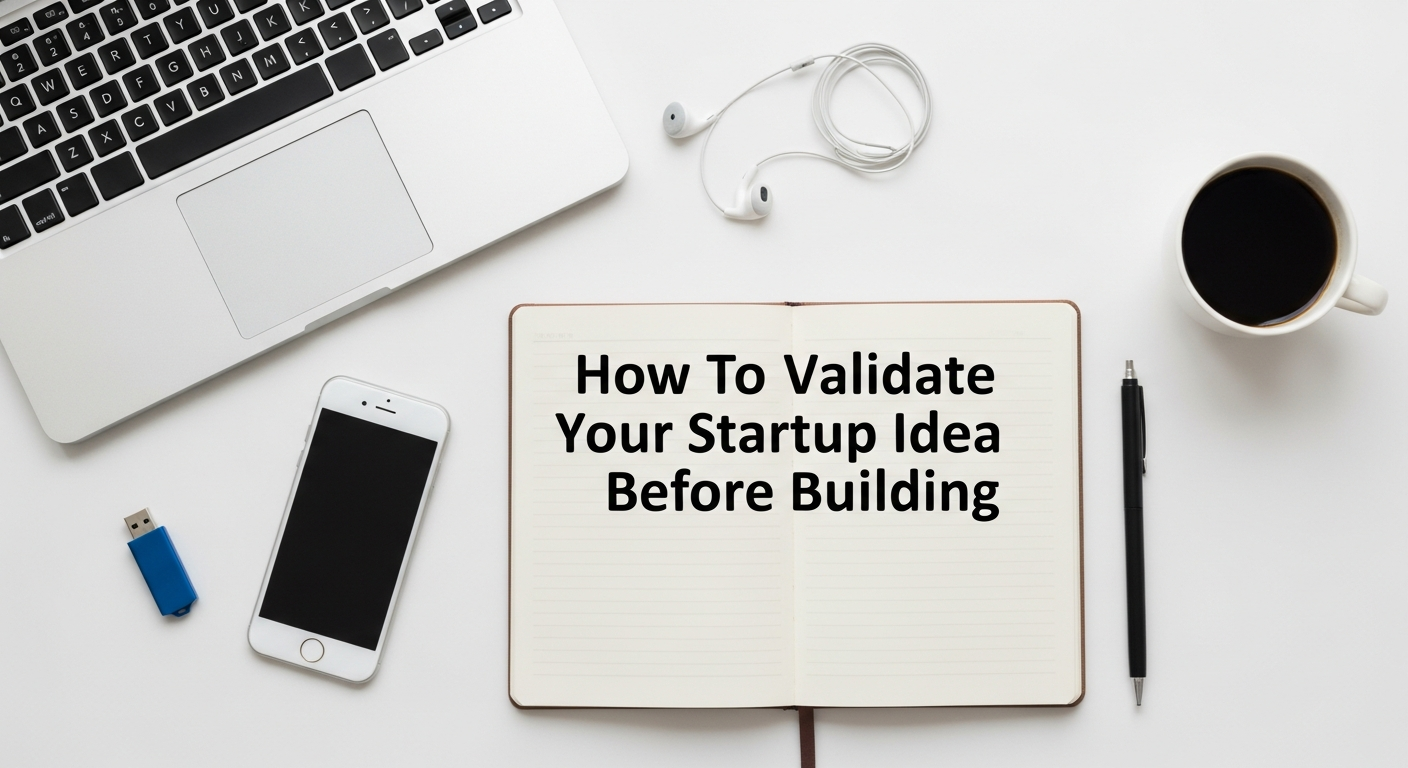
Once you’ve gathered initial validation that there’s a real problem and some interest in your proposed solution, the next step is to build a Minimum Viable Product (MVP). An MVP is not a half-baked product; it’s the smallest possible version of your product that delivers its core value proposition to early adopters, allowing you to learn from their real-world usage. The purpose of an MVP is to test your riskiest assumptions and validate your solution in a live environment with actual users, continuing the build-measure-learn loop.
The key principle here is focus. An MVP should only include the absolute essential features required to solve the core problem for your initial target segment. Resist the urge to add “nice-to-have” features; these can bloat your development timeline and budget, and distract from the core learning objectives. The goal is to get something functional into the hands of users quickly, gather feedback, and iterate.
When considering your MVP, think about the underlying tech stack. For an MVP, simplicity and speed of development are often paramount. You might opt for off-the-shelf solutions, low-code/no-code platforms, or a widely adopted framework that allows for rapid prototyping. For instance, a web-based MVP might initially leverage a Python/Django or Node.js/Express backend with a React or Vue.js frontend, hosted on a cloud provider like AWS or Google Cloud. The choice should prioritize getting to market and gathering data over long-term scalability, which can be addressed in later iterations. Understanding What Is A Tech Stack How To Choose is crucial even at this early stage, as it impacts development speed and future flexibility.
Managing the development of your MVP effectively is also critical. Utilizing agile methodologies and robust project management software for startups can streamline this process. Many Best Project Management Software Startups offer tools perfectly suited for small teams, enabling clear task tracking, collaboration, and progress monitoring, ensuring your MVP stays focused and on schedule.
Once your MVP is live, the validation continues. You’ll be measuring key metrics such as user engagement, feature usage, retention rates, and conversion rates. Crucially, you’ll also be gathering qualitative feedback through in-app surveys, user interviews, and support interactions. This combination of quantitative and qualitative data provides a holistic view of how your MVP is performing and where it needs to improve. This continuous feedback loop is what allows you to pivot, persevere, or even gracefully terminate an idea if the data indicates a lack of market fit.
Analyzing Data and Making Informed Decisions: Pivot, Persevere, or Kill
Collecting data is only half the battle; the real value comes from meticulously analyzing it and using those insights to make critical decisions about your startup’s future. This stage requires a blend of analytical rigor, open-mindedness, and sometimes, tough love.
Begin by synthesizing all the information you’ve gathered from customer interviews, surveys, landing page metrics, and MVP usage data. Look for patterns, correlations, and anomalies. Are your initial assumptions about the problem and solution holding true? Is there a consistent theme emerging from user feedback? For instance, if your landing page conversion rates are low, or your MVP has high churn despite initial sign-ups, these are red flags indicating that your value proposition isn’t resonating or your solution isn’t effectively solving the problem.
Qualitative data (from interviews, open-ended survey responses) helps you understand the “why” behind user behavior. Why are they struggling with a particular feature? Why do they prefer a competitor’s solution? Quantitative data (from surveys, analytics) provides the “what” and the “how much.” How many users are completing a specific action? What’s the average time spent on a key page? Combining these two types of data gives you a powerful, comprehensive understanding.
Based on your analysis, you’ll typically face one of three strategic decisions:
- Persevere: If your validation efforts confirm a strong market need, positive user feedback, and promising metrics, then you have a strong signal to continue building and iterating on your current path. This means investing further in development, adding more features, and scaling your user acquisition efforts.
- Pivot: If the data suggests that your initial approach isn’t quite right, but there’s still a clear underlying problem or an adjacent opportunity, a pivot might be necessary. A pivot is a structured course correction designed to test a new fundamental hypothesis about the product, strategy, or growth engine. This could mean targeting a different customer segment, changing your core value proposition, altering your pricing model, or even shifting your tech stack to better support a new direction. The key is that a pivot isn’t a random change; it’s an informed adjustment based on learned insights.
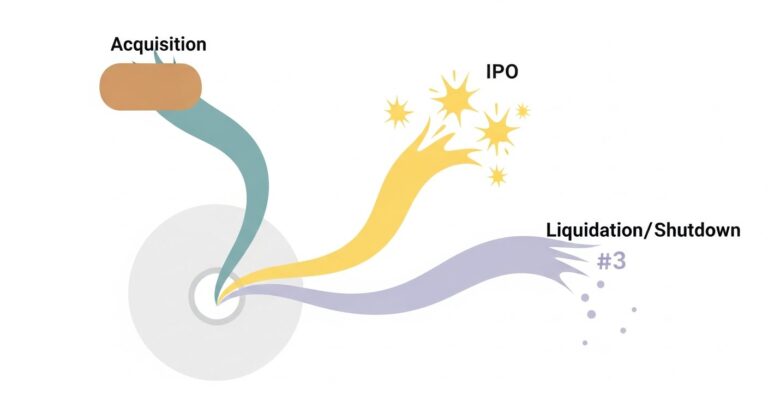
- Kill: This is often the hardest decision, but sometimes the most responsible. If repeated validation efforts consistently show a lack of market demand, an inability to solve the problem effectively, or an unsustainable business model, it might be time to gracefully shut down the idea. While painful, killing a non-viable idea frees up resources, time, and emotional energy to pursue a more promising venture. It’s not a failure; it’s a valuable learning experience.
Remember that validation is an iterative process. Even after launching a successful product, continuous feedback loops, A/B testing, and market analysis are crucial for staying relevant and competitive in 2026 and beyond. The market is constantly evolving, and your product must evolve with it.
Beyond Initial Validation: Continuous Learning and Adaptation
The journey of validation doesn’t end once your MVP is launched or even after you’ve achieved initial product-market fit. In the rapidly evolving tech landscape of 2026, continuous learning and adaptation are paramount for long-term success. Market trends shift, customer needs evolve, and new competitors emerge. Your startup’s ability to remain agile and responsive to these changes will determine its longevity.
Establish robust mechanisms for ongoing customer feedback. This includes regular user interviews, in-app surveys, monitoring social media sentiment, and actively engaging with your community. Your customer support channels are also a goldmine of insights into user pain points and feature requests. Integrate this feedback directly into your product roadmap, ensuring that future development is always driven by validated user needs.
Stay informed about broader industry trends and technological advancements. What new AI capabilities are emerging? How are regulatory changes impacting your sector? Being proactive in understanding these shifts can help you identify new opportunities or anticipate potential threats, allowing you to adapt your product and strategy before it’s too late. For instance, if your platform relies heavily on a particular API that is set to deprecate by 2026, planning for this change well in advance is critical.
Furthermore, consider how you communicate your ongoing value and insights to the market. Developing a strong content strategy, including learning How To Write Blog Posts That Rank Google, can be a powerful tool for continuous validation and market engagement. By sharing your expertise, addressing common industry challenges, and showcasing your product’s capabilities through high-ranking content, you not only attract new users but also reinforce your position as a thought leader. This ongoing dialogue with the market helps you gather subtle cues about evolving needs and allows you to test new ideas through content, long before committing to product development.
In essence, validation is a mindset—a commitment to evidence-based decision-making at every stage of your startup’s lifecycle. By embracing continuous learning, being open to iteration, and always prioritizing customer insights, you significantly enhance your chances of building a resilient and successful venture that thrives well into 2026 and beyond.
Frequently Asked Questions
Recommended Resources
Learn more about this topic in How To Use Adobe Indesign For Layouts at Layout Scene.
Learn more about this topic in Cloud Computing Explained Simply at Bookmark Sharer.