Mastering Growth: A Deep Dive into Top PLG Company Examples for SaaS Success
By eamped Editorial Team — Senior editors with 10+ years of subject-matter experience.
Published 2026-05-26 · Last Updated 2026-05-26
Affiliate disclosure: This article may contain affiliate links. Recommendations are independent and editorially driven.
In the dynamic landscape of tech startups and SaaS, the pursuit of sustainable, scalable growth is paramount. For many years, the conventional wisdom dictated heavy investments in sales and marketing to acquire customers. However, a powerful paradigm shift has reshaped this approach: Product-Led Growth (PLG). PLG places the product itself at the core of customer acquisition, retention, and expansion, allowing users to experience value firsthand before committing to a purchase. It’s a strategy that has propelled countless companies to unicorn status and redefined how businesses scale in 2026.
This comprehensive guide will explore the fascinating world of PLG by dissecting leading PLG company examples. We’ll delve into their strategies, understand what makes them tick, and extract actionable insights for your own startup. Whether you’re a founder, product manager, or marketing professional, understanding these examples is crucial for navigating the competitive digital marketplace and building a robust, user-centric growth engine.
From the early pioneers who demonstrated the power of self-service to the modern titans who continually innovate their product experiences, we’ll uncover the common threads and unique approaches that define successful PLG models. Prepare to learn how these companies leverage product features, intuitive onboarding, and seamless upgrade paths to drive unparalleled organic growth and customer loyalty.
Understanding Product-Led Growth (PLG): The Modern SaaS Imperative
Product-Led Growth (PLG) is a business methodology in which the product itself serves as the primary driver of customer acquisition, conversion, and expansion. Unlike traditional sales-led or marketing-led models, PLG prioritizes user experience and value delivery upfront. The philosophy is simple yet profound: let the product do the talking. Instead of relying solely on sales calls or extensive marketing campaigns to demonstrate value, PLG companies allow users to experience the product’s core benefits firsthand, often through a freemium model or a free trial.
In 2026, PLG has moved from a novel concept to a foundational imperative for SaaS companies. The reasons are multifaceted. Customers today are savvier, more self-sufficient, and increasingly averse to traditional sales pitches. They prefer to research, test, and decide on their own terms. PLG caters directly to this preference, empowering users to discover value autonomously. This approach not only enhances customer satisfaction but also dramatically reduces Customer Acquisition Costs (CAC), making it an incredibly efficient and scalable growth engine.
Core Principles of PLG
- User Experience is Paramount: A fantastic product that’s easy to use and delivers immediate value is non-negotiable. The product must be intuitive enough for users to onboard themselves.
- Value First, Monetize Later: The focus is on getting users to experience a “aha!” moment quickly, showcasing the product’s core benefit before asking for payment.
- Self-Service Empowerment: Users should be able to sign up, explore features, and understand how to use the product without significant intervention from sales or support.
- Data-Driven Iteration: PLG companies constantly collect and analyze user behavior data to identify friction points, improve features, and optimize conversion funnels.
- Scalable Growth: By reducing reliance on human-intensive sales processes, PLG allows companies to scale rapidly, reaching a global audience with lower operational overhead.
PLG vs. Sales-Led vs. Marketing-Led
To truly appreciate PLG, it’s helpful to contrast it with the more traditional growth models:
- Sales-Led Growth (SLG): In this model, the sales team is the primary engine of growth. Leads are generated (often by marketing), qualified, and then pursued by sales representatives who demonstrate the product, negotiate deals, and close contracts. This is common for high-value, complex enterprise software where human interaction and tailored solutions are essential. The customer journey is often top-down, starting with executive engagement.
- Marketing-Led Growth (MLG): MLG focuses on generating interest and demand through extensive marketing campaigns, content creation, SEO, and advertising. The goal is to fill the sales funnel with qualified leads, which are then either converted directly by marketing automation (for lower-priced products) or handed over to sales. The emphasis is on brand awareness, lead generation, and nurturing.
- Product-Led Growth (PLG): PLG flips the script by making the product itself the main growth vehicle. Users discover, adopt, and derive value from the product, often through a freemium or free trial model. The product’s inherent virality, ease of use, and demonstrable value drive acquisition and conversion. Sales and marketing teams, when present, support the product experience, helping users maximize value or identifying opportunities for expansion, rather than being the sole gatekeepers of access.
While distinct, it’s important to note that these models aren’t mutually exclusive. Many successful companies in 2026 adopt a hybrid approach, leveraging aspects of all three, with PLG often forming the foundation for initial user acquisition and engagement.
The Anatomy of a Successful PLG Model
A successful PLG model isn’t just about offering a free tier; it’s a meticulously crafted system designed to guide users from initial discovery to becoming loyal, paying customers. It requires a deep understanding of user behavior, continuous product iteration, and a seamless journey that minimizes friction and maximizes value perception.
Key Metrics for PLG
PLG companies rely heavily on data to measure success and identify areas for improvement. Key metrics often include:
- Activation Rate: The percentage of users who complete a key action demonstrating they’ve experienced the product’s core value (e.g., inviting a teammate, completing a project).
- Retention Rate: How many users continue to use the product over time. This is critical for long-term growth.
- Expansion Revenue (Net Revenue Retention): The revenue generated from existing customers through upgrades, add-ons, or increased usage. A high NRR (over 100%) indicates healthy expansion.
- Time to Value (TTV): How quickly a new user realizes the core benefit of the product. The shorter, the better.
- Customer Lifetime Value (CLTV): The total revenue a company expects to earn from a customer over their relationship.
- Virality/K-factor: The rate at which existing users refer new users, leading to exponential growth.
- Product Qualified Leads (PQLs): Users who have demonstrated high engagement and fit within the product, indicating a strong likelihood of converting to a paid plan.
User Onboarding and Activation
The onboarding experience is the make-or-break moment for PLG. It’s the user’s first impression and dictates whether they’ll stick around to find value. Effective onboarding is:
* Intuitive: Users should be able to navigate and understand the product’s basic functions without extensive tutorials or support.
* Personalized: Tailoring the initial experience based on user roles or stated goals can significantly increase engagement.
* Progressive: Introducing features gradually, rather than overwhelming new users with everything at once.
* Value-focused: Guiding users directly to their “aha!” moment as quickly as possible, demonstrating the core problem the product solves.
* Actionable: Encouraging users to take specific, low-friction actions that unlock immediate value.
Monetization Strategies (Freemium, Free Trial, Hybrid)
How PLG companies convert free users into paying customers is central to their business model:
- Freemium: Offers a core set of features for free, forever. Users can upgrade to a paid tier for advanced features, higher usage limits, or premium support. This strategy aims for widespread adoption and relies on a small percentage of users converting.
- Free Trial: Provides full access to a premium version of the product for a limited time (e.g., 7, 14, or 30 days). The goal is for users to experience the full value and be convinced to subscribe before the trial expires.
- Hybrid Models: Many companies blend these approaches. For example, a generous freemium tier might exist alongside a time-limited free trial for advanced features, or a sales team might engage with high-usage freemium users to guide them to an enterprise plan. The key is to provide a clear, value-driven path from free usage to paid subscription.
The success of these monetization strategies hinges on the perceived value gap between the free offering and the paid offering. The upgrade should feel like a natural progression that solves additional problems or unlocks significant new benefits for the user.
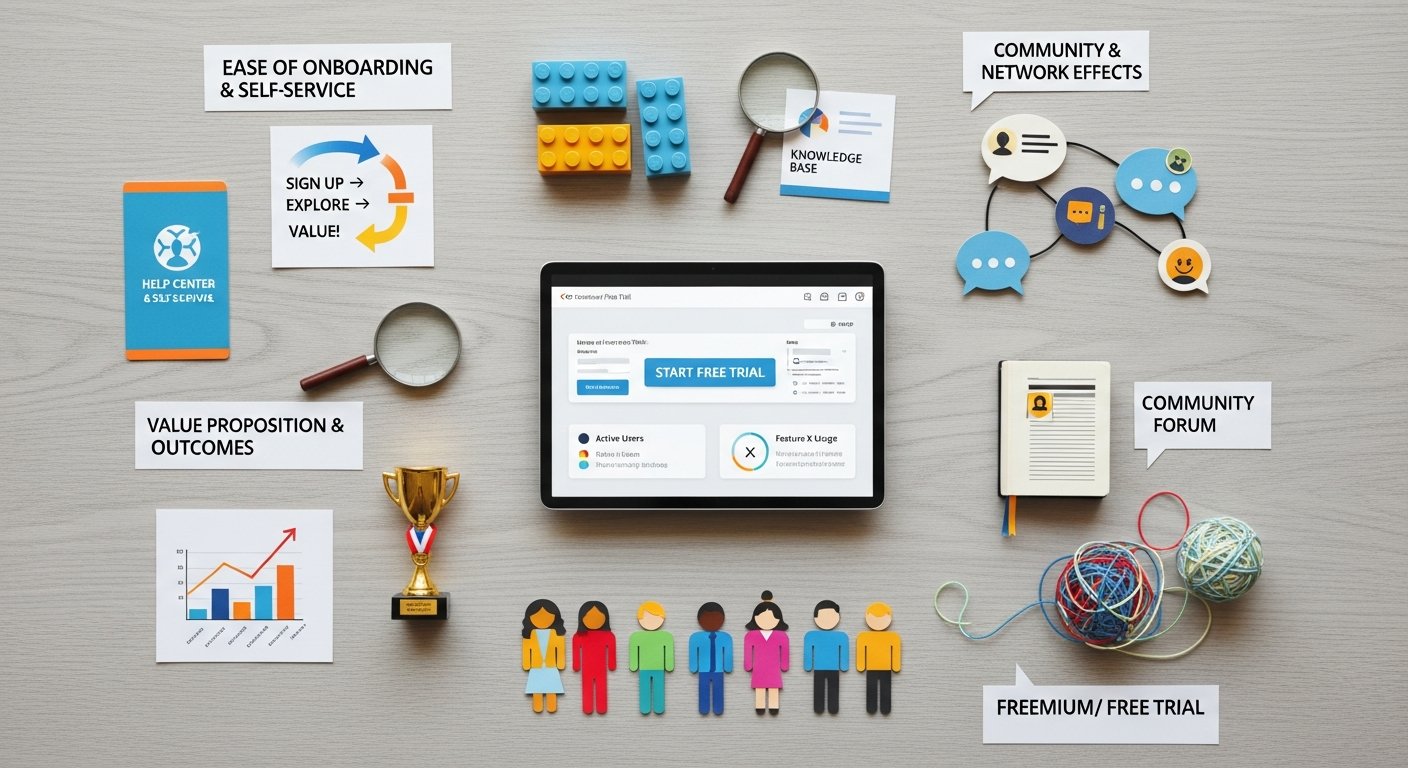
[INLINE IMAGE 1: place after second H2 | alt=”plg company examples concept illustration”]
Iconic PLG Company Examples: Early Pioneers and Modern Titans
Many of today’s most successful tech companies owe a significant portion of their growth to a product-led strategy. These pioneers demonstrated that users could indeed discover, adopt, and fall in love with software without a traditional sales pitch. Let’s explore some seminal PLG company examples that have shaped the industry.
Slack: The Communication Revolution
Slack redefined team communication, quickly becoming an indispensable tool for businesses worldwide. Its PLG success story is legendary:
- Product Value: Slack offers real-time messaging, channel-based communication, file sharing, and deep integrations with other tools. Its intuitive interface and powerful search capabilities immediately demonstrate value by streamlining internal communication and reducing email overload.
- Freemium Model: Slack offers a highly functional free tier with limitations on message history, integrations, and storage. This allows teams to get started immediately, experience the core benefits, and build a habit of using the platform without any upfront cost.
- Viral Loop: Communication tools inherently have a viral component. For Slack to be useful, team members must invite others. As more team members join, the network effect strengthens, making it harder for teams to leave. This organic adoption within organizations drives widespread usage.
- Seamless Upgrade: As teams grow and hit the limitations of the free plan (e.g., needing more message history, advanced features, or enterprise-level security), the value proposition for upgrading to a paid plan becomes clear and compelling.
Slack’s success illustrates how a product that truly solves a critical pain point, combined with a frictionless self-service model and strong network effects, can achieve explosive growth.
Zoom: Seamless Connectivity for All
Zoom’s meteoric rise, particularly highlighted in recent years, is a testament to the power of a product-led approach to video conferencing.
- Exceptional User Experience: Zoom stood out by offering reliable, high-quality video conferencing that was incredibly easy to use. No downloads, no complicated setups—just click a link and join. This simplicity was a stark contrast to older, clunkier solutions.
- Generous Free Tier: Zoom’s free plan allows for unlimited 1-to-1 meetings and group meetings up to 40 minutes, with a participant limit. This generous offering makes it accessible for personal use, small teams, and quick discussions, ensuring widespread adoption and familiarity.
- Clear Value Proposition: For individuals and small teams, the free tier is often sufficient. For larger organizations, longer meetings, or advanced features like recording and admin controls, the value of upgrading is immediately apparent.
- Problem Solved: Zoom addressed the universal need for easy, reliable virtual communication, making it a default choice for countless users and businesses.
Zoom exemplifies how a superior product experience, even in a crowded market, can lead to dominant market share through PLG.
Dropbox: Simplifying Cloud Storage
Dropbox was one of the earliest and most impactful PLG company examples, popularizing cloud storage and synchronization for the masses.
- Simple Core Value: Dropbox made file synchronization and sharing incredibly simple. Install a folder on your computer, and anything you drop into it instantly syncs across all your devices and to the cloud.
- Freemium with Incentives: Dropbox offered a free tier with limited storage. Crucially, it incentivized users to invite friends by offering additional free storage for both the referrer and the referee. This created a powerful viral loop.
- Effortless Onboarding: The product was designed for immediate usability. The value proposition was clear from the moment a user installed the client and saw their files syncing.
- Network Effect: Sharing files with others naturally brought new users into the Dropbox ecosystem, accelerating adoption. As more people used it, its utility increased.
Dropbox’s strategy of combining an easy-to-understand product with viral incentives proved incredibly effective in building a massive user base.
Atlassian (Jira, Confluence, Trello): Tools for Teams
Atlassian stands out as a unique PLG success story, particularly given its focus on enterprise-grade tools. While they have sales teams, their initial growth was heavily product-led.
- Developer-Centric Focus: Atlassian initially targeted developers and IT professionals with tools like Jira (project tracking) and Confluence (knowledge management). These users often prefer to evaluate software themselves rather than engage with sales.
- Self-Service and Low Price Point (Initially): Atlassian made its powerful tools accessible at a relatively low price point, often with perpetual licenses early on, and then transitioned to subscription models. Teams could purchase directly without sales involvement.
- Deep Integrations and Ecosystem: Atlassian products are designed to integrate seamlessly, creating a powerful ecosystem that increases stickiness. Once a team adopts Jira, adding Confluence or Trello becomes a natural extension.
- Trello’s Freemium Excellence: Trello, acquired by Atlassian, is another prime example of PLG. Its simple, visual Kanban board made project management accessible to everyone, with a generous free tier and clear upgrade paths for teams needing more features or integrations.
Atlassian proves that even complex, business-critical software can thrive with a product-led approach by empowering technical users to adopt and advocate for the tools themselves.
Emerging & Niche PLG Company Examples: Expanding the Horizon
Beyond the tech giants, a new wave of companies across various domains continues to leverage PLG to disrupt markets and capture significant user bases. These examples highlight the versatility and expanding applicability of product-led strategies.
Calendly: Scheduling Made Easy
Calendly solved a universal pain point: the endless back-and-forth of scheduling meetings. Its product-led approach made it a runaway success.
- Simple, Focused Solution: Calendly’s core value is clear: enable others to book time with you effortlessly, based on your availability.
- Freemium Model: The free tier offers essential scheduling features, making it incredibly useful for individuals. This allows users to experience the immense time-saving benefits immediately.
- Viral Loop: When you send a Calendly link, the recipient (a potential new user) experiences the ease of booking firsthand. This exposure acts as a powerful marketing tool, naturally spreading the product.
- Clear Upgrade Path: For those needing advanced features like multiple event types, integrations with payment systems, or team scheduling, the paid tiers offer compelling value.
Calendly is a perfect example of how a single, well-executed feature can drive massive adoption through PLG.
HubSpot: Marketing, Sales, and Service All-in-One (with a PLG Motion)
While HubSpot is often associated with inbound marketing and sales-led motions for its enterprise suites, it has increasingly embraced PLG for its individual tools and smaller businesses.
- Free CRM: HubSpot offers a robust, free CRM that allows businesses to manage contacts, track deals, and engage with customers without any cost. This acts as a powerful entry point into their ecosystem.
- Free Marketing/Sales/Service Tools: Alongside the CRM, HubSpot provides free versions of specific tools like email marketing, live chat, meeting scheduling, and landing page builders. These tools are often standalone useful, providing immediate value.
- Ecosystem Approach: The free tools are designed to work together and provide a taste of HubSpot’s integrated platform. As businesses grow and need more advanced features or integrations across marketing, sales, and service, upgrading to paid “Hubs” becomes a natural progression.
- Education and Content: HubSpot has always excelled at content marketing, educating users on inbound strategies. This educational content often naturally leads users to explore and adopt their free tools.
HubSpot demonstrates a sophisticated hybrid model, using free, product-led entry points to draw users into a broader, sales-assisted ecosystem, proving that PLG can augment even complex enterprise platforms.
Figma: Collaborative Design Powerhouse
Figma revolutionized the design industry by bringing real-time collaboration to graphic design, traditionally a desktop-bound and solitary activity.
- Browser-Based Accessibility: Being entirely web-based eliminated installation barriers and allowed for instant access from any device. This was a significant differentiator from competitors like Adobe.
- Real-Time Collaboration: The ability for multiple designers to work on the same file simultaneously, akin to Google Docs for design, created immense value and a natural viral loop within design teams.
- Generous Free Tier: Figma’s free tier allows for unlimited files, version history, and unlimited collaborators on up to three projects. This is incredibly powerful for individuals and small teams to get started and fully experience the collaborative benefits.
- Community and Plugins: Figma fosters a vibrant community and a rich plugin ecosystem, further enhancing its value and encouraging user adoption and innovation.
Figma’s success underlines how a truly innovative product, delivered with a frictionless user experience and a powerful collaborative free tier, can swiftly become an industry standard.
Canva: Design for Everyone
Canva democratized graphic design, enabling non-designers to create professional-looking visuals with ease. Its PLG model is a masterclass in accessibility and empowerment.
- Intuitive Interface: Canva’s drag-and-drop interface, coupled with an extensive library of templates, stock photos, and design elements, made complex design tasks simple and accessible to anyone.
- Freemium Model: Canva offers a vast array of free templates, elements, and features, allowing users to create impressive designs without ever paying. This cultivates a massive user base and builds brand loyalty.
- Clear Value Proposition: The Pro plan offers access to premium templates, millions of stock photos, brand kits, and advanced features like background remover and content scheduling, providing clear incentives for upgrade.
- Broad Appeal: By targeting individuals, small businesses, educators, and marketers alike, Canva achieved widespread adoption, often by word-of-mouth.
Canva demonstrates how catering to a mass market with an easy-to-use product and a compelling freemium offering can unlock explosive growth and empower millions of users.
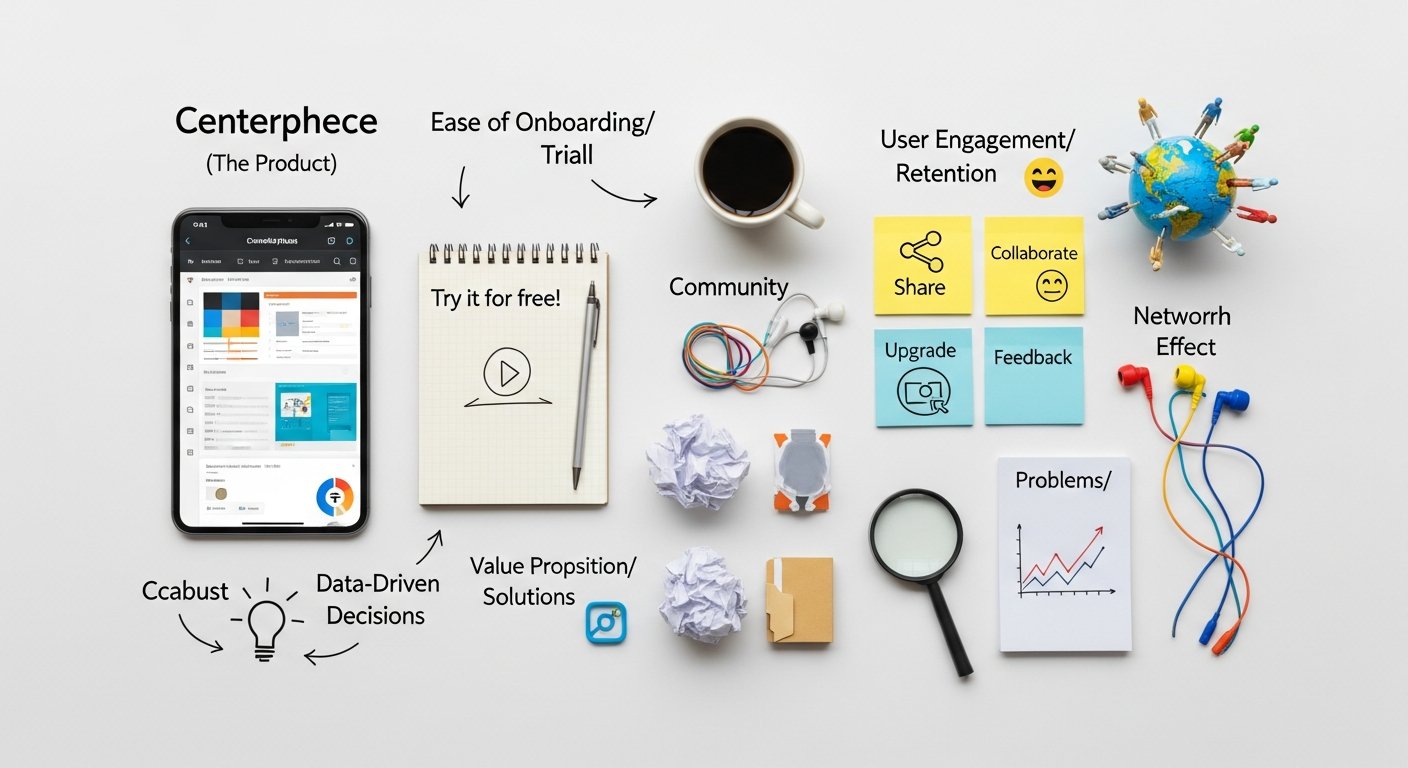
[INLINE IMAGE 2: place after fourth H2 | alt=”plg company examples comparison illustration”]
Deep Dive into PLG Strategies: What We Can Learn
Analyzing these PLG company examples reveals recurring strategic elements that contribute to their success. These aren’t just isolated tactics but interconnected parts of a holistic product-led approach that focuses on user value and organic expansion.
Viral Loops and Network Effects
Many successful PLG companies embed virality directly into their product’s usage. This means that the more people use the product, the more valuable it becomes, or the act of using the product naturally exposes it to new potential users. For example:
- Collaboration Tools: Slack, Zoom, Figma. To use these effectively, you must invite others. Each invitation is an organic user acquisition event.
- Sharing Mechanisms: Dropbox, Calendly. When you share a file via Dropbox or send a booking link via Calendly, the recipient experiences the product, often leading them to adopt it themselves.
- Content Creation Platforms: Canva. When users create designs and share them on social media or in presentations, it indirectly promotes Canva to their audience.
Designing a product with inherent viral loops significantly reduces customer acquisition costs and accelerates growth far beyond what traditional marketing alone could achieve.
Data-Driven Product Iteration
PLG companies are obsessive about data. They constantly track user behavior within the product to understand:
- Activation Paths: Which user flows lead to the “aha!” moment?
- Friction Points: Where do users drop off or get stuck?
- Feature Usage: Which features are most loved, and which are underutilized?
- Conversion Triggers: What actions or usage patterns predict an upgrade?
This data informs continuous product improvements. Every new feature, every UI tweak, and every onboarding adjustment is often a result of A/B testing and quantitative analysis. This agile, iterative approach ensures the product continually evolves to meet user needs and optimize the path to value and conversion. For tech startups, leveraging advanced analytics platforms is non-negotiable for understanding user journeys and driving informed decisions. Learn more about leveraging data analytics for SaaS growth.
Empowering the User Journey
At the heart of PLG is empowering users to succeed on their own terms. This involves:
- Self-Serve Resources: Comprehensive help centers, knowledge bases, and in-app tutorials that allow users to troubleshoot and learn independently.
- Intuitive Design: Products are designed to be discoverable and easy to use, minimizing the need for external support.
- Contextual Guidance: In-app prompts, tooltips, and guided tours that appear at the right moment to help users overcome hurdles or discover new features.
By empowering users, PLG companies reduce the load on support and sales teams, allowing them to focus on high-value interactions rather than basic inquiries.
Seamless Upgrade Paths
Converting free users to paid customers requires a clear and compelling upgrade path. This isn’t about strong-arming users but about presenting the value of premium features as a natural extension of their existing positive experience. Common strategies include:
- Feature Gating: Offering core functionality for free but placing advanced features (e.g., integrations, advanced analytics, specific tools) behind a paywall.
- Usage Limits: Restricting the free tier by usage (e.g., storage limits in Dropbox, meeting duration in Zoom, message history in Slack).
- Premium Support: Offering faster, more personalized support as a paid benefit.
- Team/Collaboration Features: Many PLG tools make basic collaboration free but charge for advanced team management, admin controls, or larger team sizes.
The key is to create a “pain point” or a clear aspiration that the paid tier effectively addresses, making the upgrade a logical next step in the user’s journey as their needs evolve.
Community Building and Advocacy
Building a strong community around the product can amplify PLG efforts. User communities serve multiple purposes:
- Peer Support: Users help each other, reducing the burden on official support channels.
- Feedback Loop: Communities provide valuable insights into user needs, pain points, and feature requests.
- Advocacy: Passionate users become brand advocates, spreading positive word-of-mouth and contributing to organic growth.
- Education: Advanced users often share tips and tricks, helping new users unlock more value from the product.
Companies like Figma and Atlassian have leveraged vibrant communities to foster engagement, drive adoption, and fuel their growth ecosystems.
To further illustrate the diverse approaches and key success factors among these companies, consider the following comparison:
| PLG Company Example | Primary Growth Lever | Monetization Strategy | Key Product Differentiator | Target Audience |
|---|---|---|---|---|
| Slack | Viral Loop (Team Collaboration) | Freemium (Usage/Features) | Real-time channel-based communication | Teams, Businesses |
| Zoom | Ease of Use, Generous Free Tier | Freemium (Time/Participants) | Reliable, simple video conferencing | Individuals, Teams, Enterprises |
| Dropbox | Referral Program, Sync Simplicity | Freemium (Storage/Features) | Effortless file synchronization & sharing | Individuals, Small Businesses |
| Figma | Real-time Collaboration, Accessibility | Freemium (Projects/Features) | Browser-based collaborative design | Designers, Product Teams |
| Canva | Template Library, Intuitive UI | Freemium (Assets/Features) | Empowering non-designers to create visuals | Individuals, SMBs, Marketers, Educators |
| Calendly | Solving Scheduling Pain Point | Freemium (Event Types/Features) | Simplifying meeting scheduling | Professionals, Small Businesses |
| HubSpot (Free CRM) | Free Entry Point to Ecosystem | Freemium/Hybrid (Feature Hubs) | Integrated marketing, sales, service tools | SMBs, Startups |
Building Your Own PLG Strategy: A Framework for Startups
Inspired by these successful PLG company examples, how can a new startup or an existing business pivot towards a product-led approach? It requires a fundamental shift in mindset and a structured framework for execution. For any tech startup aiming for aggressive growth, embracing PLG principles is almost essential in 2026.
Identifying Your Product’s Core Value
Before anything else, you must deeply understand the core problem your product solves and the unique value it delivers. This isn’t just a list of features; it’s the “aha!” moment, the primary benefit that makes users say, “I need this.”
- Problem-Solution Fit: Is there a genuine, widespread pain point that your product elegantly addresses?
- Unique Value Proposition: What makes your solution better or different from alternatives?
- Measurable Impact: How can users quickly experience and quantify the benefit (e.g., time saved, efficiency gained, better outcomes)?
Your freemium or free trial offering must center entirely around showcasing this core value without unnecessary gates or complexities. Make it easy for users to get to that “aha!” moment as quickly as possible.
Designing an Intuitive Onboarding Flow
The onboarding experience is critical for PLG. It’s the user’s first interaction with your product and must be designed for self-service success.
- Minimize Friction: Reduce the number of steps to sign up. Ask for only essential information.
- Guided First-Run Experience: Use concise in-app guides, tooltips, or short video tours to direct users to key features that demonstrate value.
- Contextual Help: Offer assistance precisely when and where users might need it, rather than overwhelming them upfront.
- Celebrate Small Wins: Acknowledge when users complete a key action (e.g., “Great job! Your first project is set up.”).
- Personalization: If possible, tailor the onboarding based on user roles, industry, or stated goals.
Regularly test and iterate your onboarding flow using analytics and user feedback to continuously improve its effectiveness.
Setting Up Effective Analytics and Feedback Loops
Data is the lifeblood of PLG. You need robust analytics to understand how users interact with your product and where they might be encountering friction.
- Key Metrics Tracking: Implement tools to track activation, retention, usage patterns, conversion rates, and churn.
- User Event Tracking: Monitor specific actions users take (or don’t take) within the product.
- In-App Feedback: Incorporate simple ways for users to provide feedback directly within the product (e.g., surveys, feature requests, bug reports).
- User Interviews: Conduct qualitative interviews with both free and paid users to understand their motivations, frustrations, and needs.
This data should directly inform your product roadmap and growth experiments. For businesses looking to optimize their customer journeys, understanding these feedback loops is critical. Explore strategies for customer journey optimization.
Aligning Sales and Marketing with PLG
While product-led, PLG doesn’t mean the elimination of sales and marketing. Instead, their roles evolve:
- Marketing: Focuses on attracting ideal users to the product, creating educational content, and nurturing users through the funnel (e.g., via email automation for activation).
- Sales: Shifts from cold outreach to engaging with Product Qualified Leads (PQLs) – users who have already experienced significant value from the free product. Sales can then help them maximize value, identify advanced needs, and guide them to appropriate paid plans, especially for higher-tier or enterprise accounts.
- Cross-Functional Collaboration: Product, marketing, and sales teams must work in lockstep, sharing data and insights to ensure a cohesive user experience from discovery to expansion.
This alignment ensures that all departments are working towards the common goal of empowering the user through the product.
Iterating and Optimizing for Growth
PLG is not a one-time setup; it’s an ongoing process of continuous improvement. Embrace an experimentation mindset:
- A/B Testing: Constantly test different onboarding flows, feature placements, pricing pages, and in-app messages.
- Feature Rollouts: Introduce new features iteratively, gather feedback, and measure their impact on key metrics.
- Pricing Optimization: Experiment with different pricing tiers and upgrade incentives to find what resonates best with your user base.
- Chasing the “North Star Metric”: Identify a single, overarching metric that represents the core value users get from your product and relentlessly optimize for it.
By adopting this iterative approach, your PLG strategy will remain agile and responsive to user needs and market changes.
Challenges and Pitfalls in PLG Adoption
While the benefits of PLG are compelling, implementing a successful product-led strategy is not without its challenges. Understanding these pitfalls can help startups and established companies navigate the transition more smoothly and avoid common mistakes.
Balancing Free Users with Paying Customers
One of the most significant challenges in a freemium PLG model is finding the right balance between what’s offered for free and what’s gated behind a paywall. If the free tier is too generous, users may never feel the need to upgrade, leading to a massive user base but low revenue. Conversely, if the free offering is too restrictive, users might not experience enough value to stick around, let alone convert.
- Defining the “Value Gap”: Clearly delineate the additional value a paid plan provides. It should solve a new problem or unlock significant efficiencies that the free tier doesn’t.
- Usage Tiers: Strategically limit usage, features, or collaboration capabilities in the free tier to encourage upgrades as user needs grow.
- Monetization Triggers: Identify specific user behaviors or team sizes that signal an increased need for paid features and target those users with compelling upgrade offers.
This balance requires continuous experimentation and a deep understanding of user segments.
The Cost of Acquisition vs. Lifetime Value
While PLG aims to reduce CAC, it’s not a magic bullet. Attracting users to even a free product still incurs costs (e.g., marketing, brand building, server infrastructure). The challenge lies in ensuring that the Customer Lifetime Value (CLTV) of converted users significantly outweighs the cost of acquiring and serving both free and paid users.
- Free User Costs: Don’t overlook the infrastructure, support, and R&D costs associated with serving a large base of free users.
- Conversion Rates: Monitor conversion rates from free to paid. Even a small percentage increase can have a massive impact on overall economics.
- Expansion Revenue: Focus on increasing expansion revenue from existing customers through upsells and cross-sells, as this is often more cost-effective than acquiring new customers.
A rigorous focus on unit economics is crucial to ensure that PLG leads to profitable growth, not just widespread adoption.
Product Complexity and Support Scalability
As products grow and add more features, they inherently become more complex. In a PLG model, where users are expected to self-serve, this complexity can become a major barrier to adoption and activation.
- Intuitive Design: Prioritize simplicity and ease of use, even as features expand. Avoid feature bloat.
- Contextual Help: Integrate in-app help, tooltips, and guided tours to help users navigate complexity.
- Knowledge Base: Maintain an up-to-date, comprehensive, and searchable knowledge base that addresses common issues and questions.
- Proactive Support: Use in-app messages or automated emails to offer help when analytics suggest a user might be stuck.
Scaling support without scaling costs is a core challenge, requiring a combination of intelligent product design, robust self-service options, and efficient support channels. For companies specializing in marketing automation, seamless integration of support into the user journey is a key differentiator.
{
“@context”: “https://schema.org”,
“@graph”: [
{
“@type”: “WebPage”,
“@id”: “https://www.eamped.com/plg-company-examples/”,
“url”: “https://www.eamped.com/plg-company-examples/”,
“name”: “Plg Company Examples”,
“description”: “Article about plg company examples”,
“datePublished”: “2026-06-05”,
“dateModified”: “2026-06-05”,
“inLanguage”: “en-US”,
“isPartOf”: {
“@id”: “https://www.eamped.com/#website”
}
},
{
“@type”: “Article”,
“@id”: “https://www.eamped.com/plg-company-examples/#article”,
“headline”: “Plg Company Examples”,
“name”: “Plg Company Examples”,
“description”: “Article about plg company examples”,
“url”: “https://www.eamped.com/plg-company-examples/”,
“datePublished”: “2026-06-05”,
“dateModified”: “2026-06-05”,
“author”: {
“@type”: “Person”,
“@id”: “https://www.eamped.com/#author”,
“name”: “Editorial Team”
},
“publisher”: {
“@type”: “Organization”,
“@id”: “https://www.eamped.com/#organization”,
“name”: “Eamped”,
“url”: “https://www.eamped.com”
},
“mainEntityOfPage”: {
“@id”: “https://www.eamped.com/plg-company-examples/”
},
“keywords”: [
“plg company examples”
],
“articleSection”: “Plg Company Examples”
},
{
“@type”: “BreadcrumbList”,
“@id”: “https://www.eamped.com/plg-company-examples/#breadcrumb”,
“itemListElement”: [
{
“@type”: “ListItem”,
“position”: 1,
“name”: “Home”,
“item”: “https://www.eamped.com”
},
{
“@type”: “ListItem”,
“position”: 2,
“name”: “Plg Company Examples”,
“item”: “https://www.eamped.com/plg-company-examples/”
}
]
},
{
“@type”: “Organization”,
“@id”: “https://www.eamped.com/#organization”,
“name”: “Eamped”,
“url”: “https://www.eamped.com”
},
{
“@type”: “Person”,
“@id”: “https://www.eamped.com/#author”,
“name”: “Editorial Team”
}
]
}
Mastering Growth: A Deep Dive into Top PLG Company Examples for SaaS Success
By eamped Editorial Team — Senior editors with 10+ years of subject-matter experience.
Published 2026-05-26 · Last Updated 2026-05-26
Affiliate disclosure: This article may contain affiliate links. Recommendations are independent and editorially driven.
In the dynamic landscape of tech startups and SaaS, the pursuit of sustainable, scalable growth is paramount. For many years, the conventional wisdom dictated heavy investments in sales and marketing to acquire customers. However, a powerful paradigm shift has reshaped this approach: Product-Led Growth (PLG). PLG places the product itself at the core of customer acquisition, retention, and expansion, allowing users to experience value firsthand before committing to a purchase. It’s a strategy that has propelled countless companies to unicorn status and redefined how businesses scale in 2026.
This comprehensive guide will explore the fascinating world of PLG by dissecting leading PLG company examples. We’ll delve into their strategies, understand what makes them tick, and extract actionable insights for your own startup. Whether you’re a founder, product manager, or marketing professional, understanding these examples is crucial for navigating the competitive digital marketplace and building a robust, user-centric growth engine.
From the early pioneers who demonstrated the power of self-service to the modern titans who continually innovate their product experiences, we’ll uncover the common threads and unique approaches that define successful PLG models. Prepare to learn how these companies leverage product features, intuitive onboarding, and seamless upgrade paths to drive unparalleled organic growth and customer loyalty.
Understanding Product-Led Growth (PLG): The Modern SaaS Imperative
Product-Led Growth (PLG) is a business methodology in which the product itself serves as the primary driver of customer acquisition, conversion, and expansion. Unlike traditional sales-led or marketing-led models, PLG prioritizes user experience and value delivery upfront. The philosophy is simple yet profound: let the product do the talking. Instead of relying solely on sales calls or extensive marketing campaigns to demonstrate value, PLG companies allow users to experience the product’s core benefits firsthand, often through a freemium model or a free trial.
In 2026, PLG has moved from a novel concept to a foundational imperative for SaaS companies. The reasons are multifaceted. Customers today are savvier, more self-sufficient, and increasingly averse to traditional sales pitches. They prefer to research, test, and decide on their own terms. PLG caters directly to this preference, empowering users to discover value autonomously. This approach not only enhances customer satisfaction but also dramatically reduces Customer Acquisition Costs (CAC), making it an incredibly efficient and scalable growth engine.
Core Principles of PLG
- User Experience is Paramount: A fantastic product that’s easy to use and delivers immediate value is non-negotiable. The product must be intuitive enough for users to onboard themselves.
- Value First, Monetize Later: The focus is on getting users to experience a “aha!” moment quickly, showcasing the product’s core benefit before asking for payment.
- Self-Service Empowerment: Users should be able to sign up, explore features, and understand how to use the product without significant intervention from sales or support.
- Data-Driven Iteration: PLG companies constantly collect and analyze user behavior data to identify friction points, improve features, and optimize conversion funnels.
- Scalable Growth: By reducing reliance on human-intensive sales processes, PLG allows companies to scale rapidly, reaching a global audience with lower operational overhead.
PLG vs. Sales-Led vs. Marketing-Led
To truly appreciate PLG, it’s helpful to contrast it with the more traditional growth models:
- Sales-Led Growth (SLG): In this model, the sales team is the primary engine of growth. Leads are generated (often by marketing), qualified, and then pursued by sales representatives who demonstrate the product, negotiate deals, and close contracts. This is common for high-value, complex enterprise software where human interaction and tailored solutions are essential. The customer journey is often top-down, starting with executive engagement.
- Marketing-Led Growth (MLG): MLG focuses on generating interest and demand through extensive marketing campaigns, content creation, SEO, and advertising. The goal is to fill the sales funnel with qualified leads, which are then either converted directly by marketing automation (for lower-priced products) or handed over to sales. The emphasis is on brand awareness, lead generation, and nurturing.
- Product-Led Growth (PLG): PLG flips the script by making the product itself the main growth vehicle. Users discover, adopt, and derive value from the product, often through a freemium or free trial model. The product’s inherent virality, ease of use, and demonstrable value drive acquisition and conversion. Sales and marketing teams, when present, support the product experience, helping users maximize value or identifying opportunities for expansion, rather than being the sole gatekeepers of access.
While distinct, it’s important to note that these models aren’t mutually exclusive. Many successful companies in 2026 adopt a hybrid approach, leveraging aspects of all three, with PLG often forming the foundation for initial user acquisition and engagement.
The Anatomy of a Successful PLG Model
A successful PLG model isn’t just about offering a free tier; it’s a meticulously crafted system designed to guide users from initial discovery to becoming loyal, paying customers. It requires a deep understanding of user behavior, continuous product iteration, and a seamless journey that minimizes friction and maximizes value perception.
Key Metrics for PLG
PLG companies rely heavily on data to measure success and identify areas for improvement. Key metrics often include:
- Activation Rate: The percentage of users who complete a key action demonstrating they’ve experienced the product’s core value (e.g., inviting a teammate, completing a project).
- Retention Rate: How many users continue to use the product over time. This is critical for long-term growth.
- Expansion Revenue (Net Revenue Retention): The revenue generated from existing customers through upgrades, add-ons, or increased usage. A high NRR (over 100%) indicates healthy expansion.
- Time to Value (TTV): How quickly a new user realizes the core benefit of the product. The shorter, the better.
- Customer Lifetime Value (CLTV): The total revenue a company expects to earn from a customer over their relationship.
- Virality/K-factor: The rate at which existing users refer new users, leading to exponential growth.
- Product Qualified Leads (PQLs): Users who have demonstrated high engagement and fit within the product, indicating a strong likelihood of converting to a paid plan.
User Onboarding and Activation
The onboarding experience is the make-or-break moment for PLG. It’s the user’s first impression and dictates whether they’ll stick around to find value. Effective onboarding is:
* Intuitive: Users should be able to navigate and understand the product’s basic functions without extensive tutorials or support.
* Personalized: Tailoring the initial experience based on user roles or stated goals can significantly increase engagement.
* Progressive: Introducing features gradually, rather than overwhelming new users with everything at once.
* Value-focused: Guiding users directly to their “aha!” moment as quickly as possible, demonstrating the core problem the product solves.
* Actionable: Encouraging users to take specific, low-friction actions that unlock immediate value.
Monetization Strategies (Freemium, Free Trial, Hybrid)
How PLG companies convert free users into paying customers is central to their business model:
- Freemium: Offers a core set of features for free, forever. Users can upgrade to a paid tier for advanced features, higher usage limits, or premium support. This strategy aims for widespread adoption and relies on a small percentage of users converting.
- Free Trial: Provides full access to a premium version of the product for a limited time (e.g., 7, 14, or 30 days). The goal is for users to experience the full value and be convinced to subscribe before the trial expires.
- Hybrid Models: Many companies blend these approaches. For example, a generous freemium tier might exist alongside a time-limited free trial for advanced features, or a sales team might engage with high-usage freemium users to guide them to an enterprise plan. The key is to provide a clear, value-driven path from free usage to paid subscription.
The success of these monetization strategies hinges on the perceived value gap between the free offering and the paid offering. The upgrade should feel like a natural progression that solves additional problems or unlocks significant new benefits for the user.
[INLINE IMAGE 1: place after second H2 | alt=”plg company examples concept illustration”]
Iconic PLG Company Examples: Early Pioneers and Modern Titans
Many of today’s most successful tech companies owe a significant portion of their growth to a product-led strategy. These pioneers demonstrated that users could indeed discover, adopt, and fall in love with software without a traditional sales pitch. Let’s explore some seminal PLG company examples that have shaped the industry.
Slack: The Communication Revolution
Slack redefined team communication, quickly becoming an indispensable tool for businesses worldwide. Its PLG success story is legendary:
- Product Value: Slack offers real-time messaging, channel-based communication, file sharing, and deep integrations with other tools. Its intuitive interface and powerful search capabilities immediately demonstrate value by streamlining internal communication and reducing email overload.
- Freemium Model: Slack offers a highly functional free tier with limitations on message history, integrations, and storage. This allows teams to get started immediately, experience the core benefits, and build a habit of using the platform without any upfront cost.
- Viral Loop: Communication tools inherently have a viral component. For Slack to be useful, team members must invite others. As more team members join, the network effect strengthens, making it harder for teams to leave. This organic adoption within organizations drives widespread usage.
- Seamless Upgrade: As teams grow and hit the limitations of the free plan (e.g., needing more message history, advanced features, or enterprise-level security), the value proposition for upgrading to a paid plan becomes clear and compelling.
Slack’s success illustrates how a product that truly solves a critical pain point, combined with a frictionless self-service model and strong network effects, can achieve explosive growth.
Zoom: Seamless Connectivity for All
Zoom’s meteoric rise, particularly highlighted in recent years, is a testament to the power of a product-led approach to video conferencing.
- Exceptional User Experience: Zoom stood out by offering reliable, high-quality video conferencing that was incredibly easy to use. No downloads, no complicated setups—just click a link and join. This simplicity was a stark contrast to older, clunkier solutions.
- Generous Free Tier: Zoom’s free plan allows for unlimited 1-to-1 meetings and group meetings up to 40 minutes, with a participant limit. This generous offering makes it accessible for personal use, small teams, and quick discussions, ensuring widespread adoption and familiarity.
- Clear Value Proposition: For individuals and small teams, the free tier is often sufficient. For larger organizations, longer meetings, or advanced features like recording and admin controls, the value of upgrading is immediately apparent.
- Problem Solved: Zoom addressed the universal need for easy, reliable virtual communication, making it a default choice for countless users and businesses.
Zoom exemplifies how a superior product experience, even in a crowded market, can lead to dominant market share through PLG.
Dropbox: Simplifying Cloud Storage
Dropbox was one of the earliest and most impactful PLG company examples, popularizing cloud storage and synchronization for the masses.
- Simple Core Value: Dropbox made file synchronization and sharing incredibly simple. Install a folder on your computer, and anything you drop into it instantly syncs across all your devices and to the cloud.
- Freemium with Incentives: Dropbox offered a free tier with limited storage. Crucially, it incentivized users to invite friends by offering additional free storage for both the referrer and the referee. This created a powerful viral loop.
- Effortless Onboarding: The product was designed for immediate usability. The value proposition was clear from the moment a user installed the client and saw their files syncing.
- Network Effect: Sharing files with others naturally brought new users into the Dropbox ecosystem, accelerating adoption. As more people used it, its utility increased.
Dropbox’s strategy of combining an easy-to-understand product with viral incentives proved incredibly effective in building a massive user base.
Atlassian (Jira, Confluence, Trello): Tools for Teams
Atlassian stands out as a unique PLG success story, particularly given its focus on enterprise-grade tools. While they have sales teams, their initial growth was heavily product-led.
- Developer-Centric Focus: Atlassian initially targeted developers and IT professionals with tools like Jira (project tracking) and Confluence (knowledge management). These users often prefer to evaluate software themselves rather than engage with sales.
- Self-Service and Low Price Point (Initially): Atlassian made its powerful tools accessible at a relatively low price point, often with perpetual licenses early on, and then transitioned to subscription models. Teams could purchase directly without sales involvement.
- Deep Integrations and Ecosystem: Atlassian products are designed to integrate seamlessly, creating a powerful ecosystem that increases stickiness. Once a team adopts Jira, adding Confluence or Trello becomes a natural extension.
- Trello’s Freemium Excellence: Trello, acquired by Atlassian, is another prime example of PLG. Its simple, visual Kanban board made project management accessible to everyone, with a generous free tier and clear upgrade paths for teams needing more features or integrations.
Atlassian proves that even complex, business-critical software can thrive with a product-led approach by empowering technical users to adopt and advocate for the tools themselves.
Emerging & Niche PLG Company Examples: Expanding the Horizon
Beyond the tech giants, a new wave of companies across various domains continues to leverage PLG to disrupt markets and capture significant user bases. These examples highlight the versatility and expanding applicability of product-led strategies.
Calendly: Scheduling Made Easy
Calendly solved a universal pain point: the endless back-and-forth of scheduling meetings. Its product-led approach made it a runaway success.
- Simple, Focused Solution: Calendly’s core value is clear: enable others to book time with you effortlessly, based on your availability.
- Freemium Model: The free tier offers essential scheduling features, making it incredibly useful for individuals. This allows users to experience the immense time-saving benefits immediately.
- Viral Loop: When you send a Calendly link, the recipient (a potential new user) experiences the ease of booking firsthand. This exposure acts as a powerful marketing tool, naturally spreading the product.
- Clear Upgrade Path: For those needing advanced features like multiple event types, integrations with payment systems, or team scheduling, the paid tiers offer compelling value.
Calendly is a perfect example of how a single, well-executed feature can drive massive adoption through PLG.
HubSpot: Marketing, Sales, and Service All-in-One (with a PLG Motion)
While HubSpot is often associated with inbound marketing and sales-led motions for its enterprise suites, it has increasingly embraced PLG for its individual tools and smaller businesses.
- Free CRM: HubSpot offers a robust, free CRM that allows businesses to manage contacts, track deals, and engage with customers without any cost. This acts as a powerful entry point into their ecosystem.
- Free Marketing/Sales/Service Tools: Alongside the CRM, HubSpot provides free versions of specific tools like email marketing, live chat, meeting scheduling, and landing page builders. These tools are often standalone useful, providing immediate value.
- Ecosystem Approach: The free tools are designed to work together and provide a taste of HubSpot’s integrated platform. As businesses grow and need more advanced features or integrations across marketing, sales, and service, upgrading to paid “Hubs” becomes a natural progression.
- Education and Content: HubSpot has always excelled at content marketing, educating users on inbound strategies. This educational content often naturally leads users to explore and adopt their free tools.
HubSpot demonstrates a sophisticated hybrid model, using free, product-led entry points to draw users into a broader, sales-assisted ecosystem, proving that PLG can augment even complex enterprise platforms.
Figma: Collaborative Design Powerhouse
Figma revolutionized the design industry by bringing real-time collaboration to graphic design, traditionally a desktop-bound and solitary activity.
- Browser-Based Accessibility: Being entirely web-based eliminated installation barriers and allowed for instant access from any device. This was a significant differentiator from competitors like Adobe.
- Real-Time Collaboration: The ability for multiple designers to work on the same file simultaneously, akin to Google Docs for design, created immense value and a natural viral loop within design teams.
- Generous Free Tier: Figma’s free tier allows for unlimited files, version history, and unlimited collaborators on up to three projects. This is incredibly powerful for individuals and small teams to get started and fully experience the collaborative benefits.
- Community and Plugins: Figma fosters a vibrant community and a rich plugin ecosystem, further enhancing its value and encouraging user adoption and innovation.
Figma’s success underlines how a truly innovative product, delivered with a frictionless user experience and a powerful collaborative free tier, can swiftly become an industry standard.
Canva: Design for Everyone
Canva democratized graphic design, enabling non-designers to create professional-looking visuals with ease. Its PLG model is a masterclass in accessibility and empowerment.
- Intuitive Interface: Canva’s drag-and-drop interface, coupled with an extensive library of templates, stock photos, and design elements, made complex design tasks simple and accessible to anyone.
- Freemium Model: Canva offers a vast array of free templates, elements, and features, allowing users to create impressive designs without ever paying. This cultivates a massive user base and builds brand loyalty.
- Clear Value Proposition: The Pro plan offers access to premium templates, millions of stock photos, brand kits, and advanced features like background remover and content scheduling, providing clear incentives for upgrade.
- Broad Appeal: By targeting individuals, small businesses, educators, and marketers alike, Canva achieved widespread adoption, often by word-of-mouth.
Canva demonstrates how catering to a mass market with an easy-to-use product and a compelling freemium offering can unlock explosive growth and empower millions of users.
[INLINE IMAGE 2: place after fourth H2 | alt=”plg company examples comparison illustration”]
Deep Dive into PLG Strategies: What We Can Learn
Analyzing these PLG company examples reveals recurring strategic elements that contribute to their success. These aren’t just isolated tactics but interconnected parts of a holistic product-led approach that focuses on user value and organic expansion.
Viral Loops and Network Effects
Many successful PLG companies embed virality directly into their product’s usage. This means that the more people use the product, the more valuable it becomes, or the act of using the product naturally exposes it to new potential users. For example:
- Collaboration Tools: Slack, Zoom, Figma. To use these effectively, you must invite others. Each invitation is an organic user acquisition event.
- Sharing Mechanisms: Dropbox, Calendly. When you share a file via Dropbox or send a booking link via Calendly, the recipient experiences the product, often leading them to adopt it themselves.
- Content Creation Platforms: Canva. When users create designs and share them on social media or in presentations, it indirectly promotes Canva to their audience.
Designing a product with inherent viral loops significantly reduces customer acquisition costs and accelerates growth far beyond what traditional marketing alone could achieve.
Data-Driven Product Iteration
PLG companies are obsessive about data. They constantly track user behavior within the product to understand:
- Activation Paths: Which user flows lead to the “aha!” moment?
- Friction Points: Where do users drop off or get stuck?
- Feature Usage: Which features are most loved, and which are underutilized?
- Conversion Triggers: What actions or usage patterns predict an upgrade?
This data informs continuous product improvements. Every new feature, every UI tweak, and every onboarding adjustment is often a result of A/B testing and quantitative analysis. This agile, iterative approach ensures the product continually evolves to meet user needs and optimize the path to value and conversion. For tech startups, leveraging advanced analytics platforms is non-negotiable for understanding user journeys and driving informed decisions. Learn more about leveraging data analytics for SaaS growth.
Empowering the User Journey
At the heart of PLG is empowering users to succeed on their own terms. This involves:
- Self-Serve Resources: Comprehensive help centers, knowledge bases, and in-app tutorials that allow users to troubleshoot and learn independently.
- Intuitive Design: Products are designed to be discoverable and easy to use, minimizing the need for external support.
- Contextual Guidance: In-app prompts, tooltips, and guided tours that appear at the right moment to help users overcome hurdles or discover new features.
By empowering users, PLG companies reduce the load on support and sales teams, allowing them to focus on high-value interactions rather than basic inquiries.
Seamless Upgrade Paths
Converting free users to paid customers requires a clear and compelling upgrade path. This isn’t about strong-arming users but about presenting the value of premium features as a natural extension of their existing positive experience. Common strategies include:
- Feature Gating: Offering core functionality for free but placing advanced features (e.g., integrations, advanced analytics, specific tools) behind a paywall.
- Usage Limits: Restricting the free tier by usage (e.g., storage limits in Dropbox, meeting duration in Zoom, message history in Slack).
- Premium Support: Offering faster, more personalized support as a paid benefit.
- Team/Collaboration Features: Many PLG tools make basic collaboration free but charge for advanced team management, admin controls, or larger team sizes.
The key is to create a “pain point” or a clear aspiration that the paid tier effectively addresses, making the upgrade a logical next step in the user’s journey as their needs evolve.
Community Building and Advocacy
Building a strong community around the product can amplify PLG efforts. User communities serve multiple purposes:
- Peer Support: Users help each other, reducing the burden on official support channels.
- Feedback Loop: Communities provide valuable insights into user needs, pain points, and feature requests.
- Advocacy: Passionate users become brand advocates, spreading positive word-of-mouth and contributing to organic growth.
- Education: Advanced users often share tips and tricks, helping new users unlock more value from the product.
Companies like Figma and Atlassian have leveraged vibrant communities to foster engagement, drive adoption, and fuel their growth ecosystems.
To further illustrate the diverse approaches and key success factors among these companies, consider the following comparison:
| PLG Company Example | Primary Growth Lever | Monetization Strategy | Key Product Differentiator | Target Audience |
|---|---|---|---|---|
| Slack | Viral Loop (Team Collaboration) | Freemium (Usage/Features) | Real-time channel-based communication | Teams, Businesses |
| Zoom | Ease of Use, Generous Free Tier | Freemium (Time/Participants) | Reliable, simple video conferencing | Individuals, Teams, Enterprises |
| Dropbox | Referral Program, Sync Simplicity | Freemium (Storage/Features) | Effortless file synchronization & sharing | Individuals, Small Businesses |
| Figma | Real-time Collaboration, Accessibility | Freemium (Projects/Features) | Browser-based collaborative design | Designers, Product Teams |
| Canva | Template Library, Intuitive UI | Freemium (Assets/Features) | Empowering non-designers to create visuals | Individuals, SMBs, Marketers, Educators |
| Calendly | Solving Scheduling Pain Point | Freemium (Event Types/Features) | Simplifying meeting scheduling | Professionals, Small Businesses |
| HubSpot (Free CRM) | Free Entry Point to Ecosystem | Freemium/Hybrid (Feature Hubs) | Integrated marketing, sales, service tools | SMBs, Startups |
Building Your Own PLG Strategy: A Framework for Startups
Inspired by these successful PLG company examples, how can a new startup or an existing business pivot towards a product-led approach? It requires a fundamental shift in mindset and a structured framework for execution. For any tech startup aiming for aggressive growth, embracing PLG principles is almost essential in 2026.
Identifying Your Product’s Core Value
Before anything else, you must deeply understand the core problem your product solves and the unique value it delivers. This isn’t just a list of features; it’s the “aha!” moment, the primary benefit that makes users say, “I need this.”
- Problem-Solution Fit: Is there a genuine, widespread pain point that your product elegantly addresses?
- Unique Value Proposition: What makes your solution better or different from alternatives?
- Measurable Impact: How can users quickly experience and quantify the benefit (e.g., time saved, efficiency gained, better outcomes)?
Your freemium or free trial offering must center entirely around showcasing this core value without unnecessary gates or complexities. Make it easy for users to get to that “aha!” moment as quickly as possible.
Designing an Intuitive Onboarding Flow
The onboarding experience is critical for PLG. It’s the user’s first interaction with your product and must be designed for self-service success.
- Minimize Friction: Reduce the number of steps to sign up. Ask for only essential information.
- Guided First-Run Experience: Use concise in-app guides, tooltips, or short video tours to direct users to key features that demonstrate value.
- Contextual Help: Offer assistance precisely when and where users might need it, rather than overwhelming them upfront.
- Celebrate Small Wins: Acknowledge when users complete a key action (e.g., “Great job! Your first project is set up.”).
- Personalization: If possible, tailor the onboarding based on user roles, industry, or stated goals.
Regularly test and iterate your onboarding flow using analytics and user feedback to continuously improve its effectiveness.
Setting Up Effective Analytics and Feedback Loops
Data is the lifeblood of PLG. You need robust analytics to understand how users interact with your product and where they might be encountering friction.
- Key Metrics Tracking: Implement tools to track activation, retention, usage patterns, conversion rates, and churn.
- User Event Tracking: Monitor specific actions users take (or don’t take) within the product.
- In-App Feedback: Incorporate simple ways for users to provide feedback directly within the product (e.g., surveys, feature requests, bug reports).
- User Interviews: Conduct qualitative interviews with both free and paid users to understand their motivations, frustrations, and needs.
This data should directly inform your product roadmap and growth experiments. For businesses looking to optimize their customer journeys, understanding these feedback loops is critical. Explore strategies for customer journey optimization.
Aligning Sales and Marketing with PLG
While product-led, PLG doesn’t mean the elimination of sales and marketing. Instead, their roles evolve:
- Marketing: Focuses on attracting ideal users to the product, creating educational content, and nurturing users through the funnel (e.g., via email automation for activation).
- Sales: Shifts from cold outreach to engaging with Product Qualified Leads (PQLs) – users who have already experienced significant value from the free product. Sales can then help them maximize value, identify advanced needs, and guide them to appropriate paid plans, especially for higher-tier or enterprise accounts.
- Cross-Functional Collaboration: Product, marketing, and sales teams must work in lockstep, sharing data and insights to ensure a cohesive user experience from discovery to expansion.
This alignment ensures that all departments are working towards the common goal of empowering the user through the product.
Iterating and Optimizing for Growth
PLG is not a one-time setup; it’s an ongoing process of continuous improvement. Embrace an experimentation mindset:
- A/B Testing: Constantly test different onboarding flows, feature placements, pricing pages, and in-app messages.
- Feature Rollouts: Introduce new features iteratively, gather feedback, and measure their impact on key metrics.
- Pricing Optimization: Experiment with different pricing tiers and upgrade incentives to find what resonates best with your user base.
- Chasing the “North Star Metric”: Identify a single, overarching metric that represents the core value users get from your product and relentlessly optimize for it.
By adopting this iterative approach, your PLG strategy will remain agile and responsive to user needs and market changes.
Challenges and Pitfalls in PLG Adoption
While the benefits of PLG are compelling, implementing a successful product-led strategy is not without its challenges. Understanding these pitfalls can help startups and established companies navigate the transition more smoothly and avoid common mistakes.
Balancing Free Users with Paying Customers
One of the most significant challenges in a freemium PLG model is finding the right balance between what’s offered for free and what’s gated behind a paywall. If the free tier is too generous, users may never feel the need to upgrade, leading to a massive user base but low revenue. Conversely, if the free offering is too restrictive, users might not experience enough value to stick around, let alone convert.
- Defining the “Value Gap”: Clearly delineate the additional value a paid plan provides. It should solve a new problem or unlock significant efficiencies that the free tier doesn’t.
- Usage Tiers: Strategically limit usage, features, or collaboration capabilities in the free tier to encourage upgrades as user needs grow.
- Monetization Triggers: Identify specific user behaviors or team sizes that signal an increased need for paid features and target those users with compelling upgrade offers.
This balance requires continuous experimentation and a deep understanding of user segments.
The Cost of Acquisition vs. Lifetime Value
While PLG aims to reduce CAC, it’s not a magic bullet. Attracting users to even a free product still incurs costs (e.g., marketing, brand building, server infrastructure). The challenge lies in ensuring that the Customer Lifetime Value (CLTV) of converted users significantly outweighs the cost of acquiring and serving both free and paid users.
- Free User Costs: Don’t overlook the infrastructure, support, and R&D costs associated with serving a large base of free users.
- Conversion Rates: Monitor conversion rates from free to paid. Even a small percentage increase can have a massive impact on overall economics.
- Expansion Revenue: Focus on increasing expansion revenue from existing customers through upsells and cross-sells, as this is often more cost-effective than acquiring new customers.
A rigorous focus on unit economics is crucial to ensure that PLG leads to profitable growth, not just widespread adoption.
Product Complexity and Support Scalability
As products grow and add more features, they inherently become more complex. In a PLG model, where users are expected to self-serve, this complexity can become a major barrier to adoption and activation.
- Intuitive Design: Prioritize simplicity and ease of use, even as features expand. Avoid feature bloat.
- Contextual Help: Integrate in-app help, tooltips, and guided tours to help users navigate complexity.
- Knowledge Base: Maintain an up-to-date, comprehensive, and searchable knowledge base that addresses common issues and questions.
- Proactive Support: Use in-app messages or automated emails to offer help when analytics suggest a user might be stuck.
Scaling support without scaling costs is a core challenge, requiring a combination of intelligent product design, robust self-service options, and efficient support channels. For companies specializing in marketing automation, seamless integration of support into the user journey is a key differentiator.
Reviewed by Sarah Kim, Senior Content Editor — Last reviewed: June 09, 2026