Master Real-Time Data Integration Techniques for Modern Workflows
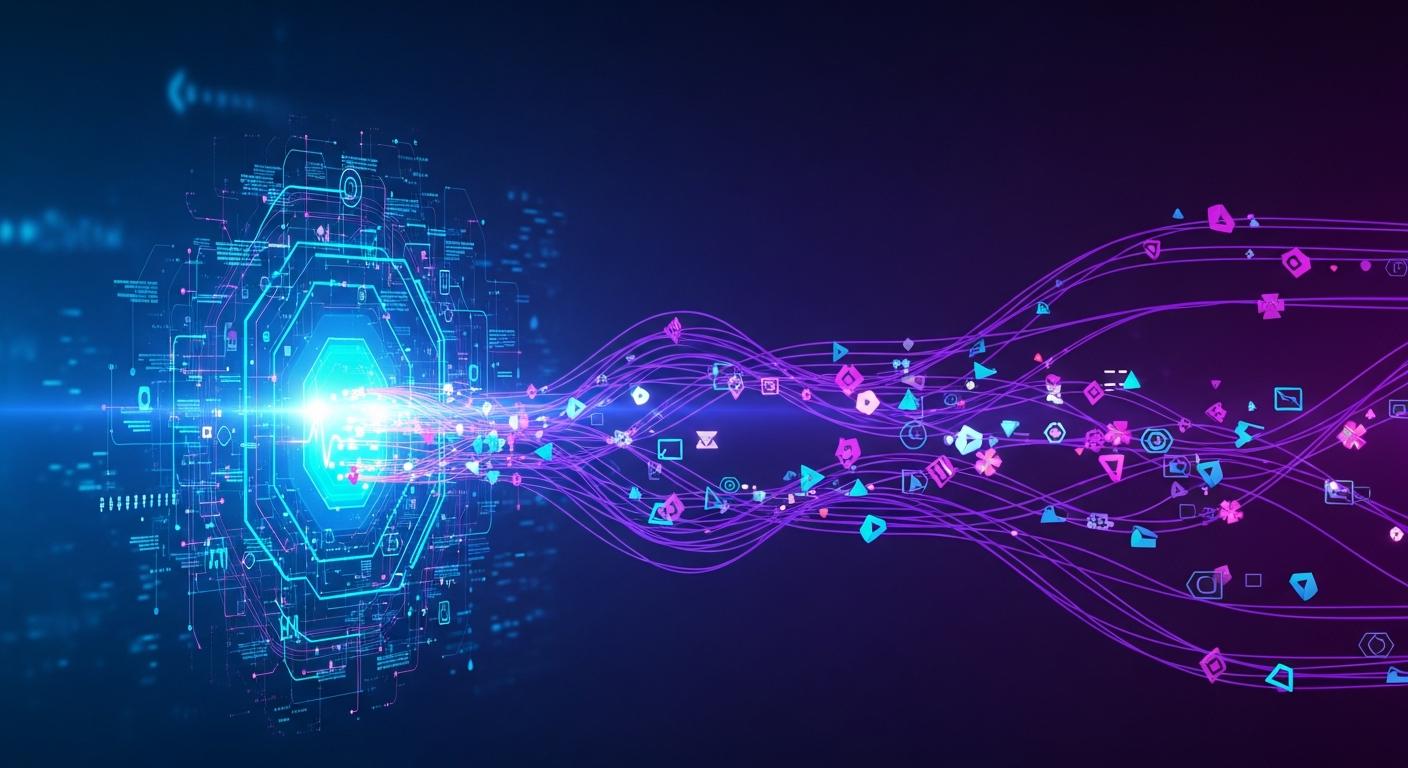
In the current data landscape, “latency” has become a dirty word. As we move toward 2026, the traditional batch-processing window—where data was collected all day and processed overnight—is effectively obsolete. Tech professionals today are tasked with building “zero-latency” architectures where data moves from source to target the moment an event occurs. Real-time data integration is no longer a luxury for high-frequency trading or fraud detection; it is a foundational requirement for personalized customer experiences, predictive maintenance, and agile supply chain management.
Building these systems requires a shift in mindset from static state-based storage to fluid event-based streams. Whether you are synchronizing microservices, feeding a real-time analytics engine, or automating complex cross-platform workflows, the integration technique you choose determines your system’s resilience and scalability. This guide explores the most effective real-time data integration techniques available today, providing the technical depth needed to architect high-performance, future-proof pipelines.
1. Change Data Capture (CDC): The Foundation of Real-Time Sync
Change Data Capture (CDC) is widely considered the gold standard for real-time database synchronization. Instead of querying a database for updates (which is resource-intensive and introduces lag), CDC identifies and captures insertions, updates, and deletions as they happen.
There are two primary methods of CDC: **Log-based** and **Query-based**.
Log-based CDC is the preferred approach for high-performance systems. Most modern databases (PostgreSQL, MySQL, Oracle, SQL Server) maintain a transaction log (e.g., the Write-Ahead Log or Binlog) to ensure data integrity. CDC tools, such as Debezium, “tail” these logs to capture changes without putting a heavy load on the source database. This allows for near-instantaneous replication to downstream consumers like data warehouses or search indexes (Elasticsearch).
Query-based CDC, on the other hand, relies on metadata columns like `last_updated` timestamps. While easier to implement, it requires frequent polling, which can degrade database performance and miss intermediate changes (e.g., a record that was updated twice between polls). For tech professionals building at scale, log-based CDC is the only viable path to achieving sub-second latency while maintaining source system stability.
2. Event Streaming Architecture: Decoupling with Kafka and Pulsar
While CDC focuses on the database layer, Event Streaming Architecture focuses on the movement of data across the entire enterprise. In this model, data is treated as a continuous stream of “events”—immutable records of something that happened (a click, a purchase, a sensor reading).
Apache Kafka and Apache Pulsar are the heavy hitters in this space. They act as a distributed “commit log” that decouples data producers from data consumers. This decoupling is vital for real-time integration because it allows multiple systems to consume the same data stream at their own pace without impacting the source.
In a modern workflow, an event streaming platform serves as the central nervous system. For example, when a user updates their profile, the “ProfileUpdate” event is published to a Kafka topic. Simultaneously, the billing service, the marketing automation tool, and the real-time analytics dashboard consume that event to update their respective states. This ensures “eventual consistency” across a distributed architecture in milliseconds. As we look toward 2026, the integration of “Tiered Storage” in streaming platforms allows for keeping historical events accessible in the same pipeline as real-time data, blurring the line between a stream and a database.
3. API-Based Integration: Webhooks and Real-Time Push
For SaaS-to-SaaS integrations or cloud-native workflows, APIs are the primary medium. However, traditional REST API polling is the antithesis of real-time integration. Requesting data every minute is inefficient and results in an average delay of 30 seconds.
To achieve true real-time integration via APIs, developers rely on **Webhooks** and **WebSockets**.
Webhooks (Reverse APIs) allow a source system to “push” data to a destination URL as soon as an event occurs. This is the standard for automating workflows in tools like Slack, Stripe, or GitHub. When a payment is processed in Stripe, it sends an HTTP POST request to your backend immediately.
For two-way, persistent real-time communication, WebSockets are the preferred choice. Unlike the request-response cycle of HTTP, WebSockets provide a full-duplex communication channel over a single TCP connection. This is essential for applications requiring constant data updates, such as live financial tickers or collaborative editing tools. When building integrations, always prioritize “Push” mechanisms (Webhooks/WebSockets) over “Pull” mechanisms (Polling) to minimize both latency and unnecessary compute costs.
4. Real-Time ETL vs. Streaming ELT
The debate between ETL (Extract, Transform, Load) and ELT (Extract, Load, Transform) has shifted into the real-time domain.
**Real-Time ETL** involves transforming data in flight before it reaches the destination. Using stream processing frameworks like Apache Flink or Spark Streaming, developers can clean, aggregate, or mask sensitive data while it is still in the buffer. This is critical for data privacy (GDPR/CCPA) and for reducing the storage load on the destination system.
**Streaming ELT** is gaining popularity with the rise of real-time data warehouses like Rockset, ClickHouse, and Snowflake’s Snowpipe. In this model, raw data is streamed directly into the destination with minimal latency, and transformations are handled using SQL-based views or materialized views within the target environment.
The choice depends on your use case. If you need immediate action on data (e.g., triggering an alert if a temperature sensor exceeds a threshold), Real-Time ETL (Streaming Processing) is necessary. If your goal is real-time business intelligence and exploration, Streaming ELT offers more flexibility, as you can change your transformation logic without re-processing the entire stream.
5. Ensuring Data Integrity: Idempotency and Schema Evolution
One of the greatest challenges in real-time data integration is maintaining data quality in a high-velocity environment. When data is moving at thousands of events per second, traditional manual checks are impossible.
Two technical concepts are non-negotiable for real-time professionals:
* **Idempotency:** In distributed systems, network failures can lead to “at-least-once” delivery, meaning a destination might receive the same event twice. Your integration must be idempotent—processing the same event multiple times should not change the result beyond the initial application. This is typically achieved by using unique event IDs and upsert logic (Update if exists, Insert if not).
* **Schema Evolution:** Source systems change. A database column might be renamed, or a JSON payload might gain a new field. Without a schema registry (like Confluent Schema Registry), these changes can break downstream integrations instantly. Real-time pipelines should utilize Avro or Protobuf formats with enforced schemas to ensure that producers and consumers remain compatible as the data model evolves toward 2026 requirements.
6. Edge Integration: Moving Logic Closer to the Source
As IoT and mobile devices proliferate, the “Edge” is becoming a critical layer for real-time integration. Sending raw data from thousands of sensors to a central cloud for processing introduces latency and massive bandwidth costs.
Edge integration involves deploying lightweight integration engines (like Eclipse Kura or specialized AWS Lambda@Edge functions) directly on gateway devices or CDN nodes. These edge nodes perform initial filtering and aggregation. For instance, a smart factory might collect 1,000 data points per second from a machine but only integrate the “Anomaly” events into the central cloud.
By the time we reach 2026, edge computing will likely be the default starting point for most industrial real-time data integrations. It allows for local autonomy (the machine stops even if the internet is down) while ensuring the central data lake receives high-quality, pre-processed information.
***
FAQ: Real-Time Data Integration
**Q1: What is the main difference between real-time and near-real-time integration?**
Real-time integration typically implies sub-second latency, where the data is processed as fast as the network allows. Near-real-time usually refers to “micro-batching,” where data is collected and processed every few seconds or minutes. For most business applications (like CRM updates), near-real-time is sufficient, but for system-to-system automation, true real-time is often required.
**Q2: Is CDC better than using Message Queues?**
They serve different purposes. CDC is specifically for syncing state between databases. Message queues (or event streams) are for broader application-level communication. Frequently, they are used together: a CDC tool captures a database change and publishes it to a message queue for other applications to consume.
**Q3: How do I handle “out-of-order” events in a stream?**
This is a common issue in distributed systems. Techniques like “Watermarking” in Flink or using sequence numbers/timestamps allow the system to reorder events or wait a specific amount of time for “late” data before finalizing a calculation.
**Q4: Will real-time integration increase my cloud costs?**
Generally, yes. Real-time systems require “always-on” compute resources compared to batch jobs that run only when needed. However, by using serverless streaming and efficient data formats (like Parquet or Avro), and by filtering data at the source, you can keep these costs manageable.
**Q5: Can I use real-time integration with legacy on-premise systems?**
Yes, though it is more complex. You can use log-based CDC connectors that run on-premise and push data to a cloud-based event bus (like Azure Event Hubs or Amazon Kinesis) via a secure VPN or Direct Connect.
***
Conclusion: The Path to 2026
The transition to real-time data integration is not merely a technical upgrade; it is a strategic necessity. For tech professionals, mastering techniques like Change Data Capture, event streaming, and edge processing is essential for building the responsive systems that businesses now demand.
As we look toward 2026, the integration layer will become increasingly “intelligent,” with AI-driven schema mapping and self-healing pipelines becoming the norm. However, the underlying principles of low latency, decoupling, and data integrity will remain the same. By implementing these techniques today, you ensure that your organization’s data remains a dynamic asset, capable of driving instant action and providing a competitive edge in an increasingly instantaneous world. Success in the next era of tech depends on your ability to move data not just accurately, but immediately.