Sales Led vs Product Led Growth: A Definitive Guide for SaaS Startup Success in 2026
By eamped Editorial Team — Senior editors with 10+ years of subject-matter experience.
Published 2026-05-26 · Last Updated 2026-05-26
Affiliate disclosure: This article may contain affiliate links. Recommendations are independent and editorially driven.
In the dynamic landscape of tech startups and SaaS, the decision of how to acquire and retain customers is paramount. It’s not merely a tactical choice but a foundational strategic pillar that dictates everything from product development to marketing automation and go-to-market (GTM) strategy. At the heart of this decision often lies a fundamental debate: sales led vs product led growth. Both models have their proponents, their strengths, and their inherent challenges, offering distinct pathways to scaling a successful SaaS business.
For early-stage startups and established enterprises alike, understanding these methodologies is crucial. A misaligned growth strategy can lead to inflated customer acquisition costs (CAC), prolonged sales cycles, and ultimately, stalled growth. Conversely, a well-chosen and expertly executed approach can unlock exponential growth, foster deep customer loyalty, and establish a dominant market position. This comprehensive guide from eamped delves deep into the nuances of sales-led and product-led growth, exploring their core tenets, ideal applications, and how modern companies are blending them into powerful hybrid models.
By 2026, the competitive pressures in the SaaS market demand clarity and adaptability. Whether you’re building a groundbreaking new platform or optimizing an existing offering, the insights within this article will equip you to make informed decisions that drive sustainable success. We’ll explore the foundational principles of each model, analyze their respective advantages and disadvantages, and provide a framework for determining which strategy, or combination thereof, best suits your unique business context, product, and target audience.
Understanding the Core: Sales-Led Growth Defined
Sales-Led Growth (SLG) is the traditional go-to-market strategy where a dedicated sales team is the primary engine for customer acquisition. In this model, the product or service itself is often complex, high-value, or requires significant customization and hand-holding during the sales process. The sales team actively identifies, qualifies, nurtures, and closes deals, typically engaging in extensive demonstrations, negotiations, and relationship building.
Key Characteristics of Sales-Led Growth
- Proactive Outreach: Sales teams actively pursue potential customers through outbound prospecting, cold calls, emails, and networking.
- High-Touch Engagement: The sales process involves direct human interaction, often with multiple meetings, demos, and discussions to understand customer needs and present tailored solutions.
- Relationship-Centric: Building strong, long-term relationships with prospects and customers is central to the sales motion, especially for enterprise accounts.
- Complex Sales Cycles: Deals often have longer sales cycles due to the complexity of the product, the number of stakeholders involved, and the size of the investment.
- Higher Average Contract Value (ACV): SLG models are typically associated with products that command higher prices, justifying the higher cost of human-driven sales.
- Sales-Driven Onboarding: Initial onboarding and implementation may also involve significant sales or customer success team involvement to ensure successful adoption.
Advantages of Sales-Led Growth
While often perceived as less “modern” than PLG, sales-led growth offers distinct benefits, particularly for specific types of products and markets:
- Direct Customer Feedback: Sales teams are on the front lines, gathering invaluable direct feedback on customer pain points, market needs, and competitive intelligence. This feedback can directly inform product development and marketing messages.
- Higher LTV Potential: By building deep relationships and understanding customer needs, sales teams can often secure larger, more comprehensive deals and drive higher customer lifetime value (LTV) through upselling and cross-selling.
- Navigating Complexity: For products that require significant explanation, integration, or customization, a skilled sales professional can effectively communicate value and overcome objections that self-service models cannot.
- Targeting Enterprise Accounts: Enterprise deals often involve multiple decision-makers, complex procurement processes, and extensive due diligence. Sales teams are adept at navigating these intricate organizational structures.
- Building Trust and Credibility: A dedicated sales representative can build trust and rapport, which is critical when dealing with sensitive data, large investments, or mission-critical solutions.
Challenges of Sales-Led Growth
However, SLG is not without its drawbacks, especially for startups with limited resources:
- High Customer Acquisition Cost (CAC): Hiring, training, and retaining a high-performing sales team is expensive. Salaries, commissions, benefits, and sales enablement tools contribute to a higher CAC.
- Slower Sales Cycles: The high-touch nature of SLG inevitably leads to longer sales cycles, which can delay revenue generation and slow down growth velocity.
- Scalability Challenges: Scaling an SLG model often means linearly increasing your sales headcount, which can be challenging and capital-intensive. Growth is often tied directly to sales capacity.
- Reliance on Sales Talent: The success of the entire GTM strategy heavily relies on the skill, performance, and availability of top sales talent.
- Potential for Inconsistent Customer Experience: Depending on the individual salesperson, the customer experience can vary, potentially leading to inconsistencies.
Ideal Scenarios for Sales-Led Growth
SLG thrives in environments where:
- The product or service has a high Average Contract Value (ACV) of several thousand dollars or more.
- The target market consists of large enterprises or complex organizations.
- The product requires significant explanation, customization, or integration.
- There’s a strong need for human interaction to build trust and navigate procurement processes.
- The market is relatively immature, and education about the problem and solution is required.
Unpacking Product-Led Growth: The Modern Paradigm
Product-Led Growth (PLG) is a go-to-market strategy that prioritizes the product itself as the primary driver of customer acquisition, retention, and expansion. In a PLG model, users discover the product’s value firsthand through free trials, freemium versions, or intuitive onboarding, often without direct intervention from a sales team. The product is designed to be self-serve, intuitive, and inherently viral, allowing users to experience its benefits before committing to a purchase.
Core Principles of Product-Led Growth
- Product as the Star: The product’s user experience (UX), usability, and inherent value are the main selling points.
- Self-Serve Empowerment: Customers can sign up, explore, and often purchase the product without needing to interact with a sales representative.
- Value Before Price: Users experience the product’s value proposition directly and deeply before being asked to pay, typically through a freemium model or a free trial.
- Built-in Virality: Features like collaboration, sharing, and integrations encourage users to invite others, fostering organic growth.
- Data-Driven Decisions: Extensive product analytics guide everything from feature development to onboarding flows and conversion optimization.
Advantages of Product-Led Growth
PLG has gained significant traction for its potential to drive rapid, scalable growth:
- Lower Customer Acquisition Cost (CAC): By reducing reliance on a large sales team, marketing spend on paid acquisition can be optimized, and virality can decrease CAC significantly.
- Faster Growth and Scalability: The self-serve nature allows for a broader reach and faster conversion cycles. The product can scale globally without linearly increasing sales headcount.
- Better User Experience and Retention: Products designed for PLG are inherently user-centric, leading to better user experiences, higher activation rates, and improved long-term retention.
- Higher Revenue Per Employee: With fewer sales resources required per customer, companies can achieve higher revenue per employee ratios.
- Authentic Feedback Loop: Users provide feedback through their direct interaction with the product, highlighting genuine pain points and feature desires.
- Global Reach: Without the need for localized sales teams, PLG companies can more easily expand into new international markets.
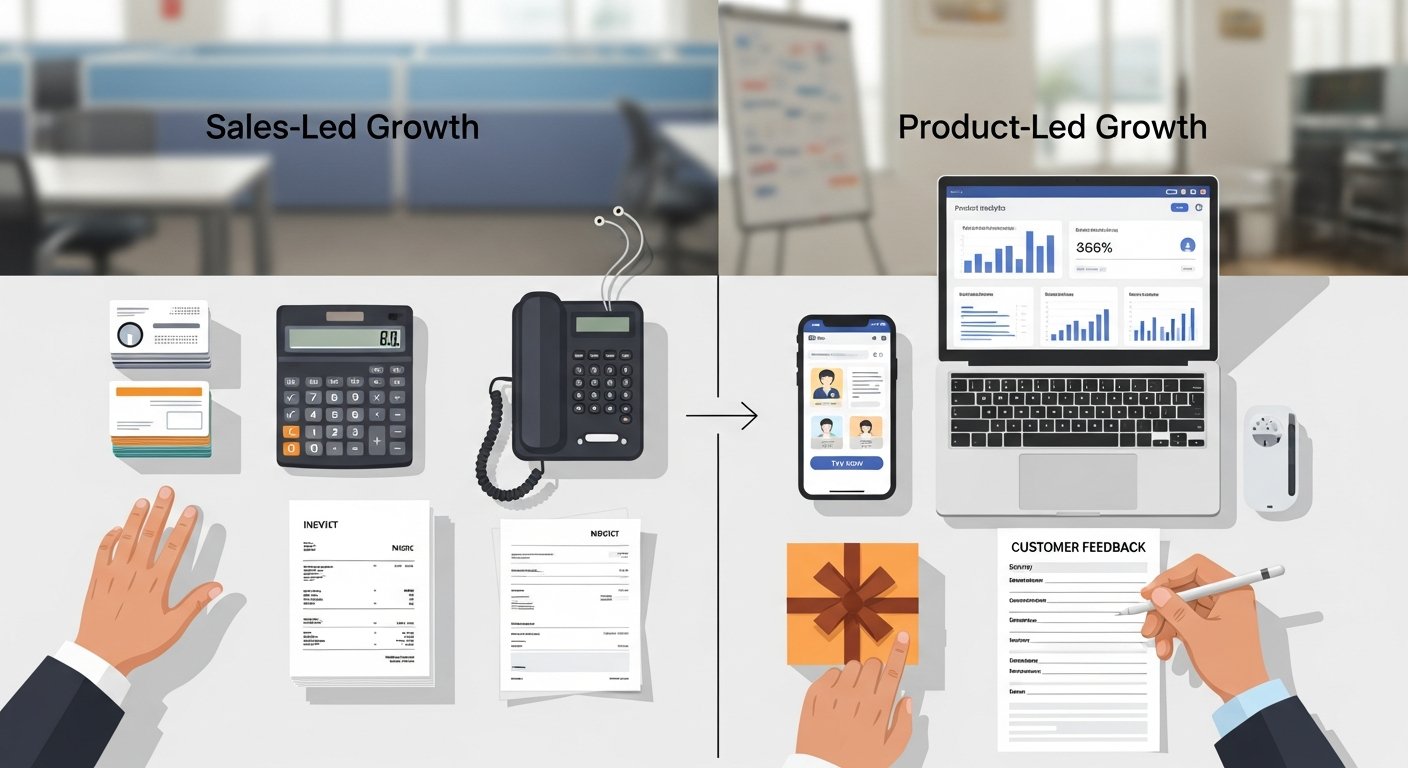
[INLINE IMAGE 1: place after second H2 | alt=”sales led vs product led growth concept illustration”]
Challenges of Product-Led Growth
Despite its appeal, PLG also presents its own set of hurdles:
- Monetization Hurdles: Converting free users to paying customers requires a sophisticated understanding of user behavior, pricing strategy, and in-app triggers.
- Product Complexity Management: The product must be intuitive enough for self-service while still offering sufficient functionality to be valuable. Balancing simplicity with power is key.
- Higher Churn Risk: With lower commitment upfront, users may churn more easily if they don’t immediately perceive value or encounter obstacles.
- Requires Significant Product Investment: Building a truly self-serve, intuitive, and sticky product demands substantial investment in product development, UX/UI design, and analytics.
- Not Suitable for All Products: Highly complex, niche, or extremely high-ACV enterprise solutions may struggle with a pure PLG approach.
- Competition for Attention: In a crowded market, simply offering a great product might not be enough; strong marketing and brand building are still essential to cut through the noise.
Ideal Scenarios for Product-Led Growth
PLG excels when:
- The product is relatively easy to understand and use without extensive training.
- The target market consists of individual users, small businesses, or tech-savvy teams who prefer self-service.
- The Average Contract Value (ACV) is moderate to low, making a high-touch sales model economically unfeasible.
- There’s potential for virality or network effects within the product.
- The company has a strong product culture and invests heavily in product development and user experience.
The Strategic Choice: Sales-Led vs Product-Led Growth Comparison
Choosing between sales-led and product-led growth is not a simple “either/or” decision for many modern SaaS companies. Instead, it involves a deep analysis of your product, market, customer, and internal capabilities. Understanding the fundamental differences in how each model approaches various aspects of the business is critical for making an informed choice. This section provides a direct comparison to highlight these contrasts.
Detailed Comparison Table
The table below summarizes the key distinctions between Sales-Led Growth and Product-Led Growth across several critical dimensions:
| Feature | Sales-Led Growth (SLG) | Product-Led Growth (PLG) |
|---|---|---|
| Primary Acquisition Channel | Dedicated sales team (outbound, demos, direct engagement). | The product itself (freemium, free trial, word-of-mouth, organic search). |
| Customer Acquisition Cost (CAC) | Higher, due to sales team salaries, commissions, and tools. | Lower, leveraging product virality, self-service, and efficient marketing. |
| Sales Cycle Length | Longer, often weeks to months, especially for enterprise deals. | Shorter, immediate user sign-up and value realization. |
| Product Experience | Value is communicated by sales; product often requires setup/onboarding. | Value is experienced directly through intuitive self-service; product is the onboarding. |
| Scalability | Linear; tied to increasing sales headcount and capacity. | Exponential; product can reach unlimited users without proportionate sales team growth. |
| Target Audience | Enterprises, large businesses, complex organizations. | Individuals, SMBs, tech-savvy teams, mass market. |
| Average Contract Value (ACV) | Typically high (e.g., $10k+ annual). | Typically low to moderate (e.g., $50-$5k annual). |
| Monetization Strategy | Direct sales, bespoke contracts, negotiation. | Tiered pricing, usage-based, feature-gating, self-service upgrades. |
| Primary Metric Focus | ARR, LTV:CAC, Win Rate, Quota Attainment. | Activation Rate, Conversion Rate (free-to-paid), Retention, MAU/DAU. |
| Key Skillset | Sales acumen, negotiation, relationship building, domain expertise. | Product management, UX/UI design, data analytics, growth hacking. |
When to Lean Sales-Led
- Your product solves mission-critical, complex problems for large organizations.
- The solution requires significant integration, customization, or professional services.
- The average contract value (ACV) is high enough to justify the cost of a dedicated sales team.
- Your target customers expect a high-touch, consultative approach and personal relationships.
- The market is nascent, and significant education is required to articulate the problem and solution.
When to Lean Product-Led
- Your product is intuitive, easy to adopt, and delivers immediate value.
- The target market is broad, composed of individuals or small to medium-sized businesses.
- The ACV is relatively low, making a traditional sales approach economically unsustainable.
- You aim for viral growth and rely on user experience to drive adoption and expansion.
- Your company culture is deeply rooted in product development, user experience, and data-driven iteration.
Ultimately, the optimal choice often isn’t about rigid adherence to one model but rather understanding the strengths of each and how they can be strategically combined to create a powerful, adaptive growth engine. This leads us to the increasingly popular concept of hybrid models.
The Blended Approach: Harnessing the Power of Hybrid Models
In today’s sophisticated SaaS market, few companies operate under a purely sales-led or product-led model. The most successful organizations are increasingly adopting a hybrid approach, strategically blending elements of both to maximize customer acquisition, retention, and expansion. This convergence recognizes that different customer segments, product tiers, or stages of the customer journey may benefit from varying levels of human interaction and product-driven discovery.
Why Hybrid Models are Gaining Traction
The rise of hybrid models is a direct response to the limitations of pure strategies and the evolving expectations of modern buyers:
- Optimizing CAC and LTV: Hybrid models allow companies to apply high-touch sales resources only where they yield the highest returns (e.g., high ACV enterprise deals) while leveraging PLG for efficient self-service acquisition of smaller accounts.
- Meeting Diverse Customer Needs: Some customers prefer to explore independently, while others (especially in larger organizations) require consultation and negotiation. A hybrid model caters to both.
- Enhanced Scalability: PLG components provide broad reach and efficient onboarding, while SLG components allow for deeper penetration into strategic accounts.
- Improved Product-Market Fit: Sales teams can feed market insights back to the product team, while product usage data can inform sales strategies, creating a virtuous feedback loop.
- Reduced Churn: By combining self-serve value with human support at critical junctures, companies can improve activation, adoption, and ultimately, retention.
[INLINE IMAGE 2: place after fourth H2 | alt=”sales led vs product led growth comparison illustration”]
Common Hybrid Strategies and Examples
Hybrid models manifest in various forms, each tailored to a company’s specific product and target audience:
1. Product-Led with Sales Assist
This is arguably the most common hybrid model. Companies start with a strong PLG foundation (freemium, free trial) to attract a broad user base. A sales team then identifies and engages “product-qualified leads” (PQLs) – users who have demonstrated significant engagement or usage patterns that indicate a high propensity to convert to a paid, higher-tier plan. Sales reps might offer proactive support, custom demos, or discuss enterprise features.
- Example: A project management tool offers a generous free tier. A user creates several projects, invites team members, and explores advanced features. This activity flags them as a PQL, prompting a sales outreach offering a demo of enterprise capabilities or a tailored subscription plan.
2. Sales-Led with Product Adoption
In this model, sales initially close the deal (often for more complex or higher-value products). However, the company then leverages product-led principles to ensure successful onboarding, activation, and ongoing usage. The product is designed to guide users, provide in-app support, and encourage self-service adoption, reducing the burden on customer success teams and preventing churn.
- Example: An AI-powered analytics platform for large corporations is sold through an enterprise sales process. Once the deal is closed, the product’s intuitive onboarding flow, guided tours, and in-app tutorials ensure that the diverse user base within the client organization quickly becomes proficient and derives value, minimizing support requests.
3. Freemium-to-Enterprise Model
This approach combines the broad top-of-funnel reach of freemium with a targeted enterprise sales motion. Users start with a free version, potentially upgrading to a low-cost paid tier via self-service. For larger teams or specific advanced needs, a sales team steps in to sell premium, enterprise-grade versions with dedicated support, custom integrations, and advanced security features.
- Example: Slack allows teams to use its basic communication platform for free. As teams grow or require advanced features like single sign-on (SSO) or robust data retention, they are either prompted to upgrade via the product or approached by a sales team to discuss enterprise plans.
Implementing a Successful Hybrid Model
To make a hybrid model work effectively, critical elements must be in place:
- Clear Definition of PQLs: Establish precise criteria for what constitutes a product-qualified lead, based on usage data, feature adoption, and engagement levels. This ensures sales outreach is timely and relevant.
- Seamless Handoffs: Create clear processes and shared data between product, marketing, and sales teams. CRM and product analytics tools should be integrated to provide a holistic view of the customer journey.
- Aligned Incentives: Ensure that sales teams are incentivized not just by closing deals, but also by driving product adoption and customer success within their accounts.
- Continuous Experimentation: Hybrid models are dynamic. Continuously test different touchpoints, sales triggers, and product experiences to optimize conversion paths.
- Unified Messaging: Maintain consistent branding and value propositions across all customer touchpoints, whether product-driven or sales-driven.
The future of SaaS growth likely resides in these intelligent combinations, allowing companies to leverage the strengths of both sales and product to create a resilient, adaptable, and highly efficient go-to-market strategy. Effective marketing automation is key to managing these complex customer journeys.
Critical Factors for Determining Your Growth Path
Choosing between sales-led, product-led, or a hybrid growth strategy is a foundational decision that impacts every aspect of your SaaS business. There’s no one-size-fits-all answer; the optimal approach depends on a confluence of internal and external factors. Thoughtful consideration of these elements is crucial for aligning your growth engine with your overall business objectives and market reality.
1. Target Audience and Customer Profile
Who are you selling to? This is perhaps the most significant determinant.
- SMBs and Individuals: These segments often prefer self-service, quick adoption, and lower price points. PLG is typically a stronger fit, as high-touch sales are uneconomical.
- Mid-Market and Enterprise: Larger organizations often have complex needs, multiple stakeholders, lengthy procurement processes, and a preference for consultative sales. SLG or a sales-assisted hybrid model is usually more effective here. They seek reassurance, integration support, and tailored solutions.
- Tech-Savvy Users vs. Less Technical Users: If your audience is highly technical and comfortable with exploring new software, PLG can thrive. If they require more guidance and support, SLG might be necessary.
2. Product Complexity and Value Proposition
How easy is your product to understand and implement without human intervention?
- Simple, Intuitive Products: Solutions with a clear, immediate value proposition that users can grasp quickly are ideal for PLG. The “aha!” moment is easily discoverable within the product.
- Complex, Integrated Solutions: Products that require extensive setup, integration with existing systems, or deep domain knowledge often necessitate a sales-led approach. Salespeople can demonstrate complex workflows, address specific challenges, and guide implementation.
- Transformative vs. Incremental Value: Products offering truly transformative value, especially at an enterprise level, often require a sales team to articulate the significant ROI and manage change within an organization. Incremental value tools can often succeed with PLG.
3. Average Contract Value (ACV) and Pricing Strategy
The revenue generated per customer significantly influences the viability of your sales model.
- Low ACV (e.g., <$100/month): A pure sales-led model is generally unsustainable due to the high cost of sales. PLG is almost always the appropriate choice here, focusing on volume and efficient conversion.
- Medium ACV (e.g., $100-$1000/month): This is a prime zone for hybrid models. PLG can handle lower tiers and initial adoption, with sales stepping in for upsells, larger teams, or specific feature requirements.
- High ACV (e.g., >$1000/month, or enterprise): The economics typically support a sales-led approach. The larger revenue warrants the investment in a dedicated sales team and the longer sales cycles. SaaS pricing strategies should align with the chosen growth model.
4. Market Maturity and Competitive Landscape
How established is your market, and what are your competitors doing?
- Nascent Markets: If you’re creating a new category, a sales-led approach might be necessary to educate the market and build demand.
- Mature, Crowded Markets: In highly competitive spaces, PLG can offer a differentiation by allowing users to try before they buy, reducing friction and building trust. However, a strong brand and unique value proposition are still critical.
- Competitor Strategies: Understanding how competitors acquire customers can inform your strategy. Can you differentiate by offering a more seamless PLG experience, or do you need a more robust SLG approach to win over entrenched customers?
5. Funding and Resource Availability
Your financial runway and access to talent play a practical role.
- Bootstrapped or Limited Funding: PLG often requires less upfront capital for a large sales force, making it attractive for lean startups. However, it demands significant investment in product development and engineering.
- Well-Funded Startups: May have the resources to invest in a robust sales team from day one, or to build a sophisticated PLG engine with sales assist.
- Talent Pool: Do you have access to top-tier sales talent, or are your strengths primarily in product and engineering? Align your strategy with your team’s core competencies.
6. Company Culture and Vision
Your company’s DNA and long-term goals should guide your choice.
- Product-Centric Culture: Companies that naturally prioritize user experience, data-driven iteration, and self-serve design will gravitate towards PLG.
- Sales-Driven Culture: Organizations with a strong history of client relationships, consultative selling, and target achievement may find SLG more natural.
- Long-Term Vision: Do you envision building a mass-market product with millions of users, or a high-value, bespoke solution for a select few? This vision helps define the appropriate growth model.
By thoroughly evaluating these factors, startups can develop a growth strategy that is not only effective for their current stage but also adaptable as they mature and market dynamics evolve. This iterative process of assessment and alignment is continuous, especially in the fast-paced tech world.
Implementing Your Strategy: From Sales Enablement to Product-Led Onboarding
Once you’ve decided on your primary growth engine – be it sales-led, product-led, or a hybrid approach – the real work of implementation begins. This phase involves setting up the right organizational structures, tools, processes, and culture to ensure your chosen strategy can thrive and deliver sustainable growth. Execution is key, and it requires a deep understanding of the operational nuances specific to each model.
Implementing a Sales-Led Growth Strategy
A successful sales-led strategy hinges on a well-oiled sales machine supported by robust infrastructure and a clear value proposition.
1. Building a High-Performing Sales Team
- Recruitment & Training: Focus on hiring sales professionals who are experts in your industry, understand complex solutions, and excel at relationship building and negotiation. Provide extensive training on your product, ideal customer profile (ICP), and sales methodology.
- Sales Leadership: Invest in experienced sales leaders who can coach, motivate, and strategically guide the team.
- Specialized Roles: For larger sales teams, consider specialization (e.g., Sales Development Representatives for prospecting, Account Executives for closing, Customer Success Managers for retention).
2. CRM and Sales Enablement Tools
- CRM System: Implement a robust CRM (e.g., Salesforce, HubSpot, Zoho CRM) to manage leads, track opportunities, and report on sales performance. This is the central nervous system of your sales operations.
- Sales Enablement Platforms: Utilize tools for content management, competitive intelligence, call recording/coaching, and proposal generation to empower your sales reps with the right resources at every stage.
- Marketing Automation Integration: Ensure your sales CRM integrates seamlessly with marketing automation platforms to enable lead scoring, nurture campaigns, and smooth handoffs between marketing and sales.
3. Defined Sales Process and Methodology
- Clear Stages: Establish a clear, documented sales process with defined stages, entry/exit criteria, and required activities (e.g., Prospecting, Qualification, Discovery, Demo, Proposal, Negotiation, Closed-Won).
- Forecasting & Reporting: Implement rigorous sales forecasting and reporting mechanisms to track progress against targets and identify bottlenecks.
- Compensation Structure: Design a transparent and motivating commission structure that aligns with company goals and incentivizes desired behaviors.
Implementing a Product-Led Growth Strategy
PLG demands a product that is not just functional but also self-sufficient in driving user adoption, engagement, and conversion.
1. User-Centric Product Design and Onboarding
- Intuitive UX/UI: The product must be exceptionally easy to use, visually appealing, and guide users naturally towards the “aha!” moment.
- Frictionless Onboarding: Design onboarding sequences that are minimal, personalized, and quickly showcase core value. In-app tutorials, tooltips, and welcome flows are critical.
- Self-Service Support: Build comprehensive knowledge bases, FAQs, and in-app chat support to empower users to find answers independently.
2. Robust Product Analytics and Feedback Loops
- Analytics Tools: Implement advanced product analytics platforms (e.g., Mixpanel, Amplitude, Pendo) to track user behavior, feature adoption, conversion funnels, and churn indicators.
- Experimentation (A/B Testing): Continuously run A/B tests on onboarding flows, feature placements, and pricing models to optimize the user journey.
- In-App Feedback: Incorporate mechanisms for users to provide feedback directly within the product (e.g., surveys, NPS prompts, feature request boards).
3. Strategic Pricing and Monetization
- Freemium/Free Trial Strategy: Carefully design your free offering – determining what features to gate, what time limits to impose, and how to encourage upgrade.
- Tiered Pricing: Structure your paid tiers to offer increasing value and cater to different user segments, making upgrade paths clear and compelling.
- Value Metrics: Identify key value metrics (e.g., number of users, storage, usage) that drive perceived value and allow for usage-based or tiered pricing models.
4. Virality and Growth Loops
- Collaboration Features: Design features that inherently encourage users to invite others (e.g., sharing documents, team workspaces).
- Integrations: Offer seamless integrations with popular tools to enhance utility and broaden reach.
- Referral Programs: Implement in-app referral programs to incentivize existing users to bring in new ones.
Implementing a Hybrid Growth Strategy
A hybrid approach requires seamless coordination and shared objectives between sales and product teams.
- Shared Data & Systems: Integrate your CRM with product analytics platforms. Sales reps need visibility into user behavior and product engagement, while product teams need insights into sales cycles and customer feedback.
- PQL Definition & Handoffs: Clearly define what constitutes a Product-Qualified Lead (PQL) based on product usage. Establish automated processes for notifying sales teams when a user becomes a PQL and a structured handoff process.
- Unified Messaging: Ensure sales and marketing materials align with the product experience. The story told by the sales team should be consistent with the value delivered by the product.
- Cross-Functional Alignment: Foster a culture of collaboration between product, sales, marketing, and customer success. Regular meetings and shared KPIs are essential.
- Sales Assist Resources: Provide sales teams with tools and content specifically designed to engage PQLs, addressing common questions or showing advanced features relevant to their usage patterns.
Effective implementation, regardless of the model, is about creating an ecosystem where every component—people, process, and technology—works in harmony to achieve your growth objectives. This involves continuous iteration and optimization based on performance data and customer feedback.
Measuring Success: Key Metrics for Each Growth Model
Understanding the effectiveness of your sales-led, product-led, or hybrid growth strategy requires a focused approach to metrics. Different models emphasize different stages of the customer journey, and thus, different key performance indicators (KPIs) will be paramount. Monitoring the right metrics ensures you can identify successes, pinpoint bottlenecks, and make data-driven decisions to optimize your growth engine.
Key Metrics for Sales-Led Growth
For sales-led models, metrics often revolve around the efficiency and effectiveness of the sales team and the revenue they generate.
- Annual Recurring Revenue (ARR) / Monthly Recurring Revenue (MRR): The total recurring revenue generated from subscriptions. This is the ultimate measure of revenue growth.
- Customer Lifetime Value (LTV): The predicted total revenue a customer will generate over their relationship with your company. LTV is crucial for justifying high CAC.
- Customer Acquisition Cost (CAC): The total cost of sales and marketing efforts needed to acquire a single customer. A healthy LTV:CAC ratio (typically 3:1 or higher) is essential.
- Sales Cycle Length: The average time it takes from initial contact with a lead to closing a deal. Shorter cycles indicate efficiency.
- Win Rate: The percentage of qualified opportunities that convert into paying customers. This reflects sales effectiveness.
- Average Deal Size: The average revenue generated per closed deal. Higher deal sizes contribute to faster ARR growth.
- Quota Attainment: The percentage of sales representatives who meet or exceed their sales targets, reflecting individual and team performance.
- Sales Pipeline Velocity: How quickly deals move through your sales pipeline.
- Churn Rate (Logo and Revenue): The rate at which customers cancel their subscriptions (logo churn) or downgrade their services (revenue churn). Customer lifecycle management is critical here.
Key Metrics for Product-Led Growth
PLG metrics are heavily focused on user engagement, activation, and self-serve conversion within the product itself.
- Activation Rate: The percentage of new users who complete a core action or reach an “aha!” moment within the product, indicating they’ve experienced its value.
- Conversion Rate (Free-to-Paid / Trial-to-Paid): The percentage of free users or trial users who upgrade to a paid subscription. This is a primary PLG conversion metric.
- Retention Rate: The percentage of users who continue to use the product over a specific period. Product stickiness is paramount.
- Daily Active Users (DAU) / Monthly Active Users (MAU): The number of unique users interacting with the product daily or monthly, indicating overall engagement.
- Product Qualified Leads (PQLs): Users who have demonstrated sufficient engagement and value realization within the product to be considered ripe for sales outreach or upgrade prompts.
- Expansion Revenue Rate (Net Revenue Retention): Revenue generated from existing customers through upsells, cross-sells, and upgrades, minus churn and downgrades. PLG often drives expansion through organic usage growth.
- Viral Coefficient / K-factor: A measure of how many new users an existing user generates. Crucial for understanding organic, product-driven growth.
- Time to Value: How quickly a new user experiences the core benefit of your product. A shorter time to value is crucial for PLG.
Key Metrics for Hybrid Growth Models
Hybrid models require a blend of both SLG and PLG metrics, often focusing on the interaction and efficiency between the two engines.
- Blended CAC: The total CAC across all channels, reflecting the combined efficiency of sales and product-led acquisition.
- PQL-to-Opportunity Conversion Rate: The percentage of PQLs that a sales team successfully converts into qualified sales opportunities.
- Sales-Assisted Conversion Rate: The percentage of users who started product-led but converted to paid after sales intervention.
- Revenue Split (Product-Led vs. Sales-Led): Understanding what percentage of total revenue comes from pure self-service vs. sales-assisted deals.
- Time-to-Conversion for P
Sales Led vs Product Led Growth: A Definitive Guide for SaaS Startup Success in 2026
By eamped Editorial Team — Senior editors with 10+ years of subject-matter experience.
Published 2026-05-26 · Last Updated 2026-05-26Affiliate disclosure: This article may contain affiliate links. Recommendations are independent and editorially driven.
In the dynamic landscape of tech startups and SaaS, the decision of how to acquire and retain customers is paramount. It’s not merely a tactical choice but a foundational strategic pillar that dictates everything from product development to marketing automation and go-to-market (GTM) strategy. At the heart of this decision often lies a fundamental debate: sales led vs product led growth. Both models have their proponents, their strengths, and their inherent challenges, offering distinct pathways to scaling a successful SaaS business.
For early-stage startups and established enterprises alike, understanding these methodologies is crucial. A misaligned growth strategy can lead to inflated customer acquisition costs (CAC), prolonged sales cycles, and ultimately, stalled growth. Conversely, a well-chosen and expertly executed approach can unlock exponential growth, foster deep customer loyalty, and establish a dominant market position. This comprehensive guide from eamped delves deep into the nuances of sales-led and product-led growth, exploring their core tenets, ideal applications, and how modern companies are blending them into powerful hybrid models.
By 2026, the competitive pressures in the SaaS market demand clarity and adaptability. Whether you’re building a groundbreaking new platform or optimizing an existing offering, the insights within this article will equip you to make informed decisions that drive sustainable success. We’ll explore the foundational principles of each model, analyze their respective advantages and disadvantages, and provide a framework for determining which strategy, or combination thereof, best suits your unique business context, product, and target audience.
Understanding the Core: Sales-Led Growth Defined
Sales-Led Growth (SLG) is the traditional go-to-market strategy where a dedicated sales team is the primary engine for customer acquisition. In this model, the product or service itself is often complex, high-value, or requires significant customization and hand-holding during the sales process. The sales team actively identifies, qualifies, nurtures, and closes deals, typically engaging in extensive demonstrations, negotiations, and relationship building.
Key Characteristics of Sales-Led Growth
- Proactive Outreach: Sales teams actively pursue potential customers through outbound prospecting, cold calls, emails, and networking.
- High-Touch Engagement: The sales process involves direct human interaction, often with multiple meetings, demos, and discussions to understand customer needs and present tailored solutions.
- Relationship-Centric: Building strong, long-term relationships with prospects and customers is central to the sales motion, especially for enterprise accounts.
- Complex Sales Cycles: Deals often have longer sales cycles due to the complexity of the product, the number of stakeholders involved, and the size of the investment.
- Higher Average Contract Value (ACV): SLG models are typically associated with products that command higher prices, justifying the higher cost of human-driven sales.
- Sales-Driven Onboarding: Initial onboarding and implementation may also involve significant sales or customer success team involvement to ensure successful adoption.
Advantages of Sales-Led Growth
While often perceived as less “modern” than PLG, sales-led growth offers distinct benefits, particularly for specific types of products and markets:
- Direct Customer Feedback: Sales teams are on the front lines, gathering invaluable direct feedback on customer pain points, market needs, and competitive intelligence. This feedback can directly inform product development and marketing messages.
- Higher LTV Potential: By building deep relationships and understanding customer needs, sales teams can often secure larger, more comprehensive deals and drive higher customer lifetime value (LTV) through upselling and cross-selling.
- Navigating Complexity: For products that require significant explanation, integration, or customization, a skilled sales professional can effectively communicate value and overcome objections that self-service models cannot.
- Targeting Enterprise Accounts: Enterprise deals often involve multiple decision-makers, complex procurement processes, and extensive due diligence. Sales teams are adept at navigating these intricate organizational structures.
- Building Trust and Credibility: A dedicated sales representative can build trust and rapport, which is critical when dealing with sensitive data, large investments, or mission-critical solutions.
Challenges of Sales-Led Growth
However, SLG is not without its drawbacks, especially for startups with limited resources:
- High Customer Acquisition Cost (CAC): Hiring, training, and retaining a high-performing sales team is expensive. Salaries, commissions, benefits, and sales enablement tools contribute to a higher CAC.
- Slower Sales Cycles: The high-touch nature of SLG inevitably leads to longer sales cycles, which can delay revenue generation and slow down growth velocity.
- Scalability Challenges: Scaling an SLG model often means linearly increasing your sales headcount, which can be challenging and capital-intensive. Growth is often tied directly to sales capacity.
- Reliance on Sales Talent: The success of the entire GTM strategy heavily relies on the skill, performance, and availability of top sales talent.
- Potential for Inconsistent Customer Experience: Depending on the individual salesperson, the customer experience can vary, potentially leading to inconsistencies.
Ideal Scenarios for Sales-Led Growth
SLG thrives in environments where:
- The product or service has a high Average Contract Value (ACV) of several thousand dollars or more.
- The target market consists of large enterprises or complex organizations.
- The product requires significant explanation, customization, or integration.
- There’s a strong need for human interaction to build trust and navigate procurement processes.
- The market is relatively immature, and education about the problem and solution is required.
Unpacking Product-Led Growth: The Modern Paradigm
Product-Led Growth (PLG) is a go-to-market strategy that prioritizes the product itself as the primary driver of customer acquisition, retention, and expansion. In a PLG model, users discover the product’s value firsthand through free trials, freemium versions, or intuitive onboarding, often without direct intervention from a sales team. The product is designed to be self-serve, intuitive, and inherently viral, allowing users to experience its benefits before committing to a purchase.
Core Principles of Product-Led Growth
- Product as the Star: The product’s user experience (UX), usability, and inherent value are the main selling points.
- Self-Serve Empowerment: Customers can sign up, explore, and often purchase the product without needing to interact with a sales representative.
- Value Before Price: Users experience the product’s value proposition directly and deeply before being asked to pay, typically through a freemium model or a free trial.
- Built-in Virality: Features like collaboration, sharing, and integrations encourage users to invite others, fostering organic growth.
- Data-Driven Decisions: Extensive product analytics guide everything from feature development to onboarding flows and conversion optimization.
Advantages of Product-Led Growth
PLG has gained significant traction for its potential to drive rapid, scalable growth:
- Lower Customer Acquisition Cost (CAC): By reducing reliance on a large sales team, marketing spend on paid acquisition can be optimized, and virality can decrease CAC significantly.
- Faster Growth and Scalability: The self-serve nature allows for a broader reach and faster conversion cycles. The product can scale globally without linearly increasing sales headcount.
- Better User Experience and Retention: Products designed for PLG are inherently user-centric, leading to better user experiences, higher activation rates, and improved long-term retention.
- Higher Revenue Per Employee: With fewer sales resources required per customer, companies can achieve higher revenue per employee ratios.
- Authentic Feedback Loop: Users provide feedback through their direct interaction with the product, highlighting genuine pain points and feature desires.
- Global Reach: Without the need for localized sales teams, PLG companies can more easily expand into new international markets.
[INLINE IMAGE 1: place after second H2 | alt=”sales led vs product led growth concept illustration”]
Challenges of Product-Led Growth
Despite its appeal, PLG also presents its own set of hurdles:
- Monetization Hurdles: Converting free users to paying customers requires a sophisticated understanding of user behavior, pricing strategy, and in-app triggers.
- Product Complexity Management: The product must be intuitive enough for self-service while still offering sufficient functionality to be valuable. Balancing simplicity with power is key.
- Higher Churn Risk: With lower commitment upfront, users may churn more easily if they don’t immediately perceive value or encounter obstacles.
- Requires Significant Product Investment: Building a truly self-serve, intuitive, and sticky product demands substantial investment in product development, UX/UI design, and analytics.
- Not Suitable for All Products: Highly complex, niche, or extremely high-ACV enterprise solutions may struggle with a pure PLG approach.
- Competition for Attention: In a crowded market, simply offering a great product might not be enough; strong marketing and brand building are still essential to cut through the noise.
Ideal Scenarios for Product-Led Growth
PLG excels when:
- The product is relatively easy to understand and use without extensive training.
- The target market consists of individual users, small businesses, or tech-savvy teams who prefer self-service.
- The Average Contract Value (ACV) is moderate to low, making a high-touch sales model economically unfeasible.
- There’s potential for virality or network effects within the product.
- The company has a strong product culture and invests heavily in product development and user experience.
The Strategic Choice: Sales-Led vs Product-Led Growth Comparison
Choosing between sales-led and product-led growth is not a simple “either/or” decision for many modern SaaS companies. Instead, it involves a deep analysis of your product, market, customer, and internal capabilities. Understanding the fundamental differences in how each model approaches various aspects of the business is critical for making an informed choice. This section provides a direct comparison to highlight these contrasts.
Detailed Comparison Table
The table below summarizes the key distinctions between Sales-Led Growth and Product-Led Growth across several critical dimensions:
Feature Sales-Led Growth (SLG) Product-Led Growth (PLG) Primary Acquisition Channel Dedicated sales team (outbound, demos, direct engagement). The product itself (freemium, free trial, word-of-mouth, organic search). Customer Acquisition Cost (CAC) Higher, due to sales team salaries, commissions, and tools. Lower, leveraging product virality, self-service, and efficient marketing. Sales Cycle Length Longer, often weeks to months, especially for enterprise deals. Shorter, immediate user sign-up and value realization. Product Experience Value is communicated by sales; product often requires setup/onboarding. Value is experienced directly through intuitive self-service; product is the onboarding. Scalability Linear; tied to increasing sales headcount and capacity. Exponential; product can reach unlimited users without proportionate sales team growth. Target Audience Enterprises, large businesses, complex organizations. Individuals, SMBs, tech-savvy teams, mass market. Average Contract Value (ACV) Typically high (e.g., $10k+ annual). Typically low to moderate (e.g., $50-$5k annual). Monetization Strategy Direct sales, bespoke contracts, negotiation. Tiered pricing, usage-based, feature-gating, self-service upgrades. Primary Metric Focus ARR, LTV:CAC, Win Rate, Quota Attainment. Activation Rate, Conversion Rate (free-to-paid), Retention, MAU/DAU. Key Skillset Sales acumen, negotiation, relationship building, domain expertise. Product management, UX/UI design, data analytics, growth hacking. When to Lean Sales-Led
- Your product solves mission-critical, complex problems for large organizations.
- The solution requires significant integration, customization, or professional services.
- The average contract value (ACV) is high enough to justify the cost of a dedicated sales team.
- Your target customers expect a high-touch, consultative approach and personal relationships.
- The market is nascent, and significant education is required to articulate the problem and solution.
When to Lean Product-Led
- Your product is intuitive, easy to adopt, and delivers immediate value.
- The target market is broad, composed of individuals or small to medium-sized businesses.
- The ACV is relatively low, making a traditional sales approach economically unsustainable.
- You aim for viral growth and rely on user experience to drive adoption and expansion.
- Your company culture is deeply rooted in product development, user experience, and data-driven iteration.
Ultimately, the optimal choice often isn’t about rigid adherence to one model but rather understanding the strengths of each and how they can be strategically combined to create a powerful, adaptive growth engine. This leads us to the increasingly popular concept of hybrid models.
The Blended Approach: Harnessing the Power of Hybrid Models
In today’s sophisticated SaaS market, few companies operate under a purely sales-led or product-led model. The most successful organizations are increasingly adopting a hybrid approach, strategically blending elements of both to maximize customer acquisition, retention, and expansion. This convergence recognizes that different customer segments, product tiers, or stages of the customer journey may benefit from varying levels of human interaction and product-driven discovery.
Why Hybrid Models are Gaining Traction
The rise of hybrid models is a direct response to the limitations of pure strategies and the evolving expectations of modern buyers:
- Optimizing CAC and LTV: Hybrid models allow companies to apply high-touch sales resources only where they yield the highest returns (e.g., high ACV enterprise deals) while leveraging PLG for efficient self-service acquisition of smaller accounts.
- Meeting Diverse Customer Needs: Some customers prefer to explore independently, while others (especially in larger organizations) require consultation and negotiation. A hybrid model caters to both.
- Enhanced Scalability: PLG components provide broad reach and efficient onboarding, while SLG components allow for deeper penetration into strategic accounts.
- Improved Product-Market Fit: Sales teams can feed market insights back to the product team, while product usage data can inform sales strategies, creating a virtuous feedback loop.
- Reduced Churn: By combining self-serve value with human support at critical junctures, companies can improve activation, adoption, and ultimately, retention.
[INLINE IMAGE 2: place after fourth H2 | alt=”sales led vs product led growth comparison illustration”]
Common Hybrid Strategies and Examples
Hybrid models manifest in various forms, each tailored to a company’s specific product and target audience:
1. Product-Led with Sales Assist
This is arguably the most common hybrid model. Companies start with a strong PLG foundation (freemium, free trial) to attract a broad user base. A sales team then identifies and engages “product-qualified leads” (PQLs) – users who have demonstrated significant engagement or usage patterns that indicate a high propensity to convert to a paid, higher-tier plan. Sales reps might offer proactive support, custom demos, or discuss enterprise features.
- Example: A project management tool offers a generous free tier. A user creates several projects, invites team members, and explores advanced features. This activity flags them as a PQL, prompting a sales outreach offering a demo of enterprise capabilities or a tailored subscription plan.
2. Sales-Led with Product Adoption
In this model, sales initially close the deal (often for more complex or higher-value products). However, the company then leverages product-led principles to ensure successful onboarding, activation, and ongoing usage. The product is designed to guide users, provide in-app support, and encourage self-service adoption, reducing the burden on customer success teams and preventing churn.
- Example: An AI-powered analytics platform for large corporations is sold through an enterprise sales process. Once the deal is closed, the product’s intuitive onboarding flow, guided tours, and in-app tutorials ensure that the diverse user base within the client organization quickly becomes proficient and derives value, minimizing support requests.
3. Freemium-to-Enterprise Model
This approach combines the broad top-of-funnel reach of freemium with a targeted enterprise sales motion. Users start with a free version, potentially upgrading to a low-cost paid tier via self-service. For larger teams or specific advanced needs, a sales team steps in to sell premium, enterprise-grade versions with dedicated support, custom integrations, and advanced security features.
- Example: Slack allows teams to use its basic communication platform for free. As teams grow or require advanced features like single sign-on (SSO) or robust data retention, they are either prompted to upgrade via the product or approached by a sales team to discuss enterprise plans.
Implementing a Successful Hybrid Model
To make a hybrid model work effectively, critical elements must be in place:
- Clear Definition of PQLs: Establish precise criteria for what constitutes a product-qualified lead, based on usage data, feature adoption, and engagement levels. This ensures sales outreach is timely and relevant.
- Seamless Handoffs: Create clear processes and shared data between product, marketing, and sales teams. CRM and product analytics tools should be integrated to provide a holistic view of the customer journey.
- Aligned Incentives: Ensure that sales teams are incentivized not just by closing deals, but also by driving product adoption and customer success within their accounts.
- Continuous Experimentation: Hybrid models are dynamic. Continuously test different touchpoints, sales triggers, and product experiences to optimize conversion paths.
- Unified Messaging: Maintain consistent branding and value propositions across all customer touchpoints, whether product-driven or sales-driven.
The future of SaaS growth likely resides in these intelligent combinations, allowing companies to leverage the strengths of both sales and product to create a resilient, adaptable, and highly efficient go-to-market strategy. Effective marketing automation is key to managing these complex customer journeys.
Critical Factors for Determining Your Growth Path
Choosing between sales-led, product-led, or a hybrid growth strategy is a foundational decision that impacts every aspect of your SaaS business. There’s no one-size-fits-all answer; the optimal approach depends on a confluence of internal and external factors. Thoughtful consideration of these elements is crucial for aligning your growth engine with your overall business objectives and market reality.
1. Target Audience and Customer Profile
Who are you selling to? This is perhaps the most significant determinant.
- SMBs and Individuals: These segments often prefer self-service, quick adoption, and lower price points. PLG is typically a stronger fit, as high-touch sales are uneconomical.
- Mid-Market and Enterprise: Larger organizations often have complex needs, multiple stakeholders, lengthy procurement processes, and a preference for consultative sales. SLG or a sales-assisted hybrid model is usually more effective here. They seek reassurance, integration support, and tailored solutions.
- Tech-Savvy Users vs. Less Technical Users: If your audience is highly technical and comfortable with exploring new software, PLG can thrive. If they require more guidance and support, SLG might be necessary.
2. Product Complexity and Value Proposition
How easy is your product to understand and implement without human intervention?
- Simple, Intuitive Products: Solutions with a clear, immediate value proposition that users can grasp quickly are ideal for PLG. The “aha!” moment is easily discoverable within the product.
- Complex, Integrated Solutions: Products that require extensive setup, integration with existing systems, or deep domain knowledge often necessitate a sales-led approach. Salespeople can demonstrate complex workflows, address specific challenges, and guide implementation.
- Transformative vs. Incremental Value: Products offering truly transformative value, especially at an enterprise level, often require a sales team to articulate the significant ROI and manage change within an organization. Incremental value tools can often succeed with PLG.
3. Average Contract Value (ACV) and Pricing Strategy
The revenue generated per customer significantly influences the viability of your sales model.
- Low ACV (e.g., <$100/month): A pure sales-led model is generally unsustainable due to the high cost of sales. PLG is almost always the appropriate choice here, focusing on volume and efficient conversion.
- Medium ACV (e.g., $100-$1000/month): This is a prime zone for hybrid models. PLG can handle lower tiers and initial adoption, with sales stepping in for upsells, larger teams, or specific feature requirements.
- High ACV (e.g., >$1000/month, or enterprise): The economics typically support a sales-led approach. The larger revenue warrants the investment in a dedicated sales team and the longer sales cycles. SaaS pricing strategies should align with the chosen growth model.
4. Market Maturity and Competitive Landscape
How established is your market, and what are your competitors doing?
- Nascent Markets: If you’re creating a new category, a sales-led approach might be necessary to educate the market and build demand.
- Mature, Crowded Markets: In highly competitive spaces, PLG can offer a differentiation by allowing users to try before they buy, reducing friction and building trust. However, a strong brand and unique value proposition are still critical.
- Competitor Strategies: Understanding how competitors acquire customers can inform your strategy. Can you differentiate by offering a more seamless PLG experience, or do you need a more robust SLG approach to win over entrenched customers?
5. Funding and Resource Availability
Your financial runway and access to talent play a practical role.
- Bootstrapped or Limited Funding: PLG often requires less upfront capital for a large sales force, making it attractive for lean startups. However, it demands significant investment in product development and engineering.
- Well-Funded Startups: May have the resources to invest in a robust sales team from day one, or to build a sophisticated PLG engine with sales assist.
- Talent Pool: Do you have access to top-tier sales talent, or are your strengths primarily in product and engineering? Align your strategy with your team’s core competencies.
6. Company Culture and Vision
Your company’s DNA and long-term goals should guide your choice.
- Product-Centric Culture: Companies that naturally prioritize user experience, data-driven iteration, and self-serve design will gravitate towards PLG.
- Sales-Driven Culture: Organizations with a strong history of client relationships, consultative selling, and target achievement may find SLG more natural.
- Long-Term Vision: Do you envision building a mass-market product with millions of users, or a high-value, bespoke solution for a select few? This vision helps define the appropriate growth model.
By thoroughly evaluating these factors, startups can develop a growth strategy that is not only effective for their current stage but also adaptable as they mature and market dynamics evolve. This iterative process of assessment and alignment is continuous, especially in the fast-paced tech world.
Implementing Your Strategy: From Sales Enablement to Product-Led Onboarding
Once you’ve decided on your primary growth engine – be it sales-led, product-led, or a hybrid approach – the real work of implementation begins. This phase involves setting up the right organizational structures, tools, processes, and culture to ensure your chosen strategy can thrive and deliver sustainable growth. Execution is key, and it requires a deep understanding of the operational nuances specific to each model.
Implementing a Sales-Led Growth Strategy
A successful sales-led strategy hinges on a well-oiled sales machine supported by robust infrastructure and a clear value proposition.
1. Building a High-Performing Sales Team
- Recruitment & Training: Focus on hiring sales professionals who are experts in your industry, understand complex solutions, and excel at relationship building and negotiation. Provide extensive training on your product, ideal customer profile (ICP), and sales methodology.
- Sales Leadership: Invest in experienced sales leaders who can coach, motivate, and strategically guide the team.
- Specialized Roles: For larger sales teams, consider specialization (e.g., Sales Development Representatives for prospecting, Account Executives for closing, Customer Success Managers for retention).
2. CRM and Sales Enablement Tools
- CRM System: Implement a robust CRM (e.g., Salesforce, HubSpot, Zoho CRM) to manage leads, track opportunities, and report on sales performance. This is the central nervous system of your sales operations.
- Sales Enablement Platforms: Utilize tools for content management, competitive intelligence, call recording/coaching, and proposal generation to empower your sales reps with the right resources at every stage.
- Marketing Automation Integration: Ensure your sales CRM integrates seamlessly with marketing automation platforms to enable lead scoring, nurture campaigns, and smooth handoffs between marketing and sales.
3. Defined Sales Process and Methodology
- Clear Stages: Establish a clear, documented sales process with defined stages, entry/exit criteria, and required activities (e.g., Prospecting, Qualification, Discovery, Demo, Proposal, Negotiation, Closed-Won).
- Forecasting & Reporting: Implement rigorous sales forecasting and reporting mechanisms to track progress against targets and identify bottlenecks.
- Compensation Structure: Design a transparent and motivating commission structure that aligns with company goals and incentivizes desired behaviors.
Implementing a Product-Led Growth Strategy
PLG demands a product that is not just functional but also self-sufficient in driving user adoption, engagement, and conversion.
1. User-Centric Product Design and Onboarding
- Intuitive UX/UI: The product must be exceptionally easy to use, visually appealing, and guide users naturally towards the “aha!” moment.
- Frictionless Onboarding: Design onboarding sequences that are minimal, personalized, and quickly showcase core value. In-app tutorials, tooltips, and welcome flows are critical.
- Self-Service Support: Build comprehensive knowledge bases, FAQs, and in-app chat support to empower users to find answers independently.
2. Robust Product Analytics and Feedback Loops
- Analytics Tools: Implement advanced product analytics platforms (e.g., Mixpanel, Amplitude, Pendo) to track user behavior, feature adoption, conversion funnels, and churn indicators.
- Experimentation (A/B Testing): Continuously run A/B tests on onboarding flows, feature placements, and pricing models to optimize the user journey.
- In-App Feedback: Incorporate mechanisms for users to provide feedback directly within the product (e.g., surveys, NPS prompts, feature request boards).
3. Strategic Pricing and Monetization
- Freemium/Free Trial Strategy: Carefully design your free offering – determining what features to gate, what time limits to impose, and how to encourage upgrade.
- Tiered Pricing: Structure your paid tiers to offer increasing value and cater to different user segments, making upgrade paths clear and compelling.
- Value Metrics: Identify key value metrics (e.g., number of users, storage, usage) that drive perceived value and allow for usage-based or tiered pricing models.
4. Virality and Growth Loops
- Collaboration Features: Design features that inherently encourage users to invite others (e.g., sharing documents, team workspaces).
- Integrations: Offer seamless integrations with popular tools to enhance utility and broaden reach.
- Referral Programs: Implement in-app referral programs to incentivize existing users to bring in new ones.
Implementing a Hybrid Growth Strategy
A hybrid approach requires seamless coordination and shared objectives between sales and product teams.
- Shared Data & Systems: Integrate your CRM with product analytics platforms. Sales reps need visibility into user behavior and product engagement, while product teams need insights into sales cycles and customer feedback.
- PQL Definition & Handoffs: Clearly define what constitutes a Product-Qualified Lead (PQL) based on product usage. Establish automated processes for notifying sales teams when a user becomes a PQL and a structured handoff process.
- Unified Messaging: Ensure sales and marketing materials align with the product experience. The story told by the sales team should be consistent with the value delivered by the product.
- Cross-Functional Alignment: Foster a culture of collaboration between product, sales, marketing, and customer success. Regular meetings and shared KPIs are essential.
- Sales Assist Resources: Provide sales teams with tools and content specifically designed to engage PQLs, addressing common questions or showing advanced features relevant to their usage patterns.
Effective implementation, regardless of the model, is about creating an ecosystem where every component—people, process, and technology—works in harmony to achieve your growth objectives. This involves continuous iteration and optimization based on performance data and customer feedback.
Measuring Success: Key Metrics for Each Growth Model
Understanding the effectiveness of your sales-led, product-led, or hybrid growth strategy requires a focused approach to metrics. Different models emphasize different stages of the customer journey, and thus, different key performance indicators (KPIs) will be paramount. Monitoring the right metrics ensures you can identify successes, pinpoint bottlenecks, and make data-driven decisions to optimize your growth engine.
Key Metrics for Sales-Led Growth
For sales-led models, metrics often revolve around the efficiency and effectiveness of the sales team and the revenue they generate.
- Annual Recurring Revenue (ARR) / Monthly Recurring Revenue (MRR): The total recurring revenue generated from subscriptions. This is the ultimate measure of revenue growth.
- Customer Lifetime Value (LTV): The predicted total revenue a customer will generate over their relationship with your company. LTV is crucial for justifying high CAC.
- Customer Acquisition Cost (CAC): The total cost of sales and marketing efforts needed to acquire a single customer. A healthy LTV:CAC ratio (typically 3:1 or higher) is essential.
- Sales Cycle Length: The average time it takes from initial contact with a lead to closing a deal. Shorter cycles indicate efficiency.
- Win Rate: The percentage of qualified opportunities that convert into paying customers. This reflects sales effectiveness.
- Average Deal Size: The average revenue generated per closed deal. Higher deal sizes contribute to faster ARR growth.
- Quota Attainment: The percentage of sales representatives who meet or exceed their sales targets, reflecting individual and team performance.
- Sales Pipeline Velocity: How quickly deals move through your sales pipeline.
- Churn Rate (Logo and Revenue): The rate at which customers cancel their subscriptions (logo churn) or downgrade their services (revenue churn). Customer lifecycle management is critical here.
Key Metrics for Product-Led Growth
PLG metrics are heavily focused on user engagement, activation, and self-serve conversion within the product itself.
- Activation Rate: The percentage of new users who complete a core action or reach an “aha!” moment within the product, indicating they’ve experienced its value.
- Conversion Rate (Free-to-Paid / Trial-to-Paid): The percentage of free users or trial users who upgrade to a paid subscription. This is a primary PLG conversion metric.
- Retention Rate: The percentage of users who continue to use the product over a specific period. Product stickiness is paramount.
- Daily Active Users (DAU) / Monthly Active Users (MAU): The number of unique users interacting with the product daily or monthly, indicating overall engagement.
- Product Qualified Leads (PQLs): Users who have demonstrated sufficient engagement and value realization within the product to be considered ripe for sales outreach or upgrade prompts.
- Expansion Revenue Rate (Net Revenue Retention): Revenue generated from existing customers through upsells, cross-sells, and upgrades, minus churn and downgrades. PLG often drives expansion through organic usage growth.
- Viral Coefficient / K-factor: A measure of how many new users an existing user generates. Crucial for understanding organic, product-driven growth.
- Time to Value: How quickly a new user experiences the core benefit of your product. A shorter time to value is crucial for PLG.
Key Metrics for Hybrid Growth Models
Hybrid models require a blend of both SLG and PLG metrics, often focusing on the interaction and efficiency between the two engines.
- Blended CAC: The total CAC across all channels, reflecting the combined efficiency of sales and product-led acquisition.
- PQL-to-Opportunity Conversion Rate: The percentage of PQLs that a sales team successfully converts into qualified sales opportunities.
- Sales-Assisted Conversion Rate: The percentage of users who started product-led but converted to paid after sales intervention.
- Revenue Split (Product-Led vs. Sales-Led): Understanding what percentage of total revenue comes from pure self-service vs. sales-assisted deals.
- Time-to-Conversion for P