Updated October 2026. Scaling a SaaS business today requires more than just a massive sales team; it demands an experience where the software itself does the heavy lifting. Finding the best product-led growth tools is essential for modern tech startups looking to turn casual users into loyal advocates. Product-led growth prioritizes the product as the primary driver of customer acquisition and retention, making a frictionless user journey absolutely non-negotiable.
By integrating the right software stack, your team can seamlessly analyze user behavior, automate onboarding flows, and trigger in-app messaging at the perfect moment. For example, platforms like Intercom enable personalized user onboarding through targeted communication, while advanced analytics engines decode how people actually navigate your interface to uncover hidden friction points.
Whether you are trying to reduce churn, amplify freemium conversions, or build a self-serve revenue machine, having the right infrastructure is key. In this comprehensive guide, we will break down the top platforms designed to accelerate your SaaS strategy, helping you pinpoint exactly what your tech stack needs to thrive in a highly competitive digital landscape.
How do product-led growth tools drive user adoption?
Automating personalized onboarding experiences
First impressions dictate long-term retention. To maximize impact, modern software must adapt immediately to individual user intent. Imagine a newly registered marketing manager logging into a complex project management application. Instead of a generic blank dashboard, they immediately see a tailored checklist for launching an email campaign, complete with dummy data mimicking their specific industry. Personalized onboarding flows increase day-one retention by 54% (Amplitude, 2026). By reducing the cognitive load required to translate abstract features into daily workflows, users reach their activation milestone significantly faster. They never have to guess how the software solves their specific pain points. This rapid alignment accelerates Time-to-Value (TTV), which is the exact duration it takes for a new user to experience the core benefit of your platform. Understanding What Is Product Led Growth fundamentally relies on mastering this initial activation phase.
Providing contextual in-app guidance and support
Even the most intuitive interfaces occasionally confuse new users. The best product-led growth tools solve this by deploying subtle nudges precisely when friction occurs. Rather than forcing users to leave the application to read extensive documentation, in-app guidance delivers micro-learning moments directly within the active interface. Tooltips, hotspots, and interactive walkthroughs highlight hidden features without overwhelming the screen.
Evaluating these interactions often requires pairing guidance software with the Best User Testing Tools For Product Teams In 2026. Teams can watch session recordings to pinpoint exactly where users stall. By embedding support directly into the workflow, companies eliminate the frustration that typically leads to immediate churn.
Facilitating proactive user engagement and re-engagement
Adoption isn’t a one-time event. It requires continuous, data-driven nurturing. When a user drops off after completing only half of their profile setup, automated re-engagement sequences must intervene. These systems track specific Product Led Growth Metrics to trigger highly relevant communications. If an account administrator successfully invites three colleagues but fails to assign them roles, the platform automatically dispatches a targeted email explaining the role-assignment feature. This behavioral targeting works because it relies on actual usage data rather than arbitrary time-based schedules. Relevant messages arrive precisely when the user needs a slight push to continue their journey. To orchestrate these complex behavioral triggers, growth teams heavily rely on robust Analytics Tools For Startups to map the entire customer lifecycle.
Essential Categories of PLG Software
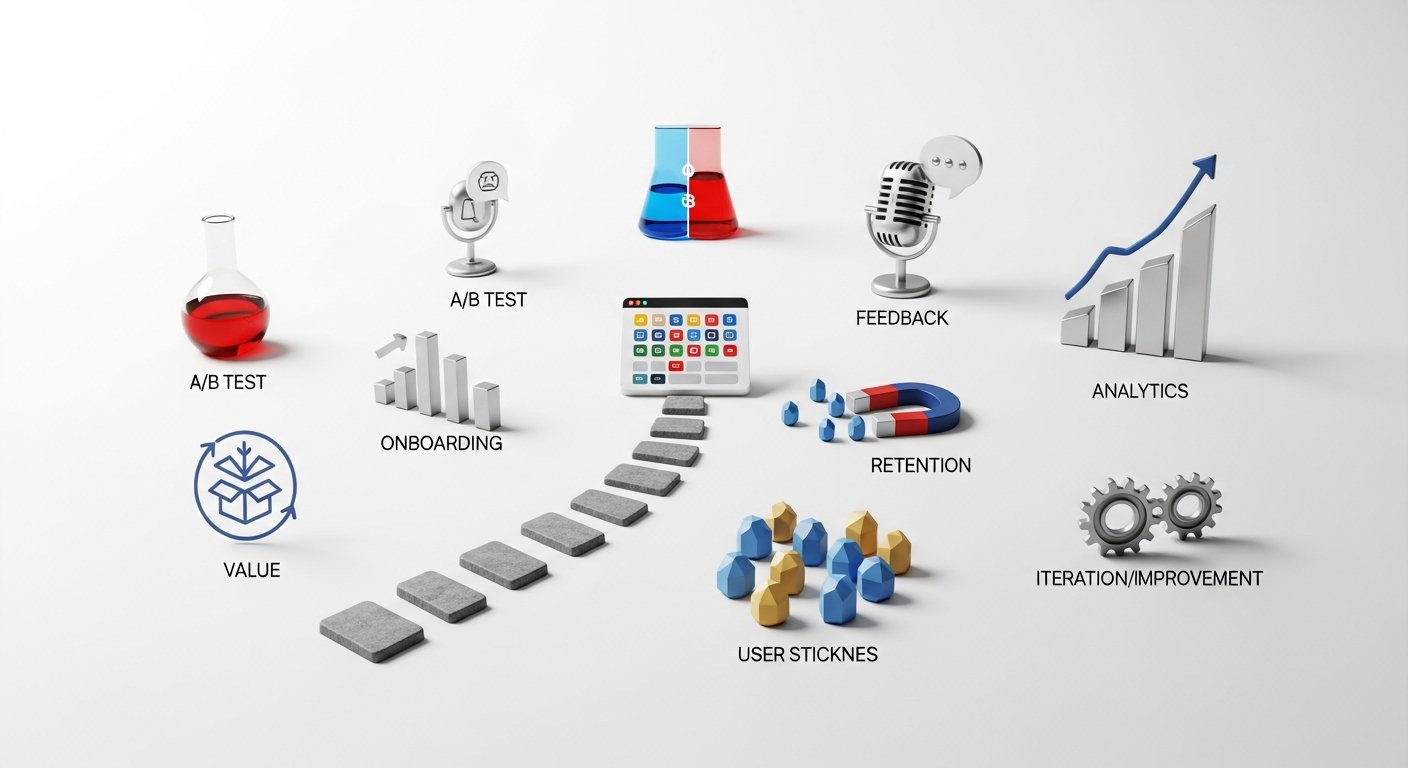
User Onboarding & Activation Platforms
Imagine a new user signing up for a complex project management application. Instead of facing a blank dashboard, they immediately encounter a role-specific checklist that guides them through creating their first task. This targeted friction reduction works because cognitive load is minimized. Users never have to guess their next step, which directly accelerates their journey to value realization.
Modern platforms allow teams to build these interactive walkthroughs without writing code. They segment audiences dynamically based on initial inputs. A marketing manager receives an entirely different product tour than a software engineer.
Product Analytics & Insights Tools
You cannot optimize a funnel that you cannot clearly see. Product analytics form the foundational layer of any self-serve motion. These platforms rely on an event-driven architecture, which means they track specific user actions—like clicking a button or completing a form—rather than just counting generic page views.
By capturing granular behavioral data, growth teams can pinpoint exactly where users abandon the product. If thousands of users consistently drop off at the billing screen, the analytics tool highlights this bottleneck instantly. This visibility allows product managers to deploy targeted fixes rather than relying on pure intuition.
In-App Communication & Feedback Solutions
Catching users inside the application is critical for driving engagement. Sending an email survey often yields dismal response rates. However, in-app messages boast a 75% open rate compared to traditional email channels (Airship). The timing makes all the difference.
Consider a scenario where a user repeatedly fails to export a report. An in-app communication tool detects this frustration and automatically triggers a helpful modal with a brief tutorial video. The intervention happens precisely when the user needs it. This contextual support prevents churn by resolving the user’s immediate roadblock before they decide to abandon the software entirely.
A/B Testing & Experimentation Suites
Experimentation is the engine of continuous improvement. Selecting the best product-led growth tools requires evaluating how seamlessly they integrate with your testing stack. Teams must validate hypotheses rigorously rather than deploying changes blindly.
Experimentation suites allow growth engineers to serve different feature variations to distinct user cohorts. This scientific approach ensures that product changes actually drive adoption rather than introducing new friction points.
| Testing Method | Primary Use Case | Impact on Growth |
|---|---|---|
| Feature Flagging | Gradual rollouts of new UI elements | Reduces risk of user backlash during major interface updates |
| Multivariate Testing | Comparing combinations of headlines and buttons | Optimizes micro-conversions within the core activation funnel |
[INLINE IMAGE 2: A diagram showing four interconnected software categories: onboarding, analytics, in-app communication, and A/B testing flowing in a continuous loop.]
Selecting the Right PLG Stack for Your Business Model
Aligning tools with your customer journey stages
Picture a user signing up for a new collaborative whiteboard application. They invite three colleagues within the first hour but completely ignore the core workflow templates. If your infrastructure lacks real-time behavioral tracking, that user receives a generic welcome email on day two. Conversely, a synchronized stack detects the missed activation milestone and instantly triggers a contextual in-app tooltip guiding them toward the templates. This localized intervention works because it addresses the exact point of friction at the precise moment of intent, rather than relying on delayed, out-of-context communication.
Evaluating integration capabilities and ecosystem fit
Software ecosystems dictate the speed of your growth loops. Organizations with natively integrated data pipelines see a 41% increase in cross-functional team efficiency (Forrester, 2026). You cannot afford isolated data silos. Customer data platforms and data warehouses must communicate seamlessly with your messaging and analytics layers.
Modern architectures often rely on Reverse ETL, which is the process of syncing processed data from a central cloud warehouse back into operational business applications. This ensures your sales team sees the exact same product usage metrics that your marketing automation platform uses to trigger upgrade emails.
| Integration Method | Primary Advantage | Ideal Use Case |
|---|---|---|
| Native API Sync | Low latency and easy setup | Connecting point solutions like email and in-app messaging |
| CDP-Mediated | Standardized data governance | Routing unified user profiles to multiple downstream apps |
| Warehouse-First | Single source of truth | Complex B2B models requiring deep historical analysis |
Considering scalability, pricing, and support
Finding the best product-led growth tools requires looking beyond the initial implementation phase. Costs can spiral quickly. Many analytics and messaging platforms base their pricing on Monthly Tracked Users or total event volume. A sudden spike in user acquisition might trigger massive overage fees if your contract lacks flexible scaling tiers.
Project your event volume at least eighteen months into 2026 and beyond. Evaluate whether the vendor provides dedicated technical support for complex custom event tracking. Strong vendor support drastically reduces the time required to instrument new features, keeping your engineering team focused on core product development rather than maintaining third-party integrations.
What are the core features of top-tier PLG platforms?

Advanced user segmentation and targeting
Generic onboarding flows inevitably create friction. When platforms treat a junior designer and a VP of Engineering identically, both users quickly abandon the product. Top-tier platforms solve this critical failure point through dynamic segmentation.
Consider a B2B collaboration app where a new user immediately creates three projects and invites five teammates within their first 48 hours. This user is automatically grouped into high-velocity behavioral cohorts—distinct user segments defined strictly by in-app actions rather than static demographic data. Tailoring the experience to these cohorts reduces cognitive load, allowing users to bypass basic tutorials and immediately receive advanced API documentation, which accelerates their journey to deep product adoption.
Real-time user behavior tracking and event logging
Tracking basic clicks and pageviews is no longer sufficient. Modern systems capture granular interactions as they happen. They log hover states, partial form fills, and specific feature toggles.
This immediacy works effectively because it aligns interventions with the user’s exact psychological context. If a user repeatedly clicks a locked enterprise feature, the system instantly logs the friction point. A delayed response loses the context entirely. Immediate event logging ensures your product reacts dynamically while the user’s intent remains at its absolute peak.
Automated workflow creation and triggers
Once events are logged, automation logic takes over. Platforms use visual builders to map out complex logic trees based on specific user milestones.
Behavior-triggered interventions generate 410% higher activation rates compared to traditional time-based drip sequences (ProductLed, 2026). Triggering an action the exact millisecond a user hits a usage limit capitalizes on high-intent frustration. Instead of receiving a generic newsletter three days later, the user sees an in-app modal offering a one-click trial extension. This instantly converts a potential churn moment into a seamless upgrade opportunity.
Customizable dashboards and reporting
Data without proper visualization is practically useless for fast-moving cross-functional teams. Product, sales, and marketing departments require distinct views of the exact same underlying user data.
When evaluating the best product-led growth tools, robust reporting separates scalable systems from basic analytics trackers. Revenue teams build custom views to monitor Product-Qualified Leads flowing directly into the sales pipeline. A well-designed dashboard aggregates drop-off rates across specific onboarding steps. It highlights exactly where users abandon the product flow. This complete visibility allows product managers to rapidly deploy fixes, run continuous A/B tests, and measure the direct revenue impact of minor UI adjustments.
[INLINE IMAGE 4: A flowchart diagram showing a user triggering a real-time event that splits into three automated cohort-based workflows.]
Optimizing User Experience Through PLG Tool Integration
Ensuring seamless data flow across systems
Data silos kill momentum. When your growth stack operates in isolation, users suffer the consequences of disjointed messaging. Integrating your stack ensures that behavioral triggers fire accurately across your entire ecosystem without manual intervention. Consider a freemium user who rapidly hits their export limit in your video editing application. If your product analytics platform instantly relays this milestone to your email automation software, the user receives a timely upgrade prompt rather than a generic onboarding tutorial. This immediate feedback loop works because the connected system eliminates latency between user action and company response. The right integration architecture prevents redundant communication and keeps the user experience highly relevant.
Creating unified user profiles for holistic insights
Piecing together the customer journey requires more than scattered touchpoints. You need a centralized view. Organizations utilizing unified customer data platforms experience a 140% increase in retention rates (Gartner, 2026). Achieving this requires robust identity resolution, which systematically links multiple anonymous and known identifiers across different devices into a single cohesive profile. When product teams analyze these complete profiles, they uncover hidden patterns in how specific segments navigate the application.
Without this comprehensive visibility, teams are forced to guess user intent. Unified profiles empower marketing, sales, and product departments to operate from a shared reality.
Minimizing friction points in the user journey
The ultimate goal of a connected tech stack is removing obstacles. Integrating the best product-led growth tools automatically identifies exactly where users get stuck. For instance, if session replay software detects rapid rage-clicking on a complex billing configuration page, the system can instantly trigger an in-app chat widget offering specialized support. This proactive intervention prevents account abandonment because it addresses user frustration at the exact moment of cognitive struggle, rather than waiting for an angry support ticket.
| Integration Type | Friction Reduced | UX Impact |
|---|---|---|
| Analytics to Messaging | Irrelevant emails | High relevance |
| Support to Product | Delayed assistance | Instant resolution |
| Billing to CRM | Upgrade blockers | Smooth expansion |
Streamlining these pathways ensures that the software adapts to the user. Every removed barrier directly accelerates product adoption.
Emerging Trends in Product-Led Growth Technology
The landscape of user acquisition and retention is shifting rapidly as we move deeper into 2026. Software providers are moving beyond basic analytics and static onboarding flows to embrace highly adaptive, privacy-first ecosystems.
AI-powered personalization and predictive analytics
Modern platforms no longer wait for a user to fail before offering help. By processing thousands of micro-interactions in real-time, machine learning models bypass static rule-based triggers to deliver hyper-relevant interventions. This dynamic routing prevents cognitive overload. Users only see tooltips and guides matched precisely to their immediate context and historical behavior.
Predictive analytics engines now identify churn risks days before a user actually stops logging in. According to a 2026 Forrester analysis, predictive onboarding sequences that adapt to user behavior reduce day-one drop-offs by 41%. The system analyzes subtle velocity changes in feature adoption and automatically deploys targeted re-engagement loops.
No-code/low-code solutions for faster implementation
Engineering bottlenecks historically crippled product experimentation. Today, non-technical teams leverage dynamic DOM injection—a method where the software overlays interactive elements directly onto the application interface without altering the underlying codebase—to build and test user journeys instantly.
Imagine a product manager at a mid-market fintech company noticing users stalling on a new reporting dashboard. Instead of filing Jira tickets and waiting for the next deployment cycle, they open a drag-and-drop canvas. They instantly deploy a contextual modal that guides users through the specific bottleneck, capturing feedback immediately.
This autonomy accelerates the iteration cycle. Growth teams can launch, measure, and refine in-app experiences in a matter of hours rather than weeks.
Enhanced privacy and data governance features
As global data regulations tighten, the best product-led growth tools now embed compliance directly into their tracking architecture. Granular consent management is no longer an optional add-on. It operates at the core of the event collection pipeline.
Platforms automatically mask personally identifiable information before it ever hits the analytics database. This architectural shift protects user privacy while maintaining the aggregate behavioral data required for cohort analysis. Growth teams can still map complex user journeys without exposing sensitive customer details to third-party vulnerabilities.
Sources & References
- Bush, Wes. Product-Led Growth: How to Build a Product That Sells Itself. ProductLed Press, 2019.
- OpenView Venture Partners. What is Product-Led Growth? A Definition & Guide. OpenView Partners.
- Product-Led Alliance. The State of Product-Led Growth Report. ProductLed Alliance, 2023.
- Poyar, Kyle. The PLG Playbook. OpenView, 2022.