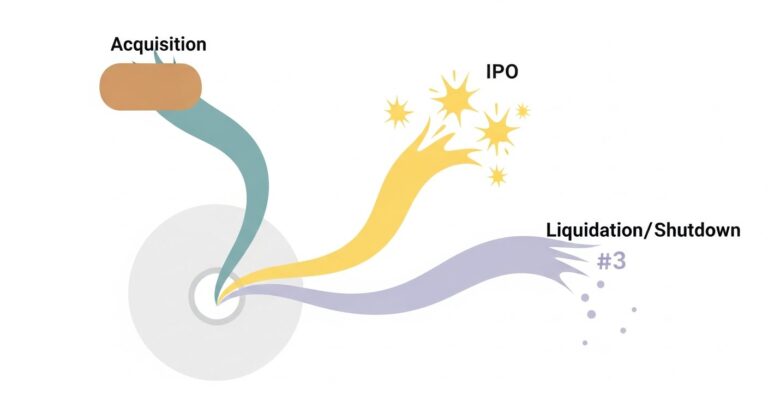

Updated June 2026. For founders launching a new digital venture, selecting the appropriate legal structures for tech startups is a foundational step that influences everything from initial liability to series A fundraising. It is easy to overlook incorporation details when you are intensely focused on building a minimum viable product and acquiring your first users, but the corporate framework you select dictates how you will pay taxes, issue employee equity, and ultimately scale the business operations.
While many small businesses default to simple liability protection, high-growth software and digital marketing ventures face distinct operational realities. They generate intellectual property rapidly, require significant upfront capital before turning a profit, and often rely on stock options to attract top-tier engineering talent. These unique characteristics mean that the standard advice given to a local retail shop simply does not apply to a technology firm aiming for exponential scale.
Choosing incorrectly can lead to severe tax liabilities, operational bottlenecks, or the need for expensive corporate restructuring just as you are trying to close a vital funding round. We will walk through the core entity types, the specific scenarios where each thrives, and the long-term implications of your initial business formation choices.
Core Company Types for Innovative Digital Ventures
Understanding the baseline company types requires looking past generic business advice to evaluate how an entity handles massive scale and external ownership. For software and digital marketing enterprises, the conversation typically revolves around three distinct models, each with specific rules regarding governance, taxation, and share distribution.
A C-Corporation functions as a completely separate legal entity from its owners, paying corporate taxes on its profits while offering distinct classes of stock. In contrast, a Limited Liability Company (LLC) provides personal asset protection while utilizing pass-through taxation, meaning the business itself pays no income tax; instead, profits and losses flow directly to the owners’ personal tax returns. The third common variant, the S-Corporation, is essentially a tax designation applied to either an LLC or a C-Corp that avoids corporate-level taxation but enforces strict limits on who can own shares and how many shareholders are permitted.
High-Level Comparison of Incorporation Options
Founders must map these structural differences against their operational timelines. A digital agency focused on immediate cash flow operates under entirely different financial pressures than a pre-revenue artificial intelligence platform requiring a five-year runway.
| Entity Designation | Taxation Mechanism | Investor Alignment | Operational Flexibility |
|---|---|---|---|
| C-Corporation | Corporate level (Double Taxation) | Extremely High (Standard for VC) | Low (Strict compliance required) |
| LLC | Pass-through to owners | Low (Institutional funds avoid K-1s) | High (Custom operating agreements) |
| S-Corporation | Pass-through to owners | Very Low (Restricted ownership rules) | Moderate (Ownership limits apply) |
What success looks like: A founding team selects an entity type that perfectly mirrors their five-year capital strategy, allowing them to issue initial equity grants without triggering immediate taxable events for their lead engineers. By navigating early regulatory guidelines and compliance protocols through careful planning, they avoid the friction of converting entity types later. See our detailed guide on [CLUSTER LINK: startup legal frameworks].
C-Corporations Drive Venture Capital Investment Strategies
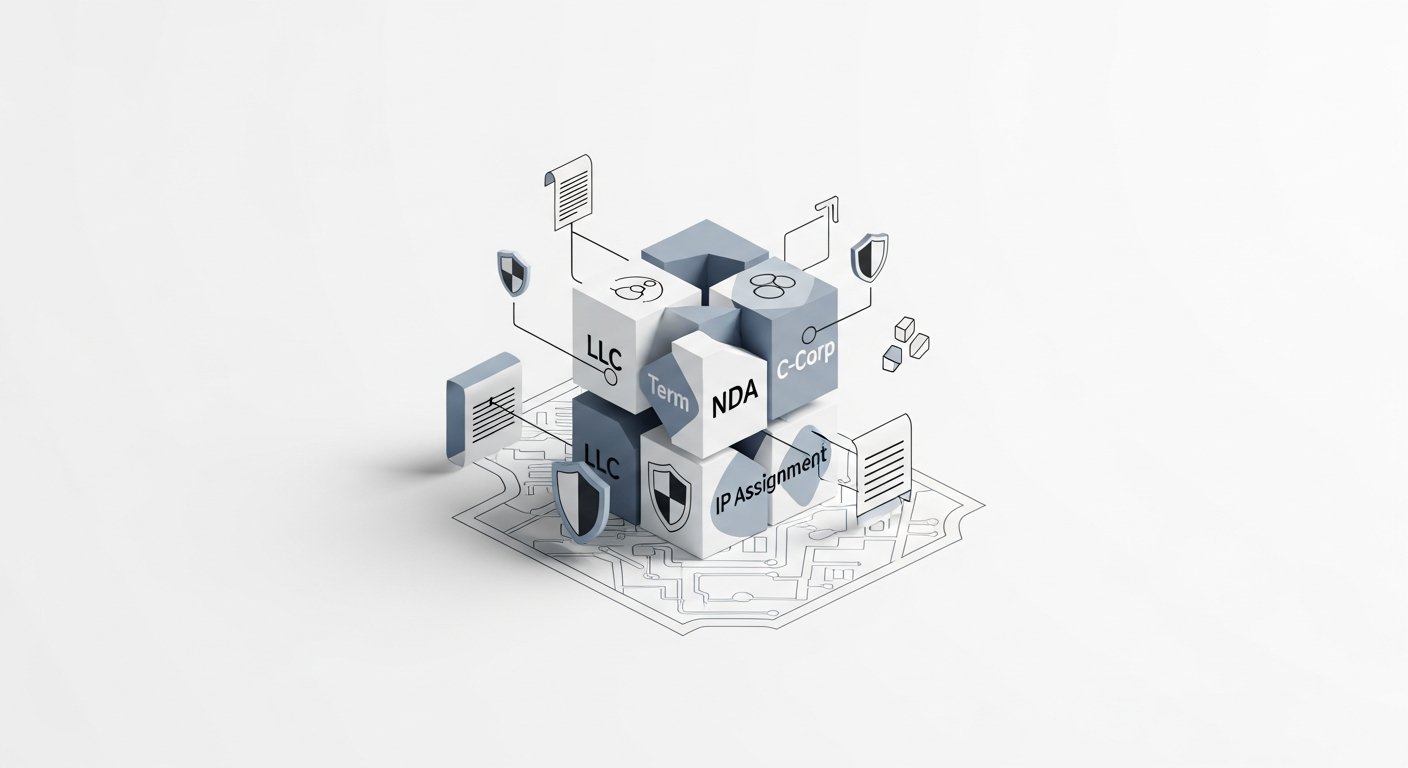
The dominant structural paradigm for venture-backed innovation is the C-Corporation, heavily favored for its robust corporate governance and predictable shareholder legal precedents. When institutional investors evaluate a pitch, they expect the underlying business formation to support complex equity distribution without complicating their own tax obligations.
Institutional funds are typically structured as pass-through entities themselves, meaning they have tax-exempt partners (like pension funds or endowments). If a venture capital firm invests in an LLC, the startup’s active business income passes through to the VC firm and up to its tax-exempt partners, generating unrelated business taxable income (UBTI). To avoid this severe tax complication, venture capitalists almost exclusively mandate a C-Corp structure, as it traps the tax liability at the corporate level and shields the investors’ partners from UBTI.
According to a Q1 2026 report by Carta, approximately 96.5% of technology ventures raising Series A funding or higher operate as C-Corporations. This preference is deeply tied to the ease of issuing preferred stock. A C-Corp allows a company to issue common stock to founders and employees while reserving preferred stock—which carries specific liquidation preferences and anti-dilution rights—for investors. Furthermore, under Section 1202 of the Internal Revenue Code, early investors and founders in a Qualified Small Business Stock (QSBS) C-Corp can potentially exclude up to 100% of their capital gains from federal taxes upon exit, provided they hold the stock for at least five years.
A founder building a scalable software-as-a-service platform must prepare the corporate framework before worrying about constructing resilient engineering architecture. Without the C-Corp container, issuing widely accepted employee stock option plans (ESOPs) becomes prohibitively complex, severely limiting the ability to recruit top-tier talent who expect equity compensation. See our detailed guide on [CLUSTER LINK: venture capital structures].
[INLINE IMAGE 2: A flowchart diagram showing how a Delaware C-Corp issues preferred shares to venture capital firms and standard options to employees.]
When is an LLC a Disadvantage for High-Growth Technology Businesses?
While incredibly popular for small businesses due to its administrative simplicity, the LLC structure often creates severe bottlenecks for ventures aiming for rapid, venture-funded expansion. The primary friction point lies in how employee compensation and outside investment are managed under pass-through tax regimes.
In an LLC, distributing equity to early employees is cumbersome. Instead of straightforward stock options, LLCs must issue profits interests. A profits interest grants the employee a right to share in the future appreciation of the company’s value, but executing this requires complex legal drafting and complex annual valuations. Moreover, employees receiving profits interests become partners for tax purposes. They can no longer receive a standard W-2 form and must instead handle a Schedule K-1, forcing them to pay estimated quarterly taxes on their portion of the company’s phantom income—revenue the company earned but did not distribute as cash.
Consider a scenario where an initial founding team bootstraps a digital marketing automation tool. They operate as an LLC to offset early losses against their personal income from consulting gigs. As the product gains traction, they attempt to raise a seed round. The angel syndicate agrees to fund them but demands conversion to a C-Corp first. This conversion requires a thorough audit of all existing contracts, new asset transfer agreements, and expensive legal counsel, draining critical resources right as they should be focused on gathering initial customer validation data.
What failure looks like: A growing software firm structured as an LLC lands a major enterprise contract, generating significant paper profits that are reinvested entirely into new server infrastructure. Because it is a pass-through entity, the founders owe personal income tax on those paper profits, yet they lack the cash distributions to pay the IRS, leading to sudden personal financial distress. See our detailed guide on [CLUSTER LINK: LLCs for digital businesses].
Key Decision Factors Influencing Incorporation Options
Selecting the optimal foundation requires balancing immediate operational convenience against long-term strategic goals. The choice cannot be made in a vacuum; founders must critically assess their product roadmap, hiring strategy, and intended exit timeline before filing articles of organization.
Core Attributes to Evaluate
- Capital Acquisition Strategy: Bootstrapped companies aiming for profitability and dividend distributions align well with LLCs. Ventures dependent on multiple rounds of institutional capital are almost universally required to be C-Corporations.
- Intellectual Property Chain of Title: Technology firms derive their valuation entirely from their IP. A corporate entity provides a clean, easily auditable vessel to hold copyrights, patents, and proprietary algorithms, ensuring individual developers cannot claim personal ownership of core code.
- Global Expansion: C-Corps offer a universally understood model for international investors and facilitate easier cross-border subsidiary formation compared to the US-specific LLC framework.
The administrative burden also varies significantly. A 2024 compliance study by the National Venture Capital Association [VERIFICAR FECHA] noted that high-growth tech firms spend an average of $25,000 annually simply maintaining C-Corp board formalities, franchise taxes, and complex multi-state registrations. While steep, this cost is viewed as necessary insurance to enable smooth billion-dollar valuations and public market transitions.
| Critical Document | Primary Function | When It Is Executed |
|---|---|---|
| Articles of Incorporation | Officially creates the entity with the state government | Day 1 of formation |
| Bylaws / Operating Agreement | Dictates internal governance, voting rights, and structural rules | Immediately post-formation |
| Technology Assignment Agreement | Transfers IP created prior to formation into the company’s ownership | Prior to any funding event |
| 83(b) Election Form | Optimizes personal tax impact of restricted stock grants | Within 30 days of equity issuance |
Founders must also align their corporate structure with their regulatory strategy, particularly when instituting robust information compliance standards across the organization. A formally structured board of directors, inherent to the corporate model, provides better oversight for GDPR and CCPA compliance than a loosely managed member-led LLC. See our detailed guide on [CLUSTER LINK: legal documentation for founders].
[INLINE IMAGE 4: Side-by-side comparison graphic highlighting the strict administrative board requirements of C-Corporations versus the operational flexibility of member-managed LLCs.]
Securing Long-Term Stability Through Jurisdiction and Agreements
Beyond selecting the entity type, the geographic jurisdiction of formation plays a pivotal role in a company’s operational trajectory. The vast majority of scalable technology companies incorporate in Delaware, regardless of where their physical headquarters or remote workforce is located.
Delaware’s dominance is not due to tax loopholes, but rather its highly developed body of corporate jurisprudence. The Delaware Court of Chancery adjudicates business disputes using judges rather than juries, providing rapid, predictable rulings based on decades of precise legal precedent. Investors demand Delaware incorporation because they know exactly how shareholder rights, board fiduciary duties, and merger regulations will be interpreted. If a startup incorporates in a state like Nevada or Wyoming to save on initial filing fees, venture capitalists will typically require a costly re-domestication to Delaware before wiring investment funds.
Equally critical to the state of incorporation are the internal founder agreements. A company’s capitalization table must be protected against sudden personnel changes. This is achieved through strict vesting schedules. A standard tech industry vesting schedule spans four years with a one-year vesting cliff. If a co-founder leaves the company on month eleven, they walk away with zero equity, protecting the remaining founders from dead equity sitting on the cap table.
Without properly structured vesting and IP assignment agreements, a single disgruntled early contributor can effectively hold the entire company hostage, blocking future funding rounds by refusing to sign over the rights to foundational code. See our detailed guide on [CLUSTER LINK: founder equity structures].
What Are the Most Common Legal Pitfalls Early-Stage Founders Make?
Even with access to abundant resources, technical founders routinely stumble into structural errors during the chaotic early days of product development. These mistakes often compound, remaining hidden until a rigorous due diligence process by an acquiring company or a lead investor exposes them, threatening the entire deal.
Early-stage missteps usually stem from a desire to minimize upfront legal costs, leading founders to utilize generic online templates that do not account for the specific needs of a scalable technology business.
- Failing to Assign Intellectual Property: Founders frequently build prototypes on their personal laptops on weekends before formalizing the business. If they fail to execute a Technology Assignment Agreement transferring that intellectual property into the newly formed entity, the corporate vessel technically owns nothing. Investors will not fund a company that does not possess clear, undisputed title to its core product.
- Ignoring Securities Laws When Raising Capital: Accepting $50,000 from friends and family might seem casual, but issuing any form of equity in exchange for capital triggers federal and state securities regulations. Relying on unverified handshake deals without filing proper exemptions (such as Regulation D) can result in severe SEC penalties and forced rescission offers.
- Mixing Personal and Corporate Assets: Using a personal credit card to pay for company cloud hosting while simultaneously using the corporate account for personal expenses destroys the liability shield. This practice, known as piercing the corporate veil, allows creditors to bypass the company entity and seize the founder’s personal assets in the event of a lawsuit.
- Delaying Formal Incorporation: Operating as a general partnership by default because no paperwork was filed exposes all founders to unlimited personal liability for the actions of their co-founders.
The operational friction caused by these errors becomes exponential as a business scales. Ensuring you have evaluated and correctly implemented the most appropriate legal structures for tech startups in the first ninety days of operation allows the founding team to focus entirely on user acquisition and product innovation, secure in the knowledge that their corporate foundation is built to withstand institutional scrutiny. See our detailed guide on [CLUSTER LINK: legal mistakes to avoid].
Sources & References

- Feld, B., & Mendelson, J. (2026). Venture Deals: Be Smarter Than Your Lawyer and Venture Capitalist. Wiley.
- Carta Data Desk. (2026). State of Private Markets: Series A Structural Analysis. Carta Institutional Research.
- National Venture Capital Association (NVCA). (2024). Corporate Governance and Compliance Costs in High-Growth Firms. NVCA Publications.
- Bagley, C. E., & Dauchy, C. E. (2026). The Entrepreneur’s Guide to Law and Strategy. Cengage Learning.