
The Dawn of Home-Based Tech Entrepreneurship
The paradigm shift towards remote work and the gig economy has fundamentally reshaped the entrepreneurial landscape. What was once considered a lofty endeavor requiring venture capital and a dedicated office space can now be initiated with little more than a laptop, an internet connection, and a burning idea. This era of home-based tech entrepreneurship is not merely about convenience; it’s about efficiency, low overheads, and the unparalleled flexibility to integrate a passion project into your existing life. In 2026, the barriers to entry for launching a tech-driven side business are lower than ever, inviting a diverse pool of talent to contribute to the digital economy.
Starting a tech side business from home means you can leverage your existing skills, whether in coding, design, marketing, or project management, to create value for a global audience. The beauty of this model lies in its inherent scalability and resilience. Unlike traditional brick-and-mortar businesses, digital ventures often operate with minimal fixed costs, allowing for higher profit margins and quicker iterations. Furthermore, the global reach of the internet means your potential customer base is virtually limitless, freeing you from geographical constraints.
The key to success in this environment is not just technical prowess, but also a strategic mindset. It involves identifying unmet needs, understanding market trends, and effectively communicating your value proposition. Many successful tech side businesses began as passion projects, evolving into significant income generators through consistent effort and smart application of digital tools. Embracing a lean startup methodology, focusing on rapid prototyping, and gathering user feedback early are critical components of this journey. This approach significantly mitigates risk, allowing entrepreneurs to test ideas and pivot quickly without substantial financial commitments. The home office, once a symbol of isolation, has become the epicentre of innovation and a launchpad for the next wave of profitable tech ventures.
Digital Products & Services: Building Scalable Income Streams
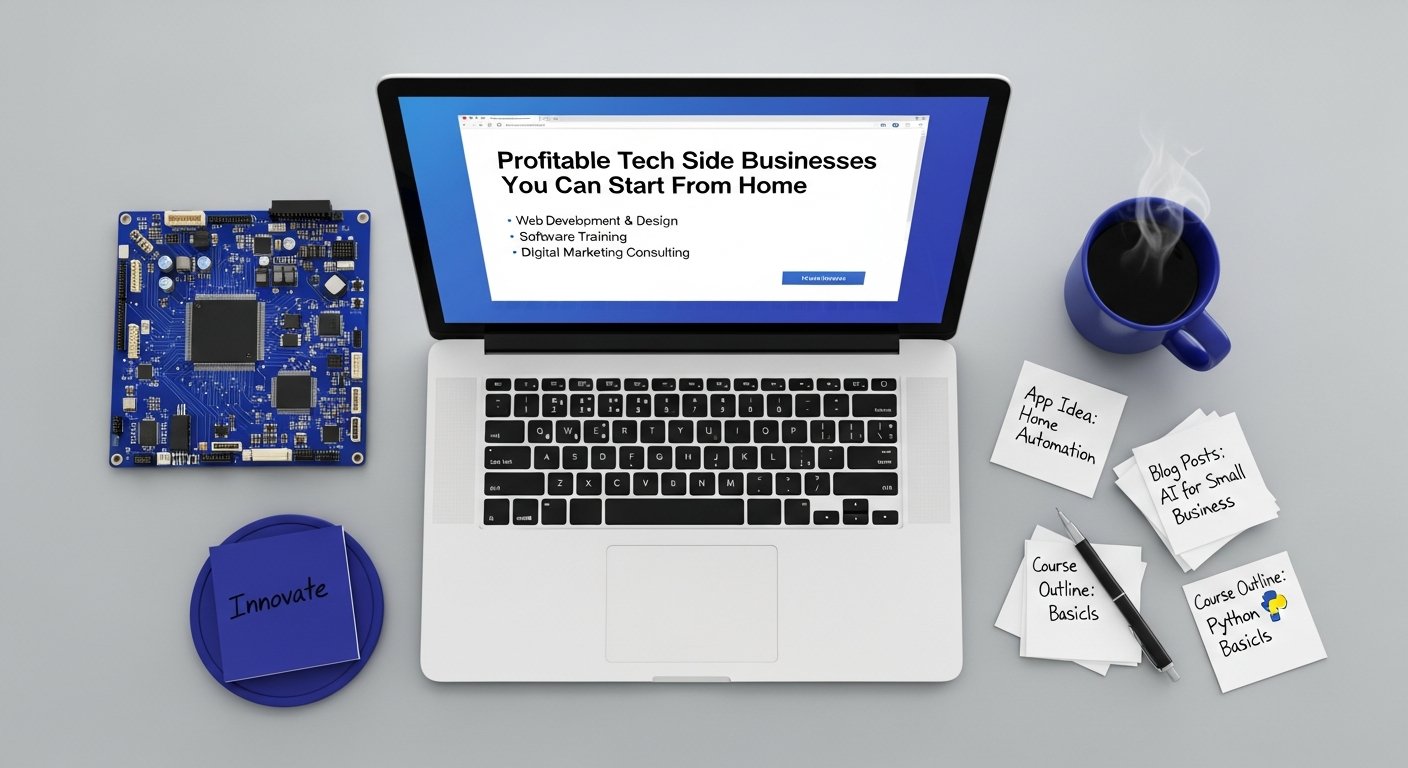
One of the most attractive aspects of home-based tech entrepreneurship is the ability to create and sell digital products and services. These ventures often boast high-profit margins due to their low marginal cost of reproduction and distribution. Once created, a digital product can be sold an infinite number of times without significant additional expense, making it an ideal model for generating scalable income from home.
- Software as a Service (SaaS) Solutions: Developing a niche SaaS product can be incredibly lucrative. Identify a specific problem faced by a particular industry or group of users, and build a web-based tool to solve it. This could be anything from a project management tool for freelancers to a specialized analytics dashboard for small e-commerce stores. The subscription model of SaaS provides predictable recurring revenue. The initial development might require a time investment, but the long-term passive income potential is immense. Focus on a minimal viable product (MVP) to launch quickly and iterate based on user feedback.
- Online Courses and Educational Content: If you possess expertise in a specific tech domain – be it programming languages, cybersecurity, digital marketing, or graphic design – creating an online course allows you to package and sell your knowledge. Platforms like Udemy, Teachable, or your own website can host these courses. This is a powerful way to leverage your existing skills and build a reputation as an authority. The effort to create the course is front-loaded, but once it’s live, it can generate income for years to come. Consider offering practical projects and community support to enhance the value.
- Digital Templates and Resources: Designers, marketers, and developers can create and sell templates (website themes, social media graphics, email newsletters, Notion templates, code snippets, project plans) or digital resources (eBooks, stock photos, sound effects). Marketplaces like Creative Market, Etsy, or specialized platforms cater to these products. This allows you to monetize your creative and technical skills without direct client interaction, offering a truly scalable product line.
- Premium Plugins and Extensions: For those proficient in specific platforms (e.g., WordPress, Shopify, Chrome), developing and selling premium plugins or extensions can be a consistent source of income. Solve a common pain point or add a unique functionality that the core platform lacks. This requires ongoing support and updates, but a well-designed, useful plugin can attract a loyal customer base.
The beauty of these digital offerings is their global accessibility. With effective digital marketing, your product can reach anyone, anywhere, at any time. This allows for unparalleled scalability and the potential to build a significant income stream directly from your home office. Remember, a strong focus on user experience and consistent value delivery is paramount for long-term success in this competitive space.
Content Creation Powerhouse: Blogging, YouTube, and Podcasting for Influence and Profit
Blogging: Authority and Affiliate Income
Starting a tech blog focused on a niche you’re passionate about can be an excellent foundation for a home-based business. Whether you write about software reviews, programming tutorials, startup strategies, or emerging technologies, a well-maintained blog establishes you as an authority. Monetization strategies for blogs include:
- Advertising: Displaying ads via networks like Google AdSense or Mediavine.
- Sponsored Content: Collaborating with tech companies to feature their products or services.
- Selling Your Own Digital Products: Using your blog as a platform to market the online courses, templates, or SaaS tools you’ve developed.
- Affiliate Marketing: This is a particularly potent income stream for tech blogs. What is affiliate marketing? It’s a performance-based marketing strategy where you earn a commission for promoting another company’s products or services. When a visitor clicks on your unique affiliate link and makes a purchase, you receive a percentage of that sale. For a tech blogger, this could involve recommending software, hosting services, development tools, or gadgets. The crucial aspect is to only promote products you genuinely believe in and have experience with, maintaining trust with your audience.
YouTube: Visual Engagement and Diverse Revenue
Video content is king, and for tech enthusiasts, how to create a YouTube channel is a question with a highly profitable answer. A YouTube channel allows you to visually explain complex tech concepts, review hardware, offer coding tutorials, or share insights into the startup world. Setting up a channel involves:
- Niche Selection: Focus on a specific area (e.g., AI tutorials, ethical hacking, web development walkthroughs, tech product reviews).
- Equipment: Start with basic gear (smartphone camera, decent microphone), upgrading as your channel grows.
- Content Planning: Script your videos, create engaging visuals, and ensure clear audio.
- Consistency: Regular uploads are crucial for building an audience.
- Optimization: Use relevant keywords in titles, descriptions, and tags to improve discoverability.
Monetization for YouTube channels includes:
- YouTube Partner Program: Earning from ads displayed on your videos once you meet eligibility requirements.
- Sponsorships: Direct deals with brands for integrated product placements or dedicated review videos.
- Affiliate Marketing: Linking to recommended products in your video descriptions.
- Merchandise: Selling branded items to your loyal viewers.
- Channel Memberships/Patreon: Offering exclusive content or perks to paying subscribers.
Podcasting: Audio Authority and Niche Audiences
Podcasting offers a unique way to connect with an audience through audio. A tech podcast can feature interviews with industry leaders, deep dives into technical topics, or discussions about the latest tech news. This format is perfect for commuters or those who prefer auditory learning. Monetization typically comes from:
- Sponsorships: Brands paying to have their message read during your episodes.
- Premium Content: Offering bonus episodes or ad-free versions to paying subscribers.
- Affiliate Marketing: Mentioning products and providing a unique URL or code in the show notes.
By strategically combining these content creation avenues, you can build a robust personal brand, diversify your income streams, and establish a profitable tech side business from your home, all while sharing your expertise with a global audience.
Unlocking Passive Income: The Potential of SaaS, Affiliate Marketing & E-commerce
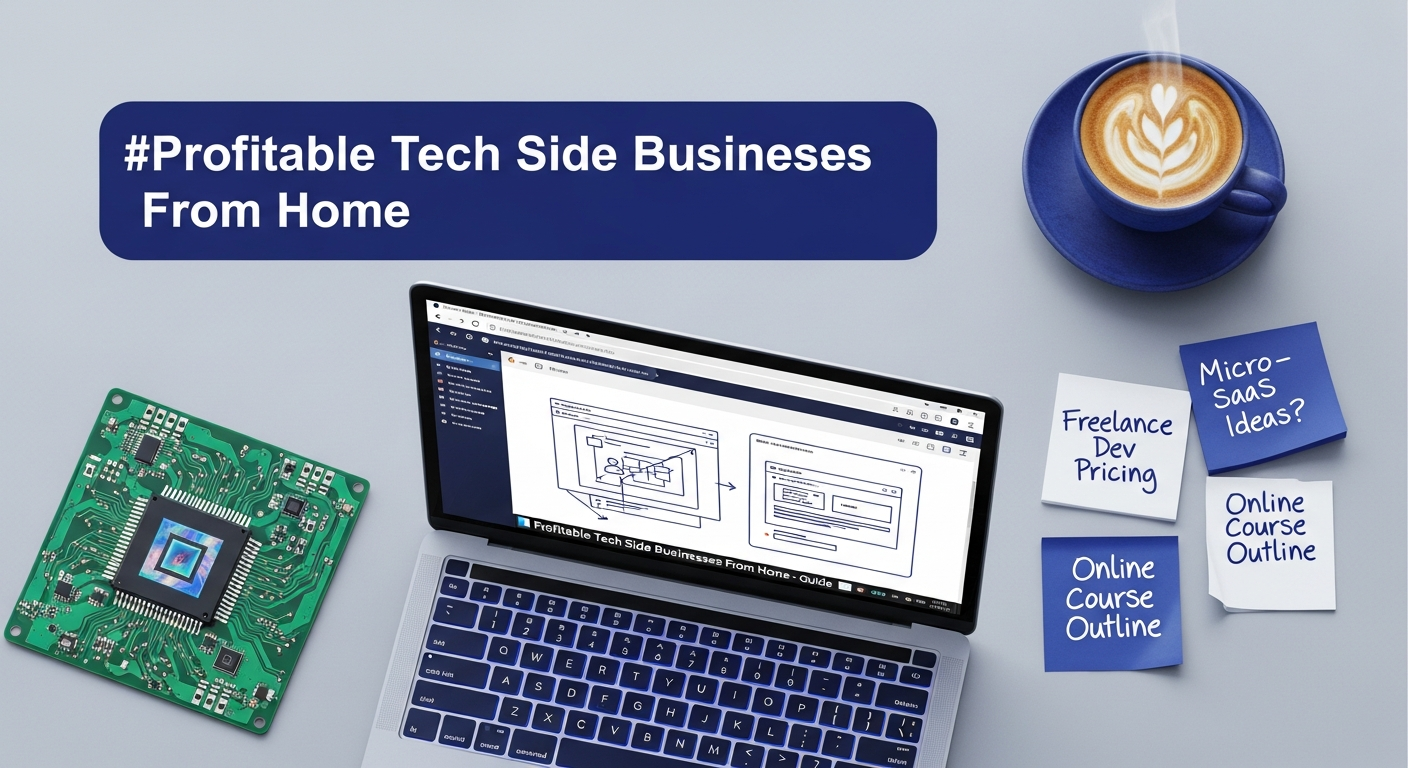
The allure of passive income is strong, especially for those balancing a full-time job with entrepreneurial ambitions. While truly “set it and forget it” income is rare, certain tech-driven models offer significant potential for earning revenue with minimal ongoing effort once the initial setup is complete. Software as a Service (SaaS), affiliate marketing, and e-commerce are prime examples of how tech entrepreneurs can build these systems from home.
SaaS: Recurring Revenue Through Problem Solving
We touched on SaaS earlier, but it warrants a deeper dive into its passive income potential. The core idea is to create a valuable software application that users pay a recurring fee (monthly or annually) to access. Examples include project management tools, CRM systems, analytics dashboards, or specialized automation scripts. The “passive” element comes from the fact that once the software is built and stable, it can serve hundreds or thousands of users simultaneously with minimal human intervention for each transaction.
To succeed with a home-based SaaS venture, focus on:
- Niche Identification: Solve a very specific problem for a defined audience. The more niche, the easier it is to market and dominate.
- User Experience (UX): Intuitive design and a seamless user experience are critical for retention.
- Automation: Automate onboarding, billing, and basic support as much as possible to reduce manual effort.
- Scalable Infrastructure: Use cloud services (AWS, Google Cloud, Azure) that can handle growth without you needing to manage physical servers.
While the initial development of a SaaS product requires significant time and skill, the recurring revenue model makes it one of the most powerful forms of passive income in the tech world. Continuous improvement and customer support are necessary, but the core revenue generation is largely automated.
Affiliate Marketing: Leveraging Trust and Traffic
As discussed in the context of blogging and YouTube, affiliate marketing is an excellent path to passive income. Once you’ve established an audience (through content creation, social media, or even an email list), you can recommend products or services and earn a commission on sales made through your unique links. The beauty of affiliate marketing is that you don’t need to create your own product, handle inventory, shipping, or customer service.
Key strategies for successful affiliate marketing:
- Build an Audience: Whether through a blog, YouTube channel, podcast, or social media, a loyal audience is your biggest asset.
- Choose Relevant Products: Only promote products that genuinely align with your niche and audience’s needs. Authenticity is paramount.
- Provide Value: Don’t just list products. Offer reviews, comparisons, tutorials, and insights that help your audience make informed decisions.
- Diversify: Work with multiple affiliate programs (e.g., Amazon Associates, ShareASale, CJ Affiliate, specific software affiliate programs) to avoid over-reliance on one source.
Once your content is published and ranking, it can continue to generate affiliate commissions for months or even years without constant active promotion, making it a powerful passive income stream.
E-commerce: Dropshipping & Print-on-Demand
While traditional e-commerce can be demanding with inventory management and shipping, models like dropshipping and print-on-demand (POD) offer a more passive approach for home-based entrepreneurs.
- Dropshipping: With dropshipping, you sell products online without holding any inventory. When a customer places an order on your website, you purchase the item from a third-party supplier (often overseas) who then ships it directly to the customer. Your role is primarily marketing and customer service. This significantly reduces upfront costs and logistical headaches, making it an accessible home-based business. Platforms like Shopify with integrated apps make setup relatively straightforward.
- Print-on-Demand (POD): POD services allow you to create custom designs for products like t-shirts, mugs, phone cases, and posters. When a customer orders, the POD company prints the design onto the product and ships it directly. You only pay for the product when it sells, eliminating inventory risks. This is ideal for designers or those with a strong brand identity. Platforms like Printful, Printify, and Redbubble integrate with e-commerce stores to automate the process.
Both dropshipping and POD require strong marketing and customer engagement, but the operational aspects are largely handled by third parties, freeing you to focus on growth and strategy from your home office. These models exemplify how leveraging technology and third-party services can create robust, semi-passive income streams for the ambitious tech entrepreneur.
Leveraging Your Expertise: Tech Consulting, Freelancing, and Online Education
For many tech professionals, the most straightforward path to a profitable side business from home involves directly monetizing their existing expertise. Tech consulting, specialized freelancing, and developing online educational platforms are excellent ways to leverage your skills, build a client base, and command premium rates, all without the need for significant upfront investment beyond your time and knowledge.
Tech Consulting: Strategic Guidance for Businesses
If you have deep experience in areas like cybersecurity, cloud architecture, data analytics, software development best practices, digital transformation, or even specific CRM/ERP implementations, offering your services as a tech consultant can be highly lucrative. Businesses, from startups to established enterprises, often need specialized expertise for short-term projects or strategic guidance that they don’t have in-house.
As a home-based tech consultant, you can:
- Define Your Niche: Don’t try to be a generalist. Focus on a specific area where your expertise is strongest and demand is high. For example, “AWS migration specialist for mid-sized e-commerce businesses” or “AI integration consultant for marketing agencies.”
- Build a Portfolio: Showcase past projects, case studies, and testimonials that demonstrate your impact.
- Network Actively: Attend virtual industry events, leverage LinkedIn, and connect with potential clients and referral partners.
- Set Your Rates: Charge based on value delivered, not just hours worked. Project-based fees or retainer models are common.
Consulting offers flexibility and the satisfaction of solving complex problems, and it’s a direct way to apply your high-value skills without needing to develop a product from scratch.
Specialized Freelancing: Delivering Project-Based Solutions
Freelancing is a broad category, but for tech entrepreneurs, it means offering highly specialized services on a project-by-project basis. This could include:
- Web Development & Design: Building custom websites, web applications, or mobile apps for clients.
- Software Development: Custom scripting, API integrations, backend development, or specific feature implementations.
- Digital Marketing & SEO: Providing expertise in search engine optimization, paid advertising, content strategy, or social media management for tech companies or businesses aiming to grow online.
- Data Science & Analytics: Offering services in data cleaning, predictive modeling, dashboard creation, or business intelligence.
- Technical Writing: Creating documentation, whitepapers, blog posts, or user manuals for tech products.
Platforms like Upwork, Fiverr (for micro-gigs), Toptal (for elite talent), or specialized job boards can help you find clients. The advantage of freelancing is the immediate income generation and the ability to choose projects that align with your interests and schedule. Building a strong personal brand and delivering exceptional work are key to securing repeat business and referrals.
Online Education & Coaching: Sharing Your Knowledge One-on-One
Beyond creating online courses, direct online education and coaching can be a powerful home-based tech side business. This involves:
- Technical Coaching: Mentoring aspiring developers, data scientists, or marketers. This could involve one-on-one video calls, code reviews, career guidance, or project support.
- Live Online Workshops: Hosting interactive workshops on specific tech topics (e.g., “Introduction to React,” “Mastering Google Analytics,” “Cybersecurity Basics for Small Business”). These can be priced higher than pre-recorded courses due to the live interaction and personalized feedback.
- Tutoring: Assisting students or professionals with specific software, programming languages, or technical concepts.
Platforms like Zoom, Google Meet, and dedicated coaching platforms facilitate these interactions. This model allows for higher per-client revenue and offers a deeply rewarding experience of helping others grow their skills. It requires strong communication skills and the ability to break down complex topics into understandable segments.
By leveraging your existing technical acumen in consulting, freelancing, or education, you can build a highly profitable and personally fulfilling side business from your home, directly transforming your knowledge into income.
The Lean Launchpad: Starting Your Tech Side Business with Minimal Capital
A common misconception prevents many aspiring entrepreneurs from taking the plunge: the belief that launching a successful tech venture requires substantial upfront capital. This couldn’t be further from the truth in 2026. The digital age has ushered in an era where “bootstrapping” – starting and growing a business with little to no external funding – is not just possible, but often advisable. The core principle of how to start a startup with no money revolves around leveraging existing resources, prioritizing essential expenditures, and focusing on generating revenue early.
Leveraging Free and Freemium Tools
The ecosystem of digital tools available today is incredibly rich with free and freemium options that can support almost every aspect of a tech business.
- Development: Open-source frameworks (React, Angular, Vue, Django, Ruby on Rails), free IDEs (VS Code), and version control (GitHub’s free tier) are standard.
- Design: Tools like Figma (for UI/UX design), Canva (for marketing graphics), and GIMP (for image editing) offer powerful free versions.
- Marketing & Sales: Mailchimp (for email marketing up to a certain number of subscribers), social media platforms, Google Analytics, and basic SEO tools can get you started.
- Project Management: Trello, Asana, and Monday.com often have robust free plans for individuals or small teams.
- Website Hosting: Utilize platforms like GitHub Pages for static sites, or explore affordable shared hosting plans that cost only a few dollars a month.
By intelligently piecing together these free and low-cost solutions, you can build, market, and manage your tech side business without incurring significant monthly overheads.
Focusing on Your MVP (Minimum Viable Product)
The MVP philosophy is central to a lean launch. Instead of trying to build a perfect, feature-rich product from day one, focus on developing the absolute core functionality that solves a critical problem for your target users. This allows you to:
- Launch Faster: Get your product or service into the hands of users quickly.
- Validate Your Idea: Gather real-world feedback to confirm market demand before investing heavily.
- Generate Early Revenue: Even a basic MVP can be monetized, providing funds for further development.
For service-based businesses like consulting or freelancing, your “MVP” might simply be your personal brand, a clear service offering, and a few initial clients to build testimonials.
Bootstrapping Strategies: Generating Your Own Fuel
Beyond minimizing costs, bootstrapping also involves strategies to generate revenue internally to fund growth:
- Pre-Sales/Pre-Orders: If you’re developing a digital product or SaaS, consider offering early access or pre-orders at a discounted rate. This not only generates initial capital but also validates demand.
- Founding Memberships: For a community-based tech side business or an online course, offer exclusive benefits to early adopters who sign up at a premium.
- Service-to-Product Transition: Many successful tech companies started by offering consulting or freelancing services. They used the income and insights gained from clients to fund and develop their own scalable products. This is a highly effective way to self-fund your product development.
- Personal Savings (Cautiously): While the goal is “no money,” a small personal investment for essentials like a domain name or minimal hosting can be a strategic use of funds. The key is to keep it minimal and focus on rapid ROI.
Starting a tech side business from home with minimal capital is an exercise in resourcefulness and strategic planning. By embracing free tools, focusing on an MVP, and employing smart bootstrapping strategies, you can transform your innovative ideas into profitable ventures without the financial pressure of traditional startups. It’s about smart execution, not deep pockets.
Scaling and Sustaining Your Home-Based Tech Venture in 2026 and Beyond
Launching a profitable tech side business from home is an achievement, but the true mark of entrepreneurial success lies in its ability to scale and sustain itself in the dynamic digital landscape of 2026 and beyond. This involves strategic planning, continuous adaptation, and a focus on operational efficiency to grow your income and impact without necessarily multiplying your workload.
Automation and Efficiency
As your side business grows, manual tasks can quickly become overwhelming. Leveraging automation is crucial for scaling without burning out:
- Marketing Automation: Use tools for email sequences, social media scheduling, and ad campaign management.
- Customer Support: Implement chatbots for FAQs, create a comprehensive knowledge base, and use ticketing systems to streamline support.
- Operational Workflows: Automate billing, invoicing, data backups, and routine reports. Integrate tools using Zapier or custom scripts.
- Development & Deployment: For SaaS or software products, continuous integration/continuous deployment (CI/CD) pipelines can automate testing and deployment processes.
By automating repetitive tasks, you free up your valuable time to focus on strategic growth, product development, and customer engagement.
Strategic Outsourcing and Delegation
You can’t do everything yourself, nor should you try. As your business generates revenue, consider strategically outsourcing tasks that are not your core competency or are highly time-consuming:
- Virtual Assistants: For administrative tasks, scheduling, or basic email management.
- Freelance Developers/Designers: To add new features to your product, refine your website, or create marketing assets.
- Content Writers/Editors: To maintain a consistent content schedule for your blog or social media.
- Accountants/Bookkeepers: To manage your finances, especially as your income streams diversify.
Outsourcing allows you to leverage specialized skills, expand your capacity, and focus on what you do best, effectively turning your side business into a mini-enterprise without needing a physical team.
Diversifying Income Streams
Reliance on a single income stream can be risky. To sustain your venture, actively seek opportunities to diversify your revenue:
- If you started with a SaaS product, consider adding premium support tiers, complementary digital products, or consulting services.
- If your primary income is from a blog, expand into YouTube, podcasts, or offer paid workshops.
- For freelancers, explore creating your own product (productized service) based on common client needs.
Diversification creates a more resilient business model, cushioning against market fluctuations or changes in specific revenue sources.
Continuous Learning and Adaptation
The tech world is in constant flux. What’s profitable today might be obsolete tomorrow. To sustain your home-based venture, you must commit to continuous learning and adaptation:
- Stay Updated: Regularly read industry news, follow thought leaders, and understand emerging technologies (AI, Web3, no-code/low-code platforms).
- Listen to Your Customers: Actively solicit feedback and be prepared to pivot your product or service offerings based on market demand.
- Experiment: Don’t be afraid to try new marketing channels, pricing models, or product features. A/B testing can provide valuable insights.
By embracing these strategies – automation, strategic outsourcing, income diversification, and continuous learning – your home-based tech side business can evolve from a successful side project into a robust, sustainable, and increasingly profitable enterprise, positioning you for long-term success in the dynamic digital economy.
Frequently Asked Questions About Profitable Tech Side Businesses
What are the initial costs for starting a tech side business from home?
The initial costs for a tech side business can be remarkably low, often starting at virtually zero beyond your existing computer and internet connection. For digital products like SaaS or online courses, you might incur costs for a domain name (around $10-15/year), basic hosting (as low as $5/month), or premium software subscriptions if free alternatives don’t suffice. For content creation like blogging or YouTube, free platforms exist, but professional tools (e.g., a good microphone for YouTube/podcasting, around $50-150) might be a small investment. Service-based businesses like consulting or freelancing have almost no direct startup costs beyond time. The core principle, as highlighted in “How to Start a Startup With No Money,” is to leverage free tools and focus on an MVP (Minimum Viable Product) to validate your idea before investing significantly.
How much time should I dedicate to my tech side business each week?
The time commitment for a tech side business is highly flexible and depends on your goals and the chosen business model. Many successful entrepreneurs start with just 5-10 hours per week, often in the evenings or on weekends. Content creation (blogging, “How to Create a YouTube Channel,” podcasting) can be time-intensive initially, but can become more passive over time. Developing a SaaS product will require significant upfront time. Consulting and freelancing offer direct correlation between time invested and income. The key is consistency. Even a few dedicated hours each week, focused on high-impact tasks, can lead to substantial progress. As the business grows and generates revenue, you can reinvest time or delegate tasks.
What is the fastest way to start generating income with a tech side business?
For immediate income generation, service-based tech businesses like freelancing or consulting are typically the fastest.
Recommended Resources
Related reading: How To Use Adobe Indesign For Layouts (Layout Scene).
You might also enjoy How To Use Obsidian For Note Taking from Bookmark Sharer.