

Understanding the Core: What Exactly is Affiliate Marketing?
Affiliate marketing is a performance-based marketing strategy where a business (the advertiser or merchant) rewards one or more affiliates (publishers) for each visitor or customer brought by the affiliate’s own marketing efforts. In essence, it’s about leveraging external individuals or entities to promote products or services in exchange for a commission on sales, leads, or clicks generated. This model has evolved significantly, moving beyond simple banner ads to sophisticated content marketing, influencer collaborations, and deep product integrations.
The beauty of affiliate marketing lies in its simplicity and efficiency. It creates a win-win scenario:
- For the Advertiser/Merchant: They gain exposure to new audiences and only pay when a desired action (e.g., a sale) occurs, making it a highly cost-effective customer acquisition channel. It’s a low-risk way to expand market reach without significant upfront marketing expenditure.
- For the Affiliate/Publisher: They earn income by promoting products or services they believe in, without needing to create their own products, handle inventory, or manage customer service. They monetize their existing audience or traffic.
- For the Consumer: They often discover new products or services through trusted sources (the affiliates) who provide valuable reviews, comparisons, or recommendations.
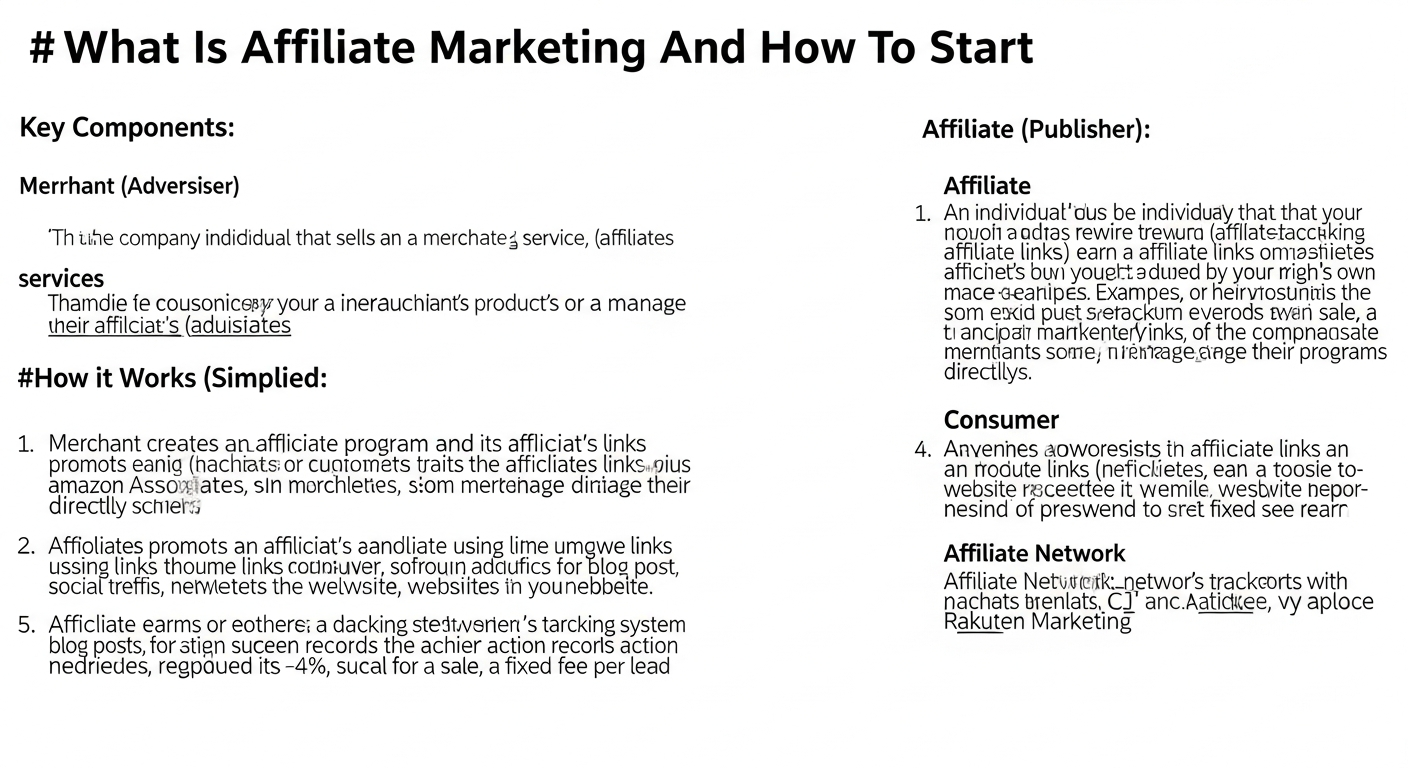
The process typically involves four key players:
- The Merchant (Advertiser/Brand): This is the company that creates the product or service. Examples range from large e-commerce giants like Amazon to SaaS companies offering cloud solutions.
- The Affiliate (Publisher/Marketer): This individual or company promotes the merchant’s product. Affiliates can be bloggers, vloggers, social media influencers, email marketers, review sites, or even large content networks. Their primary goal is to attract potential customers and persuade them to make a purchase or complete a desired action.
- The Consumer: The end-user who sees the affiliate’s marketing efforts and makes a purchase. Without the consumer, there’s no revenue to share.
- The Affiliate Network (Optional, but common): Many affiliate programs are managed through networks that act as intermediaries between merchants and affiliates. These platforms provide tracking technology, payment processing, and a marketplace for affiliates to find programs and for merchants to find affiliates. Examples include ShareASale, CJ Affiliate, Rakuten Advertising, and Amazon Associates (which is both a program and its own network).
The core mechanism is a unique tracking link (an affiliate link) provided to the affiliate. When a consumer clicks this link, a cookie is placed in their browser. If the consumer makes a purchase within a specified cookie duration (e.g., 30 or 90 days), the affiliate is credited with the sale and earns a commission. This performance-based model is a stark contrast to traditional advertising, where payment is often upfront regardless of actual results. It shares philosophical common ground with concepts like What Is Pay Per Click Advertising, where advertisers only pay when a specific action (a click) occurs, but affiliate marketing often extends to paying for conversions (sales, leads) rather than just clicks.
Why Affiliate Marketing is a Game-Changer for Modern Businesses and Entrepreneurs
In an increasingly digital-first economy, affiliate marketing has cemented its position as a cornerstone strategy for both established enterprises and nimble startups. Its inherent advantages make it particularly appealing for those navigating the competitive waters of 2026.
Low Barrier to Entry and Scalability
One of the most compelling aspects of affiliate marketing is its accessibility. Unlike launching a traditional business that requires significant capital for product development, inventory, and infrastructure, starting as an affiliate marketer can be done with minimal upfront investment. You don’t need to create your own product or service, manage customer support, or handle fulfillment. This significantly lowers the financial risk and allows individuals and small teams to enter the market quickly.
Moreover, affiliate marketing is inherently scalable. Once a successful content strategy or promotional channel is established, it can often be replicated and expanded to target new niches, promote additional products, or leverage new platforms. A single affiliate can potentially promote hundreds of products, diversifying their income streams without a proportional increase in operational overhead.
Performance-Based Model: Maximizing ROI
For merchants, the performance-based nature of affiliate marketing is a significant draw. They only pay commissions when a sale, lead, or click is generated, meaning their marketing spend is directly tied to measurable results. This contrasts sharply with traditional advertising, where budgets are often allocated upfront with no guarantee of return. This risk-averse approach makes affiliate marketing incredibly attractive for startups and businesses with limited marketing budgets, allowing them to acquire customers efficiently and predictably.
This model is closely aligned with the principles seen in What Is Pay Per Click Advertising, where advertisers bid for clicks on their ads, paying only when a user engages. Affiliate marketing extends this concept by often focusing on deeper conversions like sales or sign-ups, offering an even more direct return on investment for the merchant and a higher earning potential for the affiliate.
Diversification of Income and Reduced Risk
For affiliates, this strategy offers a powerful way to diversify income streams. Instead of relying on a single source of revenue, affiliates can promote a wide range of products and services across various niches. This diversification provides a buffer against market fluctuations or changes to individual affiliate programs. Should one product become less popular or a program change its terms, the affiliate’s entire business isn’t jeopardized.
For tech startups, particularly those offering SaaS solutions or digital products, an affiliate program can become a vital component of their growth strategy. It allows them to tap into new markets and audiences through trusted voices, accelerating customer acquisition without the fixed costs associated with building an in-house sales team for every potential market segment.
Leveraging Existing Trust and Authority
Affiliates often succeed because they have cultivated an audience that trusts their recommendations. Whether it’s a tech blogger reviewing the latest gadgets, a finance influencer discussing investment tools, or a lifestyle vlogger showcasing home products, these individuals possess a level of authenticity and authority that traditional advertising often lacks. Merchants can leverage this pre-existing trust, gaining access to highly engaged and pre-qualified audiences who are more likely to convert. This is particularly valuable in an era where consumers are increasingly wary of direct advertising and seek genuine endorsements.
Global Reach and Market Penetration
The internet knows no geographical boundaries, and neither does affiliate marketing. An affiliate in one country can promote products to an audience across the globe, opening up vast market opportunities for both the affiliate and the merchant. This global reach is especially beneficial for tech companies looking to scale internationally without establishing physical presences in every target market. It allows for agile market penetration and testing, making it a strategic imperative for businesses aiming for global dominance in 2026.
The Essential Steps: How to Start Your Affiliate Marketing Journey in 2026
Step 1: Choose Your Niche and Audience
This is arguably the most critical first step. Your niche defines your target audience, the products you’ll promote, and the type of content you’ll create. Don’t just pick a niche based on perceived profitability; choose something you’re genuinely interested in or have expertise in. This passion will fuel your content creation and help you build authenticity and authority.
- Research: Look for niches with a good balance of interest, search volume, and moderate competition. Tools like Google Trends, Ahrefs, or Semrush can help identify popular topics and keywords.
- Audience Identification: Who are you trying to reach? What are their pain points, interests, and demographics? Understanding your audience will inform every subsequent decision.
- Profitability: Ensure there are enough products or services within your niche with viable affiliate programs and decent commission rates.
Step 2: Select Your Platform(s)
How will you reach your audience? Your platform choice will depend on your niche, content style, and personal preferences.
- Blog/Website: A highly versatile platform for written content (reviews, guides, comparisons), allowing for strong SEO and long-term asset building. This is often the recommended starting point for serious affiliates.
- YouTube Channel: Excellent for product reviews, tutorials, and visually engaging content. Video is a powerful medium for building trust and demonstrating products.
- Social Media (Instagram, TikTok, Pinterest, Facebook): Ideal for visual products, lifestyle content, and direct engagement with followers. Short-form video is particularly dominant in 2026.
- Podcast: Great for in-depth discussions, interviews, and building a loyal, engaged audience through audio.
- Email List: A powerful tool for direct communication, nurturing leads, and promoting offers to a highly engaged audience.
Step 3: Create High-Quality, Value-Driven Content
Your content is the bridge between your audience and the products you promote. It must be informative, engaging, and genuinely helpful. Avoid simply spamming affiliate links; focus on providing value first.
- Solve Problems: Address common questions or pain points your audience has.
- Provide Solutions: Position affiliate products as genuine solutions to those problems.
- Be Transparent: Always disclose your affiliate relationships. Honesty builds trust.
- SEO Optimize: If using a blog or YouTube, conduct keyword research and optimize your content for search engines to attract organic traffic.
- Diversify Content Types: Mix reviews, how-to guides, comparison articles, listicles, and personal stories.
Step 4: Find and Join Affiliate Programs
Once you have your platform and content strategy, it’s time to find products to promote.
- Affiliate Networks: These platforms host thousands of programs across various niches. Popular networks include:
- Amazon Associates: Ideal for physical products, though commission rates can be low.
- ShareASale: Features a wide range of merchants from various industries.
- CJ Affiliate (formerly Commission Junction): Connects affiliates with major brands.
- Rakuten Advertising: Another large network with reputable advertisers.
- Impact: Growing rapidly, especially popular with SaaS and D2C brands.
- Direct Programs: Many companies (especially SaaS startups) run their own in-house affiliate programs. Look for an “Affiliates” or “Partners” link in the footer of websites whose products you admire.
- Product Relevance: Only promote products that genuinely align with your niche and that you would personally recommend. Authenticity is key.
Step 5: Build Your Essential Tech Stack
To operate efficiently and effectively in 2026, you’ll need a robust set of tools. This is where understanding What Is A Tech Stack How To Choose becomes crucial. Your affiliate marketing tech stack will vary based on your chosen platform, but typically includes:
- Website Builder/CMS: WordPress (with hosting like SiteGround or WP Engine) is the industry standard for blogs. For simpler landing pages, tools like Leadpages or Unbounce can be effective.
- Email Marketing Software: Essential for nurturing leads and direct promotions. Mailchimp, ConvertKit, ActiveCampaign, or GetResponse are popular choices.
- SEO Tools: To research keywords, analyze competitors, and track your rankings. Ahrefs, Semrush, Moz, or Ubersuggest are invaluable.
- Analytics Tools: Google Analytics is a must for understanding your traffic, audience behavior, and conversions.
- Graphics & Video Editing Software: Canva for quick designs, Adobe Creative Suite (Photoshop, Premiere Pro) for professional content, or more accessible options like DaVinci Resolve for video.
- Project Management Software: As your operations grow, managing content calendars, outreach, and campaign tracking becomes complex. Leveraging tools from Best Project Management Software Startups like ClickUp, Asana, Trello, or Monday.com can help you stay organized, collaborate, and meet deadlines. For solo affiliates, even a robust spreadsheet can suffice initially.
- Link Tracking/Management: Tools like Pretty Links (for WordPress) or ThirstyAffiliates help cloak and manage your affiliate links, making them look cleaner and easier to update.
Step 6: Drive Targeted Traffic to Your Content
Even the best content won’t generate commissions if no one sees it. Traffic generation is continuous.
- Search Engine Optimization (SEO): Optimize your content for relevant keywords to rank high on Google and other search engines. This is a long-term strategy but yields highly qualified, organic traffic.
- Social Media Marketing: Share your content across relevant platforms, engage with your audience, and build a community.
- Email Marketing: Build an email list and send regular newsletters, exclusive content, and targeted product recommendations.
- Paid Advertising: Consider platforms like Google Ads or Facebook Ads to accelerate traffic. Understanding What Is Pay Per Click Advertising will be beneficial here, as you can target specific demographics and interests to drive highly qualified visitors to your affiliate offers. Start small and optimize aggressively.
- Guest Posting/Collaborations: Write for other blogs in your niche or collaborate with other influencers to tap into their audiences.
Step 7: Analyze, Optimize, and Scale
Affiliate marketing is not a “set it and forget it” strategy. Continuous monitoring and optimization are key.
- Track Performance: Use your affiliate network’s reporting, Google Analytics, and any other tracking tools to monitor clicks, conversions, and earnings.
- Identify What Works: Which content pieces are driving the most sales? Which products convert best? Double down on successful strategies.
- Optimize Underperformers: Can you improve the call to action? Is the content clear enough? Are there better products to promote?
- Test and Iterate: Experiment with different headlines, product placements, and promotional angles.
- Scale Up: Once you find a winning formula, look for ways to expand your content, promote more products, or explore new traffic channels.
Key Strategies for Affiliate Marketing Success in a Competitive Landscape

The affiliate marketing space is dynamic and increasingly competitive. To stand out and build a sustainable business in 2026, you need to go beyond the basics and implement sophisticated strategies that prioritize trust, value, and long-term growth.
Build Trust and Authority Above All Else
In an era of information overload, consumers are more discerning than ever. They seek genuine recommendations from trusted sources. Your primary goal as an affiliate marketer should be to become an authoritative voice in your chosen niche. This means:
- Authenticity: Only promote products you genuinely believe in and, ideally, have personally used. Your audience will quickly see through disingenuous endorsements.
- Transparency: Always disclose your affiliate relationships clearly and conspicuously. This is not only a legal requirement in many regions but also a cornerstone of building trust.
- Expertise: Demonstrate deep knowledge of the products you review and the industry as a whole. Provide thorough, unbiased analyses that highlight both pros and cons.
- Consistency: Regularly publish high-quality content that educates and informs your audience.
Focus on Value-First Content Marketing
The days of simply slapping an affiliate link onto a product description are long gone. Successful affiliates in 2026 are content creators first, marketers second. Their content strategy revolves around providing immense value to their audience.
- Comprehensive Reviews: Go beyond surface-level observations. Provide in-depth reviews, comparisons, and hands-on demonstrations.
- Problem-Solving Guides: Create tutorials, how-to guides, and troubleshooting articles that genuinely help your audience. Integrate relevant affiliate products as solutions.
- Comparison Articles: Help consumers make informed decisions by comparing similar products side-by-side, highlighting their unique features and best use cases.
- Long-Form Content: Google often favors comprehensive, authoritative content. Aim for detailed articles that cover a topic thoroughly.
Diversify Your Affiliate Partners and Income Streams
Relying on a single affiliate program or a handful of products can be risky. Market changes, commission rate adjustments, or program closures can significantly impact your earnings. Diversification is key to resilience.
- Multiple Programs: Join several affiliate networks and direct programs relevant to your niche.
- Varying Product Types: Promote a mix of physical products, digital products, software-as-a-service (SaaS), and subscription services. SaaS products, in particular, often offer recurring commissions, providing a stable income stream.
- Different Commission Structures: Explore programs offering pay-per-sale, pay-per-lead, or even recurring commissions.
- Beyond Affiliate Marketing: Consider diversifying your monetization strategies with display advertising, selling your own digital products (e.g., e-books, courses), or offering consulting services.
Master SEO and Organic Traffic Generation
Organic traffic from search engines remains one of the most valuable sources of leads for affiliate marketers. These users are actively searching for solutions and are often closer to a purchase decision. Investing in SEO is a long-term play that yields sustainable results.
- Keyword Research: Identify high-intent keywords your target audience is using. Focus on long-tail keywords that indicate a buyer’s intent (e.g., “best project management software for small startups 2026 review” instead of just “project management software”).
- On-Page SEO: Optimize your content with relevant keywords in titles, headings, meta descriptions, and body text. Ensure your website is fast, mobile-friendly, and easy to navigate.
- Technical SEO: Address site speed, crawlability, and mobile responsiveness.
- Backlink Building: Acquire high-quality backlinks from authoritative sites in your niche. This signals to search engines that your content is trustworthy and valuable.
Leverage Email Marketing for Nurturing and Conversions
An email list is one of your most valuable assets. It provides a direct channel to your audience, independent of algorithms or platform changes.
- Lead Magnets: Offer valuable freebies (e.g., e-books, checklists, exclusive guides) in exchange for email addresses.
- Segmentation: Segment your list based on interests or engagement to send highly targeted offers.
- Nurture Sequences: Develop automated email sequences that provide value, build rapport, and subtly introduce affiliate products over time.
- Exclusive Offers: Promote special deals or new product launches to your email subscribers before anyone else.
Stay Updated with Industry Trends and Regulatory Changes
The digital marketing landscape is constantly evolving. What works today might not work tomorrow. To maintain a competitive edge:
- Follow Industry News: Keep up with changes in SEO algorithms, social media platform updates, and new advertising regulations.
- Experiment with New Platforms: Explore emerging platforms like TikTok, Threads, or new AI-driven tools that could provide unique opportunities.
- Understand Compliance: Stay informed about FTC guidelines, GDPR, CCPA, and other regional regulations regarding disclosures, data privacy, and online advertising. Non-compliance can lead to severe penalties and damage your reputation.
Common Pitfalls to Avoid on Your Affiliate Marketing Path
While affiliate marketing offers immense potential, it’s not without its challenges. Many aspiring affiliates stumble due to common mistakes that can derail their efforts. Recognizing and avoiding these pitfalls is crucial for long-term success in 2026 and beyond.
1. Lack of Patience and Expecting Overnight Riches
Affiliate marketing is a marathon, not a sprint. It takes time to build an audience, establish authority, create quality content, and generate consistent traffic and sales. Many newcomers get discouraged when they don’t see substantial income within the first few weeks or months. This often leads to giving up too soon. Success requires persistence, continuous learning, and a willingness to iterate and optimize over time. Focus on building a sustainable business, not just chasing quick commissions.
2. Choosing the Wrong Niche or Products
A poorly chosen niche can cripple your efforts from the start. If the niche is too broad, you’ll face overwhelming competition. If it’s too narrow, there might not be enough audience or profitable products. Similarly, promoting irrelevant, low-quality, or low-commission products will yield minimal results.
Avoid:
- Niches you have zero interest in, leading to burnout.
- Products with a terrible reputation, which will damage your credibility.
- Only promoting products with extremely low price points and tiny commissions, making it hard to scale earnings.
Instead: Research thoroughly, align with your passions, and select products that offer genuine value and reasonable commission rates.
3. Ignoring Disclosure Laws and Ethical Practices
Transparency is paramount. Failing to clearly and conspicuously disclose your affiliate relationship is not only unethical but can also lead to legal repercussions (e.g., FTC violations in the US, ASA in the UK). Consumers appreciate honesty, and hiding your affiliations erodes trust, which is the foundation of any successful affiliate business.
Avoid:
- Burying disclosure statements in footers or terms of service.
- Using vague language that doesn’t clearly state you earn a commission.
Instead: Place clear disclosure statements at the beginning of your content, near your links, and in visible areas on your platform.
4. Focusing Solely on Selling Instead of Providing Value
The biggest mistake an affiliate can make is to become a walking billboard for products. If all your content is thinly veiled sales pitches, your audience will disengage. People come to you for solutions, information, and entertainment, not just to be sold to.
Avoid:
- Only writing product reviews with no other helpful content.
- Over-optimizing every piece of content for affiliate links to the detriment of readability and value.
Instead: Prioritize creating high-quality, informative, and engaging content that solves problems and builds trust. Weave affiliate promotions naturally into your recommendations.
5. Neglecting Traffic Generation and SEO
Even the best content and products won’t generate commissions if no one sees them. Many new affiliates underestimate the consistent effort required for traffic generation. Relying solely on one traffic source (e.g., social media) is also risky, as algorithms can change overnight.
Avoid:
- Ignoring keyword research and basic SEO principles for your website/blog.
- Not promoting your content across multiple channels.
- Expecting traffic to magically appear without active promotion.
Instead: Develop a multi-pronged traffic strategy, with a strong emphasis on SEO for long-term organic growth. Regularly promote your content across social media, email, and consider targeted paid ads after you’ve validated your offers (revisiting principles from What Is Pay Per Click Advertising for efficient spend).
6. Not Tracking Performance and Optimizing
Treating affiliate marketing as a passive income stream without monitoring its effectiveness is a recipe for stagnation. If you don’t know what’s working and what isn’t, you can’t improve.
Avoid:
- Failing to check your affiliate dashboards regularly.
- Not using Google Analytics or other tracking tools to understand visitor behavior.
- Ignoring data that suggests a product or content piece is underperforming.
Instead: Regularly analyze your data – clicks, conversions, commission rates. Identify top-performing content and products, and optimize underperforming assets. A/B test different calls to action, review formats, and promotional strategies. Using tools referenced in your What Is A Tech Stack How To Choose will be essential here.
7. Over-Reliance on a Single Platform or Program
Just as with income diversification, relying heavily on one affiliate network or even one traffic source can leave you vulnerable. Platform changes, algorithm updates, or program closures can severely impact your business.
Avoid:
- Putting all your eggs in the Amazon Associates basket, for example, which is known for commission rate changes.
- Building your entire business on a single social media platform, risking account suspension or reduced reach.
Instead: Diversify your affiliate partnerships and traffic sources. Build your own website and email list, as these are assets you control, minimizing reliance on third-party platforms.
The Future of Affiliate Marketing: Trends to Watch Towards 2026 and Beyond
The digital landscape is in constant flux, and affiliate marketing is no exception. As we approach 2026, several key trends are shaping the future of this performance-based industry, offering both challenges and unprecedented opportunities for agile marketers.
1. Hyper-Niche Specialization and Authority
The era of broad, generalist affiliate sites is waning. Consumers are increasingly seeking deep expertise and authentic recommendations within highly specific niches. Affiliates who can establish themselves as undeniable authorities in a micro-niche will capture more engaged audiences and higher conversion rates. This means more specialized content, deeper product dives, and a stronger personal brand linked to specific areas of expertise, whether it’s “sustainable smart home tech” or “project management software for remote indie game developers.”
2. The Rise of AI and Personalization
Artificial intelligence is already revolutionizing content creation, SEO, and user experience, and its impact on affiliate marketing will only deepen by 2026. AI tools will assist affiliates in:
- Content Generation: Helping with outlines, drafting, and optimizing content for SEO (though human oversight for quality and authenticity remains crucial).
- Audience Understanding: Analyzing user data to predict preferences and tailor product recommendations more effectively.
- Personalized Experiences: Delivering dynamic content and product suggestions based on individual user behavior, leading to higher engagement and conversion rates.
- SEO Optimization: AI-powered tools will offer more sophisticated keyword research, competitor analysis, and on-page optimization suggestions.
Affiliates who learn to leverage AI as an assistant, rather than a replacement, will gain a significant competitive edge.
3. Video and Audio Content Dominance
While text-based content remains vital, video and audio are rapidly becoming the preferred consumption methods for many audiences. TikTok, YouTube, Instagram Reels, and podcasts are powerful platforms for affiliate marketers. Expect to see:
- Live Shopping & Demos: Affiliates conducting live streams to showcase products, answer questions in real-time, and drive immediate sales.
- Short-Form Video: Continued growth of engaging, concise videos that quickly capture attention and convey product benefits.
- Podcast Integrations: More sophisticated affiliate integrations within podcasts, including dynamic ad insertions and dedicated sponsor segments with unique codes or links.
Affiliates neglecting these formats risk being left behind. Learning basic video editing and storytelling will be essential.
4. Influencer Marketing and Affiliate Marketing Convergence
The lines between traditional influencer marketing and affiliate marketing are blurring. Many influencers are now moving beyond flat fees to performance-based compensation, essentially becoming affiliates. Simultaneously, affiliates are adopting influencer-style content creation to build stronger personal brands. This convergence means:
- Authenticity as Currency: The most successful partnerships will be built on genuine alignment between the influencer/affiliate and the brand/product.
- Micro and Nano-Influencers: Brands will increasingly seek out smaller, highly engaged influencers/affiliates who have deep trust within specific communities.
- Long-Term Relationships: Focus will shift from one-off campaigns to sustained partnerships that foster genuine brand advocacy.
5. Emphasis on Data Privacy and Trust
With increasing global regulations like GDPR and CCPA, and growing consumer awareness of data privacy, trust will be an even more critical differentiator. Affiliates must:
- Be Transparent: Full disclosure of affiliate relationships will not just be a best practice but a legal and ethical imperative.
- Respect User Data: Adhere to privacy policies and best practices when collecting or using any user data.
- Build Credibility: Through unbiased reviews, genuine recommendations, and a commitment to audience well-being.
Brands will prioritize affiliates who demonstrate a strong commitment to ethical marketing and data privacy.
6. First-Party Data and Direct Relationships
As third-party cookies face deprecation, the importance of first-party data will skyrocket. Affiliates who build their own email lists and direct audience relationships will be better insulated from platform changes and more valuable to merchants. Building an owned audience through email marketing, community platforms, or direct subscriptions will provide a stable channel for promotion and reduce reliance on external algorithms.
In conclusion, the future of affiliate marketing towards 2026 is bright for those who are adaptable, ethical, and committed to providing value. By embracing niche specialization, leveraging AI, focusing on diverse content formats, fostering genuine relationships, and prioritizing trust and data privacy, affiliates can build robust, future-proof businesses.
Frequently Asked Questions About Affiliate Marketing
What is the typical income potential for an affiliate marketer?
The income potential in affiliate marketing varies wildly, ranging from a few hundred dollars a month to six or even seven figures annually. It largely depends on your niche, the effort you put into content creation and promotion, the commission rates of the products you promote, and your ability to drive targeted traffic. It’
Recommended Resources
For more on what is affiliate, see Best Project Management Tools 2026 on Bookmark Sharer.
Explore Photoshop Vs Illustrator For Web Design for additional insights.