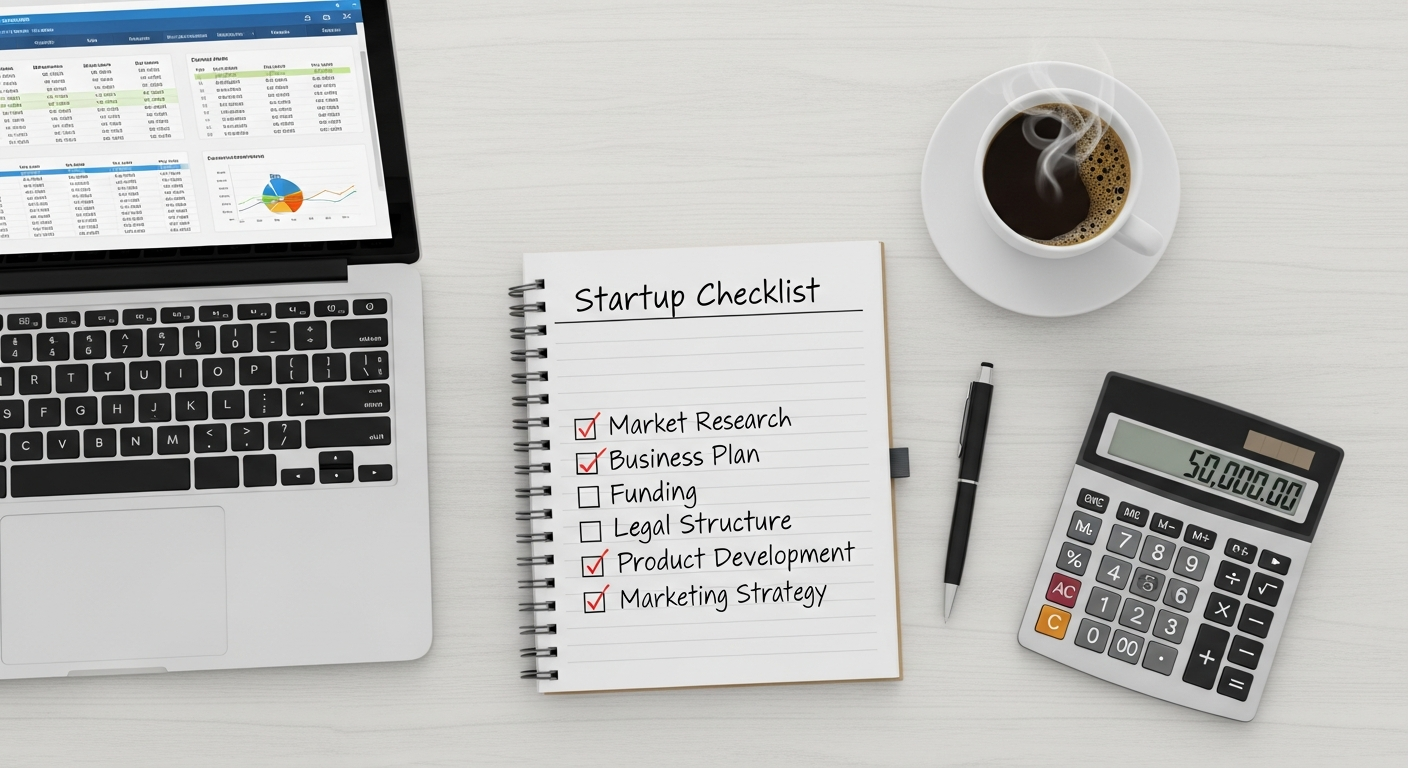
Embarking on the journey of tech entrepreneurship in 2026 is an endeavor brimming with both immense potential and significant challenges. The digital landscape is evolving at an unprecedented pace, driven by advancements in AI, Web3, quantum computing, and sustainable technologies. For aspiring founders, simply having a brilliant idea is no longer enough; success hinges on meticulous planning, rigorous validation, strategic execution, and an unwavering commitment to innovation. This comprehensive checklist from Eamped is designed to guide you through every critical stage of launching a successful tech business in the year 2026, ensuring you build on a solid foundation, navigate emerging trends, and position your venture for sustainable growth in a dynamic global market.
Laying the Foundational Groundwork: Vision, Validation & Problem-Solving in 2026
The cornerstone of any successful tech startup in 2026 is a well-defined vision anchored in solving a real-world problem. Before investing significant time or capital, it’s paramount to ensure your idea holds genuine market potential and resonates with a specific need. This initial phase is about rigorous inquiry and an honest assessment of your proposed solution’s viability.
-
Idea Generation and Problem Identification:
Start by identifying a prevalent pain point, an inefficiency, or an unmet desire within an existing market. In 2026, consider areas ripe for disruption, such as sustainable tech, AI-driven solutions for specific industries, personalized health tech, or advanced cybersecurity. Don’t just look for a cool product; seek a significant problem that, once solved, creates substantial value.
-
How to Validate a Startup Idea: The 2026 Approach:
Idea validation is non-negotiable. In 2026, this process extends beyond traditional surveys.
- Comprehensive Market Research: Utilize advanced analytics tools and AI-driven insights to understand market size, growth trajectory, and competitive landscape. Look for underserved niches.
- Competitor Analysis (Direct & Indirect): Analyze not just direct competitors but also indirect solutions customers currently use. Understand their strengths, weaknesses, pricing models, and customer sentiment. Identify gaps your solution can fill.
- Target Customer Interviews & Surveys: Engage directly with your potential customers. Conduct structured interviews to understand their pain points, current behaviors, and willingness to pay for a solution. Leverage digital platforms for broader survey distribution, but prioritize qualitative insights from direct conversations. This is crucial for understanding genuine demand.
- Minimum Viable Product (MVP) Conceptualization: Define the smallest set of features that can deliver core value to early adopters. This isn’t about building a full product, but a functional prototype to test your riskiest assumptions.
- Landing Page Tests & Pre-sales: Create a simple landing page describing your product and its benefits. Use paid ads to drive traffic and gauge interest through sign-ups or even pre-orders. This is a powerful way to validate demand and even secure early revenue.
-
Defining Your Unique Value Proposition (UVP):
Clearly articulate what makes your solution distinct and superior to alternatives. Your UVP should answer: “Why should a customer choose us over everyone else?” It needs to be compelling, concise, and customer-centric, particularly in a crowded 2026 tech market.
-
Identifying Your Target Audience:
Pinpoint precisely who your ideal customer is. Develop detailed customer personas, including demographics, psychographics, behaviors, needs, and pain points. Understanding your audience deeply informs product development, marketing, and sales strategies.
Crafting Your Blueprint: Strategic Planning & Business Modeling for 2026 Success
Once your idea is validated, the next step is to formalize your vision into a comprehensive strategic plan. This blueprint serves as your roadmap, guiding your decisions and providing a clear narrative for stakeholders, from your team to potential investors.
-
How to Write a Business Plan for a Tech Startup in 2026:
A robust business plan remains indispensable. While formats can vary, certain core components are universal and critical for a tech venture in 2026:
- Executive Summary: A concise overview of your entire plan, highlighting your vision, problem, solution, market opportunity, team, and financial projections. This is often the only part investors read initially.
- Company Description: Detail your mission, vision, values, and what makes your company unique.
- Market Analysis: Provide in-depth data on your target market, industry trends (e.g., AI integration, sustainability mandates), competitive landscape, and your competitive advantages.
- Organization & Management: Outline your legal structure, organizational chart, and the bios of key team members, emphasizing their relevant experience and expertise.
- Service or Product Line: Describe your product/service in detail, including its features, benefits, development status, and future roadmap. Emphasize any proprietary technology or IP.
- Marketing & Sales Strategy: Detail how you will reach, acquire, and retain customers. Consider digital marketing strategies relevant for 2026, such as AI-powered personalization, SEO, social commerce, and community building.
- Funding Request (if applicable): Clearly state how much capital you need, how you plan to use it, and what milestones it will enable you to achieve.
- Financial Projections: Include detailed sales forecasts, profit and loss statements, cash flow projections, and balance sheets for the next 3-5 years. Be realistic and transparent with your assumptions.
- Appendix: Supplementary documents like market research data, patents, resumes, or letters of intent.
-
Business Model Canvas Development:
Beyond a traditional plan, use tools like the Business Model Canvas to visualize and iterate on your core business components: key partners, activities, resources, value propositions, customer relationships, channels, customer segments, cost structure, and revenue streams. This offers a dynamic, single-page overview.
-
Legal Structure Considerations:
Choose the appropriate legal entity (e.g., LLC, C-Corp, S-Corp). This decision impacts liability, taxation, and fundraising capabilities. Consult with legal counsel to select the structure best suited for a tech startup aiming for growth and potential external investment in 2026.
-
Intellectual Property (IP) Protection:
For a tech business, IP is often your most valuable asset. Strategize on patents, trademarks, copyrights, and trade secrets. File for necessary protections early to safeguard your innovations and brand identity. This is critical for investor confidence and long-term competitive advantage.
Assembling Your A-Team & Building Your Product: Execution in 2026
A brilliant idea and a solid plan are only as good as the team executing them and the product they build. This phase focuses on bringing your vision to life, from recruiting talent to developing your Minimum Viable Product (MVP).
-
Team Formation: The Power of Collaboration:
Your team is your greatest asset.
- Co-founders: Seek co-founders with complementary skill sets (e.g., technical, business, marketing) and shared vision. A strong co-founding team is a key indicator for investors.
- Early Hires: Identify critical early hires who can significantly impact product development or market entry. Look for individuals who are not just skilled but also passionate about your mission and adaptable to a startup environment.
- Advisors & Mentors: Cultivate a network of experienced advisors and mentors. Their insights, industry connections, and guidance can be invaluable, especially in navigating the complexities of the 2026 tech landscape.
-
Minimum Viable Product (MVP) Development:
The MVP is not just a basic product; it’s a strategic tool for learning.
- Core Feature Set: Focus on developing only the essential features that solve the primary problem for your target users. Avoid feature creep.
- Agile Methodologies: Adopt agile development practices (e.g., Scrum, Kanban) to enable iterative development, rapid feedback loops, and flexibility in response to market changes.
- Technology Stack Selection: Choose a scalable, secure, and future-proof technology stack. Consider cloud-native solutions, AI/ML frameworks, and robust cybersecurity measures from the outset.
- Prototyping & Testing: Thoroughly test your MVP internally and with a small group of beta users. Gather feedback systematically and be prepared to iterate rapidly based on user experience and performance data.
-
Establishing Product-Market Fit:
The ultimate goal of your MVP is to achieve product-market fit—a state where your product effectively satisfies a strong market demand. This requires continuous listening to customer feedback, analyzing usage data, and refining your offering until customers can’t imagine living without it.
Fueling Your Vision: Funding & Financial Management for 2026 Growth
Capital is the lifeblood of any startup, and securing it requires a well-thought-out strategy. Beyond initial funding, prudent financial management is crucial for longevity and growth.
-
How to Start a Startup With No Money: Resourceful Beginnings:
While challenging, launching a tech startup with minimal or no initial capital is achievable through strategic bootstrapping and creative resourcefulness:
- Bootstrapping: Fund your operations through personal savings, pre-sales, or early customer revenue. This forces lean operations, validates demand, and maintains maximum equity.
- Grants & Competitions: Explore government grants, university programs, or startup competitions (e.g., for sustainable tech, AI innovation). Many offer non-dilutive funding.
- Pre-sales & Crowdfunding: Secure commitments from early adopters or run a crowdfunding campaign (e.g., Kickstarter, Indiegogo) to raise capital while also validating your product and building a community.
- Accelerators & Incubators: Apply to programs that provide seed funding, mentorship, and resources in exchange for a small equity stake. Many specialize in specific tech niches in 2026.
- Freelance & Consulting Work: Supplement income by offering services related to your startup’s core expertise, allowing you to fund development without external investment.
-
Exploring External Funding Avenues:
As you grow, external capital may become necessary.
- Friends & Family Round: Often the first external capital, from those who believe in you personally.
- Angel Investors: High-net-worth individuals who invest their own money, often providing mentorship alongside capital.
- Venture Capital (VC) Firms: Institutional investors that provide larger rounds of funding in exchange for equity, typically for high-growth potential startups. Research firms specializing in your tech sector for 2026.
- Strategic Partnerships: Collaborate with larger companies who might invest or partner to gain access to your technology or market.
-
Financial Projections and Budgeting:
Develop detailed financial models that project revenue, expenses, and cash flow for at least 3-5 years. Create a robust budget and monitor your burn rate closely. Accurate financial forecasting is critical for both internal decision-making and investor pitches.
-
Cap Table Management:
Carefully manage your capitalization table (cap table), which tracks ownership stakes. Understand how each funding round or equity grant impacts dilution. This is vital for maintaining control and attracting future investment.
Launching, Marketing & Scaling for Growth in the 2026 Digital Ecosystem
Once your product is ready, the focus shifts to bringing it to market, acquiring customers, and laying the groundwork for sustainable scaling. The marketing landscape in 2026 is highly dynamic, demanding adaptive and data-driven strategies.
-
Pre-Launch Strategy & Hype Generation:
Build anticipation before your official launch. Engage in content marketing, participate in industry forums, leverage social media, and secure early press mentions. Collect email sign-ups to build an initial user base.
-
Digital Marketing Essentials for 2026:
Your marketing efforts must be sophisticated and targeted.
- AI-Driven SEO & Content Marketing: Optimize your content for search engines using advanced AI tools to identify trends, keywords, and user intent. Create high-quality, valuable content (blogs, videos, podcasts) that educates and engages your target audience.
- Personalized Customer Experiences: Leverage data and AI to deliver highly personalized marketing messages and product experiences across all touchpoints.
- Social Commerce & Community Building: Utilize social media platforms not just for branding but for direct sales and fostering a strong community around your product. Engage with users, respond to feedback, and encourage user-generated content.
- Influencer Marketing & Partnerships: Collaborate with relevant influencers and strategic partners who can introduce your product to their established audiences.
- Data Analytics & A/B Testing: Implement robust analytics to track campaign performance, user behavior, and conversion rates. Continuously A/B test your messaging, landing pages, and product features to optimize for engagement and growth.
-
Sales Strategy & Customer Acquisition:
Define your sales funnel, from lead generation to conversion. For B2B tech, this might involve direct sales teams; for B2C, it could be app store optimization and viral loops. Focus on efficient customer acquisition cost (CAC) and high customer lifetime value (CLTV).
-
Post-Launch Feedback & Iteration:
The launch is just the beginning. Continuously collect user feedback through surveys, reviews, and direct communication. Use this data, along with product analytics, to inform subsequent product iterations and feature development.
-
Scaling Operations & Team:
As your user base grows, scale your infrastructure, customer support, and team. Implement robust processes and automation to maintain efficiency and quality as you expand. Prepare for internationalization if your market demands it.
Navigating the Evolving Landscape: Legal, Ethical & Future Trends in 2026
The tech industry in 2026 is not just about innovation; it’s also about responsibility. Founders must be acutely aware of the legal, ethical, and societal implications of their technology, as well as emerging trends that will shape the future.
-
Data Privacy and Compliance (GDPR, CCPA, and Emerging Regulations):
Adhere to stringent global data privacy regulations. Understand the implications of GDPR, CCPA, and any new regional or industry-specific data protection laws emerging in 2026. Implement privacy-by-design principles from day one.
-
AI Ethics and Compliance:
As AI becomes more pervasive, ethical considerations are paramount. Ensure your AI systems are fair, transparent, accountable, and free from bias. Develop internal guidelines for ethical AI development and deployment to avoid reputational damage and regulatory scrutiny.
-
Cybersecurity Best Practices:
In an increasingly interconnected world, robust cybersecurity is non-negotiable. Implement strong security protocols, conduct regular audits, and educate your team on best practices to protect sensitive data and intellectual property from evolving cyber threats.
-
Sustainability and Social Responsibility:
Consumers and investors in 2026 increasingly demand that companies operate sustainably and ethically. Integrate environmental, social, and governance (ESG) principles into your business model. Consider your product’s environmental footprint and its societal impact.
-
Staying Abreast of Emerging Tech:
The tech landscape is fluid. Keep a pulse on breakthroughs in areas like Web3, quantum computing, advanced robotics, synthetic biology, and brain-computer interfaces. Understanding these trends will allow you to pivot, innovate, and maintain a competitive edge.
-
Building a Resilient Culture:
Foster a culture of adaptability, continuous learning, and innovation within your team. Encourage experimentation and embrace failure as a learning opportunity. A resilient culture is key to navigating the inevitable challenges of startup life.
Launching a tech business in 2026 is an exhilarating journey that demands more than just a great idea—it requires foresight, resilience, and a meticulous approach to planning and execution. By diligently working through this comprehensive checklist, validating your assumptions, building a stellar team, securing the right resources, and embracing the dynamic nature of the tech world, you’ll significantly increase your chances of not just launching, but thriving. The path will be challenging, but with each validated step, you move closer to transforming your innovative vision into a powerful reality that shapes the future.
Frequently Asked Questions About Starting a Tech Business in 2026
Is 2026 a good year to start a tech business, given the current economic climate and rapid technological changes?
Absolutely. 2026, like any year, presents its unique set of challenges and opportunities. While economic shifts and rapid technological advancements (like AI and Web3) might seem daunting, they also create immense potential for disruption and innovation. Periods of change often give rise to new problems that require novel solutions, which is precisely where startups thrive. The key is to thoroughly validate your idea against current market needs, focus on lean operations (as discussed in “How to Start a Startup With No Money”), and be agile enough to adapt to evolving trends. Businesses that can leverage emerging technologies to solve real-world problems or improve existing inefficiencies will find 2026 to be a fertile ground for growth.
What’s the most common mistake new tech startups make, and how can I avoid it?
One of the most common mistakes new tech startups make is building a product nobody wants. This often stems from failing to adequately validate their startup idea. Entrepreneurs sometimes fall in love with their solution without thoroughly understanding if a significant market truly experiences the problem it aims to solve, or if they are willing to pay for a solution. To avoid this, dedicate significant time and resources to the “Laying the Foundational Groundwork: Vision & Validation” phase outlined above. Engage in extensive market research, conduct direct customer interviews, and, critically, test your core assumptions with an MVP before a full-scale build. This lean approach minimizes wasted effort and ensures you’re addressing a genuine market need.
Can I really start a tech startup with no money, or is that just a myth?
Starting a tech startup with no money is not a myth, but it requires immense resourcefulness, strategic thinking, and often, personal sacrifice. The concept of “bootstrapping” is a powerful reality for many successful tech companies. As detailed in “How to Start a Startup With No Money,” strategies like leveraging personal savings, securing pre-sales from early customers, pursuing non-dilutive grants, participating in crowdfunding campaigns, or even offering related freelance services can provide initial capital. The goal is to prove your concept and generate early revenue before seeking external investment. While it will be challenging, a strong validated idea, a lean operation, and a passionate team can absolutely launch a tech business without significant upfront capital.
How important is intellectual property (IP) for a tech startup in its early stages?
Intellectual property (IP) is critically important for a tech startup, even in its early stages. For many tech ventures, their IP (patents, trademarks, copyrights, trade secrets) constitutes their most valuable asset. Protecting your IP early on provides a significant competitive advantage, prevents competitors from directly copying your innovations, and is a major factor that investors scrutinize. A strong IP portfolio demonstrates defensibility and uniqueness, which can significantly enhance your valuation and attractiveness to potential investors or acquirers. Ignoring IP protection can leave your innovations vulnerable to theft and undermine your long-term market position. It’s advisable to consult with an IP attorney early in your journey.
What is the role of an MVP (Minimum Viable Product) in 2026, and how has it evolved?
The role of an MVP (Minimum Viable Product) in 2026 remains fundamentally the same: to be the simplest version of a product that can be released to the market to gather validated learning about customers with the least amount of effort. However, its evolution means that “viable” in 2026 often implies a higher baseline for user experience, security, and even basic AI integration, given advancements in user expectations and technology. An MVP in 2026 isn’t just about core functionality; it also needs to be performant, user-friendly, and secure enough to truly test product-market fit. The emphasis is on rapid iteration based on data-driven insights from early users, using agile methodologies to adapt quickly to feedback and market changes. It’s about building to learn, not just building to launch.
Recommended Resources
For more on everything you need, see Graphic Design Principles For Beginners on Layout Scene.
Check out How To Organize Digital Files Effectively on Bookmark Sharer for a deeper dive.