
Understanding the “Why”: The Core Purpose of Your Business Plan
Before diving into the specifics of what to include, it’s vital to grasp the fundamental reasons why a business plan is indispensable for any startup. It’s more than just a requirement for securing funding; it’s a strategic tool that offers profound benefits, regardless of your immediate financial needs.
- A Strategic Roadmap: Your business plan serves as your startup’s GPS. It outlines your destination, the best routes to get there, and potential detours. This roadmap ensures that every decision, from product development to marketing campaigns, aligns with your overarching goals. Without it, you risk drifting aimlessly, wasting valuable time and resources.
- Clarity and Focus: The act of writing forces you to thoroughly research and articulate every facet of your business idea. This process inherently brings clarity to your vision, helping you define your target market, unique value proposition, operational structure, and financial projections. It compels you to think critically about assumptions and potential obstacles.
- Attracting Investment and Talent: For many startups, external funding is essential. Investors rely heavily on a well-researched and professionally presented business plan to assess the viability and potential return on investment of your venture. Similarly, top talent is drawn to startups with a clear vision and a defined path to success, both of which are communicated effectively through your plan.
- Risk Mitigation: By systematically analyzing your market, competition, and operational challenges, your business plan helps identify potential risks before they become critical issues. This foresight allows you to develop contingency plans and build a more resilient business model.
- Communication Tool: It acts as a concise communication tool for all stakeholders – employees, partners, advisors, and investors. It ensures everyone is on the same page, understands the company’s mission, and knows their role in achieving collective objectives.
In essence, a business plan transforms an abstract idea into a concrete, executable strategy, significantly increasing your startup’s chances of navigating the tumultuous waters of entrepreneurship and achieving sustainable growth.
Deconstructing the Essential Components of a Startup Business Plan
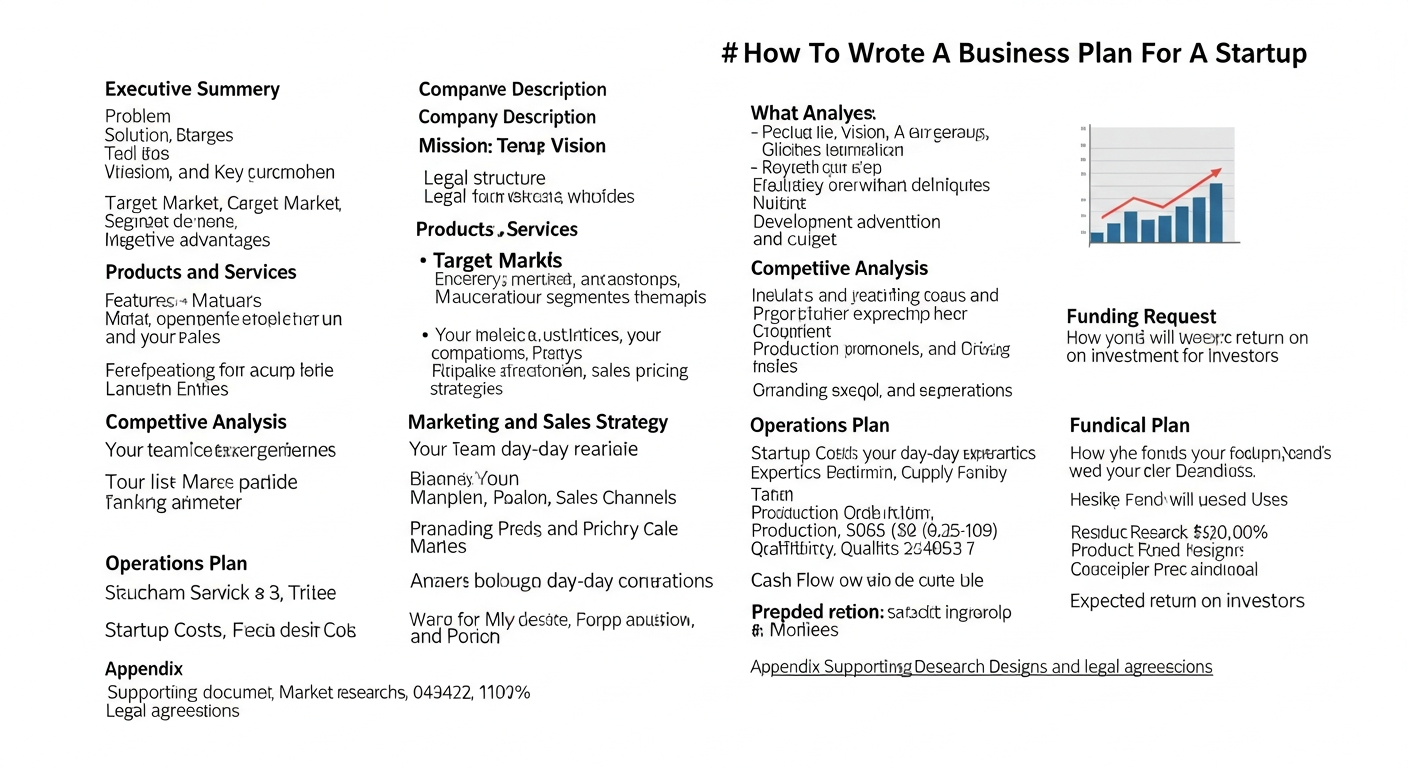
A comprehensive business plan typically follows a structured format, each section serving a distinct purpose in painting a complete picture of your startup. While the exact order or emphasis might vary slightly depending on your industry or target audience, these core components are universally critical:
- Executive Summary: Though it appears first, this section is written last. It’s a concise overview of your entire plan, highlighting your business concept, problem solved, solution, target market, competitive advantage, financial highlights, and funding request.
- Company Description: Details your startup’s mission statement, vision, values, legal structure, and a brief history if applicable. It defines who you are and what you stand for.
- Market Analysis: A deep dive into your industry, target market, market size, trends, and competitive landscape. This section demonstrates your understanding of the environment in which your startup will operate.
- Organization & Management: Outlines your organizational structure, the key members of your management team, their expertise, and how the company will be legally structured.
- Service or Product Line: Provides a detailed description of the products or services your startup will offer, their unique features, benefits, and how they solve customer problems.
- Marketing & Sales Strategy: Explains how you will attract and retain customers, including your branding, pricing, promotion, sales channels, and customer acquisition strategies.
- Funding Request (if applicable): Specifies the amount of funding needed, how it will be used, and the expected return for investors.
- Financial Projections: Presents your startup’s financial outlook, including startup costs, revenue forecasts, profit and loss statements, cash flow projections, and a break-even analysis.
- Appendix: Includes any supporting documents, such as resumes of key personnel, market research data, legal documents, intellectual property filings, or letters of intent.
Each of these sections contributes to a holistic narrative, showcasing your startup’s potential and preparedness to investors and internal stakeholders alike. The depth and quality of your research and presentation in each area will significantly impact the plan’s effectiveness.
Crafting a Winning Executive Summary: Your Startup’s Elevator Pitch on Paper
Because it summarizes the entire document, the executive summary should always be written last, even though it appears at the beginning of your plan. This ensures that all key figures, strategies, and insights are finalized and accurately reflected.
A powerful executive summary typically includes the following elements:
- The Problem: Clearly articulate the pain point or unmet need your startup aims to address. Make it relatable and significant.
- The Solution: Introduce your product or service as the innovative and effective solution to the identified problem. Briefly explain how it works and its core benefits.
- Target Market: Define your ideal customer base. Who are they? Why will they buy your product?
- Competitive Advantage: What makes your startup unique? Why will customers choose you over existing solutions? This could be technology, pricing, customer service, or a unique business model.
- Management Team: Briefly introduce the key players, highlighting their relevant experience and expertise that makes them uniquely qualified to execute the plan.
- Financial Highlights: Provide a snapshot of your most compelling financial projections, such as projected revenue for the first few years (e.g., up to 2026 and beyond), profitability, and key milestones.
- Funding Request (if applicable): State clearly how much funding you are seeking, how it will be used, and what percentage of equity or terms you are offering in return.
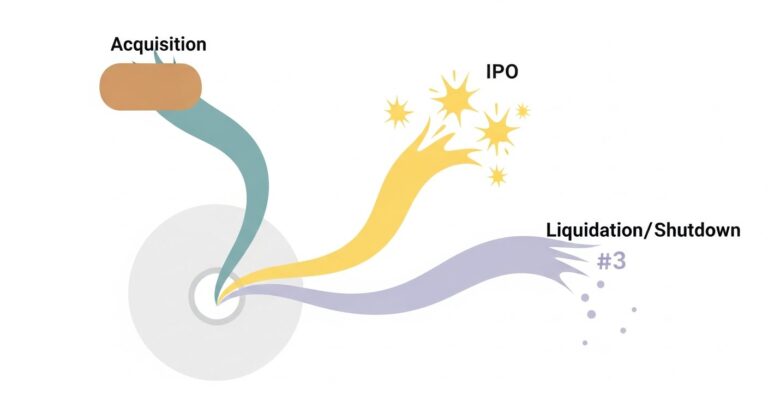
- Exit Strategy (for investors): Briefly mention how investors can expect to see a return on their investment (e.g., acquisition, IPO).
Keep the language concise, impactful, and free of jargon. Focus on compelling data and clear statements that convey confidence and demonstrate a thorough understanding of your business. Remember, the goal is not to provide every detail, but to pique interest and prove that your startup has a solid foundation and significant potential.
Deep Dive into Market Analysis and Competitive Landscape

Understanding the market in which your startup will operate is paramount. The Market Analysis section demonstrates that you’ve done your homework, validating the demand for your product or service and identifying the opportunities and challenges ahead. This section requires thorough research and a realistic assessment.
Target Market Identification
Begin by meticulously defining your target market. Who are your ideal customers? Go beyond broad categories:
- Demographics: Age, gender, income level, education, location.
- Psychographics: Lifestyles, values, attitudes, interests, behaviors.
- Needs & Pain Points: What specific problems do they face that your solution addresses?
- Buyer Persona: Create detailed fictional representations of your ideal customers to better understand their motivations and purchasing decisions.
Market Size, Trends, and Growth
Quantify the potential of your market:
- Total Addressable Market (TAM): The maximum revenue opportunity available for a product or service.
- Serviceable Available Market (SAM): The portion of the TAM that can be reached given your current business model and resources.
- Serviceable Obtainable Market (SOM): The realistic percentage of the SAM that you can capture.
- Market Trends: Discuss relevant industry trends, technological advancements, regulatory changes, and economic factors that could impact your startup. Project how these trends will evolve towards 2026 and beyond, supporting your growth narrative.
- Growth Potential: Provide data-backed estimates for the market’s growth rate, indicating a fertile ground for your venture.
Competitive Analysis
No startup operates in a vacuum. Acknowledge and analyze your competition:
- Direct Competitors: Businesses offering similar products or services.
- Indirect Competitors: Businesses addressing the same customer needs through different solutions.
- Competitive Matrix: Create a table comparing your startup against key competitors across various factors like pricing, features, market share, marketing strategy, and customer service.
- Strengths and Weaknesses: For each competitor, identify their key strengths and weaknesses. What do they do well? Where do they fall short?
- Your Competitive Advantage: Clearly articulate how your startup will differentiate itself and gain a sustainable edge. This could be through superior technology, a unique business model, cost advantage, brand strength, or exceptional customer experience. This section is critical for convincing investors you can succeed where others might struggle or haven’t even tried.
SWOT Analysis
Conclude your market analysis with a concise SWOT analysis, summarizing the internal Strengths and Weaknesses of your startup, and the external Opportunities and Threats posed by the market environment. This provides a balanced view of your startup’s position and strategic considerations. A thorough understanding of your market landscape is not just about identifying opportunities; it also helps you make informed decisions about your product development, pricing, and ultimately, your overall business strategy, influencing choices like What Is A Tech Stack How To Choose for optimal market fit.
Developing Your Startup’s Operational and Management Plan
This section of your business plan shifts focus from external market forces to the internal workings of your startup. It outlines how your business will operate on a day-to-day basis, who will be responsible for what, and the resources required to bring your vision to life. It reassures stakeholders that you have a capable team and a clear operational strategy.
Organizational Structure and Key Personnel
Investors aren’t just betting on an idea; they’re betting on the team behind it. This section highlights the human capital that will drive your startup’s success:
- Legal Structure: Specify your legal entity (e.g., LLC, C-Corp, S-Corp) and briefly explain why it’s the most suitable choice for your startup.
- Organizational Chart: Provide a visual representation of your company’s structure, showing reporting lines and departments.
- Management Team: Introduce your core management team members. For each individual, include their title, key responsibilities, relevant professional experience, educational background, and significant achievements. Emphasize how their combined skills and experience create a strong, complementary leadership group capable of executing the business plan.
- Advisory Board: If applicable, list key advisors, mentors, or board members who bring valuable expertise and credibility to your startup.
- Staffing Plan: Outline your current staffing levels, projected hiring needs for the next 1-3 years (e.g., through 2026), and how you plan to attract and retain talent.
Operations Plan
Detail the processes and procedures necessary to deliver your product or service:
- Production/Service Delivery: Describe how your product will be developed, manufactured, or how your service will be delivered. This includes details on suppliers, quality control, and logistics.
- Facilities: Information about your physical location (office, manufacturing plant, data center), including whether it’s owned, leased, or virtual.
- Technology & Tools: Crucially, this section addresses the technological backbone of your startup. Discuss the core technologies you will use. This is where topics like What Is A Tech Stack How To Choose become highly relevant. Detail your chosen programming languages, databases, cloud infrastructure (e.g., AWS, Azure, Google Cloud), development frameworks, and any specialized software. Explain why these choices are optimal for scalability, performance, security, and cost-efficiency.
- Project Management: For tech startups, efficient project management is non-negotiable. Mention the methodologies you’ll employ (e.g., Agile, Scrum) and, importantly, the tools. This is a perfect place to reference the importance of Best Project Management Software Startups. Explain how platforms like Asana, Trello, Jira, or Monday.com will be utilized to track progress, manage tasks, collaborate with teams, and ensure projects stay on schedule and within budget. This demonstrates a professional approach to execution.
- Legal & IP Considerations: Briefly touch upon any relevant legal aspects, such as patents, trademarks, copyrights, data privacy regulations (e.g., GDPR), and licensing agreements.
A well-defined operational plan demonstrates that you’ve thought through the practicalities of running your business and have the systems and people in place to execute your strategy effectively.
Marketing, Sales, and Growth Strategy
Having a brilliant product or service is only half the battle; people need to know about it and be convinced to buy it. This section details how you will attract, convert, and retain customers, ultimately driving revenue and growth for your startup.
Product or Service Line
While briefly introduced in the company description, here you go into greater detail:
- Detailed Description: Elaborate on the features, functionalities, and benefits of your offerings. Use clear, non-technical language where possible.
- Unique Value Proposition (UVP): Reiterate what makes your product/service stand out from the competition. What unique value do you provide to customers?
- Product Lifecycle: Discuss current development status, planned future iterations, and potential for new products/services.
- Intellectual Property: Highlight any patents, trademarks, or proprietary technology that protects your offering.
Marketing Strategy
This is where you outline how you will communicate your UVP to your target market:
- Branding: Define your brand identity, including your company name, logo, messaging, and brand voice.
- Pricing Strategy: Explain your pricing model (e.g., subscription, freemium, per-unit) and how it aligns with your market positioning, costs, and competitive landscape.
- Promotion & Advertising: Detail your marketing mix across various channels:
- Digital Marketing: Emphasize your online presence, including website, social media strategy, email marketing, and paid advertising (PPC).
- Content Marketing: This is a powerful avenue for tech startups. Here, you should reference How To Write Blog Posts That Rank Google. Explain your strategy for creating valuable content (blog posts, articles, whitepapers, videos) that attracts your target audience, establishes thought leadership, and improves your search engine rankings. Discuss how this content will address customer pain points and showcase your expertise.
- Public Relations: How you will manage your public image and secure media coverage.
- Partnerships & Alliances: Any strategic collaborations that will help expand your reach.
- Offline Marketing: (If applicable) Events, print advertising, direct mail.
- Customer Acquisition Cost (CAC): Project your cost to acquire a new customer.
Sales Strategy
How will you convert leads into paying customers?
- Sales Channels: Will you sell directly to consumers (B2C), to businesses (B2B), through a sales team, online, or via distributors?
- Sales Process: Outline the steps from lead generation to closing a sale and post-sale support.
- Customer Relationship Management (CRM): Mention the tools and strategies you’ll use to manage customer interactions and build loyalty.
- Sales Forecasts: Provide realistic projections for sales volumes, broken down by product/service and sales channel.
Growth Strategy
Beyond initial sales, how will you scale your startup?
- Market Expansion: Plans for entering new markets or customer segments.
- Product Development: Future product enhancements or new offerings.
- Strategic Alliances: Further partnerships for accelerated growth.
- International Expansion: (If applicable) Plans for global reach.
A well-thought-out marketing and sales plan demonstrates not only that you can attract customers but also that you have a sustainable path to growing your customer base and revenue.
Forecasting Financial Success: Projections and Funding Requests
The financial section is where your vision meets reality. It translates all your strategic plans, market analyses, and operational details into quantifiable numbers, demonstrating the economic viability and potential profitability of your startup. For investors, this is often the most scrutinized section, as it directly addresses their potential return on investment.
Startup Costs
Begin by detailing all initial expenses required to launch your business. This includes both one-time and initial recurring costs:
- Fixed Assets: Equipment, software licenses, office furniture, leasehold improvements.
- Initial Inventory/Development Costs: For product-based businesses, or initial development costs for software/SaaS.
- Legal & Professional Fees: Business registration, attorney fees, accounting services.
- Marketing & Branding: Website development, initial marketing campaigns, logo design.
- Working Capital: A cushion to cover initial operational expenses before revenue streams become consistent.
Revenue Model
Clearly explain how your startup will generate income:
- Pricing Strategy: Reiterate your chosen pricing model (e.g., subscription fees, per-unit sales, advertising revenue, freemium, commission).
- Revenue Streams: Identify all sources of income your business expects to have.
- Key Assumptions: State the underlying assumptions for your revenue forecasts (e.g., number of customers, average transaction value, conversion rates).
Financial Projections
These are forward-looking statements that estimate your startup’s financial performance. Typically, projections are provided for 3-5 years (e.g., from 2026 through 2030), with the first year often broken down monthly or quarterly for greater detail.
- Projected Income Statement (Profit & Loss): Shows your expected revenues, cost of goods sold, operating expenses, and net profit or loss over a specific period. This demonstrates your startup’s profitability.
- Projected Cash Flow Statement: Crucial for startups, this statement tracks the actual movement of cash into and out of your business. It shows if you’ll have enough cash to meet obligations, regardless of profitability. It’s often where startups fail if not carefully managed.
- Projected Balance Sheet: Provides a snapshot of your company’s assets, liabilities, and owner’s equity at a specific point in time. It indicates your company’s financial health.
- Break-Even Analysis: Calculate the point at which your total revenues equal your total costs, meaning your business is neither making a profit nor incurring a loss. This is a critical indicator of viability.
- Key Performance Indicators (KPIs): Include relevant financial and operational KPIs (e.g., Customer Acquisition Cost, Lifetime Value of a Customer, churn rate, gross margin) that you will track to measure success.
All projections must be realistic and supported by the market analysis and operational plans outlined earlier. Overly optimistic projections without clear justification will undermine your credibility.
Funding Request
If you are seeking investment, this section is your direct appeal:
- Amount Requested: Clearly state the exact amount of funding you are seeking.
- Use of Funds: Provide a detailed breakdown of how the requested funds will be allocated (e.g., product development, marketing, hiring, working capital). Transparency here builds trust.
- Type of Funding: Specify whether you are seeking equity investment, debt financing, or a grant.
- Return on Investment: For equity investors, briefly discuss the potential return on their investment and your long-term exit strategy (e.g., acquisition by a larger company, IPO, dividend payouts).
The financial section is not just about numbers; it’s about telling a compelling story of financial growth and sustainability, grounded in thorough analysis and realistic expectations.
Iterating and Adapting: The Business Plan as a Living Document
One of the most common misconceptions about a business plan is that it’s a static document, written once and then filed away. In the fast-paced world of startups, particularly in tech, this couldn’t be further from the truth. Your business plan should be a dynamic, living document that evolves with your company, market conditions, and strategic shifts.
Why Regular Review and Updates are Essential
- Market Dynamics: The market is constantly changing. New competitors emerge, customer preferences shift, and technological advancements create new opportunities or render old solutions obsolete. Your plan needs to reflect these changes.
- Learning and Iteration: As your startup launches, gathers customer feedback, and tests its assumptions, you’ll gain invaluable insights. These learnings should be incorporated back into your plan, refining your strategies for product development, marketing, and operations.
- Strategic Pivots: It’s not uncommon for startups to pivot their strategy based on market feedback or unforeseen challenges. A living business plan provides the framework for documenting and communicating these pivots effectively to your team and stakeholders.
- Accountability and Performance Tracking: Your business plan contains specific goals and financial projections. Regular review allows you to track your actual performance against these targets, identify variances, and take corrective action.
- Investor Relations: Investors appreciate seeing that you are actively managing and adapting your strategy. Updated plans can be shared during subsequent funding rounds or annual reviews.
Implementing a Dynamic Approach
- Schedule Regular Reviews: Set a cadence for reviewing your business plan – quarterly for the first year, then perhaps semi-annually or annually. This ensures it remains relevant and actionable.
- Lean Startup Methodology: Embrace principles from the lean startup methodology, which advocates for building a Minimum Viable Product (MVP), launching it quickly, measuring customer response, and learning from the data to iterate and improve. Your business plan should incorporate this iterative cycle.
- Focus on Key Assumptions: Identify the critical assumptions your plan is built upon (e.g., customer acquisition cost, conversion rates, market growth). Actively test these assumptions in the real world and update your plan when they prove incorrect.
- Version Control: Maintain clear version control for your document to track changes over time.
- Communicate Changes: Ensure that any significant updates or strategic shifts are communicated effectively to your team and relevant stakeholders.
By treating your business plan as a flexible, adaptable tool rather than a rigid set of rules, you empower your startup to remain agile, responsive, and ultimately, more resilient in the face of change. It becomes a strategic compass that constantly helps you navigate towards your ultimate vision, even if the path occasionally shifts.
Frequently Asked Questions
Recommended Resources
Learn more about this topic in Zapier Vs Make Automation Comparison at Bookmark Sharer.
Related reading: Editorial Design Layout Principles (Layout Scene).