Bidirectional Charging and Vehicle-to-Home Setup
The Core Technology: Unpacking Bidirectional Charging and V2H
At its heart, bidirectional charging is exactly what it sounds like: electricity flowing in two directions. Traditional EV chargers are unidirectional, pulling power from the grid to charge the vehicle’s battery. Bidirectional chargers, however, can also discharge power from the EV battery back into a home or the electrical grid. This capability is the fundamental enabler for Vehicle-to-Home (V2H) and Vehicle-to-Grid (V2G) systems, transforming an EV from a simple consumer of electricity into an active participant in home energy management and grid stability. The key components of a V2H setup include a compatible electric vehicle, a bidirectional charger (also known as a V2H inverter or EVSE – Electric Vehicle Supply Equipment), and often an energy management system (EMS) for intelligent power distribution within the home.
For tech startups, this core technology represents a goldmine of innovation. Developing more efficient, compact, and affordable bidirectional chargers is a hardware challenge with immense market potential. Consider the current market: early V2H solutions like the Wallbox Quasar 2, priced around $4,000-$6,000, offer a glimpse into the hardware opportunity. But beyond the physical charger, the true SaaS play lies in the energy management system. Imagine a platform that uses AI and machine learning to optimize when your EV charges, discharges to your home, or even sells power back to the grid based on real-time electricity prices, solar production forecasts, and your household’s consumption patterns. This “smart brain” of the V2H system can predict peak demand, initiate peak shaving strategies, and ensure maximum economic benefit for the homeowner, potentially saving hundreds or even thousands of dollars annually on energy bills. Startups developing these predictive analytics and optimization SaaS platforms are poised for significant growth, offering subscription models for enhanced energy efficiency and resilience. Early adopters of V2H, like those with a Ford F-150 Lightning and Ford Intelligent Backup Power System, are already experiencing the tangible benefits, setting a precedent for wider market adoption and validating the need for sophisticated software solutions.
Unlocking Value: Benefits of V2H for Homeowners and New Business Models
The value proposition of a Vehicle-to-Home setup for homeowners is multifaceted and compelling, extending far beyond mere convenience. Firstly, it provides unparalleled energy resilience. In an era of increasing power outages due to extreme weather or grid strain, an EV with V2H capability acts as a massive home battery, often with capacities ranging from 60 kWh to over 100 kWh – significantly larger than most residential stationary batteries (typically 10-20 kWh). This means uninterrupted power for critical appliances, and often the entire home, for days rather than hours. For instance, the Ford F-150 Lightning, with its 131 kWh extended-range battery, can power an average home for up to three days on a full charge. This backup power alone is a powerful selling point, especially in regions prone to grid instability.
Secondly, V2H offers substantial economic savings through intelligent energy management. Homeowners can engage in “peak shaving,” using stored EV power during expensive peak-rate hours and recharging during cheaper off-peak times. With electricity rates fluctuating by as much as 300% between peak and off-peak periods in some deregulated markets, a V2H system can dramatically reduce monthly energy bills. A study by the National Renewable Energy Laboratory (NREL) suggests V2H could save homeowners hundreds of dollars annually, with potential savings exceeding $1,000 in certain scenarios. This creates a potent value proposition for startups offering V2H solutions. Digital marketers can craft compelling campaigns highlighting these tangible savings and the peace of mind offered by backup power. Furthermore, V2H opens doors for new business models:
1. **Subscription-based Energy Management SaaS**: Offer homeowners software that optimizes charging/discharging based on real-time energy prices, weather, and home consumption.
2. **Installation and Maintenance Services**: A growing market for certified V2H system installers and ongoing maintenance.
3. **Grid Services Aggregation**: Startups can aggregate V2H-enabled EVs into virtual power plants (VPPs), selling demand response or frequency regulation services to utilities, and sharing profits with EV owners. This is a significant SaaS opportunity, managing thousands of distributed energy resources.
4. **Hardware as a Service (HaaS)**: Lease bidirectional chargers to homeowners, bundling them with energy management software and support.
These models tap into a market driven by a desire for independence, savings, and sustainability, presenting clear pathways for startup growth.
The Startup Opportunity: Building Products and Services Around V2H
The burgeoning V2H market is a greenfield for entrepreneurial innovation, ripe for tech startups to carve out significant niches. The opportunities span hardware, software, and service layers, each presenting unique challenges and substantial rewards.
On the **hardware front**, while major players like Wallbox (with its Quasar 2) and manufacturers like Ford and GM are entering with proprietary solutions, there’s still room for innovation in charger design, efficiency, and cost reduction. Startups could focus on developing universal bidirectional chargers compatible with a wider range of EV models and grid standards (CHAdeMO, CCS, ISO 15118-20). Imagine a modular V2H inverter that can scale with a home’s energy needs or integrate seamlessly with existing solar setups. The global bidirectional charging market is projected to grow at a CAGR exceeding 30% through 2030, reaching over $17 billion, indicating massive potential for hardware innovators who can deliver cost-effective, high-performance solutions.
However, the most significant long-term growth and recurring revenue opportunities lie in **SaaS and software solutions**. The complexity of optimizing energy flow between an EV, a home, solar panels, and the grid demands sophisticated intelligence. Startups can build:
* **AI-powered Energy Management Systems (EMS)**: These SaaS platforms could learn household consumption patterns, predict solar generation, monitor real-time electricity prices, and orchestrate the EV’s charging and discharging schedule to maximize savings and minimize carbon footprint. Think of a platform that proactively discharges your EV when energy prices hit $0.40/kWh and recharges it at $0.10/kWh.
* **Virtual Power Plant (VPP) Aggregators**: Develop software that networks thousands of V2H-enabled EVs, creating a distributed energy resource that can provide grid services (like frequency regulation or capacity reserve) to utilities. This allows individual EV owners to earn revenue by participating, managed entirely by the startup’s platform, taking a percentage of the earnings.
* **User Experience (UX) Platforms**: As V2H becomes mainstream, intuitive dashboards and mobile apps will be critical. Startups excelling in user-centric design can create the “Apple experience” for energy management, simplifying complex data into actionable insights for homeowners.
* **Cybersecurity Solutions**: With increased connectivity comes increased risk. Startups focused on securing V2H ecosystems from cyber threats will be crucial, offering B2B SaaS solutions to charger manufacturers, utilities, and VPP operators.
Finally, **service-based businesses** will thrive. Installation, maintenance, and consulting services for V2H setups, especially as they integrate with solar and smart home systems, will be in high demand. Startups can build national networks of certified installers, offering white-glove service for a premium, or develop digital platforms to connect homeowners with local, vetted professionals. The synergy between these layers—innovative hardware, intelligent software, and reliable services—creates a robust ecosystem where multiple startups can flourish, each contributing to the broader adoption and optimization of V2H technology.
Marketing Bidirectional Charging: Strategies for a Niche, High-Value Product

Marketing a cutting-edge, high-value product like bidirectional charging and V2H requires a strategic, founder-focused approach that educates, demonstrates value, and builds trust. This isn’t a commodity; it’s an investment in energy independence and future-proofing, demanding sophisticated digital marketing tactics.
**1. Educate and Demystify:** Many consumers are still unaware of V2H capabilities or harbor misconceptions. Your digital marketing strategy must prioritize content marketing. Create blog posts, infographics, explainer videos, and webinars that break down the technicalities into easily digestible benefits. Focus on answering common questions: “What is V2H?”, “How much can I save?”, “Is it safe for my EV battery?”, “Which cars are compatible?”. Use real-world examples and simple analogies. For example, compare V2H to having a giant, portable power bank for your home. Target keywords like “EV home backup power,” “reduce electricity bill EV,” “solar EV integration.”
**2. Highlight Tangible ROI and Resilience:** The primary drivers for V2H adoption are cost savings and backup power. Your messaging should hammer these points home with specific numbers and scenarios.
* **Savings**: Develop a calculator on your website where users can input their EV model, electricity rates, and solar setup to estimate potential annual savings. Use case studies showing homeowners who saved X% on their energy bills or earned $Y from grid services.
* **Resilience**: Feature testimonials from customers who successfully weathered power outages thanks to their V2H setup. Use compelling visuals of homes powered by EVs during blackouts. Emphasize peace of mind and security.
**3. Strategic Partnerships and Influencer Marketing:** Collaborate with EV manufacturers, solar installers, home automation companies, and local utilities. A joint marketing campaign with a prominent EV brand or solar company can significantly boost credibility and reach. Consider offering co-branded solutions or referral programs. Engage with EV community influencers, clean energy advocates, and smart home tech reviewers to demonstrate product functionality and benefits to their engaged audiences. This can be highly effective in a niche market where early adopters seek expert validation.
**4. Data-Driven Lead Generation and Nurturing:** Leverage paid digital channels (Google Ads, social media ads) targeting demographics interested in EVs, solar energy, smart home tech, and energy independence. Use detailed segmentation to reach homeowners in areas with high electricity rates, frequent outages, or strong EV adoption. Implement a robust CRM to nurture leads through the sales funnel with targeted email campaigns, offering personalized information, whitepapers, and direct consultations. A/B test your landing pages and ad copy to continually optimize conversion rates. A successful digital marketing strategy for V2H isn’t just about awareness; it’s about converting educated interest into committed customers by demonstrating clear, quantifiable value.
Navigating the Landscape: Key Players, Standards, and Regulatory Hurdles
Entering the bidirectional charging and V2H market requires a keen understanding of the existing ecosystem, which is complex due to evolving standards, diverse players, and varying regulatory environments. For tech startups, navigating this landscape effectively is paramount for market entry and sustainable growth.
**Key Players:** The market is currently a mix of established automotive giants, energy technology companies, and emerging startups.
* **Automakers:** Ford (F-150 Lightning with Intelligent Backup Power), GM (Ultium Home), Hyundai (IONIQ 5 with V2L – Vehicle-to-Load, a precursor to V2H), and Nissan (Leaf with CHAdeMO V2H compatibility) are leading the charge. Tesla, surprisingly, has been slower to adopt full V2H/V2G capabilities, focusing more on stationary Powerwall batteries.
* **Charger Manufacturers:** Wallbox (Quasar 2), Enphase (though primarily stationary batteries, their energy management systems will integrate), Delta, and bidirectional inverter specialists are crucial.
* **Energy Management & Software Providers:** Companies like Sunrun (partnered with Ford), Electrify America (focusing on charging networks), and numerous smart home energy management startups are vying for control of the software layer. Startups in this space, such as those building AI-driven optimization platforms, are competing to become the “operating system” for home energy.
**Standards:** The lack of a single, universally adopted standard for bidirectional charging has been a significant hurdle.
* **CHAdeMO:** Predominantly used by Japanese EVs (Nissan Leaf, Mitsubishi Outlander PHEV), CHAdeMO was an early mover in bidirectional capabilities.
* **CCS (Combined Charging System):** More prevalent in North America and Europe, CCS is evolving with ISO 15118-20, which includes support for V2G/V2H. This standard is crucial for future interoperability, and startups developing chargers or software must be compliant.
* **Open Charge Point Protocol (OCPP):** A communication protocol for EV charging stations, OCPP 2.0.1 includes smart charging and V2G functionalities, providing a framework for software integration.
**Regulatory Hurdles:** Regulations vary widely by region, impacting everything from interconnection rules for selling power back to the grid to safety certifications for V2H installations.
* **Interconnection Agreements:** Homeowners typically need approval from their utility to connect a V2H system to the grid, especially for V2G functionality. This process can be slow and complex.
* **Incentives and Rebates:** Government incentives (e.g., federal tax credits, state-level rebates for EV chargers or solar storage) can significantly reduce the upfront cost for consumers, boosting adoption. Startups need to stay abreast of these programs and help customers navigate them.
* **Safety Standards:** UL certification (e.g., UL 9741 for PV Inverters, Converters, Controllers and Interconnection System Equipment for Use With Distributed Energy Resources) and local electrical codes are non-negotiable for V2H hardware and installation.
For startups, this means strategic partnerships with compliant hardware providers, active participation in standard-setting bodies if possible, and a keen eye on evolving regional regulations. Digital marketing efforts should highlight compliance and any available incentives, while product development must prioritize future-proofed, standards-compliant solutions to capture market share effectively.
Data and AI: The Brains Behind V2H and Energy Optimization
In the world of bidirectional charging and Vehicle-to-Home setups, hardware is merely the muscle; data and artificial intelligence are the brains. For tech startups, particularly those in the SaaS sector, the ability to collect, analyze, and act upon vast quantities of energy data is where the true competitive advantage lies. This is not just about charging an EV; it’s about intelligent, predictive energy management that maximizes economic returns and grid stability.
An advanced V2H ecosystem generates a constant stream of data: real-time electricity prices (which can fluctuate every 5-15 minutes in deregulated markets), household energy consumption patterns, solar panel generation forecasts, EV battery state of charge, weather predictions, and even grid demand signals. Manually optimizing decisions based on this dynamic data is impossible for a homeowner. This is precisely where AI and machine learning (ML) algorithms become indispensable.
SaaS platforms leveraging AI can perform several critical functions:
* **Predictive Optimization**: ML models can learn a household’s energy usage habits over time, predict future consumption, and combine this with weather forecasts to anticipate solar production. They can then cross-reference this with real-time and projected electricity prices from the utility. Based on this comprehensive analysis, the AI can intelligently decide *when* to charge the EV from the grid (e.g., during cheapest off-peak hours), *when* to discharge the EV to power the home (e.g., during expensive peak hours or an impending outage), and *when* to potentially sell power back to the grid (V2G) to maximize revenue. For example, an AI could save a typical household 15-25% on their annual electricity bill by executing optimal charging/discharging strategies, translating to hundreds of dollars in savings.
* **Grid Services Orchestration**: For V2G applications, AI can manage participation in demand response programs. When the grid is strained, the utility might signal for reduced consumption. An AI-powered V2H system could automatically discharge the EV to meet home demand or even inject power into the grid, earning the homeowner (and the VPP aggregator startup) compensation.
* **Battery Health Management**: AI can also play a role in optimizing battery longevity by managing charge cycles, ensuring the battery operates within optimal temperature ranges, and avoiding excessive deep discharges, thus protecting the homeowner’s significant investment in their EV battery.
For startups, building robust, scalable AI/ML platforms requires expertise in data science, cloud infrastructure, and cybersecurity (to protect sensitive energy consumption data). Monetization can come through subscription fees for the optimization service, a percentage of energy savings or grid service revenue generated for the homeowner, or a combination of both. The startup that can deliver the most accurate predictions, the most seamless user experience, and the most substantial financial benefits through its AI-driven V2H SaaS platform will capture a dominant share of this rapidly expanding market, transforming passive EV owners into active participants in the energy economy.
Future-Proofing Your Business: Integrating V2H into Smart Home Ecosystems
For tech startups aiming for long-term relevance and sustained business growth, viewing Bidirectional Charging and V2H in isolation is a missed opportunity. The true power and market potential lie in its seamless integration into the broader smart home ecosystem. This convergence creates a holistic energy management solution that offers unparalleled convenience, efficiency, and resilience, positioning early movers for significant competitive advantage.
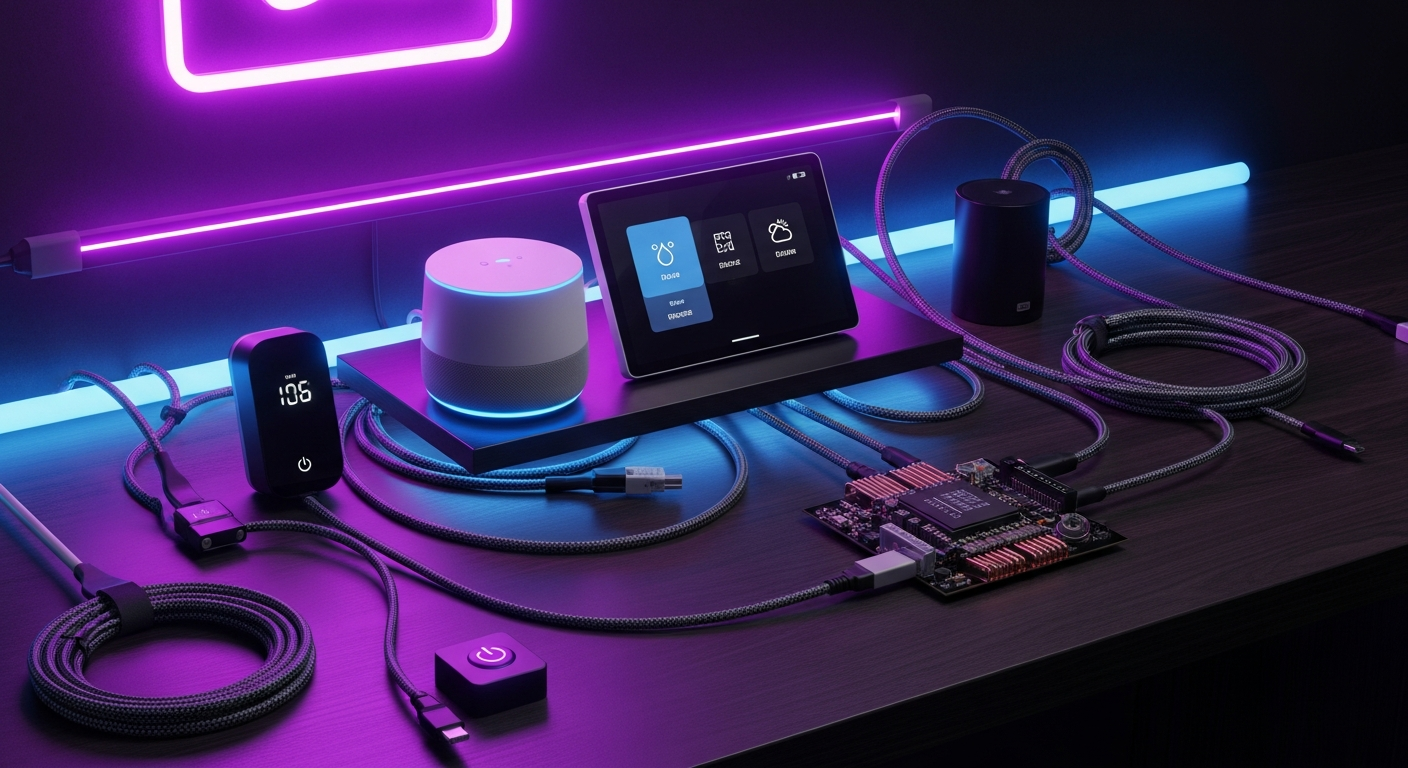
Imagine a home where your smart thermostat communicates with your V2H energy management system (EMS), which in turn knows your EV’s battery status, your solar panel’s current output, and the real-time electricity price. If the thermostat detects you’re away, the EMS might prioritize selling excess solar power to the grid or charging your EV at the cheapest rate. If a storm is approaching, the system could automatically ensure your EV battery is fully charged and ready to power your home. This level of intelligent, automated energy orchestration is the future.
For startups, this means developing:
* **Open APIs and Integration Protocols**: Your V2H software or hardware must be designed with interoperability in mind. Compatibility with popular smart home platforms (e.g., Apple HomeKit, Google Home, Amazon Alexa, Zigbee, Z-Wave) is crucial. This allows homeowners to manage their energy alongside their lighting, security, and climate control, all from a single interface.
* **Unified Dashboards and User Interfaces**: The complexity of managing multiple energy sources and loads needs to be hidden behind a simple, intuitive user experience. A SaaS platform that acts as the “operating system” for the entire home energy ecosystem – integrating EV charging, solar, stationary batteries, and smart appliances – will be incredibly valuable. This offers a single pane of glass for homeowners to monitor energy flow, view savings, and control preferences.
* **Predictive Maintenance and Diagnostics**: Integrating V2H systems with smart home sensors can enable predictive maintenance. The system could alert a homeowner (and a service provider startup) to potential issues with their charger or EV battery based on performance anomalies, reducing downtime and enhancing customer satisfaction.
* **Personalized Energy Profiles**: Leveraging AI, the integrated system can learn individual preferences and optimize accordingly. For example, knowing a homeowner values comfort over maximal savings, the system might prioritize maintaining a specific indoor temperature even during peak hours, drawing power from the EV, rather than strictly optimizing for cost.
The market for smart home technology is booming, projected to reach over $200 billion by 2028. By positioning V2H not just as an EV accessory, but as a core component of the intelligent, sustainable home of the future, startups can tap into multiple revenue streams. This includes direct sales of integrated solutions, recurring SaaS subscriptions for advanced energy management, and partnerships with smart home device manufacturers to create bundled offerings. Future-proofing your business in this space means building a flexible, connected, and intelligent platform that anticipates and adapts to the evolving needs of the energy-conscious, technologically advanced homeowner.
Comparison Table: V2H & Home Energy Management Solutions
This table outlines key players and approaches in the V2H and broader home energy management space, relevant for startups considering partnerships or competitive analysis.
| Platform/Tool | Primary Function | Key Features | Target User/Market | Integration Capability | Estimated Cost Range (Hardware/Setup) |
|---|---|---|---|---|---|
| **Wallbox Quasar 2** | Bidirectional EV Charger (V2H/V2G) | DC bidirectional charging, Blackout Mode (automatic home backup), intelligent energy management app, ISO 15118-20 compliant. | EV owners with compatible vehicles (Ford F-150 Lightning, etc.), homeowners seeking energy independence & backup. | Smart home systems (via API), Solar PV systems, Grid services. | $4,000 – $6,000 (charger only, ex-install) |
| **Ford Intelligent Backup Power** | V2H System (F-150 Lightning specific) | Uses F-150 Lightning battery to power home, automatic power transfer, intelligent gateway, managed by Sunrun. | Ford F-150 Lightning owners, homeowners needing robust backup power & energy management. | Ford EVs, Sunrun energy management, Home electrical panel. | $3,895 (Home Integration System) + F-150 Lightning |
| **Enphase Energy System (IQ Battery + IQ Gateway)** | Home Energy Storage & Management | Modular AC-coupled battery storage, microinverters for solar, intelligent energy management, grid services. | Homeowners with solar, seeking battery backup, energy savings, and grid participation. | Solar PV systems, Smart home devices (limited), Grid services. | $10,000 – $25,000+ (battery & install) |
| **Generac PWRcell** | Integrated Home Energy Storage System | Modular battery storage, smart management, integration with solar, critical load management, backup power. | Homeowners prioritizing backup power, solar optimization, and comprehensive energy management. | Solar PV systems, Generac ecosystem, Home electrical panel. | $10,000 – $30,000+ (battery & install) |
| **Generic V2H Software Platform (SaaS)** | Energy Optimization & Monitoring | AI-driven predictive analytics, real-time energy price monitoring, automated charge/discharge scheduling, carbon footprint tracking. | V2H hardware owners, energy-conscious homeowners, VPP operators. | Bidirectional chargers (via API/OCPP), Smart meters, Solar inverters, Smart home devices. | Subscription model (e.g., $10-$30/month) |