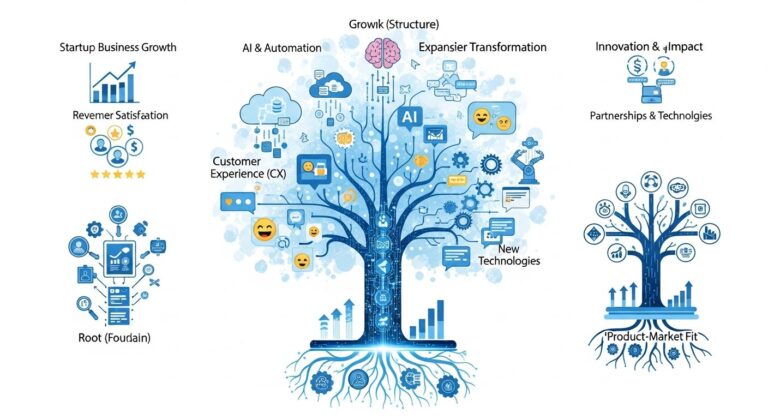

The Non-Negotiable Foundation: Product-Market Fit and Vision
Before you even think about accelerating, you must ensure your foundation is solid. Attempting to scale a startup without a confirmed product-market fit is akin to building a skyscraper on quicksand. Product-market fit means you have identified a specific target market and created a product or service that effectively satisfies their needs and desires. It’s the point where customers are actively seeking out your solution, finding immense value, and even becoming advocates for your brand. Without this crucial validation, any scaling efforts will simply amplify an offering that customers don’t truly want or need, leading to wasted resources and inevitable failure.
Achieving product-market fit requires deep empathy for your target audience, iterative product development, and continuous feedback loops. You must listen intently to your early adopters, understand their pain points, and observe how they use your product. Is it solving their problem efficiently? Are they willing to pay for it? Are they telling others about it? These are the questions that confirm your fit.
Beyond product-market fit, a clear, compelling vision is paramount. This vision should articulate where your company is headed, what impact it aims to make, and what enduring value it seeks to create. A well-defined vision acts as a compass, guiding all strategic decisions, from product roadmaps to hiring choices. It inspires your team, attracts talent, and provides a north star that prevents your startup from getting sidetracked during the tumultuous journey of rapid growth. Without a shared understanding of this vision, different departments and individuals within your scaling organization may pull in disparate directions, hindering cohesion and efficiency.
Furthermore, establishing core values early on is essential. These values define your company’s culture and guide employee behavior. As your team expands rapidly, these values become the bedrock of your organizational identity, ensuring that new hires align with your ethos and contribute positively to the collective mission. Neglecting culture during hypergrowth can lead to internal friction, high employee turnover, and a fractured work environment, all of which severely impede scaling.
- Validate your product-market fit relentlessly: Use metrics like retention rates, Net Promoter Score (NPS), and customer acquisition cost (CAC) versus lifetime value (LTV) to confirm your product is truly resonating.
- Articulate a powerful vision: Ensure everyone in the company, from founders to entry-level employees, understands and is inspired by the long-term goal.
- Define and embody core values: These values will shape your company culture and serve as a guiding principle for all decisions, especially as your team grows exponentially.
- Focus on a niche initially: Dominate a specific segment before expanding your scope. This allows you to build expertise and a strong reputation.
In essence, a startup cannot scale fast if it doesn’t know what it’s scaling, who it’s scaling for, or why it’s scaling. These foundational elements are the silent architects of future success, enabling every subsequent step towards rapid expansion.
Engineering Hypergrowth: Building a Scalable Tech Stack
The technological backbone of your startup is arguably the most critical component for rapid scaling. A poorly chosen or inadequately designed tech stack can quickly become a bottleneck, hindering performance, increasing costs, and preventing your product from evolving at the speed required in 2026. Conversely, a well-architected, scalable tech stack empowers your team to innovate faster, handle massive user loads, and adapt to new market demands with agility.
What Is A Tech Stack and How To Choose Wisely for Scale
A tech stack refers to the combination of programming languages, frameworks, libraries, databases, servers, UI/UX solutions, and tools used to build and run a web or mobile application. It’s the entire ecosystem of technologies that powers your product. For a rapidly scaling startup, choosing the right tech stack is a decision that will impact everything from development speed and operational costs to talent acquisition and future adaptability.
When selecting your tech stack, consider several factors:
- Scalability: This is paramount. Can your chosen technologies handle a 10x or even 100x increase in users, data, and transactions? Cloud-native architectures (e.g., AWS, Azure, Google Cloud Platform) offering serverless computing, microservices, and containerization (Docker, Kubernetes) are almost non-negotiable for hypergrowth. These services allow you to scale resources up or down automatically based on demand, ensuring performance without overprovisioning.
- Performance: Fast load times and responsive interfaces are crucial for user experience and retention. Evaluate the performance characteristics of different languages and frameworks, especially under load.
- Developer Productivity & Talent Availability: Choose technologies that are widely adopted and have a large talent pool. This makes hiring easier and ensures a wealth of community support and resources. Languages like Python, JavaScript (Node.js, React, Vue), Go, and frameworks like Ruby on Rails or Django are popular for good reasons.
- Cost-Effectiveness: While investing in robust technology is important, managing costs is also critical. Open-source solutions can reduce licensing fees, but factor in maintenance and support costs. Cloud infrastructure costs need careful monitoring and optimization as you scale.
- Security: Data breaches can cripple a scaling startup. Prioritize technologies with strong security track records and implement best practices from day one.
- Maintainability & Modularity: As your product grows, its codebase will become complex. Opt for modular architectures (like microservices) that allow different teams to work on separate components independently, reducing dependencies and speeding up development cycles.
- Integration Capabilities: Your stack will likely need to integrate with numerous third-party services (payment gateways, CRM, analytics, marketing automation). Ensure your chosen technologies have robust APIs and libraries for seamless integration.
For instance, a frontend built with React or Vue.js, a backend with Node.js or Python (Django/Flask), a PostgreSQL or MongoDB database, and hosted on AWS Lambda functions with API Gateway, all managed via Kubernetes, represents a common, highly scalable modern tech stack. This combination allows for rapid iteration, efficient resource utilization, and excellent performance under varying loads. The key is to avoid legacy systems or niche technologies that might be difficult to maintain or scale without significant custom engineering efforts, which can drain resources and slow down your scaling trajectory.
Investing in automation for deployment (CI/CD pipelines), testing, and infrastructure management (Infrastructure as Code) is also fundamental. These practices minimize manual errors, speed up release cycles, and free up engineering talent to focus on innovation rather than repetitive tasks. By making thoughtful, forward-looking decisions about your tech stack, you lay the groundwork for seamless, rapid growth well into 2026 and beyond.
Operational Excellence: Streamlining Processes and Empowering Your Team
One of the first steps is to document and standardize key processes. As your team grows, tribal knowledge becomes a liability. Clear standard operating procedures (SOPs) for everything from customer onboarding to bug fixes ensure consistency, reduce errors, and accelerate the training of new hires. Automation should be a core strategy here. Identify repetitive tasks that consume valuable human time and invest in tools or custom scripts to automate them. This not only frees up your team to focus on higher-value strategic work but also improves accuracy and speed, critical factors in a fast-paced scaling environment.
Delegation becomes an art form during hypergrowth. Founders and early leaders must learn to let go of control and empower their teams. This requires trust, clear communication of goals and expectations, and providing the necessary resources and authority for team members to make decisions independently. Micromanagement is a death knell for a scaling startup, creating bottlenecks and stifling innovation. Instead, foster a culture of ownership and accountability.
Hiring smart is another cornerstone of operational excellence. As you scale, every new hire amplifies your culture and capabilities. Look for individuals who not only possess the required skills but also embody your company’s values, are adaptable, proactive, and have a growth mindset. Building diverse teams brings varied perspectives, leading to more robust problem-solving and innovation.
Leveraging the Best Project Management Software for Startups
As your team expands and projects become more complex, efficient project management is indispensable. Manual tracking and informal communication quickly become unsustainable. This is where dedicated project management software becomes a strategic asset, providing the visibility, collaboration tools, and organizational structure needed to keep everyone aligned and productive. For startups aiming for rapid scale, choosing the right software can significantly impact your ability to deliver effectively and on time.
When evaluating the
- Centralized Task Management: A single source of truth for all tasks, deadlines, and responsibilities. Tools like Asana, Trello, Monday.com, and Jira allow teams to break down complex projects into manageable tasks, assign them, and track progress.
- Collaboration Features: Integrated communication, file sharing, and commenting capabilities reduce reliance on disparate tools and ensure context is maintained. Slack or Microsoft Teams integrations are often crucial.
- Workflow Automation: The ability to automate routine tasks, notifications, and approvals, saving time and reducing manual errors.
- Reporting and Analytics: Dashboards and reports that provide insights into project status, team workload, and potential bottlenecks. This data is invaluable for making informed decisions and reallocating resources efficiently.
- Scalability and Integration: The software should be able to grow with your team and integrate seamlessly with your existing tech stack (e.g., CRM, development tools, communication platforms).
- User-Friendliness: An intuitive interface encourages adoption across the entire team, regardless of technical proficiency.
For example, a startup focused on software development might lean towards Jira for its robust agile features, while a marketing-heavy startup might prefer Asana or Monday.com for their more visual and flexible project management. The key is to select a tool that fits your specific operational needs and culture, and then ensure your team is thoroughly trained and committed to using it consistently. By doing so, you transform potential operational chaos into a well-oiled machine, capable of handling the demands of rapid growth and ensuring that your strategic initiatives are executed flawlessly through 2026.
Accelerating Acquisition: Marketing and Sales for Rapid Expansion
Once your product-market fit is established and your operations are streamlined, the next critical step for rapid scaling is to aggressively accelerate customer acquisition. This involves a synergistic approach to marketing and sales, designed to efficiently identify, attract, convert, and retain customers at scale. In 2026, a multi-channel strategy is essential, leveraging digital platforms and data-driven insights to maximize reach and impact.
Start by defining your ideal customer profile (ICP) with precision. Understanding who your best customers are – their demographics, psychographics, pain points, and preferred channels – allows you to tailor your messaging and allocate marketing spend more effectively. This focus prevents you from casting too wide a net and wasting resources on unqualified leads.
Inbound marketing, centered around valuable content, is a cornerstone of scalable customer acquisition. By creating content that addresses your ICP’s questions and challenges, you attract them naturally to your brand. This builds trust and positions your startup as an authority in its niche. Search Engine Optimization (SEO) is critical here, ensuring your content is discoverable when potential customers are actively searching for solutions.
How To Write Blog Posts That Rank on Google and Drive Traffic
For a startup aiming to scale fast, content marketing, particularly blog posts, can be an incredibly cost-effective and powerful engine for lead generation and brand building. However, simply writing blog posts isn’t enough; they need to rank highly on Google to drive organic traffic. To achieve this, you need a strategic approach to content creation:
- Thorough Keyword Research: Identify the specific terms and phrases your target audience uses when searching for information related to your product or industry. Use tools to find high-volume, low-competition keywords, and long-tail keywords. Focus on keywords that indicate commercial intent or problem-solving needs.
- Understand Search Intent: Google prioritizes content that best answers a user’s query. Before writing, understand whether the user is looking for information, a comparison, a tutorial, or a product. Tailor your content to match this intent.
- Create High-Quality, Comprehensive Content: Don’t just skim the surface. Provide in-depth, well-researched, and actionable information. Aim for content that is more thorough and valuable than what your competitors offer. Include data, examples, and expert insights.
- Optimize for On-Page SEO:
- Title Tags and Meta Descriptions: Craft compelling, keyword-rich titles and descriptions that entice users to click.
- Header Tags (H2, H3): Structure your content logically using headers to improve readability and signal topic hierarchy to search engines. Include keywords in some headers.
- Keyword Placement: Naturally integrate your target keywords and related terms throughout the article, especially in the introduction and conclusion. Avoid keyword stuffing.
- Internal and External Links: Link to other relevant articles on your blog (internal linking) to improve site navigation and SEO. Link to authoritative external sources to build credibility.
- Image Optimization: Use relevant images with descriptive alt text that includes keywords.
- Ensure Readability: Use short paragraphs, bullet points, numbered lists, and bold text to break up content and make it easy to digest. A good user experience keeps visitors on your page longer, which is a positive signal for Google.
- Promote Your Content: Don’t just publish and forget. Share your blog posts across social media, email newsletters, and relevant online communities. The more eyes on your content, the higher the chance of backlinks and social signals, both of which contribute to higher rankings.
- Regularly Update and Refresh: Google favors fresh, up-to-date content. Periodically review old posts, update statistics, add new insights, and improve their SEO.
Beyond content, a robust sales strategy is vital. This involves building a scalable sales funnel, from lead generation and qualification to nurturing and closing. Implement CRM software early to manage customer relationships and track interactions. Train your sales team on effective closing techniques, product knowledge, and how to articulate your unique value proposition. Consider implementing sales automation tools to streamline repetitive tasks and allow your sales reps to focus on building relationships. Performance marketing, including paid search (Google Ads) and social media advertising, can provide immediate traffic and lead generation, especially when paired with compelling landing pages and conversion rate optimization (CRO) techniques. By combining a strong inbound strategy with targeted outbound efforts and an optimized sales process, your startup can achieve a rapid and sustained pace of customer acquisition, critical for fast scaling in 2026.
Fueling Growth: Strategic Funding and Financial Management
Rapid scaling demands significant financial resources. While bootstrapping can be effective in the early stages, most startups aiming for hypergrowth will eventually need external funding. Strategic financial management is not just about raising money; it’s about understanding your burn rate, managing cash flow, and making informed investment decisions that fuel sustainable expansion.
Understanding Funding Stages and Investor Relations
The journey of startup funding typically involves several stages, each with different investor types and expectations:
- Seed Funding: Often from angel investors or venture capitalists (VCs) at an early stage, this capital is used to validate the product, build a minimum viable product (MVP), and achieve initial traction.
- Series A, B, C, etc.: As your startup demonstrates growth and market traction, larger rounds of funding from institutional VCs become accessible. Each series aims to provide capital for specific growth milestones, such as expanding market reach, developing new features, or entering new geographies.
- Growth Equity / IPO: For very mature, rapidly growing startups, private equity firms or an Initial Public Offering (IPO) might be the next step to raise substantial capital for massive expansion.
When seeking funding, it’s crucial to build strong relationships with potential investors. They’re not just providing capital; they’re often bringing valuable expertise, networks, and mentorship. Prepare a compelling pitch deck that clearly articulates your vision, market opportunity, product, team, traction, and financial projections. Be transparent about risks and challenges, and demonstrate a clear path to profitability and return on investment for your investors.
Prudent Financial Management for Scale
Raising capital is only half the battle; managing it effectively is even more critical. Fast scaling can be expensive, and without disciplined financial management, even well-funded startups can burn through cash quickly. Key aspects include:
- Cash Flow Forecasting: Develop robust financial models that project your cash inflows and outflows. Understand your “runway” – how long you can operate before needing more funding – and plan accordingly. Regularly update these forecasts based on actual performance.
- Burn Rate Management: Monitor your net burn rate (the rate at which your company is losing money) closely. While some burn is expected during hypergrowth, it must be strategic and tied to specific growth initiatives. Identify areas where costs can be optimized without compromising growth.
- Unit Economics: Understand the profitability of each unit of your product or service. This involves knowing your customer acquisition cost (CAC), customer lifetime value (LTV), and gross margins. Positive unit economics are a strong indicator of a sustainable business model and are highly attractive to investors.
- Budgeting and Expense Tracking: Implement strict budgeting processes and diligently track all expenses. Use financial software to automate this where possible. Categorize expenses to identify areas for optimization and ensure spending aligns with strategic priorities.
- Pricing Strategy: Continuously evaluate and optimize your pricing strategy. As you scale, you might gain economies of scale, allowing for more competitive pricing or increased margins. Your pricing should reflect the value you provide and be adaptable to market changes.
- Legal and Compliance: As you grow, legal and compliance requirements become more complex. Ensure you have the right legal counsel and systems in place to manage contracts, intellectual property, data privacy (e.g., GDPR, CCPA), and employment laws. Non-compliance can lead to significant fines and reputational damage, derailing your scaling efforts.
By treating financial management as a strategic function rather than just an accounting task, founders can ensure that funding is deployed efficiently, risks are mitigated, and the company maintains a healthy financial trajectory as it scales rapidly. This proactive approach to finances is a defining characteristic of startups that successfully navigate the challenges of hypergrowth and emerge as market leaders by 2026.
Cultivating a Resilient and Adaptive Culture for Sustained Scale
Beyond product, technology, operations, and funding, the most enduring asset of a rapidly scaling startup is its people and the culture that binds them. A vibrant, resilient, and adaptive culture isn’t just a nice-to-have; it’s a strategic imperative that dictates a startup’s ability to innovate, overcome challenges, and sustain growth over the long term. As your team grows from a close-knit group to a larger organization, maintaining and evolving this culture becomes increasingly complex but vitally important.
Embracing Change and Fostering Innovation
Rapid scaling inherently means constant change. New challenges emerge daily, market dynamics shift, and your product itself will evolve. A culture that embraces change, rather than resisting it, is essential. This means fostering an environment where experimentation is encouraged, failure is seen as a learning opportunity, and continuous improvement is a collective mindset. Employees should feel safe to voice new ideas, challenge existing processes, and adapt to new roles or responsibilities as the company scales.
Innovation isn’t just for the product team; it must permeate every aspect of the organization. Encourage teams to find innovative solutions to operational inefficiencies, marketing challenges, and customer support issues. Provide dedicated time or resources for employees to work on passion projects or explore new technologies, which can often lead to unexpected breakthroughs.
Building High-Performance Teams
As you scale, you’ll be hiring relentlessly. Focus on building high-performance teams by:
- Clear Role Definitions: While flexibility is good, clear roles and responsibilities become crucial in larger teams to avoid duplication of effort and ensure accountability.
- Effective Communication Channels: Implement robust internal communication tools and practices. Regular all-hands meetings, departmental syncs, and transparent internal newsletters help keep everyone informed and aligned, especially across distributed teams.
- Continuous Learning and Development: Invest in your employees’ growth. Provide opportunities for training, skill development, and mentorship. A team that is continuously learning is a team that can adapt to future challenges and contribute more effectively.
- Feedback Culture: Establish a culture of open and honest feedback, both upwards and downwards. Regular performance reviews, 360-degree feedback, and informal check-ins help individuals grow and teams improve.
- Recognition and Rewards: Acknowledge and celebrate successes, both big and small. A strong recognition program motivates employees and reinforces desired behaviors and values.
Prioritizing Employee Well-being and Engagement
The intensity of a rapidly scaling startup can lead to burnout if not managed carefully. Prioritizing employee well-being is not just ethical; it’s strategic. Engaged and healthy employees are more productive, creative, and less likely to leave. This includes:
- Work-Life Balance: Encourage healthy boundaries and discourage excessive overtime. Promote flexible work arrangements where feasible.
- Mental Health Support: Provide resources and support for mental well-being. Destigmatize discussions around mental health in the workplace.
- Inclusive Environment: Build a truly inclusive culture where every employee feels valued, respected, and has a sense of belonging. Diversity, equity, and inclusion (DEI) initiatives are critical not just for attracting talent but for fostering a thriving internal community.
- Transparent Leadership: Leaders must be transparent about the company’s performance, challenges, and strategic direction. This builds trust and ensures employees feel connected to the bigger picture.
A startup’s culture, once established, can be its most powerful differentiator and its most challenging aspect to manage during rapid growth. By consciously cultivating a culture that is resilient, adaptive, innovative, and deeply committed to its people, a startup sets itself up not just for fast scaling, but for sustained success and impact through 2026 and beyond.
Frequently Asked Questions
Recommended Resources
Check out How To Use Chatgpt For Productivity At Work on Bookmark Sharer for a deeper dive.
For more on how to scale, see How To Use White Space In Design on Layout Scene.