Cloud Computing Explained for Beginners 2026: Your Startup’s Strategic Imperative
The Core Premise: What is Cloud Computing, Really?
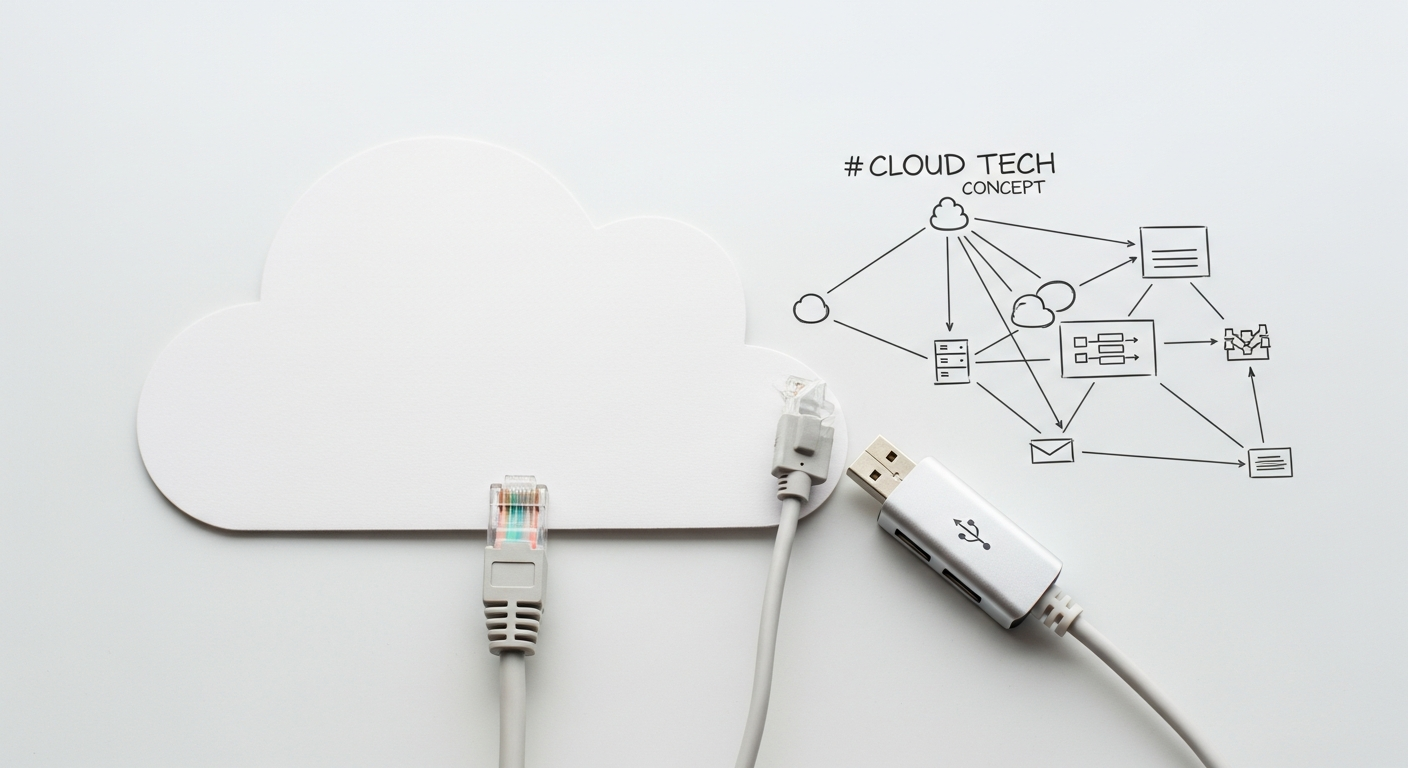
At its essence, cloud computing is the on-demand delivery of computing services—including servers, storage, databases, networking, software, analytics, and intelligence—over the Internet (“the cloud”). Instead of owning your computing infrastructure or data centers, you can access services from a cloud provider like Amazon Web Services (AWS), Microsoft Azure, or Google Cloud Platform (GCP) and pay only for what you use. Think of it like electricity: you don’t build your own power plant; you plug into a utility grid and pay for the power you consume. The cloud applies this utility model to computing resources.
This paradigm shift isn’t just about renting someone else’s computers. It’s about fundamentally changing how businesses acquire and use IT resources. The key characteristics that define true cloud computing, as outlined by the National Institute of Standards and Technology (NIST), are:
* On-demand self-service: Users can provision computing capabilities, such as server time and network storage, automatically without requiring human interaction with each service provider.
* Broad network access: Capabilities are available over the network and accessed through standard mechanisms that promote use by heterogeneous thin or thick client platforms (e.g., mobile phones, laptops, and workstations).
* Resource pooling: The provider’s computing resources are pooled to serve multiple consumers using a multi-tenant model, with different physical and virtual resources dynamically assigned and reassigned according to consumer demand.
* Rapid elasticity: Capabilities can be elastically provisioned and released, in some cases automatically, to scale rapidly outward and inward commensurate with demand. To the consumer, the capabilities available for provisioning often appear unlimited and can be appropriated in any quantity at any time.
* Measured service: Cloud systems automatically control and optimize resource use by leveraging a metering capability at some level of abstraction appropriate to the type of service (e.g., storage, processing, bandwidth, and active user accounts). Resource usage can be monitored, controlled, and reported, providing transparency for both the provider and consumer.
These characteristics collectively empower startups to build and scale applications with unprecedented speed, flexibility, and cost-effectiveness, transforming what was once a capital expenditure into an operational one.
The Three Service Models: IaaS, PaaS, SaaS – A Strategic Breakdown
1. Infrastructure as a Service (IaaS)
IaaS provides the foundational building blocks of cloud computing. Here, you rent the raw IT infrastructure—virtual servers, storage, networks, and operating systems—from a cloud provider. You manage your applications, data, runtime, middleware, and the operating system. The cloud provider manages the virtualization, servers, storage, and networking.
* Analogy: Imagine renting a bare apartment. You get the walls, floor, and ceiling, but you’re responsible for all the furniture, appliances, and decorations.
* Examples: AWS EC2 (Elastic Compute Cloud), Azure Virtual Machines, Google Compute Engine, AWS S3 (Simple Storage Service).
* Strategic Fit for Startups: IaaS offers maximum flexibility and control. It’s ideal if your startup needs to migrate existing applications that require specific configurations, build highly customized solutions, or have specialized security and compliance requirements. It gives you granular control over your computing environment, but also requires more technical expertise to manage.
2. Platform as a Service (PaaS)
PaaS takes IaaS a step further by providing a complete development and deployment environment in the cloud. It includes the infrastructure, operating systems, programming language execution environment, databases, and web servers. You only manage your applications and data. The provider manages everything else.
* Examples: AWS Elastic Beanstalk, Azure App Service, Google App Engine, Heroku.
* Strategic Fit for Startups: PaaS significantly reduces the operational burden, allowing your developers to focus purely on writing code and building features, not on managing servers or databases. It accelerates development cycles and is excellent for web applications, APIs, and microservices where rapid deployment and scaling are critical. According to a 2023 report by Flexera, over 80% of organizations are already leveraging PaaS, indicating its growing mainstream adoption for agility.
3. Software as a Service (SaaS)
SaaS is the most complete and ready-to-use cloud service. It delivers fully functional applications over the internet, typically on a subscription basis. Users simply access the software via a web browser or mobile app; they don’t manage any underlying infrastructure, platform, or even the software itself.
* Analogy: Renting a hotel room. Everything is provided and managed for you; you just use the services.
* Examples: Salesforce, Slack, Microsoft 365, Google Workspace, Zoom, Dropbox.
* Strategic Fit for Startups: SaaS solutions are invaluable for immediate productivity. They handle non-core business functions (CRM, project management, communication, HR) efficiently, freeing up your internal resources to focus on your core product. For example, a startup might use HubSpot for marketing, Zendesk for customer support, and GitHub for code management, all as SaaS solutions.
Many startups will use a hybrid approach, combining IaaS for core custom applications, PaaS for rapid development environments, and numerous SaaS solutions for day-to-day operations. The key is to choose the model that best aligns with your team’s capabilities, specific application needs, and strategic priorities.
The Deployment Models: Public, Private, Hybrid, Multi-Cloud – Navigating Your Options
Beyond service models, how you deploy your cloud resources also presents strategic choices. For most startups, the public cloud is the primary focus, but understanding the other models helps frame your long-term strategy.
1. Public Cloud
The public cloud is by far the most common and accessible deployment model, especially for startups. Resources (servers, storage, etc.) are owned and operated by a third-party cloud service provider and delivered over the internet. These resources are shared among multiple tenants, though logically isolated.
* Key Providers: AWS, Microsoft Azure, Google Cloud Platform.
* Advantages for Startups: Unmatched scalability, pay-as-you-go pricing, reduced upfront capital expenditure, high reliability, and access to a vast array of cutting-edge services (AI/ML, IoT, Big Data). A recent Gartner report estimates that global public cloud spending will exceed $678 billion in 2026, highlighting its pervasive adoption.
* Strategic Fit: Ideal for virtually all startups, from early-stage MVPs to rapidly scaling enterprises. It’s the default choice for agility and cost-effectiveness.
2. Private Cloud
A private cloud refers to cloud computing resources used exclusively by one business or organization. It can be physically located on the company’s on-site datacenter or hosted by a third-party service provider.
* Advantages: Greater control over data, enhanced security, and compliance with specific industry regulations.
* Disadvantages for Startups: Higher upfront investment, increased operational overhead, and less scalability compared to the public cloud.
* Strategic Fit: Typically not the starting point for most startups due to cost and complexity, but may become relevant for highly regulated industries or very large enterprises with specific data sovereignty requirements.
3. Hybrid Cloud
A hybrid cloud combines public and private clouds, allowing data and applications to be shared between them. This model enables organizations to leverage the benefits of both environments.
* Advantages: Flexibility to move workloads between clouds, optimize costs, and maintain control over sensitive data while using public cloud for less sensitive applications or burst capacity.
* Strategic Fit: A hybrid approach might be considered by a growing startup that needs to integrate with existing legacy systems or comply with specific data residency rules while still enjoying public cloud benefits for newer applications.
4. Multi-Cloud
Multi-cloud refers to using multiple public cloud providers (e.g., AWS for compute, Azure for specific AI services, and GCP for analytics). This differs from a hybrid cloud, which involves public and private clouds.
* Advantages: Reduces vendor lock-in, increases resilience (if one cloud provider has an outage, your services can failover to another), and allows you to pick the “best-of-breed” services from different providers.
* Strategic Fit: While appealing, multi-cloud introduces complexity in management and integration. For beginners, it’s often best to start with one primary public cloud provider and expand later if strategic needs dictate. However, many successful startups leverage multi-cloud tactics for specific services, such as using Snowflake for data warehousing (which runs across multiple clouds) or Databricks for AI/ML.
For most startups in 2026, focusing on a single public cloud provider initially allows for concentrated expertise and streamlined operations, maximizing the benefits of rapid deployment and cost efficiency.
Why Cloud is Non-Negotiable for Startups in 2026: Data-Driven Advantages
The shift to cloud computing isn’t merely a trend; it’s a fundamental re-architecture of how businesses operate. For startups, the advantages translate directly into competitive edge and accelerated growth.
1. Unparalleled Cost Efficiency: OpEx over CapEx
One of the most compelling reasons for startups to embrace the cloud is the dramatic reduction in upfront capital expenditure (CapEx). Instead of investing heavily in servers, data centers, and IT infrastructure that rapidly depreciates, the cloud offers an operational expenditure (OpEx) model. You pay only for the resources you consume, scaling up or down as needed.
* Pay-as-you-go: This model means you’re not paying for idle capacity. If your startup experiences seasonal fluctuations, you only pay for peak usage during those periods.
* Reduced Overhead: Eliminate costs associated with hardware procurement, maintenance, power, cooling, and physical security. Cloud providers manage all this, allowing your team to focus on product development.
* Data Point: A study by Microsoft found that companies can save up to 30% on IT costs by migrating to the cloud, primarily due to reduced infrastructure and operational expenses. For a lean startup, this directly impacts runway and profitability.
2. Limitless Scalability & Elasticity
Startups often experience unpredictable growth patterns. A viral marketing campaign, a successful product launch, or a sudden surge in user demand can overwhelm traditional on-premise infrastructure, leading to downtime and lost customers. The cloud solves this with unparalleled scalability and elasticity.
* Rapid Scaling: Cloud resources can be provisioned almost instantly. If your user base explodes, you can add compute power, storage, and database capacity within minutes, not weeks or months.
* Examples: Netflix, built entirely on AWS, handles petabytes of data and millions of concurrent users globally, scaling dynamically to meet demand spikes. Airbnb leverages AWS services to manage its massive transactional load, especially during peak travel seasons. These companies demonstrate how cloud elasticity directly supports hyper-growth.
* Global Reach: Deploy your application in multiple geographic regions with a few clicks, offering low-latency experiences to users worldwide without establishing physical data centers.
3. Accelerated Speed to Market & Innovation
In the startup world, speed is paramount. The cloud dramatically shortens development cycles and allows for rapid experimentation.
* Access to Advanced Services: Cloud providers offer a vast ecosystem of pre-built, managed services for AI/ML (e.g., AWS SageMaker, Azure ML, Google AI Platform), IoT, Big Data analytics (e.g., Google BigQuery, Snowflake), and more. This allows startups to integrate sophisticated capabilities into their products without needing deep in-house expertise in every domain. A small team can leverage these services to build features that would have required massive R&D budgets just a few years ago.
* Data Point: According to IDC, organizations leveraging cloud platforms can achieve up to 30% faster time-to-market for new applications.
4. Enhanced Reliability & Disaster Recovery
Cloud providers invest billions in building highly redundant and fault-tolerant infrastructures, far exceeding what most individual startups could afford.
* High Availability: Services are distributed across multiple data centers and availability zones, meaning if one goes down, your application can seamlessly failover to another. Most major cloud providers offer 99.99% or even 99.999% uptime SLAs (Service Level Agreements).
* Disaster Recovery: Cloud-based disaster recovery solutions are significantly cheaper and faster to implement than traditional methods. You can replicate data and applications across different regions, ensuring business continuity even in the event of a regional catastrophe.
* Example: Dropbox, built largely on AWS, maintains high availability and data durability for billions of files, thanks to a robust cloud architecture.
5. Robust Security Posture
While some beginners express concerns about cloud security, major cloud providers typically offer a far more robust security posture than most startups could achieve on their own.
Shared Responsibility Model: Cloud providers manage the “security of the cloud” (physical infrastructure, network, virtualization), while you manage the “security in* the cloud” (your data, applications, operating system configurations, network traffic rules).
* Advanced Security Features: Access to sophisticated security services like identity and access management (IAM), encryption at rest and in transit, DDoS protection, and continuous security monitoring, often backed by AI.
* Compliance: Cloud providers adhere to stringent global compliance certifications (e.g., ISO 27001, SOC 2, HIPAA, GDPR), making it easier for startups to meet regulatory requirements.
* Data Point: IBM’s 2023 Cost of a Data Breach Report indicated that companies leveraging hybrid cloud strategies experienced lower average data breach costs compared to those relying solely on on-premise infrastructure.
6. Focus on Core Business
By offloading infrastructure management to cloud providers, your startup can reallocate valuable engineering resources from maintaining servers and patching operating systems to developing core product features that differentiate you in the market. This strategic focus is invaluable for a startup with limited resources.
Crafting Your Cloud Strategy: Tools, Tactics, and a Step-by-Step Approach
Adopting the cloud is a strategic journey, not a one-time migration. A well-defined strategy is essential to maximize benefits and avoid common pitfalls.
1. Choosing Your Primary Cloud Provider (The Big Three)
For beginners, starting with one primary public cloud provider simplifies management and allows your team to build deep expertise. The “Big Three” dominate the market, each with unique strengths:
* Amazon Web Services (AWS): The market leader (around 30-35% market share in 2026), offering the broadest and deepest set of services. Excellent for startups due to its mature ecosystem, extensive documentation, and strong community support. Ideal if you need a vast array of specialized services.
* Microsoft Azure: Strong for enterprises with existing Microsoft investments (Windows Server, SQL Server, .NET). Offers robust hybrid cloud capabilities and is gaining market share rapidly. Good if your tech stack is heavily Microsoft-centric or you need strong enterprise-grade features.
* Google Cloud Platform (GCP): Known for its strengths in data analytics, AI/ML, and Kubernetes. Often seen as more developer-friendly and offering competitive pricing for certain workloads. Excellent if your startup has a strong focus on data-driven applications or leverages open-source containerization heavily.
Actionable Tip: Don’t get paralyzed by choice. Pick one based on your initial tech stack, team’s existing skills, or specific service needs, and get started. You can always integrate services from other clouds later (multi-cloud strategy).
2. Essential Cloud Services for Startups
Regardless of your chosen provider, these are the fundamental service categories your startup will likely leverage:
* Compute:
* Virtual Machines (IaaS): AWS EC2, Azure Virtual Machines, GCP Compute Engine. For traditional server workloads.
* Serverless Functions (PaaS/FaaS): AWS Lambda, Azure Functions, Google Cloud Functions. Run code without provisioning or managing servers. Ideal for event-driven architectures, APIs, and background tasks, significantly reducing operational overhead and cost for sporadic workloads.
* Containers (PaaS): Kubernetes (AWS EKS, Azure AKS, GCP GKE) or managed container services (AWS Fargate, Azure Container Instances). For packaging applications and their dependencies, offering portability and consistent environments.
* Storage:
* Object Storage: AWS S3, Azure Blob Storage, GCP Cloud Storage. Highly scalable, durable, and cost-effective storage for static files, backups, and data lakes.
* Block Storage: AWS EBS, Azure Disks, GCP Persistent Disk. High-performance storage attached to virtual machines.
* File Storage: AWS EFS, Azure Files, GCP Filestore. Network file system for shared access.
* Databases:
* Relational Databases (Managed Service): AWS RDS (PostgreSQL, MySQL, SQL Server, Oracle), Azure SQL Database, GCP Cloud SQL. For structured data, offering scalability, backups, and patching automatically.
* NoSQL Databases (Managed Service): AWS DynamoDB, Azure Cosmos DB, GCP Firestore/Cloud Bigtable. For flexible schema, high-performance, and massive scale (e.g., user profiles, IoT data, real-time analytics).
* Networking:
* Virtual Private Cloud (VPC/VNet): Create isolated, private networks within the public cloud to secure your resources.
* Load Balancers: Distribute incoming application traffic across multiple servers to ensure high availability and responsiveness.
* Security & Identity:
* Identity and Access Management (IAM): Control who has access to which resources and what actions they can perform. Crucial for security.
* Encryption: Ensure data is encrypted at rest (storage) and in transit (network).
* Monitoring & Logging:
* Tools like AWS CloudWatch, Azure Monitor, Google Cloud Monitoring to track application performance, resource utilization, and troubleshoot issues.
3. Implementing a Cost Optimization Framework (FinOps)
While cloud offers cost savings, uncontrolled usage can lead to “bill shock.” Implementing FinOps (Financial Operations) practices is critical.
* Right-sizing Instances: Regularly review and adjust the size of your virtual machines and databases to match actual workload demands. Don’t over-provision.
* Reserved Instances/Savings Plans: Commit to using a certain amount of compute capacity for 1-3 years in exchange for significant discounts (up to 70%).
* Spot Instances: Leverage unused cloud capacity for fault-tolerant or flexible workloads at significantly reduced prices (up to 90% off on-demand). Ideal for batch processing, rendering, or development environments.
* Serverless First: Prioritize serverless architectures (Lambda, Functions) where feasible, as you only pay for actual execution time, not idle servers.
* Automated Shut-down/Scale-down: Implement automation to shut down non-production environments outside business hours or scale down resources during low-traffic periods.
* Monitoring & Alerting: Use cloud billing dashboards and set up alerts for budget thresholds to prevent unexpected costs. Tools like CloudHealth by VMware or AWS Cost Explorer provide deep insights.
* Tagging: Use consistent tagging (e.g., `project:my-app`, `environment:dev`, `owner:john-doe`) to track costs by team, project, or environment.
Data Point: According to Flexera’s 2023 State of the Cloud Report, optimizing cloud spend remains the top initiative for organizations, highlighting the critical need for FinOps.
4. Prioritizing Security Best Practices
Security is a shared responsibility. While cloud providers secure the underlying infrastructure, you are responsible for securing your data and applications in the cloud.
* Strong IAM Policies: Implement the principle of least privilege – grant users and services only the permissions they absolutely need. Use multi-factor authentication (MFA).
* Network Security: Configure Virtual Private Clouds (VPCs) with private subnets, security groups, and network access control lists (NACLs) to restrict traffic.
* Data Encryption: Encrypt all sensitive data at rest (e.g., S3 bucket encryption, database encryption) and in transit (e.g., HTTPS, TLS).
* Regular Audits & Monitoring: Use cloud security tools (e.g., AWS Security Hub, Azure Security Center, GCP Security Command Center) to monitor configurations, detect threats, and ensure compliance.
* Vulnerability Management: Regularly scan your applications and underlying images for vulnerabilities.
* Training: Ensure your team understands cloud security best practices.
5. A Phased Migration Strategy (for existing workloads)
If you have existing applications, don’t attempt a “big bang” migration. Adopt a phased approach:
1. Assess: Inventory your current applications, data, and infrastructure dependencies.
2. Pilot Project: Start with a non-critical application or a development environment. Learn the ropes, build confidence.
3. Lift-and-Shift (Rehost): Move applications to the cloud with minimal changes (e.g., moving a VM to an EC2 instance). Quickest, but may not fully leverage cloud benefits.
4. Re-platform: Make some cloud-native optimizations (e.g., moving from a self-managed database to AWS RDS).
5. Refactor (Re-architect): Rebuild applications to fully embrace cloud-native patterns (e.g., microservices, serverless). Offers maximum benefits but is the most complex.
For new startups, this often means building “cloud-native” from day one, leveraging managed services and serverless architectures to reduce operational burden.
Common Pitfalls and How to Avoid Them
While the cloud offers immense benefits, missteps can lead to significant challenges.
1. Uncontrolled Costs (Bill Shock):
* Avoidance: Implement FinOps principles from day one. Use budget alerts, monitor usage constantly, right-size resources, and leverage cost-saving mechanisms like Reserved Instances or Spot Instances.
2. Security Misconfigurations:
* Avoidance: Adhere strictly to the shared responsibility model. Implement strong IAM policies with least privilege, encrypt everything, configure network security groups correctly, and conduct regular security audits. Never expose sensitive services directly to the public internet without proper authentication and authorization.
3. Vendor Lock-in (Perceived or Real):
* Avoidance: While some level of lock-in is inherent with deep cloud integration, mitigate it by using open standards (e.g., Kubernetes for orchestration), designing loosely coupled architectures (microservices), and abstracting services (e.g., using object storage APIs that are common across providers). A multi-cloud strategy can also mitigate this, but adds complexity.
4. Lack of Cloud Expertise/Training:
* Avoidance: Invest in training your team. Cloud providers offer extensive free and paid training resources and certifications. Start small, learn by doing, and foster a culture of continuous learning.
5. Ignoring Compliance and Data Governance:
* Avoidance: Understand relevant industry regulations (GDPR, HIPAA, SOC 2) and data residency requirements. Design your cloud architecture with these in mind from the outset. Leverage cloud provider compliance certifications and tools.
Conclusion: Your Cloud-Powered Future Starts Today
Cloud computing in 2026 is no longer an option; it’s a fundamental requirement for any startup aiming for agility, innovation, and sustainable growth. By understanding the core concepts, strategically choosing service and deployment models, and diligently applying best practices for cost optimization and security, you can build a robust, scalable, and future-proof digital foundation. The cloud empowers you to focus on what truly matters: delivering exceptional value to your customers and out-innovating the competition. Don’t merely adopt the cloud; master it as your strategic imperative. The future of your startup’s success is inextricably linked to your cloud strategy. Start building, start scaling, and start winning today.
“`json
{
“@context”: “https://schema.org”,
“@graph”: [
{
“@type”: “Article”,
“mainEntityOfPage”: {
“@type”: “WebPage”,
“@id”: “https://eamped.com/cloud-computing-explained-for-beginners-2026”
},
“headline”: “Cloud Computing Explained for Beginners 2026