Strategic Refactoring: Reducing Technical Debt with Automation in 2026
In the fast-paced world of software engineering and workflow orchestration, technical debt is often viewed as an inevitable byproduct of innovation. We move fast, break things, and promise to “fix it later” to meet a product launch or a quarterly milestone. However, by 2026, the complexity of interconnected microservices and hyper-automated ecosystems has made the “interest” on that debt higher than ever. For tech professionals building integrations, technical debt isn’t just messy code—it’s a systemic bottleneck that creates brittle API connections, security vulnerabilities, and operational friction.
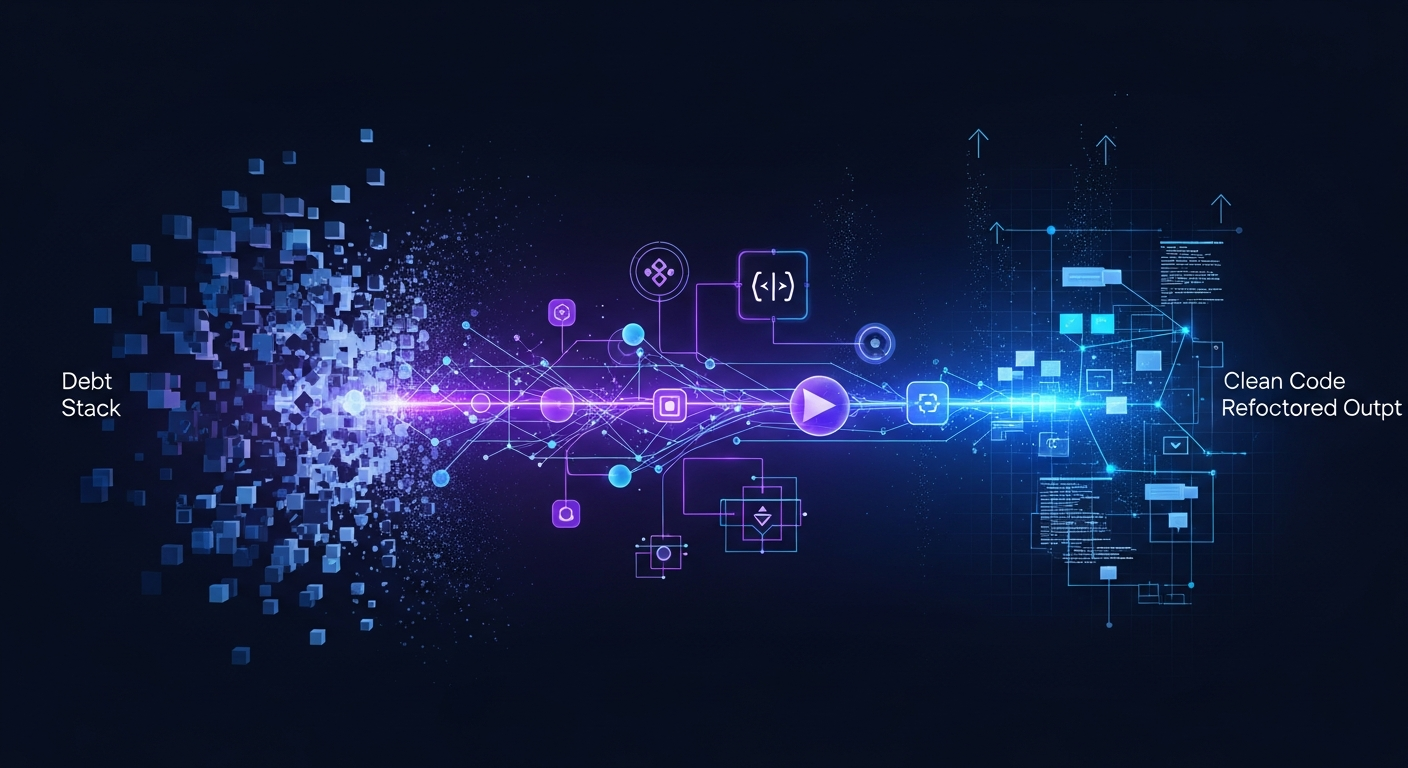
The good news is that the same automation tools we use to scale our businesses can be turned inward to pay down this debt. Reducing technical debt with automation is no longer a luxury; it is a fundamental survival strategy for engineering teams. By moving away from manual refactoring and toward programmatic, self-healing, and automated maintenance, organizations can transform their legacy burdens into agile foundations. This article explores the strategic implementation of automation to identify, prioritize, and eliminate technical debt.
—
1. The Architecture of Atrophy: Identifying Modern Technical Debt
Before we can automate the solution, we must understand the nature of the problem. In the context of integrations and workflow automation, technical debt typically manifests in three distinct ways: code debt, architectural debt, and documentation debt.
**Code Debt** is the most visible. It includes duplicated logic, overly complex functions (high cyclomatic complexity), and “spaghetti” integrations where logic is hardcoded into individual scripts rather than centralized. In 2026, as we rely more on AI-assisted coding, code debt often appears as “hallucinated” inefficiencies or unoptimized blocks that were pushed to production without sufficient oversight.
**Architectural Debt** is more insidious. It occurs when the fundamental structure of an integration is no longer fit for purpose. For example, using a point-to-point integration model when an Event-Driven Architecture (EDA) is required. This results in latency issues and a lack of scalability that automation must address by restructuring how data flows between systems.
**Documentation and Testing Debt** is the “silent killer.” When workflows are automated but the logic behind them isn’t documented—or worse, when there are no automated tests to verify the integration—the system becomes a “black box.” Engineers become afraid to touch the code for fear of breaking a critical business process. Automation allows us to bridge these gaps by generating living documentation and maintaining robust test suites that evolve alongside the code.
—
2. Automated Testing: The First Line of Defense
The most effective way to stop the accumulation of technical debt is to prevent it from reaching production. Automated testing is the cornerstone of this effort. For professionals building integrations, this means moving beyond simple unit tests and embracing comprehensive integration and end-to-end (E2E) testing suites.
In 2026, sophisticated mocking and service virtualization allow engineers to simulate complex third-party API environments. Automation tools can trigger these tests every time a change is proposed, ensuring that new code doesn’t introduce regressions.
**Contract Testing** has become particularly vital. By automating the verification of API contracts, teams can ensure that providers and consumers stay in sync. If a third-party vendor changes their JSON schema, an automated contract test will fail immediately in the CI/CD pipeline, preventing a production outage. By automating these “sanity checks,” you ensure that the technical debt of “outdated dependencies” is handled proactively rather than reactively during a Friday night fire drill.
Furthermore, **Automated Regression Testing** ensures that as you refactor legacy code to reduce debt, you aren’t inadvertently destroying existing functionality. This creates a “safety net” that gives developers the confidence to prune old code and optimize workflows.
—
3. Leveraging CI/CD Pipelines for Proactive Debt Management
The Continuous Integration and Continuous Deployment (CI/CD) pipeline is the primary engine for automating debt reduction. Modern pipelines act as automated “gatekeepers,” enforcing quality standards before a single line of code is merged into the main branch.
**Static Analysis and Linting:** By integrating tools like SonarQube or ESLint directly into the pipeline, you can automate the detection of code smells, security vulnerabilities, and style violations. These tools provide a “Technical Debt Ratio,” giving teams a quantifiable metric of how much work is required to bring the code up to standard.
**Automated Dependency Updates:** Outdated libraries are a significant source of security and performance debt. Tools like Dependabot or Renovate automate the process of checking for new versions of dependencies, running tests against the new versions, and even creating Pull Requests (PRs) for the engineering team. In 2026, these tools are often configured to “auto-merge” minor patches if all automated tests pass, effectively eliminating dependency debt with zero manual intervention.
**Policy as Code (PaC):** For those building cloud-native integrations, PaC allows you to automate the enforcement of architectural standards. If a developer attempts to deploy a workflow that doesn’t include required logging or exceeds resource limits, the CI/CD pipeline can automatically reject the deployment. This prevents architectural debt from ever entering the environment.
—
4. The Rise of AI-Driven Refactoring and Code Review
One of the most exciting shifts in 2026 is the application of Large Language Models (LLMs) and specialized AI agents to the problem of refactoring. While manual refactoring is time-consuming and often prioritized lower than new features, AI-driven automation can handle the “heavy lifting” of cleaning up legacy codebases.
**Automated PR Reviews:** AI agents can now act as the first reviewer on a PR. They are trained to identify not just syntax errors, but deeper architectural flaws. They can suggest more efficient ways to handle data transformations or point out where an integration might fail due to lack of idempotency.
**Self-Healing Code:** We are seeing the emergence of “self-healing” systems where, if a recurring error is detected in an automated workflow, an AI agent analyzes the logs, identifies the source of the debt (such as a poorly handled exception), and proposes a code fix. Once approved by a human engineer, the fix is deployed automatically.
**Automated Decommissioning:** A major source of debt is “zombie code”—scripts and integrations that are no longer used but still consume resources and require monitoring. AI-powered observability tools can track usage patterns over time and automatically flag (or even disable) unused endpoints and workflows, cleaning the “digital attic” without human intervention.
—
5. Modernizing Integrations: Replacing Brittle Scripts with Orchestration Platforms
For integration professionals, the greatest source of technical debt is often the “custom script” trap. Years of building bespoke Python or Bash scripts to connect SaaS platforms results in a fragmented ecosystem that is impossible to maintain.
Reducing this debt requires migrating from hardcoded scripts to modern **Integration Platforms as a Service (iPaaS)** or low-code orchestration engines. Automation helps in this transition through:
* **Standardization:** Automation platforms provide standardized connectors and error-handling frameworks. By migrating legacy scripts into these platforms, you replace “custom debt” with “standardized assets.”
* **Centralized Logic:** Instead of having business logic scattered across twenty different serverless functions, an automated orchestration platform centralizes that logic. This makes it easier to audit, update, and scale.
* **Visual Refactoring:** Many modern automation platforms allow for visual representation of workflows. This inherently reduces “documentation debt” because the workflow *is* the documentation.
By automating the migration process—using scripts to map old API calls to new platform connectors—organizations can rapidly modernize their integration stack and shed years of accumulated architectural debt.
—
6. Establishing a “Culture of Cleanliness” Through Automated Observability
You cannot manage what you cannot measure. Technical debt often grows because it remains invisible until a system crashes. Automated observability turns “unknown unknowns” into actionable data.
In 2026, observability isn’t just about logs and metrics; it’s about **Automated Insights.** Modern monitoring tools use machine learning to establish a baseline for “healthy” integrations. When a workflow begins to slow down—indicating a buildup of performance debt or an inefficient database query—the system automatically creates a ticket in the engineering backlog.
**Feedback Loops:** By connecting observability data back to the development team via automated Slack alerts or Jira tickets, you create a closed-loop system. If a specific integration is consistently throwing “429 Too Many Requests” errors, the system identifies this as a debt issue (lack of proper rate limiting or caching) and alerts the team to refactor it before it causes a total failure.
**Quantifying ROI:** Automation allows you to track the “cost of delay” caused by technical debt. By measuring how much time engineers spend on “toil” (manual maintenance) versus “value-add” (new features), you can present a data-driven case to stakeholders for why investing in automated debt reduction is essential for the bottom line.
—
FAQ: Reducing Technical Debt with Automation
**Q1: Won’t building automation for technical debt just create *more* technical debt?**
A: This is a common concern. The key is to use industry-standard tools and “clean code” principles when building your automation. If you build a custom, complex automation framework that only one person understands, you are indeed creating debt. However, using established CI/CD tools, open-source testing frameworks, and PaC ensures that your automation is an asset, not a liability.
**Q2: How do we prioritize which debt to automate first?**
A: Focus on “High-Interest Debt.” This includes integrations that break frequently, workflows that handle sensitive data (security debt), and processes that require significant manual intervention (toil). Use automated observability tools to identify which parts of your system have the highest failure rates or latency.
**Q3: Can AI really refactor code safely?**
A: As of 2026, AI is a powerful assistant but not a total replacement for human judgment. AI can identify patterns and suggest refactors, but these should always be validated by automated test suites and human peer reviews before being merged. The “automation” lies in the identification and the generation of the solution, while the “safety” lies in the testing pipeline.
**Q4: We have a massive legacy codebase. Where do we start with automation?**
A: Start with “Shift-Left” testing. Implement automated linting and basic unit tests for all *new* code. For the legacy code, implement “Characterization Tests”—automated tests that describe the current behavior of the system. Once you have a safety net, you can begin using automated tools to refactor the most problematic areas.
**Q5: Is low-code automation a good way to reduce debt?**
A: Yes, provided the low-code platform is enterprise-grade and supports version control and API connectivity. Low-code reduces “syntax debt” and makes workflows more accessible to the team. It allows professional developers to focus on high-level architecture rather than debugging mundane script errors.
—
Conclusion: The Automated Future of Maintainability
Technical debt is not a moral failing of a development team; it is a natural consequence of building in an uncertain and rapidly changing environment. However, the traditional methods of addressing debt—manual code reviews, “refactoring sprints,” and long-form documentation—are no longer sufficient to keep up with the scale of modern digital ecosystems.
By 2026, the most successful engineering teams are those that treat technical debt as a data problem that can be solved with automation. From CI/CD pipelines that act as quality filters to AI agents that suggest structural improvements, the tools at our disposal have never been more powerful.
Reducing technical debt with automation allows tech professionals to reclaim their time, improve system reliability, and focus on what they do best: building innovative solutions that drive the business forward. The goal is not to eliminate debt entirely—that’s impossible—but to manage it so effectively through automation that it never becomes a barrier to growth. Start small, automate your testing, leverage your pipelines, and turn your technical debt into a manageable, automated line item rather than a looming crisis.