
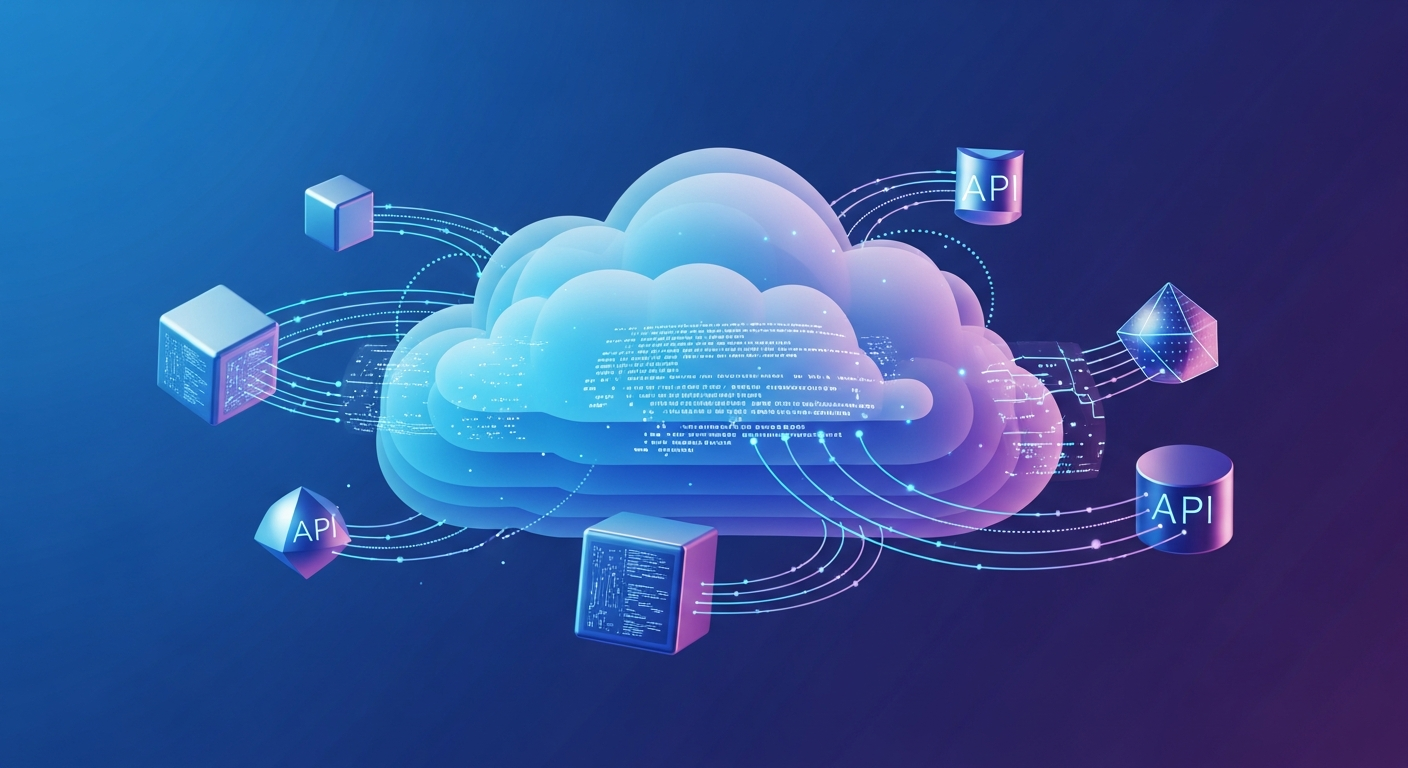
Updated May 2024. The paradigm of enterprise automation has shifted. For decades, the backbone of system integration and workflow automation relied on “cron boxes”—dedicated virtual machines or aging on-premise servers running scheduled scripts. These systems were notoriously fragile, difficult to scale, and costly to maintain during idle periods. As we move deeper into 2026 and beyond, the industry has firmly pivoted toward utilizing a serverless architecture for automation scripts, a model that decouples code execution from infrastructure management.
For tech professionals, the move to serverless isn’t just about cost-cutting; it’s about building resilient, event-driven ecosystems that react in real-time to business needs. Whether you are synchronizing CRM data, automating security remediation, or managing CI/CD pipelines, serverless functions provide the “glue” that connects disparate SaaS platforms and cloud services. By abstracting the underlying runtime environment, engineers can focus on logic rather than patching kernels or managing scaling policies. This article explores the strategic implementation of serverless models, the architectural patterns that drive efficiency, and the best practices for maintaining high-performance workflows in a modern cloud environment.
The Strategic Shift Toward Serverless Automation
Traditional automation relies on persistence. You pay for a server to sit idle for 23 hours a day so it can run a 5-minute cleanup script at midnight. Serverless computing upends this model through a functional, execution-based billing system. But the benefits extend far beyond the balance sheet.
Operational Excellence and Reduced Overhead
In a serverless model, the cloud provider handles the heavy lifting of server maintenance, OS updates, and runtime patching. For DevOps teams, this means the “to-do” list no longer includes upgrading Python versions on three different build servers. When you deploy a script as a function (FaaS), you are essentially deploying a packaged unit of logic that is ready to execute on demand.
Granular Scalability
Automation needs are rarely linear. A script designed to process incoming support tickets might handle ten requests an hour on Monday and ten thousand an hour during a product launch. Serverless architectures scale horizontally and instantaneously. Each trigger spawns a new instance of the function, ensuring that background tasks never become a bottleneck in the workflow.
Improved Security Posture
Serverless functions are inherently ephemeral. They exist only for the duration of the execution, which significantly reduces the attack surface for long-term exploits. Furthermore, by utilizing fine-grained IAM roles, developers can ensure that a specific automation script has permission to write to one specific S3 bucket and nothing else—limiting the “blast radius” of any potential credential compromise. You can read more about AWS IAM best practices in their official documentation.
Types of Architectural Patterns and When to Apply Them
To effectively leverage serverless for automation, one must move beyond simple scheduling and embrace event-driven design. As of 2026, several primary patterns dominate the landscape:
The Webhook Listener
Many modern tools (GitHub, Slack, Stripe, Jira) emit webhooks when specific actions occur. A serverless function acting as a webhook listener allows you to build reactive integrations. For example, a push to a specific GitHub branch can trigger a serverless function that automatically spins up a staging environment, runs a security scan, and posts the results to a Slack channel.
The Scheduled Event (Cloud-Native Cron)
While “cron” is an old concept, the cloud-native implementation is far more robust. Using tools like Amazon EventBridge or Google Cloud Scheduler, you can trigger serverless functions at specific intervals. This is ideal for “housekeeping” tasks, such as rotating API keys every 30 days, generating weekly compliance reports, or shutting down non-production environments during weekends to save costs.
The Pipe and Filter Pattern
In complex data processing automation, the “Pipe and Filter” pattern uses message queues (like AWS SQS or Azure Service Bus) to decouple stages of a script. One function might ingest data, a second function cleanses it, and a third function writes it to a data warehouse. This modularity ensures that if the third step fails due to a database timeout, the data remains safely in the queue for a retry without losing the work performed in steps one and two.
Event Streaming Platforms
For highly scalable, real-time automation workflows, serverless functions can integrate seamlessly with event streaming platforms like Kafka or RabbitMQ. This is particularly useful for APIs that require high-throughput data ingestion and processing, allowing your automation scripts to react to continuous streams of data rather than discrete, isolated events.
[INLINE IMAGE 2: Diagram illustrating the Pipe and Filter pattern using message queues and serverless functions.]
Which Serverless Engine Fits Your Automation Needs?
Selecting a provider for your serverless automation depends heavily on your existing ecosystem. Here is how the major players stack up for automation-specific tasks in the current 2026 landscape:
- AWS Lambda: The industry standard. Its deep integration with the broader AWS ecosystem (S3, DynamoDB, EventBridge) makes it the most powerful choice for complex infrastructure automation. With support for “Lambda Layers,” it is easy to share common libraries across multiple automation scripts.
- Azure Functions: The preferred choice for enterprises embedded in the Microsoft ecosystem. Azure Functions excels in Durable Functions, which allow for stateful workflows—essential for long-running automation that requires human approval or complex branching logic.
- Google Cloud Functions (GCF): Known for its simplicity and lightning-fast deployment. GCF is frequently chosen for data-heavy automation, as it integrates seamlessly with BigQuery and Google’s AI/ML suites (Vertex AI), making it ideal for automated data science pipelines.
- Cloudflare Workers: A rising star for low-latency automation at the edge. If your automation script needs to intercept HTTP requests or perform global redirects with minimal delay, Cloudflare’s V8 isolate-based architecture is significantly faster than traditional container-based FaaS.
[INLINE IMAGE 3: Comparison table of AWS Lambda, Azure Functions, Google Cloud Functions, and Cloudflare Workers.]
Managing Complexity Through State and Orchestration
A common pitfall in serverless automation is the “timeout wall.” Most functions have a maximum execution time (often 15 minutes). For scripts that perform large-scale data migrations or complex system audits, 15 minutes is rarely enough. To solve this, tech professionals utilize orchestration engines.
Workflow Orchestration
Tools like AWS Step Functions or Google Cloud Workflows allow you to stitch together multiple serverless functions into a single logical process. This allows for:
- Error Handling: If a script fails, the orchestrator can automatically trigger a retry logic or a rollback function.
- Parallelism: You can split a massive task into 100 smaller tasks, run them in parallel via 100 concurrent functions, and aggregate the results.
- Wait States: You can pause an automation script for minutes, hours, or even weeks (e.g., waiting for an admin to click “Approve” in an email).
The Idempotency Principle
In automation, idempotency is the property where an operation can be applied multiple times without changing the result beyond the initial application. Because serverless functions might occasionally trigger twice (due to “at-least-once” delivery guarantees in many event buses), your automation scripts must be idempotent. Before performing an action—like creating a user account—the script should check if the account already exists.
How Do You Secure Serverless Automation Workflows?
Automation scripts often require high-level privileges because they act as “super-users” across different systems. This makes them a high-value target for attackers.
Secrets Management
Never hard-code API keys or database credentials within your serverless code. Use native services like AWS Secrets Manager or HashiCorp Vault. These services allow your functions to fetch credentials at runtime, and more importantly, they facilitate automatic credential rotation without requiring a redeployment of your automation scripts.
Observability and Auditing
“Set it and forget it” is a dangerous mantra for automation. You need centralized logging (CloudWatch, Stackdriver) and distributed tracing (AWS X-Ray). Every time an automation script modifies your infrastructure, it should leave a clear audit trail. In 2026, best practices involve using structured logging (JSON) to allow for automated monitoring and alerting on script failures or anomalous behavior.
The Principle of Least Privilege
Ensure each function has its own dedicated execution role. If a script is only supposed to delete old snapshots, its IAM role should not have the permission to terminate EC2 instances. Granular permissions are the strongest defense against “automated” disasters.
Security Audits and Advanced API Design
Serverless automation plays a critical role in enforcing advanced API design principles. By automating security audits for APIs, serverless functions can continuously scan endpoints for vulnerabilities, validate authentication tokens, and ensure compliance with governance standards. This proactive approach guarantees that your APIs remain secure without requiring manual intervention.
Implementation Strategies From Local Dev to Production
Building serverless automation requires a different mindset than traditional scripting. The development lifecycle must be as rigorous as your application code.
Infrastructure as Code (IaC)
Your serverless functions and their triggers should be defined in code. Using frameworks like Terraform, Pulumi, or the AWS CDK ensures that your automation environment is reproducible. If you need to move your automation from a development account to a production account, it should be a matter of running a single command, not manual configuration in the console.
Local Development and Testing
Testing event-driven scripts can be challenging. Tools like LocalStack or the SAM CLI allow developers to emulate cloud environments locally. This enables you to trigger your scripts with mock events and verify logic before deploying to the cloud, significantly reducing the “deploy-test-fail” cycle.
CI/CD for Automation
Automation scripts should go through a CI/CD pipeline. When code is pushed to a repository, it should undergo linting, unit testing (mocking external API calls), and security scanning before being deployed. This ensures that a typo in a script doesn’t accidentally bring down a production database during an automated cleanup task.
What Are the Most Common Questions About Serverless Automation?
As organizations transition to modern cloud environments, several common questions arise regarding the implementation and optimization of serverless workflows.
Q1: How do I handle “Cold Starts” in automation scripts?
For most automation tasks (like daily backups or Slack alerts), a 200ms cold start delay is irrelevant. However, if your automation is user-facing or time-sensitive, you can use “Provisioned Concurrency” to keep functions warm, or opt for runtimes like Go or Rust which have significantly faster startup times than Java or Python.
Q2: Is serverless always cheaper than a dedicated VM for automation?
Not always. If you have a script that runs 24/7 at high utilization, a small reserved instance or VM might be more cost-effective. However, for 90% of automation use cases—which are intermittent and bursty—serverless provides substantial savings by eliminating “idle time” costs.
Q3: How do I debug a serverless script that fails intermittently?
Use distributed tracing (like AWS X-Ray or OpenTelemetry). This allows you to see the entire journey of a request, from the event trigger to the specific line of code that caused the timeout or error. Centralized logging with unique “Correlation IDs” is also essential for tracking executions across multiple functions.
Q4: Which programming language is best for serverless automation?
Python remains the king of automation due to its vast library support (Boto3, Requests) and readability. However, Node.js is excellent for I/O-intensive tasks. In 2026, we see a rise in Go for automation scripts that require high performance and low memory footprints.
Q5: Can serverless functions access on-premise resources?
Yes. By configuring your functions to run within a Virtual Private Cloud (VPC) and setting up a VPN or Direct Connect to your on-premise data center, your automation scripts can securely interact with legacy databases or internal APIs.
The Future of Cloud-Native Automation
The transition to a serverless model represents a fundamental maturity in how we manage technical operations. By stripping away the burden of infrastructure management, tech professionals are empowered to build more complex, reliable, and responsive systems. In the landscape of 2026, the competitive advantage lies with organizations that can automate rapidly and securely, leveraging predictive scaling and AI-driven event triggers.
Serverless isn’t just a hosting platform; it’s an architectural philosophy that favors modularity, event-driven logic, and precise resource utilization. Whether you are a DevOps engineer looking to streamline deployments or a backend developer integrating disparate SaaS platforms, serverless functions offer the most scalable and cost-effective path forward. As you build your next automation workflow, remember that the best server is no server at all. Focus on the code, master the event triggers, and let the cloud handle the rest.
Sources & References
- AWS Lambda Developer Guide – Official documentation on serverless compute service.
- Azure Durable Functions Overview – Microsoft’s guide to stateful serverless workflows.
- Google Cloud Functions Documentation – Best practices for event-driven serverless functions.
- Serverless Architectures on AWS by Peter Sbarski (O’Reilly Media) – Comprehensive insights into building serverless systems.
About the Author
Alex Mercer, Lead Cloud Architect — Alex is a seasoned DevOps engineer and cloud architect specializing in serverless ecosystems, API development, and enterprise automation. With over a decade of experience building scalable infrastructure, he helps startups and enterprises optimize their cloud operations.
Reviewed by Sarah Jenkins, Senior Systems Engineer — Last reviewed: May 15, 2024