Pinterest Marketing Strategy for Business 2026: The Founder’s Blueprint for Visual Growth
By [Author Name]
In the dynamic arena of digital marketing, where attention spans dwindle and competition intensifies, founders must identify platforms that offer a distinct strategic advantage. Pinterest, often miscategorized as merely another social media channel, stands apart as a formidable visual discovery engine – a potent force for driving high-intent traffic and conversions for startups. For ambitious entrepreneurs looking to scale, understanding and leveraging Pinterest’s unique ecosystem by 2026 isn’t just an option; it’s an imperative. This isn’t about chasing fleeting trends; it’s about establishing a robust, data-driven visual marketing pipeline that positions your brand directly in the path of users actively planning, dreaming, and crucially, purchasing. Let’s dissect the practical strategies, tools, and frameworks that will define your success on Pinterest in the coming years, focusing on how a comprehensive digital marketing strategy for startups can integrate Pinterest for optimal results.
This blueprint provides actionable advice for founders aiming to master their Pinterest marketing strategy for business in 2026. We will cover everything from optimizing your business profile and crafting compelling visual content to advanced advertising tactics and crucial analytics. By the end of this guide, you will have a clear roadmap to harness Pinterest’s power for explosive tech startup growth and enhanced digital marketing performance.
What is the Evolving Pinterest Landscape and How Does it Impact Business?
To truly harness Pinterest’s power, we must first reframe our perception. It’s not Instagram, nor is it Facebook. Pinterest is a future-oriented platform where users come with commercial intent, actively searching for ideas, products, and solutions to inform their next steps. This fundamental difference makes it an invaluable asset for businesses.
By current estimates, Pinterest boasts over 450 million global monthly active users, a significant portion of whom are actively engaged in shopping-related activities. These aren’t passive scrollers; they are planners and decision-makers, often with higher disposable incomes, meticulously curating their aspirations. While its user base has historically skewed female, the platform is seeing substantial growth in male users and younger demographics, broadening its appeal across various markets.
The platform’s evolution has been relentless. What began as a simple digital scrapbook has transformed into a sophisticated visual search engine and a powerful shopping destination. Key features like Idea Pins (formerly Story Pins), Video Pins, and especially Shoppable Product Pins have blurred the lines between inspiration and direct commerce. Pinterest’s integration of AI-driven recommendations means hyper-personalized feeds, serving users exactly what they’re looking for, often before they even know they need it. Furthermore, advancements like Augmented Reality (AR) try-on features for beauty and home decor are already reshaping the consumer journey, offering immersive shopping experiences that convert.
For your startup, this evolving landscape means unparalleled opportunities to connect with an audience primed for discovery and purchase. Unlike other platforms where you interrupt a social feed, on Pinterest, you become the answer to a search query, providing value at a critical decision-making point. This strategic positioning is why Pinterest is poised to be a cornerstone of savvy digital marketing strategies by 2026.

How to Craft Your Pinterest Business Profile for Authority?
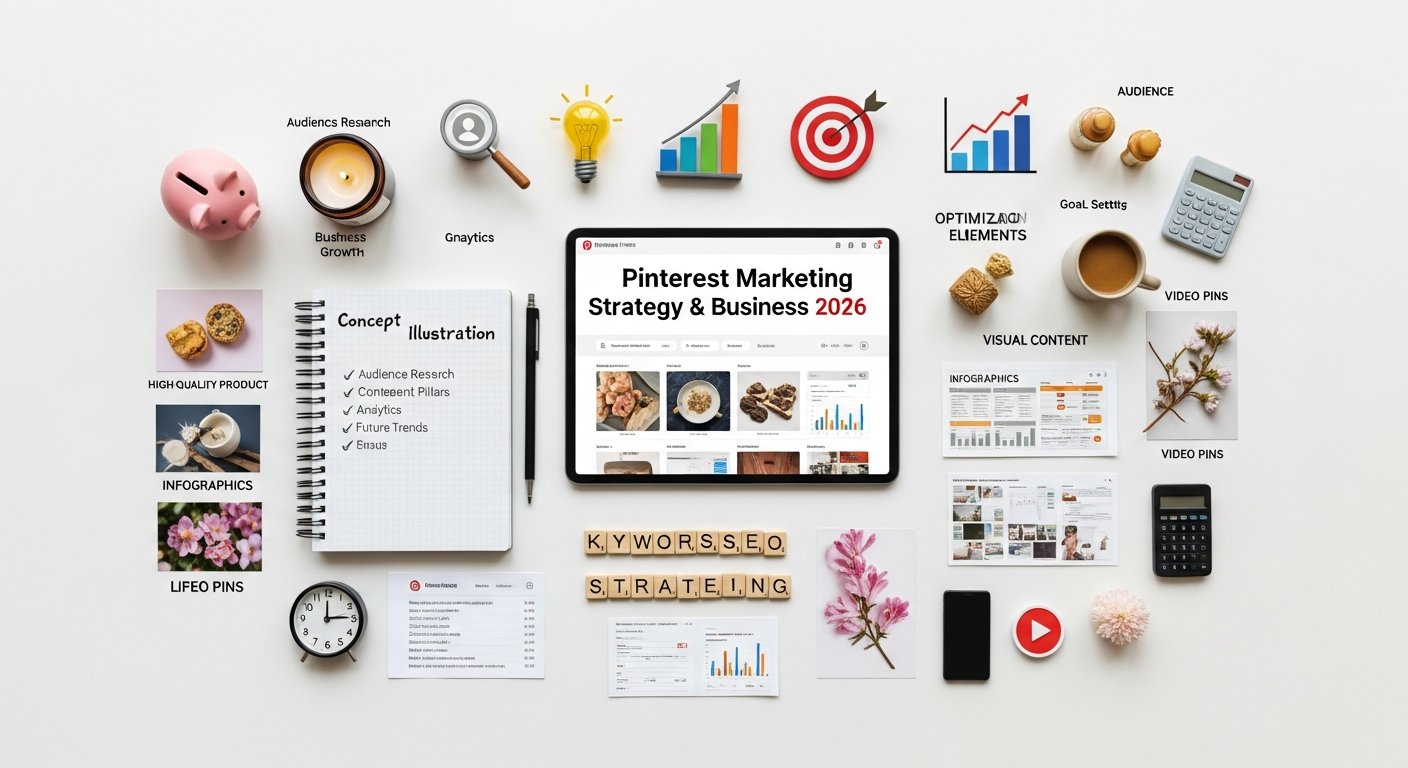
Your Pinterest business profile isn’t just a presence; it’s your storefront, your catalog, and your brand’s visual identity rolled into one. A meticulously optimized profile is the bedrock of any successful Pinterest marketing strategy.
1. How to Convert to a Business Account?
This is non-negotiable. A free business account unlocks crucial analytics, advertising capabilities, and the ability to claim your website and other platforms.
2. How to Claim Your Website and Social Profiles?
- Website: Claiming your website is paramount. It verifies your content, provides access to Rich Pins, and allows you to track website traffic originating from Pinterest. This is easily done through your Pinterest settings by adding an HTML tag or uploading an HTML file to your site’s root directory.
- Other Platforms: Claim your Instagram, Etsy, and YouTube accounts. This allows your content from these platforms to be attributed to you on Pinterest and enhances cross-platform visibility.

3. How to Implement Rich Pins?
Rich Pins are a game-changer for businesses. They automatically pull metadata from your website, adding crucial details directly to your pins and making them more informative and actionable.
- Product Pins: Essential for e-commerce. These pins display real-time pricing, availability, and a direct link to your product page. For a startup selling bespoke stationery, a Product Pin might show the price of a custom planner, if it’s in stock, and link directly to its purchase page.
- Recipe Pins: Include ingredients, cooking times, and serving sizes. (Relevant for food-tech, meal kits, or food bloggers).
- Article Pins: Feature a headline, author, and story description. (Ideal for SaaS companies publishing thought leadership, or content-heavy startups).
- How to enable Rich Pins: If you use platforms like Shopify or WooCommerce, Rich Pins are often enabled automatically or via a simple app integration. For custom websites, you’ll need to add specific meta tags to your site’s HTML and then validate one of your URLs using Pinterest’s Rich Pin Validator.
4. How to Optimize Your Profile Details?
- Profile Photo: Use your clear, recognizable company logo.
- Display Name: Include your business name and, if space allows, a key differentiator or keyword (e.g., “Eamped | Digital Marketing for Founders”).
- Bio: Craft a keyword-rich, concise description of what your business does and who it serves. Think about your target audience’s pain points and how you provide solutions. For example: “Empowering startup founders with actionable digital marketing strategies for explosive growth.” Include a clear call to action and utilize relevant keywords your audience might search for.
- Cover Board: Select a board that visually represents your brand’s core offerings or best-performing content. This is the first thing users see when they land on your profile.
5. How to Develop a Strategic Board Structure?
Boards are how you organize your content and help Pinterest understand your niche.
- Keyword-Rich Titles: Each board title should be discoverable. Instead of “Cool Stuff,” use “Sustainable Home Office Setup Ideas” or “SaaS Marketing Playbook.”
- Detailed Descriptions: Provide a keyword-rich description for each board, explaining its purpose and the type of content users will find there. This aids Pinterest SEO significantly.
- Categorization: Assign your boards to the most relevant Pinterest categories to improve discoverability.
- Content Mix: Create a variety of boards: some focused directly on your products/services, others on broader industry topics, inspiration, or how-to guides. For a tech startup, you might have boards like “Productivity Hacks for Entrepreneurs,” “AI Tools for Business,” and “Eamped Case Studies.”

By meticulously building out this foundational profile, you not only present a professional image but also lay the groundwork for Pinterest’s algorithm to understand your brand and connect you with the right audience.
What is the Content Strategy for Pinterest 2026: Visuals that Convert?
Pinterest is a visual medium, but effective content goes far beyond pretty pictures. It’s about strategic visuals that resonate, inform, and drive action. By 2026, content that tells a story, solves a problem, or directly facilitates a purchase will dominate.
1. How to Master Key Pin Formats?
- Standard Pins: These remain the workhorse.
- Visuals: High-quality, vertical images (ideally 2:3 aspect ratio, e.g., 1000x1500px). Use lifestyle shots, product in use, or clear graphics.
- Text Overlay: Incorporate concise, compelling text overlays that grab attention and convey value (e.g., “Boost Your Productivity by 30%”).
- Description: Write rich, keyword-optimized descriptions (200-500 characters) that explain the pin’s value and include a clear call to action.
- Example: A SaaS startup offering project management software could create a Standard Pin with an infographic showing “5 Steps to Streamlined Project Workflow,” linking to a blog post.
- Idea Pins (formerly Story Pins): These multi-page, immersive pins are crucial for engagement and brand storytelling. They can include video segments (up to 60 seconds per page), images, text overlays, stickers, and music.
- Focus: Tutorials, DIYs, behind-the-scenes glimpses, product demonstrations, educational series.
- Engagement: Encourage interaction with stickers and prompts.
- Strategic Use: While direct outbound links are limited to the last page or profile bio, Idea Pins are powerful for building awareness, showcasing expertise, and nurturing audience trust, ultimately driving traffic to your profile or website.
- Example: An e-commerce brand selling sustainable home goods could create an Idea Pin series titled “Zero Waste Kitchen Makeover,” showcasing various products in action across multiple steps.
- Video Pins: Short-form, engaging native videos (under 1 minute) are highly effective for capturing attention.
- Purpose: Demonstrate product features, quick tips, before-and-after transformations, or engaging brand narratives.
- Example: A fitness tech company could use a Video Pin to show a 15-second demo of their smart workout mirror in action.
- Product Pins (Shopping Pins): These are your direct sales tools. Ensure your Rich Pins are set up correctly so these automatically display price, availability, and a direct link to your product page on your website. They appear in shopping results and product carousels.

2. What are the Visual Best Practices for Pinterest Content?
- High Resolution: Always use professional, high-resolution imagery. Pixelated pins reflect poorly on your brand.
- Vertical Orientation: Pinterest is optimized for vertical content. Stick to the 2:3 aspect ratio for maximum screen real estate.
- Branding Consistency: Maintain consistent brand colors, fonts, and logo placement across all your pins. This builds brand recognition and trust.
- Contextual Imagery: Show your products or services in real-world use. A software startup might show its dashboard being used by a smiling entrepreneur, rather than just a screenshot.
3. How to Conduct Strategic Keyword Research for Pinterest SEO?
- Pinterest Search Bar: Start typing keywords related to your niche into the Pinterest search bar. Pinterest’s autocomplete suggestions are goldmines for understanding what users are actively searching for.
- Pinterest Trends: This tool reveals trending search terms on the platform, allowing you to identify seasonal opportunities and capitalize on rising interest.
- Competitor Analysis: Observe what keywords your successful competitors are using in their pin titles, descriptions, and board names.
- Google Keyword Planner: While primarily for Google, this tool can provide broader keyword ideas that you can then test on Pinterest.
- Application: Integrate these keywords naturally into your pin titles, descriptions, image filenames, and board titles/descriptions. Think like your customer: what would they type into the search bar to find a solution you offer?

4. How to Develop Content Pillars for Pinterest?
Categorize your content into themes that resonate with your audience and align with your brand.
- Inspiration: Lifestyle imagery, mood boards, aspirational content related to your brand’s ethos.
- Education: How-to guides, tutorials, infographics, step-by-step processes.
- Product Focus: Showcase unique features, benefits, specific use cases, and product comparisons.
- Problem/Solution: Address common pain points your target audience faces and position your product/service as the ideal solution.
Real-World Example: “Evolve Gadgets” (Smart Home Tech Startup)
- Standard Pins: High-res images of their smart thermostat with text overlay “Save 20% on Energy Bills.” Links to product page.
- Idea Pins: “Automate Your Morning: 3 Smart Home Hacks” – a multi-page video tutorial showing how to set up morning routines with their devices (coffee maker, lights, thermostat).
- Video Pins: A quick 20-second clip demonstrating the ease of installation for their smart doorbell.
- Shopping Pins: Direct links to their online store for individual products, showing price and “in stock” status.
- Boards: “Smart Home Security Solutions,” “Energy-Saving Gadgets,” “Productivity Tech for Modern Living.”
By strategically combining these content formats and best practices, your startup can create a robust visual narrative that not only attracts but also converts your ideal customers on Pinterest.
How to Drive Traffic & Sales with Advanced Pinterest Tactics?

Once your foundational profile and compelling content are in place, the next step is to amplify your reach, drive qualified traffic to your website, and ultimately, convert prospects into customers. This requires a blend of organic SEO and strategic paid promotion.
1. What is a Pinterest SEO Deep Dive?
- Keyword Placement: This is paramount.
- Pin Titles: Make them descriptive and keyword-rich, enticing users to click.
- Pin Descriptions: Treat these as mini-blog posts. Use 200-500 characters to elaborate on the pin’s value, naturally weave in multiple relevant keywords, and include a clear call to action. For example, instead of just “New Sneakers,” try “Eco-Friendly Vegan Leather Sneakers for Urban Explorers | Sustainable Footwear for Your Commute.”
- Image Alt Text: Describe your image clearly for accessibility and search engines, aligning with the pin’s topic and target keyword.
- Board Titles & Descriptions: As mentioned, these provide crucial context to Pinterest’s algorithm about your niche.
- Hashtags: Unlike Instagram where you might use 10-30, on Pinterest, 3-5 highly relevant, specific hashtags are most effective. Use them at the end of your pin description. These act as additional keywords for discoverability.
- Consistent Pinning: Regular, consistent pinning signals to Pinterest that you are an active and valuable content creator, which can boost your organic reach.
2. How to Manage Scheduling & Consistency on Pinterest?
- Frequency: Aim for a consistent pinning schedule, ideally 5-10 new pins per day. This doesn’t mean creating 10 brand new pieces of content daily. It includes re-pinning your own evergreen content, creating multiple pin variations for the same URL, and occasionally pinning relevant content from others (though focus primarily on your own).
- Tools: Leverage scheduling tools to maintain consistency without constant manual effort.
- Tailwind: A popular choice for Pinterest, offering features like SmartLoop (to re-share evergreen content), Communities (formerly Tribes) for collaborative pinning, and detailed analytics.
- Later & Buffer: Also offer Pinterest scheduling capabilities.
- Pinterest’s Native Scheduler: The platform now offers its own robust scheduling tool within the business account interface.

3. How to Accelerate Growth with Pinterest Ads?
- When to Use Them: Pinterest Ads are ideal for scaling reach, launching new products, promoting seasonal campaigns, driving direct sales, or targeting specific, high-intent audiences.
- Ad Formats:
- Shopping Ads: The most direct route to sales. These are Product Pins promoted to a wider audience, showing price and direct link. Highly effective for e-commerce.
- Idea Ads: Promote your Idea Pins to boost engagement, brand storytelling, and build an audience. Great for educational content or brand awareness.
- Video Ads: Capture attention with moving visuals, perfect for product demos or compelling narratives.
- Collection Ads: Showcase multiple products in a single ad, allowing users to browse a mini-catalog.
- Targeting Options: Pinterest’s targeting capabilities are sophisticated:
- Interests: Target users based on their saved pins and search history (e.g., “sustainable fashion,” “small business marketing,” “home automation”).
- Demographics: Filter by age, gender, location.
- Customer Lists: Upload your existing customer email lists for retargeting or to create “actalikes” (lookalike audiences).
- Actalikes: Reach new users who share characteristics with your existing customers or website visitors.
- Keyword Targeting: Target users actively searching for specific terms.
- Budgeting & Bidding: Start with a modest budget to test campaigns, then scale up what’s working. Experiment with automated vs. manual bidding strategies to optimize for your specific goals (e.g., clicks, conversions).
- Example: A niche online course platform targeting startup founders uses Pinterest Ads to promote a free masterclass. They target interests like “business coaching,” “startup growth,” and “entrepreneurship,” driving traffic to a lead capture page. They then retarget users who visited the page but didn’t sign up with different ad creatives.

4. How to Use Analytics & Iteration for Pinterest Marketing?
- Pinterest Analytics Dashboard: Regularly monitor key metrics such as impressions, saves, pin clicks, and crucial outbound clicks (traffic to your website). Understand which pins and boards are performing best.
- Google Analytics 4 (GA4): Integrate GA4 to track the quality of traffic from Pinterest, user behavior on your site, and critically, conversions (sales, sign-ups, lead forms). Use UTM parameters on your Pinterest links for granular tracking.
- A/B Testing: Don’t guess; test. Experiment with different pin visuals, headlines, call-to-action buttons, and pin descriptions. Run multiple versions of a pin for the same product or blog post to see which resonates most. This data-driven approach is essential for continuous improvement, much like other A/B testing strategies in digital marketing.

By combining robust organic SEO with targeted Pinterest Ads and consistently analyzing your performance, you can build a powerful engine for driving high-quality traffic and generating measurable sales for your startup.
Measuring Success & Future-Proofing Your Pinterest Strategy
A successful Pinterest strategy isn’t static; it’s dynamic, data-driven, and forward-looking. Measuring your impact and adapting to future trends will ensure your startup maintains a competitive edge.
1. What are the Key Performance Indicators (KPIs) for Pinterest Success?
- Brand Awareness:
- Impressions: How many times your pins were seen.
- Unique Viewers: The number of unique people who saw your pins.
- Engagement:
- Saves (formerly Repins): How many times users saved your content to their boards. This indicates high value.
- Close-ups: How many times users clicked to view your pin in more detail.
- Idea Pin Views: For Idea Pins, track how many people viewed your multi-page content.
- Traffic:
- Outbound Clicks: The number of times users clicked from your pin directly to your website. This is a critical metric for driving direct traffic.
- Conversions:
- Sales: Direct purchases attributed to Pinterest traffic.
- Leads: Form submissions, email sign-ups, or other lead generation actions.
- Sign-ups: Registrations for services, webinars, or trials.
2. How to Future-Proof Your Pinterest Marketing Strategy?
- Stay Agile with Algorithm Changes: Pinterest’s algorithm is constantly evolving. Regularly check official Pinterest business blogs and industry news for updates. Be prepared to adapt your content and strategy.
- Embrace New Features: Pinterest frequently rolls out new pin formats, advertising options, and analytics tools. Experiment with these early to gain a competitive advantage. For example, if new AR features become more widespread, consider how your products can leverage them.
- Focus on User-Generated Content (UGC): Encourage your customers to create and share pins featuring your products. UGC builds trust and provides authentic social proof.
- Integrate with Other Marketing Channels: Pinterest shouldn’t operate in a silo. Ensure your Pinterest strategy aligns with your overall digital marketing strategy for startups, including email marketing, other social media, and SEO efforts. Cross-promote your Pinterest content on other platforms.
- Invest in High-Quality Visuals: As Pinterest continues to emphasize visual search and discovery, the quality and uniqueness of your imagery will become even more critical. Consider professional photography, graphic design, and video production.
- Personalization and AI: Leverage Pinterest’s AI-driven personalization by creating diverse content that caters to various segments of your audience. The more relevant your content is, the better it will perform.
By diligently tracking your KPIs and proactively adapting to the platform’s evolution, your startup can build a resilient and highly effective Pinterest marketing strategy that continues to drive visual growth and conversions well into 2026 and beyond. Pinterest offers a unique opportunity for founders to connect with an audience that is actively seeking solutions and inspiration, making it an indispensable tool in the modern digital marketing landscape.