

Understanding the Basics of API Integration
Before delving into the profound impact of API integration, it’s crucial to first grasp what an API is and what integration entails. An API (Application Programming Interface) acts as a set of rules and protocols that allows different software applications to communicate with each other. Think of it as a menu in a restaurant: it lists what you can order (requests) and what kind of meals you can expect (responses). You don’t need to know how the kitchen works (the internal workings of the application); you just need to know how to place your order.
In a business context, APIs enable software systems to exchange information and functionality without direct human intervention. For example, when you use a weather app on your phone, it’s likely using an API to pull weather data from a meteorological service. When you pay for something online using a third-party payment gateway, an API is facilitating that secure transaction between the merchant’s site and the payment processor.
API integration, then, is the process of connecting two or more applications through their APIs to enable them to exchange data and work together seamlessly. This isn’t just about simple data transfer; it’s about creating interconnected ecosystems where each application contributes its unique capabilities to a larger, more powerful system. Without integration, businesses would be left with isolated data silos, manual data entry, and fragmented workflows, leading to inefficiency, errors, and a significant drain on resources. The goal of API integration is to eliminate these pain points, fostering an environment where information flows freely and processes are automated, allowing businesses to operate with agility and precision.
The complexity of API integration can vary widely, from simple point-to-point connections between two applications to sophisticated enterprise-level integrations involving dozens of systems orchestrated by dedicated integration platforms. Regardless of scale, the underlying principle remains the same: to create bridges between software that allow them to function as a unified, intelligent whole. This foundational understanding sets the stage for appreciating the transformative power that API integration brings to the modern business landscape.
The Core Mechanics: How API Integration Works
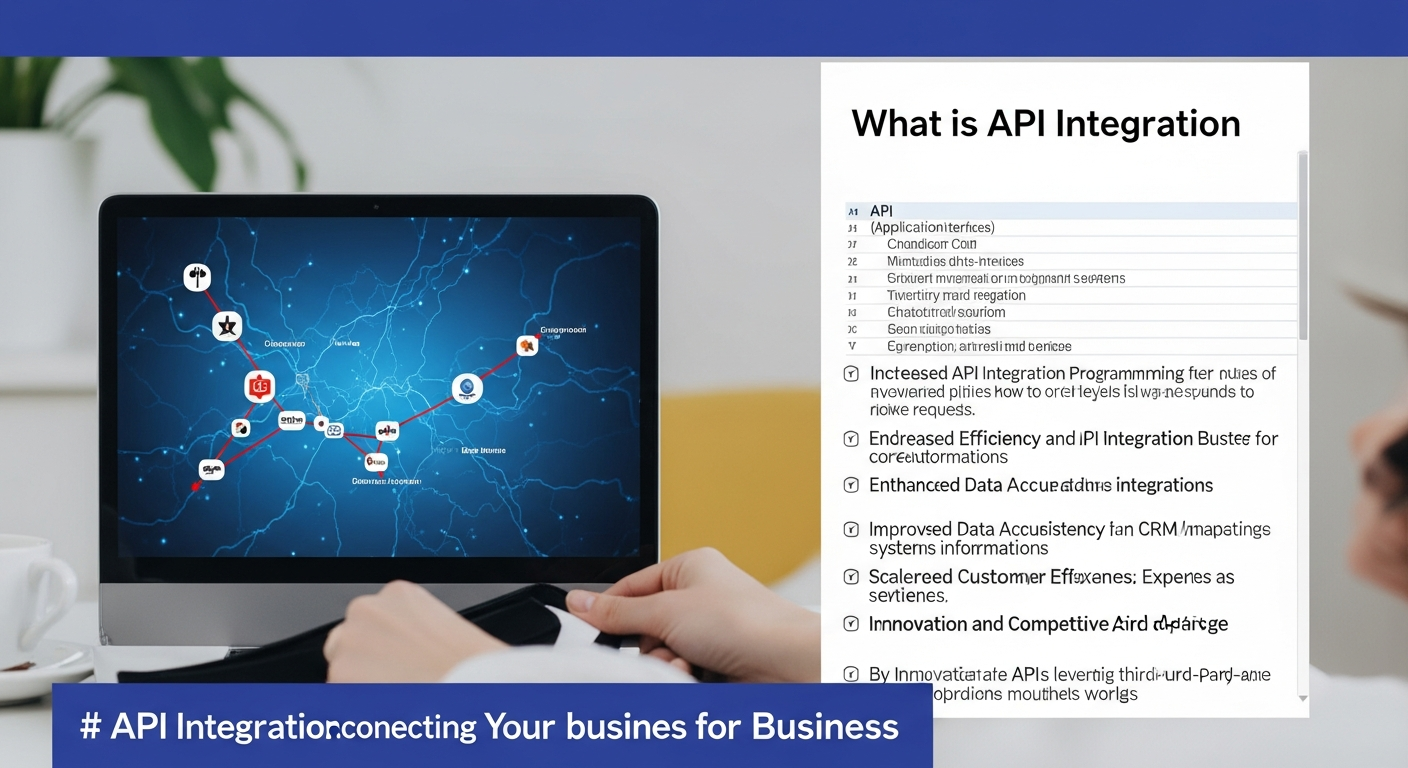
To truly appreciate the strategic value of API integration, it helps to understand the fundamental mechanics behind its operation. While the technical specifics can be intricate, the core process is built on a request-response model, typically utilizing HTTP protocols for web-based APIs, which are the most common type in business environments today.
Here’s a simplified breakdown of how API integration works:
- The Request: One application (the client or consumer) sends a request to another application (the server or provider). This request specifies what action needs to be performed or what data needs to be retrieved. For instance, a CRM system might request customer order history from an e-commerce platform.
- The Endpoint: The request is sent to a specific URL, known as an API endpoint, which acts as the digital address for a particular resource or function within the server application.
- Authentication: For security, most APIs require authentication. This ensures that only authorized applications can access the data or functionality. Common authentication methods include API keys, OAuth tokens, or JWTs (JSON Web Tokens).
- The Processing: Upon receiving an authenticated request, the server application processes it. This might involve querying its database, executing a specific function, or performing a calculation.
- The Response: After processing, the server sends back a response to the client application. This response typically contains the requested data (often in formats like JSON or XML) or a confirmation of the action performed, along with a status code indicating success or failure.
- Data Interpretation: The client application receives the response and interprets the data, using it to update its own records, trigger another action, or display information to a user.
Modern API integrations often leverage middleware or integration platforms to manage these interactions. These platforms provide tools for:
- Data Transformation: Converting data from one format to another to ensure compatibility between systems.
- Orchestration: Chaining multiple API calls together to execute complex business processes.
- Error Handling: Managing failures and retries to ensure data integrity and system reliability.
- Monitoring: Tracking API usage, performance, and potential issues.
The beauty of this system is its modularity. Each application can focus on its core competency, relying on APIs to connect to other services for specialized functions. This allows businesses to build robust, interconnected ecosystems that are far more powerful and flexible than any single standalone application. Understanding these mechanics helps demystify the process and highlights why investing in skilled integration specialists or robust integration platforms is crucial for successful digital transformation.
Why API Integration is Indispensable for Modern Businesses
In today’s hyper-connected business world, the question is no longer if you should integrate your systems, but how quickly and effectively you can achieve it. API integration has transitioned from a technical convenience to a strategic imperative for businesses of all sizes, across every industry. Its indispensability stems from its ability to address critical business challenges and unlock new avenues for growth and efficiency.
One of the primary reasons API integration is so vital is its role in breaking down data silos. Many organizations suffer from fragmented data, where crucial information is locked away in separate applications – CRM, ERP, marketing automation, accounting, HR, etc. This fragmentation leads to incomplete insights, redundant data entry, and an inability to get a holistic view of operations or customers. API integration acts as the bridge, ensuring that data flows freely and consistently between systems, providing a single source of truth and enabling better decision-making.
Furthermore, API integration is the engine behind automation and operational efficiency. By connecting applications, businesses can automate repetitive tasks that would otherwise require manual intervention. For example, a new customer signing up on your website can automatically trigger a record creation in your CRM, an email sequence in your marketing automation platform, and an onboarding task in your project management system. This not only saves countless hours of manual labor but also reduces the likelihood of human error, freeing up employees to focus on more strategic, value-added activities. This automation directly impacts the bottom line by reducing operational costs and accelerating business processes.
Beyond efficiency, API integration is a cornerstone of enhanced customer experience. Customers today expect seamless interactions across all touchpoints. When your e-commerce platform, customer support system, and loyalty program are integrated, you can provide personalized experiences, faster service, and more accurate information. Imagine a customer service representative instantly knowing a customer’s entire purchase history, recent interactions, and preferences, regardless of which system that data originated from. This level of responsiveness and personalization builds trust and fosters loyalty.
Finally, API integration is critical for innovation and agility. In a market that demands constant evolution, businesses need the flexibility to adopt new technologies, pivot strategies, and scale operations rapidly. With a well-integrated architecture, introducing a new application or service becomes significantly easier, as it can connect to existing systems rather than requiring a complete overhaul. This allows businesses to experiment with new tools and services – like those offered by the Best Project Management Software Startups – without disrupting their entire ecosystem, fostering a culture of continuous improvement and innovation. In essence, API integration future-proofs your business, ensuring it remains adaptable and competitive in a constantly changing digital landscape.
Key Benefits of Strategic API Integration

The strategic implementation of API integration delivers a multitude of tangible benefits that directly impact a business’s growth, efficiency, and competitive standing. These advantages extend across various operational areas, making it an indispensable component of any modern digital strategy.
1. Increased Efficiency and Automation: Perhaps the most immediate and impactful benefit is the dramatic increase in operational efficiency. By automating data transfer and workflow triggers between systems, businesses eliminate manual data entry, reduce human error, and accelerate core processes. For example, when an order is placed on an e-commerce site, an API can automatically update inventory, trigger a shipping notification, and record the transaction in the accounting system, all without human intervention. This frees up valuable employee time, allowing teams to focus on strategic tasks rather than repetitive administrative work.
2. Enhanced Data Accuracy and Consistency: Data integrity is paramount for informed decision-making. Fragmented data across disparate systems often leads to inconsistencies and inaccuracies. API integration ensures that data is synchronized and consistent across all connected applications, providing a “single source of truth.” This reliability is crucial when trying to choose a business intelligence tool, as the quality of insights derived from such tools is directly dependent on the accuracy and completeness of the underlying data. With integrated systems, you can be confident that the data feeding into your analytics platforms is unified and up-to-date.
3. Improved Customer Experience: Modern customers expect seamless, personalized interactions. API integration enables a unified view of the customer across all touchpoints – from sales and marketing to support and service. This means customer service agents have immediate access to purchase history, previous interactions, and preferences, allowing them to provide faster, more relevant support. Integrated marketing platforms can deliver personalized content based on real-time customer behavior, leading to higher engagement and satisfaction. This holistic approach builds stronger customer relationships and fosters loyalty.
4. Scalability and Flexibility: As businesses grow, their technology needs evolve. API integration provides a flexible architecture that can easily scale to accommodate new applications, increased data volumes, and expanding user bases. Instead of rebuilding entire systems, new services can be seamlessly plugged into the existing integrated ecosystem. This agility allows businesses to quickly adapt to market changes, adopt new technologies, and expand into new areas without significant disruption, ensuring long-term sustainability and growth.
5. Better Business Intelligence and Decision Making: With integrated systems, data from all corners of the business – sales, marketing, operations, finance – can be aggregated and analyzed holistically. This comprehensive view provides deeper insights into business performance, customer behavior, and market trends. API integration is also fundamental when considering How To Choose Business Intelligence Tool, as it dictates the breadth and depth of data you can feed into your analytics platforms. Rich, integrated data enables more accurate forecasting, identification of inefficiencies, and strategic planning, empowering leaders to make data-driven decisions that propel the business forward.
6. Cost Reduction: While there’s an initial investment in setting up API integrations, the long-term cost savings are substantial. Reduced manual labor, fewer errors, optimized resource utilization, and streamlined operations all contribute to significant cost reductions. Furthermore, by improving efficiency and customer satisfaction, API integration indirectly drives revenue growth, offering a powerful return on investment.
These benefits collectively underscore why API integration is not just a technical enhancement but a strategic imperative for any business looking to remain competitive and innovative in 2026 and beyond.
Common Use Cases and Real-World Applications
The practical applications of API integration are vast and touch nearly every aspect of modern business operations. Understanding these common use cases helps illustrate how businesses leverage APIs to solve real-world problems and drive efficiency.
1. E-commerce and Retail:
- Inventory Management: Integrating an e-commerce platform with an inventory management system ensures that stock levels are updated in real-time across all sales channels, preventing overselling and improving fulfillment accuracy.
- Order Fulfillment: When an order is placed online, APIs can automatically trigger actions in warehouse management systems, shipping carriers (e.g., FedEx, UPS), and payment gateways.
- Customer Relationship Management (CRM): Connecting e-commerce data with a CRM allows for personalized marketing campaigns, better customer service, and a complete view of customer interactions and purchase history.
2. Marketing and Sales:
- Lead Management: Integrating lead capture forms from a website with a CRM system ensures new leads are automatically entered and assigned, streamlining the sales funnel.
- Marketing Automation: Connecting a marketing automation platform with a CRM allows for triggered email campaigns based on customer behavior or lifecycle stage. Real-time conversion data can also be fed back into your What Is Pay Per Click Advertising campaigns, allowing for dynamic bid adjustments and optimized ad spend.
- Sales Force Automation: Integrating sales tools with other business systems (e.g., ERP, accounting) provides sales teams with accurate pricing, inventory availability, and customer credit information directly within their sales workflow.
3. Finance and Accounting:
- Automated Invoicing: Integrating an ERP or CRM with an accounting system can automatically generate invoices based on sales orders or completed projects, reducing manual data entry and errors.
- Expense Management: Connecting expense reporting software with accounting systems streamlines reimbursement processes and provides real-time visibility into company expenditures.
- Payment Processing: APIs enable secure and seamless integration with various payment gateways, allowing businesses to accept online payments, process refunds, and reconcile transactions efficiently.
4. Human Resources (HR) and Payroll:
- Onboarding Automation: Integrating HR systems with payroll, IT, and training platforms can automate the employee onboarding process, from setting up user accounts to enrolling in benefits.
- Time Tracking and Payroll: Connecting time tracking software with payroll systems ensures accurate and automated payroll processing, reducing administrative burden.
5. Project Management and Collaboration:
- Workflow Automation: Integrating project management tools with communication platforms (e.g., Slack, Microsoft Teams) or development tools (e.g., Jira, GitHub) can automate status updates, task assignments, and notifications. Imagine your sales CRM seamlessly updating your chosen project management software from the top Best Project Management Software Startups, ensuring that client projects kick off the moment a deal is closed.
- Resource Allocation: Connecting project management software with HR or resource planning tools helps in optimizing team allocation and capacity planning.
These examples merely scratch the surface of what’s possible with API integration. From automating customer service responses to feeding real-time conversion data back into your What Is Pay Per Click Advertising campaigns, APIs are the invisible threads that weave together the fabric of modern digital operations, empowering businesses to innovate, optimize, and grow.
Overcoming Challenges and Best Practices for Implementation
While the benefits of API integration are undeniable, the process is not without its challenges. Successfully implementing and managing integrations requires careful planning, robust execution, and ongoing maintenance. Understanding common hurdles and adopting best practices can significantly increase the likelihood of success.
Common Challenges in API Integration:
- Complexity: Integrating multiple systems, especially older legacy systems with modern cloud applications, can be complex due to differing data formats, protocols, and security requirements.
- Data Mapping and Transformation: Ensuring that data fields from one system correctly map to another, and transforming data into compatible formats, can be a time-consuming and error-prone process.
- Security Concerns: Exposing internal systems via APIs introduces potential security vulnerabilities. Proper authentication, authorization, and encryption are crucial to protect sensitive data.
- Performance Issues: Poorly designed integrations can lead to latency, system slowdowns, or even crashes, impacting overall business operations.
- Maintenance and Monitoring: APIs can change (version updates), and integrations require continuous monitoring to ensure they are functioning correctly. Troubleshooting issues can be complex without proper tools.
- Lack of Internal Expertise: Many businesses may lack the in-house technical skills to design, implement, and manage complex API integrations effectively.
Best Practices for Successful API Integration:
- Define Clear Objectives: Before starting any integration project, clearly articulate what you want to achieve. What business problem are you solving? What specific processes will be automated or improved? This clarity guides the entire project.
- Choose the Right Integration Strategy and Tools:
- For simpler, point-to-point integrations, direct API calls might suffice.
- For more complex, enterprise-wide integrations involving many systems, consider an Integration Platform as a Service (iPaaS) or an Enterprise Service Bus (ESB). These platforms offer pre-built connectors, data transformation capabilities, and robust monitoring tools, significantly simplifying the process.
- When considering how to choose a business intelligence tool, remember that the integration strategy for data ingestion into that tool is paramount.
- Prioritize Security: Implement robust security measures from the outset. Use secure protocols (HTTPS), strong authentication mechanisms (OAuth 2.0), API keys, and encrypt sensitive data both in transit and at rest. Regularly audit your integration security.
- Thoroughly Plan Data Mapping and Transformation: Invest time in understanding the data structures of all connected systems. Create detailed data maps to ensure accurate and consistent data flow. Leverage transformation tools within your iPaaS if applicable.
- Implement Error Handling and Logging: Design integrations to gracefully handle errors, with clear logging mechanisms to identify and diagnose issues quickly. Implement retry logic for transient failures.
- Monitor and Test Rigorously: Continuous monitoring of API performance, uptime, and data flow is critical. Implement automated testing for your integrations to catch issues before they impact operations. Regular testing, especially after system updates, is essential.
- Start Small and Iterate: Begin with a pilot integration or a less complex use case to gain experience and iron out kinks. Learn from these initial projects and apply those lessons to more ambitious integrations.
- Document Everything: Maintain comprehensive documentation of your integrations, including API specifications, data maps, security configurations, and troubleshooting guides. This is invaluable for maintenance and future development.
- Consider External Expertise: If internal resources are limited, consider partnering with integration specialists or consultants. Their experience can accelerate projects and ensure best practices are followed.
By proactively addressing these challenges and adhering to best practices, businesses can unlock the full potential of API integration, turning a complex technical endeavor into a powerful strategic asset.
The Future of Business with API Integration
As we look towards 2026 and beyond, API integration is not just a trend; it’s the fundamental operating system for digital business. The pace of technological innovation continues to accelerate, with new applications, services, and data sources emerging constantly. In this dynamic environment, the ability to seamlessly connect and orchestrate these disparate components will be the defining characteristic of successful enterprises.
One major trend shaping the future is the increasing prevalence of API-first strategies. Businesses are designing their products and services with APIs as a core component, making them inherently open and extensible. This approach fosters ecosystems where partners and developers can build on top of existing platforms, leading to new revenue streams, innovative solutions, and expanded market reach. This shift from “API as an afterthought” to “API as a product” will drive even greater interconnectedness.
The rise of AI and Machine Learning (ML) will also be inextricably linked with API integration. AI models require vast amounts of data to train and operate effectively. APIs will be the primary mechanism for feeding real-time, integrated data from various business systems into AI/ML platforms, enabling more intelligent automation, predictive analytics, and personalized customer experiences. From optimizing supply chains to personalizing marketing messages, AI’s effectiveness will largely depend on the quality and accessibility of data provided through APIs.
Furthermore, the demand for hyper-automation will continue to grow. Businesses will seek to automate not just individual tasks but entire end-to-end processes across multiple systems. This will require more sophisticated API orchestration and workflow management tools, often leveraging low-code/no-code platforms to empower citizen integrators alongside professional developers. The goal is to create truly intelligent, self-optimizing operations where human intervention is minimized.
The concept of the composable enterprise will become mainstream. This involves building businesses from interchangeable, modular software components (often exposed via APIs) that can be quickly assembled and reassembled to meet changing market demands. This agility will be crucial for responding to unforeseen disruptions and seizing new opportunities. Integrating niche solutions from the Best Project Management Software Startups with established enterprise systems, for example, will become a standard practice rather than a complex customization project.
Finally, API security and governance will evolve significantly. With more critical business processes relying on APIs, the focus on robust security, lifecycle management, and performance monitoring will intensify. Dedicated API management platforms will become even more sophisticated, offering advanced threat detection, access control, and analytics to ensure the reliability and security of integrated ecosystems.
In conclusion, API integration is no longer a niche technical task but a core strategic capability. For businesses looking to innovate, scale, and remain competitive in 2026, mastering API integration is not optional; it is fundamental to building a resilient, agile, and future-ready digital enterprise.
Frequently Asked Questions About API Integration
What is an API?
An API (Application Programming Interface) is a set of rules and protocols that allows different software applications to communicate and exchange data with each other. It acts as an intermediary, enabling applications to interact without needing to understand each other’s internal workings.
Why is API integration important for my business?
API integration is crucial because it enables automation, streamlines workflows, improves data accuracy, enhances customer experiences, and provides better business intelligence. It breaks down data silos, reduces manual effort, and allows your various software systems to work together as a cohesive unit, leading to increased efficiency and competitive advantage.
What are the different types of API integrations?
API integrations can broadly be categorized by their architecture (e.g., point-to-point, hub-and-spoke, ESB, iPaaS) and the type of API protocol used (e.g., REST, SOAP, GraphQL). They can also be classified by their purpose, such as data synchronization, workflow automation, or real-time data exchange. The choice depends on the complexity and scale of the integration needs.
Is API integration secure?
Yes, API integration can be highly secure when implemented with best practices. This includes using secure protocols (HTTPS), robust authentication methods (like OAuth 2.0 or API keys), authorization mechanisms, data encryption, and regular security audits. However, like any digital system, improper implementation can introduce vulnerabilities, so security must be a top priority.
How long does API integration take?
The duration of API integration varies significantly based on complexity. Simple integrations between two modern cloud applications with well-documented APIs might take days or weeks. More complex projects involving multiple legacy systems, extensive data transformation, and custom development could take months. Factors like the number of systems, API documentation quality, data complexity, and available resources all influence the timeline.
What challenges might I face during API integration?
Common challenges include managing complexity across disparate systems, ensuring accurate data mapping and transformation, addressing security vulnerabilities, maintaining optimal performance, and providing ongoing monitoring and maintenance. Lack of internal technical expertise can also be a significant hurdle, often necessitating external specialized support.
Recommended Resources
You might also enjoy Trello Vs Asana Vs Monday Comparison from Bookmark Sharer.
For more on what is API, see How To Create A Style Guide For Your App on Layout Scene.